

Starter's Guide to Becoming a Professional Writer
Freelancers don’t have it always easy, but if it’s the life you want for yourself, you need to aware of the inherent costs and hurdles. Here’s some things you need to know when getting started as a freelance writer.
More and more employees find themselves sitting at their desk and dreaming of becoming their own boss as a professional writer. It’s a recurring dream for all those who want it difficult to juggle with the unnecessary office politics or the toxic colleagues.

Whatever the reasoning, self-employment is at its highest level in the UK and the US, signifying more and more people have decide to move their professional career under the freelancing skies. After all, if there’s something appealing in the world of freelancing, it’s the sense of freedom that you get. For many, freelancing as a professional writer is the way out of the career or a company that didn’t suit their personality or desires.
But working for yourself comes at a high cost, in terms of money, social behavior and mental health. Freelancers don’t have it always easy, but if it’s the life you want for yourself, you need to aware of the inherent costs and hurdles. Here’s some things you need to know when getting started as a freelance writer.
The legal stuff
Do you know how to pay taxes or if you need a business license in your area? You need to research these two items before you start taking on clients. Here’s some tips on the legal part of becoming a freelance writer.
You compete against other market players
The freelancing world is that the market is a busy place. There is a lot of competition coming from a variety of places. As an independent contractor, you might find yourself competing against companies or other freelancing individuals.
In fact, if you’re not in a position where you can bring your client a competitive edge, either by your expertise or your specialist niche experience, you’ll be struggling to make ends meet. There’s no way around it: As a freelancer, you need to have top qualifications, and more often than not it’s something you need to invest either or money into. How do you gather the relevant knowledge? There are many options, depending on your area of freelancing.

For instance, if you’re a freelance copywriter and want to attract more financial writing gigs, you might need to get an MSC Accounting and Finance – and studying, as you know, doesn’t come for free.
You might also want to take on an internship in a specialist sector, just to gather the relevant market knowledge. The advantage is that an internship position doesn’t require any payment on your part. The inconvenient is that it isn’t paid either.
Another option is to find a niche in what you're already skilled at. For example, if you were a firefighter, you can write about safety. If you're a mom, you can write about a wide range of topics, from childcare tips to home organization. If you're a nurse, you can make the health field your niche.

You don't need to base your niche off of your old career or degree, either. It can also come from hobbies you are passionate about. Say, for example, you love to cook. You don't need a degree from the Culinary Arts Institute. Your resume can say something like:
"As a lifelong home cook trained by three generations of women, I have made over 5,000 recipes in my life."
This is how I started writing about tech. I don't have any kind of technical degree, but I'm passionate about learning everything about it. This gives me an edge.

Here are some more tips for standing out from the crowd.
Professional writer, be organized
When working in an office, there is only one thing that you need to worry about: Finishing your project within the deadline. When you work for yourself, you need to become a master of organization.
If you work on several projects at the same time, you may find it useful to stay on top of your client tasks in the same way that companies manage employee schedules, with a work schedule maker.
Fortunately, there are plenty of affordable or even free tools, starting with the obvious pen and paper. However, the more complex your tasks are, the more you’ll have to spend on keeping your freelancing business on track, from automated invoicing to digital task overview.
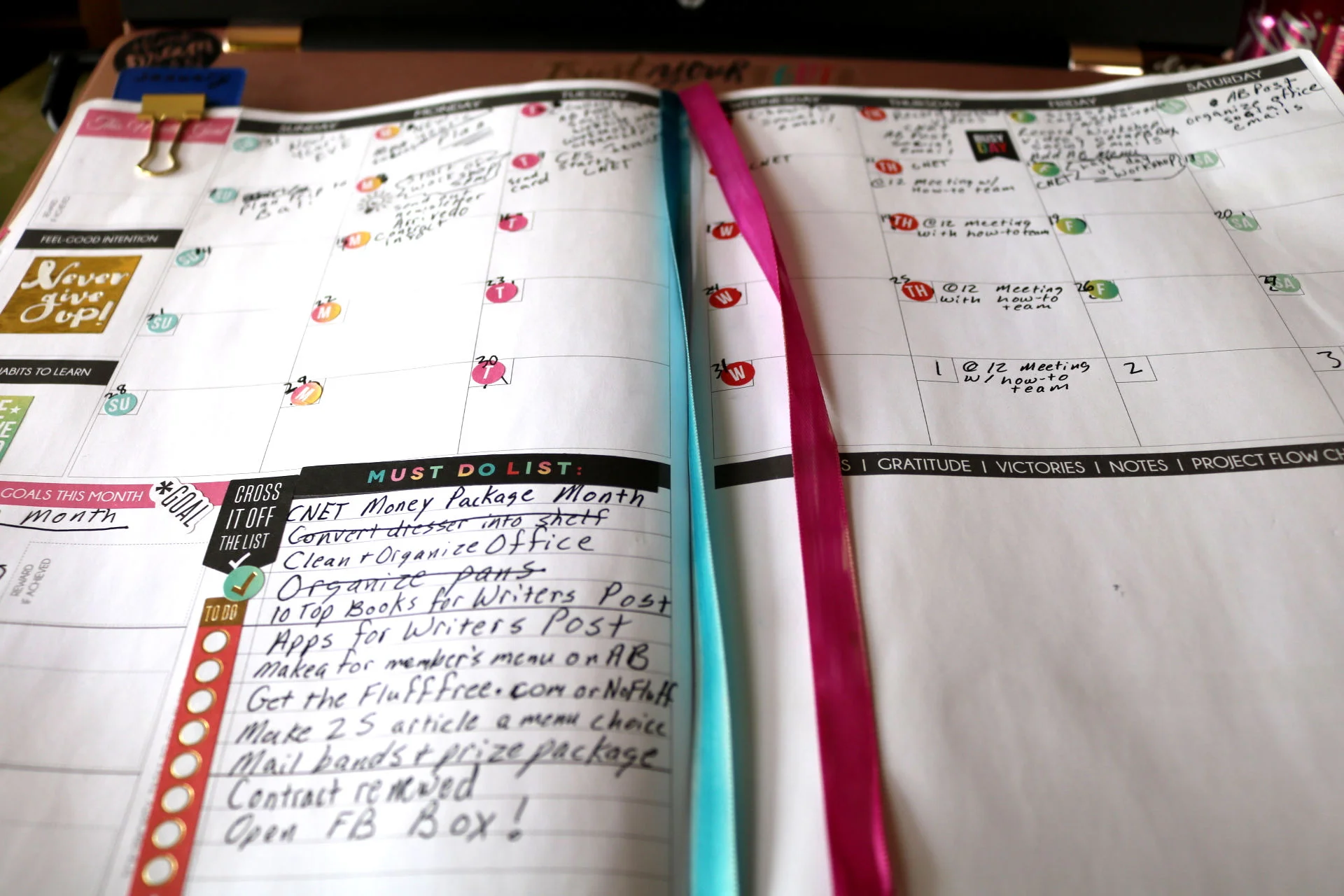
If you're a goal oriented person (I recommend setting goals to build your career, btw) get a planner that focuses on setting goals while organizing your day. I personally use the Law of Attraction Planner. If you want a digital organizer, try Google Calendar. It's free and you can set up alarms and reminders.
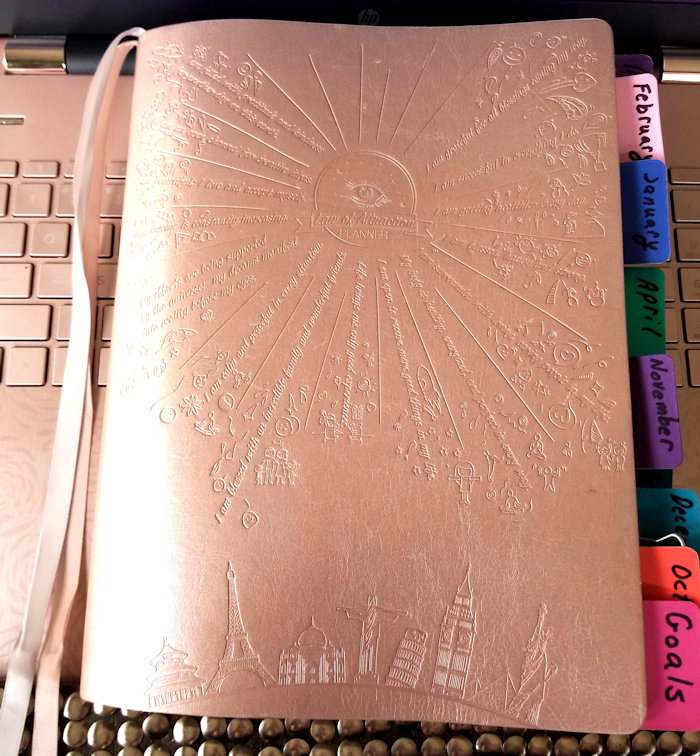
abundance planner
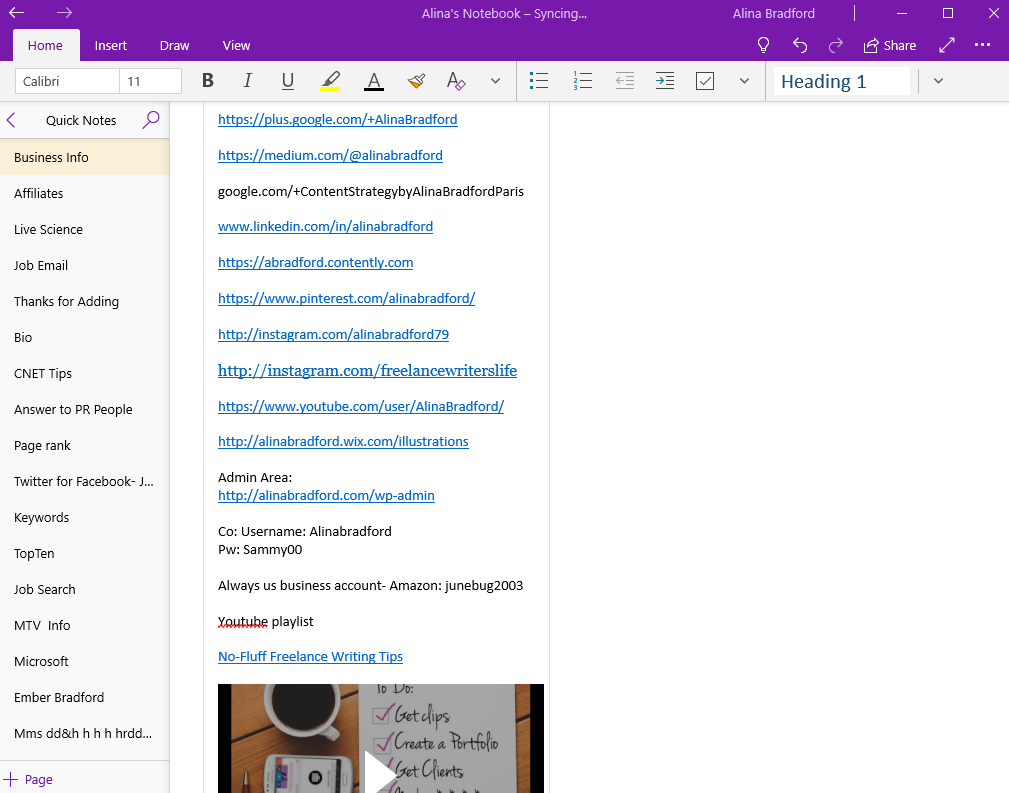
Another must have is a note taking app that you can use on your desktop, computer, phone and tablet that syncs all of your notes. I use OneNote and probably won't use anything else. I have a page with links to all of my social media and books so I can just copy and paste it when people ask for the information. I also have pages for writing guidelines for various clients, project ideas and email templates.
You create your own office
If you work from home, you will need to design a home office that is both inspiring and functional. More often than not, you’ll come across cute home office design tutorials that list all the furniture and DIY tools required to achieve “the look.” But they often forget to mention the cost of your work setting.
As a freelancer, you will need a decent desk, the relevant tech – from laptop to printer – and a storage facility. Remember that you’ll spend long hours working, so you need a comfortable and homely decor.
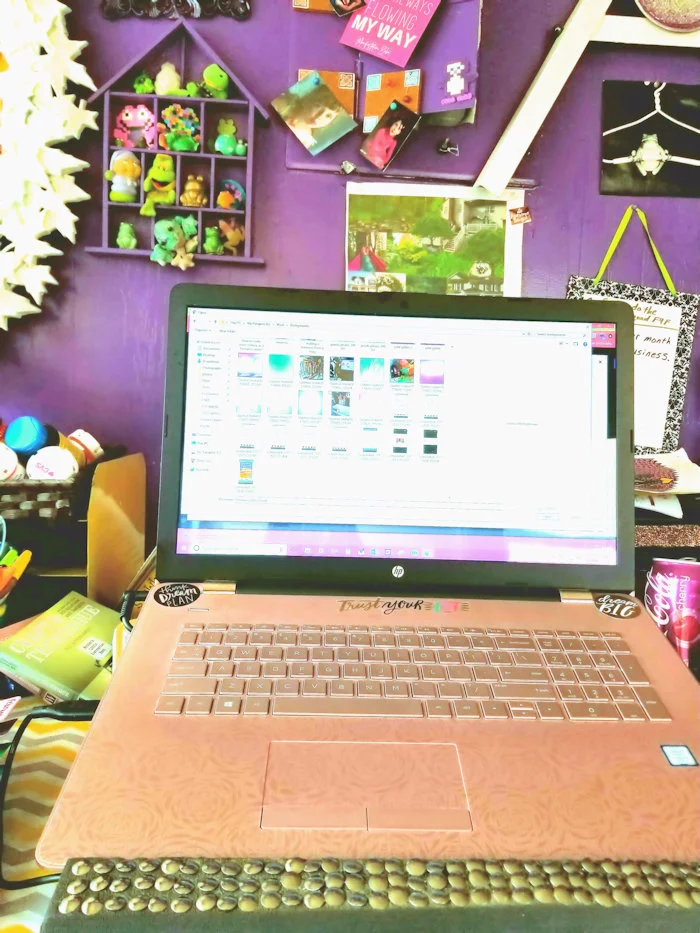
my desk
Here's a list of the basics:
Laptop or desktop. (I prefer a laptop so I can work from anywhere.)
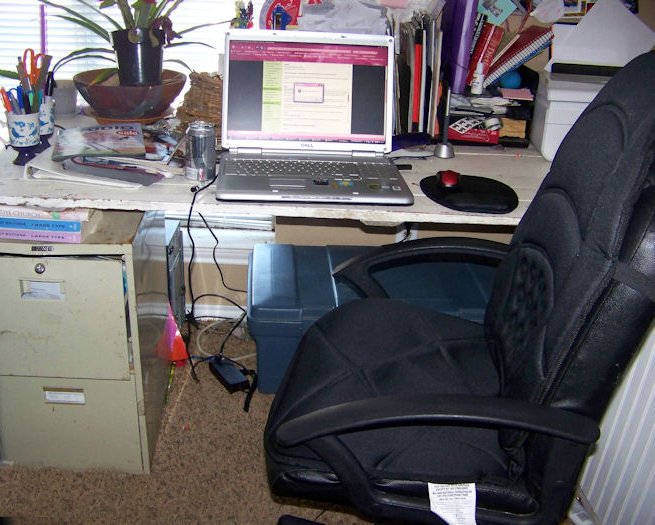
Desk. (I use a standing desk, but for years I had an old door propped across small filing cabinets.)
Some kind of online portfolio or website. (I suggest just getting a LinkedIn page to start here is some more in-depth info on building a portfolio.)
If you're going to write for local businesses you'll need business cards. (Moo.com is my card maker of choice. Here are my cards, below.)
Business cards for freelance writers
Business cards for freelance writers
Need a break? It’s at your expense
Being paid by the project, you might be tempted to work almost 24/7. However, overworking yourself is not a practical solution. Not only will this decrease the quality of your work, but it can put your health at risk too. Be safe, my professional writer friend!
You do need to take a break to recharge your batteries. Holidays and sick days are not remunerated, though. What this means is that you need to evaluate your health against your finance: Can you afford to take a day off?
One of the things I love about being a freelancer is that I can do my work ahead of schedule so I can take a week or two off. My clients are happy, I get paid, and I get needed time off. I take several vacations throughout the year.

professional writer on vacation
Either you multitask, or you pay someone to do it
Working for yourself as a professional writer means that you need to be a marketer, an accountant, a sale representative and a freelancing expert at the same time. It’s not only exhausting to juggle between each job; it seems that multitasking also reduces your IQ and productivity.
If your budget is in the green (a simple monthly budget template can help you keep your finances in line), you should consider outsourcing. If it isn’t, you’ll need to rely a smart tool such as ToDoist to keep you focused on one task at a time. I ended up setting up some automated systems because I just couldn't do EVERYTHING. Now, I have an assistant.
Working alone as a professional writer affects your health
As a freelancer, you’re free from the office routine and the colleagues -- and drama! It also means that you are on your own. While it might seem like a blessing at first, it’s a lonely career, and it can become extremely depressing and stressful.
Indeed, the very nature of the gig economy undermines the need for security. Job insecurity can lead to depression, anxiety, emotional exhaustion and even heart disease, and that’s precisely what you will be dealing with every single day of your self-employed life, if you let it.

Me in my office.
My advice is to not be scarcity oriented, but abundance oriented in your freelance business. The more you think about the abundance that's coming your way, the more confident you will be, which will attract more clients. When I was starting out I called it "fake it until you make it". This mindset will not only make you more successful, it will also lessen the job security anxiety.
Additionally, loneliness is a natural feeling to experience, and it can become a burden when you can’t exchange with same-minded colleagues. Are your ideas still good if nobody hears about them?
For a lot of freelancers, hitting the wall of insecure isolation can break their career and convince them to move back to a more traditional employment situation. If you feel lonely, I suggest joining my Facebook group for writers. It helps to have others to talk to that know exactly where you're coming from.
Also, grab your laptop or your notebook and work at a picnic table at your local park or lake. Even setting up a workstation at your favorite coffee shop once a week can help with the loneliness. When I first started out, I took my kids to McDonalds and while they played on the playground I would brainstorm article ideas.

One of our trips to McDonalds.
Freelancing is freeing (haha) if you’ve got the right mindset and the appropriate expectations. It’s not a lifestyle that is best suited for everyone. Of course, the best way to find out if you like it is to try!
Need step-by-step instructions for starting your freelance business? My book, The Fluff-Free Freelance Writing Master Course, has everything you need, from how to find clients to setting up a fantastic portfolio.

3 SEO Basics You Need to Know in 2019
SEO tips that you need to know when writing articles and blogs in 2019.
If you haven't optimized your website with search engine optimization (SEO), then that may put you behind your competitors. What are you waiting for?
In today's digital world, no one questions the effectiveness of an SEO marketing strategy for attracting your ideal audience and clients. Using the right SEO basics to get your site onto the top positions on search engine result pages will not only result in more clicks for you, it will also help to build your credibility as a trusted authority within your niche. Here are the three SEO basics you need to know in 2019.

Keyword Research
Keywords may feel overwhelming to understand, but a couple tips and tricks exist to help people learn more about this topic. To optimize your site for specific keywords, you need to engage in keyword research. Of course, it helps to start with a clear company mission in mind first. Then, you want to specify your ideal audience.
Dotcom Design suggests that you want to identify keywords that are most relevant to your target audience. Once you have the background, it's time to narrow down to keywords that fit your niche and the people you are trying to attract. Then, optimize your content with the keywords you have found.
Use your keyword in the headline and once in the opening paragraph, but don’t keep repeating it thinking that it will up your SEO juice. Use synonyms when possible to expand your search reach on search engines. Also, make sure your keywords sound natural in your sentences.

Always Include a Call to Action in Every Article
Moving Company Reviews explains that SEO experts rate CTR (Click Through Rate) as a "very important signal" predicting organic search success. Calls to action (note at the end of an article or post that encourages readers to do something) are the difference between an informational and a sales-driven site. In fact, some say you can't run a successful marketing campaign without a successful CTA. This is your time to invite responses and appeal to your readers. You want your viewers to engage with your content, and your CTA invites them to do just that.
A CTA can involve various types of actions from filling out a form to downloading a PDF. They can also be subscription sign ups or buying a product. Don't forget to use active verbs for your CTA like subscribe, comment, learn more, buy, and order. You should add a CTA on every page of your site. An effective CTA increases audience conversions, and conversions are always good for business.
Remove Duplicate Content
In the past, duplicate content has been used in Black Hat SEO practices (Black Hat = Bad). Neil Patel talks about how it's vital to remove duplicate content as it will be picked up by search engine algorithms, and your site will get penalized by dropping in ranking. If your site has several pages that appear to be duplicates of each other, then you need to delete the doubles. Search engines will only present useful, relevant, content to its searchers. Duplicate content is considered spam.

Many people tend to be drawn to sites who use SEO basics like keywords to actively seek them out as opposed to cold leads. Since most people look up products and services on search engines before making a purchase, implementing the basics of SEO seems to be a logical decision for any online business.
To learn more about how to SEO like a pro read my article What is SEO: A Step-by-Step Guide for Writers.

Make it Work: Tips for Women in Small Business
You’re already an inspirational woman, who has big dreams of starting a small business from scratch. Your initial reservations are probably that many small businesses can fail within the first year of starting up, but you don’t need to worry.
You’re already an inspirational woman, who has big dreams of starting a small business from scratch. Your initial reservations are probably that many small businesses can fail within the first year of starting up, but you don’t need to worry.

If you’ve got the drive, passion and clarity for your business you will be soaring your way to the top in a flash. I believe in you!
Firstly, you need to set your initial goals and brainstorm the main innovations bubbling in your imagination. Make sure you do some market research to check out your potential competitors in the market, too. You might find a niche that you can maximize on, so roll with it if you gut is giving you good vibes.
Once your plan is mapped out in your mind you can start bringing pen to paper and get your invigorating ideas out into the world.
Inspire With Ideas
Your first ideas may well be vast and broad, but you need to come up with a plan to hone in on one clear cut idea. Don’t stray away from the goal you’ve set and try not to lose focus.

freelance life
If you’re starting up an online business you will need to get going with website and social media . These platforms can catapult your business idea from tiny to tremendous, so make sure you make the most of the prolific platforms out there.
When starting out, I overlooked the importance of having a "fan group" on social media. Don't make the same mistake I did. (Make sure your social media name echos your business name so you’re easy to find, too.)
Your ideas are what makes you the firecracker business woman you are, so don’t rush yourself on coming up with a finalized plan. Even the greatest of businesses are constantly flourishing with new thoughts, so keep a notepad with you at all times and scribble down those light bulb moments as soon as they come to you.
Refining Finances
Part of your planning stages should involve a detailed map of your finances. You may want to consider low-risk options first, so don’t throw all of your money into the business all at once.
Consider looking into a line of credit, which will make cash available to you, but has a lower APR than a credit card. Set yourself a start-up budget and write down your method for making this money back.
Don’t overlook women small business grants. These grants can get you up and started in your business without going in debt. According to NerdWallet, you should look for grants here:

how to write headlines
Research is key when it comes to setting your prices so make sure you stay competitive with your product or service. The amazing things about being a boss is that you have complete control of your own decisions and finances. Being financially independent is most woman’s goal and you have the power to make that happen. With a solid financial plan and planned out cash-flow you’ll have this in the bag.
Let Your Creative Freedom Flow
As soon as your business is ready to hit the masses you have the freedom to run with your creativity. Keep your brand on point and allow it to progress and flow freely as the industry changes. Stay one step ahead of your competitors by always listening to your clients and consumers. They will give you honest feedback on where your business needs to go.
There will undoubtedly be a few bumps in the road when starting up a small business, but you have the strength to catapult your ideas into the big wide world. You should always aim high and never hold back. Feel brave and empowered and set your business ideas free!

5 Ways to Make You Stand Out in the Writing World
There are so many writers out there. It may seem like it is impossible for you to gain any attention from potential clients and readers. Don’t worry, No-Fluffer! I have your back. Use these five tips to flood the world with your awesomeness.
There are so many writers out there. It may seem like it is impossible for you to gain any attention from potential clients and readers. Don’t worry, No-Fluffer! I have your back. Use these five tips to flood the world with your awesomeness.

#1: Create a badass LinkedIn profile
Of course, LinkedIn is a platform that is valuable for a whole range of people, but it’s a good place to put all of your key skills and writing history out there into the world. LinkedIn profiles are something that most people will check out before they decide to employ you. Don’t just add bland facts to your profile, though. You’re a writer, so get inventive if you can! Write the summary like you’re talking to a friend. Use some wit in your headline.
Here’s an example of a fab summary:
If you want cookie cutter articles, then you’ve got the wrong writer. If you need to increase your pagerank with informative, engaging content and copy that furthers your branding efforts, I can help. I shy away from bland, boring content and give readers, and search engines, what they want: SEO ramped articles that are informative and entertaining.
Also, be sure to use a good, quality headshot that spotlights your personality and use a good image for the background banner. Make sure the banner matches the feel of your brand. For example, if you are a tech writer that has a quirky writing style, you would want an image to reflect that, not a boring stock photo.
Bonus tip: Here’s how to find gigs on LinkedIn.

#2: Use SEO to push your writing up in the search engines
You may think that your writing will just never break through, particularly because most of it is sitting on the 20th page of any given Google search. How are people even going to discover you? It’s a good idea to get in touch with an SEO agency, and see what you can do to get your best pieces to the top of search engines. This will really help to improve your brand, and spread your reach.
Don’t want to pay someone? Here’s my best SEO tips for writers.
#3: Write for as many different people as possible
When it comes to getting your name out there as a writer, write as much as you can. This will give you more stuff to add to your portfolio, and it will also mean that stuff is out there for people to read. Variety is key here, so don’t just write for your own blog or website.
Unless you’re writing for yourself, though, don’t write for free. Here’s 30+ sites that pay writers.
#4: Get good at social media
Social media is one of those tools that is really useful for marketing, and as a writer, it’s great because it keeps you in people’s minds. Post regularly, about things that are important to you, and keep it clean. You don’t always have to go for those PG non-political posts, but think about whether it is going to be detrimental to you in the future before you click ‘send tweet.’
Most of all, let your personality out and connect with others. Building an online world for your business is important.
And of course, share every single article you write on your social media accounts. You may just catch a potential client’s eye with a well-written article or blog post.

#5: Ask people to review your services
Having a good deal of reviews behind you - that are accessible to people online - is a great way for you to improve your personal brand. Every time you work for somebody, ask them to give you a few sentences that sum up their experience. The more recommendations or testimonials you have, the more you look like a well-established writer on the web. Post them on a dedicated page on your website so potential clients can see how great you are. Here’s my testimonial page.

Here's the Legal Stuff You Need Before Becoming a Freelance Writer
Here’s what US freelance writers need to start their business legally.
If you wake up one morning and decide that you want to start up your own business from home, or you fancy working on some freelance jobs on the side of your full time hustle, you'll want to make sure that everything is legal before you go out and start to make money. Here’s what US freelance writers need to start their business legally.

A Name
Although you'll want to pick a name which suits you and the type of freelance writing business you want to start, you don’t need to do this straight away. Use your own name. I’ve used my own name as a business name for 20 years. That’s perfectly legal.
If you’re dead set on starting off with a business name, you’ll need to register it with the government before you can use it legally because it will become your “doing business as” (DBA) name. The US Small Business Administration lays out all of the rules for registering your small business name here.
Employer Identification number (EIN)
An EIN is the tax number that you will use to identify your business. You'll need it to work for clients, do your taxes and much more. Think of it as your business' Social Security Number.
Here’s the government site to sign up for a free EIN.
Business License
The last thing you will need is your business license. Many cities require that you have a license to own a business before you can start making money.
It will only take you a few minutes to fill out the form, and you will need to use your EIN to identify your business. To find out what licenses you’ll need for your area, contact your local courthouse.

5 Things You'll Find in Most Writing Contracts
When a client sends you a contract, there are going to be quite a few stipulations they are going to expect you to agree to. Let’s look at some of the most common terms and examine how they will affect you in the long-run if you sign the freelance writing contract.
When a client sends you a contract, there are going to be quite a few stipulations they’re going to expect you to agree to. Let’s look at some of the most common terms found in freelance writing contracts and examine how they will affect you in the long-run if you sign the contract.
*Note: I am not attorney, so please don’t take this article as legal advice.
Copyright
The copyright section (also called Assignment of Proceeds, Assignment of Inventions and Work for Hire) basically lays out who will own the work after it is accepted by the client.
There are several ways this section can play out:
They want all rights, world-wide in digital and print, which means they own your work and you can’t do anything with it after your client accepts it and pays for it.
They only want digital rights, which means you can reprint your work in magazines, newspapers or books if you want.
They only want US rights (or rights for whatever country), which means you can publish the work in other countries.
They want print rights, which means you can publish the piece online, but you can’t publish it in magazines, newspapers or books.
Here’s an copyright excerpt from a contract I took on years ago:
The Writer acknowledges and agrees that all of the results and proceeds of every kind of Work(s) rendered by the Writer for the Publisher—including, but not limited to: articles, stories, reports, memoranda, drawings, photographs, ideas, suggestions, titles, designs and other work—shall be, and hereby are, assigned to the Publisher. The Publisher shall have the perpetual and worldwide right, amongst all other rights of ownership, but not the obligation, to use and exploit the Work(s) throughout the universe in any manner whatsoever, in any and all media, now known or hereafter devised.
Typically, freelance contracts will stipulate the company you are doing the work for owns all rights to the piece (as long as they pay for it). Keep an eye out for clients that allow you to keep certain rights, though. Keeping certain rights will allow you to earn money off of the work more than once.
For example, say the client only wants digital rights. You can go on and sell the piece to a magazine or put it in a book you’re writing. You earn twice! Cha-ching!
Independent Contractor Status
This section basically states that you aren’t employed by the client and that you work for yourself. By contract, a freelance worker or independent contractor:
Is not covered by employment and labor laws
Provides their own tools and work space to complete the job
Invoices the company to be paid
Pays their own taxes
Is responsible for any legal actions that comes about due to misinformation or plagiarism in the work

It’s also important to remember the legal definition of an independent contractor. According to Business Dictionary:
To be legally designated as an independent contractor, an individual must (1) be free from the control of the client, (2) be able to exercise his or her judgment as to the manner and methods to accomplish the end-result, and (3) be responsible for the end-result only under the terms of the contract.
So, if a company tries to get you to clock in, use only their computers or work only on-site, you are an employee, and the company is committing an illegal act by calling you an independent contractor.
Confidentiality
The confidentiality section goes over what the client wants you to keep secret about their business. This can include trade secrets, how much money you make writing for them, their hiring process and more. Be sure to read this section and commit to memory what they don’t want you to reveal.

Here’s an example:
You will not disclose nor use for your own or another’s benefit, during or after the course of rendering services for the Program, any information not publicly known (hereinafter “Confidential Information”) relating to the Company or any of its parent, affiliated or related companies, unless authorized in writing by the Company. Confidential Information shall include, but not be limited to, any information or data concerning any aspect of Producer’s or Company’s operations or existing or future programming, or any other information regarding the Program; administrative and production procedures and manuals; business and financial plans, projections, results and prospects; computer programs and software; customer, employee, stockholder and supplier information or lists; Equal Employment Opportunity data, employee surveys, upward feed-back data, activities, plans; research efforts, trade secrets, Proprietary Property and technical information; trademarks under consideration; terms and conditions of the Company’s contracts and agreements; as well as any information disclosed to the Company in confidence by third parties. You must preserve Confidential Information even after your services hereunder end.
You shall not make any statements to the press, any media service or other third party or distribute or circulate any written release, promotional literature, news story, advertising publicity or communications of any kind to any other party regarding the Company or any of its parent, affiliated or related companies, its programming services, operations and activities without prior written approval from the Producer or the Company.
Services and Compensation
The services and compensation section is my favorite. It lays down what your scope of work is and how much you’ll get paid. Pay close attention. Some clients try to sneak extra work into this section that you didn’t agree to initially. If you’re not comfortable, don’t be afraid to ask for changes.

Here’s an example of this type of section:
Our agreement includes:
Blog Posts
2 Weekly Blog Posts between 300 to 500 words on the topic areas of content marketing, native advertising and audience development, including the CTA.
1 or 2 Monthly Linkedin Pulse Articles between 300 to 500 words on the topic areas of content marketing, native advertising and audience development. Articles will by posted to my Linkedin Pulse under my name and will include a link or CTA to the Ideal Media site.
1 Monthly Guest Post around 500 words on the topic areas of content marketing, native advertising (though the word "advertising" will be used sparingly) and audience development. Finding guest posting arrangements will be worked on together.
10 to 11 articles, total.
XYZ Media will be invoiced $1,000 per month.
Social Media Services
Additionally, writer will leverage social audience, especially via Twitter and Linkedin to promote these posts and the new blog site. Writer will also include any additional posts about the company needed. Included in this service will be the use of analytic tools to research the best times to post for the best engagement.
XYZ will be invoiced $500 per month.
Payment for Work
Here, your client will specify how soon you will be paid. Some will pay on delivery while others will stipulate a 15, 30 to 45 day timeframe.
Here’s an example:
Writer, for authoring said Work(s), shall receive payment agreed upon for each article completed, submitted, and accepted by the Publisher. The Publisher will pay the Writer by check on 15th day of the following month for all Work submitted and approved by the Publisher. If the 15th occurs on a Saturday or Sunday, payment will be made the following business day.
Want to get more high-paying clients so you can sign more contracts? My book teaches you how I make $100 to $200 an hour freelance writing from home with real, actionable tips: The Fluff-Free Freelance Writing Master Course

A Freelance Writer's Guide to Dealing with Digital Contracts
Here’s how to sign and send digital contracts for freelance writers.
Say you land a new freelance writing client and they send you a digital contract. How do you sign it and send it back? A few days ago, I got this email from a No-Fluffer with similar concerns:
Hi, Alina!
I'm one of your email subscribers and fans. I wanted to ask a question regarding freelance contracts:
How do these contracts work? I mean, how do you actually send them? Do I need a fax machine as a freelancer? When a client says I have to sign a contract, how exactly do I do that?
Full disclosure: I don't own a fax machine.
Thanks for reading!
Tara
Those are all great questions, and I bet many other new writers want to know the answers, too. So, I decided to whip up a post about how to deal with client contracts.
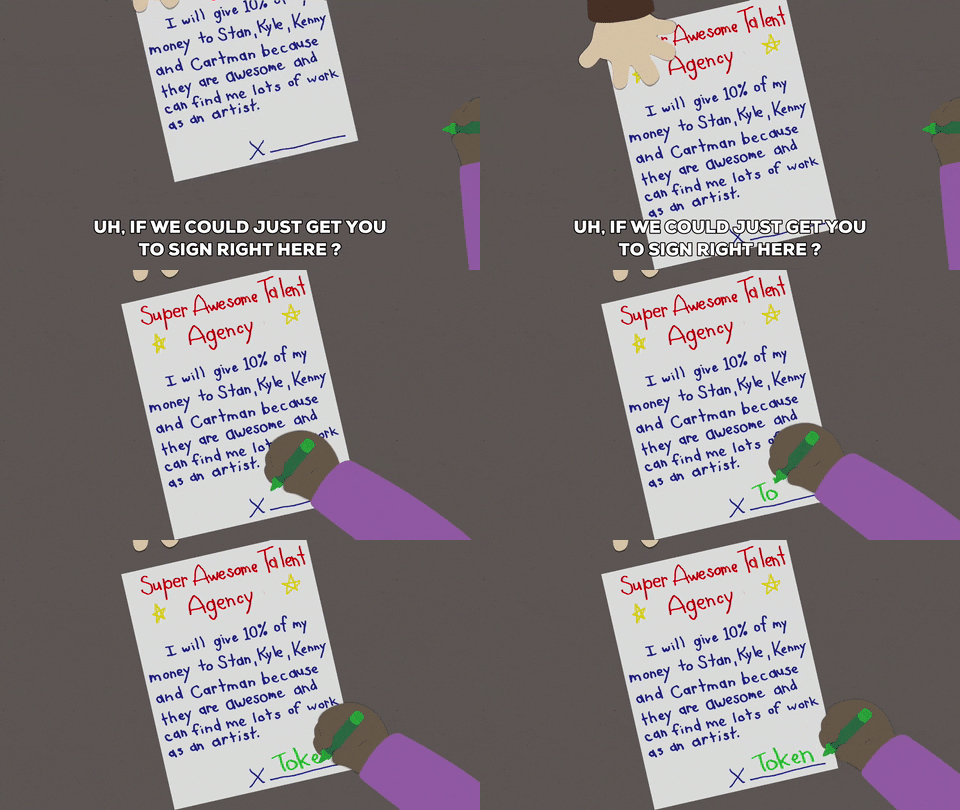
How You’ll Receive a Contract
There are a few ways that clients will send you a contract. There’s the DocuSign, PDF or a Word document.
The easiest way to deal with contracts is through DocuSign. Basically:
Your client sends you a DocuSign link in an email
You sign up for the site’s free account
The site will add the client’s contract to your account automatically
You sign everything digitally
Now, not all clients will be this easy. Typically, you’ll get your contract as a PDF or Word document. This makes things much harder because you would need to print it out, sign it, scan it and then email it back.

How to Skip the Steps
I hate the print, sign, scan process (mostly because my printer/scanner is always on the fritz), so I came up with a work-around.
If the contract is a PDF, there are two ways you can fill it out. Sometimes I take a screenshot of the page I need to sign, then use a photo editing app to add my signature and date. I keep a jpeg of my signature that I can place on any contract using the layering tool, then I use the text feature to add the date. To finish, I save the page as a jpeg and email the it to the client.
If you don’t want to fool around with photo editing software, you can also use an online site called PDFEscape. It makes the document editable (meaning your can add your signature, dates, etc.) and it’s free. Once you’re done, the site lets you download a copy that you can email to your client. I used PDFEscape for one of my last freelance client contracts.
If you get a Word document, the process is much easier. You can use the insert tool on any word processor app (like Google Docs) to add your saved signature jpeg and then just type in the date. Save the document as a PDF and you’re good to go.

How to Create a Signature Jpeg
Okay, may be a little lost when I say I have a signature jpeg. It’s literally just a photo of my signature. You can make a quick one of your own by writing your signature on a piece of white paper and then taking a photo of it with your phone. Crop your signature image very closely so there isn’t a lot of white space around the letters so it is easier to place on contract signature lines. Finish off by saving the image as a jpeg.
You can also open a new, white canvas using a drawing or photo editing app and write your signature using your finger or stylus on the touchscreen. Then, just crop and save it.
Email the image to yourself so you can download it onto your computer or laptop for whenever you need it.
What About Faxing?
Thankfully, most people don’t ask you to fax anymore. If they do, you can always go to Office Depot or FedEx and they will fax your contract for a small fee.
Got any questions? Let me know in the comments!!

How Poor Personal Credit Could Affect Your Business
Whether you find yourself struggling to get approved for loans and credit or paying higher interest rates on your mortgage, bad credit will follow you around everywhere you go and complicate your whole life.
We all know our credit rating is important. In fact, our credit score is one of the most significant numbers in our lives. A poor credit score can affect your life in a multitude of ways, none of them good. Whether you find yourself struggling to get approved for loans and credit or paying higher interest rates on your mortgage, bad credit will follow you around everywhere you go and complicate your whole life.

You’re not saved by your business credit score, either!
One of the most common but fatal mistakes that new entrepreneurs make is to assume that their personal and professional credit scores are separate. While your business and personal credit scores may be maintained separately, they are intimately linked with one another. If you have a poor personal credit rating, it will still affect your ability to secure credit for your business.
Why Does Personal Credit Affect Your Business?
If you are a new and unproven entrepreneur, you will need to convince banks that it’s worth betting on you and extending you credit. If they don’t think that you’ll be able to pay them back, too bad. They’re unlikely to approve any loans. In the absence of a solid track record for business, they may well use your personal credit score as an indication of how trustworthy you are.
This makes sense.
The lender needs more than your word that you are going to stick to your payment plans. They want some kind of certainty that they will ultimately make money back on their investment. Your credit score is the best indicator they have of how reliable a debtor you are likely to be.
If you have a poor personal credit score, there are a number of problems it can cause. We’ll take a look at each in detail below. Click here to find out more about some general tips for raising your credit score.
Problems Launching Your Business
In order to launch a new business, you often need startup capital. There are numerous costs associated with starting a new business and if you aren’t able to cover even one of them, it can prevent you from launching your business at all. Finding funding to cover these startup costs is one of the biggest obstacles facing any new business. These costs include securing licenses and permits, equipment, supplies, marketing and covering the payroll.

If a business doesn’t have this finance in place from the very beginning, it will seriously struggle during its earliest and most vulnerable days. There are plenty of ways that businesses can try and work around a lack of funds, but none of these are going to be as effective as an adequately funded business.
Remember, bad credit is called bad credit for a reason. A bad credit score makes every aspect of launching and running a business that much more difficult. A poor credit score can prevent you from being able to launch an otherwise viable business and in some cases, can force entrepreneurs to give up their dreams entirely. If you want to avoid falling into this situation, make sure that you stay on top of your credit commitments, debts, and other financial obligations.
Problems Securing Loans
Credit scores in the US range from 300 - 850. If your credit score is too low when a company performs a credit check, they will deny you loans outright. Being rejected for loans can end up seriously throwing a spanner into the works as far as your plans are concerned. Although, there are high risk business loans option that you can still explore.
Banks are much more selective about who they will give small business loans to today than they were just a decade ago. You will, therefore, need to be in a better financial position to secure funding today than you would have been ten years ago. This can make securing funding from traditional lenders an uphill struggle, even if you have relatively good credit. If you can’t obtain funding through a traditional lender, look to alternative funding sources.

The drawback to using one of these alternative funding sources is that they will often charge much higher interest rates than a bank or traditional lender would. Lenders who are backed by government agencies like the SBA are able to offer much lower interest rates to borrowers.
You should treat a small business loan just like any other investment, meaning you need to weigh up how much it is going to cost and what the risks are. The lender will be doing similar calculations on their end to determine whether it makes sense to take a chance on your business or not. Lenders charge interest for this very reason; it is both a fee for the services that they provide and compensation for the risks that they take in lending money to you.
If your personal credit score is bad, lenders will see you as being riskier and will charge you a higher interest rate for any loan they provide.
Inventory and Supply Problems
Most freelance writers won’t have this problem, but I’m going to talk about it anyway, just in case you ever need the info in the future.
Business loans are commonly used when a business needs funds in order to ensure it can maintain appropriate stock and supply levels. It isn’t just lenders that care about your credit score. If you want to open a line of credit with one of your suppliers, they’ll need to be relatively sure that you will be able to pay it back.
If you want to secure some new utilities for your business, the supplying company will want to take a look at your credit score, too. If you have a poor credit score, they may well ask for an additional deposit from you to cover the extra risk that you represent. This is true for most businesses that provide you with any kind of loan, credit or long-term service.

What to Do About Bad Credit
Fortunately, if you do discover that you have bad credit then there are a number of things you can do to remedy this. Don’t let bad credit ruin your entrepreneurial dreams. Take control of your finances and start repaying your debts today.
Here are some things you can do:
Pay down the balance on your credit cards.
Pay your bills on time every month.
Pay of debts like car loans and title loans.
Take out a new credit card but only use it to pay one bill a month and pay the card off every month.

Have a Blog? Here's How You Can Profit from Your Existing Content
Blogging is a great hobby, but it can also easily be turned into a profitable business, if you try these tips.
In case you have been blogging for years just for fun -- or to connect with like minded people -- chances are that you already have built-in audience ready to listen to your opinion and recommendations. It might be time to take the next step and monetize your website to earn some extra cash while you do what you enjoy. While many websites tell you you can make money by setting up your blog, only a few experts talk about using your existing content to create profits. Read on to get some ideas.

Compile an eBook
If you have enough content on a certain topic, you could easily create a guide or an ebook you can sell online. While you might need to do some editing and extra writing, making use of your free content this way can prove to be profitable long term.
Here are two of my ebooks:
The Fluff-Free Freelance Writing Master Course
The No-Fluff Guide to Writing Web Content
Turn Articles Into a Video Training
Apart from ebooks, you can also create your own video training that you sell on your own site or through affiliates. Whichever method you use, make sure you get a professional camera (or a phone with a really good camera) and write your scripts before you sit down.
Practice video creation through blogging, and invest in editing software to make your product professionally finished.
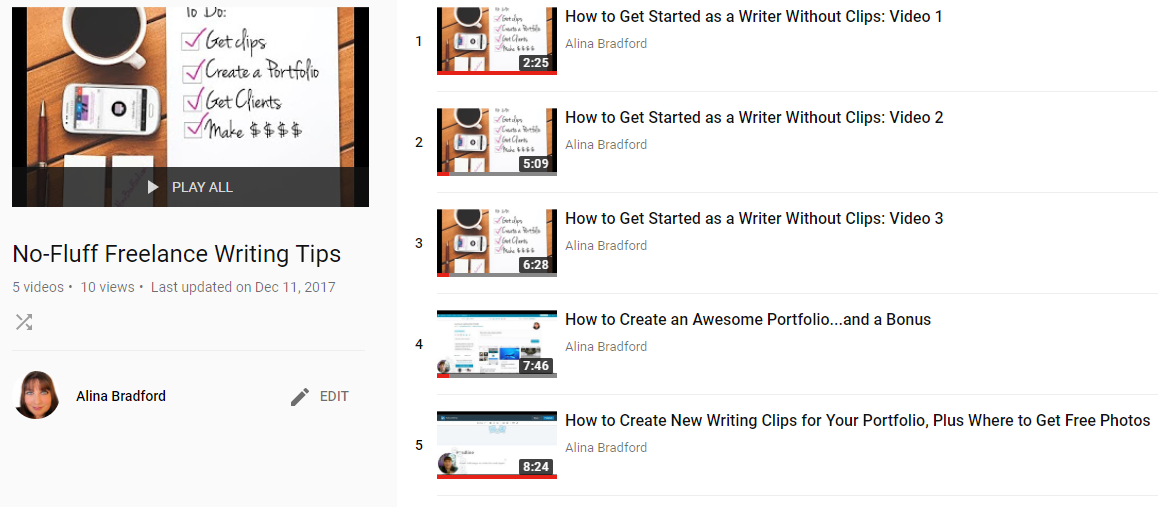
I put my videos on SkillShare and make money from ad views. Here's a look at my playlist for writers on SkillShare. I've had a lot of luck posting there.
Offer Paid Guest Posts
Having a lot of subscribers and comments on your blog doesn’t only make you feel good, but it can also help you get the attention of companies looking to place their links and ads on your site. Advertise your site on different platforms and offer a flat rate for article placements.
Be sure the company has strict guidelines and they don’t intend to spam your site with low quality links.
Add Affiliate Links or Google Adwords
The simplest way of monetizing your website is by adding Google ads or affiliate links to your page. Sign up for a CPA affiliate network and choose the offers that are most relevant to the topics you regularly feature on your blog.
If you use WordPress as your blogging platform, you might be able to automatically place your link in each past post based on the right keywords using a plugin.
Some places to get affiliate links are:
Set Up a Side Business and Promote Products
If you regularly write about home improvements and furnishings, and you have your favorite items, you can create a store on your blog where your visitors can purchase the items through you. The good news is that you don’t have to deal with shipment and administration if you use a dropshipping service.

4 Essential Survival Tips for the Self Employed
Being self employed definitely has its moments. It’s hard not to feel a slight smug satisfaction for those of us able to spend the working day sat in a coffee shop with a laptop, free to do as we please, so long as we hit the deadlines of course. However, being self employed also comes with a number of unique challenges.

First and foremost, as a self employed individual, you will need to find your own work. Whether you work as an individual freelancer or you have aspirations of starting a fully-fledged business, hiring staff, the whole works, you will need to be able to find people to buy your services. Being self employed also means that you often don’t have a guaranteed salary from one month to the next; there will be busy times and quiet times.
If you are to stand a chance of making it in today’s hyper-competitive job market, you will need to get your business off on the right foot and then do all you can to maintain good habits. Fortunately, this is more achievable than many people realize. Being self employed can be a nightmarish and incredibly stressful experience, but it doesn’t have to be.
Here are some essential survival tips to ensure that you and your business can weather any storm you might face while self-employed.
Learn to Budget
It is hard to overstate just how important this advice is. First, let’s be clear about what budgeting isn’t. Budgeting is not having a vague plan of how to spend your money, and budgeting is not knowing how much money you have. Budgeting requires you to know exactly how much money you have, exactly how much money you are going to spend, and exactly what you are going to spend it on. Budgeting also means forecasting the amount of money you expect to come in and out of your business in the near future.
The first thing you want to do is get all of your business finances in order, so that you can establish exactly how much money your business has on hand. Once you have this information, you can then work out how much you will need to spend on basic upkeep such as costs of staff and premises.

You don’t need to be a math whizz to deal with the numbers. It’s a good idea to record your financial information on a spreadsheet. Check out this handy guide that will help you create a spreadsheet for your business accounts. If you don’t have Microsoft Office, Google’s cloud-based Sheets app offers the same functionality for free.
Don’t just budget in your business life either. Budgeting in your personal life is vital when you are self-employed. Should the worst happen and your business runs into difficulty, you may well need to dip into your personal finances to keep it afloat, so make sure that this won’t have a devastating impact on your finances. If your business is just about breaking even but you need more money to live on, consider whether income based loans might be right for you. Whatever funding sources you use, make sure that you consider them within the context of your wider budget.
Don’t Skimp on Equipment
It doesn’t matter what your job is, you have to make sure that you have the right tools for the task. If you are making money teaching kids how to play the guitar, make sure that your guitar and amp are in perfect working order and well maintained. If you are an app developer, ensure that you have a capable computer to code and test your apps on. If you are a writer, make sure that you have a setup that allows you to write freely and comfortably.
Investing in the right equipment will benefit your customers, who will be able to receive a higher quality of work, but it will also benefit you. You might be surprised how much difference the smallest of changes can make to your productivity and overall happiness. Think about the tools that you use every day, whether they are literal tools, pieces of software or anything else that is integral to your business.
Shop around to make sure that you have quality equipment that you enjoy using. The more comfortable and happy you are in your job, the more productive you will be.
Get Networking
Networking is a staple part of any entrepreneur’s diet. It is through networking that you will make new contacts and find opportunities that would otherwise have passed you by. You never know which of the people you meet might be most helpful to you in the future, nor do you know what opportunities there will be for you to help them.
Every interaction you have through your business is an opportunity to form and solidify connections with other people and businesses. Don’t let these opportunities go to waste! Always be thinking about how your interactions reflect you and your business. If you aren’t the most sociable person, try your best to swallow your anxieties and get stuck in regardless. It might take you time to build confidence, but it’s better to start now than later.
Use Social Media
Social media isn’t for everybody. There are a number of reasons why we should be encouraging one another to dial back our usage of these platforms, but for businesses they are invaluable. Facebook, and to a lesser extent other social media platforms, are ultimately very sophisticated interactive advertising platforms. The purpose of social media is to target adverts as precisely as possible to individuals.
Of course, your business would be crazy not to get in on this action. It doesn’t matter whether you are operating as a sole freelance trader or you have a full team behind you, social media will help you to get your message out there as fast and efficiently as possible.

This kit will help you get started with marketing on social media.
Making it as a self employed person isn’t easy. There will inevitably be ups and downs along the way. However, for those who are able to whether the storm, being self employed is a wonderful experience. As long as you are prepared to fight to show your worth, you stand a chance of making it to the top.

The Reviews Are In! Writers Love the The Fluff-Free Freelance Writing Master Course
I don’t do this often on my blog, but I wanted to take a minute to toot my own horn. My book The Fluff-Free Freelance Writing Master Course has broken the top 100 of Amazon’s Best Seller Rank in all three categories that it is listed in on Amazon.
I don’t do this often on my blog, but I wanted to take a minute to toot my own horn. My book The Fluff-Free Freelance Writing Master Course has broken the top 100 of Amazon’s Best Seller Rank in all three categories that it is listed in on Amazon.
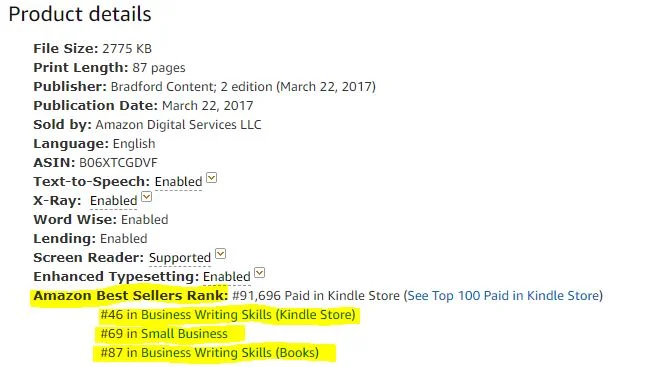
Plus, I’m getting rave reviews through Amazon, email, Facebook and even on Instagram.
Here’s some reviews from Amazon:
Jenny Gage reviewed: Fluff Free For the Win!! Alina! This is a complete gem!
I've taken courses, read countless "How to Become a Freelancer" freebies, and watched soooo many YouTube videos about online freelancing.
I love your straight shooter style and because of your tangible and practical action steps, I feel like I could ACTUALLY do this for real.
Having spent an entire year hearing so many differing opinions and suggestions, I was burnt out and overwhelmed by all of the decisions and methods out there.
You piece things together simply, and transfer the responsibility to the reader without requiring the purchase of thousands of dollars of add ons like other online coaches.
Can't wait to report back with my success!
Megan reviewed: A No-Nonsense "How-To" Guide and I LOVED it. As a newly minted freelance commercial copywriter, the biggest benefit of the book was finding out that I'm NOT ALONE in handling issues such as pricing, "interesting" offers, and handling challenging clients. Some practical social media steps, too! It's clear that this was written by someone who really knows what it takes to make it and I'm so happy I ran across this book! Recommended for writers at ANY stage of setting up/ running their business.

Apple reviewed: Alina Bradford has gifted newbie freelance writers with this wonderful, insightful, and useful guide. If you're serious about your writing career, this step-by-step program will get you up and running in a short amount of time.
In a nutshell, here's her approach: Avoid writing for crappy pay, especially no pay. She then gives you the tools to land well-paying gigs faster than you probably think possible.
Deanna Balestra: I’ve been a freelance writer for years but I love to support other freelancers by buying and reading their books. This is a great book for new writers looking for a place to start - from finding jobs to writing good content. Many actionable steps and direct links to resources. Also written with a pleasant and funny personality.
Kristi Weinert: Full of pertinent info to get into the Industry. All Freelancers should read before beginning, to help them along their journey.
Cin Clinton: This was the best I've found.
I feel like I've read 50 freelance writing books in the last two months, but this one had me running out to my computer late at night to get busy. I like the writing style and the way she just cuts the crap. I feel like they all make wild promises, but this book really helped me. I feel less intimidated and overwhelmed and like I can make a plan for myself. Anyway, maybe this writing style just clicks with me or something. I'm not willing to give this book back yet. I need more time with it. I'm applying to 12 different places tomorrow. I'm excited. I feel like I'm going to start making more than a penny a word soon because of this book, so thank you. I mean it.
Pen Name reviewed: This book really lit a 🔥 under my butt. So many helpful tips and links that are immediately useful. Not just theory or "fluff," but real life freelancing advice for those starting in the field.
Kindle Customer: I'm a new freelance writer and I was looking for help in where to start. This book is exactly what ideas looking for! Helpful tips for writers block, methods for looking for jobs, what to charge and how, I recommend this to anyone looking for more information on how to improve as a freelance writer!
Alexa D. reviewed: Do you wish to get out of your current job for one where you can write about whatever you want with good pay? Please read The Fluff-Free Freelance Writer Master Course Workbook. This book offers great advice on meeting clients, SEO, social media accounts, and beating writer's block.
I've read freelance writing books before. Most of their content was either too thin or overloaded. This book simply answers my questions and concerns perfectly.
Make sure you do the book's writing assignments. You'll feel better if you do!
Wanda F. Sewell reviewed: This has given me some good insight. It's been a pleasure learning from Alina ... This has given me some good insight. It's been a pleasure learning from Alina Bradford.
S. E. Lentz reviewed: New and useful ideas for freelance writers -- as easy and enjoyable to read as it was helpful. It earned its five stars.
This book gave me some great ideas for finding new freelance writing jobs -- ideas that no other book on freelance writing had offered. So, for that reason alone, this book earns its five stars. Besides that, it was as easy to read as it was helpful and encouraging. The author clearly has a passion for helping fellow freelance writers make good livings with their skills (even as they work to improve them). I'd recommend this book to any freelance writer.
Maria H Blanco reviewed: The Title Says It All Alina Bradford offers succinct solid advice on organizing your work as a freelance writer. This quick read is a roadmap to success that you will want to refer to over and over again.
A.Reader reviewed: Great E-Book for Aspiring Writers Lots of good tips for aspiring freelance writers and bloggers, including how to find your niche, SEO, and blogging. Definitely worth the read!
June Ginchereau reviewed: Excellent and concise guide for new freelance writers. I loved Alina's down to earth approach. I recommend it for all freelancer newbies.
Have you read The Fluff-Free Freelance Writing Master Course yet?

Cold Calling For Business: Tips And Tricks
If you are considering adding cold calling to your client hunt, here are some of the things you will need to do to make it work effectively for you.
Cold calling is form of marketing and sales which has been used for decades by writers looking for clients. It can often be seen as a dreaded method in gaining customers and sales, but is still one of the main tools used by freelance businesses today.
If you are considering adding cold calling to your client hunt, here are some of the things you will need to do to make it work effectively for you.

1) Focus on the goal
The first thing you need to think about is the aim of your call. It is not simply about making a sale immediately, it is about getting the trust of the customer and in turn having THE CHANCE to make a sale further down the line. Think of it like laying down the foundations for your relationship with the customer.
2) Research your market
You need to make sure that you fully research your potential markets and target your calls to the right people. It might take some time to conduct your research, but it means that you will be able to find out more about the people you are calling and make friendly conversation with them when you call. You can then use call analytics tracking to see how successful each call was for your purpose.
3) Use social media
Find people who are in the same LinkedIn group as you to call. It will give you both something to talk about and will mean you have a much better chance of getting a sale out of them due to your common bond, rather than just picking someone from the air.
4) Prepare an opening statement
You don’t want to sound like you're reading from a script (even if you are) because the person on the other end of the phone will likely hang up on you. Make sure that you can sound as personable and casual as you can, and be polite. Your opening statement could be something like ‘is this a good time?’ You are showing the person that you care about their time and you only want to have a chat.
5) What should be in the opening statement?
When you are coming up with an opening statement for your call you will need to add a few different things:
An introduction
A reference point (i.e what the call is about)
The benefit of your product or service
Transition into conversation
6) Prepare a script
Like I said earlier, the last thing you want to do is come across sounding like a robot, but in the same breathe you need to have a clear direction for your call so that you can meet your goals.
Writing a script with questions and statements will help guide the conversation in the way that you want and give you a better chance of a sale. Make sure you have detailed information about your company and products on hand because you will likely be asked a ton of questions.
Want other methods for finding clients? Read my book The Fluff-Free Freelance Writing Master Course Workbook: The only course that gives you concrete, actionable information to building a successful freelance business without any fluff.

10 Job Boards for Freelance Writers
Freelance job boards are a great solution to this problem, helping connect freelance writers to the people who need them. If that sounds like a perfect place for you, then you’ll want to check out the websites on this list of 10 legitimate job boards for freelance writers.
If you’re on the hunt for a job with flexible working hours and great income potential, freelance writing is one opportunity you’ll want to check out. Being a freelance writer allows you to work from home (or a coffee shop, or your daughter’s ballet recital if necessary). And while it may be hard to imagine making an income while lounging about the house in your pajamas, there are plenty of people in the world who are able to make a great full-time income exclusively through freelance writing.

Of course, with the same draws that come with freelance writing, there are some drawbacks. One such drawback is the need to be continuously seeking out new work. Even seasoned freelance writers will have dry spells between clients when it will be necessary to seek out new work, but if you’re just breaking into the freelance industry, a large portion of your day will be spent looking for work. Freelance job boards are a great solution to this problem, helping connect freelance writers to the people who need them. If that sounds like a perfect place for you, then you’ll want to check out the websites on this list of 10 legitimate job boards for freelance writers.
Upwork
Upwork is one of the leading freelance job boards on the web right now, and most freelance writers have made an appearance there at one point or another. One great thing about Upwork is that the freelance work available is not just limited to one type of writing—or to writing at all. Instead, people and companies both can post listings for jobs that need to be done, leading to an endless bevy of opportunities.
In turn, freelancers can put in a bid on the jobs they’re interested in. Typical bids include not only a price point, but also a cover letter indicating why you’d be the best fit for the job and links to any relevant freelance writing you’ve done that they can use as an indication of your capabilities.
An overall great job board, the one struggle with Upwork is that because it’s so popular and trusted, new freelancers may have a hard time getting their toe in the door without much of a portfolio to speak of. Still, it’s a great site to have in your back pocket, even if it’s not one you spend a lot of time on until you’re a little more established.
Pitchwiz
Check out my review of this great, high-quality job board here.
Verblio
Once known as BlogMutt, this job board has recently been rebranded as Verblio. Verblio specializes in companies that need frequent content on certain topics. Writers can write articles within these topics for companies, and the companies can choose the articles they like best.
Though the downside is that you only get paid for articles that get selected—and articles are sometimes not selected because the company has received too many on the same topic, not because there’s anything wrong with your writing—the upside is that it’s entirely possible to build a reputation with a company, making them more likely to choose your articles going forward or even request special projects from you.
FreelanceWriting.com
If “set it and forget it” is a phrase that you hold near and dear to your heart, FreelanceWriting.com may be the perfect place for you. They compile freelance writing opportunities from some popular sites, including Indeed.com, and send out a daily newsletter promoting some of the best freelance writing opportunities on the web.
Their website itself also helps connect writers to writing jobs, so on days you’re feeling more actively invested, you can go there for even more opportunities.
BloggingPro
BloggingPro looks more like a traditional job board than some of the other freelance writing job boards available, with multiple companies listing ads and freelance writers applying for them the way they might apply for any other job. One great thing about BloggingPro, however, is that it links to not only short-term freelance opportunities but also more traditional part-time and even long-term writing jobs, meaning you have a chance of landing a full-time client here if you time things correctly.
Online Writing Jobs
Online writing jobs is a job board with high expectations of its writers. In order to be approved to write for their site, you have to read and understand a litany of stylistic rules and regulations. The trade-off for the extra research—and, often, extra edits—that goes into their jobs is a higher pay rate on approved articles. This is also a great job board if you’re looking to grow your skills as a writer as it forces you to learn about different stylistic choices and to write to very unique criteria.
Text Broker
Text Broker is a great site for aspiring writers as it allows you to build your reputation over time. While early jobs will only earn pennies at a time, you get ranked as a writer the more you write. Higher rankings mean higher earning potential, so if you’re willing to hone your craft, you can make a halfway decent income through their jobs.
Writer Access
One unique aspect of Writer Access is the entry exam, which rates writers as they come in and gives them an initial star rating. This star rating helps determine pay rates and hourly rates for writers, setting everyone to a standard while rewarding some of the more skilled writers on the market. Writer Access also offers free online webinars and podcasts on being a content marketer, which makes it a great place to learn more about the industry while also writing for it.
JournalismJobs
Not all freelance writers want to write blogs or product descriptions. Freelance journalism jobs do exist, and JournalismJobs.com specifically caters to these jobs, as well as to more long-term journalism jobs. You can even narrow your search results by location and preferred salary range, allowing you to be a little more nuanced in your selection process.
All Freelance Writing
Another more traditional type of job board, All Freelance Writing stands out from the crowd because it clearly displays the pay range for writing jobs and the date they were posted, allowing you to determine at a glance whether or not a job is worth further investigation. They also make a point of only keeping listings on their site for 30 days or fewer, ensuring that you’re not wasting your time applying for jobs that have long expired.

3 Ways to Save Some Time in Your Workday
Sometimes you just can’t save time. After all, preparing for the important events you truly wish to get right does require a significant time investment. To meet quality and speed in the middle, you need to plan carefully, consider the right services, or ensure that you double and triple check your work after applying any time-saving measure. But there are also small, time-savers you can apply directly to your smaller working habits. Take a look at these three.

Presentations
If there’s anything that makes people nervous, it’s public speaking. Not only do they have to communicate your points efficiently, but also in an assertive, collected and punctual manner. This can be difficult. It certainly takes time.
It can be incredibly important to use awesome to keep your crowd’s attention. You can wow your colleagues with Beautiful.AI, a service that uses AI to seamless incorporate essential animations to get your point across - without having to worry about waiting for designers to do the work.
This allows you to focus on your delivery, cutting to the core of your points, and being more forthright with your proposals. This can help you impress your boss, client, colleagues, or other potential partners, all while saving time on the smaller expectations.
Synchronized Devices
Browsers, suites, accounts, they are all essential to our workflow. They can also take time to log in and out of. While keeping an eye on security at all times, you can thankfully still systemize this process to help your information and workflow seamlessly track across devices to save time.
I like to use Chrome, Keep Notes, Google Docs and Drive, and OneNote. They these services sync across my laptop, phone and tablet, so I always have access to the project I’m working on.
Brevity
Communication wastes tons of time. Making use of brevity can be essential in all of your communications. This means cutting down on flowery email messages (no fluff!). Get to the point and don’t let the other person get off track.
Keeping it simple can also help you avoid confusion when you need to get to the meat of the matter. If you remind people you are on a tight schedule, they will learn to respect you time and keep their communications short, so don’t worry about a little reminder every now and then.

Drowsy After Another Restless Night? Try These 5 Tips For A Good Night’s Sleep
Krish, who is also director of TMJ & Sleep Therapy Centre of North Texas, offers a few suggestions for those who find themselves still grumpy and exhausted when morning arrives:
Writers need a good night sleep to do their best work. Millions of Americans, though, toss and turn much of the night, unable to fall asleep – or to stay asleep once they finally do drift off.

Maybe it’s worry about bills. Maybe it’s relationship problems. It might even be a sleep disorder keeping them awake when they should be snoozing soundly. Whatever the reason, more than one-third of American adults don’t get enough sleep on a regular basis, according to the Centers for Disease Control.
Without proper sleep, you could be drowsy at work the next day, unable to properly perform your job and irritable with everyone around you.
And that’s not all.
“Lack of sleep can leave you fatigued and with a weakened immune system, which could make you more susceptible to infections,” says Dr. Shab Krish, author of Restore Your Rest: Solutions for TMJ and Sleep Disorders (www.krish.com).
“Lack of sleep can also decrease your mental acuity, disrupt natural hormone levels, and lead to a variety of other significant health problems.”

Krish, who is also director of TMJ & Sleep Therapy Centre of North Texas, offers a few suggestions for those who find themselves still grumpy and exhausted when morning arrives:
Set your clock to remind you bedtime is approaching. You probably already set your clock so that you wake up when you need to in the morning. But Krish suggests you also set an alarm for 30 minutes before bedtime. “That will be a reminder that you need to shut off your electronic devices and start to unwind,” she says. Krish says you should strive to go to bed at the same time every night.
Set the mood. Krish says your bedroom should be an oasis. She recommends having dark shades covering all windows and eliminating any noise. Set the temperature between 68 degrees and 72 degrees.
Follow rituals. Establish nightly bedtime rituals, such as taking a warm bath, listening to relaxing music, or reading. “Getting into a nightly routine will tell your brain that it’s time to start relaxing and preparing for sleep,” Krish says.
Use your bed only as a bed. People lead busy, stress-filled lives, and sometimes they take their work to bed right along with them, determined to answer one last email or finish that report before they turn out the light. Bad idea, Krish says. “Doing work or other stressful activities while in bed can make it difficult for your brain to relax when it’s time to sleep,” she says. “Go into a different room to finish that work. That way when your body hits the mattress, your brain knows it can start to relax.”
Rule out a sleep disorder. Experiencing trouble falling asleep, waking up regularly during the night, and snoring are a few of the indications that you might have a sleep disorder, such as sleep apnea, Krish says. “When you wake up in the morning you should feel refreshed,” she says. “If you don’t, that might be an indicator of a more serious problem and you should consider talking to a medical professional.”
Finally, Krish says exercise also can help.
“Regular exercise is not only good for your body and overall health, it’s also good for your sleep,” she says. “A solid 30 minutes of daily exercise can make a huge difference in your quality of sleep.”
Need more tips? Here’s 7 Ways to Make Your Bedroom More Sleep-Friendly.
About Dr. Shab Krish
Dr. Shab Krish, author of Restore Your Rest: Solutions for TMJ and Sleep Disorders, is director of TMJ & Sleep Therapy Centre of North Texas (www.krish.com). She has board certifications with the American Academy of Craniofacial Pain and the American Board of Craniofacial Dental Sleep Medicine. She is also a double specialist in both periodontics and endodontics.


Make Your Readers Fans by Developing Your Writing Voice
Developing your voice may seem like a daunting task, but don't fret. Knowing your target audience, deciding on a specific style, and simplifying your writing are the top four ways to help you start a successful blog.
Standing out among all the other writers on the vast internet by using your own unique voice will make your career. Developing your voice may seem like a daunting task, but don't sweat it. Knowing your target audience, deciding on a specific style, and simplifying your writing are the top three ways to help you start a successful blog. Then, you need to consider how you talk in real life. It sounds like a lot, but it really isn’t folks!

Who’s Your Target Audience?
Knowing what you'll write about for your blog is easy, but knowing to whom you're writing for is a bit more difficult. Who you’re writing to can change the voice you use while writing. Think about the age group, gender, and financial state of the audience you want to target. Are these people more buttoned-up or are they looking for a friendly voice?
An easy shortcut? Viewing your audience as a single person. What's this person's personality like? How does he or she dress? What music does he or she listen to? Knowing your audience's personality is essential to knowing how they'll respond to your blog.
Here’s a tutorial on using formal and informal tone when writing.
This sets you up for the next step: choosing your writing style.
The 4 Writing Styles
Choosing the writing style for your blog is as simple as matching your writing to the content you're blogging or the product you're marketing. The four main types of writing styles are:
Expository
Descriptive
Persuasive
Narrative
Tailor your writing style to your blog audience and to those you want to reach. Expository writing is good for informing your audience, while descriptive writing is used to describe a certain recipe or product. Persuasive writing is used to convince your audience to believe something, and narrative writing is important when you wish to convey a story to your audience. Use the style that works best for your blog.
Simplify, Simplify, Simplify
The third step is knowing how to simplify your writing. After choosing the writing style that will best fit your audience, the next step to success is writing content for your blog. Keep your word choice simple and your sentences and paragraphs short. Blogs are frequently read on mobile devices, so sticking to these guidelines will help keep your audience interested in your content and avoid skimming out of boredom.
Writing a blog is hard work, but following these three simple steps will keep your writing clean and straight to the point. Knowing who your target audience is will help you to build a trustworthy brand as well.
Listen to Your Natural Voice

Now, that you have those three steps out of the way, go visit a friend, go to the grocery store, call your mom, call a customer service line. While you do these things, listen to how you talk. Are you straight-forward? Blunt? Extra friendly? Silly? Funny?
If you can’t decide, ask your friends what they think about how you express yourself.
You know I’m the No-Fuff writer. That’s because I like to get to the point, on a page and when I’m telling a story to my friends and family. I don’t add extra. Sum yourself up like that. Take all of these notes and try to remember them when you write. Fold your natural voice into your writing.
Ready to take your blogging to the next level, but don’t know how or where to start? Let me help! Getting into freelance writing or writing for yourself doesn’t have to just be a dream. Grab my No-Fluff Freelance Writing Starter Pack to help build your business today.

Here's How Writers Can be Ready for Disaster
Do you have a plan for your work when disaster strikes? Here are some ways you can keep everything safe…and allow you to keep working, even after fires and during blackouts.
This story is from a few years ago, but it still sends shivers down my spine. A writer ran into a burning building to save his two novels from disaster. He managed to save his work without getting hurt, thankfully.

Screenshot of BBC article.
A while back I faced every writer's worst nightmare, though it wasn’t as bad as this guy’s problem. My computer died and wouldn't start back up. Luckily, it turned out to just be a damaged power cord, but it could have been worse. I've had lightning hit my laptop, for example. It fried everything! I’ve also worked in a blackout during an ice storm.
Do you have a plan for your work when disaster strikes? Do you know what you would do if tragedy struck your laptop of desktop? How would you handle client work? How would you access your precious files?Here are some ways you can keep everything safe…and allow you to keep working, even after fires and during blackouts.

Start by getting a back-up device
First, you'll need a computer-like device that you can use to check emails, create articles and more. You probably already have a phone or a tablet that can do everything you need. Just download some apps to get you going, like Word, Google Docs or OneNote, for article creation.
Next, connect your search engine account with your device so you can access all of your bookmarks in the browser. Finally, if you connect with clients through Slack, Blue Jean or another messaging system, be sure to download it to your device.
Save your files somewhere else
All of my files are saved on a My Passport Ultra 1TB external hard drive. All I need to do is plug my hard drive into another device and I'm good. You'll probably need to invest in a hard drive with 1TB to 2TB of storage. You'll be surprised at how fast they fill up!
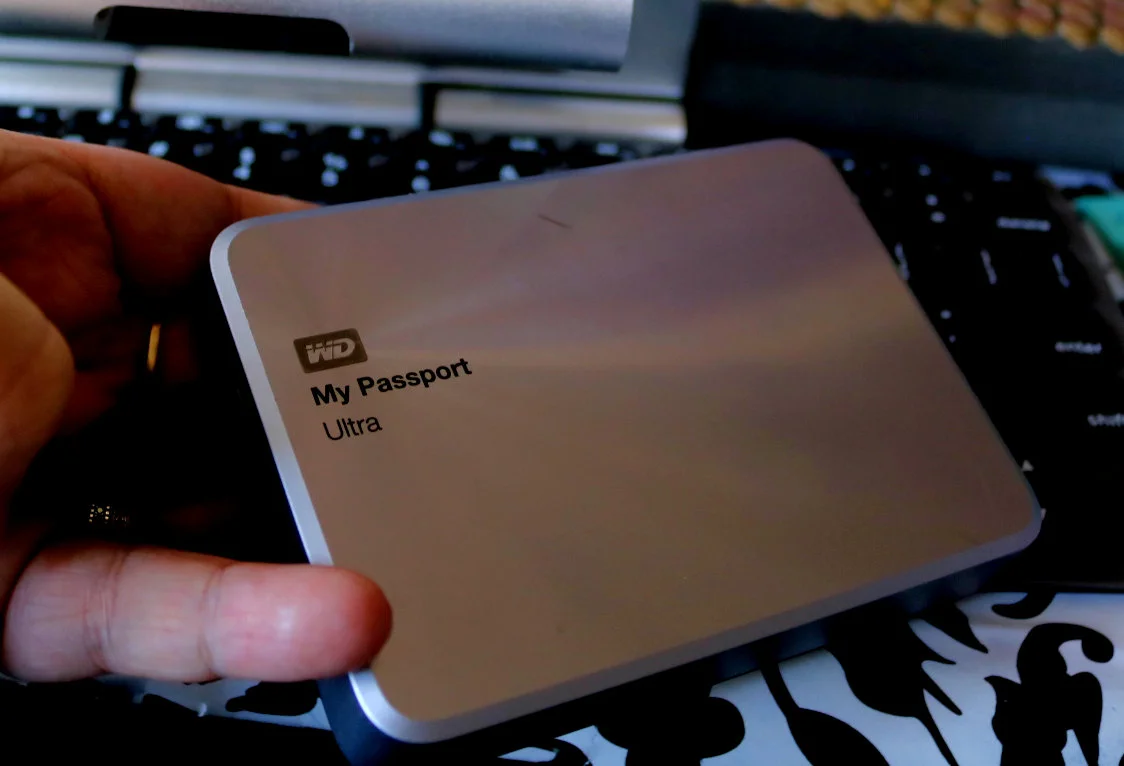
If you don't like the idea of having an external hard drive, consider storing your files in the cloud. Google Drive is a good choice. Another good cloud storage service to look into is provided by Microsoft Word 360.
Have a power supply
When there was an ice storm my power was out for days. You can't exactly run your online business without electricity. When your laptop battery dies, you can move to your tablet or phone, but how will you power them when they die?
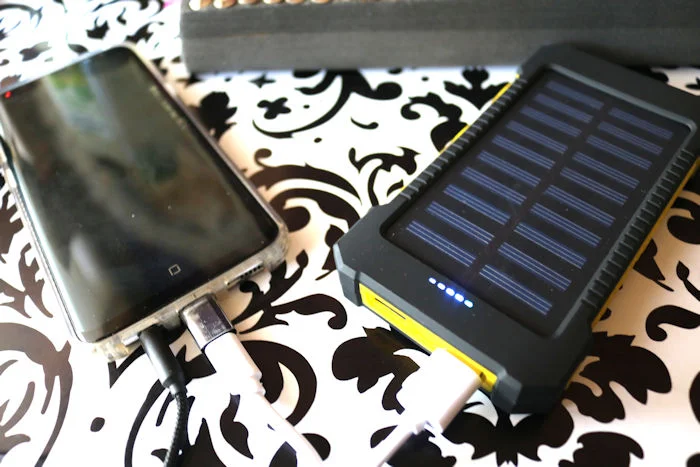
I highly recommend getting a solar charger like the Everything Tech Gear Solar Charger. It powers my phone with no problems. I'm using clean power, too, so I love it.
Make things easier with a portable keyboard
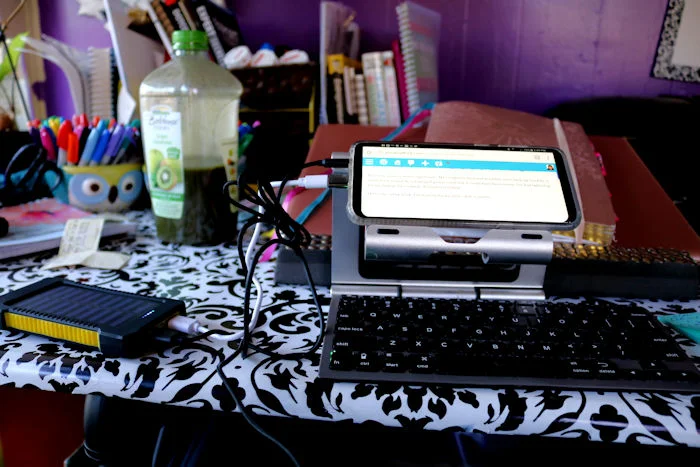
My phone, a wireless keyboard, headphones and a solar charger to power it all. It's awkward, but at least get work done.
I can type pretty quickly on my phone, but putting together an article is a nightmare using the on-screen keyboard. I have a wireless keyboard by ZAGG that syncs with my phone or tablet and it's almost full-size, so typing is MUCH faster!
Don't wait until you're in a predicament. Go set up your backup right now. You never know when you'll need it.

3 Ways to Be More Productive as a Writer
Sometimes, writing is more than just creativity. Becoming a strong writer requires self-discipline and attainable goals. Here are three ways to boost your writing productivity.
Sometimes, writing is more than just creativity. Becoming a strong writer requires self-discipline and attainable goals. Here are three ways to boost your writing productivity.
Remove Distractions
Some of the hardest things to eliminate from a writer's life are distractions. Distractions can impede your productivity and really bog you down mentally. While you’re writing on your tablet or a laptop, this can be an especially difficult challenge. The urge to keep multiple tabs open is one of the main traps. Checking your email and browsing social media are among the top diversions for writers.

One way to avoid this and get back to more productive writing is to start composing by hand again. Just use a simple notepad and pen to start writing as you would on your laptop or tablet. You don't have to do this all the time, but it's a good way to kick-start your productive writing sessions and get into the habit of distraction-free composition.
You can also use browser extensions that can block social media and other online distractions for certain amounts of time. Stay Focused and Work Mode are good, free extensions for Chrome. If you use Firefox, Blocksite is a good choice.
Find Your Space
A great habit to get into to boost your writing sessions is to find a space of your own that inspires you. Whether that place is the quiet of your room, a local coffee shop, or outside at your favorite park doesn't matter.
Another great way to unleash your creative muse is to go into work each day at a place away from where you live. There can be advantages to using coworking spaces as well as other spaces that are outside of the comfort of your home.

The first advantage is the flexibility to collaborate with your peers. You may want to write alone most of the time, but there are times when collaboration is sorely needed. It can be one of the best ways to brainstorm ideas, collect constructive criticism, or get fresh eyes on your writing when editing.
Set a Daily Word Goal
Whether you are steadily working on a major effort or continually tackling small projects, it is wise to set a word goal for your day.
One tip for setting your daily word goal is to constantly adjust the number of words you write per day. This assures that you are constantly challenging yourself and that your writing abilities get better as each day passes.
BTW, keep track of how much you write each day. Routinely monitoring how many words a day you can successfully produce a day can help you project how much money you can make in a day, week or month.
Writing is a marvelous creative outlet, and it is even better if you can get paid for it. Keeping your distractions in check, finding your space and setting daily goals will put you on the road to becoming a more productive writer in no time.
Want to know more secrets about being a successful writer?

How to Make $100 to $200, Be Lazy and Never Leave Home
I make around $100 to $200 per hour. I work at home and I make my own hours. You can, too. No kidding.
I make around $100 to $200 per hour. I work at home and I make my own hours.

make money online
Not bad, eh? A lot of freelance writers I know don't think this is possible. They grab $3 articles from auction sites like oDesk and Upwork, then work their fingers to the bone to bang out enough of these little stinkers to keep their power on.
Now, I admit, I'm lazy. Belting out article after article, eight hours per day, seven days a week just seems like too much work. I like to work smarter, not harder, so I end up writing higher paying articles, clips and how-tos a couple hours a day.
Oh sure, you're probably saying, as if higher paying articles are just ripe for the picking!
Look, I'm not talking about Cosmo rates, here. I'm talking about articles that pay in the $50 - $200 range. These are easy enough to get if you have some sort of writing talent, and often only take an hour to type up.
Let's look at the math:
Three $20 articles per day x 30 days = $1,800 per month
Two $30 articles per day x 30 = $1,800 per month
Two $40 articles per day x 30 = $2,400 per month
Two $50 articles per day x 30 = $2,800 per month
Two $100 articles per day x 30 = $6,000 per month
Two $200 articles per day x 30 = $11,200 per month
Of course, in real life you wouldn't have an jumble of articles that were all worth the same amount. The point is, you want to be working at that larger end of the scale, not for peanuts.
Okay, you're probably still thinking, ya that's great, but where do I find the work? My book
The No-Fluff Master Classes for Freelance Writers
will teach you how to make good money without working so hard your brain turns to mush.
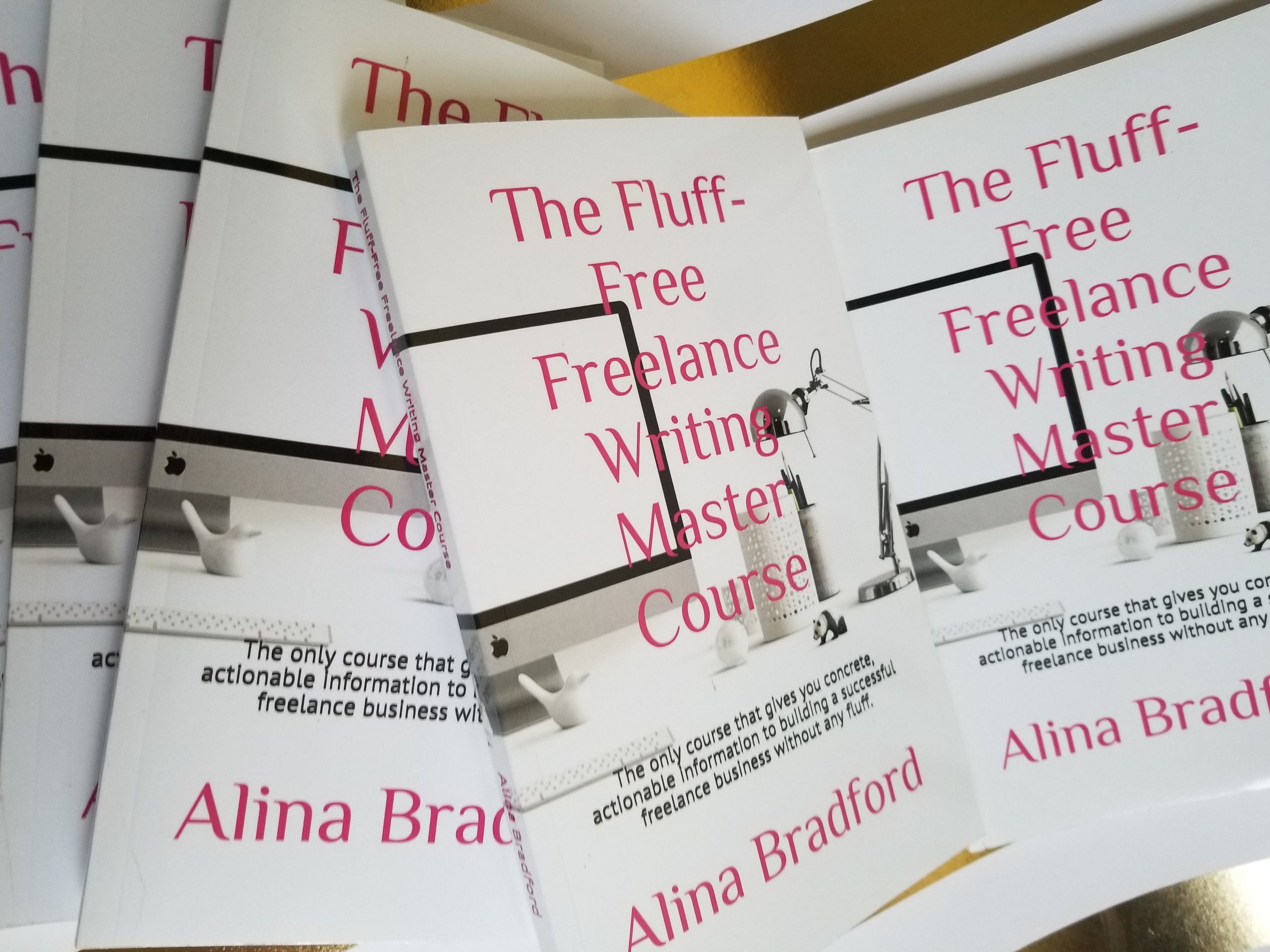

How To Stay Focused at Your Job as a Working Mother
Tips for working mothers to help them keep their sanity and productivity, no matter what the kids are up to.
Tips for working mothers to help them keep their sanity and productivity, no matter what the kids are up to.
Guest post by Ujëbardha Bekolli, Mother Works
Every once in a while everyone experiences a downhill at their workplace. We get fed up by daily drama, same old routine and everything looks like a bore.
However the loss of focus that mothers experience is entirely different. Whether you work part-time jobs or full time, this lack of focus has a taste of fatigue, tiresome, chaos and imbalance. That is because our mind is floating in 20 different things within one minute.
We’re worrying about whether the baby is asleep right now, if the nanny forgot to feed her, wondering if we manage to make it home for dinner, maybe that co-worker will give me a hand, what if our plans for next year’s summer camp fail, is the world we live in a safe place to raise children?
And this is just the average of what’s going on inside our heads. So, how can we manage to gather our senses and focus on our job?
Write.stuff.down
You can be the most efficient person in the world who memorizes everything, and yet without having a proper list,, your brains will feel chaotic. So in order for you to feel more organized, make a list of things you have to do throughout the day. Better yet, make two lists. Divide whatever it is that you have to do once you get home, and the tasks you are assigned to do while being at your work desk.
Visualize yourself crossing a huge line in between these two, without being able to go back and forth from one list to another. This will help you feel more at ease, and it will clarify your thoughts. Cross each task out of the list once finished, and the sense of relief you will feel is utterly amazing.

working mothers
Use breaks efficiently
There is no use in working 3-4 straight hours while you're always thinking about getting a snack or grabbing a coffee. Although breaks work differently depending on people, use them to the maximum, to recharge and to gain balance.
Use that balcony at work to go outside and breathe some fresh air, while sipping your coffee. Call your husband or talk to your toddler. It will help you gain back some inspiration, and you will return stronger, knowing that you are blessed with those people who will be eagerly waiting for you to come home. You’ll come back wanting to hug your boss out of the sweetness you’ve received from a phone call. Don’t do it though, he’ll think you’ve gone mad!
Make ‘you’ time and ‘we’ time

You would be surprised to know how much time off of work impacts your time at work. When you’re stressing out over lack of sleep, or that discussion you had last night with your partner over the kids, you will be constantly distracted.
So set up dinner dates with your loved one, open up a bottle of wine after the kids have gone to bed and spice things up a little bit. That spontaneous drive will keep you going throughout everything.
But don’t forget to make some time for yourself as well whether that be in the early sunrise or those late hours of tranquility. Recharge, take a bath filled with scents, take some yoga classes or go out for a long run. It might sound like a cliche piece of advice, but it will add some blissfulness to your daily routine.
Sharing
You do not have to carry the weight of the world on your shoulders. When I say share, I do not only imply the sharing concept of chores, although that is what you should do in the first place. Let your partner pick up the children, do laundry or wash the dishes every once in a while. Let your daughter cook and don’t laugh out at her chicken recipe. This will ease your responsibilities, and it will grow out your children to be good-willing independent human beings.

But also, share your concerns. May that be with your spouse, friends, co-workers or fellow parents who are also struggling to find that work-family balance.
As you commiserate with people going through the same situation, you will not feel alone. In fact, you will gain strength as they make you feel great about all the work you're doing.
Keep your expectations real
All those stories you hear on TV about how you can do it all, you can be perfect, or that ‘Beyonce also had 24 hours at her disposal and look what she achieved’ nonsense, ignore them all. You are doing everything that a regular, normal mum can do. So do not set unrealistic expectations for what you owe to be doing, or what your children should become like.
Follow a reasonable pace and let things flow. I promise you will feel peace captivate you once you know your worth and realize that some things take patience. You have to go by a list of priorities, and follow that list through whatever. If your priority is a presentation you have for tomorrow, don’t start scrolling through food recipes for dinner. Resisting that sweet call of Facebook to keep scrolling will reward you with positive feedback at work tomorrow.
Do nothing day

I know it sounds luxurious, being both an employee and a mum, but sometimes doing nothing isn’t really a waste of time.
You’ve heard people talk about cheat days, how about applying that version for you and your family. Cheat your career every once in a while, by lingering in bed for some extra hours, watching cheesy tv shows or ordering Chinese.
Your children will think you rock, and I’m sure you’ll be able to put up with some mess once you get a bucket full of laughter in return.
Bio:
Ujëbardha Bekolli, SAHMjobs
Ujëbardha Bekolli is a writer for https://sahmjobs.net/. SAHMjobs is a job portal designed to bring together stay at home moms and recruiters. The platform also brings helpful articles in the Blog section regarding mothers who want to return to the workforce.