

Everything You Need to Know About Side Hustles
It’s not always possible to bring in as much cash as you’d like. If you’re relying on just a few clients for the bulk of your money, then you’re just a couple of small admin changes away from feeling the pinch. But there’s good news: you’re not only a writer. You have plenty of other skills that you can use to bring in the cash.
When you’re a freelance writer, life, overall, is pretty sweet. You can pick your clients, pick the best time of the day for you to work, and all around be in control of your life. However, there is a downside to freelance writing. It’s not always possible to bring in as much cash as you’d like.
If you’re relying on just a few clients for the bulk of your money, then you’re just a couple of small admin changes away from feeling the pinch. But there’s good news: you’re not only a writer. You have plenty of other skills that you can use to bring in the cash.

Side Hustles to Try
Editing
You’re not just banging keys all day: you’re researching, editing and proofreading as well. As a result, you’ll be a talented editor, even if you haven’t thought of yourself as such before!
Take a look online, and you’ll find that there are plenty of people who need help editing their short stories and articles. Sometimes, it’s only when we read what other people are writing that we learn just how much writing talent we actually have!
Post your services on online classified pages, and wait for them to find you. It might not provide a full-time income, but it will top up your income.
Internet Knowledge

If you’ve been working online - in this case, writing - full-time, then you’ll know more about the internet and how it works than the vast majority of people. By taking your existing knowledge and topping it up with more education, you could become an SEO consultant, which could be considered the fastest way to make money online. You’ll be working with multiple clients, helping them to achieve their goal, just by providing the knowledge that you already have (mostly). And with most companies eager to improve their search engine ranking, you should be able to find plenty of work.
Reusable Content

How many words have you written over the course of your writing career? How many nuggets of information have you uncovered? I imagine the answer to both questions will be: lots. But how many are simply filed away, never to be heard of or seen again?
Well, it’s time to get digging.
You could have plenty of content that could be reworked into videos, ebooks, new articles and more. All of these sources could provide added income, and all you’ll have done is given your old content a new lease of life. Just make sure that you still own the copyright to the work.
Manage Social Media

Another great job you could focus on while you are trying hard to make a name for yourself in the world of writing is being a freelance social media manager. Most companies are interested in keeping their social media profiles current and updated regularly, and this is a job that's very easy to outsource for them.
As long as you don’t take on too many clients, you should be able to keep the time you need to spend on these tasks to a minimum. After all, it only involves tweeting and updating Facebook statuses!
You can easily get paid $1 per post or more. I like to do packages for clients, like 30 Twitter posts and 10 Facebook posts for a set price, for example.
Tutor Your Skills

Do you have quite a specific skill set or knowledge base? If so, then you might be able to set yourself up as a tutor. Just about anyone with a degree can do it.
For instance, if you studied English at college or university, you could offer tutoring services to high-school students in your local area. In fact, it’s also easy to offer your tutor services to people who don’t live anywhere near you - you can always set up lessons via Skype!
There are also online tutoring service you can join up with. Just Google your niche and "online tutoring."
As you can see, there are many awesome #sidehustles that can help you make a living as you are working on your writing work. Here are 99 more side gig ideas if these don't spark your interest. You can also check out this complete list of side hustle ideas to find inspiration. Which one do you think you will try?
How to Organize Your Writing Business Using a Planner
Here’s an inside look at how I plan and organize my business.
A big part of my success as a freelance writer is staying organized. It keeps me from missing deadlines or forgetting to invoice clients. This all revolves around my trusty planner. Here’s a look at how I organize my business using a planner.
By the way, I’m not saying this is the only way to plan. It’s just how I do it.
The planner I use
After trying out many planners over the years, I've fallen in love with Happy Planners, mostly because they are incredibly customizable. There are a bunch of different types on inserts you can purchase to make the planner work better for you. You can also print off free inserts to add to your planner. They also come in various themes, such as Desert Flower, Live A Happy Colorful Life, Marbled Paint, Good Habits.
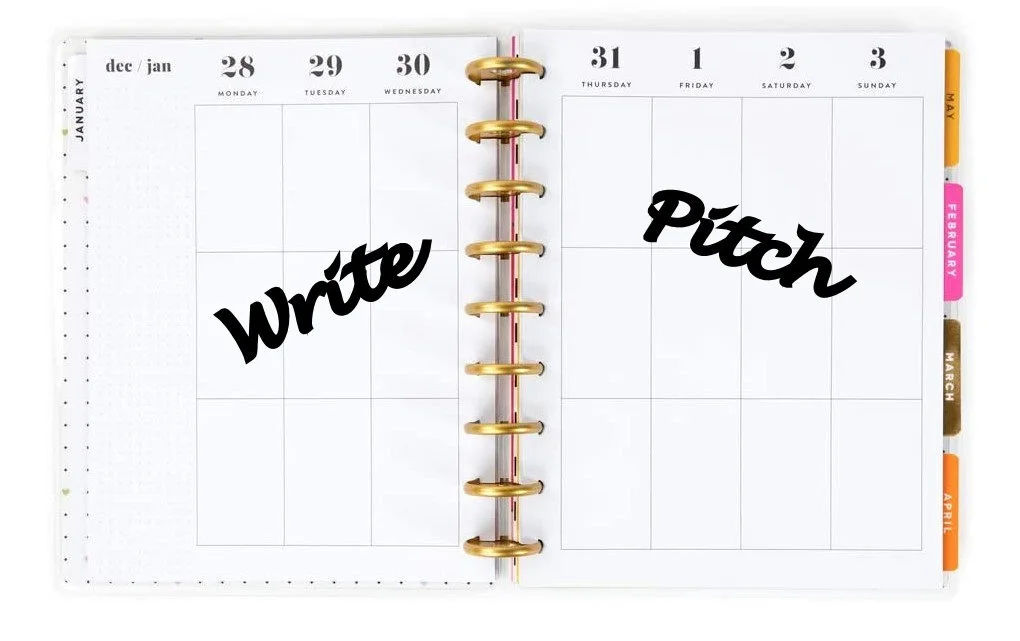
Specifically, I use the Classic Vertical Happy Planner. Vertical types of these planners have three vertical boxes for each of the days. It gives you a lot of space to plan days.
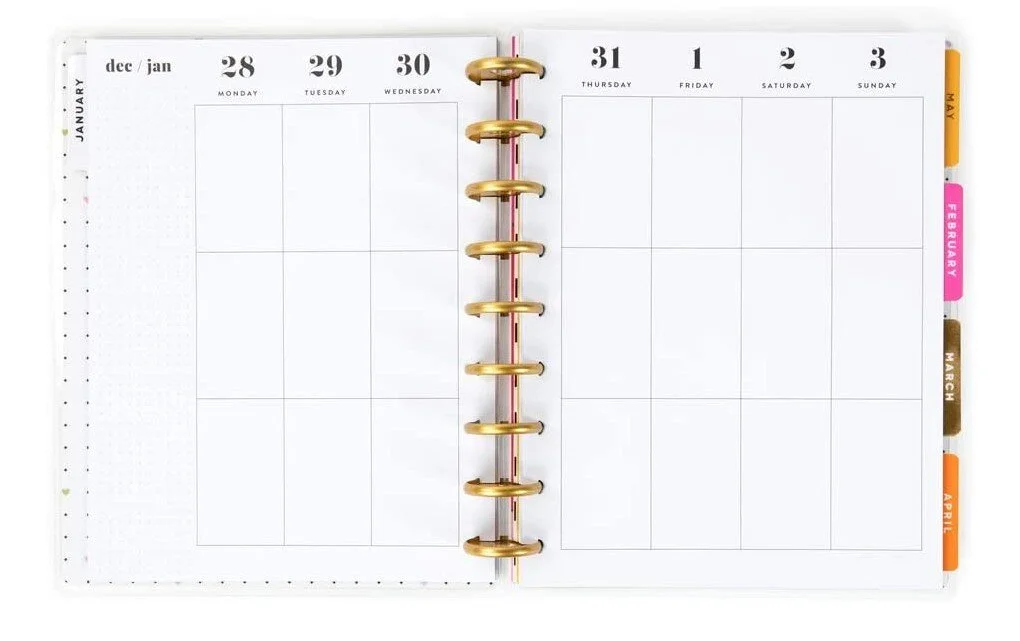
Vertical layout
Dashboard Happy Planners are a little different. For each week there are spaces to help you keep trach of emails, calls, errands, things to buy, and the focus of the week. On the second page the days of the week are laid out along with a to-do list. This style lets you plan out specific tasks. I suggest getting the style that works better for the way you plan.
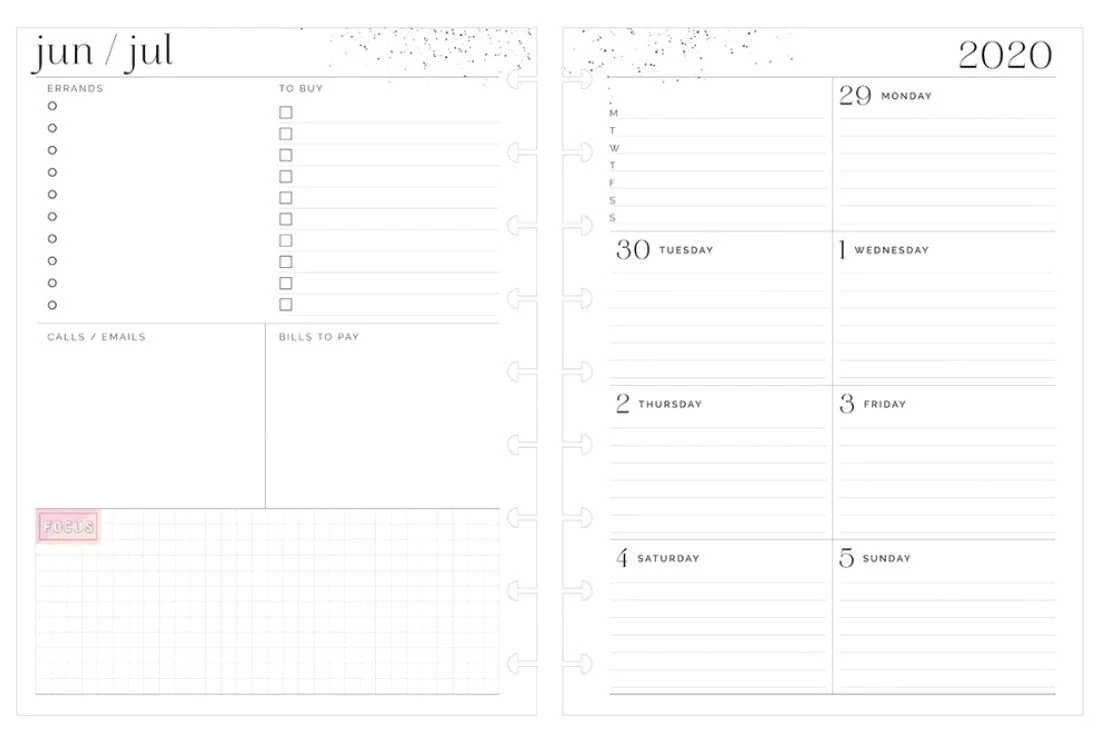
Dashboard layout
How I plan out my week
Now that you’ve gotten a feel for what type of planner I use, my method will make a little more sense. You can use my method in just about any type of planner, but I find the vertical layout of the Happy Planner gives me enough room to write everything down, though I like the dashboard style, too.
Okay, so let’s get into it. First, I write all of my assignments down in the To Do section on the left side. I used to keep a running list on a legal pad, but I find this works better. I make sure to write out the date each article is due and the time. I’ll make a smaller list for other to-dos underneath the assignment to-do list.

Next, I’ll write down any appointments that I have on the day they come up. From there I’ll do a small daily to-do list at the top of each day. Here will be the assignments I need to do that day, errands, calls to make, etc.
Finally, I tally my earnings. For each assignment I complete I will write down how much I earned and then add it up into a daily total. On Sunday I’ll tally up all of the daily totals and write down the weekly total. At the end of the month I will take my weekly totals, add them up, and write the tally on the last day of the month. Writing down my earnings in my planner helps me stay motivated and gives me a daily glimpse at how my goals are going.
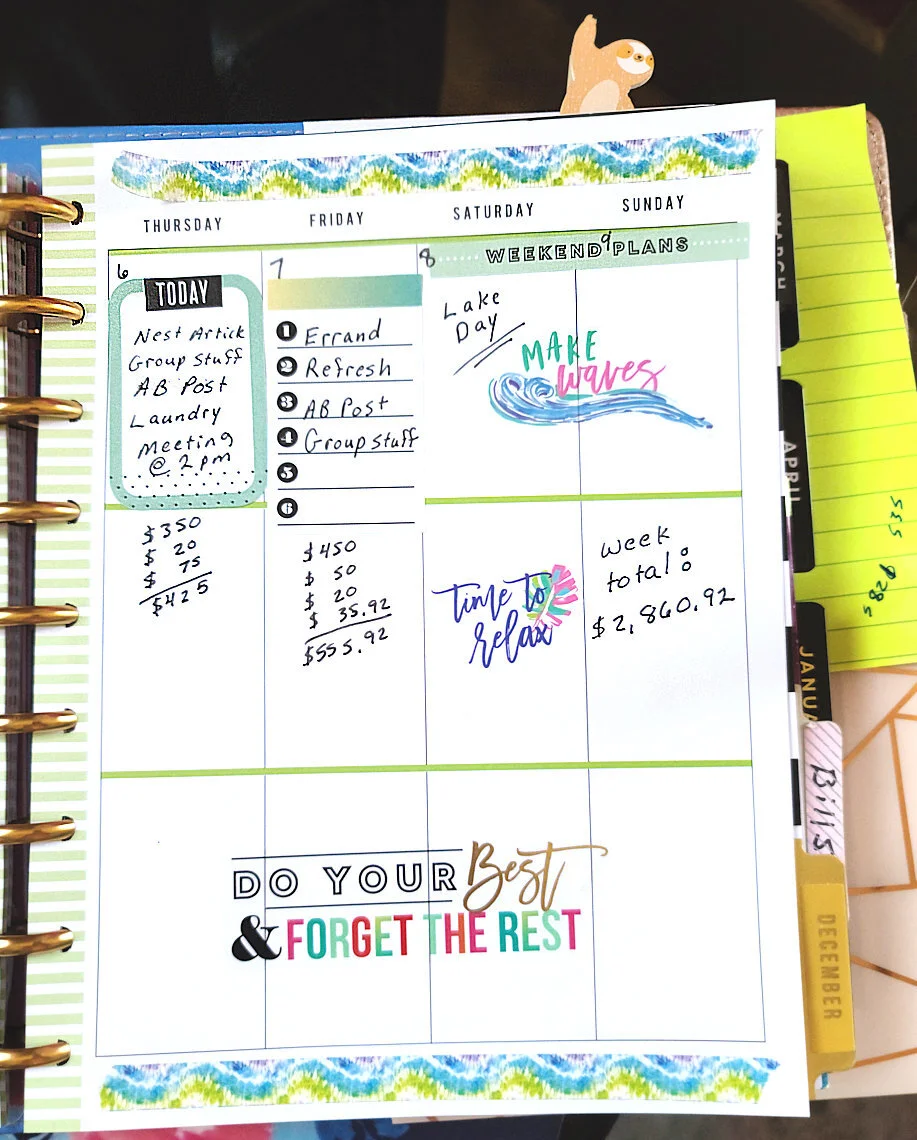
Extras
You’ll notice that I spruce up my pages with stickers. I just like customizing the pages to match my mood that week. Plus, I’m a sticker fanatic. Happy Planner has a lot of stickers designed to be used with their planners, but you can also get cute planner stickers at Dollar Tree if you’re on a budget.
I also use erasable pens because I tend to flip around when I’m going to do what. Some good erasable pens are Pilot Fixion.
If you go with a Happy Planner, I recommend getting their hole puncher so that you can add in homemade or printed inserts to your planner.
BTW, if you need more help making your freelance writing career successful, check out my book The Fluff-Free Freelance Writing Master Course Workbook: The only course that gives you concrete, actionable information to building a successful freelance business without any fluff.

How to Make 2021 New Year’s Resolutions that Stick
Planning for 2021? Here’s some help for setting goals.
Every year we begin a new year resolving to do (or quit doing) something and expect to be the game changer in our lives. For some it’s to workout, lose weight, cut out all carbs and sweets. For others, it’s a promise to save more money and get finances on track. For writers, it's typically to make more money or to get new clients. Regardless of what you resolve to do, according to Dr. Sanam Hafeez, there is a way to set yourself up for failure or success. The mindset we are in when deciding on a resolution determines its
Below Dr. Hafeez, a New York based neuropsychologist affiliated with Columbia University, shares key insights on how to make 2021 New Year’s Resolutions that stick.

1. Envision the end result and reverse engineer it.
According to Dr. Hafeez, neural pathways in the brain can be changed through a combination of visualization and aligned action. She encourages people to journal about what it is they want. Write it all out. “How would life improve? What would all the benefits be? Cut pictures out of magazines of what you want and post them to a wall (or if appropriate, the refrigerator). Get very clear on what you think you will feel like once you see results,” she recommends.
2. Get clear on your triggers.
Set yourself up for success by understanding what may potentially get you off track. “Sticky resolutions come with planning. If you want to lose weight, then begin with clearing out your fridge and cupboards of junk food. That in itself is an action that will tell your brain that you are serious. Get recipes and write out a new grocery shopping list. Writing plans, micro goals and ideas that serve the greater accomplishment you're reaching for creates “buy in” from your brain, says Hafeez.”
For the people resolving to save more money Dr. Hafeez says to evaluate when and why you spend. If you notice you spend $40 a week on coffee, think of alternatives. “You don’t want to cut yourself off from anything cold-turkey. The brain doesn’t respond well to deprivation. It sends brain chemicals that signal displeasure which is what makes resolutions lose their stickiness. Shift to a possibility or curiosity mindset. Asking yourself, what can I do to save $5 per day invites in inspired thoughts and creative ideas,” explains Hafeez.
3. Pace yourself.
“The reason why resolutions don’t stick is because people set the bar way too high and expect achievement way too fast. Think of every week as a win! Break it down into weekly chunks and train the brain to value quick accomplishments,” she advises. The people who resolve to lose weight and get more exercise won’t stick to it if they don’t celebrate small milestones and try to do too much too soon. Resolve to lose 1 to 3 pounds per week. Do this by cutting out soft drinks or juices and drinking water instead. After 10 weeks you will be 20 pounds lighter with great skin just because you did one thing week by week until it became your new normal.
4. Trick your brain by making it fun.
“Our language and self-talk is everything and determines if our resolution will fade or will become something we’re still doing in June,” says Dr. Hafeez. “When someone resolves to change their diet, exercise and lose weight they already envision how difficult it is going to be, so they are already dreading it before they started. However, shifting the brain to doing something fun that is in line with the goal gets you more committed," she adds. Create a playlist of great music to work out to. Look up recipes on Pinterest to build your new shopping list. When you do the advance preparation that is more fun and take small steps towards building the new lifestyle to support your resolution, you’re setting yourself up for a win.
5. Fuel your resolution with greater purpose worth committing to.
If you want to resolve to save more money, it’s is helpful to have a clear purpose for the money you plan to save. Resolving to save more money is vague making it hard to remain on track. Saving more money to take an amazing vacation or to purchase a home or car is something tangible you can stick to. “It’s common for people to commit to doing something when they connect it to a greater purpose beyond them or an experience they want to have. This explains why lifetime smokers can instantly quit when they learn they are pregnant. It’s not about them anymore. We see the man who is 75 pounds overweight lose weight when his daughter gets engaged. Whenever we can connect resolutions to a bigger purpose our minds get on board, and when the mind is all in, resolutions stick,” explains Dr. Hafeez.
About Dr. Hafeez:
Dr.SanamHafeezPsyD is a NYC based licensed clinical psychologist, teaching faculty member at the prestigious Columbia University Teacher’s College and the founder and Clinical Director of Comprehensive Consultation Psychological Services, P.C. a neuropsychological, developmental and educational center in Manhattan and Queens.
Dr. Hafeez masterfully applies her years of experience connecting psychological implications to address some of today’s common issues such as body image, social media addiction, relationships, workplace stress, parenting and psychopathology (bipolar, schizophrenia, depression, anxiety, etc…). In addition, Dr. Hafeez works with individuals who suffer from post-traumatic stress disorder (PTSD), learning disabilities, attention and memory problems, and abuse. Dr. Hafeez often shares her credible expertise to various news outlets in New York City and frequently appears on CNN and Dr.Oz.
Connect with her via twitter @comprehendMind or www.comprehendthemind.com
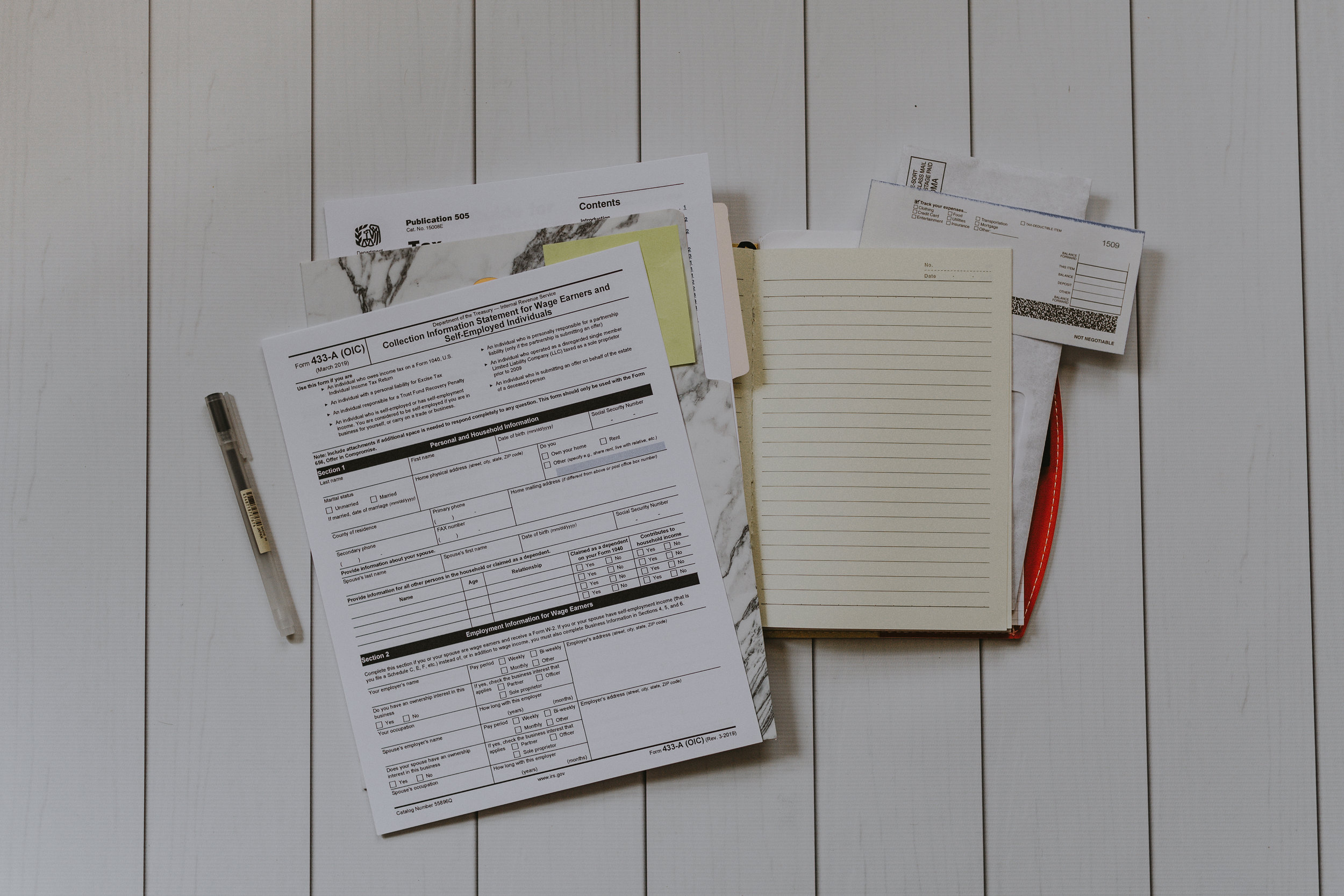
How to Manage Your Finances as a Freelance Writer
Get your finances in order with these tips.
It’s often said that freelancers don’t like doing the boring stuff. While it may be true, unfortunately, for the freelance writer, putting off the task of money management is not an option if you want to keep bringing in the cash and stay on top of your financial game. Managing your finances can be daunting at the best of times. Still, don’t let these stresses keep you from achieving your freelancing goals! Here are some tips to help you get your finances in order, from creating a savings account to saving on your taxes.

Identify your regular expenses
To stay financially fit, you need to know what most of your money is being spent on every month and trim the fat.
The most common expenses are:
Rent or mortgage costs
Phone bill
Car note
Insurance
Utilities
Don’t forget to figure out your business expenses! These include:
Internet
Office supplies
Website hosting
Domain costs
Now that you know what you’re spending, trim the fat. The less you pay in bills each month, the less you will be stressed during lean times in your business. Compare the prices of utility companies, website hosting, insurance, and internet services to see if you can find a lower-cost provider. Then, consider refinancing your cars and mortgages to find a better interest rate to save even more in the long-term.
Once that’s done, look into additional expenses, such as eating out, going to the movies, or going out to get a coffee every morning. Are there things that could be limited or done at home to save money?
Set goals for your finances
Any successful business will need to set and meet financial goals. The same goes for freelance writers, too. To start out, figure out these three numbers:
How much money is needed to pay all the bills
How much money is needed to pay the bills and have a little extra to play with
How much money is needed to live the dream life
Once all of these numbers have been identified, you can plan on how much work you’ll need to get to achieve your financial goals.
How do you determine your rates? Here’s a good guide to help you figure it all out.
Save smart
When squirrels hunt for acorns and such during the fall, they will take the nuts and bury them away to come back to later when food runs out. This is what we should be doing with our finances. Having enough money stashed away to cover any incidentals, or as an ‘emergency fund’ is just smart, especially if you are a freelance writer.

Freelance writing is unpredictable. The ‘feast and famine’ nature of the freelancing world could mean several months of drought where you can’t quite meet your financial goal for that month. With an emergency fund, you won’t need to worry about how you’re going to pay your bills and keep food on the table.
For example, on average, you make around $3,000 per month, but in August you only made $2,500, you can loan yourself $500 from your savings to cover the cost of those extra expenses. You have to keep track of what you borrow, though, and then pay yourself back when you make any money over your financial goals.
Here’s some ways to maximize your freelance profits.
Work on improving your credit score

Many personal loan calculators and banks will ask for your monthly income as part of the application process and, for us, income can be unpredictable. I’ve found that when I’m getting car loans, a good credit score can mean the difference between getting a loan and going home without a car because the banks recognize the unsabilitity of freelancing as a negative. Can’t really blame them on that one, but it means that we need to keep our credit score strong.
These are some simple ways that you can work to improve your credit score over time:
Set up an auto payment for your credit cards, so you never miss a payment- missed, or late payments will lower your credit score.
The more available credit you have, the better. Don’t be afraid to ask your credit card companies to increase your limit. An increased limit that isn’t used will make your score increase.
Pay off debt. Paying off car loans, paying your student loans, paying your mortgage, and paying down on your credit cards all make your score go up.
Pay some regular payments through your credit card, such as your phone bill and pay them back within a few days of paying your bill to bring your available balance back up.
Limit spending because you see the money is there. Credit card money is not your money to be spent but is a backup option. Budgeting properly is essential, so you don’t use your credit card as additional spending money!
Over time, you will begin to see your credit score creeping up. Here are some more tips for bettering your credit from Experian.
Work out deductions
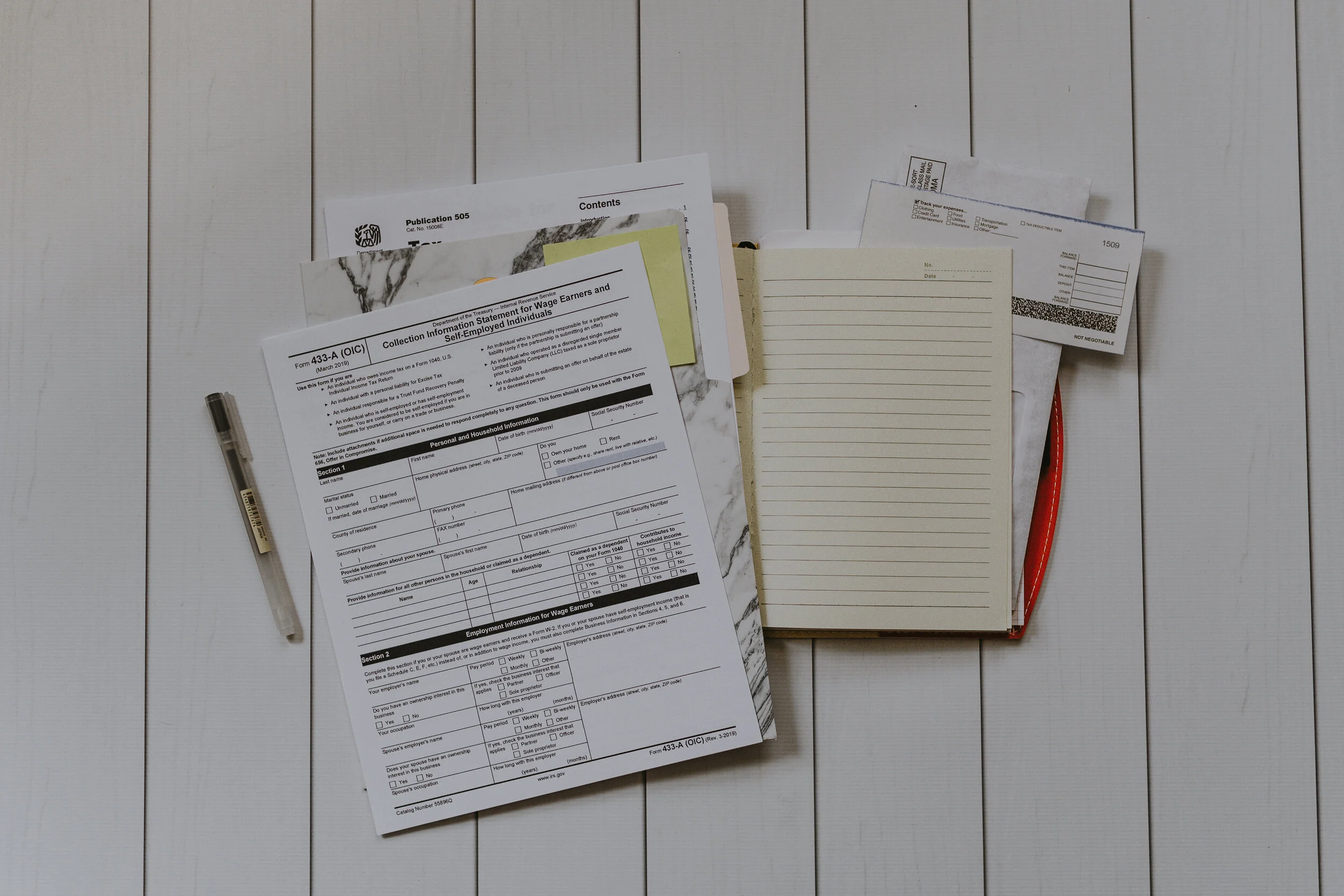
Working for yourself will often mean getting the lovely surprise of being hit with that extra tax rate due to your self-employment. Stay on top of your business expenses and use them as deductions to avoid paying more in taxes than your should.
First, use a business expense tracking app, like BizXpenseTracker, Smart Receipts, or Expensify, to store pictures of your receipts, and then work with an accountant who will help you to sift through to see which purchases could be claimed as a business expenses.
You’d be surprised at how much of your spending is for legitimate business reasons! Many freelancers don’t take advantage of the fact that their mileage, internet usage, and office equipment even though all count towards tax savings!
Here are some potential deductions:
Office supplies
Clothes you buy to wear at meetings with clients
Part of your mortgage to account for your home office
Desks, office chairs, filing cabinets, and other office furniture
External hard drives, mice, keyboards, routers, and other computer equipment
Computer or laptop
Internet service
Magazines, books, and courses you use to learn about freelance writing or to manage your business
Mileage on your car used to meet with clients or to go to seminars
Website and domain hosting costs
PayPal or other money service fees
Bank fees

Minimizing The Stress And Strain Of Being A Writer
Let’s look at a few tips to ensure you stay safe and sane when writing in your den.
Oh, woe, being a writer is truly the toughest job of them. Okay, so that might not be true. Compared to the majority of workers, we might have things fairly cushy. However, that doesn’t mean that the stresses writers face on the job shouldn’t be taken seriously. They can get in the way of your productivity, affecting your ability to make a living and, even more crucially, can cause real injury if you’re not careful. Let’s look at a few tips to ensure you stay safe and sane when writing in your den.
Ensure that you have a comfy office
Writing involves spending a lot of time sitting in one place with your hands at a keyboard, type, type, typing away. If that’s not a recipe for repetitive strain injury, then nothing else is.
The first tip is to make sure that your office supports and comforts you, reducing the physical strain that tends to build up in your shoulders and lower back when you work for a long time. A comfortable chair, one that supports these parts of your body, and allows you to adjust the height to make sure that you’re adopting good sitting posture is a must. Here’s what I use. Otherwise, you might actually want to get a standing desk to avoid the issues of sitting too much in the first place.
Get up and stretch
Even if you do have a great ergonomic chair, you should take the time to get up and stretch your legs every hour. Even if you have a standing desk, you should shake out your body and move around a little.
For writers, it’s particularly important to do wrist stretches to make sure that you’re taking care of the parts of your body that are most likely to suffer from RSIs in the first place. One good stretch is to slowly raise your palms to the air with your arms held directly upwards for ten seconds, before slowly lowering them. Then you hold your arms by your side, holding your hands so that the back of them points to the ground for ten minutes, repeating this until you do ten of each stretch. Here are some ideas:

Work in good lighting
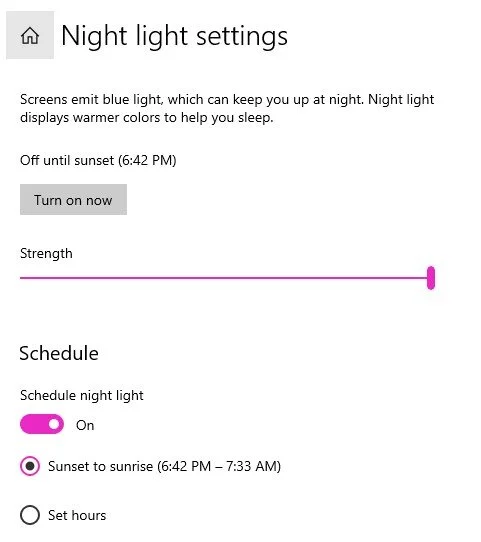
Aside from spending their day sitting in front of a keyboard, writers also spend a lot of time with their eyes glued to a computer monitor. Direct contact with blue light can affect you in a range of ways. For one, it can cause eyestrain, which can be stinging and annoying. It can also affect your sleep if you’re working at night. Windows allows you to switch from blue to yellow light on your monitor. Just go into Settings > Display > Night Light. Toggle on the Night Light setting and schedule when the blue light will turn off. I have mine set so that the blue light turns off at sunset.
You can also use glasses that have blue light filters, and you might want to choose a shop that offers free shipping as you might want to get more than one pair for safety. You need your eyes to see what you’re writing, so they’re 98worth protecting.
Know how to position your wrists
Enough keyboarding and mousing can lead to some pretty nasty injuries and conditions, with carpal tunnel able to effectively end your writing career if it gets bad enough. However, computer use doesn’t have to lead to such nasty injuries if you take care of yourself.
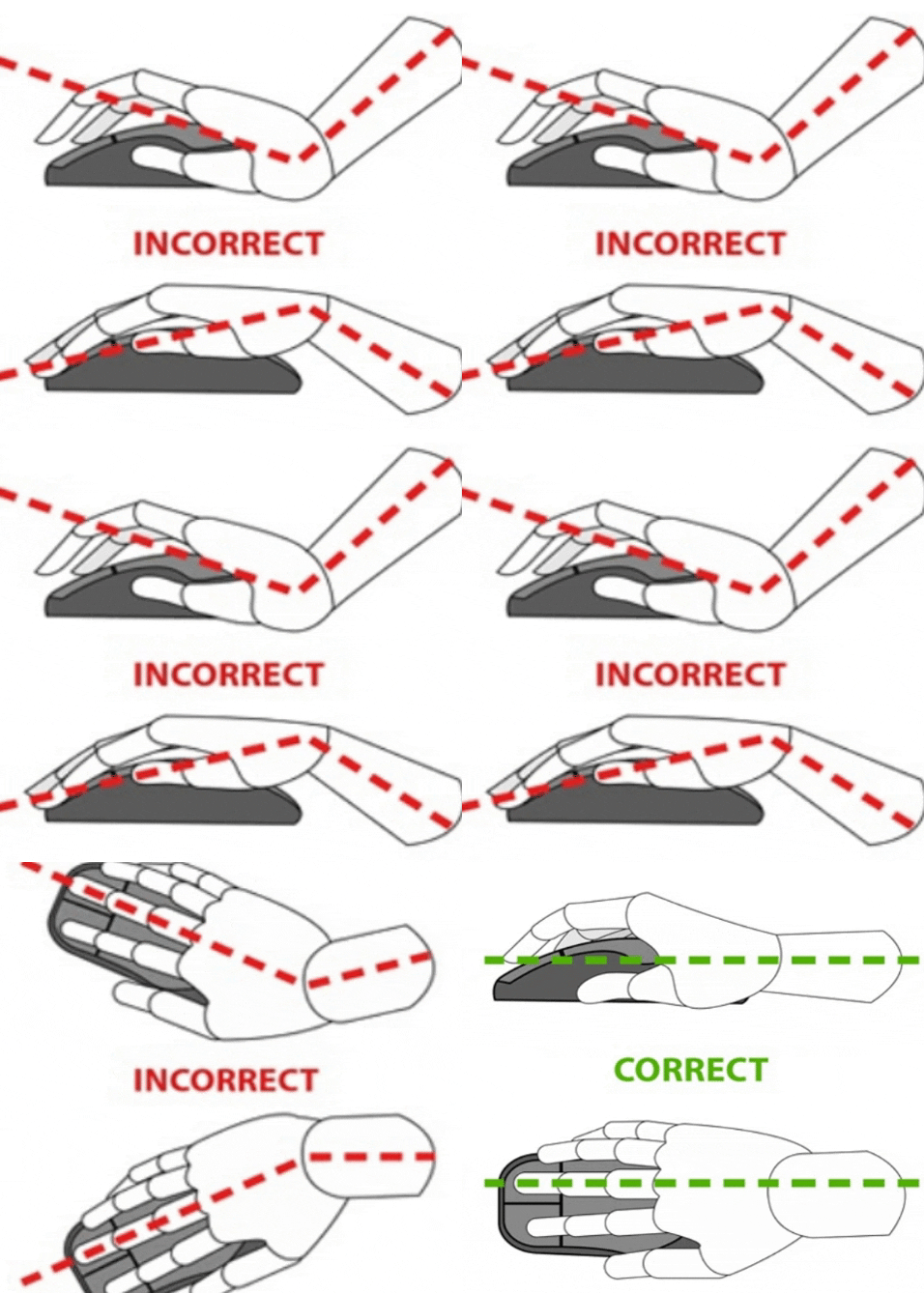
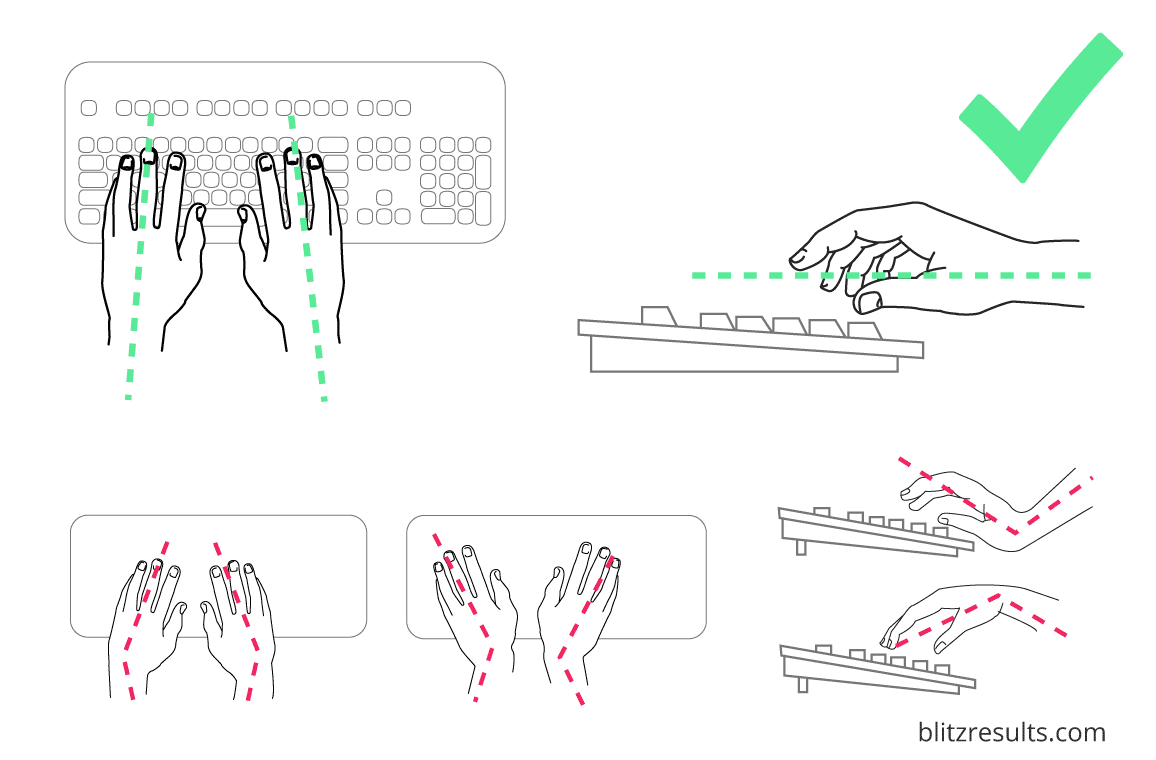
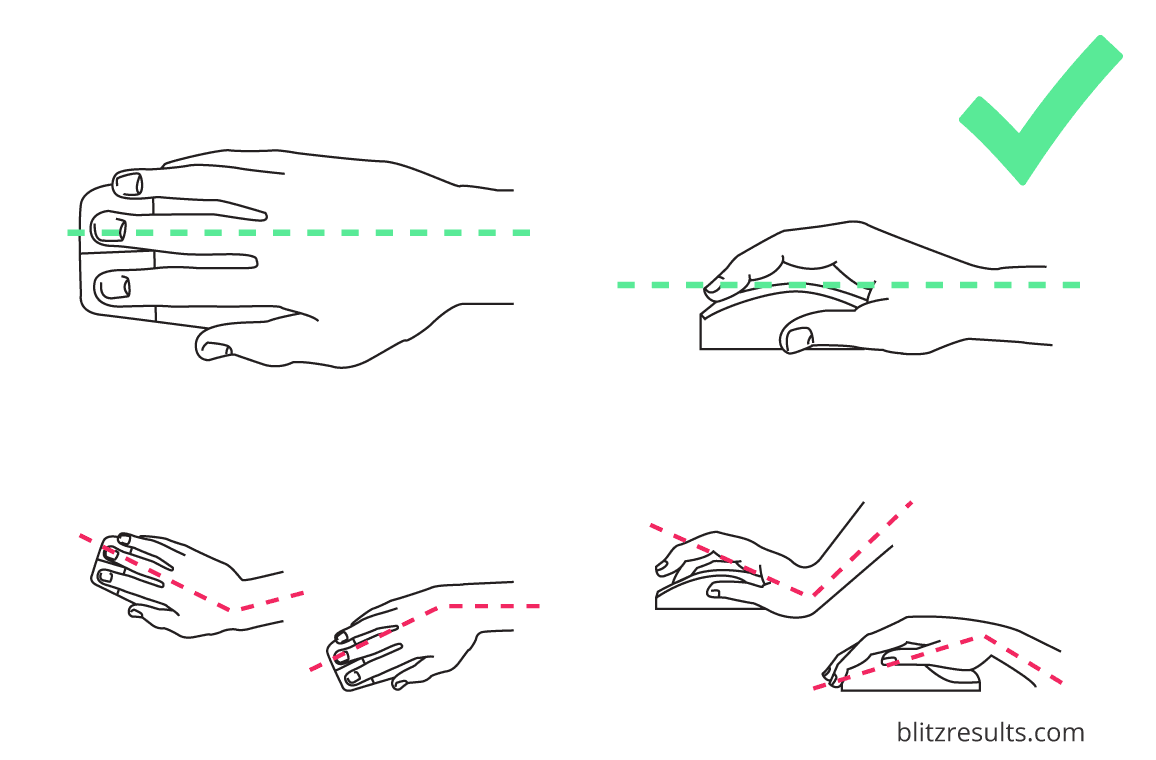
Make sure your chair is positioned so that your hands are raised just above the level of the keyboard but below the level of your elbows. You shouldn’t be reaching up to type at the keyboard, nor should you be typing at any angle other than straight, if you can help it. Also, keep your wrist straight when using your mouse.
Know your limits

Because of the intensive nature of the work, writers can get into some pretty unhealthy patterns (like skipping meals) in order to get those 5,000 words a day (or however many it is) out there. For one, it’s important to set realistic expectations for how much you can reasonably write in one workday, make sure that your getting paid a decent rate per word, and try not to push your limits. Burnout is a very real risk. If a writing piece involves a lot of research, then be sure to include that time in your calculations, as it counts as work all the same, even if it doesn’t involve any typing.
Choose a time that best fits you

A lot of writers end up being night owls, for some reason. There’s not necessarily anything wrong with this if it is truly when you’re at your most productive. Just make sure you’re negating the risk of eyestrain and sleep disruption and it can work fine. However, if you end up working late due to procrastination more than anything, you should make an effort to try scheduling out different writing times to see what works best for you.
Having a pre-work preparation ritual, such as getting dressed, eating breakfast, and taking a walk might be able to help you better switch on your “work mode” at any time of the day. Stick to your most productive time once you find it.
Know when to take breaks

Due to the intensive nature of professional writing, it’s easy for stress to build up, especially if you’re writing to a deadline. Burnout is a real risk that you should stay keenly aware of. You should make sure to schedule breaks to allow yourself to breathe, be it at certain times or whenever you hit a certain word count. Be willing to take impromptu breaks, as well. If you start to feel yourself getting distracted or you feel like your head is starting to get too fussy, then you should take a break, get away from the computer, and take a moment to breathe or even to chat to someone.
With the tips above, you can ensure that you’re able to fire off thousands of words without worry of getting burnt out or of doing real injury to yourself.

Smart Ways To Maximize Your Freelancing Profits
How to make more without getting more clients.
There are many benefits to working as a freelancer. Not least, getting to be your own boss and knowing that all the hard work you put in is lining your pockets with profits rather than someone else's. However, ensuring your business is profitable is not always easy. The good news is that you can get some helpful suggestions on how to maximize profit below.

Keep your costs low
It's simple math, but keeping your outgoings as low as possible will ensure that your profits remain high. In particular, drop any unnecessary costs like:
Sharing an office when you can just as efficiently work from home
Buying tech you don’t really need like expensive cameras for photos or fancy printers
Traveling to do an interview when you can Skype or email
Buying reference guides when you can look the information up online
Getting a fancy desk when grandma’s old desk will do
Avoid being scammed
It's not a lot of fun to think about, but there is a heck of a lot of people out there that do not recognize the hard work and hustle that freelancers do to survive. Unfortunately, it is these people that see freelancers as an easy mark for fleecing and scams.
In fact, freelancers tend to be scammed in several ways, from clients refusing to pay once they have completed the work to clients using rough drafts and proofs rather than settling the full invoice.
One way to avoid this is to use freelancer websites that will broker payment for you. However, if you go it alone, be sure to ask for at least a 50% deposit before beginning a job. Then, have specific completion points where the remainder of the fees are paid. Also, share drafts as locked Google Docs or PDFs that can’t be copy and pasted onto a scammer’s website without payment.
Oh, and if a client won't agree to this, it's best to walk in the other direction, because you will usually end up spending precious and profitable time chasing them for payment!
Invest any additional profits
Many people think of their profits from freelance work as an end goal. However, this isn't necessarily the case. After all, you can make your money work even harder by investing it wisely.
For some people, this will mean investing in their business or even getting more training to do what they do better. While for others, investing in the stock market is the most profitable option.
Of course, before you even consider financial investment, it's wise to take some time to familiarize yourself with all the different types of products from Share CFDs to penny stocks. Only then, once you understand the market and the particular types of investment you will be using, should you start to use your hard-earned freelance profits.
Subcontract the extra work
If you think that being a freelancer is about doing everything yourself, you are in for a shock. After all, it's standard practice for those freelancing to subcontract out work or parts of projects that they either do not specialize in or do not have time to do.
The great thing about subcontracting extra work is that it can help rather than hinder your profits. The reason is that you can offer a much more comprehensive service to your client, thus making you much more likely to get more significant and more profitable contracts. Plus, hiring out saves you time and time equals profits.
Here's a New Type of Time Management Solution for Working at Home
This fascinating way of managing your time may just be the answer to your slump.
Guest post by Dr. Caro Williams-Pierce and University of Maryland College of Information Studies
I have always struggled to be on time. Somehow, my natural tempo sends me to places either 10 minutes early or 5 minutes late, leaving me bored out of my skull (what can you actually do in 10 minutes?) or harried and flush with embarrassment. I have always assumed that this was my superpower (hey, superpowers can be bad — just because they’re not good doesn’t mean they’re not superpowers), and all I could do was fight to be the person that shows up annoyingly early every time. It was exhausting, and I never understood why others found it so effortless.
Then, the pandemic taught me that my bad superpower has a flip side, and in a situation like the one we are currently in, it’s a good superpower. And, like many superpowers, I got this one from my parents.

What unschooling taught me
I grew up unschooled in an off-the-grid home in rural Maine, with a feminist mother who took flack for deciding to be a full-time mom and a self-employed dad who kept us safe and fed. Unschooling varies by household, but in ours it meant that we spent most of our time doing whatever we wanted. We read books, built unstable treehouses, roasted apples over an open fire, played in the swamp, went over rickety bicycle jumps we constructed out of half-rotten boards and a couple large rocks, etc. So our sense of time was thoroughly disconnected from what the rest of society called ‘time’ — because it was based upon the emergent rhythms of our activity.

The Williams kids, corralled momentarily for this photo in the late 1980s.
At the same time that we were throwing rotten apples at each other until we got bored and decided to go pick blueberries on the barrens because we wanted a snack, children our age were having their activities dictated by an external clock (we are doing Science now, but in a couple minutes a bell will ring and we’ll have three minutes to fully switch from doing Science to learning how to type, and no snacks because it’s not 11:32 a.m. yet, which is the Time For Food). In other words, we obeyed our interests and bodily desires — and, sometimes, our parents — while other children were being taught to obey the bell.
As we grew up, those children transitioned to obeying other proxies for society’s time: their watch, the machine for punching into work, the exact moment that the bus will pass your stop if you’re not there to catch it, the time their kids have to be at school or risk a tardy slip. I, on the other hand, grew up to be finally introduced to the fact that an invisible and intractable force was now running my life — and I always struggled to be on time.
The time management breakthrough
Then, many years later, in graduate school, my friend and colleague, Crystle Martin, introduced me to Gell (1992). Gell “divided time up into what he termed A-series time, or standardized time as measured by a clock, and B-series time, or time that is run by the punctuation of activity” (Martin et al., 2012, p. 229). I remember thinking, “Hah — I grew up in B-series time!” Now, the pandemic has upended the structures I had developed in the A-series time of universities, and I’ve realized just how much I relied upon various proxies for time to stay productive.
At first, I couldn’t focus on anything, and all the little rituals and plans and ways of keeping myself working (most of which focused on where I was when) were useless. After all, while society as a broad structure is still running on A-series time, our individual lives are running on B-series time — with all the familiar A-series structures fallen by the wayside. No longer is there a place that indicates work (driving to the office signifies that it is Time to Work) — there is only this one place (home) that signifies everything, and thus nothing. And the nearest proxy for time — my computer clock — does not anchor me into the familiar pattern of a day. It’s 9:50 am eastern, and who cares?
The way it works
So, I have let myself fall back into the soft fluffy B-series time of my childhood. Rituals and plans have drifted away. I haven’t worn my watch in weeks, and I ignore the little proxies for time sprinkled around my home. Instead, I have reverted to obeying my interests and bodily desires, just as I did as a barefoot, curious, creative kid. For those of us academics learning to work away from the Ivory Clocktower (brilliant phrase coined by the brilliant Ana Ndumu) and needing to learn (or re-learn) how to strive in unstructured, organic rhythms, I’ve outlined how I manage in this new B-series world.
First, I am fortunate enough that I have a job that I generally enjoy — so I have projects that are interesting and make me want to get right into B-series time and a sense of flow (e.g., Nakamura & Csikszentmihalyi, 2005). But even interesting projects have to be organized, so I have a Magic Method from the brilliant Susan Winter — but you have to promise to continue reading past the first sentence of the next paragraph, because it will make you snort in disbelief. (I know this to be true because the first time Susan Winter explained it to me, I snorted in disbelief. Then came back to her two months later and said, “I can’t stay organized — what should I do?!” And she explained it again, and I didn’t snort, and now I’m a firm believer.) So just give me a little time to properly explain before you dismiss the Method. Promise? Okay, here we go!
I use a Google spreadsheet. (Yep, let that snort out — get it over with!) Each column represents a week of time (proxies for time are useful, sometimes), and each row represents a different type of obligation, grouped within a meta-goal (e.g., Goal 6: teaching INST 728F). So today (a Tuesday), I had this week’s column to guide me, and then I had the beautiful luxury of choosing which project or obligation I want to work on right now — which activity should I punctuate my life with? Which makes me feel excited about jumping in and getting busy? Below are two of my meta-goals for this week and next — and you can see that there are obscure notes to myself alongside hyperlinks to make sure I have quick access to the most relevant digital information about that cell or row.
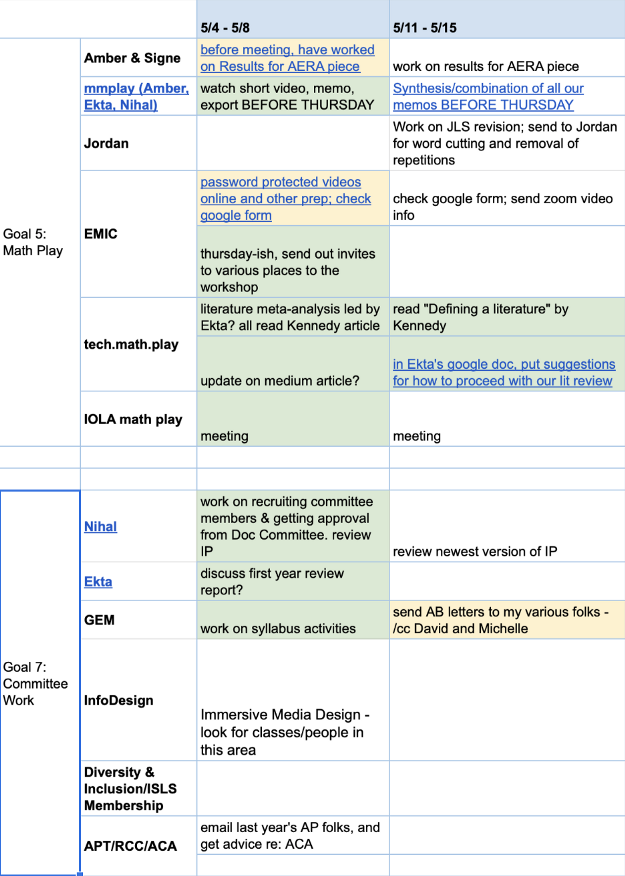
My spreadsheet: metagoals to the far left, subdivided into smaller obligations one column to the right of that, then weekly tasks for those obligations.
So within today (a Tuesday), I had the current week’s column to guide me: this is what I want to accomplish this week. And then I allowed myself the beautiful luxury of choosing which project or obligation I want to work on right now — which activity should I punctuate my life with? Which makes me feel excited about jumping in and getting busy? When I do some work on a cell (say, Project mmPlay for this week — memoing video data), I highlight the cell yellow to indicate I’ve done some of it. When I complete the task (memo the entire second video, and export memos to share with the research team), I highlight it green — and then I ignore it for the rest of the week!
I also have a couple of odd rows, like “One-Off Service” — if an editor asks me to review a journal article, I can go directly to that row and see if I have a spare cell to tuck it in. All the cells are full for the next two months? Welp, too bad, can’t review. There’s also a row called “Annoying Bits” where I put the administrative paperwork (like filling out the travel reimbursement paperwork that has stopped piling up but is still piled up). Committees sometimes share a row, but my doctoral students get their own– sometimes it just says “weekly meeting,” but other times it says “Don’t forget to read that draft BEFORE the meeting!”
Then, at the end of the week, I move over any task I’ve left incomplete to the next week’s column (or ignore it as ultimately unnecessary), and “hide” the column so that my new week is the most prominent column. And, just to add a dash of gamification, before I hide the old column, I count up the green cells — total number of tasks I completed that week, which tends to be between 12 and 20—and transfer that number of dollars into my bank account that is for FUN STUFF ONLY. If the slow accumulation of guilt-free money into a fun-only stash doesn’t motivate you, find something that does. Maybe 5 minutes of pleasure reading for each completed task, so you can store them up and finally dig into those cozy mysteries you’ve been putting off. Or 5 minutes of Netflix—I recommend Keeping Up Appearances for an oldie-but-goodie (completing six tasks gets you an episode!). Or 5 minutes of the peculiarly peaceful Animal Crossing. Whatever you choose, take pleasure in adding up your completed tasks each week, and using your thoroughly deserved awards regularly.
So each individual day of my week is guided by my spreadsheet, but driven by my immediate interest (and see the Footnote and image below) — and I can work on what I’m most interested in until B-series time bops me on the head and says, “Your stomach is growling! Punctuate this activity with the activity of eating!” Often, after such a call by my bodily functions, I realize that I’m tired of working on that project — so I scribble a few notes to remember where to pick up next time, color the cell in appropriately, and move on to something else I feel like doing. Or I bite the bullet and do one of those Annoying Bits, just to give my brain something different-feeling to focus on.
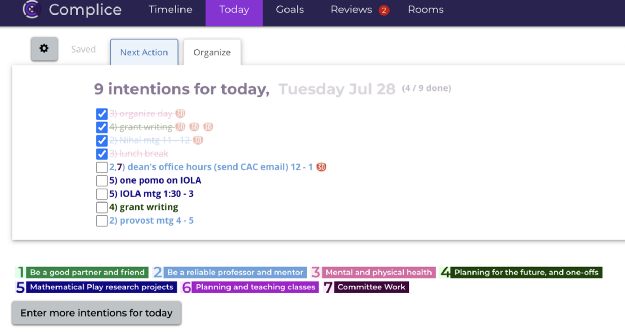
My Complice list for a single day — meetings and goals from my spreadsheet.
Now, here are is the single concession I make to A-series time: every single A-series time commitment I make (whether the weekly family zoom session, teaching my online class, a research meeting, a planned grocery trip, etc.) goes directly on my calendar, and I get alerts on my phone 10 minutes beforehand. (The school bell that kept kids on track in school, and reminded them that A-series time runs their lives, has now transitioned to a phone ding!) This way, I can otherwise ignore proxies for time, and I have 10 minutes to help myself transition from the interrupted B-series activity to the upcoming A-series one. That’s it — that’s all the A-series concessions I make. The rest of my life is B-series.
The world is a complicated mess right now — but accepting that my life is now B-series time has helped me ebb and flow with the new normal. Embrace motivation, interest, enjoyment, and necessities, and try a life that isn’t wrapped around your familiar proxy for A-series time. Give into the urge to do what you feel like doing, in the moment that you feel like doing it, and see what happens. It might just turn out that B-series time is your new favorite tempo.
Footnote
As I’m looking over my spreadsheet each morning, and letting my interests guide me (or any hard deadlines for the day, like reading that integrated paper), I put the things that seem most interesting into my daily task list in https://complice.co. Complice was designed specifically to avoid stale task lists — that is, the constant accumulation of additional un-done tasks from day to day until your list is 3,007 individual tasks long and you decide to never look at it again. If you tend towards guilt-inducing stale tasks lists, try Complice — it complements the spreadsheet perfectly, because the spreadsheet gives you the long-term view and the weekly view, and Complice gives you the daily view (and some lovely co-working rooms!).
References
Gell, A. (1992). A-series:B-series::Gemeinschaft:Gesellschaft::Them:Us. The anthropology of time: Culture construction of temporal maps and images (pp. 286–293). Oxford: Berg.
Martin, C., Williams, C., Ochsner, A., Harris, S. King, E., Anton, G., Elmergreen, J. & Steinkuehler, C. (2012). Playing together separately: Mapping out literacy and social synchronicity. In G. Merchant, J. Gillen, J. Marsh & J. Davies (Eds.), Virtual literacies: Interactive spaces for children and young people (pp. 226–243). London: Routledge.
Nakamura, J., & Csikszentmihalyi, M. (2002). Concept of Flow. In C. R. Snyder & S. J. Lopez (Eds.), Handbook of Positive Psychology (pp. 89–105). New York: Oxford University Press, Inc.
Acknowledgements: Thanks to: Joan B. for helping me realize that my bad superpower had turned good; the fall semester’s students in my Games & Learning class for our discussion about A-series and B-series time; and my old research lab’s chapter Playing Together Separately (Martin et al., 2012) for getting my brain to mesh the two together. Additional thanks to Ana Ndumu and Jordan T. Thevenow-Harrison for their brilliant feedback on the original version, and to Mia Hinkle for her encouragement to dust this off and get it out there. #BlackTransLivesMatter

How to Deal with Distractions When Working from Home
If you’re among those who telework, you’re probably familiar with these struggles. Let’s dive into more details about each issue and show you how to deal with them.
Guest post by Marija Kojic
Working from home has many benefits, such as the fact that there’s no commuting, so you can sleep longer, and you can wear cozy clothes all day long. And, almost everything you need for work is within a hand’s reach. But, your personal belongings are also nearby, which means that your attention can easily be disrupted.

Working from home involves many distractions, which are quite different from those in a traditional office setting. There was a recent survey by the research firm Valoir, which interviewed 327 participants who telecommute. According to their answers, the major distractions when working from home are:
Social media - 32%,
children - 24%,
other adults - 18%,
other distractions - 16%, and
traditional media - 10%
If you’re among those who telework, you’re probably familiar with these struggles. Let’s dive into more details about each issue and show you how to deal with them.
Social media
Knowing that your boss or manager is not around gives you the freedom to check your phone whenever you hear a notification from social media channels. But, the famous “just checking” behavior can quickly evolve into spending 15 minutes or more browsing your Instagram or Twitter account. Next thing you know, you still haven’t finished an important task that needs to be done by noon.
To avoid stressful situations like this, you can do the following:
Turn off notifications for social media apps.
By doing so, you’ll save your valuable time and leave social media explorations for later. In addition, you can mute your phone calls and text messages.
Schedule your social-media-dedicated time
For instance, set a reminder and have a 5-minute break every hour. These can be the moments when you catch up on the latest social media posts.
Try website blockers.
If you prefer visiting social media sites on your laptop, this is an ideal option for you. Website blockers can keep you away from entering predefined sites. All you need to do is add the sites that you want to block and choose for how long these sites should be banned. We suggest apps and extensions such as StayFocusd, WasteNoTime, and Freedom.
Children

We bet you remember that viral video of children interrupting a BBC news interview. We all laughed while watching this scene that’s quite common when working from home. Now, you might not be a journalist broadcasting from your home office, but if you have kids, you’re aware they can sometimes disrupt your work.
Here are some steps you can take to overcome this problem:
Create a dedicated workspace.
If you have a spare room that you can turn into your home office, that would be the best solution. Let your children know that, when you’re in that room, you’re working and shouldn’t be interrupted. Also, prepare some fun activities, or even chores for kids to keep them occupied during your work hours.
However, if you live in a small apartment, you may not have a separate room for work. Instead of modifying an entire room, choose a quiet corner where you can put your laptop, your notebooks, headphones, and everything else you need for work.
This setting is also useful if you need to constantly keep an eye on your baby. In case your children are older, hopefully they’ll understand that you have job duties, and they’ll behave properly.
Learn how to manage your tasks.
Organize your tasks in accordance with your children and their daily routine. So, whenever they’re sleeping or napping, that’s when you should focus on deep work, or try to finish more complex assignments.
On the other hand, leave all your tedious tasks for the times when your kids are having lunch or spending time with you in the same room. For example, you can check your email at that time.
If you have a lot of meetings on your plate, try scheduling them during the times when your children are sleeping. Besides, you can create a spreadsheet for all your colleagues who are also parents, so that you can manage your meetings time together. You can try Doodle, an app for coordinating meetings or check out other work from home apps that can help you automate work.
Other adults

Besides children, you might be distracted by adults living with you - your roommates, your partner, parents, or other family members. Now, they won’t disturb you on purpose, but maybe they don’t realize that even a quick chat can affect your productivity.
Here’s what we suggest you do:
Set clear boundaries.
We mentioned before and we’ll emphasize again - having a separate room for work, or at least some quiet place in your home is crucial for your productivity. The people you live with need to know that your working area is only yours.
The rules are simple - if they see that your office doors are closed, you’re working. Also, if you put on noise-canceling headphones, that’s the sign that you want to focus and you won’t tolerate any interruptions.
Let them know when you are and are not available.
Keep your working hours transparent. That way, your family members will know when you’re busy and when you’ll be available again. Ask them to respect your working schedule and not to bother you during busy hours.
Whenever you need a quick break from work, you can have coffee or lunch with your loved ones. Besides, this is one of the main perks of working from home.
Other distractions
When it comes to the “other distractions” choice in the Valoir study, there was no precise data about this box and what distractions it includes.
So, we’ll cover some additional diversions that can decrease your productivity. These can be outside noises, visual distractions, and internal distractions.
Outside noises
Dogs barking, neighbors yelling or singing, construction works outside your building, or simply the sound of a traffic jam. These are all outside noises that are usually out of your control. Except when it comes to your neighbors, you can try talking to them about the noise they’re making.
Speaking of the other outside noises, here’s what you can do:
Use noise-canceling headphones.
The most effective way to deal with this issue is to use noise-canceling headphones. This is an investment that will make you less nervous and more productive.
Enjoy some music.
Also, you can find some soothing music that will keep you away from noises. We suggest some classical music playlists, movie soundtracks, or instrumentals. If you don’t mind listening to the music that has lyrics, go for it. Plus, you can also listen to some interesting podcasts when dealing with some less-demanding tasks.
Aside from music, you can try noise generator apps, such as Noisli, MyNoise, or Coffitivity. These tools offer diverse sounds, like rain sounds, or waterfalls, or even sounds from a busy coffee shop.
Visual distractions

If you tend to keep a lot of things on your desk, especially those that are not work-related, you might get distracted by them. But, visual distractions include all other items across the room, the ones you use in your free time. So, whenever you don’t feel like working, these items can draw your attention away.
How to avoid these diversions?
Organize your workspace and working area.
Try keeping your desk as clear as possible. If there are a few things you need during your daily job activities, leave only them on your desk. Everything else can be stored in a drawer or in any other room.
When it comes to other items in the room, hide them from your sight if possible. If you don’t see them, these items won’t interrupt you.
Internal distractions
If you don’t feel well or you’re experiencing a personal problem, you likely won’t be able to focus. Thus, your productivity levels will drop, and your mind will start wandering around.
So, whenever you’re feeling down, here’s how you can deal with this issue.
Take frequent breaks.
By having quick breaks every hour or so, you’ll feel a bit more focused and more productive. If you don’t have time to take a walk around the block, at least you can take a few minutes to close your eyes and relax.
You can also try meditation, yoga, or pilates in the evening, after you’re done with work.
Try the Pomodoro technique.
This method will help you stay productive and less distracted by your problems. To get started with the Pomodoro technique, you need to use a timer and work in 25-minute intervals, along with a 5-minute break after each interval. Then, after four cycles, you can have a longer, 20-minute break. This way, you’ll be able to finish your tasks with ease.
Traditional media

Traditional media are all those media channels that were here before the Internet - radio, print, and broadcast television. Some sources even add billboards, film, and music to this list.
Now, listening to the radio probably won’t bother you during your work hours. After all, you can find a radio station that won’t affect your productivity.
When it comes to print media, newspapers and magazines can rather be a visual distraction. So, just like we mentioned, be sure to store them somewhere out of your sight.
That brings us to the third element of traditional media - broadcast television. When you or a family member leaves a TV on, this will surely distract you from work.
How to prevent interruptions caused by traditional media?
Keep them away from you and your workspace
If you can, work in a room without the TV and be sure to keep newspapers and magazines out of that room, too. Let your family members, your partner, or roommates know that television affects your productivity.
This way, you won’t be tempted to turn on the TV during your work hours. Therefore, your productivity levels will remain high.
One bonus tip

Aside from your children and adults living with you, your pets can sometimes distract you from work, too. But, there are ways you can prevent this.
If you have a dog, try taking him/her for a walk before you start working. This way, you’ll get some fresh air, too. Then, you can play with them during your quick breaks.
We recommend that you keep your pets outside of your workspace area. This is especially important if you have calls with your colleagues and clients often.
It’s also vital to keep your pets occupied while you’re working. Give them something they can play with so that they won’t bother you.
Wrapping up
When working from home, you’ll sometimes have to deal with your children running around, or other family members who always feel like chatting with you. In addition, you might be tempted to check your social media accounts or turn on the TV to get some inspiration for lunch from your favorite cooking show. In some cases, the construction work in front of your building might be the reason why you can’t finish an important project.
One thing’s for sure - telecommuting doesn’t have to be hectic. By changing your workspace and your work habits, you’ll be able to maintain your productivity. Hopefully, the tips we’ve covered in this article will be your first steps to accomplishing this goal.
About the author:
Marija Kojic is a productivity expert specialized in time management techniques. She works at Clockify, where she enjoys helping people discover meaningful and effective ways to work smarter.

Personal Finance Tips Every Business Owner Should Know
Financial management is one of the top skills every business owner should develop before starting their business. If you’re unsure how to do it, these personal finance tips for every business owner should help.
Guest post by Michael Deane
You may excel at managing your business and knowing where every dollar goes but you might not think much about your personal finances. Maybe it’s simply not something you enjoy doing, unlike running your business, which is your true passion.

We understand. In fact, many home business owners are in the same position. This is because the line between your business and your personal life is easily blurred when you work from home. But keeping your personal finances in good shape is a priority if you want to avoid trouble later. Financial management is one of the top skills every business owner should develop before starting their business.
If you’re unsure how to do it, these personal finance tips for every business owner should help.
Never Mix Personal Finance With Your Business Finance
We start with the most obvious tip precisely because business owners make this mistake all too often. Mixing personal and business finance almost never ends well.

Separating your personal and business finances requires setting up separate bank accounts, keeping business expenses separate from your own, giving yourself a fixed salary every month, etc.
This may sound difficult when you run a home-based business and you basically live and work in the same place. But even so, you should try to separate the two.
The benefits of keeping your finances separate go far beyond tax purposes, although this is reason enough to stick to this rule. You can take advantage of various tax deductions to reduce the tax bill for your business. Additionally, you can write off most of your spending as business expenses.
Now imagine the added stress of having to go through all the expenses, personal and business, trying to calculate your taxes? This would take significantly more time. Keeping your business expenses separate makes everything much easier. Also, if you happen to be audited, the authorities will audit both your records: personal and business. Naturally, you want to avoid this.
Give yourself a fixed salary every month, even if you are running an online business, and don’t use your business credit card for small personal purchases now and then. You’ll be thankful later.
Manage Your Spending
Unless your business is bringing in millions every year and finances are the least of your worries, you need to be careful with your spending. Even though you run a business and may want to keep certain appearances, you should really try to keep track of how much you spend and where your money goes.

Creating a personal budget helps. It enables you to live within your means and gives you structure. You know how much you make every month, you know how much your mortgage and bills are, and how much you can splurge on luxuries. Clear and simple, no philosophy about it.
You’re already managing a remote team so you’re saving money on rent and office supplies. Think about how else you may cut your spending. Perhaps quit that gym you paid for in advance if you don’t really use it. The idea is to see whether you’re spending more than you earn every month and how to remedy that. Putting everything on paper gives you perspective.
There are countless practical ways to manage your spending, such as budgeting apps. You can download one to help you track your expenses. Many of them are completely free so take your pick.
Create a Strategy for Your Debt
If you’re in debt, you should tackle that as soon as possible. Debt can prevent you from meeting your financial goals and can really hinder both your personal and business efforts. As long as you’re in debt, you can’t focus on your retirement plans, purchasing a bigger home for your family, etc.
Choosing a debt strategy is extremely helpful in this situation. For example, you should strive to make at least minimum payments towards your debts every month, regardless of how small a payment we’re talking about. As you pay off a debt, you can use that money and put it towards your next bigger debt. This method is called a debt snowball strategy.
This is another reason why budgeting is such a smart choice. Include your debt payments into your personal monthly budget to ensure that you make payments toward the debt every month.
Seek a Financial Professional

You may think that hiring financial professionals is reserved for big companies and not small home-based businesses. But if you’re really not eager to delve deeper into money management or you’re simply overwhelmed, you can skip our tips and talk to a professional. They’re likely to give you some guidance when it comes to managing your finances and you’ll be able to get confirmation that you’re doing everything right.
One purposeful talk with a financial advisor can make a huge difference in your life. It’s a small investment compared to the benefits you will get.
Start an Emergency Savings
We all might be one emergency savings away from a disaster. There have been too many examples of failed businesses and bankruptcies all because these business owners and individuals didn’t bother to set up an emergency fund. Or they believed they couldn’t afford it.
But given the importance of having emergency savings, you can’t afford to not have it.
You might be a huge medical bill away from bankruptcy. We need not look further for examples than what’s going on right now in the world. The COVID-19 pandemic has swept the world leaving countless small businesses with their doors shut and even managing to jeopardize some of the big names.
If your business happens to fail and you don’t have any savings, you’re in trouble. However, if you manage to save at least three months’ worth of expenses, you’ll have the time to think about your next move without pressure.
About the Author
Michael has been working in marketing for almost a decade and has worked with a huge range of clients, which has made him knowledgeable on many different subjects. He has recently rediscovered a passion for writing and hopes to make it a daily habit. You can read more of Michael's work at Qeedle.

10 Reasons You're Not Productive Working From Home
Guest post by Elizabeth Shields
Many believe they are more productive working from home compared to working in a traditional office, while others disagree. In this article, you're going to learn the various things hampering your productivity as you work from home. In the end, you should be able to identify them, then navigate your way to a more productive life.

Distractions
The number one cause of unproductivity for work-at-home individuals are distractions. They appear in diverse forms, thereby becoming a stumbling block for achieving your goals. It could be the kids. Maybe they want you to heat the water, or perhaps make lunch. If they aren't fighting, which might often require your attention, then they are calling you for help with their schoolwork.
Aside from the children, your spouse, pets or even neighbors are also other sources of distraction, which can become very exhausting. If you don't correctly manage these, you may find yourself not meeting your goals for the day.

It doesn't matter if you have a dedicated home office, or merely a desk with a laptop in your living room. The fact is that these distractions reduce productivity, thereby making working from home less appealing.
The best way to avoid any distractions while working from home, is to ensure you have a designated space to work from with a door you can close. This will help to avoid any unnecessary distractions. Also, let your family know that you are working and that you are not to be disturbed unless it is an emergency.
Lack of Associate Networking
This fact is currently under debate, as to whether working in a traditional office is more productive due to the teamwork atmosphere. But the reality of working from home often makes one feel alone since there is no associate or coworker to boost their morale.
In a traditional office, there is a timeframe of 9 to 5, unlike working from home. Thus, work at home individuals might find themselves losing track of time and not achieving their goals. But when you have coworkers to work with, you're motivated to work on your project just like everyone else.
An effective way to stay connected with your colleagues when working from home is via online meetings. There are a multitude of tools available to hold such meetings and it may increase your motivation to hold a meeting once a day so you can all see each other and discuss what you are working on.
Lack of Tools and Facilities

Lacking some productivity tools or equipment is another mitigating factor, causing individuals to be less productive in their home office. Due to this, many people have opted for coworking spaces that offer high-speed internet and numerous productivity tools that are often found in a typical traditional office.
The only downside with this is the added expenses. By working from home, you need to improvise and make use of the available tools. However, this cuts down on productivity.
It now begs the question, does working from a traditional office increase productivity compared to working from home? Although many are of the notion that workers can be productive if they can secure the necessary tools they need, the tools and facilities that promote productivity are often missing at home and this can lead to low productivity.
A way around this is to see if your company can help out with costs for high speed internet etc. and to also find out if they have any subscriptions to online productivity tools that they may be able to share with you. If not, don’t worry. Due to the current circumstances, a lot of online tools are currently being offered free of charge so it’s worth doing some online research to see what you can find.
Lacking Management Capability
Working from home can be ideal for some people due to their management skills. When others are complaining of low productivity, some unique individuals are meeting targets and getting more things done. But when someone lacks management skills, it can affect their overall performance.
Being a good manager isn’t a pleasant route. You have to be a planner, diligent and resilient in tackling the task that leads to your goal - management spans beyond just planning but also being able to provide immediate solutions when problems arise.

When most people start working from home, only then do they realize how vital their manager is, especially when it comes to fixing a piece of equipment. Without proper management, one might slack and lose his competitive spirit.
For people working from home for the first time, this is a major hurdle they face, thereby leading to low productivity. Without the right supervision in place, they discover that they are becoming lazy and unable to complete the task in hand.
To manage yourself better, assign yourself a to do list and look at using an online time management tool. You could also speak to your manager and ask if it would be possible to arrange weekly online meetings to give you a focus and accountability.
Lack of Control

Numerous workers perform better with their supervisor or boss telling them what to do continuously. For such folks, working from home would be a terrible decision as productivity would be zero. Since they are working independently and might not have a supervisor, they often fall behind in their work and slack off.
Unlike in a traditional office where the manager might walk from desk to desk, it isn't the same with working from home. There is no one to monitor you or to tell you to hurry up. Even though there are numerous tools like video conferencing, it still doesn't fill the hole.
If your boss often controls you at work and suddenly, you are no longer within grasp, there would be a drastic difference in productivity. Most likely, it would be negative.
In a traditional office setting, workers are serious and want to beat the deadline. No time for YouTube or social media as they would want to concentrate. When it comes to working from home, it presents a different scenario. One might want to check a message but then get carried away checking the news feed. Without a supervisor or manager around, they end up wasting valuable time and accomplishing little.
As mentioned above, you could arrange weekly check in meetings with your supervisor or manager. It is important to take short breaks from your computer during the day but ensure you put a time limit on them - maybe 5 minutes every hour or so – that way you won’t lose track of time.
Lack of Conducive Environment
You cannot compare a traditional office setting to a home office. There is a vast difference between the two. No doubt these differences also have a hand in productivity. In a conventional office, the temperature is just about the right degree, with a beautiful view to the outside and great lighting too. Also, there is no unwarranted noise as everyone is focused on his or her job.
But at home, your home office might not be a fantastic space. The tons of boxes could be a turn-off, or perhaps the cluttered cables and miserable weather conditions. For individuals who are new to working from home, the change in the environment can be an inherent factor.

The moods won't be the same, thereby leading to a laid-back attitude when they are supposed to work. No matter how beautiful they end up making their home office, they still find it hard to concentrate like they do in a conventional office.
The best thing to do is to try to make your workspace as clutter free as possible so that you have a nice environment to work from. If you battle with noise from outside, you could always wear some headphones and listen to some relaxing music while you work.
Multitasking
Working from home comes with several challenges, which leads to low productivity. While working, you might need to do some home chores in the house like laundry, cooking or taking the kids to school. If you don't have help, this method of working will tremendously affect your output and make you miss your goals.
While working from home, you face more than just office work – you have the work around your home too. Managing work and your home can be exhausting and draining. The doorknob might break and in your attempt to fix it, you may end up wasting a huge chunk of your time.

When you're working from home, you have two enormous responsibilities on your shoulders – keeping your home in order and work. It can be a very tough task to combine both. If you lack proper management skills, one aspect of your life will end up suffering.
Set yourself a schedule for home chores so that they fit in around your working hours. Maybe set the laundry going at breakfast time before you start work. And cook enough food for dinner so that you can have the leftovers for lunch the next day so that you do not need to spend a lot of time preparing food in the middle of your work day.
Improper use of Social Media
We are in the era of social media, where everyone has something to say. Without proper care, you might get carried away with social media activities, thereby allowing your work to suffer. According to many work at home individuals, social media is so addictive that you might lose track of time. That is true if you lack proper management skills.
Eliminating or perhaps scheduling time for social media is the best way to avoid missing your daily targets but when you do not adhere to it, low productivity will ensue. Maybe limit yourself to only checking social media before and after work.

Lack of Planning
When there is no clear direction about what you should or should not do, you may find yourself tackling everything as it occurs. This approach is dangerous, as it means you can quickly get distracted and lose tons of time. Without a clear plan on how your day should go, you may miss important things.
To overcome this, make a to do list every morning before getting up. That way, you're always on top of what you need to do. If not, unproductivity becomes the outcome. You can find to do list apps for free on your phone if that makes it easier.
Too many Breaks
All work and no play makes jack a dull boy. Many people working from home, in an attempt to stretch their legs, end up taking more time out than necessary. Not only does this cut down on productivity but it can also become a habit that can be extremely hard to break. Taking too many breaks is one of the significant causes of unproductivity for work at home folks. The good news is, it can be brought to a halt once you recognize this anomaly.

As mentioned previously, the best way to overcome this is to schedule your breaks and stick to them. Time them with the timer on your phone so that you know when to get back to work.
Wrapping Up!
If you've been unproductive working from home, the chances are that you're guilty of some of the above reasons. If that is the case, all hope is not lost. All you have to do is identify the problem and look for a solution. Where there is a will, there is a way!

4 Ways to Boost Your Confidence as a Writer
Here are four easy ways to boost your confidence.
Everyone should feel confident, happy, and secure in their job roles, even if they are forging a new life as a freelance writer. Taking steps to improve your abilities and feel more confident will help to boost your overall satisfaction…and how much you make. Here are four easy ways to boost your confidence.

1. Complete online training courses
Modern technology means that it is now possible to complete a wide variety of online courses from the comfort of your home. These courses are designed to be flexible and can be completed at your own pace, alongside work and other commitments. Completing online training courses and qualifications can be an excellent way to develop your skills and improve your abilities at work. Taking the time to focus on your professional development will put you in a stronger position when applying for promotions or other advancement opportunities. Here are some courses to consider:
3 Steps to $1,000 Freelance Writing in 45 Days or Less - Free
Freedom Machine - Free webinar then $2,000
Other ways to broaden your knowledge include reading up on the latest research in your sector and attending webinars, workshops, and talks with industry experts.
2. Dress to impress
One study found that wearing formal business attire improves abstract thinking, creativity, and long-term strategizing. Another study found that doctors make fewer mistakes when wearing a white lab coat. Overall, there is a lot of research to suggest that what you wear at work is essential. The way you dress at work can have a significant impact on your performance and overall productivity, but it works for at-home workers, too. For that reason, you should dress in clothing that makes you feel comfortable and confident. For instance, a well-fitted tailored suit can make you feel powerful and instantly boost your self-confidence. You might consider getting a few “power pieces” of jewellery that make you feel powerful, even if you’re wearing jeans and a tee. Fjewellery.co.uk offers an excellent range of versatile pieces that can be used to complement any work outfit.
3. Maintain a positive mindset
Things will not always go to planned, and it’s important not to beat yourself up or respond negatively when you encounter issues. You can maintain a positive mindset by learning from your mistakes, surrounding yourself with supportive people, and taking regular breaks. Maintaining a positive outlook will help you feel more in control, which should help to boost your confidence levels.
4. Don’t be afraid to ask questions
Doing something incorrectly because you were too afraid to ask for help is not going to help your confidence in the workplace. You should keep in mind that you are never going to know all the answers, no matter what stage you are at in your career. For that reason, you should always ask questions and seek clarification if you are unsure about something. Never be afraid to ask your client for clarification. That way, you will be equipped with the skills and knowledge to complete your work tasks efficiently.

5 Easy Actions Writers Can Use to Prevent Back Pain
Sitting all day writing can really do a number on your back. To help, Blitz Results, an interactive educational website with focus on consumer topics & health, sent over some tips to help.
I tend to have a lot of back pain. Sitting all day writing can really do a number on your back. To help, Blitz Results, an interactive educational website with focus on consumer topics & health, sent over some tips to help.

1: Place your computer monitor at least one arm's length away. If it’s too close, you will create tension in your shoulders and neck.

2: The monitor should be set so that your eyes are at a downward angle. This helps to relieve strain on your neck and your eyes.
3: Sit with the pelvis tilted slightly forwards. Ergonomic chairs and seat cushions help to retain the backs’ natural posture, providing relief to the discs and muscles.

4: Move around. Drink a lot of water: it’s not only healthy, but it will keep you moving.
5: Important - Adjust the desk and chair to your height so that you are relaxed while sitting. How does that work? Use an online calculator for ergonomic sitting.
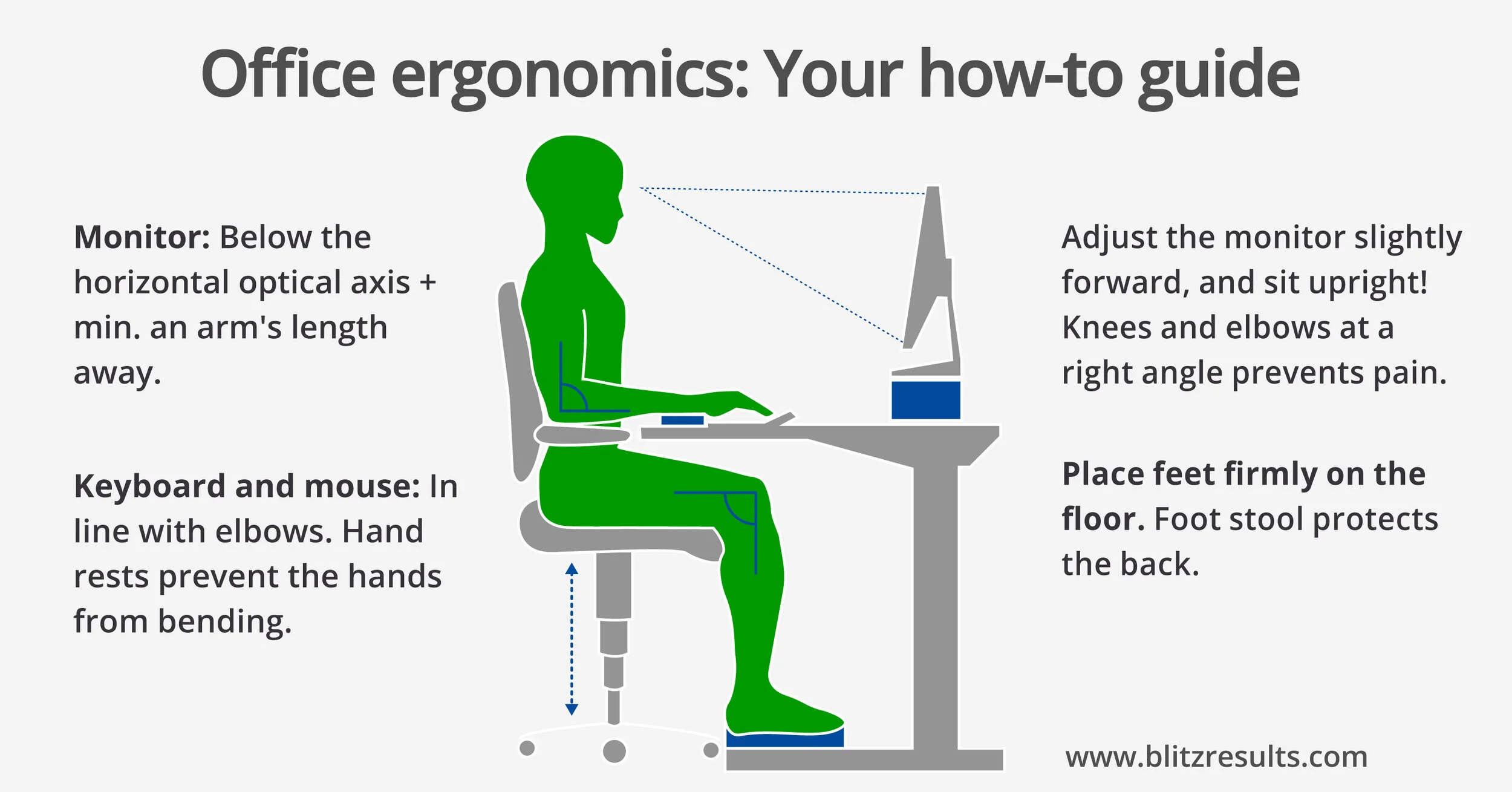
"Most people don’t realize how much damage prolonged sitting can do, but there are some simple remedies. In most cases, minimal adjustments to your desk and chair will help ensure proper posture,” says Tim Lilling, expert at blitzresults.com.
Here are some more great tips to prevent pain at your desk:

How Freelancers Can Protect Their Finances in 2020
Here’s how to make your finances as stable as possible so you can be less stressed.
Running a freelance business is a lot of flying-by-the-seat-of-your-pants feast or famine. This can play havoc with your finances, especially if you aren’t prepared to handle emergencies when they arise. Here’s how to make your finances as stable as possible so you can be less stressed.

Insurance
Nothing can be worse than having a disaster strike your family – a costly one – that you’re unable to pay for. It’s a tragedy that all too often befalls freelancers that have neglected to get the right insurance. I know, I know, you don’t want another bill to pay, but insuring all areas of your life can literally be a lifesaver.
Look into getting insurance for:
Vehicles
Pets
Health
Home/Rental
Funeral (life insurance)
Business
Coverage for if you get hurt and aren’t able to work for a short amount of time (like Aflac)
Be sure to check the small print before you sign up and beware of companies that raise rates and deductibles without warning. Sometimes the company with the lowest price isn’t the right one for you. Check out a company’s reviews and talk to your friends and family to find an insurance company you can trust.
Budgeting
The current economic climate has millions of freelancers struggling to put food on the table and living from paycheck to paycheck every month. To make your money go a little further, create a stringent and all-encompassing budget so that you can see exactly where you’re spending cash unnecessarily, and where you could save on weekly purchases in the long-term.
To get started, write down all of your monthly expenses, including coffee, gas for your car, utilities, clothes, food, etc, for a month. Yes, I’m telling you to grab a notebook or journal and write down every single purchase for a whole month. You’d be shocked at how much you purchase in a month, even if you are already very budget contentious.
Then write down your monthly income. See how they match up and cut or scale back on any unnecessary expenses like cable or eating out.
Put the extra into a savings account that collects interest so you have something to fall back on during slow times. Those with the healthiest financial situations can save cash every month – to the point that they’re able to invest some of their wealth in new assets, like stocks or property, too.
Pro tip: Save money on your budget by switching to more affordable utility services. There are many tools online that can help with this. Simply search something like “electricity plans in Houston” to find a tool that will find you the best deal.

Avoid debt collectors and repo men
We’ve all been there. A client fails to pay and an emergency has wiped out your savings. Suddenly you don’t have enough money to pay your bills. This scenario can leave you hopelessly lost – unsure what to do. Whether you’re struggling to pay your rent, your mortgage, or your loan repayments, you need to find ways to avoid debt collectors and the late fees that can rack up, making your debt spiral out of control. Here are some tips for when you fall behind.
If you fall behind on your car payment, call your lender and ask if you can take the missed payment and add it to the end of your loan. Many companies will be happy to do this and it gives you some breathing room.
A lot of companies like banks, utilities and credit card companies will also let you break a missed payment up into chunks. Then, they will add a little to future payments until you’re caught up. This is much easier than trying to pay a missed payment and your current payment at the same time.
When you’re falling behind on student loans, ask for a forbearance. The interest will still build up, but your payment requirements will be paused until you get back on your feet.
By the way, be sure to watch out for illegal debt collecting practices. A lawsuit related to unfair debt practices can take on the debt collectors if they try to process your case wrongly or illegally.
Prevent the famine
Most freelance writers will tell you, you’ll have times of feast and famine. One month you’ll have work flooding in, and then the next month you’ll be sitting around, panicking that your freelance career is over. One of the best ways to prevent those lean months is to pitch consistently. 12 at play keeps the bills at bay! I explain the 12 rule and how to pitch properly here.
Another thing you need to do is to have a backup plan. When it looks like you’re going to have a slow month, don’t just sit around. Contact old clients and see if they need anything written. Work on your blog so that you can have an alternate source of income. Come up with a side-hustle that’s related to what you already do (here are some good side-hustles for writers). Keep the momentum going and you’ll pull through until more clients come along.
Want to learn how to make a successful living as a freelance writer? Get the No-Fluff Freelance Writer Starter Pack. Only $29.97.
Starter's Guide to Becoming a Professional Writer
Freelancers don’t have it always easy, but if it’s the life you want for yourself, you need to aware of the inherent costs and hurdles. Here’s some things you need to know when getting started as a freelance writer.
More and more employees find themselves sitting at their desk and dreaming of becoming their own boss as a professional writer. It’s a recurring dream for all those who want it difficult to juggle with the unnecessary office politics or the toxic colleagues.

Whatever the reasoning, self-employment is at its highest level in the UK and the US, signifying more and more people have decide to move their professional career under the freelancing skies. After all, if there’s something appealing in the world of freelancing, it’s the sense of freedom that you get. For many, freelancing as a professional writer is the way out of the career or a company that didn’t suit their personality or desires.
But working for yourself comes at a high cost, in terms of money, social behavior and mental health. Freelancers don’t have it always easy, but if it’s the life you want for yourself, you need to aware of the inherent costs and hurdles. Here’s some things you need to know when getting started as a freelance writer.
The legal stuff
Do you know how to pay taxes or if you need a business license in your area? You need to research these two items before you start taking on clients. Here’s some tips on the legal part of becoming a freelance writer.
You compete against other market players
The freelancing world is that the market is a busy place. There is a lot of competition coming from a variety of places. As an independent contractor, you might find yourself competing against companies or other freelancing individuals.
In fact, if you’re not in a position where you can bring your client a competitive edge, either by your expertise or your specialist niche experience, you’ll be struggling to make ends meet. There’s no way around it: As a freelancer, you need to have top qualifications, and more often than not it’s something you need to invest either or money into. How do you gather the relevant knowledge? There are many options, depending on your area of freelancing.

For instance, if you’re a freelance copywriter and want to attract more financial writing gigs, you might need to get an MSC Accounting and Finance – and studying, as you know, doesn’t come for free.
You might also want to take on an internship in a specialist sector, just to gather the relevant market knowledge. The advantage is that an internship position doesn’t require any payment on your part. The inconvenient is that it isn’t paid either.
Another option is to find a niche in what you're already skilled at. For example, if you were a firefighter, you can write about safety. If you're a mom, you can write about a wide range of topics, from childcare tips to home organization. If you're a nurse, you can make the health field your niche.

You don't need to base your niche off of your old career or degree, either. It can also come from hobbies you are passionate about. Say, for example, you love to cook. You don't need a degree from the Culinary Arts Institute. Your resume can say something like:
"As a lifelong home cook trained by three generations of women, I have made over 5,000 recipes in my life."
This is how I started writing about tech. I don't have any kind of technical degree, but I'm passionate about learning everything about it. This gives me an edge.

Here are some more tips for standing out from the crowd.
Professional writer, be organized
When working in an office, there is only one thing that you need to worry about: Finishing your project within the deadline. When you work for yourself, you need to become a master of organization.
If you work on several projects at the same time, you may find it useful to stay on top of your client tasks in the same way that companies manage employee schedules, with a work schedule maker.
Fortunately, there are plenty of affordable or even free tools, starting with the obvious pen and paper. However, the more complex your tasks are, the more you’ll have to spend on keeping your freelancing business on track, from automated invoicing to digital task overview.
If you're a goal oriented person (I recommend setting goals to build your career, btw) get a planner that focuses on setting goals while organizing your day. I personally use the Law of Attraction Planner. If you want a digital organizer, try Google Calendar. It's free and you can set up alarms and reminders.

abundance planner
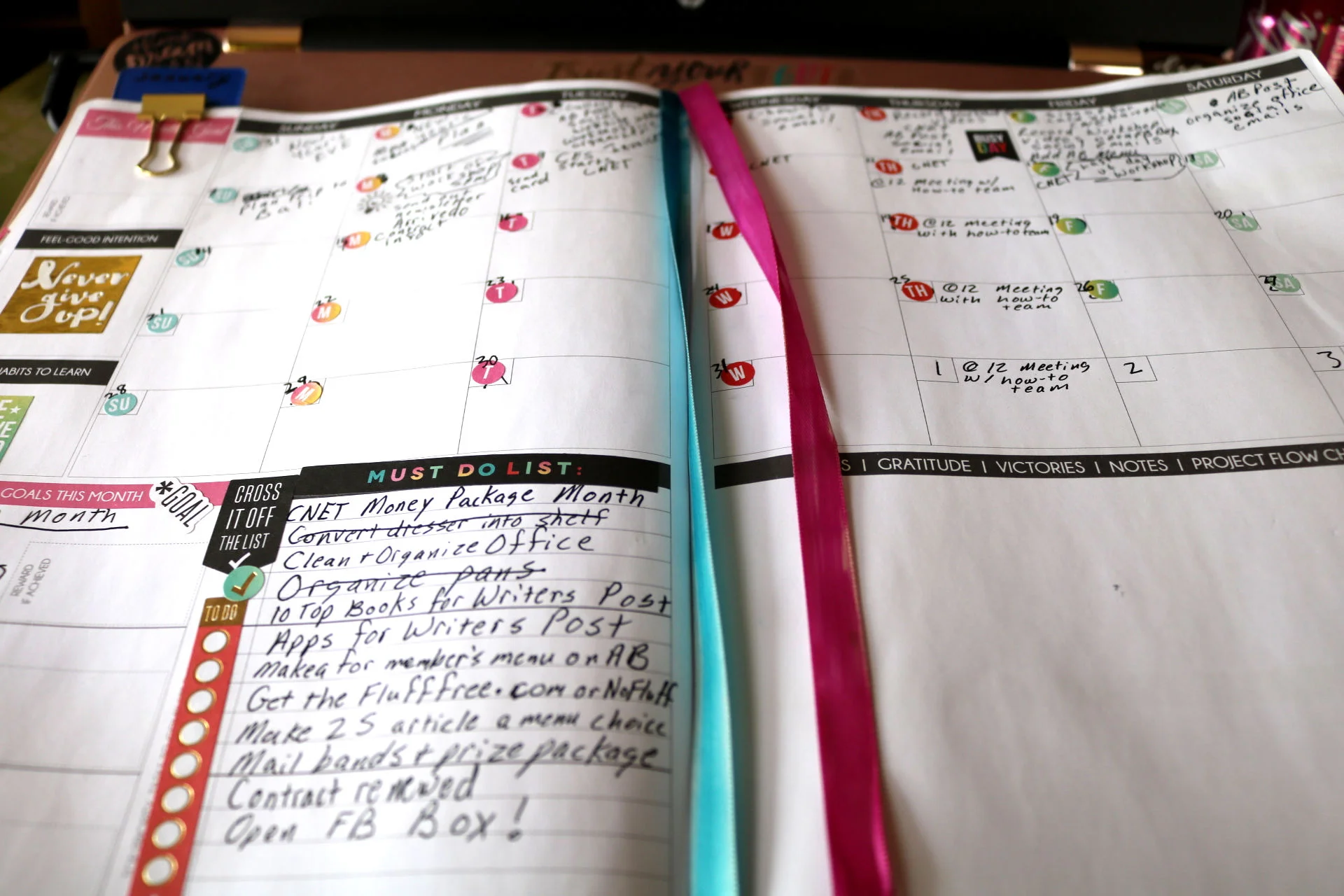
Another must have is a note taking app that you can use on your desktop, computer, phone and tablet that syncs all of your notes. I use OneNote and probably won't use anything else. I have a page with links to all of my social media and books so I can just copy and paste it when people ask for the information. I also have pages for writing guidelines for various clients, project ideas and email templates.
You create your own office
If you work from home, you will need to design a home office that is both inspiring and functional. More often than not, you’ll come across cute home office design tutorials that list all the furniture and DIY tools required to achieve “the look.” But they often forget to mention the cost of your work setting.
As a freelancer, you will need a decent desk, the relevant tech – from laptop to printer – and a storage facility. Remember that you’ll spend long hours working, so you need a comfortable and homely decor.

my desk
Here's a list of the basics:
Laptop or desktop. (I prefer a laptop so I can work from anywhere.)
Desk. (I use a standing desk, but for years I had an old door propped across small filing cabinets.)
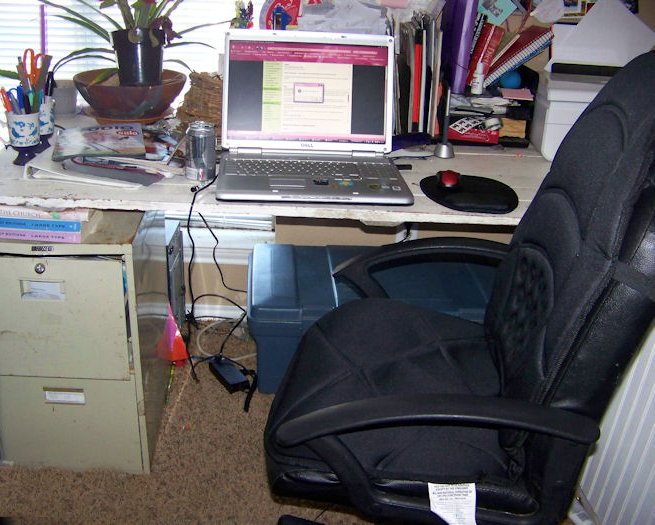
Some kind of online portfolio or website. (I suggest just getting a LinkedIn page to start here is some more in-depth info on building a portfolio.)
If you're going to write for local businesses you'll need business cards. (Moo.com is my card maker of choice. Here are my cards, below.)

Business cards for freelance writers
Business cards for freelance writers
Need a break? It’s at your expense
Being paid by the project, you might be tempted to work almost 24/7. However, overworking yourself is not a practical solution. Not only will this decrease the quality of your work, but it can put your health at risk too. Be safe, my professional writer friend!
You do need to take a break to recharge your batteries. Holidays and sick days are not remunerated, though. What this means is that you need to evaluate your health against your finance: Can you afford to take a day off?
One of the things I love about being a freelancer is that I can do my work ahead of schedule so I can take a week or two off. My clients are happy, I get paid, and I get needed time off. I take several vacations throughout the year.

professional writer on vacation
Either you multitask, or you pay someone to do it
Working for yourself as a professional writer means that you need to be a marketer, an accountant, a sale representative and a freelancing expert at the same time. It’s not only exhausting to juggle between each job; it seems that multitasking also reduces your IQ and productivity.
If your budget is in the green (a simple monthly budget template can help you keep your finances in line), you should consider outsourcing. If it isn’t, you’ll need to rely a smart tool such as ToDoist to keep you focused on one task at a time. I ended up setting up some automated systems because I just couldn't do EVERYTHING. Now, I have an assistant.
Working alone as a professional writer affects your health
As a freelancer, you’re free from the office routine and the colleagues -- and drama! It also means that you are on your own. While it might seem like a blessing at first, it’s a lonely career, and it can become extremely depressing and stressful.
Indeed, the very nature of the gig economy undermines the need for security. Job insecurity can lead to depression, anxiety, emotional exhaustion and even heart disease, and that’s precisely what you will be dealing with every single day of your self-employed life, if you let it.

Me in my office.
My advice is to not be scarcity oriented, but abundance oriented in your freelance business. The more you think about the abundance that's coming your way, the more confident you will be, which will attract more clients. When I was starting out I called it "fake it until you make it". This mindset will not only make you more successful, it will also lessen the job security anxiety.
Additionally, loneliness is a natural feeling to experience, and it can become a burden when you can’t exchange with same-minded colleagues. Are your ideas still good if nobody hears about them?
For a lot of freelancers, hitting the wall of insecure isolation can break their career and convince them to move back to a more traditional employment situation. If you feel lonely, I suggest joining my Facebook group for writers. It helps to have others to talk to that know exactly where you're coming from.
Also, grab your laptop or your notebook and work at a picnic table at your local park or lake. Even setting up a workstation at your favorite coffee shop once a week can help with the loneliness. When I first started out, I took my kids to McDonalds and while they played on the playground I would brainstorm article ideas.

One of our trips to McDonalds.
Freelancing is freeing (haha) if you’ve got the right mindset and the appropriate expectations. It’s not a lifestyle that is best suited for everyone. Of course, the best way to find out if you like it is to try!
Need step-by-step instructions for starting your freelance business? My book, The Fluff-Free Freelance Writing Master Course, has everything you need, from how to find clients to setting up a fantastic portfolio.

Brain Hacking: Reprogram Your Brain to Create Writing Goals
To Achieve More with Your Writing Career Than Ever Before, Reprogram Your Brain with a Specific Plan!
To Achieve More with Your Writing Career Than Ever Before, Reprogram Your Brain with a Specific Plan!
“If you’ve ever attended a seminar and been inspired to make great change, only to find yourself right back where you started, you’ve experienced the enormous gap that exists between setting goals and actually reaching them,” says John Assaraf. “Whether you’re trying to do something as simple as exercise once a week or something as daunting as leaving your job to start a business, that gap is always there.”

So how can people overcome this gap between setting goals and achieving them? The key, John asserts, is in creating a specific plan.
“Plans can help bridge that gap between goals and achievement,” he says. “Without plans, your goals are really just dreams. The reason plans work so well is because of the way they impact the brain.”
Here are four distinct reasons why “Innercising” your mental-planning muscle can make all the difference.

brain hacking
HOW and WHY Work Differently in the Brain
Goals with a high emotional value can create a dopamine release in the brain. If you set a goal with a powerful why, you experience that first dopamine hit. But while that why is critically important to creating your goals, it’s only a first step on the road to accomplishing them. The old saying, “Where there’s a will, there’s a way,” isn’t quite accurate. Where there’s a will, we also need to create a clear way. We need to make sure we activate not just the parts of the brain that help us create the goal, but also the parts of the brain that help get us there.
Spend all your time in “why” and you’re a dreamer who never takes action. Spend all your time in “how” and you might be busy, but with what? When you activate these various parts, an important switch takes place. You move from your conscious mind to your subconscious mind; you move from the realm of imagination to the realms of belief, action, and, eventually, productive habits.
Your Brain Thrives on the Mini-success of Plans
The initial boost of dopamine you get from setting a goal is helpful — and you can continue to support your efforts by focusing on your goal — but that’s not enough. Big change is almost always a long-term project, and for that you need the ongoing motivation that comes from regular dopamine infusions. Fortunately, that delivery method is prewired into your brain. Every time you succeed at something, your brain releases more dopamine. It’s a reward system designed to keep you doing more of what works, and less of what doesn’t.
The secret to those tiny bursts is a clear plan created from small steps. Each baby-step success provides a dopamine boost that motivates you to take another step, and on and on. With enough doable steps, you can create a virtuous cycle that ensures you have a steady supply of motivational fuel to reach your goal.

goals with brain hacks
Goals are Loose Ends in the Brain
One of the surprising paradoxes of change is that goals can actually distract you from… well, reaching your goals. Because your brain is so goal-oriented, it keeps focusing on your goals even when you’re not actively working toward them. When you want something and you don’t yet have it, your brain continues to allocate resources to “keeping the goal alive” until you can accomplish it. This would be fine if we only had one goal to think about. In reality, though, your daily life is filled with a multitude of goals of wildly varying sizes. Even the act of brushing your teeth is fulfilling a goal.
The result is that goals become a kind of loose end in the brain, and those loose ends can distract us from the work of actually tying them up. It’s a surprising contradiction, but one we have to resolve in the brain. The best solution for this is planning.
Your Two Brains are Time-Conflicted
Imagine that you’ve set a goal to lose weight. To accomplish this, you’ve decided to change your diet. Setting the goal has likely inspired you, yet, almost without realizing it, you find yourself adding less-healthy choices to your shopping cart or sitting in front of the TV with a bowl of something sugary. What happened? How can you be so motivated in one moment and so off-track the next?
The culprit in this case is how different areas of your brain view time. You see, parts of your brain have the ability to set goals for the future while other parts are more inclined toward immediate gratification. Once again, planning is the bridge. A good plan tells you what to do next. Without one, you can feel a void that you’re likely to fill by reaching for default unhealthy habits you’ve been stockpiling over the years.
About: John Assaraf is a serial entrepreneur, brain researcher, and CEO of NeuroGym. In the last 25 years, John has grown 5 multi-million dollar companies in real estate, internet software, brain research, and life and business coaching and consulting. He is the author of two New York Times best-selling books: “Having It All” and “The Answer.” His brand-new book is called “Innercise: The New Science to Unlock Your Brain’s Hidden Power” (Waterside Press, 2018). John has made frequent appearances on Larry King Live and has been featured in eight films, including the blockbuster smash hit “The Secret” and “Quest for Success” with Richard Branson and the Dalai Lama. He is one of the leading behavioral and mindset experts in the world, with a unique ability to help people release the mental and emotional obstacles that prevent them from achieving their very best in life and business. John is a vegan who creates and eats his own hot sauces, meditates daily, and exercises six days a week. He loves skiing, traveling, taking cooking classes, listening to the Bee Gees and Enigma, and being a dad, husband, and mentor.

Yes, Even Freelancers Can Take Breaks From Work
Some people are worried about making the transition to freelance work because they know it means no paid days off for vacation. You don’t have to see no paid time off as a massive negative. There are ways you can get around it. Sure, the stereotypes of freelancing may include not taking any vacations and working long, long hours, but I know lots of freelancers who are able to take time off when they need to. Including me! If planned correctly, taking a vacation as a freelancer shouldn’t hit the bank balance too hard either. Want to know how to set up your own freelance vacation? Read on!
Plan Well in Advance
One of the key factors in being able to take time off from your freelance business is planning your escape well in advance. Once you know which days you are going to be away, you should block those days out in your calendar so that you don’t accidentally sign up for any work or projects.
You might also want to try to book in a bit of extra work in the weeks running up to your vacation. That way, you still get paid while you take time off. Planning well in advance also gives you enough time to save up a bit of extra cash so that your bank isn’t strained by a few days of no work.
View this post on Instagram
A post shared by fam vibes (@famvibes) on Jan 18, 2019 at 1:41am PST
Consider Handing Some Tasks Over to A VA
If you are worried that your inbox will be flooded with important emails while you are away, you could always hire a freelance virtual assistant (VA) to manage your inbox for you while you are away. This could be especially important if you won’t be checking your emails at all during your vacation. If you use a company like Virtual HQ, you would also get the benefit of their efficient telephone-answering service.
You might even want to hire a virtual assistant who is able to take care of some of your projects for you while you are away. Outsourcing your work will mean that your clients won’t notice any disruption in the services that you provide. However, it does mean that you need to find a VA who you completely trust with all of your work projects.
Have Some Projects Planned for Your Return
It’s a good idea to have a few projects lined up that you can start as soon as you get back to the office. You’ll then be able to start earning right away. If you don’t do this, then you may spend a couple of weeks hustling for some new work, which means even more time not bringing in an income. Plus, having some work to start with as soon as you are back will help you get into the swing of running your business. Your post-vacation blues won’t last for too long if you are busy working!

how to take a vacation when you freelance
Take Advantage of Weekends
Most freelancers are able to work to flexible schedules. So, if you do need to take a few days off during the week, at least you will be able to make up for them at the weekend. If you take advantages of weekends in this way, then you should find that you are able to take more breaks through the week.
Let All Your Clients Know
Make sure that all of your clients know you will be taking some time away from the office. They will understand. Trust me! After all, you are only human and will certainly deserve a break sometimes!
Turn on Your Out of Office Email Notification
Don’t forget to turn on an out-of-office automatic email reply before you leave the office. Most email providers will offer this service free of charge. Just go into your email settings and look for the Vacation Responder option.

how to take a vacation when you're a freelancer
You will be able to customize the message, so it’s a good idea to mention how long you will be away and if there is an alternative way to contact you. Once your out of office is switched on, anyone who tries to contact you will be reminded that you are away when they send you an email. This way no one will be annoyed if it seems like you are ignoring them!
It’s Ok to Check in During The Break
It’s perfectly fine to continue checking your emails while you are on your vacation. In fact, you might want to even take your laptop with you so that you can carry on with a small amount of work on your travels. Quite a lot of freelancers follow the 80-20 rule of vacationing. It basically means that you spend 80% of your time relaxing and enjoying yourself, while the other 20% is dedicated to work. Your whole vacation won’t be completely spoiled by constant work, but you'll still get things done.
Relax!
Of course, you should ensure that you do have plenty of time to take a breather and relax while you're on vacation. Recharging your batteries allows you to return to your desk a lot more energized and rejuvenated.
Taking a break is perfectly reasonable and acceptable even if you are a freelancer. I’m sure you deserve to get away for a few days, just make sure that you enjoy yourself!

7 Ways to Make Your Site Traffic Soar in 2019
If you're looking for more traffic to your website in 2019, get going. It won't happen on its own. Here's what you need to do to make 2019 your blog or website's best year yet.
Update Your Content
With changes in rules, regulations, laws and the way technology is advancing at an amazing pace, something you wrote on your website 6 months ago could be totally out of date and mislead anyone that reads it. You need to reread all of the past articles and blogs and update any of them that fall into this category. Search engines will see the post as still being relevant and that can help with your SEO rankings.
The trend seems to be that long articles attract more attention too. One that is between 2000 and 3000 words gives the impression of being more informative than a 500-word blog and this means that more people go to your site to read it. Of course, don't stretch out articles or blog posts unless you have great information to add. Remember my manta: No fluff!
Optimize Your SEO
It is no secret that SEO is one of the most successful ways to drive traffic to your website, but the way SEO works changes all the time. Some of it has to do with keywords. Search engines try to discover the topic of a piece by looking for keywords in the article. If you use keywords no one is looking for, then your article will rank poorly. On the other hand, if you use too many keywords, your article will also tank.
SEO
They also look for other sites that have linked to the article and how well it is shared on social media. When the information, and it's good, they move you up the rankings. As most people only look at the first couple of pages of search results, the higher you are in the rankings the better.
There is more to it than written content though. As technology has advanced so have the capabilities of the tools used by the search engines. They can now take account of video and image content as well, and can even move you up the rankings if you get a good amount of followers on social media.
To learn more about SEO, check out my step-by-step article.
Use Ads to Move Up the Rankings
Most times, when you put something into your search engine, the top few results will say ‘ad’ at the side. This is because businesses have paid to be in one of the top spots. This can be well worth the money invested because then your page is much more likely to be linked to by viewers, raising your rank.
This is just one way the likes of resources such as Google Ads can help to increase the traffic to your website and with Adwords scripts collection you will have an automated service that will control your Google Ads data. That way, you can do more and reach more people with less effort.
Make the Most of Social Media
Social media is a must for all businesses. It is a vital way of getting your brand known and of sending more traffic to your website.
You should post every day, at least, but do not make all your posts promotional. If you do, users will start to scroll past your posts without bothering to read them. One promotional post out of five is a good rule. Some people post 20 percent promotional content and 80 percent other content. Your mix will depend on your target audience.

Don't just use memes, photos and text posts. Videos are sometimes the best way to attract attention to your brand, and if they contain some humor they are likely to be shared many times.
Always respond to any comments in a positive manner, as this will help to build trust in your business. Nobody wants to deal with rudeness.
Also, put a link to your site on all your posts, and then you will get people go to it more often. Here's an example of how I do that on Instagram. When they get to your website, it should be engaging immediately. You only have 3 or 4 seconds to grab their attention and if your website does not do that, they will move elsewhere.
Email Marketing
Email marketing fell out of favor for a while but now it is back. It is a great way to stay connected with existing customers or to make connections with new ones. Each email has to be of interest or solve a problem for your audience, and it should always have a link to your website included.
There are online resources that will send out thousands of these for you at very little cost. You set the email up, add new email addresses, and they do the rest.
Run a Contest
Running a contest is a great way to attract new traffic. You just have to make linking to your site as one of the rules of entry. Another rule is they must enter with their email address so you can add this to your mailing list.

Consumers of all ages love something for nothing and if the prize is something they would like they will not only enter themselves, they will share it so their friends and family can enter as well. It seems from surveys that the favorite prizes have something to do with travel or something digital. The cost of putting someone up in a hotel for a few nights is nothing compared to the amount of new traffic these competitions can bring to your website.
Optimize for Mobile First
Around 80 percent of internet use is done on mobile devices. This percentage is likely to grow, as smartphones have become little more than handheld computers. There is very little you cannot do on a smartphone now and so it makes sense to optimize your site to suit them before anything else.
mobile optimization
Make Sure Your Business Deserves the Attention
It is no use in increasing your website traffic if once viewers get there the quality of the product or service is not up to standard. You have to ensure that your business deserves all the extra attention you are attracting and that it can cope with the extra sales when those viewers convert to customers.
Above all else, you have to give them a good buying experience if you want them to become loyal customers for the future. Keeping customers is as important as finding new ones, less time consuming than finding new ones and much cheaper than finding new ones. Look after the customers you already have, implement some of the suggestions above and your business will flourish.

Mistakes to Avoid when Planning Your Career Move
Instead of jumping in head first, you should think the new business or career through to make sure that you are able to tackle the challenges ahead. Below you’ll find a few mistakes to avoid when planning a career move.
If you want to try yourself at a new career or start your own business, it is easy to believe that - if you buy some books and enroll in a training - you are guaranteed success. Instead of jumping in head first, you should think the new business or career through to make sure that you are able to tackle the challenges ahead. Below you’ll find a few mistakes to avoid when planning a career move.

No Market Research
No matter if you would like to become a professional medical freelance writer or get started with flipping properties, you need to get to know the market you are entering. A good way of assessing your chances for success is completing a SWOT analysis. Once you have a clear business plan, you can identify the strengths and weaknesses of your model, the opportunities, and the threats. Further, you will have to assess the competition in the marketplace.
Lack of Investment
While people will tell you that you can make money without investing, this is hardly ever the case. Even if you are looking for remote jobs for graduates, you will need to upgrade your laptop and software, invest in research training, and get a home office built. If you want to enter a manufacturing market, however, you will need to buy equipment and get professional certifications and insurance.

Not Paying Attention to the Latest Technologies
Many people think traditionally when entering a competitive market, and they fail to differentiate themselves. No matter if you want to make money through oil production or consulting, you need to be aware of the trends. For example, check out greasebook.com to find out more about the latest developments in the oil and gas industry. Do your research and order white papers, read research studies and patent documents to be in the picture.
Not Being Realistic
You must create measurable and clear goals for your business. It is highly unlikely that you will break even in just a few months’ time. If you are starting a freelance business, you will need to take lower payments in the beginning, until you have a solid reputation and great feedback score.

Neglecting Marketing
Whether you seek a paid position with a company or want to work for yourself. It is important that you learn how to market yourself as a professional. Learn basic CV writing skills, find out more about what customers and companies are looking for, and invest time and money in marketing. Use social media, start networking, and find out as much as you can about your potential employers, customers, and business partners.
If you would like to change your career, more often than not you will need to change your mindset, too. Don’t set unrealistic expectations, but invest in your training and research, as well as marketing your skills and services. Find out as much as you can about the latest trends, and learn how to differentiate yourself in the competitive market.
Here's How To Identify Your Soul Purpose To Live A Regret-Free Life
Here's some interesting news that was sent to me in an email this morning. I thought it may help you when planning goals for your writing career or just life in general. A new study from Cornell University published in the journal Emotion uncovered the biggest regrets that people had in life, reports Forbes.com.

“And they aren’t about missing a deadline or not buying a big house,” says Jennifer Longmore, B.A.S.W., M.Ed, a Life Coach & Founder of Soul Journeys, an international coaching company that helps everyone from Fortune 500 CEOs to Professional Athletes rediscover their life’s purpose.
The study found that the biggest regrets people had in life were about failing to fulfill their hopes, goals and aspirations and NOT about failing to fulfill their duties, obligations and responsibilities, writes The Cornell Chronicle.
“We want to feel like we matter and that our lives have meaning, but in order to do that you have to first identify your life’s purpose and then go after it,” explains Jennifer Longmore, who has conducted over 30,000 soul purpose sessions, including ones with Fortune 500 executives at Microsoft, Amazon and Disney, as well as with professional athletes from the Chicago Bulls, the L.A. Lakers and the Seattle Sounders.
Longmore says:
Here's How To Identify Your Soul Purpose To Live A Regret-Free Life
Flip through magazines. Rip out pages that speak to you, even if you don’t know why. It can help you identify your passions.
Identify leaders you admire. Read their biographies. You can get clues to how they live their life. Success always leaves clues.
Look for people in your life who you feel are living on purpose. Go ask them some questions. Just talking about this with others will help you start to uncover your own passions.
Be purposeful. When we are purposeful about morning habits it ripples into other areas of our life. Set up a morning routine for your first hour of waking and start doing this every day.
Clear out your unhealthy habits. Put a priority on health. We all know what our bad habits are, work on cutting them out. Health clears the mental clutter and makes you think clearly, making it easier to discover your life path.
Read books on soul purpose, goal achievement, and mindfulness. Try The Fluff-Free Freelance Writing Master Course Workbook: The only course that gives you concrete, actionable information to building a successful freelance business without any fluff.
Start small. Once you have an idea of something you want to achieve, try it on for size – see if you really do like it before you dive headfirst.
Meet people. Network with people who are doing what you want to do. Not only will you learn from them, you may get an opportunity to jump into the work.
Make time. Make your purpose a priority. On hour a week, google how to achieve your goal and schedule these steps into your calendar for specific dates and times.

Small Blog, Big Ideas - How To Turn Your Blog Into a Success
How do you make your blog a success? Read this advice below to help improve your blog and gain traffic that will allow you to make money from doing something that you love.
For many freelance writers, having a successful blog is at the top of their goals list. While it’s great to make money writing for others, there’s something rewarding about writing for yourself (and being paid for it).

blogging
The issue with blogging, however, is that there is a lot of competition out there that can make it difficult for your blog to get noticed. How do you make your blog a success? Read the advice below to help improve your blog and gain traffic that will allow you to make money from doing something that you love.
Put good content first
Before worrying about increasing traffic to your blog, you need to focus on creating good content. That way, when people visit your blog there’ll be something worthwhile waiting for them.
There are some excellent suggestions for blog content that can make it easier for you to find ideas. Instead of writing the usual posts, consider doing interviews, reader ideas and videos to give some extra depth to your content and make it different than others who write in your niche.
Make sure it runs like clockwork

Websites can break, and there’s nothing more frustrating than coming across a page that is riddled with errors or takes ages to load. As well as spending some time creating content, you should also focus on maintaining the back end of your blog.
If you self-host, you’ll have to do updates manually, so it’s worth checking once a week to see if everything on your blog is in working order. Keep an eye out for broken links in particular and fix them if you need to. If you’re struggling with speed or functionality, you may want to consider using a different provider to ensure your blog benefits from the most up to date services.
Boost the visual content of your blog
Having high-quality written content is great for your blog, but even avid readers can start glazing over when faced with a long wall of text. Create some beautiful visuals to go with your blog content such as photographs and graphics - these will help add interest to your posts and make your blog look more professional.

freelance writing
You don’t even need to be a great photographer to add photos to your blog; there are some amazing free ways to get photos for your blog that give it an incredible look and feel.
Work on your promotion strategy
Promotion is important for getting your blog noticed. If you have social media channels, make sure that you share your posts on them. The principles of creating an effective social media plan are the same whether it’s for a blog or other type of product, and involve a bit of planning and thought on your part about what you want to achieve. Here's my guide to social media for writers.

getting more clients as a freelance writer
Alongside your promotion strategy, think about how you can engage with others in the community and build up relationships with other bloggers and those with an interest in your content.
Focusing on the promotion can be just as important as creating the post itself, so bear that in mind when you’re organizing your time.
Try guest blogging
Guest blogging is a popular way for bloggers to increase their traffic and followers. You can guest blog for others or have others guest blog for you - a mix of the both can achieve excellent results.
You should read up about using a guest post for backlinks to see the benefits it could offer your blog. Guest blogging and effective backlinking help to increase your Google rankings, and can be a good strategy to implement alongside SEO to help make it easier for people to find your blog.
Don’t lose your enthusiasm
Blogging requires passion and enthusiasm to keep the momentum going, and if you lose these, then you could soon start to find maintaining your blog a chore. Instead of feeling uninspired or lacking motivation for your blogging, take a step back from it to help you miss it, as well as give yourself some space to think of new ideas.

making money online
Spend time reading blogs about things that you enjoy and have an interest in; this can help reignite that spark in you that renews your enthusiasm in your own blogging niche. Choosing a topic you know you love and will enjoy writing about is important, so consider your blogging subject carefully before you start pouring all of your energy into it.
Blogging can be a rewarding pastime as well as an effective way to generate income for yourself. Take a look at some of the ways you can monetize your blog and start generating some money from your hard work. A successful blog is within your reach, you just need to work to achieve it.