

Tip for New Writers: Successful Writers Don’t Burn Bridges
Don’t burn bridges with clients, new writers. Here’s why.
Should you fight the system? Here’s my thoughts.

I frequent many writers’ forums. I like to lurk, absorbing the knowledge that my peers type about companies and publishers. I remember that a few years ago I stumbled upon a thread full of angry writers. The writers all freelanced for a publication that I wrote for, as well.
The publication had decided to essentially put all freelance projects on hold while they sorted out financial issues. I understood and was patiently waiting to hear if I would get to work with them again. The group of writers in this thread didn’t feel the same. Many threatened the company with a smear campaign. Others posted hateful diatribes directed at the editors of the publishing company. Many declared that they would never write for the company again.

This company had been good to their writers. They always paid on time and offered extra incentives for hard work. I had to wonder if these angry writers were shooting themselves in the foot with this public display of angst. You see, as a freelance writer of more then 20 years, I have learned to take everything in stride. I know the value of holding my temper and not burning bridges.

When I first started my writing career I went to work for a small company as a freelance article writer. This company was bought out only months after I started writing for them. They told their writers that they would be handing out work again within a month’s time.
I didn't hear from them (other than a "wait and see" letter) for more than a year. Instead of sending them a hateful I’m-Tired-of-Waiting email or ranting about them on forums, I took work with other companies. Then, one day they emailed me out of the blue and offered me a fantastic opportunity. The job took me about thirty minutes and I got paid $100.
Maybe the problem is you
Since then, I have worked for them consistently for two years and have made thousands of dollars. Another time that I could have burned bridges was when a publication wouldn’t answer my emails. I had worked with this publication for around a year and they paid well. Plus, I loved the work.
Suddenly, though, I stopped receiving emails from my editor. Did I send a heated email? No, I gave them the benefit of the doubt. Turns out, my email system was blocking their emails even though I had them on my safe list. After the problem was solved I continued writing articles for them and made a lot of money. I’m just glad I didn’t try to jump to conclusions!

Things change
Even though that editor wasn’t the problem, many are. I’ve dealt with some real jerks in my time.
One of my first editors, for example, was a piece of work. She’d rarely answer her emails and when she did she would give me one sentence answers that didn’t even address what I had asked in the first place. Then, when I emailed her again, she would give me very snotty responses.

I remained civil and, though I was tempted, I didn’t tell her off. Many writers will tell you this is a mistake. My theory is that no editor stays at a publication for very long.
You don’t need to waste your writing time fighting the system, it will change soon enough. Sure enough, a few months later a new editor took her place and that publication is still one of my best sources of income. Moral of the story? Getting work as a writer is hard. Making connections is hard. Don’t make your life harder by burning bridges.
Be nice 24/7?
So, you’re probably wondering if I’m telling you to just roll over and take bad behavior. No way! If you are experiencing sexism, racism, or abuse, go over the editor’s head or terminate your contract with the client. Some behavior just can’t stand. Just make sure to act professionally. Don’t rant, don’t rave. State your problem clearly and back it up with screenshots.
Need help? Here’s everything you need to start a successful freelance writing career.

High Paying Magazines Looking For Pitches: 19 Magazines on Medium that Pay
You may know that you can publish articles and blog posts on Medium and use them for clips to grab the attention of potential clients, but did you know there are magazines that are owned by Medium that will pay for your work? Yup.
Medium magazines that accept freelance submissions in 2020.
You may know that you can publish articles and blog posts on Medium and use them for clips to grab the attention of potential clients while making a few coins, but did you know there are magazines owned by Medium that will pay for your work? Yup. It’s just like submitting to other online magazines, but through the Medium platform. Medium-owned publications also have the bonus of paying very well. Many pay $1 to $2 per word!
Tim Denning has some more great tips on how to get Medium editor’s attention and get published. For this article, though, I’m going to list some Medium publications, their guidelines, and how to get in contact with the editor.
Also, don’t forget to check out 50+ High Paying Magazines Looking For Pitches.
FFWD
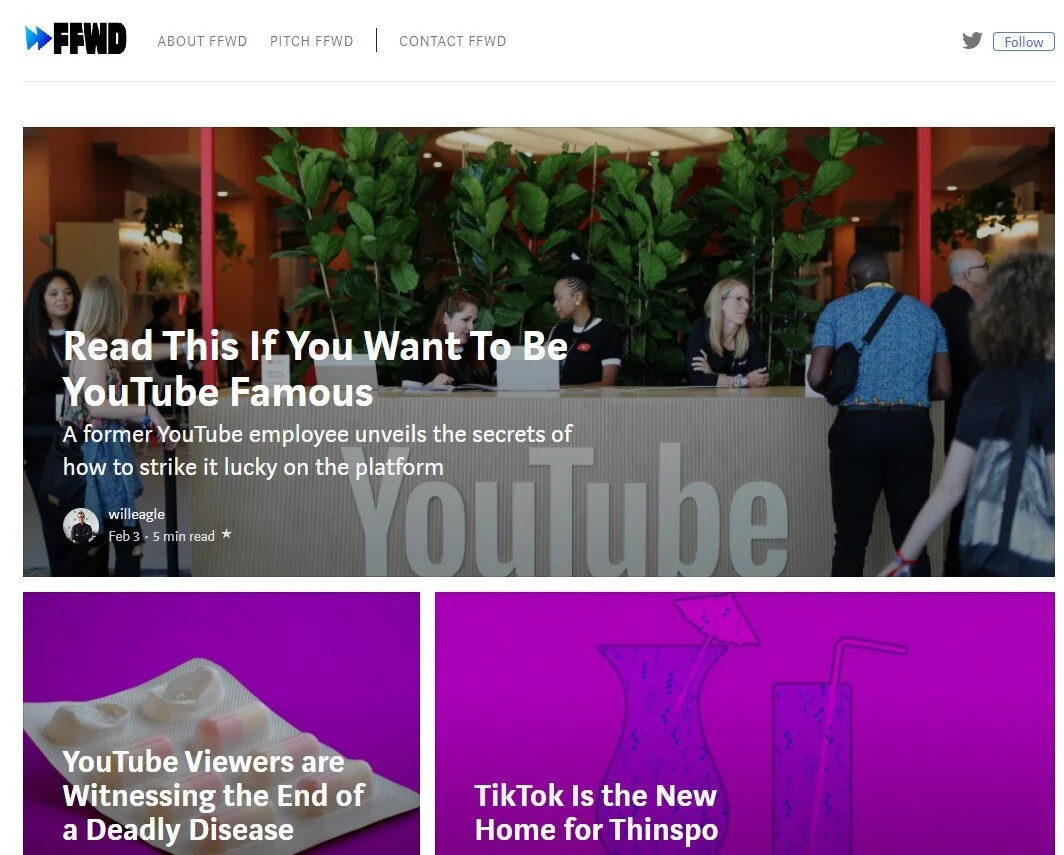
“Think of it like The Economist for online video (meaning at the minute YouTube, Twitch and TikTok), looking at the bigger trends and putting them into all-important context, explaining to readers what their wider impact is for society and how this shifts the way we work, earn money, and spend our time.”
Marker
“Marker is a new Medium publication making you smarter about business. We deliver intelligence by entrepreneurs, CEOs and thinkers, and rigorously reported journalism that changes how you think about the future. If you’re interested in writing for Marker or reaching an editor, you can email us at marker@medium.com.”
Slackjaw
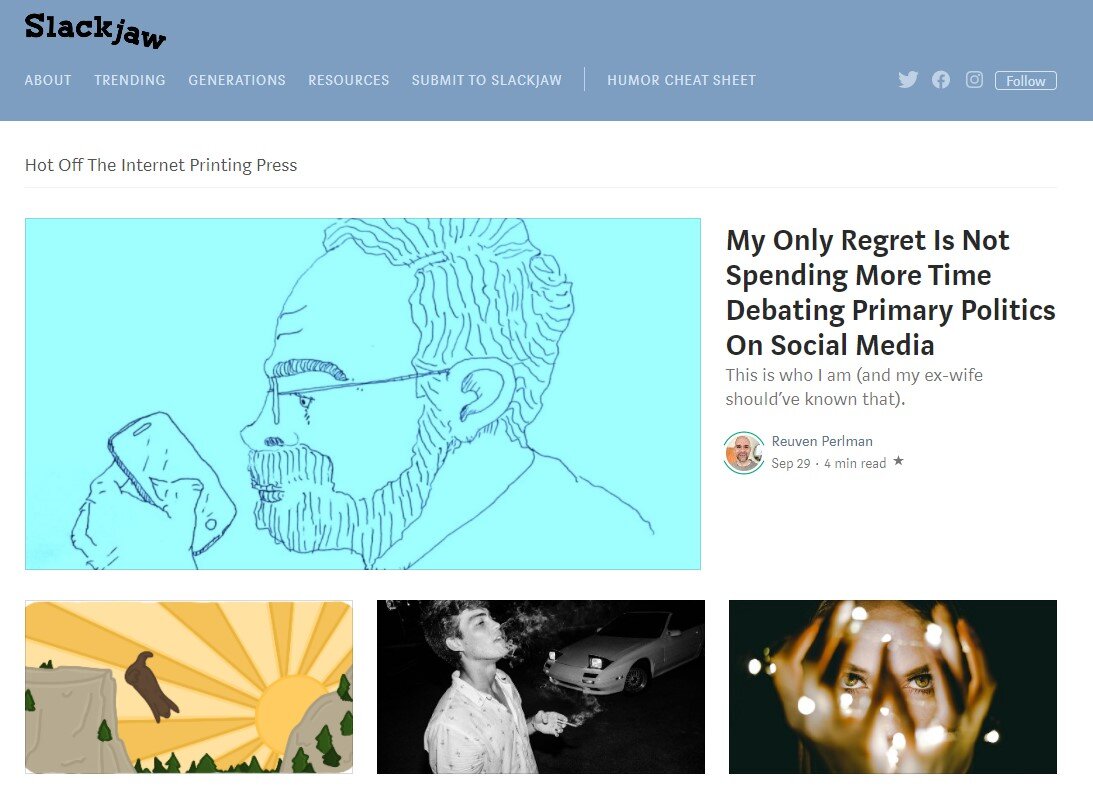
“As the #1 destination on Medium for all-things humor, and think-pieces on cats, Slackjaw wouldn’t be what it is without you, High Warlock of Funny Ideas. That said, we do accept submissions from humor writers of all backgrounds and extraterrestrial lifeforms.”
The Startup
“We’re reimagining the startup. Medium's largest active publication, followed by +708K people.”
Momentum
“This is a blog that captures and reflects the moment we find ourselves in, one where rampant anti-Black racism is leading to violence, trauma, protest, reflection, sorrow, and more. Momentum doesn’t look away when the news cycle shifts. Momentum doesn’t chase the news or report it out dispassionately. Momentum reflects the lived experiences of people right now, and ongoing, in America.”
Guidelines: Submit stories at momentumeditors@medium.com.
Level
“We aim to fundamentally change what you think of when you hear the phrase “men’s publication,” and to do so through and for the worldview of Black and Brown men.”
Elemental
“Elemental is a new Medium publication for science-backed health and wellness coverage. Every day, you will find new ambitious and trustworthy reporting on the many ways to live a healthy life. You can email us at elemental@medium.com.”
OneZero

“OneZero is a Medium publication about the impact of technology on people and the future.”
Guidelines: Submit stories at onezero@medium.com.
Heated
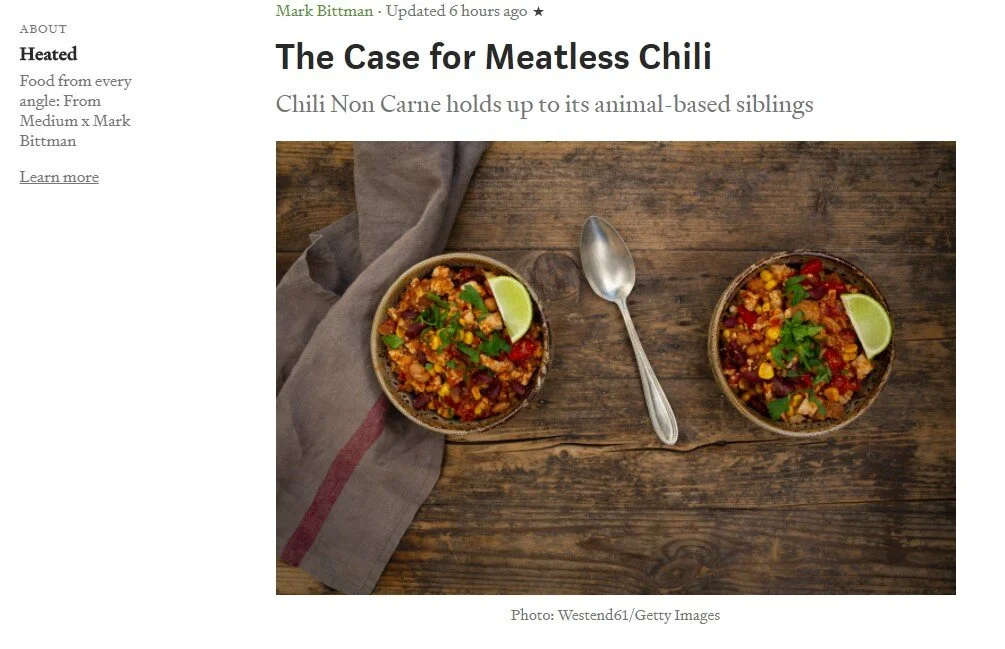
“Our goal is to showcase the links between food and just about everything else: agriculture, politics, history, and labor; culture and cooking; identity, family, and love. It’s a new, ongoing, and exciting project, one in which we intend to involve lots of different voices and views — including, we hope, yours.”
ZORA

“At ZORA, we unabashedly amplify the voices of women of color. We are a digital home for incisive ideas, contemplative thinking, and enterprise storytelling that explores the interiority and intersections of women of color. ZORA gives women of color a place where they are seen and heard, and the intricacies of their lives are honored and reflected daily.”
Guidelines: Submit stories to platform editor, Jolie A. Doggett, at jdoggett@medium.com.
Human Parts
https://humanparts.medium.com/
“Human Parts is Medium’s home for personal stories and perspectives. From the mundane to the extraordinary to the downright weird, we’re here to explore what it means to be human.”
Tenderly
https://medium.com/tenderlymag
“We believe in living deliciously and joyfully, while trying to help more than we hurt, and we’re here for anyone who believes the same. We publish original vegan recipes that center and celebrate plants; the stories of animals who have been liberated from exploitation and the people who helped them; interviews with the most interesting and influential vegans and plant-based chefs in the world; happiness breaks; deep dives into the complex ethics of progressive veganism and anti-speciesism; pop culture through an animal rights lens; vintage vegetarian book reviews; personal essays on dogs, beans, nature, and more; advice for beginner vegans; heartfelt recommendations and passionate odes to our favorite ingredients and products; beautiful photographs from the wild world; cakes; comics, and cats.”
GEN
“GEN is a new Medium publication focused on politics, power, and culture. Every day, you will find stories that will help you understand the powerful forces reshaping our world. You can email us at gen@medium.com.”
Forge
“Forge is here to examine and illuminate our constant struggle to get more done, invest in creativity and focus, and be happy doing it. We bring journalistic rigor and credible, peer-reviewed science to bear. We don’t use vague inspiration-speak or glibly suggest quick fixes to major personal problems. Medium is ad-free, and Forge will not peddle product recommendations or embed affiliate links. We provide a toolbox of research- and expert-backed strategies to be more productive, inspired, and whole, and mind-expanding ideas about how we humans are navigating this big, complicated world. You can email us at forge@medium.com.”
The Bold Italic

“The Bold Italic is an online magazine that celebrates the character and free-wheeling spirit of San Francisco and the Bay Area. For pitches, feedback, or questions, send a message to info@thebolditalic.com.”
Serious Eats @ Medium
https://medium.com/@seriouseats
“Anything related to food, cooking, eating. We prefer to develop recipes in-house, so including recipes in SE@M submissions is probably not advisable. Same with specific or generalized technique advice that would require our staff to test and verify; we’re trying to keep this platform more personal and less prescriptive, for now. Otherwise, the relation to food can be specific or tangential as long as the focus is sharp.”
The Establishment
https://medium.com/@ESTBLSHMNT
“The Establishment is looking to unearth overlooked stories, produce original reporting, and provide a platform for voices that have been marginalized by the mainstream media. And yes, we want your humor, wit, and good old-fashioned satire, too. We publish originally reported features, interviews, long-form journalism, personal essays, and multimedia of all shapes, sizes, and creeds.We pay $125 for feature stories, op-eds, and personal essays (800–1,500 words), and $500 for a select few long-form investigative pieces that involve original reporting and at least five interviews (3,000 words).”
The Ascent
“We believe in authentic, personal storytelling. The stories that perform best for us are rooted in firsthand experience and packed with tons of value, in the form of personal lessons and profound takeaways for the end reader.”
Modus
“Modus is a place designers can rely on to level up their skills and knowledge, stay current on the state of the design and tech fields, and dig deeper into the areas that interest them.”
Guidelines: Pitch the editor at modus@medium.com.


Where to Find Expert Quotes and Facts for Your Articles and Blog Posts
Here is a quick list of places I go when I need information for my articles.
Nothing makes you look more like a professional writer than using expert opinions and researched data to back up your topic. Where do you find all of these knowledgeable people? Good question! Here is a quick list of places I go when I need information for my articles.

Qwoted- This site is my new favorite. It’s super easy to use and you can easily sort through replies to your query.
Profnet- I use this site the most. You type up a note about what type of person you need and Profnet sends it out to people that may be interested.
HARO- Help a Reporter Out is a lot like Profnet. When you use this one, be ready for a flood of replies to your query.
ExpertClick- You can find press releases, experts and news stories at this site.
TravMedia- Do you write travel pieces? Then this is the site you need to join.
NewsWise- NewsWise can send you the latest press releases and list of expert contacts to your email address. They specialize in health, science and life news.
Game Press- This is the go-to site for video game information. You can get contact information for gaming experts here, as well as news and press releases.
Association of Food Journalists- Foodie writers can find leads and information for food trend articles on this site.
Reporter Connection- I haven't used this site, but it looks like it works like Profnet.
MyBlogU- This is a collaboration site for bloggers.
Businesswire- Business writers will love this site. You can find press releases, market information and more.
Kiti- This site, formally Media Kitty, helps you “find unique story angles, news releases, connect with brands and network with media and influencers.”
Want to make $100 to $200 per hour from home like I do? My No-Fluff Freelance Writing Starter Pack teaches you how to make a living as a writer from home.
You'll learn:
☆How to gather and create clips for your portfolio
☆Everything you need to know about SEO
☆How to create amazing articles
☆Information on invoicing
☆How to get high-paying clients and keep them
The pack includes my guide for writing content, freelance writing course, a social media marketing guide for writers, invoice template, contract template and more. Now $29.97. Get yours now!

How to Send Out Cold Emails That Get Results
Here are some tips on how to stay on the safe side and make your cold email campaign a success.
Guest post by Michael Deane
Cold email is dead.
How often have you heard this? A lot, most probably.
And still, this strategy has been around for quite some time and still beats the odds. If done right, cold emailing can help you grow your customer base quickly. The best thing about it is that you don’t have to run through your entire marketing budget in order to see results.

Stats say that email generates a 3,800% ROI, which means that for every $1 you invest, you’ll make $38.
However, there’s a risk of slipping into the spam territory if your cold emails aren’t properly crafted.
Here are some tips on how to stay on the safe side and make your cold email campaign a success.
Build a Prospect List
This requirement is an absolute must, and if you really want your cold email outreach to generate results, you should understand that building a prospect list doesn’t mean purchasing it on the internet.
This is a very bad idea because these lists are packed with outdated and incorrect information, not to mention that you have no idea whether these people whose addresses you obtain are your target audience in the first place.
If we bear in mind that data decays very quickly – 30% of people change jobs, 34% of companies change their names, and 37% of email addresses become outdated annually, it’s clear that a list purchased on the internet is an example of dirty data.

But the trouble is not only that you’ll send your campaign to a defunct address, but also that you’ll raise a red flag with your email service provider. Namely, by reaching out to inactive addresses, you risk being marked as a spammer as well as ruining your sender reputation.
This is dangerous because if you’re blacklisted, your emails will be automatically directed to the spam folders of your recipients.
Build your own list by researching publications’ websites, particularly on the About Me and Contact pages. You can also find contacts by googling the publication’s name and the words “submission guidelines.” For example, if you were looking for the editor’s email address at Better Homes and Gardens, you would google “Better Homes and Gardens Submission Guidelines.”
Research Your Target Audience
Most cold email campaigns fail because inexperienced business owners think that it’s enough to collect a number of email addresses and blast out a massive amount of emails.
But, you need to understand your target audience in order to be able to create tailored emails that will resonate with them.
That’s why it’s essential to unearth your prospects’ interests, preferences, and pain points. If you address their issues and offer them a solution, your cold emails won’t fall flat.
So, knowing as much as possible about the publication you’re reaching out to will help you personalize your emails and provide value.
Implement Email Automation
The thing is that you will send cold emails to hundreds and maybe even thousands of recipients, which means that it’s impossible to do it manually and stay on top of everything.
Email automation will help you streamline this entire process and monitor your metrics. It’s the only way to keep track of your opens, clicks, bounces, and other KPIs (key performance indicators).

Advanced email automation tools feature email chatbots that can quickly respond to prospects’ messages and engage them. They’re similar to AI-powered conversational chatbots capable of handling customer questions and issues, as both types of digital workers keep the conversation going and generate business opportunities. Most writers won’t need chatbots, but they can be helpful for answering questions on your website and social media pages.
Personalize Your Emails
You’ll increase your odds of being marked as a spammer if you send generic, mass emails.
Nobody wants to receive email messages that aren’t genuine and personalized, so you have to try harder than that if you want to grab your prospects’ attention.
There are different personalization tactics that can vary in a degree of sophistication, but just using your recipients’ first name won’t suffice. You can use all kinds of information about your prospects such as mentioning a recent article you enjoyed from their publication. It’s also a good idea to use a mutual connection or mention your prospect’s recent accomplishments such as a new job or something similar in order to start a conversation.
Polish Your Subject Line
Using a relevant and catchy subject line is a surefire way to make your email stand out in your recipients’ inboxes. However, this doesn’t mean that you should use deceptive click-bait in order to get them to open your message, as this trick will work only once, if at all.
Asking relevant questions that include your recipients’ pain points is a good tactic as it indicates that you’re going to discuss that issue and offer a solution. Similarly, it’s very important to personalize your subject lines as that will also capture your prospect’s attention. You can get tips on crafting great subject lines here.
Conduct A/B testing to identify what works for your target audience and use your findings for future reference.
Finally, check a list of spam trigger words and phrases, and do your best to avoid using them in your subject line.
This is a round-up of the most important tactics to help you send out effective cold emails that will get your prospects to open, click, and respond. It’s worth mentioning that you shouldn’t give up after just one attempt. Be persistent and follow up at least a couple of times before you call it quits.
Here are 55 subject line ideas to help get you started.
Author Bio
Michael has been working in marketing for almost a decade and has worked with a huge range of clients, which has made him knowledgeable on many different subjects. He has recently rediscovered a passion for writing and hopes to make it a daily habit. You can read more of Michael's work at Qeedle.

50+ High Paying Magazines Looking For Pitches
I am revealing 20 online and print magazines that are looking for article pitches. Here they are.
High Paying Magazines, Online and Offline, That Want Your Pitches
Like most freelance writers, you have a ton of article ideas and very few places to place them. When you do find a publication to submit to, they pay peanuts. All of your work is worth more! To help you out, I am revealing 50+ online and print magazines that accept freelance submissions in 2020. Here they are.
Need help pitching these magazines? Here’s what you need to know.
Plus, here's what an editor wants you to say in your pitches.
Also, don’t forget to check out High Paying Magazines Looking For Pitches: 19 Magazines on Medium that Pay.

Zift
“At Zift we believe being a parent is the most important job in the world. As parents ourselves we understand that smartphones, social media, apps, and other digital media and devices are here to stay, and that in many ways, it’s a good thing. But our relationship with technology is complicated. We struggle with how to understand and navigate our children’s technology use. And our own. So we created the Parent Portal and Parenting Insights blog where we focus on topics that can help us become better parents in a technology-driven world.”
Website: https://wezift.com/
Contact: Guidelines
Expected Pay: $100 per article
ZEKE
“Each issue of ZEKE features photography stories about important global issues. We are seeking writers to craft articles about these issues. Past articles in ZEKE have been on climate change, violence against women, maternal health in Africa, nationalism in Russia, migration, Syria, and other global topics.”
Website: https://www.zekemagazine.com/
Contact: Guidelines
Expected Pay: $275-$500 per article
Backpacker Magazine
“Our readers are knowledgeable and experienced backpackers, therefore we accept only authentic, well-researched, well-crafted stories.”
Website: https://www.backpacker.com/
Contact: Guidelines
Expected Pay: Online rates range from $150-$250, with average being $175-$200
Travel + Leisure Us
Like the name implies the magazine is filled with content on travel and lifestyle.
Website: www.travelandleisure.com
Contact: submissions@travelandleisure.com
Expected Pay: $1-$2 per word.
Vocal
Vocal accepts submissions to each of their 34 different topic-specific communities, including music, food, fashion, travel and more.
Website: http://www.vocal.media
Contact: Guidelines
Expected Pay: $3.80 per 1000 reads
PTO Today
“PTOtoday.com and PTO Today magazine are essential resources for leaders of parent groups (often called parent-teacher organizations) at the 80,000 elementary and middle schools across the United States. Content focuses on helping the volunteer leaders of these groups run their organizations more efficiently and support their schools more effectively.”
Website: https://www.ptotoday.com/
Contact: Guidelines
Expected Pay: $125 to $500 per article

cosmo writers
Cosmopolitan (U.S)
Here, articles written on women lifestyle are in high demand.
Website: www.cosmopolitan.com
Contact: Guidelines
Expected Pay: $2 per word.
Discover
This is a renowned science magazine that is on the look out for new research stories.
Website: www.discovermagazine.com
Contact: Guidelines
Expected Pay: $2 per word.
Writer’s Weekly
“Each year, all year long, we purchase articles for WritersWeekly.com. WritersWeekly is distributed to thousands of freelance writers and authors across the globe every week (of course). “
Website: https://writersweekly.com/
Contact: Guidelines
Expected Pay: $60 per article
Dwell
If you know architectural design and home design, this is where you should most likely make your pitch because they are definitely on the look out for people like you.
Website: www.dwell.com
Contact: Guidelines
Expected Pay: $1 per word.
Lisa Tanner Writing
“I love featuring work from other mompreneurs, and am currently accepting some guest posts.”
Website: https://lisatannerwriting.com/blog
Contact: Guidelines
Expected Pay: $50 per article
Eating Well
This magazine is interested in articles that are geared towards promoting healthy eating habit and also disseminating information on eating traditions and cultures.
Website: http://www.eatingwell.com/
Contact: Guidelines
Expected Pay: $1 per word.
Funds for Writers
“FundsforWriters is an online resource for writers. You can be a thirty-year veteran or a part-time wannabe, but here at FundsforWriters (FFW), we consider you a writer none-the-less. We emphasize finding money to make writing a realistic career. Of course, you’d write anyway. That’s the way of a writer.”
Website: https://fundsforwriters.com/
Contact: Guidelines
Expected Pay: $50 per article
Early American Life
This magazine is concerned about disseminating information regarding American lifestyle and culture.
Website: http://www.ealonline.com/
Contact: queries@firelandsmedia.com
Expected Pay: $500 minimum per piece.
Successful Freelance Mom
“FreelanceMom is a community for moms who believe that women can still be who they are after becoming a mom. We believe the landscape has completely changed and that there is no better time for parents to be a freelancer or solopreneur. If you agree with us, then we want to hear from you! We love hearing case-studies and other moms’ stories – and we’ll even pay you for them!”
Website: https://successfulfreelancemom.com/blog/
Contact: Guidelines
Expected Pay: Between $75 to $100 per article
Fortune
fortune magazine pitches
This magazine is on the lookout for business stories and pieces generally tacking management and leadership issues.
Website: www.fortune.com
Contact: Emails
Expected Pay: $1 per word.
MoneyPantry
“MoneyPantry is a personal finance blog with a focus on helping you earn & save more money. We scour the world to bring you extraordinary, unusual, yet practical ways of making and saving more of that all-important dough!”
Website: https://moneypantry.com/
Contact: Guidelines
Expected Pay: $30-$150 per article
Glamour
This is a women’s magazine that features articles on beauty, fashion, current affairs etc.
Website: www.glamour.com
Contact: Guidelines
Expected Pay: $2 per word.
Good Housekeeping
This magazine focuses on enlightening the masses on lifestyle.
Website: www.goodhousekeeping.com
Contact: Guidelines
Expected Pay: $1.5 per word.
Brides
This magazine covers everything ranging from wedding planning and innovative ideas as regards wedding.
Website: www.brides.com
Contact: “We’re always looking for experienced, qualified writers with a bridal background who share in our mission to provide practical, inspirational and useful content that truly helps people plan this important occasion. If that’s you, send a few examples of your work to this email: write@brides.com” From their About Us Page
Expected Pay: Between $2-$3 per word
Catholic Digest
Here, essays that supports Catholicism are highly appreciated and favored.
Website: http://www.catholicdigest.com
Contact: Guidelines
Expected Pay: From $500 upwards.
Consumers Digest
This magazine is interested in articles that reviews new products from the customers' point of view.
Website: : www.consumersdigest.com
Contact: editorial@consumersdigest.com
Expected Pay: $1 per word
Longreads
If you are a creative writer that can produce quality fictional and nonfictional essays, this is where you should pitch your work. The standard word limit is from 1,500 words and above.
Website: www.longreads.com
Contact: hello@longreads.com
Expected Pay: $500 per essay.
Maxim (U.S)
This is a men’s magazine that covers the regular topics men are concerned about: women, sports, relationships, sex, careers.
Website: www.maxim.com
Contact: Guidelines
Expected Pay: $2 per word
Psychology Today
This magazine is interested in articles that talks about the current in the field of social psychology.
Website: https://www.psychologytoday.com
Contact: Guidelines
Expected Pay: $1 per word.
Vibrant Life
“Vibrant Life is a bimonthly lifestyle magazine that promotes physical health, mental clarity, and spiritual balance from a practical, Christian perspective.”
Website: http://www.vibrantlife.com
Contact: Guidelines
Expected Pay: $100 to $300 per article
The Sun Magazine
“The Sun is a reader-supported ad-free magazine. We’ve been described in many ways: celebratory, fierce, unflinching, thoughtful, truthful, dark, darkly funny, tender. “
Website: http://www.thesunmagazine.org/
Contact: Guidelines
Expected Pay: $1 per word – so you could be earning as much as $1000 for a 1000-word article.
Radish Magazine
“Radish is a monthly magazine dedicated to improving our readers' health through the natural foods, products and services of western Illinois and eastern Iowa.”
Website: https://qconline.com/radish/
Contact: Guidelines
Expected Pay: $50 to $150 per article
Parenting
“Today’s Family Fun covers fun entertainment for families.”
Website: https://www.parents.com/familyfun-magazine/
Contact: Guidelines
Expected Pay: $1.25 per word
CopyHackers
Website: https://copyhackers.com/
Contact: Guidelines
Expected Pay: $300 to $1000 per article
Vox
This is a news site that covers everything ranging from politics to business. So, make sure you tailor your pitch to their needs.
Website: www.vox.com
Contact: Guidelines
Expected Pay: $500 per piece.
Upworthy
This publication focuses on shinning a light on important topics.
Website: http://www.vibrantlife.com
Contact: Guidelines
Expected Pay: $200 per article
The American Scholar
This magazine is interested in articles on history, public affairs and culture.
Website: https://theamericanscholar.org
Contact: Guidelines
Expected Pay: Up to $500 per featured piece.
DivvyHQ
“Provide content managers and producers with insights, inspiration, and practical guidance in an effort to help them simplify and be more efficient and effective in their day-to-day battle within the trenches of corporate marketing/communications departments.”
Website: https://divvyhq.com/
Contact: Guidelines
Expected Pay: $250 to $400 per article
Outside
“To inspire active participation in the world outside through award-winning coverage of the sports, people, places, adventure, discoveries, health and fitness, gear and apparel, trends and events that make up an active lifestyle.”
Website: https://www.outsideonline.com/
Contact: Guidelines
Expected Pay: $0.50/word and up

Vogue
Website: www.vogue.com
Contact: contact@vogue.com
Submission Address: Condé Nast 4 Times Square 12th Floor New York NY 10036-6518
Expected Pay: $100 to $300 per article
Vibrant Life
“Vibrant Life is a bimonthly lifestyle magazine that promotes physical health, mental clarity, and spiritual balance from a practical, Christian perspective.”
Website: http://www.vibrantlife.com/
Contact: Guidelines
Expected Pay: $100 to $300 per article
Outside/In
“Outside/In is a show about the natural world and how we use it. When time and budgets allow, we are delighted to work with freelance producers and reporters.“
Website: http://outsideinradio.org/
Contact: Guidelines
Expected Pay: $800 to $2,000 per article
Prism
“Prism is a BIPOC-led nonprofit news outlet that centers the people, places, and issues currently underreported by national media. Through our original reporting, analysis, and commentary, we challenge dominant, toxic narratives perpetuated by the mainstream press and work to build a full and accurate record of what’s happening in our democracy.”
Website: https://www.prismreports.org/
Contact: Guidelines
Expected Pay: $.40/word
Smarter Living!
Website: https://www.nytimes.com/section/smarter-living
Contact: tim@nytimes.com
Expected Pay: $1 per word
Supermajority Education Fund
“Supermajority News, a project of Supermajority Education Fund, reports on the news stories that impact women’s lives.”
Website: https://supermajority.com/news/
Contact: Guidelines
Expected Pay: Prices range from $175 (for social-first content) to $400 (for longer features)
Global Voices
“We are a global network of bloggers and online activists dedicated to protecting freedom of expression and free access to information online. “
Website: https://advox.globalvoices.org/
Contact: Guidelines
Expected Pay: $150 per article
Mental Floss
“We’re always looking for new voices to write about the diverse verticals we cover, whether that's history, science, entertainment, language, pop culture, art, or beyond.”
Website: https://www.mentalfloss.com/
Contact: Guidelines
Expected Pay: $125 and up per article
CNTraveler.com
“Condé Nast Traveler aims to inspire travel and inform readers about the world around us. We cover travel in a way that helps people travel better, smarter, and more safely. We are committed to telling reported and personal stories about traveling, with inclusive coverage that includes BIPOC, LGBTQ+, and disabled communities.”
Website: CNTraveler.com
Contact: Guidelines
Expected Pay: $300 and up for articles
UX Writers Collective Blog
Contact: Pitch your ideas to blog@uxwriterscollective.com
Expected Pay: $100 for articles
BBC Worklife
“BBC Worklife is a BBC.com features site about work, life and everything in between. As part of BBC Global News, we are interested in the big economic, social and technological trends changing our lives, and try to find the most fascinating stories from all over the world which make these trends relevant and accessible for a younger audience.”
Website: BBC.com
Contact: Guidelines
Expected Pay: $600 per article
Lacuna Voices
“Lacuna Voices was formed to bridge a gap in the mainstream media for topics that matter to so many people but are rarely given the column inches they deserve. Here, we’ll give our interviewees and writers a space to speak their truth without a need for us as the publisher to set an agenda, use salacious headlines or produce a feature more outrageous than the last.“
Website: https://www.lacunavoices.com
Contact: Guidelines
Expected Pay: £100 for 1000 words
Broccoli Magazine
“Broccoli is a magazine for cannabis lovers, but only some of what we publish directly references weed. We love fresh, informed, personal takes on film, music, fashion, and design—either of the moment or treasures from the past—as well as pieces about history and unexpected themes, especially when they include little-known people and things that might be of interest to Broccoli readers, who are funny, informed, curious, and smart.”
Website: https://broccolimag.com/
Contact: Guidelines
Expected Pay: $.40-$.50/word, with flat rates for shorter pieces in the $75-$100 range
Teaching Tolerance
“Please keep in mind that ours is a national audience of K–12 educators interested in social justice and anti-bias topics. We suggest that prospective writers become familiar with Teaching Tolerance’s style of writing and content before contacting us.”
Website: https://www.tolerance.org/
Contact: Guidelines
Expected Pay: $1 per published word
National Geographic
“The National Geographic Society uses the power of science, exploration, education, and storytelling to illuminate and protect the wonder of our world.”
Website: https://www.nationalgeographic.com/
Contact: Guidelines
Expected Pay: $0.5 per word
Pathfinders Travel Magazine
Website: https://pathfinderstravel.com/
Contact: Guidelines
Expected Pay: $150 for articles


How to Write a Paragraph the Right Way
No matter if you're just starting out as a writer, or have some experience under your belt, this little guide will get your work read and published. Sit back and take notes.
No doubt you can write a sentence. That's easy. The problem comes when you try to lace those sentences together to make a paragraph, and then go on to write another paragraph.

No matter if you're just starting out as a writer, or have some experience under your belt, this little guide will get your work read and published. Sit back and take notes.
How to Write the First Line
There are several types of paragraphs. The type of paragraph you’re writing determines what your opening sentence will be. Types of paragraphs include:
An introduction paragraph- These are found at the beginning of a blog or article and are meant to draw the reader in while giving them a pretty firm idea of what the rest of the paragraphs are about. Think of it as a hey-I’ve-got-something-awesome-for-you-so-here’s-a-little-summary paragraph. Hit them with an interesting fact or statistic. Try to get this done in three to four sentences. Be sure to use your keyword as soon as possible, too.
Example:
“40 percent of writers don’t know how to write a paragraph correctly, according to Writing XYZ Magazine. That’s a shocking statistic, but you may be in that percentage and not even know it. Here’s what you need to know so that you’re not part of the clueless masses.”
Standard paragraph- The first line of a standard paragraph is meant to either introduce the reader to a topic or to continue a thought from the last paragraph.
Closing paragraph- A closing paragraph sums up what your post was about and tells the reader what to do next. This can be encouraging the reader to click on a link to an article, book, item you’re selling, whatever. No matter what you guide your reader to next, this bit is called a Call to Action (CTA).
Inside the Paragraph

Once you have the opening sentence down, there are a few rules you need to follow.
First, don’t repeat the main word in every line. For example:
Wrong: “40 percent of writers don’t know how to write a paragraph correctly, according to Writing XYZ Magazine. That’s a shocking statistic about writers, but you may be in that percentage and not even know it. Here’s what you need to know so that you’re not part of the clueless writer’s club.”
Notice I used the word “writers” in every sentence. That’s bad. Not only does it make the paragraph boring, writing the same word over and over again will hurt the article’s SEO (I talk more about SEO here).
Next, be sure that each sentence is different. Using sentences that are the same length and construction is boring. Mix it up.
Use:
A short sentence
A compound sentence (a sentence that uses ‘and,’ ‘or,’ ‘but,’ ‘though,’ a semicolon or a colon, etc.)
A sentence that uses a comma
Quotes
Statistics
You get the idea. Sentence salad. Just make sure that each sentence makes sense in how to connects to the sentence before it. Using different lengths of sentences, but not making them stream together in a harmonious stream of thought isn’t going to work.
Check out the difference between these two paragraphs:
Writing is fun. It takes work. Keep being creative. Use variety. Keep readers entertained.
Writing is fun, but it takes work. Keep being creative. Use variety to keep readers entertained.
Thought the first paragraph is perfectly fine, it’s boring and choppy because it only used super short sentences. Mixing up the sentence structures made the paragraph more interesting.

Finally, be sure to always transition from one paragraph to the next. You can do this by using transitional words in the first sentence. These words continue the thought from the last paragraph.
Some transitional words and phrases include:
‘First,’ ‘second,’ and ‘third’
Next
Finally
Again
Also
Then
Though
Additionally
On the other hand
Remember
Don’t forget
Conversely
Even though
Not only
Actually
Besides
Likewise
Hence
Thus
Later
Immediately
Meanwhile
Therefore
Consequently
For instance
For example
Of course
Otherwise
Still
Yet
In contrast
Take a look back at my previous paragraphs in this article and you’ll see I use transitional words a lot. They help your reader follow your thought process and they are particularly useful for guiding readers through how-to instructions.

How Much Can You Make as a Freelance Writer?
Indeed has released information they have collected on this very topic. Here’s a look at what they shared and some other insights.
I’m asked a lot about how much income someone can expect as a freelance writer. I always say it depends on how much time you put in, your skill and niche. I know that answer doesn't satisfy most people. Interestingly enough, Indeed has gathered some information on this very topic. Here’s a look at what they shared and some other insights.
How much does a Writer make in United States?
Here’s what Indeed had to say about writer pay in the US:
The average salary for a Writer is $23.38 per hour in United States. Salary estimates are based on 1,159 salaries submitted anonymously to Indeed by Writer employees, users, and collected from past and present job advertisements on Indeed in the past 36 months. The typical tenure for a Writer is less than 1 year.
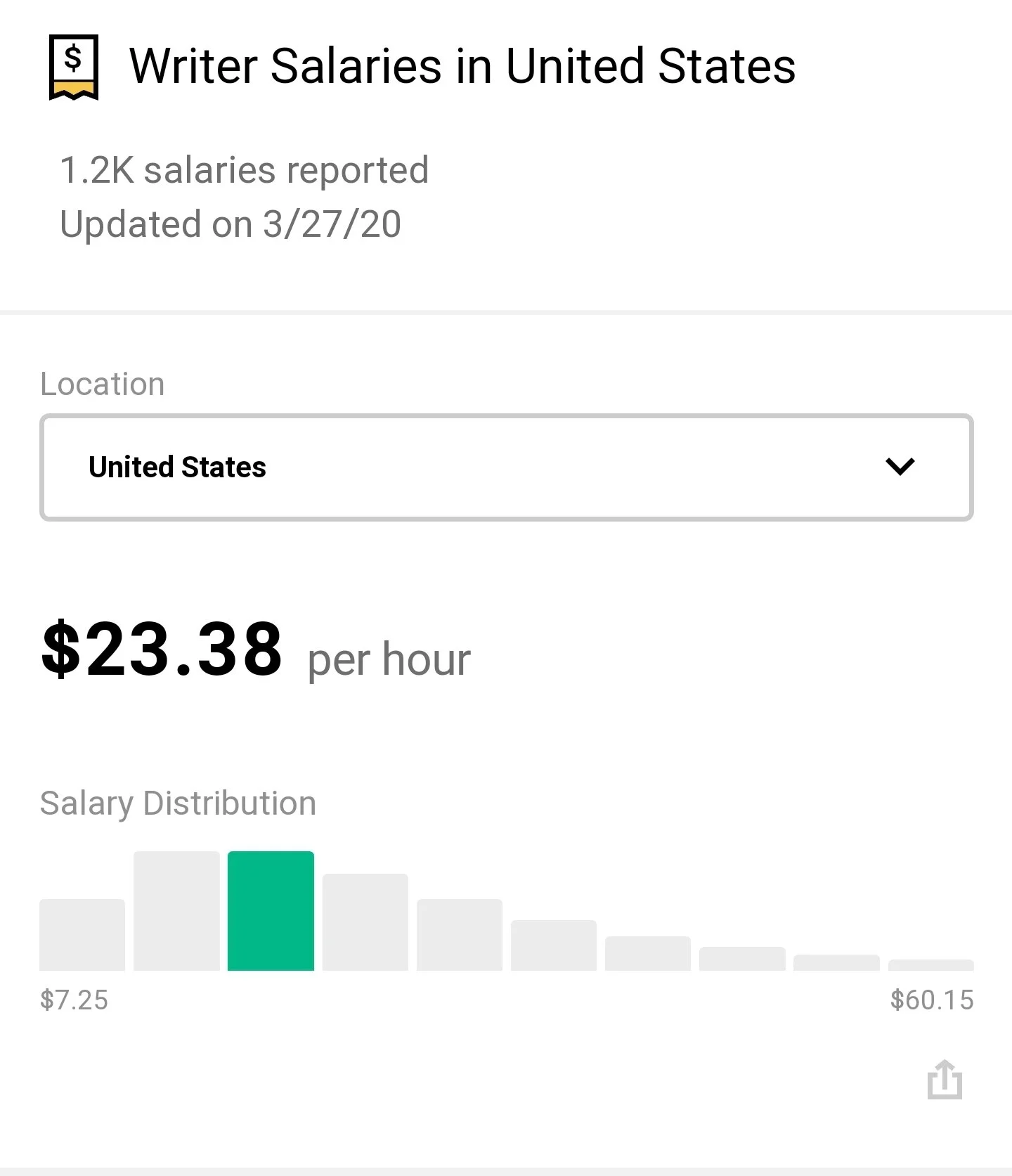
I think this is pretty accurate for beginners. Many writers (including myself) make much more. I tend to make $100 to $200 an hour. Also, what type of writing you do plays a role. For example, Indeed found that content writers (people who write articles or blogs) tend to make $16.97 per hour. Copywriters make around $57,152 per year on average and technical writers tend to make $33.24 per hour.
How to raise your rates
Overall, Indeed says that writers in the United States generally earn between $10.50 – $56.05 per hour based on 5,014 salaries shared by writers and employers in the United States. How much I earn is 311.84% above the United States's average. So how did I get here? Glad you asked. Here’s some tips:
Read articles, blogs, whitepapers, or whatever in your niche and take notes.
Write, write, write! You can’t improve without consistently working on your craft.
Apply for high-paying gigs and be confident!
My No-Fluff Freelance Writing Pack lays out all of the steps for you. Get it for just $29.97.

How to Organize Your Ideas for Better Web Content Writing
Here’s how to organize your website content ideas.
Guest post by Emily Lamp
Given that nearly all content begins with written words, it won’t matter what kind of web content you generate. But the truth is that you can benefit from observing how professional writers go about their work. The biggest struggle for many content marketers is finding a way to create enough content while at the same time ensuring its high-quality content.

This is something that all professional writers have to deal with on a day-to-day basis. The following is a look at how to organize your website content ideas.
Begin with the Sitemap
We have already established that content writing isn’t a piece of cake. It’s the reason why you need to be organized. Failure to organize your writing will cause the writing task to feel overwhelming. For this reason, you need to take a step by step approach when writing content for your website.
You can start by opening a Word or Google document featuring an outline. Then take a step back and inhale deeply. You can simplify the whole process by using readily available tools. Look for tools that will enable you to set up a map as you continue to supplement the content that you will eventually want to display.
Create an Outline for Each Page
A good sitemap ought to have an outline for all the content to appear on the website. Garner a general idea of the kind of structure that you need. Start by organizing this first. You can use an excel spreadsheet to help you organize all the ideas that you have generated so far, and will continue to generate.
Go back to the sitemap created above and start jotting down the main points, which will include the top-level navigation for the website. Using a programming language like C# to read excel spreadsheet will make it easier for you to continue drilling down all the individual pages. For instance, in the Services section, you will need to have numerous pages about each service.
Ensure that the outline gets to capture all the key components of the pages you intend to write. This kind of organization enables you to not only organize words, but also determine the images that you have to start collecting, the CTAs to use, and any other items you may want to capture.
Start Writing the Copies
Having developed an outline, you can now start writing content for your website. Now put your thinking cap on, grab your thesaurus and start crafting your copies.
If you always find it hard for you to tackle the writing aspect, you are in luck, as the work that was done earlier will help smoothen things for you.
At this juncture, you have already done most of the work, and you can always opt to let another team member handle the creative aspect. All you need to do is hand them the notes you prepared in the second step.
Polish and Refine the Content Created for the Website
At this point, you have already created the content for the site, and all that is left is to refine it. Refining will involve checking the spacing, font size, adding images, and using a spell checker to look for grammar and spelling errors. Ensure that the work looks perfect before publishing it for the world to read and view.
Conclusion
It becomes easier to create content for your website when you are properly organized. The good news is that there are tools such as excel that have been designed specifically for this purpose. You need to utilize these tools whenever you’re writing new website content to ensure that you don’t get stuck midway. And always remember to proofread your work before publishing it.
About the Author
Emily Lamp is a professional writer, working closely with many aspiring thinkers and entrepreneurs from various companies. She is also interested in technology, business growth and self-improvement.

How To Choose the Keywords That Appeal to Your Target Audience
Finding keywords that will appeal to your target readership and answer their queries can be a challenge, which is why we’ve put together some tips to help beginners.
Guest post by Rosana Beechum
Creating a popular WordPress blog takes hard work and dedication, but this will pay off in the long run when you’re able to reach your target audience and develop a relationship with them. One of the main ways you can attract readers to your blog, and keep them coming back for more, is to use relevant keywords.

Finding keywords that will appeal to your target readership and answer their queries can be a challenge, which is why we’ve put together some tips to help beginners.
Choose Hot Topics
Creating relevant, inspiring content takes a lot of thought and market knowledge. You also need to know the most popular topics that readers want to know about. Check out this list of the most searched keyword topics on Google to get some inspiration and find a topic that will entice readers to your blog.
Use Google To Your Advantage
When you’re looking for relevant keywords, you might think that you need expensive SEO tools and an expert to help you use them, but there are many free techniques that a budding blogger can employ. One of them is to use Google to find the keywords, phrases and questions that readers are searching for. Simply type your topic, and some phrases related to it, into the Google search bar, then see what the search engine suggests. You can also use the ‘People also ask’ and ‘Searches related to’ sections to see what people are searching for in this subject area.
Read Existing Content On Your Chosen Topic
It might sound like an obvious step, but it’s surprising how many content creators neglect to read existing content on their topic when they’re searching for keywords. You should read the top-ranking content and explore the keywords it uses frequently, how it uses subheadings and the questions it answers for readers. Once you’ve read a few pieces, you’ll begin to see patterns in the way they use keywords, which you can replicate in your own content.
Check Out Keyword Research Tools
As well as Google, you can also use SEO keyword research tools to find out the keywords your readers want to know about. Many SEO reporting solutions, including Moz, SEMrush and AHrefs have keyword research tools. If you’re not paying to use these solutions already, then consider using free tools such as Answer The Public to find keywords that are related to your chosen topic.
Add A WordPress Plugin To Help You Research Keywords
If you want to integrate your keyword research into your blog writing process, you can use a WordPress plugin to quickly find relevant keywords. This solution will allow you to quickly find long-tail keywords that your readers want and add them to your content. As it’s already integrated into WordPress, you can use it as part of your blog writing process easily and efficiently.
Learn How To Use Keywords Correctly
Once you’ve gathered your keywords together, you need to learn how to distribute them throughout your content. You want to avoid ‘keyword stuffing’; an outdated practice involving repeated use of the same keywords to achieve a good ranking in search engines. Instead, you should try to distribute your keywords naturally throughout your content, so that they are noticeable but don’t look like they’ve been forced into your writing. This will help you to ensure that your blog posts reach and appeal to your target audience.
Finding trending keywords might seem like a laborious and time-consuming task, but it will be worth the effort when your blog is popular with readers. This list of tips isn’t exhaustive, but it should give you a good place to start in your journey to creating great content that’s relevant and engaging.

6 Secrets for Becoming Professional SEO Content Writers
If you are looking forward to being the best SEO blog content writer, take a look at the following secrets.
Guest post by Emily Lamp
In the era of search engine optimizations, getting the right content is critical, whether you are writing blog posts, articles, or web pages. Ensure that the content is connected to the target audience's interests for search engine optimization. If you are looking forward to being the best SEO blog content writer, take a look at the following secrets.

1. Utilize your Keywords
Start by identifying a central keyword for your page that is highly relevant to your customers' interests. It would be best if you find a long-tail keyword, which helps to keep your posts concise and focused.
For any SEO content writing, the aim is to have your work show up in the search engine results. You, therefore, have to make a strategic essential word use, which should appear two to five times on a page. Try and use them naturally; avoid forcing them to fit in.
2. Develop a Compelling Introduction
The introduction is an essential part of your posts; note that if your readers don't read past your first few sentences, they will not get to your call of action. Make your introduction sentences short, sweet, and easy to understand so that you capture the curiosity of your reader. Continue building on their interest using compelling sentences that will coax them to learn more.
3. Write Useful Content
To offer the best SEO services, you must be good at research to gather as much information as possible to create the best content of your topic. Identify your target audience and create an audience-centric post that will cater to what they want to hear. Ensure that you offer some value or solutions to your readers' problems. Your content should also engage the audience and remain relevant even after publication to be shared widely or prompted by more readers, which improves the post's SEO.
4. Get Familiar with the Technical Aspects of SEO
You can't be a great writer if you aren't familiar with the basics of SEO. For instance, you should know how Google discovers websites and other pages so that you can come up with an interlinking strategy to make your content stand out from the rest. The ideal plan includes using well-researched content for a particular topic, appropriate sentence structure, spelling check, and grammar correction.
5. Give Detailed Information
Word count is an essential aspect of SEO as Google offers a better preference to longer pages; therefore, the longer the post, the more valuable it is, and the higher it ranks. Even though the longer form is recommended, it would be best if you avoid stuffing your blog with fluff. For digital marketing, researchers advise that search engine prefers excellent content that provides in-depth information on a given topic. Be on the safe side by ensuring that you have a proper word count, with a minimum of 600 words.
6. Proofread your work
It's advisable to have someone else go through your work and ensure that it's error-free, especially where some words have different meanings as nouns or verbs. Additionally, formatting requires equal attention. Even if your article is fully optimized for search engines, any grammatical errors will turn off your readers; thus, feel free to use tools like Grammarly or Hemingway.
Summary
Nowadays, SEO writing is proving to be a crucial part of digital marketing, as it's the reason behind the fluctuating traffic in various sites. You need to create well-organized content that entices and engages readers to attract high SEO ranking. Implement the above tips, and remember to link your work appropriately and also utilize the call to actions to encourage readers to read more from you.
About the Author
Emily Lamp is a professional writer, working closely with many aspiring thinkers and entrepreneurs from various companies. She is also interested in technology, business growth and self-improvement.

Freelancing guide: Everything you need to know about pitching
Pitching the the epicenter of the freelance writer’s world, so it is important to know what it is and how to do it properly to keep cash flowing in. Here’s what pitching is and how to do it the right way to get results.
Pitching the the epicenter of the freelance writer’s world, so it is important to know what it is and how to do it properly to keep cash flowing in. Here’s what pitching is and how to do it the right way to get results.

What is pitching?
Pitching is basically the act of sending out ideas to publications in hopes that they will like your awesomesauce idea and have you write the idea in the form of an article, blog post, ebook, avertisment, web copy, ect. Its definition also extends to the act of contacting people and companies to get new gigs.
Writers need to be constantly reaching out through pitches to keep money flowing into their business. My motto is, “Keep 12 pitches in play to keep the bills at bay.” That means send out 12 pitches, and when one comes back, send out another one.
Pitching awesomesauce
After more than 20 years as a freelance writer, I know what an editor wants in a pitch, and what they don’t want. Here’s a basic outline of what a good pitch consists of:
A zazzy subject title- Grab the editor’s attention so they will open your email. The only exception to this is if the publication’s guidelines state a phrase or word that you should specifically put in the subject line. Don’t know how to find a publication’s guidelines? Get a copy of Writer’s Market. It’s all in there.
Introduction- This starts with a hello and why you are contacting the editor. Something like, “Hello Jane, (yes, make sure to use the editor’s name!) I saw that you are in need of xyz ideas for ABC Magazine. So, I would like to pitch you my idea for an article on xyz.” If you're applying for a gig, tell them!
An outline- Here you will briefly layout what your article idea is about and why it’s special. Only write one to two paragraphs, tops! Editors want you to get to the point, and if you can’t describe your article in two paragraphs, you probably need to go think out the idea a little more, anyway.
Credentials- Any information about where you have previously written (if you have written anywhere, if not, leave it out) and three links to clips or a link to your portfolio. If you think your experience on the topic is impressive, put it after the intro.
Close- I always like to end my pitches with something like, “Thank you for your time and consideration. I look forward to working with you soon.” Then, sign off with your name.
That’s it. Sometimes I switch things up, but this is the basic outline of a good pitch.

Examples of pitches that worked
Okay, those steps seems simple, but what do they look like in action? Here’s a couple of pitches that I’ve written that got me an assignment. This first one got me a byline on Rachael Ray’s site.
Dear Princess Gabbara,
I am a freelance writer with 20 years of experience writing health, tech and lifestyle articles and blogs. I have worked with many large sites, such as CBS, MTV, MSN, USA Today, Digital Trends and CNET.
Google Home, Alexa, Facebook Portal...Which One is Right for Me?
This article would focus on how to choose the right home assistant for your family's needs. I have written extensively about each one, so I know what they offer and how they can benefit different types of users.
Topics I would cover:
-Which is best for home chefs?
-Which one allows you to organize your life easily?
-Which one is best for keeping in touch with long-distance family and friends?
I would write the article in a friendly and informative style.
You can see some examples of my work here: https://abradford.contently.com/ Thanks for your time!
Many thanks,
Alina Bradford
This next pitch got me a writing gig at Family Handyman. Notice this isn’t an article pitch, but a pitch for a gig opening.
Hi Berit,
I saw your need for DIY freelancers. I have been writing DIY content (particularly smart home topics) for many years. My work has been published by CNET, Digital Trends, CBS, MTVNews, Everyday with Rachael Ray and many more. I would love to join your team. Here are some links to my work:
https://www.digitaltrends.com/home/how-to-talk-to-samuel-l-jackson-using-alexa
https://www.cnet.com/how-to/how-to-get-google-home-to-play-your-youtube-playlist/
https://www.rachaelraymag.com/whats-new/how-to-pick-the-right-video-smart-tech-for-your-home
You can learn more about me here: LinkedIn
Thank you for your time. I look forward to hearing from you.
Alina Bradford
You’ve got the goods
I know, you’re probably thinking, “Well, ya, the editor gave you a chance! Look at your credentials!” Let me tell you, I’ve been using this method of pitching from the beginning. It works, as long as you have a great article idea or can convenience the editor that you’re the person for the job. If you don’t have on-the-job experience, tell the editor:
How the topic has been a lifelong hobby or passion
About training you received that relates to the topic/gig
You know experts that can be interviewed for this piece and/or any in the future
Life experience you’ve had with the topic (raising a special needs child, caring for ailing parents, mental health issues, parenting multiples, beating cancer, etc.)
The fact that you know SEO and writing compelling calls to action
Follow up
After you send a pitch, follow up. Sometimes an editor will miss your message the first time. A good rule of thumb is to wait two weeks, then send a little something like this:
Hi Jane,
I’m just checking in on the pitch/application I sent you two weeks ago. I’ve pasted it below for your convenience.
Thanks for your time and consideration!
Alina Bradford

Keep track of your pitches
As you send out pitches, you need to keep a record of what ideas you sent out, what gigs you applied for and the details. After all, you need to know when to follow up and you need to remember their rates for future negotiations. Things you need to note include:
Your pitch idea or gig position
The publisher name or potential client
Date you sent the pitch
When to follow up
Contact details
Pay rates (if you know them)
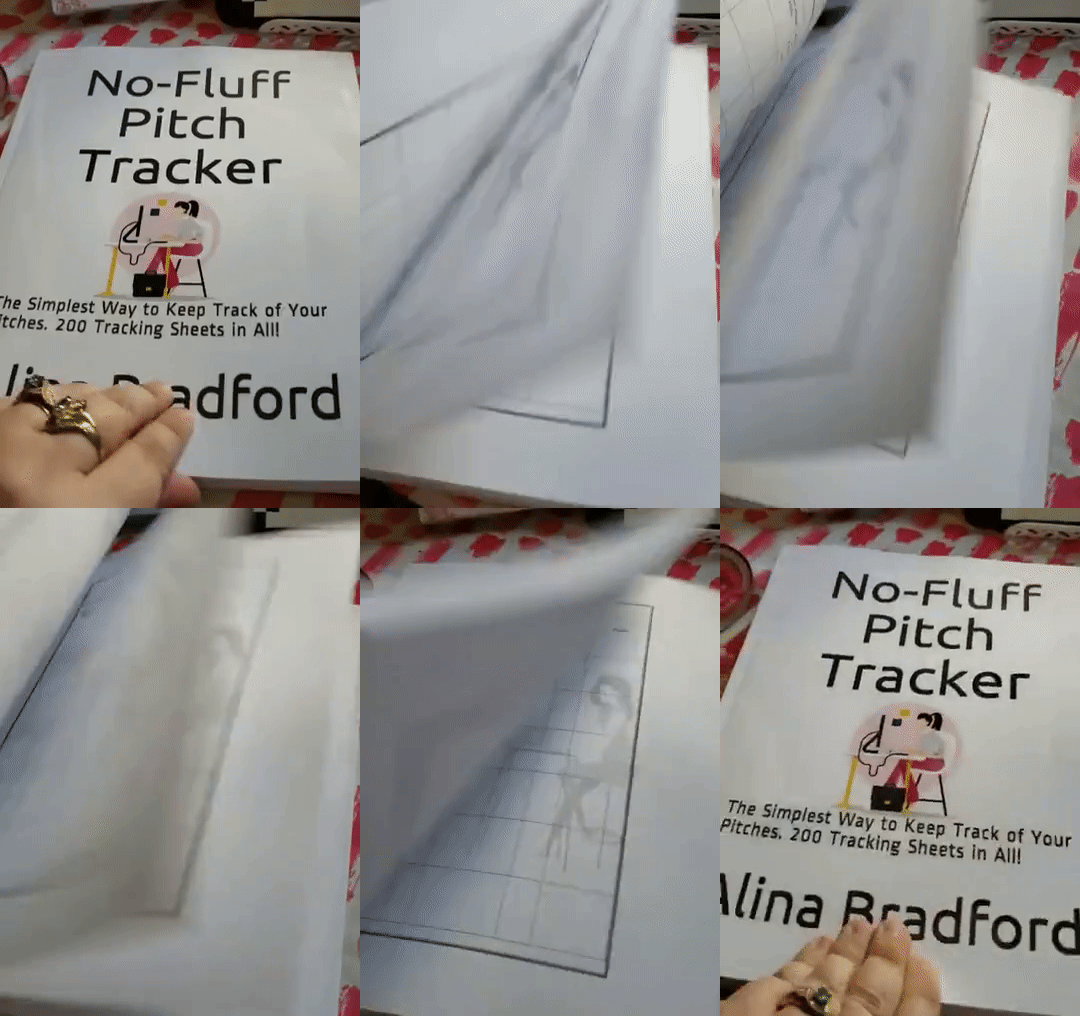
You can write all of this information in a notebook or type it up in a spreadsheet. If you’re not sure how to set up your tracking, I’ve created a workbook to keep all of your pitches in and you can get the No-Fluff Pitch Tracker on Amazon, or you can get spreadsheets to print out here.
Quick tips for pitching
Always double-check spelling and grammar
Always use the editor’s name if you know it
Make the email’s subject line an attention grabber
Be your own hype man
Keep track of pitches
Follow up in two weeks
Want to learn how to make a successful living as a freelance writer? Get the No-Fluff Freelance Writer Starter Pack. Only $29.97.
Political Writing: The Power of Words in Politics
Here’s some things to watch out for when gathering information for your articles, news pieces and blogs.
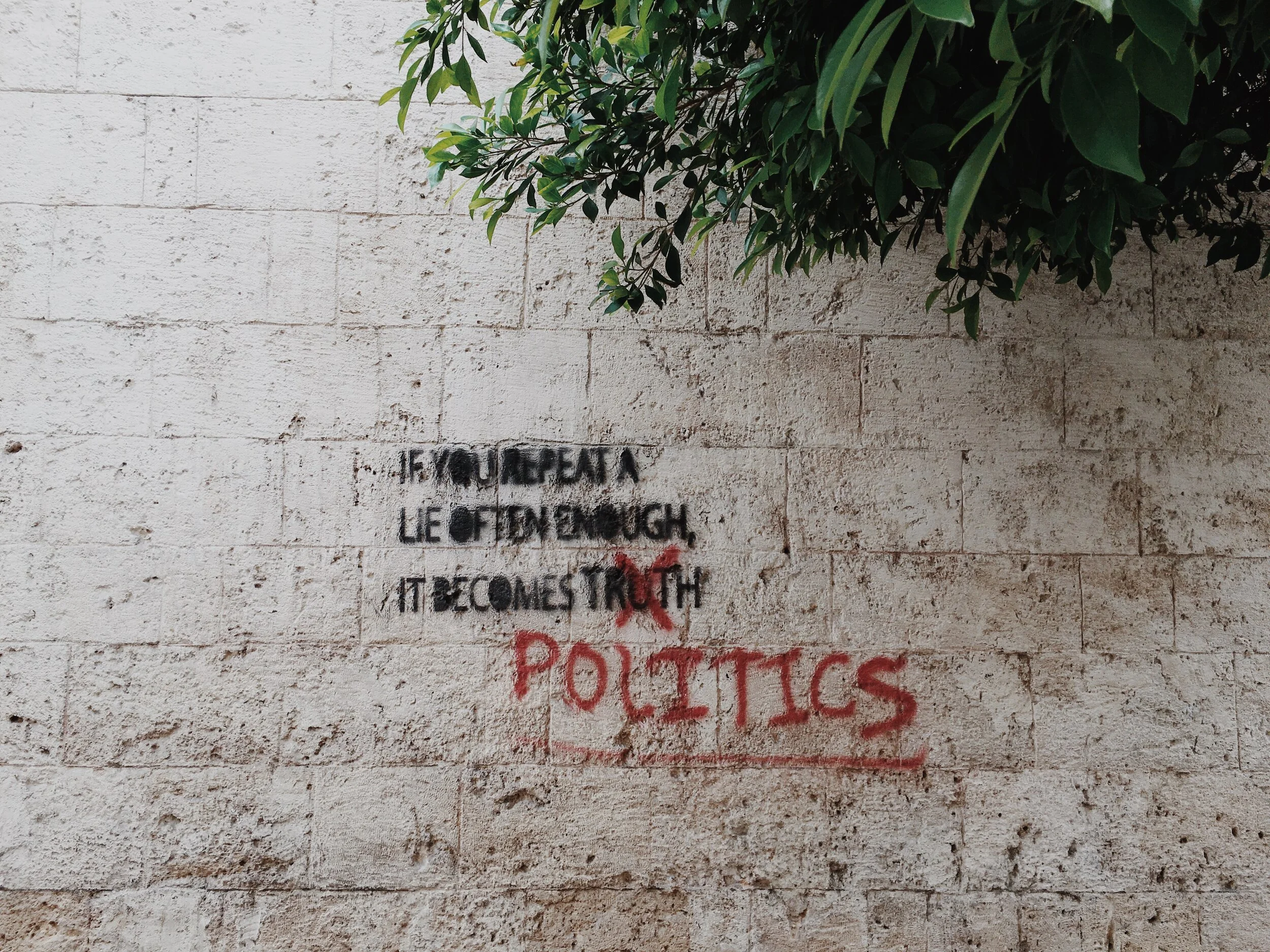
Words hold a lot of power in any context, but they can be especially important when it comes to writing about politics. Words can be used to inspire people, to manipulate people, and to stir all kinds of emotions. People in politics choose their words carefully, whether they're giving a speech or creating a campaign poster. Even when it seems like they're not being deliberate with their words, they often are. We as writers need to be just as deliberate, but we also need to offer fair unbiased reporting (unless you’re writing an opinion piece, of course). Here’s some things to watch out for when gathering information for your articles, news pieces and blogs.
Key Political Words and Phrases
One interesting thing to consider is the power that certain words have in politics. Some words are generally viewed positively, and others are seen more negatively, and politicians use this to their advantage. For example, a Pew Research Center 2010 survey revealed that 89% of Americans view the phrase "family values" positively, while 59% viewed "socialism" in a negative light.
Words Shaping the Truth
Words can be used in politics to shape the truth. You're sure to have heard a lot of talk of fake news in recent years, making people doubt what is and isn't true. Words are used in politics in a similar way to how they're used in marketing, to encourage people to think certain things and respond in particular ways.
The Use of Propaganda
Propaganda has been used in politics to influence a range of social issues throughout history. A smart use of words can create propaganda that has the desired effect upon society, ranging from voting for a particular party to joining in with the war effort. Just a few words can make a big difference, especially when combined with compelling visuals.
Here’s a look at propaganda through history:

How to Post an Article to LinkedIn
I often recommend posting your articles to LinkedIn to give you a good showcase for your work that you can show to potential clients. How to post articles isn’t 100% obvious, so I’m going to run you through a quick tutorial. Here’s how to get your articles posted on LinkedIn.
I often recommend posting your articles to LinkedIn to give you a good showcase for your work that you can show to potential clients. How to post articles on LinkedIn isn’t 100% obvious, so I’m going to run you through a quick tutorial.

Go to the LinkedIn feed.
Right beneath the Start a post box you’ll see Write an article on LinkedIn. Click the link.
You’ll be taken to a page where you can write or copy>paste your text, add photos and more.
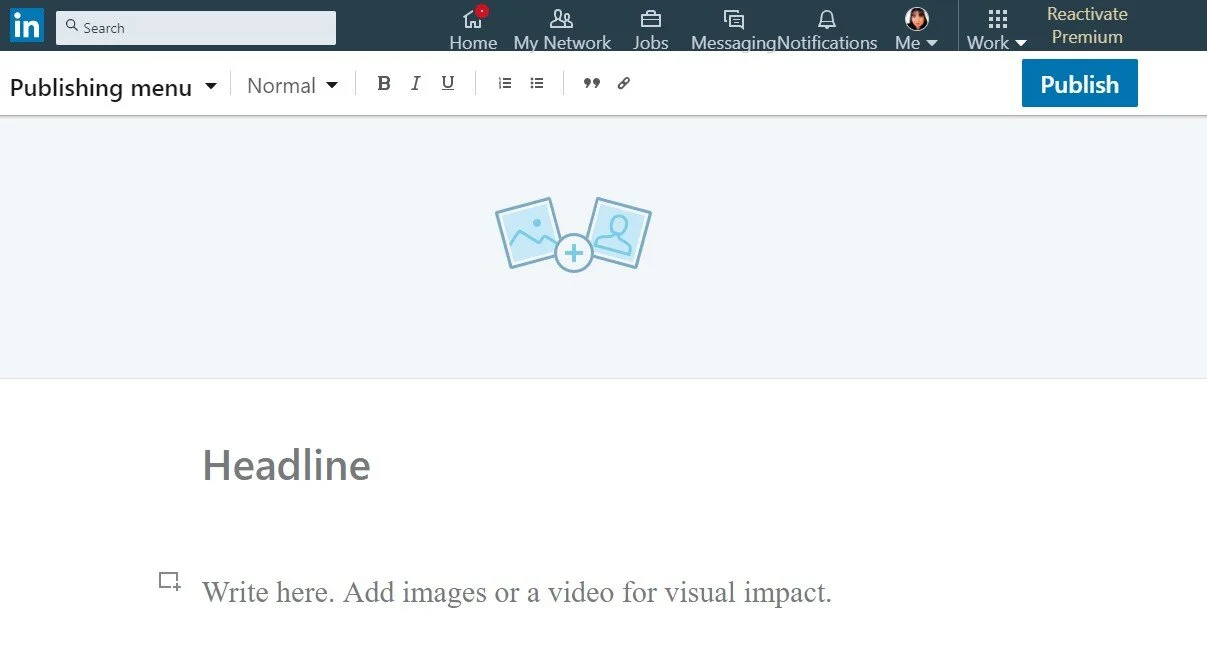
Once you’re done, hit the publish button on the upper right-hand side of the screen. Then you can share your article using LinkedIn’s built-in tools.
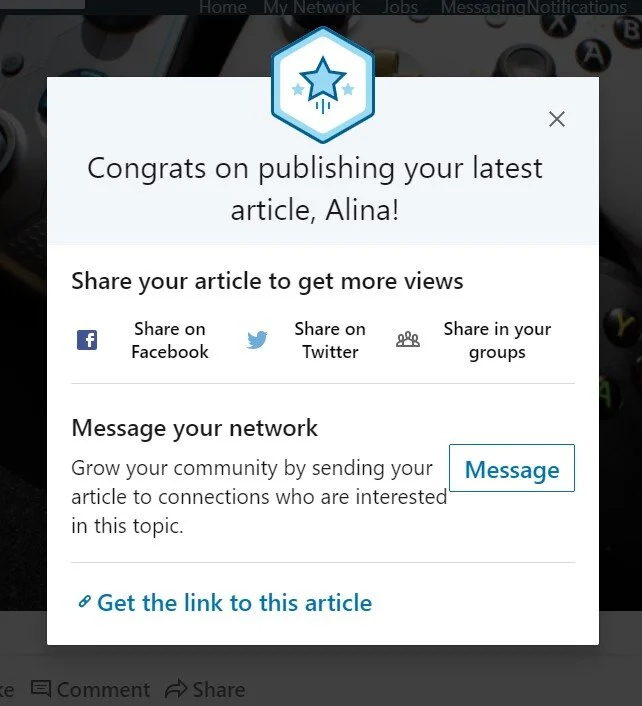
You can find your articles by going to your profile and scrolling down to Articles & activity. Then click on the See all articles link.
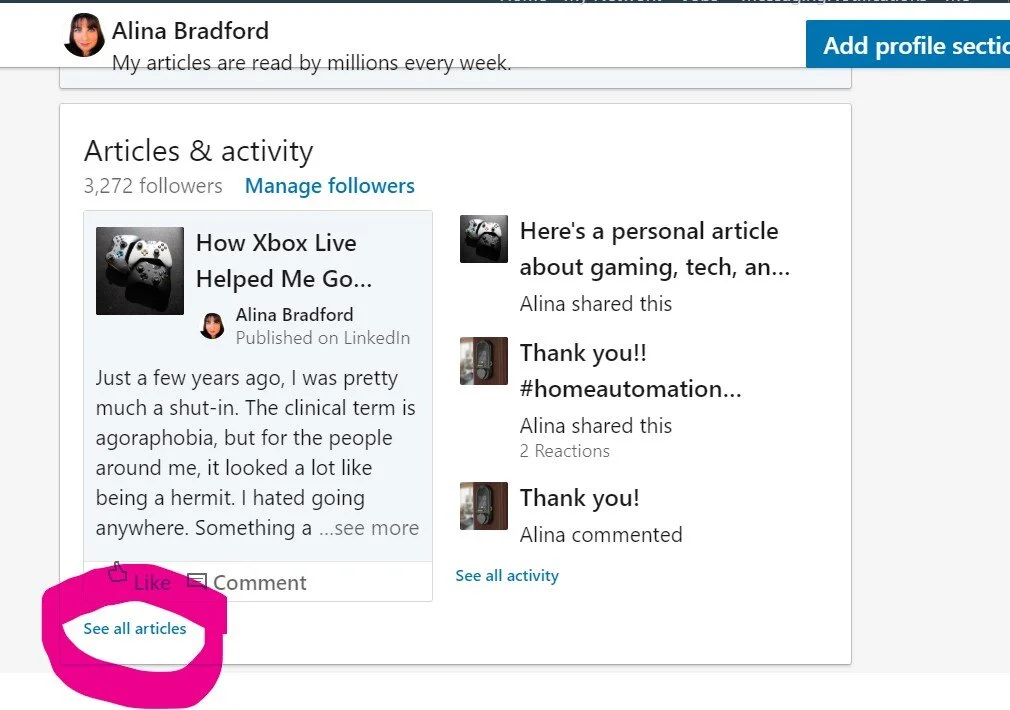
That’s all there is to it. Now when a potential client wants to see something you’ve written you can send them links to a couple of your articles.
Want to learn more about creating portfolios, getting clients and making a great living at freelance writing? Get the No-Fluff Freelance Writing Starter Pack.
20+ Words Every Freelance Writer Should Know
Here are 20 words every freelance writer should know so a client or editor never leaves you confused with their lingo.
In the writing game you’ll come across a lot of industry-specific words that may trip you up a little. Here are 20 words every freelance writer should know so a client or editor never leaves you confused with their lingo.
Pitch: A pitch is an email, letter or message that you send to a business or publication offering your services. When an editor says that they want you to pitch them an idea it means that they want you to outline an article idea and send it to them.
Bandwidth: You may have a client or editor ask you if you have the bandwidth to take on a project. It just means that they want to know if you have time in your schedule.
TK: This is an editing mark that means “to come.” Putting this in an article lets your editor know that you intend to add more to this section. Editors may also put TK in your article where they want you to add to a paragraph or expand on an idea.
SEO: Search Engine Optimization. It is the technique of creating an article that search engines will like and rank high in search results. Learn more about SEO here.
Keyword: Words in an article that lets a search engine know what the article is about. An important part of SEO.
Keyword phrase: Think about what you type in when you're searching for something online. That is called a keyword phrase.
Net earning: This is how much profit your freelance writing business (or any business) has made after expenses and taxes.
Gross earnings: This is the amount you earned before any deductions or taxes.
Fluff: Filler that needs to be cut from an article. It is extra words and sentences that are there to make the word count larger but doesn’t add anything to the article. Can also be used as another word for BS.
Headline: The title of a peice. Many clients will have certain length requirements and capitalization requirements for headlines, so be sure to ask.
Queue: Often a list of articles that writers can choose assignments from. It can also refer to a bunch of articles that are waiting to be edited or published.
Gaf: Shorthand for paragraph. Someone who says gaf typically picked up this term in journalism school.
Subheading: A title that is given to a set of paragraphs on the same topic. Online articles and many print articles are divided up into sections using subheadings.
H1, H2, H3: The size of a subheading. Typically, most online publications use H2 subheadings. You can choose the heading size with most article tools such as Google Docs, WordPress, etc.
Slug: This is whatever you want the web address to be. It can also mean a short name for your article.
Internal link: This is a link that goes to somewhere else on the site when you click it.
External link: These links take readers to other sites.
Do-follow, don’t-follow links: Sometimes clients will ask you to put these links in your articles. Dofollow links are your normal links. Nofollow links tell search engines to ignore the link and will have a rel=”nofollow” HTML tag. This will prevent the link from harming a site's rank on a search engine.
Lede: Basically the introduction to the article. Sometimes it refers to a snappy summary of the article in just one sentence that compliments the title.
Byline: The name of the author of the article.
Hook: The part of an article idea that will make your article catch reader’s attention or stand out.
CTA: Call to action. A sentence or two at the end of the article or copy that encourages readers to take some kind of action, like click a link, read the next article, or purchase an item or service. Here’s an example:
Like tips like these? Grab my No-Fluff Freelance Writer Starter Pack. It teaches you how I make $100 to $200 an hour as a freelance writer.
More articles you may like:
Pitchwiz is the Best (Free) Place to Find High-Paying Writing Gigs
How To Pitch Magazines: A Writer's Guide for Getting Published
Here's How to Find Out How Much Publications Pay Their Writers
5 Examples of Awful and Awesome Email Subject Lines...and Maybe a Few Shades of Grey

How To Pitch Magazines: A Writer's Guide for Getting Published
Here is a step-by-step guide to writing and pitching your article to a magazine.
Lately, one of the biggest questions I've gotten from new writers is how to pitch a magazine. For the modern freelance writer, the online world of published articles and opportunities to be featured in well-known magazines is daunting and intimidating. There's a right way to propose your pitch to the editor of a magazine – which means there's a wrong way, too.
There is so much competition out there for that spot to feature your article that it's worth taking the time to work out how to approach the big wigs and make a name for yourself. Here is a step-by-step guide to writing and pitching your article to a magazine.

pitching to magazines
1. Research
Doing your research is paramount. You have to know the magazine you're pitching to reasonably well to know exactly how to address them. Read their latest publication and find out what kind of material they are most interested in. Then, read the last six issues. Really, get to know the style and type of article they like. I'm not kidding. Do the leg-work.

2. Deciding on a form of contact
Once you've done your research and have familiarized yourself with the magazine, you need to work out whether to send an email or a letter. For the most part, email is best for this initial approach – it allows you to be brief in your proposal but clear in what you're trying to achieve. Editors don't have time to read an essay.
3. Getting the contact information
Finding the email address of the right section editor can be tricky. Here are some tips:
Usually the magazine's website will have the information you need. Go to the contact page and look for the submission email address.
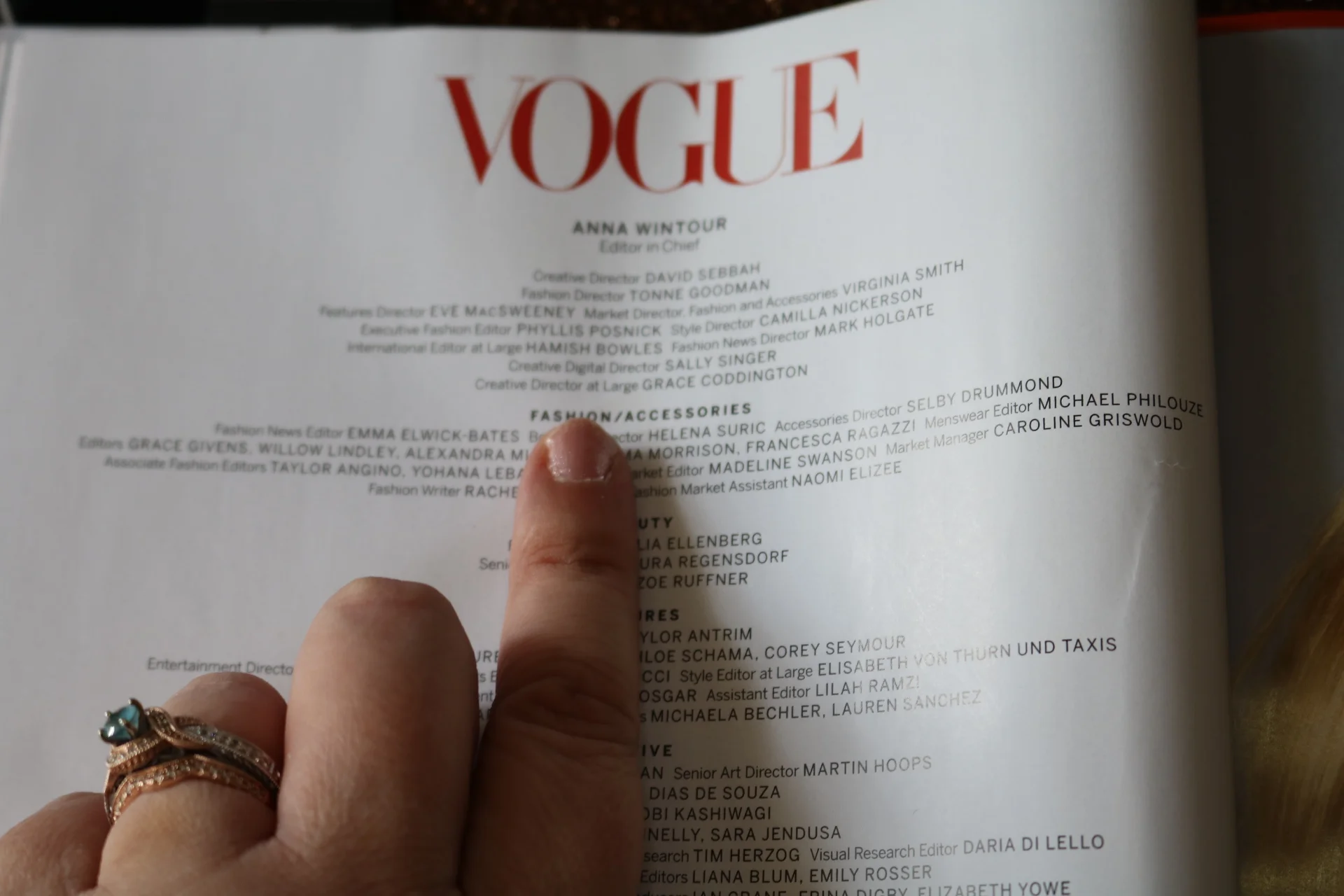
If the site doesn't list one, go to the magazine's masthead (the listing of the people who work for the magazine usually found by the contents page) and see who the section editors are. Then, attempt to make contact with them through LinkedIn.
You can also try finding out their email address by finding their social media pages on Facebook, Twitter or Instagram.
Google the magazine's name and the words "submission guidelines." A little searching may turn up just what you need.
Get a subscription to the Writer's Market. This site lists all the latest contact information. Or you can buy Writer's Market 2020 in book form if you don't want a subscription.
How to contact a magazine
4. How to write your pitch
Begin your pitch with an eye-grabbing subject line that summarizes your story without going into too much detail about it. Then, start your email with a top-line in bold that summarizes your pitch. While you need to be clear with the context of your article, the editor wants to know what you want ASAP. Be specific and clear about what it is you're pitching.
What you follow up your top-line with is essential. You should include roughly 100 to 150 words of background to your title, allowing the editor to get a little more information about your article, without giving the whole thing away. You want to give them a taste of what you've written.

Finally, once you've filled out the email with your top-line and brief article summary, you want to finish off with a short bio about yourself – past work, achievements, why you want to write for their particular magazine. Keep it short and relative to their publication – only include information that reflects the kinds of things they're looking for in a writer.
5. Follow up with the magazine
Once you've finished writing your pitch, don't just sit back and wait for the reply. Editors are busy people and have a lot of emails to get through every day, so part of the job is in your ballpark.
Once you've sent your email, find their contact information and give them a call, asking if they've received your pitch. This will help them to find your email and potentially get them to put it at the top of their to-do list. You want to be perceived as proactive and motivated.

Calling not your thing? I hear you! You can also send a follow-up email. I've gotten dozens of assignments just because I had the nerve to follow up with an editor.
It's a dog eat dog world out there for freelance writers pitching to magazines, and it's not getting any easier. You want to stand out from the crowd by producing an attention-grabbing, relatable pitch – it gives the editor the impression that you're seasoned and know what you're doing.
Want some more great tips on how to be a freelance writer? Get the No-Fluff Freelance Writing Starter Pack.

Pitching and More: How to Get More Work as a Freelance Writer
Here are some strategies to get more work as a freelance writer.
Working freelance is tough. Not only do you have to keep yourself organised and motivated, but you also have to make sure that you promote and market yourself. If you’ve decided to give up your 9 to 5 job and take up a more flexible freelance life, here are a few tips on how to promote yourself and get good work.
Consider the publications you’re pitching

First of all, chances are you’re sending off all sorts of pitches to different editors and publications. Don't do that. It’s important to make sure that you’re sending the right ideas to the right places to maximize your efforts.
Form pitches is the kiss of death. To an editor worth their salt, it’ll be obvious from a mile off if you’ve been sending the same idea around to lots of different publications. Make sure that you’ve researched the publication that you’re sending your pitch. Then, give specific reasons for choosing their publication and tell them why you think your idea would work for them. Editors love writers that do their research.
Be full of ideas, but don't stress
Let’s face it: no matter how great you think all your ideas are, they won’t all get accepted and published, even if you’d love them to be. Facing rejection is part and parcel of being a freelance writer - and you can’t let it deter you from continuing on and thinking of even more great ideas.
It’s important for you to be inspired by the world around yourself - make sure that you take experiences that happen to you, whether they’re good or bad, and consider how you could make them into a pitch. After all, everything is material.
When you have ideas, send them out as queries to publications. Keep at least 12 queries out at one time. This will help you keep a steady flow of article jobs coming in. Remember, 12 pitches in play keeps the bills at bay.
Pitching beyond
Pitching doesn’t mean just sending your ideas to publications and hoping they hire you to write an article. You can also pitch your writing services to business blogs and websites. Don’t forget to look for writing gigs on jobs sites, too.

Maintain your online presence
Being a freelance writer is not just about being a good writer - it’s also about knowing how to present yourself online.
First, make sure that you maintain a certain voice on your social media accounts. Strike that balance of fun and professionalism that will make people want to contact you to get some freelance work done.
Make sure you have a website, too, with your contact information clearly visible, including your phone number, email address and postal address, along with Facebook, Instagram and Twitter social media accounts.
Once you have your site up and going, remember, SEO is your friend. Essentially SEO means rearranging the Google search results so that your name comes to the top when someone searches for "freelance writer." Useful, right?

Communicate for referrals
Finally, you make sure that you communicate effectively with your clients. Remember, word of mouth is one of your best marketing strategies. If your clients like you, they will recommend you. Make sure that you’re clear about how long work will take you to complete and keep them updated at all times. Then, when work is done, ask your clients to refer you to their friends or colleges.
Want to start making $100 to $200 an hour with your freelance writing business? My book offers in-depth, actionable secrets that will get you there in just a few months. Learn more here.
More articles you may like
Pitchwiz is the Best (Free) Place to Find High-Paying Writing Gigs
How To Pitch Magazines: A Writer's Guide for Getting Published
Here's How to Find Out How Much Publications Pay Their Writers
5 Examples of Awful and Awesome Email Subject Lines...and Maybe a Few Shades of Grey
Warning writers! Write Right may Be a Scam
Yah, this looks like a writing gig site you should stay clear of.
So I had a super strange interaction with a person on LinkedIn. He claimed to be Bhavik Sarkhedi, an author of three books and the owner of the website Write Right. At first, he said he was a new writer and asked me to help him check his Google results. Okay, I guess. No problem.

Then, a long time later, he sent me this message:
If he’s a new writer, then why is he looking to hire writers? Curious, I took a look at the application.
Oop. Red flag. Usually when a person wants you to write a sample article they keep it and don’t pay you.
Whoa! Hold up! They want you to find spelling mistakes on their website? First, there shouldn’t be any mistakes. Second, it sounds like they’re trying to get free proofreading. Yikes!
Oh, so it gets even better! They want you to help them with their SEO, too. So, essentially, they are asking for a lot of free stuff. Okay. I decided to ask this guy about Right Write and see what he had to say. His replies are just as baffling as the application.
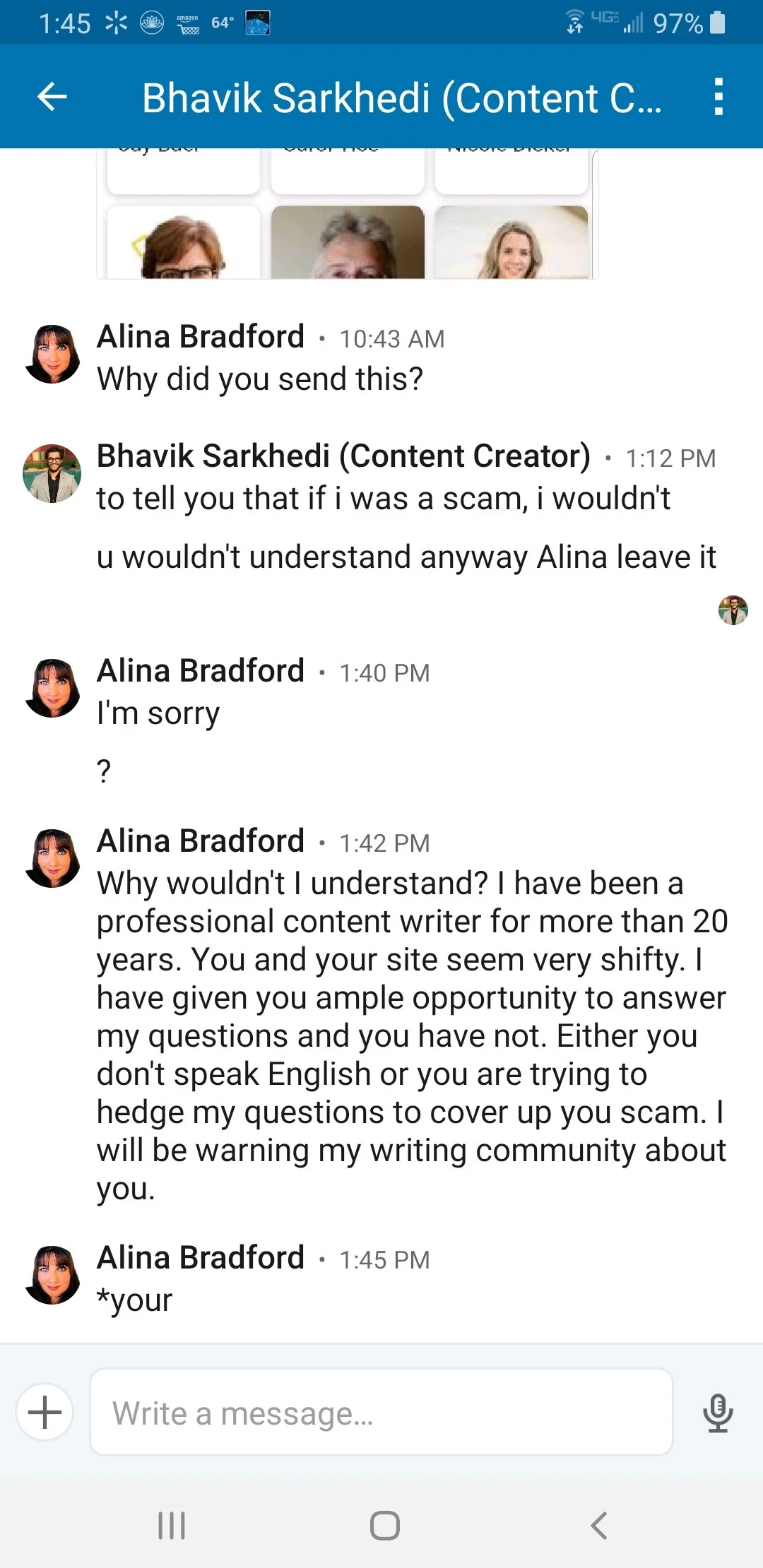
Yah, uhh, no
I ended up blocking him and reporting him to LinkedIn. If you run across this guy or a freelance writing ad for Write Right, run. By the way, I tried finding Write Right, but I didn’t come up with a site other than a essay writing service site. As you probably know, essay writing doesn’t have anything to do with SEO writing. Ironically, it’s basically writing an essay for a student so they don’t have to. It looks like Mr. Sarkhedi may have wanted writers to do his site’s content and SEO for him, but he just didn’t want to pay.
Other Articles You May Like
Here's the Legal Stuff You Need Before Becoming a Freelance Writer
How To Pitch Magazines: A Writer's Guide for Getting Published
A Freelance Writer's Guide to Dealing with Digital Contracts
Starter's Guide to Becoming a Professional Writer
Freelancers don’t have it always easy, but if it’s the life you want for yourself, you need to aware of the inherent costs and hurdles. Here’s some things you need to know when getting started as a freelance writer.
More and more employees find themselves sitting at their desk and dreaming of becoming their own boss as a professional writer. It’s a recurring dream for all those who want it difficult to juggle with the unnecessary office politics or the toxic colleagues.

Whatever the reasoning, self-employment is at its highest level in the UK and the US, signifying more and more people have decide to move their professional career under the freelancing skies. After all, if there’s something appealing in the world of freelancing, it’s the sense of freedom that you get. For many, freelancing as a professional writer is the way out of the career or a company that didn’t suit their personality or desires.
But working for yourself comes at a high cost, in terms of money, social behavior and mental health. Freelancers don’t have it always easy, but if it’s the life you want for yourself, you need to aware of the inherent costs and hurdles. Here’s some things you need to know when getting started as a freelance writer.
The legal stuff
Do you know how to pay taxes or if you need a business license in your area? You need to research these two items before you start taking on clients. Here’s some tips on the legal part of becoming a freelance writer.
You compete against other market players
The freelancing world is that the market is a busy place. There is a lot of competition coming from a variety of places. As an independent contractor, you might find yourself competing against companies or other freelancing individuals.
In fact, if you’re not in a position where you can bring your client a competitive edge, either by your expertise or your specialist niche experience, you’ll be struggling to make ends meet. There’s no way around it: As a freelancer, you need to have top qualifications, and more often than not it’s something you need to invest either or money into. How do you gather the relevant knowledge? There are many options, depending on your area of freelancing.

For instance, if you’re a freelance copywriter and want to attract more financial writing gigs, you might need to get an MSC Accounting and Finance – and studying, as you know, doesn’t come for free.
You might also want to take on an internship in a specialist sector, just to gather the relevant market knowledge. The advantage is that an internship position doesn’t require any payment on your part. The inconvenient is that it isn’t paid either.
Another option is to find a niche in what you're already skilled at. For example, if you were a firefighter, you can write about safety. If you're a mom, you can write about a wide range of topics, from childcare tips to home organization. If you're a nurse, you can make the health field your niche.

You don't need to base your niche off of your old career or degree, either. It can also come from hobbies you are passionate about. Say, for example, you love to cook. You don't need a degree from the Culinary Arts Institute. Your resume can say something like:
"As a lifelong home cook trained by three generations of women, I have made over 5,000 recipes in my life."
This is how I started writing about tech. I don't have any kind of technical degree, but I'm passionate about learning everything about it. This gives me an edge.

Here are some more tips for standing out from the crowd.
Professional writer, be organized
When working in an office, there is only one thing that you need to worry about: Finishing your project within the deadline. When you work for yourself, you need to become a master of organization.
If you work on several projects at the same time, you may find it useful to stay on top of your client tasks in the same way that companies manage employee schedules, with a work schedule maker.
Fortunately, there are plenty of affordable or even free tools, starting with the obvious pen and paper. However, the more complex your tasks are, the more you’ll have to spend on keeping your freelancing business on track, from automated invoicing to digital task overview.
If you're a goal oriented person (I recommend setting goals to build your career, btw) get a planner that focuses on setting goals while organizing your day. I personally use the Law of Attraction Planner. If you want a digital organizer, try Google Calendar. It's free and you can set up alarms and reminders.
abundance planner
Another must have is a note taking app that you can use on your desktop, computer, phone and tablet that syncs all of your notes. I use OneNote and probably won't use anything else. I have a page with links to all of my social media and books so I can just copy and paste it when people ask for the information. I also have pages for writing guidelines for various clients, project ideas and email templates.
You create your own office
If you work from home, you will need to design a home office that is both inspiring and functional. More often than not, you’ll come across cute home office design tutorials that list all the furniture and DIY tools required to achieve “the look.” But they often forget to mention the cost of your work setting.
As a freelancer, you will need a decent desk, the relevant tech – from laptop to printer – and a storage facility. Remember that you’ll spend long hours working, so you need a comfortable and homely decor.

my desk
Here's a list of the basics:
Laptop or desktop. (I prefer a laptop so I can work from anywhere.)
Desk. (I use a standing desk, but for years I had an old door propped across small filing cabinets.)
Some kind of online portfolio or website. (I suggest just getting a LinkedIn page to start here is some more in-depth info on building a portfolio.)
If you're going to write for local businesses you'll need business cards. (Moo.com is my card maker of choice. Here are my cards, below.)
Business cards for freelance writers
Business cards for freelance writers
Need a break? It’s at your expense
Being paid by the project, you might be tempted to work almost 24/7. However, overworking yourself is not a practical solution. Not only will this decrease the quality of your work, but it can put your health at risk too. Be safe, my professional writer friend!
You do need to take a break to recharge your batteries. Holidays and sick days are not remunerated, though. What this means is that you need to evaluate your health against your finance: Can you afford to take a day off?
One of the things I love about being a freelancer is that I can do my work ahead of schedule so I can take a week or two off. My clients are happy, I get paid, and I get needed time off. I take several vacations throughout the year.

professional writer on vacation
Either you multitask, or you pay someone to do it
Working for yourself as a professional writer means that you need to be a marketer, an accountant, a sale representative and a freelancing expert at the same time. It’s not only exhausting to juggle between each job; it seems that multitasking also reduces your IQ and productivity.
If your budget is in the green (a simple monthly budget template can help you keep your finances in line), you should consider outsourcing. If it isn’t, you’ll need to rely a smart tool such as ToDoist to keep you focused on one task at a time. I ended up setting up some automated systems because I just couldn't do EVERYTHING. Now, I have an assistant.
Working alone as a professional writer affects your health
As a freelancer, you’re free from the office routine and the colleagues -- and drama! It also means that you are on your own. While it might seem like a blessing at first, it’s a lonely career, and it can become extremely depressing and stressful.
Indeed, the very nature of the gig economy undermines the need for security. Job insecurity can lead to depression, anxiety, emotional exhaustion and even heart disease, and that’s precisely what you will be dealing with every single day of your self-employed life, if you let it.

Me in my office.
My advice is to not be scarcity oriented, but abundance oriented in your freelance business. The more you think about the abundance that's coming your way, the more confident you will be, which will attract more clients. When I was starting out I called it "fake it until you make it". This mindset will not only make you more successful, it will also lessen the job security anxiety.
Additionally, loneliness is a natural feeling to experience, and it can become a burden when you can’t exchange with same-minded colleagues. Are your ideas still good if nobody hears about them?
For a lot of freelancers, hitting the wall of insecure isolation can break their career and convince them to move back to a more traditional employment situation. If you feel lonely, I suggest joining my Facebook group for writers. It helps to have others to talk to that know exactly where you're coming from.
Also, grab your laptop or your notebook and work at a picnic table at your local park or lake. Even setting up a workstation at your favorite coffee shop once a week can help with the loneliness. When I first started out, I took my kids to McDonalds and while they played on the playground I would brainstorm article ideas.

One of our trips to McDonalds.
Freelancing is freeing (haha) if you’ve got the right mindset and the appropriate expectations. It’s not a lifestyle that is best suited for everyone. Of course, the best way to find out if you like it is to try!
Need step-by-step instructions for starting your freelance business? My book, The Fluff-Free Freelance Writing Master Course, has everything you need, from how to find clients to setting up a fantastic portfolio.

Edit Your Writing: How to Use Commas, Quotation Marks and Semicolons
Creating clean, mostly error-free content is important to freelance writers. Copy full of errors look unprofessional and can really turn off potential customers. You don't want to be lumped in with noobs! Edit!
Creating clean, mostly error-free content is important to freelance writers. Copy full of errors look unprofessional and can really turn off potential customers. You don't want to be lumped in with noobs! Edit!
Emails, blogs and social media encourage speed over accuracy, lulling many into the feeling that close is good enough. If you plan on being a successful freelance writer, though, almost isn't good enough. Here are some tips to help you get closer to perfection.
When to Use Commas
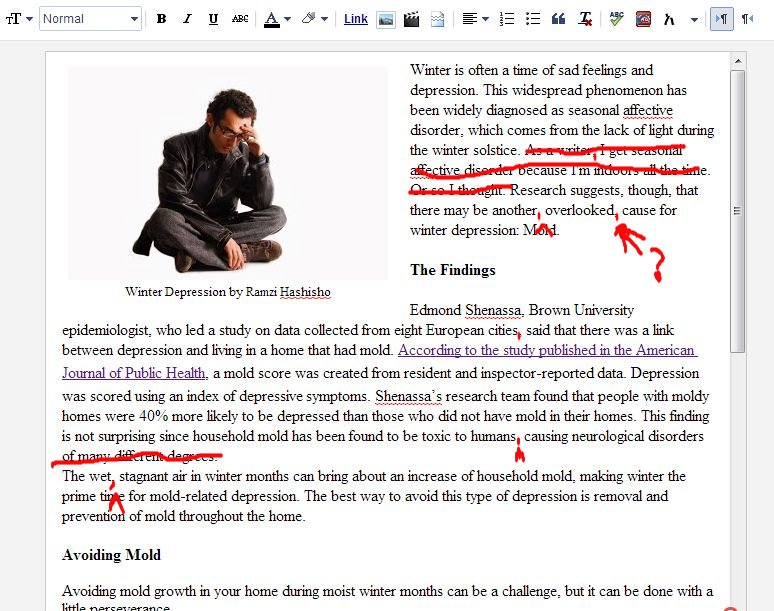
Get it right, or scare people away.
One of the most common problems even more skilled writers run into is how to use commas properly. A comma is defined as a punctuation mark used to indicate the separation of ideas or elements or a pause in a sentence.
The biggest misuse of commas is often overuse. When in doubt, use a comma when there is an audible pause while saying the sentence out loud.
For example:
Jan, can you write the story, please?
This sentence has definite pauses when said aloud. Proper use of commas also keeps the meaning of a sentence clear.
For example:
Wrong - Jan loves to draw fish and write.
Jan likes to draw fish?
Right - Jan loves to draw, fish and write.
Notice that a comma wasn’t used after the word “fish.” It has become common to leave off the comma before “and” in a series, especially if you are writing for magazines or websites.
The last use of a comma is with a direct name or title.
For example:
The writer and artist, Jan, is my old friend.
Or
Would you draw me a picture, Jan?
Or
Jan Lang, Ph.D., is the author of some impressive articles.

punctuation edit
How to Mix Quotation Marks and Punctuation
Using punctuation with quotation marks isn’t the mystery some think it is. In fact, there are only two major rules to remember:
Always use punctuation inside the quotation marks.
For example:
“The article is finished. It only took a week to do.”
And
Jan said, “It only took a week.”
Also, always use a comma before or after a quote is introduced.
For example:
Jan said, “The article is finished.”
And
“The article is finished,” cried Jan.
“Said” in the first sentence tells you that a quote is coming so it is followed by a comma.
In the second sentence, “cried Jan” tells you who just made the quote. In this case, there is a comma before “cried.” Remember, the punctuation is always found inside the quotation marks.
editing quotes
When to Use a Semicolon
Semicolons are an unloved punctuation, mostly because it is misunderstood. If used correctly, though, semicolons are an easy way to spice up a writer’s prose, or at least show an editor that the writer is competent.
The rule to follow is: If there are two sentences that are complete thoughts and don’t have a conjunction, you can use a semicolon to join them.
For example:
Jan’s article is interesting; it is full of great quotes.
Sure, you could put a period between these two statements, but it sounds so much better with a semicolon. Basically, a semicolon shows a close relationship between two sentences and a pause just a little shorter than a period, but longer than a comma.
Now that your copy is treated with respect, romance will be on the way. Your customers will undoubtedly fall in love with the work and you can ride off into the sunset with a check in-hand.

What is SEO: A Step-by-Step Guide for Writers
SEO is a big deal for writers that want to make money writing articles and blogs online. Without SEO skills you won't keep up with your competition. You've probably seen job ads looking for writers that know SEO. If you don't know what those three letters mean, don't worry. I'm here to help!
What is SEO?
SEO is an abbreviation for search engine optimization, which, in a nutshell, means anything that helps a search engine find an article and rank it on the first page of search results. Go to Google and search for your favorite topic. See the first result? That article has excellent SEO. Some sites hire companies like whitehat-seo.co.uk to build their site rank, but most rely on writers like us.
So, how do you get these magical results? Well, only so much of it is in the hands of the writer. A lot of SEO has to do with the website's reputation. I'm going to cover what you, as a writer, needs to know about it to make your articles rank.

What is seo
Research Keywords
The first thing you do before you write an article is to research. Now, as an expert on your niche, you should have a pretty good idea about what people want to read. There's more to it than that, though. Keywords are a big way search engines know what your article is about and how to rank it in search.
To research keywords, go to Google Keyword Planner> Go to Keyword Planner > Discover new keywords. Then, type in a word or phrase that describes what you want to write about and click, Get Started.
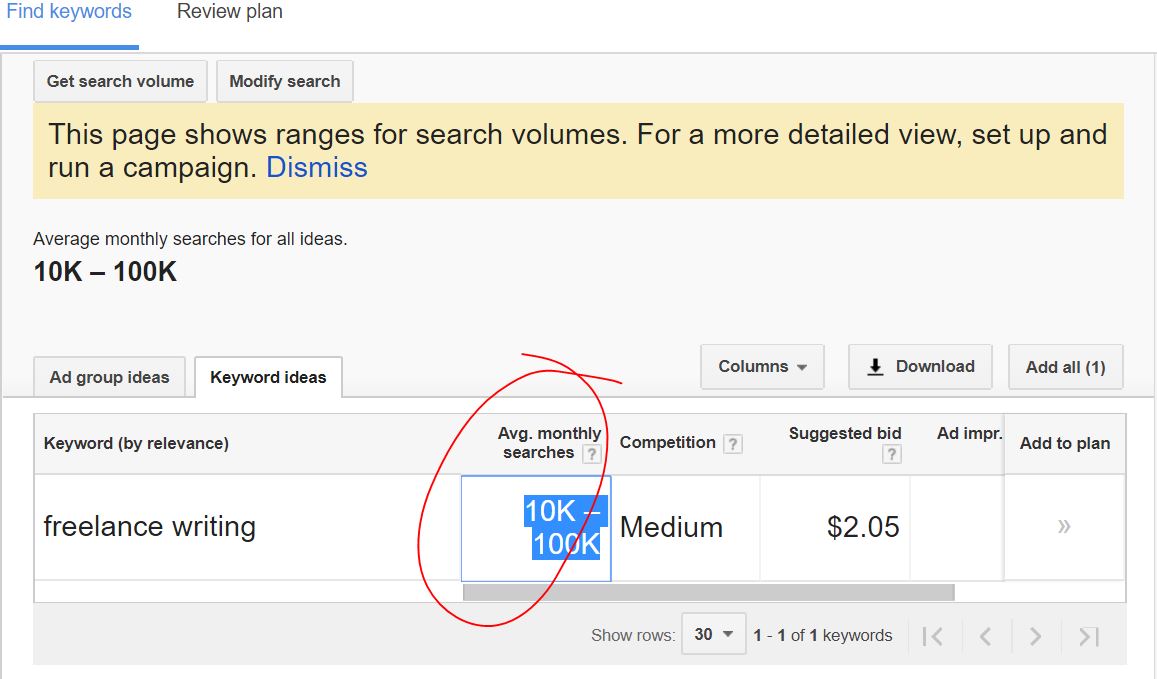
tips for seo keywords
A list of keywords will pop up. Look for keywords and phrases that have 10 to 100 thousand monthly searches. This means that people are actively typing these keywords into Google each month looking for articles on the topic. And in turn, Google actively searches for articles that provides information on these topics.
So your articles should have keywords here and there throughout. Most of the time, keywords will naturally pop up in your writing. You don't really need to think about it too hard.
Just be sure that:
You have a keyword in the title of the article or post and that it is close to the beginning
There is a keyword in the name of the image files you use and in the captions
Keywords are in the headings
There is a least one keyword in the first or second sentence of the post
DO NOT litter your article or post with keywords, though. Other than the areas I've highlighted, let them come naturally. If you spam an article with the same words over and over you'll get a penalty, which will make your post rank lower in searches.
SEO-Friendly Headings
Now you know that your posts should have keywords in the headings, but there is one more thing you should know. All of your headings should have H2 or H3 tags in the code. Search engines look at your heading to figure out what your article is about. These tags help search engines know where your headings are.
Don't freak out! You don't need to know coding. Most post editors and word processing software, like Word, have heading options. Just highlight your heading, tap on the H2 or H3 heading option and you're golden. The tag will be automatically added to the code.
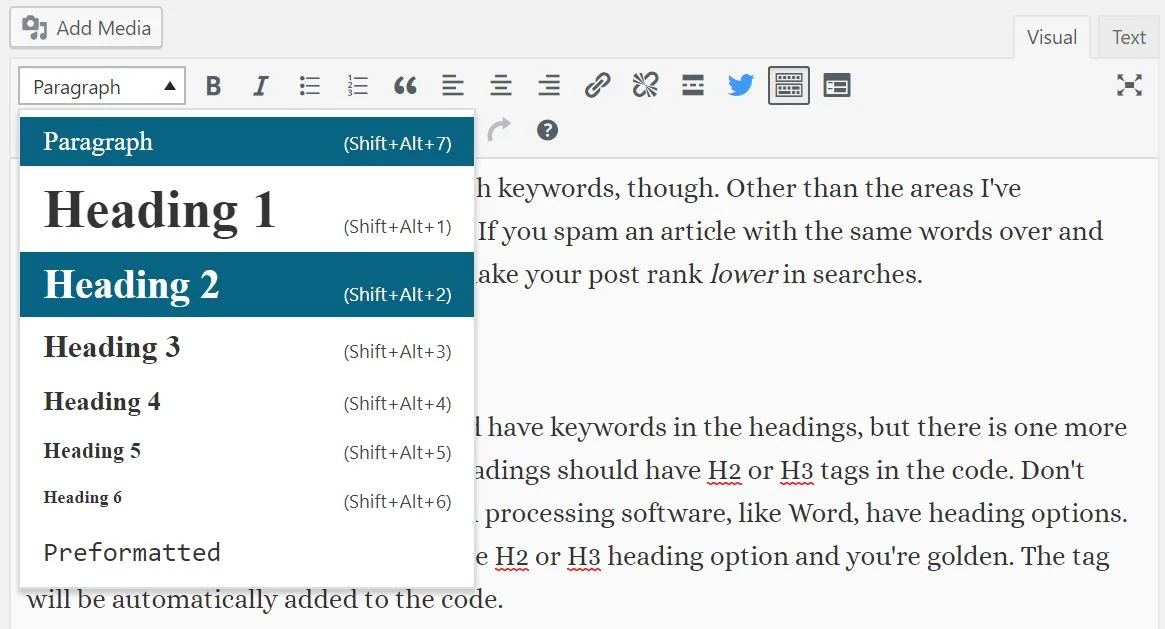
wordpress headings
Add Media
Search engines LOVE media. Media in a post tells the search engines that you are providing added value to the reader.
The rule is to add at least two images to your post for good ranking, but the more the merrier. Some media you can add to a post are:
Embedded YouTube videos
Gifs
Image galleries
Audio recordings
Videos of yourself explaining a concept
Infographics
Memes
Surveys
Maps
Where do you get quality media? Here are some free places I use:
Consider Length
The length of your post or article makes a difference, too. Search engines seem to prefer posts that are 400 words or more. The longer, the better, though. Once again, search engines are looking for value.
Best Article length
If you have a post that is a gallery of images and very little words, don't worry. If there is a lot of media it seems to cancel out the word count requirement.
Quality Links Make SEO Better
Finally, you need to add quality links in your articles. Link to reputable sites throughout your articles.
So reputable websites that search engines love are:
Government sites like the FDA, National Library of Health, or the CDC
Groups like the World Health Organization, American Dental Association or the American Cancer Society
Science and health journals and magazines like JAMA and Scientific American
Trusted health sites like the Mayo Clinic
University websites
Search engines like it when the link is embedded in words, not just a typed out address. Here is an example:
Bad- The site https://moz.com/beginners-guide-to-seo has some good tips for search engine optimization.
Good- The Moz site has some good tips for search engine optimization.
Just highlight the words and click on the link tool in the post editor or word processing software to embed your link.
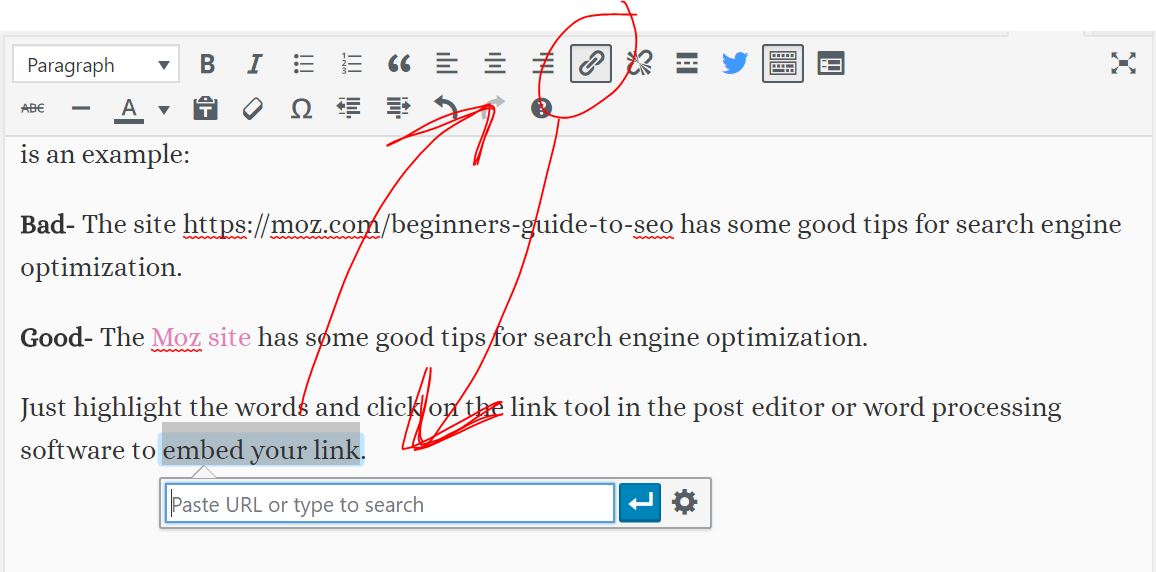
linking for seo
Also, make sure you link to other articles or blogs on your site. Try to put two links to your own content in the first two paragraphs of every piece.
Be a Good Writer
Search engines also rank posts higher if they contain good spelling. This should go without saying, since you're a professional writer and all, but ALWAYS check your spelling.
That's It!
That's basically all writers need to know about SEO. Remember, as long as you're thinking about your reader and providing quality, then most of your worries are taken care of already.