

Vendor Plugins: The Soft Underbelly of Your Stack
You know those plug-and-play bits that make a site feel polished: search, forms, chat, analytics? They’re brilliant for speed. They’re also extra doors into your stack. Most stay locked; some don’t. That’s why vendor plugins deserve the same care you give your core product. This isn’t a hacker explainer; it's a practical guide for business folks who want the convenience without the cleanup. We’ll keep the jargon light, the actions clear, and ground it in a real example, CVE-2025-44043, to show how “just a search box” can turn into a very non-ordinary risk when nobody is watching the settings.

Why “Quick Wins” Become Long-Term Security Debt
It’s not the plugin’s existence that creates risk; it’s the distance between how quickly you can deploy one and how slowly most organisations fold that new dependency into standard risk routines. In human terms, it’s easy to add features and hard to add process. Over time, the little things stack up. A contact-form library that hasn’t been updated. A search component with default settings. A widget that logs too much. None of these looks like a headline on day one. Yet collectively they widen your attack surface in subtle, unglamorous ways.
The Convenience Trap in One Sentence
The fastest way to add capability is also the fastest way to forget who’s responsible for keeping it safe.
What Makes Plugins Different From Your Core Software
Opaque roadmaps. You can’t steer a vendor’s release cycle, and some fixes arrive on their schedule, not yours.
Config gravity. Defaults persist, especially on marketing properties, because “it works as is.”
Ownership confusion. Is it IT? SecOps? Dev? Marketing? If everyone owns it, no one owns it.
Monitoring blind spots. Many plugins bypass your normal logging/alerting, which means you learn about problems late.
Data path surprises. A feature that “just searches your site” may also talk to services you didn’t plan for.
Follow the Value: Treat the Feature Like a Product
A vendor plugin that touches customers, content, or credentials should pass the same basic tests as your core product:
Threat model lite. In one page: what inputs it accepts, what data it can touch, what it can call.
Operational SLOs. Who patches it, how often, and what “done” means after an alert.
Observability. Logs to your system of record, not the vendor’s silo.
Kill switch. A reversible way to disable the feature without nuking the entire site.
Minimum privilege. Keys, tokens, and file paths with the least access needed to run.
Ship the feature, but also ship the operations around it.
CVE-2025-44043: a Practical Reminder, Not a Panic Button
In June 2025, the National Vulnerability Database flagged CVE-2025-44043, an SSRF issue in Keyoti’s SearchUnit before version 9.0. Plainly put: with the right poke, the search feature could trick your server into reaching places it shouldn’t, which can lead to data exposure if you don’t lock it down. This isn’t about blaming a vendor; it’s about spotting a familiar pattern. Everyday features, yes, even a basic search bar, need the same patching and configuration discipline you give your “serious” systems. (NVD)
Business takeaway: The component you consider “just a UX nicety” sits on the same network, pulls the same credentials, and logs to the same disks as your crown-jewel apps. Treat it accordingly.
Risk in Business Language (So Your CFO Nods)
Think of plugin risk as a balance sheet item:
Asset: Faster time-to-value, lower build cost, steady updates.
Liability: Shared control, reliance on external release cycles, potential public CVEs.
Equity: Your process—vendor vetting, patch cadence, monitoring, and rollback steps- converts that liability into a manageable, known risk.
The “ROI of patching” looks dull until you price a PR incident, compliance fines, and the opportunity cost of a week of war rooms. A two-hour quarterly review suddenly feels like a bargain.
How to Operationalise Plugin Security Without Slowing the Team
1) Inventory like you mean it
Create a single list of every plugin, extension, and embedded service across your web properties: what it does, who owns it, where it lives, what versions and keys it uses. Tie each entry to a human owner (a name, not a team).
2) Standardise your acceptance criteria
Before the next plugin goes live, require three basics:
Logging: Events flow to your SIEM with a unique source tag.
Config review: Defaults reviewed and documented; risky options explicitly justified.
Rollback: A one-step disable mechanism tested in staging.
3) Make patching boring
Move “check vendor releases & apply updates” from a reactive firefight to a calendar-driven job. Fold it into your regular sprint ceremonies or monthly ops cycle. Boring is good.
4) Test for the obvious
Run lightweight checks on inputs (search boxes, file uploads, XML/JSON endpoints) and verify that your web app firewall rules and allowlists actually fire. No exploit kits, just sanity checks. When in doubt, include the plugin in your next application security test.
5) Close the loop with marketing & content teams
Many plugins sit on marketing-owned sites. Give non-technical owners a two-minute checklist: “If you install or update a plugin, ping this Slack channel; we’ll tag it to the inventory and check the logging.” Culture beats policy.
A 30-60-90-Day Plan You Can Run With
Days 1–30: Discover & stabilise
Build the plugin inventory (site by site).
Tag owners. Add version numbers and links to vendor release notes.
Turn on logging for any plugin that’s currently a black box.
Validate that you can disable each plugin without breaking checkout, login, or critical flows.
Days 31–60: Reduce and harden
Remove unused or redundant plugins; consolidate where two do the job of one.
Lock down configs (inputs, file paths, external connections).
Establish a patch cadence and a standing 30-minute review per month.
Write a standard “plugin incident” runbook (who to call, where to look, how to rollback).
Days 61–90: Automate & communicate
Add plugins to your vulnerability alerts (RSS, vendor emails, NVD watches).
Include plugin status in your quarterly security update to the leadership team.
Run a tabletop on “search plugin misconfiguration” to practice your kill-switch, rollback, and comms.
What to Ask Your Vendors—Before You Deploy
“How do I see security-relevant logs?” If the answer is “log into our portal,” push for export into your logging stack.
“What’s your disclosure and patch policy?” Look for public advisories, timelines, and clear versioning.
“How do I disable the plugin safely?” You want a single setting or removable script tag with documented side effects.
“What’s the minimum permission set?” If the default is admin-level tokens, keep asking.
“Can you share recent security fixes?” Recent changelogs are a good sign; “we’ve never had an issue” is not.
Map Plugin Risk to Plain
Reputation: A public incident, even a minor one, shrinks conversions faster than any A/B test can grow them.
Compliance: If the component touches personal data, it inherits all your obligations, too.
Productivity: A surprise issue on a marketing microsite derails the same engineers you need for revenue work.
Translate tech risk into outcomes every leader already cares about. You’ll get budget and buy-in without scaring anyone.
Metrics That Actually Move Behaviour
Mean time to update (MTTU): From vendor release to production patch.
Coverage: % of plugins with owners, logging, and rollback tested this quarter.
Dependency count: Total plugins per domain; drive it down over time.
Drift: Number of plugins whose config deviates from your standard.
Keep these in one dashboard. Review monthly. Celebrate when they improve.
Where to Place Plugin Security in Your Org Chart
If you have a platform or web ops team, plugin security lives there with a dotted line to Security. If you don’t, name a Plugin Steward—a rotating role that ensures the inventory is current, patches are scheduled, and alerts are handled. This isn’t a full-time job; it’s a habit builder.
Case Study Sidebar: How the News Informs the Process
CVE-2025-44043 involves an SSRF risk in the Keyoti SearchUnit component that could be abused through specific service endpoints prior to version 9.0. It’s a tidy example of how a search feature—often treated as “just a widget”—can create unexpected data paths if not configured and monitored carefully. The fix is straightforward in principle: know you’re using it, confirm the version, review configs, and schedule the update. This isn’t alarmism; it’s routine hygiene backed by public records. (NVD, keyoti.com)
Build or buy? A pragmatic lens
Buying is usually right for commodity features. Just price in the operations cost up front. The true comparison isn’t “license fee vs. dev time.” It’s “license + monitoring + patching cadence” vs. “build + maintain + test forever.” If your team won’t run the process either way, buying didn’t save you risk—it just moved it around.
Your Lightweight Checklist (Print-Worthy)
Inventory all plugins by site, owner, version, and data touched
Ensure logs land in your SIEM with a unique tag
Review and document non-default configs
Test the kill-switch in staging (and know who can flip it)
Put vendor release notes and security advisories on your watch list
Track MTTU and coverage monthly
Remove dead or duplicate plugins each quarter
Bottom Line
Vendor plugins are fantastic for speed and polish. But speed without structure is how tiny cracks become big costs. Treat each plugin like a miniature product with an owner, a patch plan, and a way to observe it. Do that, and you’ll keep the velocity you love and the resilience your brand demands.

How AI Transforms Information Flows Between Fund Managers And Investors
Clear, timely, and accurate communication is critical in the investment industry. Fund managers need to present data, performance updates, and market insights to investors in ways that are both efficient and transparent. Artificial intelligence is now playing an increasingly important role in shaping how this information flows, creating new standards for accuracy and accessibility.

Streamlining Data Collection and Processing
Investment firms handle large volumes of financial data daily. Traditional reporting methods often required teams to sift through spreadsheets, consolidate figures, and manually prepare documents for investor review. AI-powered systems now automate much of this work by extracting, cleaning, and organizing data in real time. This shift reduces human error while enabling fund managers to produce reports more quickly and with greater consistency. For investors, this means receiving performance updates that reflect the most current market conditions rather than waiting days for manual reporting cycles to be completed.
Enhancing Investor Reporting
Artificial intelligence is also improving the presentation of information. AI-driven platforms can generate customized reports that highlight the metrics each investor prioritizes, such as risk exposure, portfolio diversification, or sector-specific performance. Natural language processing tools can produce narrative summaries that accompany charts and figures, allowing investors to grasp trends and insights without requiring advanced technical expertise. This combination of data-driven precision and clarity improves decision-making by ensuring the right details reach the right people at the right time.
Supporting Predictive Analytics
While historical performance remains essential to investor reporting, forward-looking insights are increasingly valued. AI models can analyze patterns across vast datasets to forecast potential risks and opportunities. Fund managers can use these insights to provide investors with scenario-based outlooks, helping them evaluate how different market events could impact their portfolios. Predictive analytics also allows managers to adjust communication strategies, addressing investor concerns before they escalate and demonstrating proactive engagement.
Strengthening Transparency and Trust
One of the ongoing challenges in fund management is ensuring investors feel confident in the accuracy and integrity of the information provided. AI helps meet this need by standardizing reporting processes and eliminating many of the inconsistencies associated with manual data handling. Automated systems create audit trails that document how figures are collected and processed, offering investors greater transparency. This accountability can strengthen trust, particularly during periods of market volatility when reliable information is most essential.
Integrating with Existing Systems
AI tools are increasingly integrated into platforms that investment firms already use to manage client relationships. For example, a private equity CRM system that incorporates AI can centralize communication, performance reporting, and investor preferences in one place. This integration reduces duplication of effort and ensures that every investor interaction is informed by the most up-to-date data. Over time, such systems also learn from historical interactions, allowing for more personalized and efficient communication strategies.
The use of AI in fund manager-to-investor communication is creating a new benchmark for efficiency, accuracy, and transparency. Investors benefit from clearer updates, while fund managers strengthen their ability to maintain trust and deliver insights that go beyond the numbers. Look over the infographic below to learn more.


Is Your Cash Flow Strategy Built For Growth?
Cash flow is more than an indicator of whether a business can pay its bills. It is also a measure of a company’s capacity to sustain operations, pursue opportunities, and weather disruptions. Many organizations emphasize revenue growth but neglect to align their cash flow strategy with long-term expansion. Without deliberate planning, even profitable businesses can struggle to fund their next stage of growth.

Evaluating Current Cash Flow Practices
The first step in determining if your strategy is growth-ready is to analyze how money currently moves in and out of the business. Reviewing accounts receivable patterns, supplier payment terms, and inventory management can highlight gaps. Late payments from clients, for instance, can create shortfalls that stall projects or delay payroll. Similarly, tying up too much cash in slow-moving inventory reduces flexibility to invest in opportunities that require quick action.
Aligning Cash Flow with Business Goals
A strategy built for growth must account for both short-term obligations and long-term investments. Aligning financial decisions with these objectives helps prevent reactive decision-making. Forecasting cash needs based on growth initiatives rather than past performance alone can create a more accurate financial roadmap.
Leveraging Technology for Insight
Modern financial tools can help businesses predict and monitor cash flow with greater precision. Automated dashboards, forecasting software, and integrated accounting systems provide real-time visibility into financial health. These tools make it easier to spot emerging trends, track seasonal fluctuations, and test different scenarios. Better data equips leaders to make informed decisions and adapt quickly to changes in market conditions.
Balancing Liquidity and Investment
Growth strategies often require significant capital, but maintaining liquidity is equally important. Companies that invest aggressively without preserving adequate reserves may face financial strain during slow months or unexpected disruptions. On the other hand, businesses that hold too much idle cash miss out on opportunities to expand. A balanced approach involves setting aside reserves for stability while strategically investing in initiatives that drive future returns. Access to financing solutions can also provide a safety net, ensuring that growth plans remain on track even if immediate cash flow falls short.
Strengthening Internal Processes
Beyond forecasting and technology, internal processes play a critical role in building a growth-ready cash flow strategy. Clear policies for invoicing, expense approval, and credit management reduce uncertainty. Training employees to follow consistent procedures ensures accountability and prevents small errors from compounding into significant financial challenges. Streamlining these processes not only saves time but also improves predictability.
The Long-Term View
Businesses that thrive over time treat cash flow as an ongoing discipline rather than a quarterly task. A strong strategy is dynamic, adjusting as goals evolve and external conditions shift. Leaders who continuously monitor, refine, and balance liquidity with investment create a financial foundation that supports sustainable growth. The goal is to build the capacity to seize opportunities with confidence.
A growth-ready cash flow strategy is deliberate, balanced, and informed by both data and process discipline. For businesses seeking long-term success, strengthening cash flow management is as critical as increasing revenue. Check out the infographic below for more information.


Avoiding Hiring Mistakes That Cost Businesses Time And Money
Hiring the right employee can drive a business forward, but hiring the wrong one can create setbacks that affect productivity, morale, and even long-term financial stability. Many companies repeat the same errors during recruitment, and avoiding these pitfalls requires careful planning, consistent evaluation throughout the process, and a strong commitment to aligning candidates with both the job requirements and the company’s culture.

Rushing the Hiring Process
One of the most common mistakes is rushing to fill a role quickly without fully considering whether a candidate aligns with both the job requirements and company culture. This often happens when workloads are heavy, and managers feel pressure to bring someone in immediately. Taking the time to evaluate skills, experience, and compatibility reduces turnover and creates stronger teams. A slower but more thoughtful hiring process saves more time in the long run than repeatedly training new employees.
Relying Too Heavily on Resumes
Resumes can be polished to highlight strengths while leaving out weaknesses. Employers who focus only on resumes risk overlooking essential factors such as problem-solving skills, adaptability, and communication abilities. Structured interviews, skills assessments, and situational judgment tests provide a clearer picture of how a candidate will perform in real-world conditions.
Neglecting Proper Screening
Skipping or minimizing background checks can lead to costly mistakes. A candidate may appear qualified on paper but could have a history that raises concerns about reliability, safety, or trustworthiness. Implementing background screening services ensures that decisions are based on accurate and verified information. This additional step reduces risks and provides peace of mind for both leadership and existing staff.
Failing to Define the Role Clearly
A vague or poorly written job description can attract candidates who are not truly suited to the role. Employers often list generic responsibilities or fail to include the specific skills required, which leads to mismatched hires. A detailed description that includes day-to-day duties, expectations, and growth opportunities helps both the employer and candidate determine whether the role is a good fit.
Overlooking Cultural Fit
Skills and qualifications are important, but cultural fit plays a critical role in long-term success. An employee who does not align with the company’s values, communication style, or work environment can create friction even if their technical abilities are strong. Considering both hard and soft skills during the evaluation process helps avoid mismatches that could affect team dynamics.
Ignoring Onboarding and Training
The hiring process does not end with an offer letter. Failing to invest in proper onboarding and training can leave new hires confused and disengaged. Employees who feel unsupported in their first few months are more likely to leave prematurely. Clear expectations, structured training, and regular check-ins build confidence and help new team members succeed.
Preventing hiring mistakes requires a commitment to thorough evaluation, clear communication, and structured processes. Companies that avoid rushing, invest in screening, and prioritize both role clarity and cultural alignment create stronger teams with lower turnover. Careful hiring practices reduce long-term costs, boost productivity, and strengthen overall business stability. For more information, look over the infographic below.


Building Influence Online: Best Practices For CEOs
A modern CEO is expected to do more than lead internally. The digital landscape has made online presence and influence essential for credibility, visibility, and trust. Building influence online is not a matter of simply posting content but of approaching engagement with intention and strategy.

Establishing a Strong Personal Brand
The starting point for online influence is a consistent personal brand. CEOs who communicate their values, leadership style, and expertise build a narrative that connects with both employees and the public. This involves identifying what you want to be known for and maintaining consistency across all platforms. For example, a CEO focusing on sustainability should reflect that commitment in articles, interviews, and social updates. A fragmented message weakens authority, while a cohesive voice strengthens credibility.
Leveraging Thought Leadership
Publishing original insights is one of the most effective ways to build authority online. Writing op-eds, posting thoughtful LinkedIn articles, and contributing to industry publications allow CEOs to shape conversations rather than just participate in them. The key is substance. Audiences respond to practical knowledge and real-world experiences over broad statements. Sharing case studies, leadership lessons, or observations on industry trends builds trust and invites engagement.
Engaging Directly with Audiences
Influence requires two-way communication. CEOs who reply to comments, acknowledge diverse viewpoints, and interact authentically demonstrate accessibility. This type of engagement fosters loyalty and signals that leadership values dialogue rather than one-way messaging. Live Q&A sessions, AMAs, or short video updates are effective tools to humanize leadership and make it approachable. Consistency matters more than frequency; even brief but regular interactions can reinforce credibility.
Using Data and Analytics to Guide Strategy
Measuring influence is just as important as cultivating it. Monitoring engagement rates, reach, and sentiment analysis helps CEOs refine their strategies. Data highlights what resonates most with audiences and where adjustments are necessary. CEOs should not rely solely on intuition, but instead treat their online presence as they would any other business initiative, with measurable goals and performance reviews.
Building Partnerships for Greater Reach
Influence grows through networks. Partnering with industry leaders, media outlets, and organizations extends visibility beyond a CEO’s immediate audience. Collaborations such as co-authored articles, podcast appearances, or joint webinars place executives in front of new audiences and demonstrate relevance. Many leaders also work with strategic communications firms to structure their outreach in ways that maximize impact while staying authentic.
Balancing Transparency and Professionalism
While authenticity is crucial, CEOs must maintain a balance between personal and professional content. Oversharing can dilute credibility, but withholding too much risks making leaders appear detached. Striking the right balance involves showing enough personal insight to build a connection while ensuring that messaging remains professional and aligned with company values.
Online influence is not built overnight. It is the result of deliberate effort, consistent engagement, and the ability to listen as well as lead. CEOs who invest in their digital presence position themselves as credible voices in their industries and set the tone for how their organizations are perceived. For more information, look over the accompanying resource below.


Businesses Need To Start Understanding The Importance Of Technology
You would think that after living in the age of technology for quite some time now, businesses would have gotten on board with technology. Most of them have, but there are still some who think that they can be the black sheep and operate without tech on their side. The problem is that they are wrong, and if they continue trying to walk down this path, the business is going to crumble as they will simply not be able to compete with the others in the industry.

So, it’s important that if you are a business owner, you have the tech that you need. We’re going to be taking a look into why this is so important down below, so if you would like to know a little more about the why, feel free to read on.
Efficiency Improvements
Of course, the number one benefit of technology is the fact that it enhances your efficiency overall. Your business needs technology to be able to remain competitive with the others in the industry, because we guarantee you that they are using the tech you’re trying to avoid. It’s important to keep in mind that technology was initially developed to make life easier for people, and that is exactly what it has done. Sure, some pieces have a bit of a learning curve, but once you get the hang of it, it simply makes things quicker, simpler, and therefore better.
If your business is not efficient, customers are going to go and find another company that is. They want what they want, and they want it in a timely manner, so if you can’t give them that, you’re going to lose out.
Health And Safety Application
Technology can not only help with improving efficiency, but it can also be used to improve health and safety standards within your company. If you work in a high-risk industry, then you may already be aware of the risks of explosions and the impact of various chemicals touching. This is where something like visimix.com can come in handy, it measures what the risks are and how to minimize these in the workplace.
Opens Up A Whole New World
Lastly, as a business owner you will inevitably know that you need to move along with the times. You don’t want to get stuck and left behind while your competitors are racing ahead, taking all your customers and clients. Technology can bring with it a whole new world, making life significantly easier for all those involved. For instance, if you are needing to send out invoices to clients then you no longer have to manually input all the numbers to find out how much they owe you.
You could hire an accounts team to manage this for you, but that would seem a little waste of money from your budget. Do your research and find the best software or app that lets you charge clients online.
We hope this helps you understand some of the key steps that you should take to ensure that you are able to maximise the greatest potential out of tech in your business model.

Is Setting Up A Business Your Next Move? Here's What You Need To Think About
Is setting up a business your next career move? If you have decided that you no longer want to work under anyone else and you want to go your own way, we honestly do not blame you. It’s a lot to work for someone else, especially if you feel as though you are unappreciated. So, going it on your own sounds like a great idea, and one that we’re going to help support you with as much as we can.

Setting up a business is not going to be easy, so you have to put your best foot forward here. In this article, we’re going to be taking a look at some of the different things that you need to consider, so keep reading if you would like to find out more.
Partnering With Other Companies
First, you need to think about partnering with other companies to increase your chances of success. The chances are that you’re not going to be able to make this happen without some kind of help, as you literally cannot do everything on your own. There are so many elements to a business, and it’s imperative that you get help where it’s needed, or else you’re going to struggle.
For example, if you have decided that you feel as though there’s a gap in the market for dog food. Perhaps you want to start a dog food company that has different values or focuses on different areas than others, so it might then be worth partnering with a dog food flavor company so that the food tastes fantastic, as well as being full of what they need.
Identifying Your Target Audience
You also need to identify your target audience. You need to know who you are trying to appeal to, and what appeals to them. Each demographic has different things that will encourage them to make a purchase, and that’s why it’s so important for you to understand who you are targeting. This is not to say that all of your customers are going to be within your target audience, because chances are that they aren’t. It doesn’t matter, though. The goal is to get as many customers as you can while being able to offer quality, so while identifying your target audience helps you to understand who you are serving, it doesn’t mean it’s exclusively them.
Working Out Marketing Tactics
When it comes to marketing, it needs to be as targeted as possible so that it lands in the right place, in front of the right people. Having said that, you should have some more general materials also on your side to ensure that you are appealing to a broad reach of people as well. You don’t want to actively exclude groups while you’re marketing to a particular one, as that is going to cause you even more problems, potentially even turning away potential customers who now feel they don’t fit your criteria.
The point is, it's a tough gig marketing, but you’ve got to make it work.

How To Ensure Your Business Thrives All Year Round
While it is normal for everything from sales to foot traffic to fluctuate through the year, it's important that you do everything you can to keep those orders (and customers) flooding in. Otherwise, your business could land in deep water pretty quickly.

With that in mind, here are some simple, yet effective ways in which you can ensure your business thrives all year round.
Incentivize sales during quiet periods with unbeatable promotions. By now, you likely have an idea of when you sell the most products. For most retail companies, this is the holiday period, but it can vary from industry to industry. However, you can increase your profits during quieter periods by running your best promotions during this time. For example, you could increase your customer loyalty discount by a small percentage, or run a buy-one-get-one-free scheme. This will help to bring more people through your doors, increasing sales at a time when you usually may struggle.
Be prepared for bad weather. While the sun may be shining right now, winter will be upon us before we know it. This means that bad weather, such as snow and sleet, is on the way too. If your entryway looks like an ice rink, customers may be unwilling to stop by, or they may get injured when trying to do so. Preparing for this ahead of time, such as by working with companies that offer ploughing services, such as Gresham's Snow Removal will help your business remain operational come rain or snow.
Find ways to reward your customers. Finding effective ways to reward your customers will also help your business to perform at its best all-year round. This is because it will strengthen the relationship you share with them, while also making sure that they too benefit from continued custom. While sales are a great starting point for this (as mentioned above), you should also develop a loyalty scheme.
On a similar note, you should also make sure that you spend as much time getting to know your customers as possible. This ensures that you’re then able to bring products to the market that they actually want to buy. This way, they will start to fly off your shelves as opposed to being left to gather dust in your stock cupboard. It will also help you to build a stellar reputation for a company that always brings the hottest products to market.
Ask for feedback from your customers. Asking your customers for feedback at regular intervals throughout the year, i.e., every quarter, is also incredibly useful when it comes to your overall success. This is because, if you’re doing something wrong, you have a chance to make things right again as quickly as possible (and before customers start to shop elsewhere).
Final thoughts. In short, there are many steps that you can take to ensure your business thrives all year round, from running regular sales and promotions to asking for in-depth feedback and constructive criticism from your customers or target audience.

Set Up Your Business for Growth Success in 7 Steps
Getting your business up and running is something you never even thought was a possibility. But, now you’re in a steady place, it’s time to start thinking about growth. After long working days, lengthy planning processes, and a whole lot of hope, you’d like to think that you’re ready to take the next step with your company. If you really want to succeed in growing your business, you may need to put some extra time and effort into certain strategies. Luckily, there are plenty of entrepreneurs who have walked in your shoes before, and they have tried and tested them over the years. Although every business has a unique set up, it’s clear that there are certain strategies that showcase more success than others.
With this in mind, consider the following plan to set up your business for growth in just seven simple steps:

Create a Clear Business Plan
If you don’t have a clear and concise business plan to work from, you may not have your energy focused in the right places. Your business plan needs to drive your sales, meet the needs of your customers and provide you with tangible strategies to move the needle forward with your business. Take a look online at some business plan templates and you will soon have a document that helps you to stay focused on all of your goals.
Work With a Business Growth Strategist
As a business owner, you need to be able to take guidance from others who have walked in your shoes before. Working alongside a mentor or business growth strategist will not only help you to improve your growth methods, but it will also open up your eyes to a whole host of other opportunities. Finding a growth strategist for entrepreneurs will be dependent on the type of business you’re running and what your specific goals are. Suppose you’re looking to align your brand with your business goals, build solid marketing systems to generate growth and position yourself as a market leader. In that case, there are plenty of trusted growth strategists who can help you achieve this. From improving your customer journeys to solidifying the most effective marketing plan, you can work with someone who gives you guidance, accountability and knowledge to take your business to the next level and increase your revenue.
Make Sure Your Website is Slick
Your website is the internal hub of your business, so it needs to be slick, impressive and ready to attract the attention of your target audience. Luckily, there are plenty of build your own website plans that can help you to make the right choices for your design and website copy. A slick and professional website is easy to achieve as long as you have done plenty of research on what your target audience’s pain points and goals are.
Carry Out Research on Your Target Audience
Before you can grow your business and reach the next level, you need to carry out some in-depth research into your target audience. This could involve talking to people who you have worked with before, or those within the demographic you’re trying to reach. Whether you’re doing questionnaires, or phone consultations to find out more information, these details are the key to taking your business up a notch and finding the sweet spot for your ideal target customer.
Focus on Improving Your Products and Services
You should always be focused on continuous improvement when it comes to your products and services. There is no “end game” when it comes to running your business; you need to stay one step ahead otherwise your customers will soon find a different and more innovative company to shop with. Making these small tweaks and improvements to your products and services will not only ensure that you’re providing the best possible options for your customers, but they’ll also establish you as a trustworthy competitor in your space.
Make the Most of Social Media
Social media is a golden marketing method that should never be ignored when you’re trying to grow your business. Whether you’re making the most of Instagram, YouTube or Facebook marketing, you can build a loyal audience and expand your target demographic with engaging content. If you’re unsure how to leverage the power of social media, you can always enlist the help of a social media manager who can ensure that your posts are consistent and aligned with the views of your target customer.
Don’t Forget About Competitor Research
When it comes to growing your business into a successful entity, you need to make sure you’re keeping an eye on the other competitors in your space. Although you would never intend to copy their strategies, it’s important to ensure your pricing aligns with theirs and you’re always on the front foot with regards to product improvements. You can actually learn a lot from your competitors, so having a strong overview of what they’re focusing on may help you to move forward with your business so that you can grow and improve your services simultaneously. Having competitors is never a bad thing either; it means there is great demand for the product or service that you’re providing. So, if you can showcase your unique selling point, you will soon find a way to find the right match customers to work with.
As you can see, there are so many simple and smart methods that can help you to grow your business in a smart and strategic way. You don’t need to reach all of your goals at once; opt for a slow and steady strategy that helps you to leverage the power of your strengths and unique selling points. Although you may not see progress right away, you are bound to find the right flow when it comes to attracting the right customers, connecting with your target audience and moving forward with your business. All in all, every entrepreneur will have their own methods and ideal strategies, but you will find a tailored version that suits your business type and gives you the competitive edge over others in your space.

Overcrowded Job Sites And Their Hidden Impact On Safety
Construction job sites often operate on tight timelines with multiple subcontractors working simultaneously. While coordination is essential for progress, excessive personnel or equipment in a confined area can lead to hazardous conditions. Crowded job sites are not just inconvenient; they are a direct threat to worker safety and operational efficiency.

Too Many Workers, Too Little Space
One of the most significant hazards of overcrowding is limited mobility. Workers must often move around each other, materials, tools, and machinery. In such tight quarters, the risk of tripping, slipping, or coming into contact with active equipment increases. These accidents may seem minor, but they contribute to a steady stream of injuries that delay projects and raise insurance costs.
Physical proximity also increases the chance of errors. A miscommunication between trades or a distraction caused by a nearby task can lead to incorrect installations or unsafe shortcuts. For example, electricians and HVAC crews working in the same area may unintentionally interfere with each other’s systems, creating code violations or requiring costly rework.
Equipment and Traffic Congestion
Material deliveries, cranes, forklifts, and power tools all demand space to operate safely. In an overcrowded environment, vehicle operators face reduced visibility and narrower paths, which makes collisions more likely. This risk increases when temporary storage areas overflow into work zones, forcing workers to maneuver around poorly placed supplies.
Congestion also causes scheduling delays. Trades may have to wait for access to shared spaces, which can lead to rushed work and skipped safety protocols. Over time, this leads to quality concerns and a higher chance of on-site injuries.
Communication Breakdowns
Clear communication is essential on busy job sites, but crowded conditions interfere with verbal instructions and visual signals. Foremen may struggle to monitor all active zones, while workers might miss hazard notices or entry restrictions. This confusion can lead to untrained personnel entering dangerous areas or using equipment incorrectly.
Noise also plays a role. Horns, engines, and power tools can drown out warnings, making it harder to react quickly to emergencies. Without reliable communication, response times suffer and small incidents may escalate into larger problems.
Improving Safety with Strategic Planning
Controlling foot traffic and organizing work schedules can reduce crowding. Staggering trade activities so that fewer workers occupy shared zones at the same time helps improve safety and accountability. Marked walkways and well-defined storage areas guide movement, even in compact environments.
Technology offers additional support. Wearables and digital monitoring systems help supervisors track worker locations and receive alerts for potential hazards. Prefab electrical assemblies, which allow portions of a system to be constructed off-site, reduce the number of workers and the amount of time spent in high-risk zones.
Crowded job sites are not simply a productivity concern. They present clear and preventable safety risks. Careful site planning, coordinated scheduling, and the use of off-site construction methods can all help reduce the hazards associated with limited space. As project demands increase, companies must recognize spatial efficiency as a critical element of job site safety. To learn more, look over the accompanying infographic.


The Power Of Lighting: How It Shapes The Retail Customer Experience
Lighting does more than illuminate products. It sets the tone for how shoppers perceive a store, how long they stay, and whether they make a purchase. In a retail environment, lighting is a strategic tool that influences customer behavior and can directly impact sales. Retailers who invest in thoughtful lighting plans often see improvements in traffic flow, mood, and brand perception.

Creating a Comfortable Shopping Atmosphere
Ambient lighting plays a key role in establishing a store’s overall feel. Soft, evenly distributed light can create a welcoming environment. On the other hand, harsh or inconsistent lighting may lead to discomfort or shortened visits. Retailers aiming to create a relaxed experience often use warmer tones in lifestyle and home goods settings, while cooler lighting is more common in technology stores.
The psychological impact of lighting is backed by research. Bright, well-lit spaces tend to promote a sense of cleanliness and trust, both of which are critical to customer satisfaction. Dim or flickering lights may give the impression of poor maintenance or outdated operations, even if the merchandise itself is high quality.
Directing Attention and Influencing Behavior
Beyond setting the mood, lighting is a powerful tool for guiding customer focus. Accent lighting is often used to spotlight promotional displays or highlight high-margin items. A strategically lit display can draw attention to specific products without overwhelming the shopper. For instance, grocery stores often use directional lighting to guide traffic through key aisles and influence purchasing decisions.
Retailers also use lighting to create visual zones within larger stores. This zoning helps customers intuitively navigate departments, especially in big-box or multi-category spaces. Light intensity and color temperature can be adjusted by section to signal transitions between categories, such as clothing, accessories, or home goods.
Supporting Brand Identity Through Lighting
Every retail brand has a story to tell. Luxury retailers frequently opt for low, focused lighting that creates a sense of exclusivity. In contrast, fast fashion brands often rely on bright, uniform lighting to reflect speed and accessibility. Lighting choices should align with the brand’s aesthetic and target audience, reinforcing consistency across physical and digital channels.
Color rendering is another important factor. Accurate lighting ensures products appear true to color, which is especially critical in apparel, cosmetics, and decor. Poor lighting can lead to dissatisfaction if a product looks different under natural light after purchase.
Integrating Lighting With Store Infrastructure
Lighting strategy is most effective when considered alongside electrical system design. A well-integrated system allows for adaptive lighting solutions such as dimmable fixtures or programmable lighting zones. Coordination with HVAC and control systems can also reduce energy waste and improve operational efficiency. These design choices contribute to a seamless customer experience while helping businesses manage long-term utility costs.
Lighting is an investment in customer perception, behavior, and satisfaction. When used strategically, it becomes a silent but persuasive influence. Retailers who treat lighting as a core design element, rather than an afterthought, are more likely to deliver memorable and productive experiences for their customers. For more information, look over the infographic below.


Global Careers, Local Voices: Why Bilingual Professionals Stand Out
Language has always been central to business, but in a globalized economy, the ability to communicate in more than one language has moved from a bonus to a competitive advantage. Bilingual professionals can bridge geographic and cultural gaps, often leading to better outcomes in international roles. From client communications to internal coordination, language skills are increasingly tied to career advancement across industries.

Increased Marketability in Multinational Roles
Companies with global footprints often prioritize candidates who can work across linguistic boundaries. Being bilingual opens positions that would otherwise be limited to local hires or require translation support. Employers see bilingual staff as a direct asset in global negotiations, vendor relations, and regional market development. Even in remote settings, bilingual professionals are better equipped to engage with diverse teams and clients, which improves productivity and fosters trust.
Improved Cognitive and Communication Skills
Language learning goes beyond vocabulary. Bilingual individuals tend to develop stronger problem-solving abilities and greater flexibility in how they approach challenges. Switching between languages reinforces cognitive control and enhances focus, which contributes to clearer communication and better decision-making. These attributes are especially valuable in fast-paced or multicultural work environments where clarity and adaptability are key.
Stronger Cultural Intelligence
Cultural fluency is closely tied to language fluency. Professionals who speak more than one language are often better at interpreting tone, nuance, and context across different communication styles. This skill reduces the chances of miscommunication in international business and improves cross-border collaboration. Bilingual professionals are also more likely to anticipate how cultural expectations influence customer behavior and team dynamics.
Expanded Career Pathways and Opportunities
Some roles explicitly require bilingual ability, such as international sales, localization, or customer support for foreign markets. Other positions offer faster promotion tracks to bilingual employees due to their unique contributions in expanding market access. Professionals fluent in widely spoken languages like Spanish, Mandarin, or Hindi are particularly well-positioned in sectors such as tech, manufacturing, and consulting. With the growing demand for language access in digital communication, candidates fluent in multiple languages also gain more leverage in negotiations and hiring processes.
Accessible Language Learning Options
For professionals looking to gain an edge, language learning has become more accessible than ever. Many turn to flexible programs such as online Hindi classes in USA-based platforms to build skills while working full time. These digital resources allow learners to improve fluency at their own pace, which supports both long-term goals and immediate workplace needs. Some platforms also offer cultural context and business-specific vocabulary, which can further improve a learner’s ability to apply language skills in professional settings. This convenience has removed traditional barriers such as scheduling conflicts and limited local course options.
Language skills do more than open doors. They build bridges across borders, industries, and disciplines. As global business continues to expand, companies will keep looking for professionals who can communicate across cultures with confidence and accuracy. For individuals looking to stand out, bilingualism remains one of the most practical and future-facing investments they can make in their careers. To learn more, look over the infographic below.


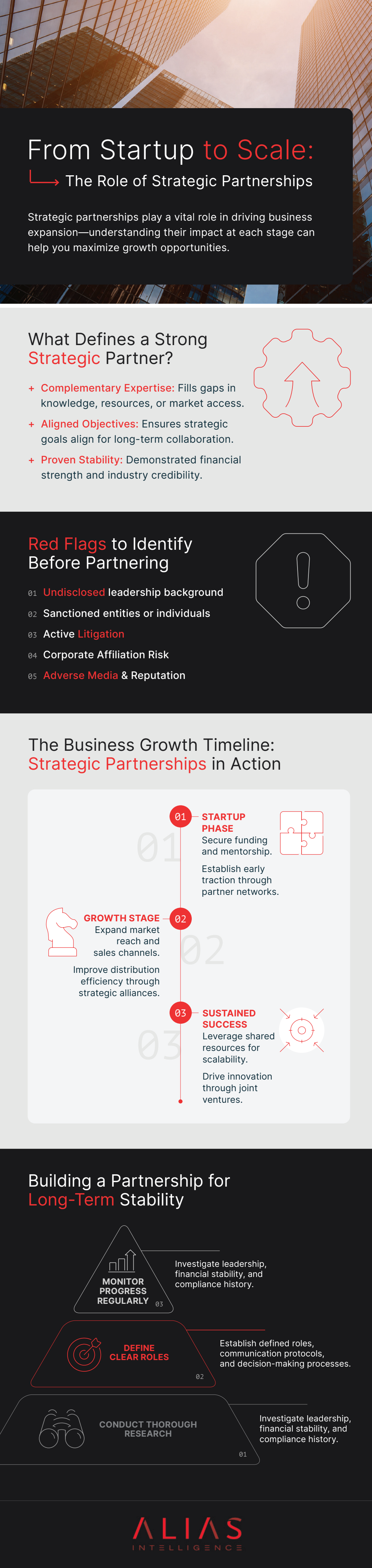
Strategic Partnerships: A Growth Lever From Startup To Scale
Strategic partnerships are often the difference between incremental progress and accelerated growth. For startups, they can provide early traction and credibility. For scaling companies, they unlock operational efficiencies, open new markets, and offer valuable knowledge exchange. The success of these relationships depends not just on shared goals but on timing, alignment, and the ability to adapt as business needs evolve.

Building Early-Stage Momentum
In the startup phase, resources are limited and brand recognition is minimal. Strategic alliances at this stage tend to focus on filling capability gaps and gaining early market access. Partnerships with complementary technology providers, local distributors, or niche influencers can help young companies expand their reach without significant overhead.
However, early partnerships must be carefully selected. An ill-fitting collaborator can slow momentum or distract from core development. Many startups consult due diligence firms to vet potential partners' reputations, financial stability, and contractual track records. This added scrutiny helps prevent future conflict or resource drain.
Strengthening the Value Proposition
As a company moves past initial traction, strategic partnerships shift toward differentiation and scalability. Businesses often look for partners who can strengthen their value proposition through co-development of features, integration with existing tools, or expanded service offerings. These alliances help companies remain competitive in crowded markets.
For example, a SaaS provider might integrate with widely used enterprise platforms to make adoption easier for large clients. A product manufacturer could co-brand with a trusted retail partner to increase shelf visibility. In each case, the partnership serves to reinforce the company’s market position and add practical value for end users.
Supporting Operational Scale
Partnerships also play a key role in operational scaling. Logistics providers, supply chain consultants, and IT service firms can help startups evolve into fully scaled enterprises. These relationships support higher volume, faster delivery, and more responsive service without requiring internal teams to grow at the same pace.
As operations become more complex, companies benefit from external expertise that allows them to focus on their core competencies. Strategic alignment on KPIs, workflows, and communication standards helps these partnerships remain efficient as the business expands.
Risk Management and Resilience
Not every partnership continues to serve its original purpose over time. Businesses must reassess their alliances periodically to determine whether the relationship still supports strategic objectives. This review process includes measuring joint performance outcomes, tracking financial returns, and evaluating market shifts that may affect the collaboration.
Well-managed partnerships include clear exit strategies, shared data access, and mechanisms for conflict resolution. These features make it easier to pivot or dissolve a relationship if conditions change. Regular check-ins and performance reviews also help identify potential issues before they escalate.
From early traction to scaled operations, strategic partnerships offer a pathway to faster, more sustainable growth. They enable companies to reach beyond their internal limits, reduce risk, and access new capabilities without overextending internal resources. With clear objectives and well-structured agreements, these collaborations become long-term assets that grow in value as the business evolves. For more information, feel free to look over the accompanying resource below.

The Logistics Chain Reaction: How One Disruption Affects The Entire Supply System
A smooth-running logistics network is rarely noticed, but the moment something falters, the ripple effects are immediate. Every component of the supply chain is connected, and a failure in one area has consequences throughout the entire system. Businesses that depend on timely transportation and consistent supply schedules can find themselves facing mounting costs, delayed deliveries, and operational stress.

How Delays Escalate Quickly
A delay at one port, warehouse, or transportation hub can throw off a coordinated delivery schedule across multiple partners. For example, if a container ship is held up, the trucks scheduled to collect its cargo may sit idle. Those same trucks may have been reserved for another load later that day, which now must be rescheduled. These kinds of timing issues are not confined to isolated companies. Disruptions can affect suppliers, distributors, and retailers alike.
Over time, repeated delays reduce trust across supply partners. Companies may need to order more than necessary or hold excess stock to hedge against potential disruptions. This leads to bloated inventories and increased warehousing costs, affecting financial performance.
Technology Plays a Critical Role
Real-time tracking, warehouse automation, and route optimization software offer businesses a chance to reduce the impact of disruptions. Visibility into the supply chain allows stakeholders to reroute trucks, adjust shipping schedules, and update customers. Predictive analytics also help companies anticipate bottlenecks based on historical data and conditions.
Digital solutions must be adopted throughout a supply network to be most effective. A company using real-time data to optimize deliveries may still be impacted if its vendors or logistics partners lack that same level of visibility. This dependency makes consistent investment in tech adoption critical across the entire chain.
Labor Shortages and Demand Swings
Logistics is not only about trucks and cargo; it’s also about people. Labor shortages continue to affect schedules and reliability. During high-demand periods, limited human resources cannot scale fast enough to meet needs, particularly during peak seasons.
Additionally, demand forecasting remains a constant challenge. Businesses that cannot accurately anticipate customer demand risk over-ordering or under-stocking. With markets shifting rapidly, demand spikes can exhaust transport and storage capacity.
Why the Smallest Changes Matter
The interconnectivity of logistics means that small disruptions can have exaggerated effects. Something as minor as a mislabeling error or a failed part in a conveyor system can cause delays that cost thousands of dollars. That ripple is measurable in procurement cycles, labor shifts, delivery times, and even in how clients perceive reliability.
One key tool that industry analysts use to monitor these effects is a trucking freight rates chart. These charts reflect the market’s response to supply and demand pressures and can help companies adjust their logistics planning. An unexpected rise in rates may indicate trouble somewhere in the supply chain, even if your own shipments are on time.
The logistics chain reaction is a constant risk in today’s global economy. Recognizing how each piece fits into the larger puzzle allows businesses to build more resilient systems that withstand pressure and keep products moving. For more information, look over the accompanying infographic.


The Hidden Cost Of Weak Networks In Modern Factories
Factory operations rely on speed, accuracy, and constant connectivity. As digital transformation reshapes manufacturing, network infrastructure becomes a critical asset. Yet many factories continue to struggle with inconsistent wireless coverage, outdated switches, or limited bandwidth. The result is a silent drain on productivity and profitability that few companies measure accurately.

Downtime That Disrupts Workflows
Unstable network connections can lead to unexpected equipment downtime. Machines may be fully functional, but without reliable data transmission, their output cannot be tracked or adjusted in real time. This issue becomes especially problematic in facilities using Internet of Things (IoT) sensors for monitoring temperature, vibration, or inventory levels. If the network lags or disconnects, the delay in response time can lead to spoilage, mechanical damage, or missed quotas.
A survey by Cisco found that manufacturers lose an average of five percent of annual production due to unplanned downtime. While some of that is tied to mechanical issues, network failures increasingly contribute to the problem. Even a few minutes of lost communication can disrupt a production line, force reruns, or require additional quality checks.
Reduced Visibility and Slower Decision-Making
Digital systems in factories rely on live data for informed decision-making. Weak networks interfere with this visibility. Supervisors may face delayed reporting from production areas, or analytics software may produce outdated forecasts. Without a steady flow of information, manufacturers are forced to rely on assumptions rather than data-driven insights.
Warehouse management systems, for instance, often depend on mobile scanners and automated inventory trackers. A weak wireless network can cause those devices to lose sync with the central system. This leads to picking errors, delayed shipments, or inaccurate stock counts.
Strained Communication Across Teams
Many factories operate across large physical footprints. Workers on one end of the facility need to communicate quickly with teams on the other. Poor connectivity can hinder messaging apps, handheld devices, and even Voice over IP (VoIP) phone systems. Communication breakdowns can stall workflow coordination or delay urgent maintenance needs.
To address this, companies increasingly equip line workers and supervisors with devices like a rugged tablet that can maintain signal integrity in harsh environments. These tools are only as effective as the networks supporting them. A durable device with no connection offers little value in the moment.
Cybersecurity Gaps Created by Poor Infrastructure
Weak networks are also vulnerable networks. Outdated switches and routers may lack modern encryption standards. Insecure connections between machines and servers can allow hackers to access sensitive production data or manipulate control systems.
As manufacturers adopt more remote monitoring and cloud-based platforms, ensuring secure and continuous connectivity becomes non-negotiable. Weak networks not only put daily operations at risk but also increase a company’s exposure to costly compliance violations or data breaches.
Investing in better network infrastructure is no longer a question of IT improvement. It is a foundational decision that affects safety, efficiency, and profitability. Manufacturers who address weak points in their connectivity through stronger wireless access points, faster switches, or better redundancy position themselves for more resilient operations. Check out the infographic below to learn more.


The Law Firm Administrative Time Leak: Where Billable Hours Disappear
In law firms, the pressure to maximize billable hours is constant, yet many attorneys lose a significant portion of their workday to administrative tasks. From timekeeping and client communications to document management and internal coordination, non-billable work often consumes hours that could otherwise generate revenue. These hidden time leaks reduce productivity, impact profitability, and often go unnoticed until they accumulate into a substantial operational cost.

The Hidden Cost of Non-Billable Tasks
A recent survey by the Legal Trends Report found that lawyers spend less than three hours per day on billable tasks, with the rest of their time consumed by administrative duties. Tasks like data entry, scheduling, and reviewing client information may be necessary, but they often interrupt focused legal work. This constant shifting between priorities leads to inefficiency and burnout. Firms that do not actively monitor and address these inefficiencies may see their margins tighten despite high workloads.
Technology That Reduces Manual Workload
Legal practice management software can help automate many time-draining processes. Time tracking, billing, and client intake systems can all be streamlined through digital platforms. Automation also reduces human error, ensuring that invoices are accurate and client records remain up to date. Additionally, workflow tools that integrate with email and document systems allow attorneys to manage tasks without jumping between applications.
For smaller firms, adopting these technologies can significantly improve how attorneys allocate their time. Even simple upgrades, like document templates or e-signature tools, can cut down repetitive work and free up more hours for case-related tasks.
Delegation and Support Roles
Another contributor to time leaks is poor delegation. Attorneys often handle tasks that could be completed by paralegals, legal assistants, or administrative staff. Establishing clear boundaries for each role’s responsibilities helps prevent lawyers from spending valuable time on lower-level work. Firms that invest in training and hiring support staff see improved overall efficiency and better client service.
Administrative personnel can also serve as process managers, identifying bottlenecks and recommending changes that improve how work flows through the office. This kind of operational oversight can help firms catch inefficiencies before they grow into financial problems.
Remote Work Structures and Time Discipline
The expansion of remote work for attorneys has introduced new opportunities and challenges. While remote environments can improve focus and reduce office distractions, they also demand more intentional time management. Without traditional structures in place, some attorneys find it harder to separate administrative tasks from billable work. This can lead to further time loss, especially if performance metrics are not clearly defined.
Firms that support remote work need systems that encourage accountability. Time-tracking tools, virtual check-ins, and shared calendars help ensure transparency and keep legal teams aligned on priorities.
Administrative work is inevitable in any legal practice, but letting it dominate the workday is not. Recognizing where time is lost and taking practical steps to reclaim it can help firms improve both their bottom line and their client satisfaction. For more information on law firm administrative time leaks, feel free to look over the accompanying infographic below.


Tracking The Battery Drop-Off: Where Most Batteries Go Missing
Battery losses between production and disposal are more common than many businesses realize. While battery technology continues to advance, the systems designed to track and manage batteries from the warehouse to waste have not kept pace. Gaps in logistics, storage, and end-of-life management create opportunities for batteries to disappear from inventory or bypass proper disposal methods. These losses come with environmental, financial, and regulatory consequences.

Inventory Gaps Start Early
The battery supply chain begins with manufacturing and warehouse distribution, where large volumes are handled in bulk. Errors at this stage often result from insufficient tracking systems. Warehouses that rely on manual logs or outdated inventory software are more likely to misplace pallets or allow product expiration to go unnoticed. Batteries may be lost due to damage in transit, incorrect labeling, or accidental inclusion in unrelated shipments. Without accurate data logging from the start, recovery becomes difficult once batteries move into active use.
In-Use Losses in Business Operations
Once batteries are deployed in consumer electronics, industrial tools, or electric vehicles, tracking becomes even more challenging. Many companies do not have internal protocols to document battery replacements or retirements. Batteries removed from equipment are sometimes discarded as general waste, left in storage rooms, or passed between departments without clear ownership. These informal hand-offs increase the likelihood that batteries will be misplaced or forgotten entirely.
End-of-Life Disposal Is Often Incomplete
The final stage in a battery's life should include safe disposal or recycling, but this is another point of frequent breakdown. Businesses may be unaware of local regulations for hazardous waste disposal, leading to unintentional noncompliance. Others may underestimate the number of batteries that require specialized handling. In some cases, used batteries are stockpiled indefinitely, especially in industries with irregular disposal schedules. Without a consistent process, these batteries may end up in landfills or scrap bins.
Lack of Recycling Infrastructure Adds to the Problem
Even when businesses intend to recycle, gaps in access and education limit success. Not all regions have convenient drop-off locations or partnerships with certified recyclers. Battery recycling companies have noted that large quantities of batteries never reach formal processing centers. Instead, they vanish into waste streams or sit in facilities without clear plans for disposal. This disconnect underscores the need for better collection systems and awareness campaigns within commercial sectors.
Improving Battery Accountability
Reducing battery loss across the supply chain requires investment in both logistics and education. Inventory software should include battery-specific tracking features and alert systems for expiration or disposal milestones. Employees should be trained on battery handling procedures and encouraged to document battery transfers or removals. Contracts with certified recycling partners can simplify end-of-life processing and improve compliance.
Small changes in documentation and storage practices can significantly reduce battery loss over time. With increasing demand for sustainable operations, companies must view battery tracking as a critical component of environmental responsibility. Clearer accountability at each step of the battery’s journey will lead to fewer losses and a more efficient, safer energy system. For more information, check out the infographic below.


SafeWise's Kids Safety Survey is Released for 2025
I’m proud to announce that the 2025 SafeWise Kids Safety Survey is live! It shares what 1,000 parents had to say about keeping their kids safe both online and in the real world. It covers the biggest worries moms and dads have—like online predators, too much screen time, and cyberbullying—and shows the steps many are taking to help, such as using parental controls, setting limits on device use, and talking to their kids about staying safe. The infographic is colorful and easy to follow, making it simple to see what today’s parents are thinking and doing to protect their kids in a digital age.
I was proud to make some of the graphics for the survey, like the infographic, below.
Embed this infographic onto your site using this code:
<div style="position: relative; width: 100%; height: 0; padding-top: 250.0000%;
padding-bottom: 0; box-shadow: 0 2px 8px 0 rgba(63,69,81,0.16); margin-top: 1.6em; margin-bottom: 0.9em; overflow: hidden;
border-radius: 8px; will-change: transform;">
<iframe loading="lazy" style="position: absolute; width: 100%; height: 100%; top: 0; left: 0; border: none; padding: 0;margin: 0;"
src="https://www.canva.com/design/DAGo2LuYBMM/Uk6yCiPCcVJSblvTbMYANQ/view?embed" allowfullscreen="allowfullscreen" allow="fullscreen">
</iframe>
</div>
<a href="https://www.canva.com/design/DAGo2LuYBMM/Uk6yCiPCcVJSblvTbMYANQ/view?utm_content=DAGo2LuYBMM&utm_campaign=designshare&utm_medium=embeds&utm_source=link" target="_blank" rel="noopener">2025 SafeWise Kids Safety Survey, design by Alina Bradford</a> by Lifestyle Brands

How Small Teams Build Skills Without Breaking Budgets
Developing employees is one of the biggest challenges facing small and growing teams. While large companies often have dedicated departments and significant funds for training, smaller organisations must find smarter ways to build capabilities. Limited budgets, time constraints, and competing priorities make it difficult to implement traditional development strategies.

Yet ignoring training altogether risks widening skills gaps, reducing productivity, and damaging morale. Fortunately, there are several cost-effective approaches small teams can take to strengthen performance and support long-term growth.
The Hidden Costs of Underdeveloped Teams
When employee development is overlooked, the consequences can be far-reaching. Reduced productivity is one of the most immediate effects. Employees without sufficient training often need longer to complete tasks and are likelier to make errors. These delays and mistakes quietly impact the bottom line over time. Providing relevant learning opportunities helps improve task accuracy and efficiency without requiring huge investments.
Hiring new talent to fill skill gaps can also lead to unnecessary spending. Recruitment often involves significant costs, including advertising, interviews, onboarding, and administrative work. Investing in internal development is typically more efficient and preserves existing institutional knowledge. Upskilling current employees can prevent the need for constant hiring and help maintain team continuity.
Retention is another major factor. Employees who do not see growth opportunities are more likely to leave, causing turnover costs to rise. Regular development activity signals that the organisation values its people, which increases motivation and encourages long-term commitment.
To help address these challenges, some organisations work with experienced corporate training providers who offer scalable learning options suited to businesses of all sizes. These solutions enable small teams to access professional resources and structure their development initiatives without overextending their budgets.
Budget-Friendly Approaches That Deliver Real Results
Teams can use many low-cost strategies to deliver meaningful corporate training without large-scale programmes. One such method is microlearning. This approach divides training into short modules that typically last between five and fifteen minutes. These bite-sized lessons fit around the typical workday and allow employees to engage with training without taking significant time away from tasks. The ability to revisit content when needed also reinforces long-term learning.
Peer-to-peer knowledge sharing can be equally valuable. Establishing a regular system where team members teach one another specific skills is both effective and inexpensive. A simple rota of monthly or fortnightly sessions can ensure consistent learning. These interactions support development and build a stronger sense of collaboration.
Another useful tool is an internal skills directory. This document lists team members with expertise in particular areas, allowing others to reach out directly when they need support. As teams grow, such directories become essential for resource allocation and ensure that knowledge is shared efficiently.
Free and low-cost digital platforms also offer a broad range of materials for professional development. Many tools include access to high-quality courses, templates, and industry insights. These resources can be curated into learning pathways tailored to individual roles.
Mentorship schemes, even informal ones, are particularly effective in smaller teams. Connecting junior employees with experienced colleagues helps with problem-solving and role-specific learning. Structured mentoring can occur through short monthly catch-ups that track development goals and offer guidance.
Keeping Track of Progress Without Complicated Systems
One common barrier to implementing training is the assumption that measurement requires specialist software. In reality, small teams can use basic tools such as spreadsheets to track training participation, completion rates, and engagement. These figures highlight what works and make it easier to adjust future training content.
Recording participation helps identify popular sessions and those that fail to engage. Teams can use this information to fine-tune topics, format, or delivery method. Simple feedback forms can also highlight whether a session achieved its goals and whether learners feel more confident applying what they’ve learned.
Comparing this data month to month builds a picture of progress. This visual evidence reinforces the value of training for team members and management. When changes in performance align with training participation, it becomes easier to justify continued investment.
Planning Development Around Individual and Team Needs
Understanding which skills are most relevant to current roles is crucial for any effective development plan. One starting point is to map out the basic skills required for each position. From there, employees can self-assess their confidence and familiarity with each area.
Once gaps are identified, personalised development plans can be created. These should be realistic and focused, ideally covering just two or three skills at a time. Each plan should include a relevant resource or activity for building that skill. Managers can support this process by recommending materials, arranging internal training, or encouraging mentorship.
Quarterly check-ins allow employees and managers to review progress, address challenges, and adapt plans where necessary. These meetings maintain momentum and help embed development into the rhythm of work.
A balanced approach with technical and soft skills brings the best results. While technical learning is often more urgent, soft skills such as communication, adaptability, and teamwork are vital for long-term success. Employees who are confident in these areas are better equipped to lead, collaborate, and solve problems independently.
Making It Sustainable with Long-Term Planning
Sporadic training is rarely effective. A structured, year-round approach keeps development on track and manageable. Introducing a quarterly training calendar ensures activities are spaced evenly and aligned with team capacity. Monthly lunch-and-learn sessions, short skill-building workshops, and focused learning days are all options that support steady progress without overwhelming the team.
Documenting the outcomes of training initiatives reinforces their value. For instance, those results should be recorded and shared if a particular workshop leads to improved task completion or stronger collaboration. This kind of feedback loop highlights the practical benefits of development efforts.
Smaller teams must resist the temptation to copy large-scale corporate learning models. Instead, they should focus on what works for their size, capacity, and business goals. Staying flexible and open to change allows teams to adapt their training based on feedback and evolving needs.
Simplicity and consistency are key. Once a development rhythm is established, teams are more likely to maintain it. Over time, training becomes an embedded part of work life rather than an occasional extra.
Supporting Growth Without Overspending
Smaller teams can successfully implement corporate training strategies that drive development and improve performance without significant financial investments. By focusing on outcomes and scalability, organisations can strengthen their workforce and improve retention, all while staying within budget.

Industries Making Major Bets On Artificial Intelligence
The use of artificial intelligence has rapidly shifted from experimental to essential in many sectors. As more industries face pressure to increase efficiency, manage data at scale, and predict outcomes faster, AI has become one of the most significant investments shaping business strategy. Companies are no longer questioning whether to use AI. They are deciding how much to invest and how quickly to expand their AI infrastructure.

Manufacturing Pushes for Smarter Production
Manufacturers are adopting AI to streamline production lines, reduce waste, and forecast maintenance needs. Predictive analytics powered by AI tools help prevent equipment failures by analyzing sensor data and usage patterns. This reduces downtime and saves substantial costs in repairs. Vision systems powered by AI are also being used for quality control, identifying defects faster than human inspectors. These capabilities are already helping companies boost throughput without sacrificing accuracy.
Healthcare Leverages AI for Diagnosis and Operations
In healthcare, AI investment is growing in diagnostics, drug development, and patient management. Machine learning models are analyzing imaging data to detect signs of disease early, improving treatment options and patient outcomes. Hospital systems are integrating AI to manage scheduling, staffing, and supply chains, which has become especially critical after the disruptions caused by the pandemic. Some institutions are also using AI to predict patient readmission rates, allowing for more proactive care planning.
Finance Automates Decision-Making and Risk Management
Financial institutions are increasing their AI budgets to help detect fraud, manage risk, and personalize customer services. Banks use AI to monitor real-time transactions, spotting irregular activity faster than traditional systems. In investment management, algorithms assist in portfolio construction and optimization by analyzing massive data sets. These systems help analysts make more informed decisions and respond to market shifts with precision.
Retail Adopts AI for Consumer Insights and Inventory
Retailers are pouring capital into AI to forecast demand, personalize shopping experiences, and improve inventory control. AI-powered recommendation engines are now a standard feature in e-commerce platforms. These tools analyze consumer behavior to suggest products and streamline the buying journey. Retailers are also using AI to improve pricing strategies and reduce stockouts or overstock situations by predicting demand with higher accuracy.
Technology Sector Fuels Innovation with Generative AI
Tech companies are driving the development of generative AI, with a focus on building tools that can create text, images, and even code. These investments are aimed at enhancing creative workflows, automating content production, and powering new applications across media, education, and software development. The race to build better language and image models has drawn significant funding from both private investors and public markets.
As competition intensifies, companies will continue expanding their AI budgets, embedding smarter systems deeper into daily operations. The shift is not limited to any one industry. AI is becoming foundational, and businesses that fail to invest risk falling behind. As models mature and data becomes more accessible, the momentum will only grow. Leaders across sectors are watching closely, ready to bet big on the next AI breakthrough. For more information, check out the infographic below.
