How AI Transforms Information Flows Between Fund Managers And Investors
Clear, timely, and accurate communication is critical in the investment industry. Fund managers need to present data, performance updates, and market insights to investors in ways that are both efficient and transparent. Artificial intelligence is now playing an increasingly important role in shaping how this information flows, creating new standards for accuracy and accessibility.

Streamlining Data Collection and Processing
Investment firms handle large volumes of financial data daily. Traditional reporting methods often required teams to sift through spreadsheets, consolidate figures, and manually prepare documents for investor review. AI-powered systems now automate much of this work by extracting, cleaning, and organizing data in real time. This shift reduces human error while enabling fund managers to produce reports more quickly and with greater consistency. For investors, this means receiving performance updates that reflect the most current market conditions rather than waiting days for manual reporting cycles to be completed.
Enhancing Investor Reporting
Artificial intelligence is also improving the presentation of information. AI-driven platforms can generate customized reports that highlight the metrics each investor prioritizes, such as risk exposure, portfolio diversification, or sector-specific performance. Natural language processing tools can produce narrative summaries that accompany charts and figures, allowing investors to grasp trends and insights without requiring advanced technical expertise. This combination of data-driven precision and clarity improves decision-making by ensuring the right details reach the right people at the right time.
Supporting Predictive Analytics
While historical performance remains essential to investor reporting, forward-looking insights are increasingly valued. AI models can analyze patterns across vast datasets to forecast potential risks and opportunities. Fund managers can use these insights to provide investors with scenario-based outlooks, helping them evaluate how different market events could impact their portfolios. Predictive analytics also allows managers to adjust communication strategies, addressing investor concerns before they escalate and demonstrating proactive engagement.
Strengthening Transparency and Trust
One of the ongoing challenges in fund management is ensuring investors feel confident in the accuracy and integrity of the information provided. AI helps meet this need by standardizing reporting processes and eliminating many of the inconsistencies associated with manual data handling. Automated systems create audit trails that document how figures are collected and processed, offering investors greater transparency. This accountability can strengthen trust, particularly during periods of market volatility when reliable information is most essential.
Integrating with Existing Systems
AI tools are increasingly integrated into platforms that investment firms already use to manage client relationships. For example, a private equity CRM system that incorporates AI can centralize communication, performance reporting, and investor preferences in one place. This integration reduces duplication of effort and ensures that every investor interaction is informed by the most up-to-date data. Over time, such systems also learn from historical interactions, allowing for more personalized and efficient communication strategies.
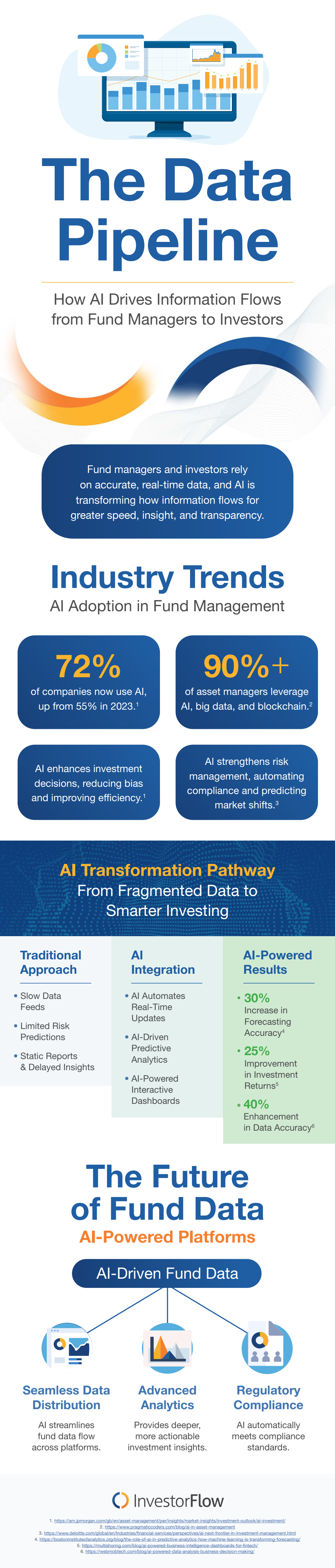
The use of AI in fund manager-to-investor communication is creating a new benchmark for efficiency, accuracy, and transparency. Investors benefit from clearer updates, while fund managers strengthen their ability to maintain trust and deliver insights that go beyond the numbers. Look over the infographic below to learn more.