

No-Fluff Freelance Writing Jobs List: February 3, 2021
Here’s this week’s list of freelance writing gigs. Get to pitching!
Here’s this week’s list of freelance writing gigs. Get to pitching!
Also, don’t forget to check back next Wednesday for another fresh freelance writing gig list, or have it delivered to your inbox by signing up for our newsletter.
I just had to use this stock photo. This little girl is fierce! Photo by Maddog 229.
SEMRUSH Content Writer
Content Writer - Remote position
Freelance Content Writer
Freelance Cannabis Writer
Medical Writer (Reviewer) - Remote
Writer/Editor
Financial Content Writer (Remote)
Technical Writer and Editor
Long Term Writer for BBQ/Smoker Website
Writer and Editor- The Ohio State University - John Glenn College of Public Affairs
CALL FOR PITCHES: Online mag Secure Futures for tech, business and leadership articles. Pay $300-$1000 USD per article. Send by Feb 1st. More info: https://t.co/CsD3j69WBg @write_jobs @whopayswriters #callforpitches #journojobs
— Suraya Casey (@surayacasey) January 25, 2021
Just a call out, Travelfish is looking for more submissions for the long reads section. In particular it is looking for a writer out of Cambodia & Singapore (As trying to loop around the region).
— Stuart MaskDonald (@travelfish) January 27, 2021
We pay US$750 for 2,500 to 3,500 words, with pics.
Gig is freelance.
**Seeking Science Writers**
— BOLDEDscience (@BoldedScience) January 25, 2021
Bolded Science is now accepting guest blog post pitches for March 2021!
Email: TheBoldedScientist@gmail.com with your blog pitch if interested! #scicomm #phdvoice #openscience #academicchatter pic.twitter.com/xbr2mdNksG
Content writer- Needed immediately!
Legal Content Marketing Writer (Contract)
Content writer / Creator
Freelance Product Copywriter - Woman's/Kids Fashion Apparel
Social Media Outreach and Punchy Writer
Real Estate Agents(Contract Writing/Closing Cordination, Lea...
Contract Writer
Writers wanted for a storytelling app
Freelance Writer
Minecraft Writer
The @csmonitor is hiring! We have three open #journojobs right now, a climate writer, a Washington writer (general assignment), and a junior editor/writer. #jobopen @WritersofColor (and everyone else!) are strongly encouraged to apply. https://t.co/D0au0OaHeu
— Noelle Swan (@swannoelle) January 28, 2021
Hey! We want pitches for a few upcoming themed issues:
— Blood Knife (@BloodKnifeMag) January 27, 2021
April - Cosmic horror
June - Feminism & feminist SFF/Horror (lady authors only for now)
August - Cyberpunk
(All these topics are within our normal focus so you can also pitch us on them at any time.)https://t.co/AIV5SzlkUe
Research Writer (Part-time)
Freelance Writer
Freelance Diversity Content Writer
Freelance Business Plan Content Writer Needed - Urgent
Literature Study Guide Writer (Remote)
SEO Content Writer
Financial Writer (Remote)
Marketing Copywriter
(Weekend) Automotive News Writer
Health and Technology Content Writer
Video Blogger and Podcaster
Long Term Writers for DIY / Home Improvement Websites – (US and Canada Only)
Content Writer (Technical)
Want to pitch an article idea for the first issue of 2021? Email a section editor(s) by next Wed, Feb. 3rd @ Noon!
— The Quad (@TheQuadWCU) January 26, 2021
Emails can be found at: https://t.co/H7FAMRjPiH
For podcasting & videography: quad.multimedia@gmail.com
^We'd love to have you on Quadcast!
First step: We’re using the money to PAY writers! $100 for 600+ word pieces. So pitch us: We want Latina and femme Latinx perspectives on media (TV/film/books, new or cannon) and current events, particularly BIPOC ones. CC: @writersofcolor, @LEJALatino, @NAHJ pic.twitter.com/gWjBlZWLUF
— Latina Media (@latinamediaco) January 26, 2021
CALL FOR PITCHES: Online mag Secure Futures for tech, business and leadership articles. Pay $300-$1000 USD per article. Send by Feb 1st. More info: https://t.co/CsD3j69WBg @write_jobs @whopayswriters #callforpitches #journojobs
— Suraya Casey (@surayacasey) January 25, 2021
Senior Staff Writer - Trending
Personal Finance Writer
Staff Writer - Electronics
PC Hardware & Gaming Setups Writer
SEO Content Writer
Grants/Proposal writer for Islamic Society of Western Massachusetts
Senior SEO Content Writer
Content Writer
Writer wanted for Mobile Commerce Marketplace
Content Writer
US Travel Content Writer – Flexible Work
Some ~professional news~: I'll be doing some editing for @TheTyee! Please send me your BC-based story pitches at andreacunliffebennett@gmail.com. 🖊️📘 I love stories about: queer life, food & farming, transportation, rural issues, housing, faith, ethical conundrums ... etc!
— andrea bennett (@akkabah) January 28, 2021
If you're a Black writer looking to pitch coverage for Black History Month, we now have a budget to accommodate you! Rate is $50 per piece so we can bring on 5 writers. Hit us up!https://t.co/5ONAa0flD1
— Ty Galiz-Rowe (@ty_grrrrrrrr) January 26, 2021
#CallForPitches: I'm now accepting fiction + nonfiction pitches for @CatapultStory! As before, I'm particularly (but *not* exclusively) interested in work with a science or social science component. Rates around $200, email a7chen at gmail to pitch. More details below.
— Angela Chen (@chengela) January 25, 2021
Writer, Personal Finance
Freelance writer for coffee website
Freelance Blog/Content Writer
Captivating Content Writer/Copywriter Needed to Help Natural Health Company
Freelance Ghostwriter
Running & Fitness Content Writer
Freelance Copywriter
Copywriter Advertising / Media / Publishing
Senior Copywriter: Organic Social
Have a special issue idea? Pitch us! Reach out to our Associate Editor @daphmarts at daphnem@stanford.edu
— Research in Education (@ResearchinEd) January 27, 2021
This might be very different from what you're talking about but: CALL FOR PITCHES: Looking for writers for @believermag; s schema,... categorizes something cultural in an uncommon way. 500-1,000 words, flat rate is $500. Send a 2-3 sentence pitch to @kristen@believermag.com
— Jen Fliss 🚲 (@writesforlife) January 25, 2021
Hey! We pay for reviews and interviews! You should pitch editor @clancymcg! slreviewseditor@gmail.com pic.twitter.com/uOJU9P0kpl
— Split Lip Magazine (@splitlipthemag) January 28, 2021
For our upcoming issue on plastics, we're looking for stories on solutions that involve the wellbeing of our planet, economic recovery, accountability for Big Oil, and repair for marginalized communities.
— YES! Magazine (@yesmagazine) January 26, 2021
Send us your leads and pitches by Feb. 5.https://t.co/XQLo9Tu6b5
Hey, all! This is a call for pitches for Black writers wanting to talk about podcasting for @Discover_Pods. More details in this thread but to start off, we're looking at about $0.10 for a ~1000-word piece, plus $50. We're a small publication, but we care about compensation! 1/
— Wil Williams ✨🐌 (@wilw_writes) January 25, 2021
**Freelancer positions**@howtogeek is looking for freelance writers in the following areas:
— Justin Duino (@jaduino) January 25, 2021
- Windows
- Microsoft Office
- Privacy/Security
- Cord cutting how-tos
- Linux
- Tech generalists
- More
DMs are open for apps. $100/post. Three relevant writing samples requested.
Hello my glorious humans! I'm looking for writers for @theprogressive to 1) cover climate issues or 2) review political documentaries.
— Kassidy Tarala (@kassidy_tarala) January 21, 2021
If interested, please send pitches to kassidy@progressive.org. Native, Black, and writers of color are strongly encouraged to submit!
Thanks!!
https://t.co/8v1VfE6XWj is looking for pitches from Black and POC writers for #BlackHistoryMonth. Looking for album/event anniversary pieces, artist interviews, culture features and more. Please reach out to me with ideas and pitches at the email address listed in my bio.
— John O¢hoa (@JohnAOchoa) January 21, 2021
Calling all Black writers and creators!
— The Eyeopener (@theeyeopener) January 21, 2021
We're offering a 💸 paid💸 contributing opportunity for #BlackHistoryMonth
The Eye is looking for stories and content that celebrates the Black experience as rooted in joy and passion
Deadline for pitches is Feb. 5, more details below: pic.twitter.com/YXwq0p5IkN
“We’re currently looking for feature articles to fit the theme of renewal for an upcoming issue of Christ and Pop Culture Magazine.
Pitches must have a strong pop culture emphasis. Consider developing your article around TV shows, movies, books, songs, events, trends, and habits that address the themes of renewal and faith.
We pay $75 for each magazine feature accepted and published. Send a one-paragraph pitch by noon Monday, January 25 to Rachel Reon. See additional pitch details below. Please keep in mind that we are unable to respond to all pitches. If we choose your article, a full draft of your article will be due by noon Wednesday, February 10. You will also need to be available for revisions during the following week after submission.”
https://christandpopculture.com/call-for-pitches-renewal/

Be More Productive: Stop Writing To-Do Lists
You were busy all day, but you didn't seem to achieve anything that you set out to do. Talk about a knock to your self esteem, am I right? That's why I've declared no more to-do lists! Insead, try doing I-did lists.
It’s time to nix the to-do lists, writers. They are holding you back. Want to be more productive? Stop making lists that make you feel bad.
Have you ever written a to-do list and at the end of the day discovered that you checked off maybe one thing on the list? You were busy all day, but you didn't seem to achieve anything that you set out to do. Talk about a knock to your self esteem, am I right? That's why I've declared no more to-do lists! Insead, try doing I-did lists.

How to Start an I-Did List
A to-do list is basically a list of things you need to do, right? Well, an i-did list is the opposite. It's writing down things that you've accomplished as you do them. All you need is one task to get the ball rolling. Then, throughout the day, keep writing down tasks you've completed.
For example, here's my I-did list for today, so far:
Answered emails
Cleared out old emails
Did my social media posts
Updated my SEO strategy (Thanks Kate Toon!)
Posted an article to alinabradford.com
Edited a client article
Wrote an article for alinabradford.com
Posted a high-paying job to the No-fluff Facebook Group
Helped my daughter send off a letter to her cardswap buddy
Checked business stats
Gathered up the recycling
Found my portable keyboard
Cleaned up the office floor
Caught up with my Mom
Tidied up the bathroom
Put away some laundry
Now, if I hadn't made my I-did list, I would probably look back on this day and think of all the things I didn't do (like work on my new book) and feel like a lazy twit. Just one look at my list, though, tells me that I did a lot of things and was far from lazy.
The Beauty of the I-Did List
By making a list of things you already did, you can actually see that you're making progress in life. Not only does that boost your self esteem, it also triggers your memory. While you're writing down things you did, you'll think of other things to do. As you think of the things, do them, write them down and move onto the next thing. You'll be more productive and you'll end up coming up with some creative ideas to solve problems you're handling, just because you don't feel pressured.
Trust me. It's like magic.
I challenge you to make an I-did list everyday for the next three days. Tell me how it went in the comments!
Guide to Writing Niches: Yes, You Need a Niche, Freelance Writers
Here’s everything you need to know about freelance writing niches.
This is by far the biggest question I get from writers: “Do I need a niche?” Umm, yes. This usually makes at least a few people mad. “Why should you limit yourself!? You’re just limiting your income by having a niche!”
Please, have a seat.
I struggled to get paid what I was worth for a long time as a freelance writer. You know why? Because I was a generalist. I would write about anything. When someone asked me what my specialty was I would say, “I can write anything!”
*Insert the sound of a deflating balloon here*

Yah, potential clients don’t want to hear that you write about all kinds of things. They want to know you specialize in their category. They want to know they’ve hired a writer that knows industry terms and sounds like they genuinely know what they’re talking about.
Why Clients Want to Know Your Niche
Okay, think about it this way… You wouldn’t hire someone to paint your car if their sign says, “We can paint anything!” No, you’d want someone who has years of experience painting cars so you know your vehicle will come out looking shiny and flawless.
Picking Niches Changed Everything
Eventually, I wised up and focused on three topics: DIY, health/science and tech. Know what happened when I finally pick some niches? I quadrupled my freelance income.

freelance life
How to Pick a Niche
Picking your niche isn’t as overwhelming as it may seem. All you really need to do is think about what you like writing about. This is the most important thing. Remember, you will be writing about this topic day in and day out, so you better enjoy it.
Here are some ideas to get you started:
Do you love researching the latest scientific discoveries? Then you may be a science writer.
Can’t wait to write about the latest iPhone? You may be a tech writer.
Adore sharing tips on eating healthy? You may be a diet or health writer.
Do you like to build or fix things, then write about it? You’re probably a DIY writer.
Have the need to share your parenting tips with the world? You could be a parenting writer.
Feel the overwhelming urge to talk about movies or the latest Hollywood gossip? You’re probably an entertainment writer.
Do you know the difference between post modernism and expressionism? You may like being a fine art writer.
Does doing your taxes or following the stock market give you a high? You might be a financial writer.
Were you a marketer in another life? Copywriting or content marketing may be for you.
Do you love correcting someone’s grammar more than you love writing? You’re probably better suited as a copyeditor.
Pro tip: Perusing job lists (like the ones I post every Monday and Wednesday on this blog) can give you a feel for what kinds of content people are looking for and may even give you some ideas for your niche.

choosing a niche as a freelance writer
Don’t Get Too Narrow, Though
While you’re narrowing down your niche, remember not to get too specific. A broad category will allow you to find ample work, while still anchoring you as an expert.
For example, "tech writer" is nice and broad. This niche label lets me write about anything under that enormous umbrella, including tablets, phones, computers, home hubs, self-driving cars and home security. If I picked tablet writer, though, my niche would be so narrow I wouldn’t be able to find much work. Plus, I would get bored very quickly!
Your Assignment
Now, I want you to go sit down with your trusty notebook and write down all the things you like to write about. Then, choose no more than three to be your specialty.
Be a Niche Spy: How to Write Authoritative Copy For Niche Clients
Freelance writers, particularly when they’re just starting out, will often take any paying clients that happen to come along. This means that occasionally you’ll need to write for a business that occupies an extremely narrow niche, that you have very little experience with. Obviously, this makes writing consistently high-quality content a little harder than it would be with more conventional clients. Here’s some of the best advice for writing for these niche clients…
Educate Yourself
If you want your work for a niche client to be as fitting and effective as possible, you need to strive to make yourself an expert in that given niche, or at least as close as possible without having to scramble to meet your deadline.

Researching and reading some publications tied to that specific industry is usually the best way to start, as it can introduce you to industry-specific terms which will give your content a potent sense of authority. For example, if you were writing for a company that sells diesel generators, you wouldn’t be able to write a competitive piece of content while sticking to a conversational, generic blogger’s style. The tone would need to be a little more formal and a lot more technical.
You should strive to educate yourself about any product or service you write about, and this is even more important when it comes to niche clients.
Examine Larger Competitors’ Content Strategy
Your clients are going to want unique content that hooks readers and sticks in their mind. One of the best ways to draw inspiration is by taking a peek at the business’s larger, more successful competitors. You can easily find them by googling the industry. The top results are usually the best in the niche.
Pretend you're a corporate spy.

Okay, don't do anything illegal. Just head on over to their website and take in their copy, their style and their tone. You're going to want to mimic it to a certain extent. To prevent being too copycatty, take a look at several different competitors and look for similarities. This is what you want to incorporate into your approach with your client's copy.
There will also be some competitors who are running a notably worse content strategy, which can be just as important to research and understand. No one’s going to give you their Google Analytics password, no matter how nicely you ask, so you’re going to need to apply a little detective work to see how content is performing. Take a look at their social engagement on social media (how many likes they get, how many comments, how many shares). If they are doing things right, they should have tons of engagement. If not, try to figure out what they are doing differently than their more successful competitors.
Also take a look at their SERPs, and comments on the posts themselves to gauge how a given piece of content is being received by your client’s target audience. Most importantly, as with anything creative, you should be combining different elements that seem to be working, all the while thinking about some way you can make your content stand out.
Write for the Target Niche Audience
Like I said before, when writing about certain niche businesses, it can be smart to include a few specialised phrases and pieces of jargon that will assure the reader that you know what you’re talking about. Having said that, if you write like a professor in a given field, and use too much specialised language, you could risk alienating the readers you’re trying so hard to attract.

It’s all about getting the balance just right. If the company you’re writing for targets B2B clients, then you should write according to the basic knowledge of these people, without getting too complex and trying to sound too clever. If a prospective customer has to keep opening a dictionary in another tab just to figure out what your content is actually saying, they’re not going to stay on the page for long!
Want more tips on becoming a successful freelance writer? Read my book:
The Fluff-Free Freelance Writing Master Course: The only course that gives you concrete, actionable information to building a successful freelance business without any fluff.

No-Fluff Freelance Writing Jobs List: January 27, 2021
Here’s this week’s list of freelance writing gigs.
Here’s this week’s list of freelance writing gigs. Get to pitching!
Also, don’t forget to check back next Wednesday for another fresh freelance writing gig list, or have it delivered to your inbox by signing up for our newsletter.
News Writer for Articles
PC Hardware & Gaming Setups Writer
Technical Writer (3-6 month contract)
Grant and Contract Writer
Technical Writer
Content Writer REMOTE WORK
Digital Copywriter
Amazon Copywriter and Listing Merchandiser
Seeking Freelance Journalists / Writers
Contract Content Writers
Technical Business Writer - Remote Contract Position
Copywriter
Long Term Writers for DIY / Home Improvement Websites – (US and Canada Only)
Content Writer
Freelance Healthcare Copywriter
Business Content Marketing Writer (remote)
Legal Marketing Writer
Brand Studio Writer New Remote Remote; Virtual (PST Hours)
Technical Writer
Content Writer
Dating Writer, Elite Daily
Marketing Copywriter/SEO
Contributing Writer/Editor
Content Writer/Editor
Awesome Optics Writers Wanted (Long-Term & Consistent Work)
SEO Content Writer
E-commerce Writer: Streetwear Shoes/Clothing Copy
Substance Abuse/Addiction Writer (Remote/Freelance)
Freelance Video Game Guide Writers (Remote)
Resume Writer
Pharma Copywriter
Freelance Writer for PC Hardware Media Business
Writer: Software Development, Data, and Business Related Topics...
Remote Strategic Content Writer
Rockstar Writer Needed (Long Term, Stable Work)
Content Writer For Small Agency
Flooring Copywriter
Entertainment Staff Writer
Content Writer
[Pest Control] Hiring Full Time Writers For Authoritative Resource
CharlieINTEL.com Writer
Sports Writer
Games and Esports Writer
Blog Writer
Freelance Content Writer for the Safety Wear Niche

No-Fluff Freelance Writing Jobs List: January 20, 2021
Here’s this week’s remote freelance writing jobs list.
Hey No-Fluffers! We’ve got some really good remote freelance writing leads this week. There’s so many publications right now that are looking for great writers! Get to pitching!
Don’t forget to check back next Wednesday for another fresh freelance writing gig list, or have it delivered to your inbox by signing up for our newsletter.

SEO Content Marketer/Blog Writer About Books
Exam Question Writer
SEO Writer
Content writer (shoe review blog posts)
Content Creator/Copy Editor
Independent Sports Writers
Technical Content Writer
SEO Content Marketing Writer
Proposal/Technical Writer-Federal Government Contracts
Research Associate/ Writer - Financial Services
WRITERS: I'm seeking pitches for all of our content areas (work, money, health, love, our future) for @Rewire_dot_org ($250 for 800-1000 words)
— James Napoli (@JamesNapoli_) January 12, 2021
@WritersofColor @aaja @NABJ @NAHJ @najournalists @sajahq @TransJA @SPJFreelance @studyhallxyz @weischoice https://t.co/loBYb5VyBo
Graphic Designer/Copywriter
CBD Reviewer and Blogger
SEO Content Writer (Remote)
Technical Writer
Marketing Copywriter
Lead Content Writer/ Content Creator- remote/permanent
Freelance Copywriter
Freelance TV/Movie News Writer
Journalist - Virginia/Southeast
Content Marketing Writer
Copywriter (freelance)
CBD Reviewer and Blogger
Another call for pitches: I'm looking for personal essays from Puerto Rican writers that explore colorism, whether in Puerto Rico or among Puerto Rican communities stateside. 1500-2500 words, rates are around $200. email: mallory.soto@catapult.co.
— Mallory Soto (@apapertrail) January 20, 2021
Communications Editor/Writer Specialist for Print and Digital
Content Writer
Content Strategist/Copywriter
Dedicated Content Writer/Optimizer
Email and Sales Copywriter
Business Writers Wanted
Game Story Editor/ Narrative Designer
GameRant - Video Game Strategy Guide Writer
Ghost Writer - Drone Industry
LinkedIn Social Media Specialist (*Strong Copywriting Required)
Trainer and Technical Writer
Email Marketing Copywriter
NBA & NFL Topic Writer
Content Strategist & Copywriter
Health Coach / Nutritionist / Writer
Freelance Content Writer for the Safety Wear Niche
Writer/Contributor
Content Writer (Freelance)
Grant Writer-Arts & Aging Nonprofit Seeks Experienced Talent
Content Writer/Social Media Coordinator
Remote SEO Content Editor
Part-time Business Writer
Content Writer
Writer - Copy and Creative
Gay With Kids Needs Associate Editor & Staff Writer
Experienced Writer With Background in Pets/Animals
Freelance Writer - iPhone Technology
Freelance Writer - Android Technology
Pop-Culture News Writer
Freelance DC (Movies and TV) Feature Writer
Freelance TV/Movie Feature Writer
College of Science Marketing - Editorial Writer
Ad Copy Writing (Contract)
Contract Resume Writer - Remote
Freelance Reality TV Realtor Show Writer
Tech Competency Writer (Security, Productivity)
Fundraising Writer
Freelance Brokerage Review Writer
Product Content Writer for Amazon / Ecommerce Business
Business Consultant freelance writer
Government Contract & Grant Writer
Business Technical Writer for Cherokee Nation Businesses
Freelance Writer Wanted for Tennis Website

Easy Steps to Writing a Blog Post in Just Minutes
Time is money, especially when you’re a writer. Here is your step-by-step guide to writing blog posts faster and better than ever before.
I’ve been in the game of content creation for, well, a bunch of years. One thing that I’ve learned well is how to write a blog post and write it quickly. Hey, when you’re getting paid by the post, you learn how to be fast!
Forget about the font!
So, I thought I’d share with my readers my tips for going from an idea to a published post in less than 60 minutes. Got those timers ready? Get ready. Get set. Go!
Figure Out Your Topic
Don’t know what to write? Take a look at what others in your field are writing about to brainstorm some ideas using BuzzSumo. Here is a more traditional way to brainstorm, too.
Time: 5 to 10 minutes
Do Your Research
You’ve got a fantastic idea, but don’t start typing yet. First, plug the topic into Google’s Keyword Planner to decide which keywords will be best for your post. Don’t get too caught up in picking, just choose a couple that have low or medium competition, but have high monthly search (over 20,000 searches is ideal).
Time: 5 minutes
Summarize Your Content
To make the writing process as fast as possible, summarize the different parts of your post you want to talk about and then use them as your H2 headers.
Time: 5 minutes

Get to it!
Fill in the Blanks
Now that you have your headers, fill in the blanks until you talk about everything you wanted to cover in the post.
Time: 15 to 20 minutes
Finish Up Writing Your Blog Post
Now, write the intro, the closing paragraph and the call to action. Once you have those wrapped up, don’t forget to write a meta description.
Time: 10 to 15 minutes
Add Some Multimedia
Add some flash (and some search engine love) to your post by adding some media. Search for free content or create your own using:
PhotoPin for Creative Commons photos
Creative Commons for Creative Common photos
NVD3 for charts
Mapbox for maps
ClipSafari for clip art
Survey Monkey for surveys
Office Sway for presentations
Pond5 for historic media files
GetEmojis for emojis
Time: 10 minutes
That’s all there’s to my process. Pretty simple, huh? Trust me, once you get the hang of it, you can crank out blog posts in just 15 to 30 minutes without breaking a sweat!
Need some tips on writing better content or becoming a content writer for hire? Read my book:

The No-Fluff Guide to Starting a Blog
Ready to make the leap? Here’s how to get started.
While you may not go viral and earn millions from your blog, it is still a great tool. Blogging is one of the best ways to grow a portfolio and a following as a writer. It takes time and dedication, but I promise you it’s not a waste of time.
Ready to make the leap? Here’s how to get started.
how to make your blog awesome
Where to Start
Before you can do anything else, you need a blogging platform. If you don’t want to fuss with setting up your own blog, Medium is a good place to start. Blogger also offers a free blogging platform. Though these sites help you get started for free, they offer very little freedom. Setting up your own site with its own domain name is usually a better option. I’ve found SquareSpace to be affordable and very easy to use. They also have a lot of free website templates for those of us that know nothing about web design. (No, they aren’t paying me to say that.)
Set Up a Home Office
When you're working from home, it makes sense to set up a good office space. A space of your own means you're comfortable and can stay productive- once you're at your desk you know, it's time to get down to work. Having a separate office also helps you to maintain a good work/ life balance which can be tricky when you're working a significant amount of time from home.
If you have a spare bedroom, give it a coat of paint and kit it out with a sturdy desk, an office chair, some shelves and some storage. You could finish with some fun accessories and personal touches that make the room feel pleasant to spend time in.
Here are some tips for setting up a home office.
Clear, Beautiful Images
Your content is important, and the words you write will keep a reader coming back for more. But it’s the images you use that will draw them in and will bring your words to life. It's the photos that will make your blog and blog posts look visually appealing. If you run the kind of blog that reviews products, you will need clear, high-quality images of whatever you’re talking about. If you write about lifestyle or travel, you will a good camera to be able to take beautiful, stunning shots of the places you visit.
A good quality camera such as a DSLR is a good investment as a blogger. These can be complex, but Skillshare has some great low-cost classes that you can take to learn how to use one.
A good understanding of Photoshop or other editing software is useful too, so you can enhance your images and make them the best they can possibly be.
Good stock photos are important, too, for times you can’t take your own photos. Here’s a list of all the places you can get free images and graphics for your blog:
20+ Free Ways to Get Photos and Multimedia Content for Blog Posts and Articles
A Nice Layout
Cluttered blogs with ads everywhere, messy presentation, cheap looking fonts in poor styles and colors and the cardinal sin, background music playing, can all put off a reader. You might feel like your content is the only thing that truly matters, but unfortunately, no one will read what you have to say your blog has an unpleasant aesthetic.
If you've tried designing your blog yourself you could be putting people off in all kinds of ways. Your best bet in this case is to either use a premade template or find a web designer.
Improve Your Domain Authority
Your domain authority is something that sponsors will be looking at when they're searching for blogs to work with. This is a metric devised by Moz which shows how much authority your blog has online.
Lots of different factors make up your score, some of which you can’t directly influence (such as your website's age) but one thing you can do is get as many backlinks as possible. This is where you get your link onto good quality websites, and the main way you can go about it is by offering guest posting. The website owner gets some good quality content, and you get to include your link. You could also speak to a network of bloggers and ask if they would be willing to swap links with you which is a quick and easy way for you all to gain some backlinks.
Another thing you can do to boost your domain authority is to get rid of any broken links and within your site. Use a broken link checker and go through and remove anything that no longer works.
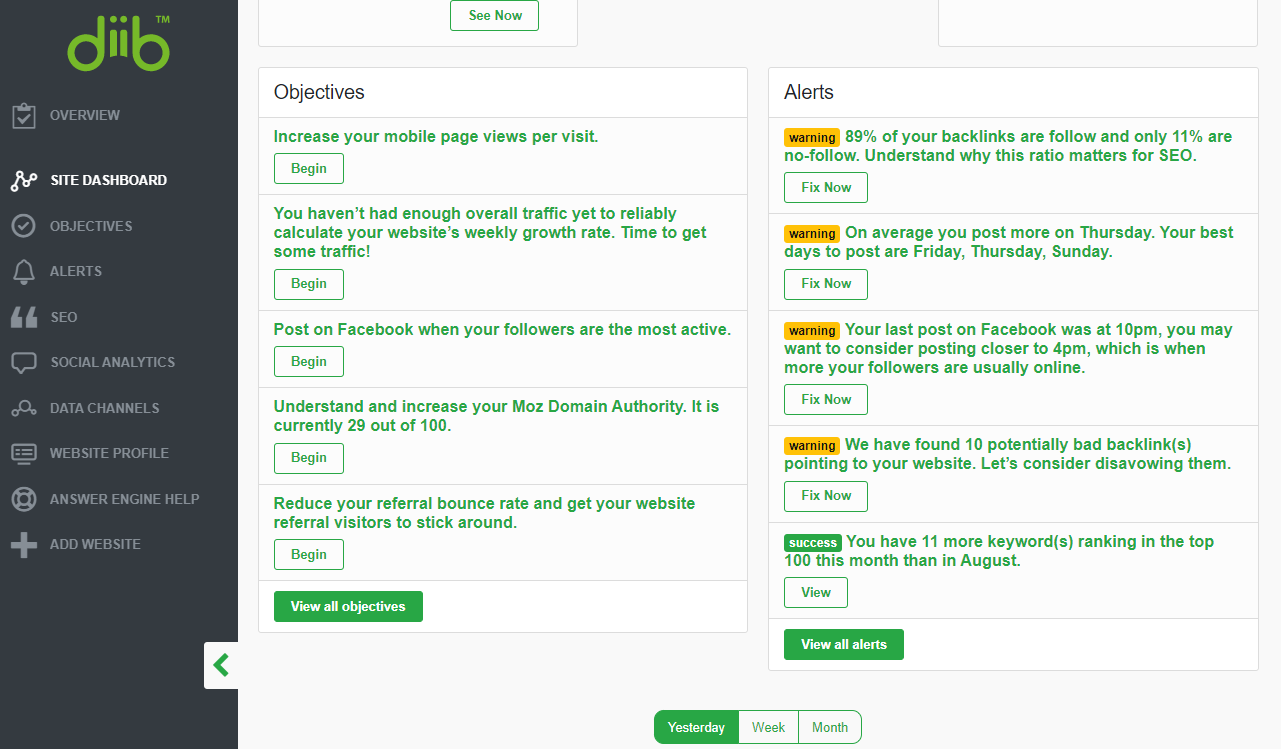
My favorite tool is Diib. It goes through your whole site and finds ways to improve your site’s rank and earn more money from your blog. It also walks you through the steps to fix your site rank, get more readers and more.
Think of Ways To Monetize
You can earn money from blogs in a number of ways. Your biggest source of income as a blogger will be sponsored content, here you will work with an advertiser publishing blog posts or ads for a fee. Depending on how influential your blog is, advertisers can pay very well for this. The only trouble is because they come to you, you can never be sure how much work you're going to get. Some months you might get lots of interest and others less or none.
Some other income sources are:
Selling your own ebooks or other digital media
Set up a members area for special pro tips or socializing
SEO

SEO (Search Engine Optimization) is how search engines find your blog or posts so they can suggest them to internet searchers. Here’s how to make Google, and the others, love you.
Think long
When it comes to blogs you need well written, interesting and engaging content, and you don’t need to squeeze this into a couple of hundred words. Allow your creative writing to flow and expand on your favourite topics.
Why? Because your readers deserve a beautifully crafted, well thought out read. Also, search engines tend to favor longer posts. You might be done at 1,000 words, but there’s nothing wrong with pressing on to 2,000 if you find you can. Don’t make a post long if it doesn’t need to be, though! Search engines are smart and can tell when a blogger is just writing fluff to make their posts longer.
Remember, make your posts interesting and informative, but stop when you’re done.
Keywords and phrases
These are the tools for your SEO success, but they must be used very carefully. When creating your blog title you’ll want to use SEO keywords that are highly searchable. But shoe horn them into your title and you’ll be penalised for using phrases that look unnatural and obviously there for Google’s eyes only.
The same goes for the rest of your text. Make sure that you use your keywords and phrases as naturally and liberally as possible but without making it look like they don’t belong.
Click here to learn more about SEO.
Frequent Updates

Arguably, the most important quality of a successful blog is that it is updated as frequently as you can manage. However, you shouldn’t allow this rule of thumb to get in the way of quality. Your blog posts should always be helpful to your audience, or at least entertaining.
Ultimately, if you are not entirely happy with your writing, then you should either polish it until you are, or write something new.
Still, it is important that you keep your blog regularly updated, as this ensures that readers will continue to return as often and search engines will show your site in search results. Whatever posting schedule you decide on, keep it. Consistency is important.
Outside Advice
Many people have gone before you already, even with the Internet being as young as it is, and many of the trailblazers have great advice to share. There are a huge number of blogging resources out there which you should take advantage of for this reason. Doing so will help you to get your blog to where you want it to be. I suggest reading Jon Morrow's blog.
YouTube
Blogging and YouTube might be separate platforms, but they can go hand in hand. You can work with both of these as a way to gain a bigger audience and appeal to the most number of people. For example, you could do lifestyle vlogs on YouTube, but then full reviews of places you visit on the blog.
You can learn more about Vlogging (video blogging) here.
Social Media

As a blogger, you absolutely need to utilise social media to do well. This is the way you connect and network with others, and it also gives you a free way to advertise. You should set up accounts on Twitter, Facebook, Instagram and Pinterest (choose two you really like) and use each of them as a way to promote your blog and connect with others.
Pay Taxes
Once you start making money from your blog, you need to ensure that you’re paying the right amount of taxes and that you're registered to do so. In most cases, it's as simple as completing a form online and then submitting a tax return each year where you can pay anything that's outstanding. It’s good practice to put money aside in a separate account, that way when your tax bill comes in you have a way to pay it without struggling.
Here's the legal stuff you need to know.
Content is King
Finally, the most important thing for any blog is putting out the best content possible. You should provide the reader with information that’s interesting and valuable. If you write about things you yourself are passionate about, your enthusiasm will transfer to your posts. This is how you will attract readers and gain you interaction on your blog posts.
Other Articles You May Like

White Papers For Beginners: Five Tips to Help You Nail Your First Brief
Whether you’re an experienced copywriter or are new to the field, a white paper can be a challenging and exciting project. These tips will help you get your head around the brief and deliver an excellent product.
As a beginning writer, every project is a learning curve, especially if you’re still getting your skills up to speed. If a potential client wants you to produce white papers for their business, but you’ve never even heard of white papers before, don’t let the technical term intimidate you into saying it’s beyond your scope. These tips will help you get to grips with the brief and produce an amazing piece for your client.

So “White Papers” Are What Exactly?
A white paper is a document produced for the purposes of marketing, but it doesn’t make a sales pitch. White papers range in length from six to ten pages, or however long it takes to achieve the aim of the brief, which is to help your client’s potential customers identify and resolve a problem that they might have. A well-researched, discursive look at a particular topic is the best way to achieve this goal.
Here’s some examples of white papers:
Build Credibility
As the copywriter, your role in producing a white paper is to produce an informative report that builds credibility around your client’s business. It’s important to bear in mind that the purpose of your special report is not to sell a product on behalf of your client, but to align your client’s brand with everything that is regarded as credible within in a specialised field. You’ll need to use graphs, data point, quotes and any other data that builds the credibility of the white paper and your client.
Create Buzz
White papers give you a lot of freedom to explore an issue your client cares about, and drill down into the core of the issue. A good white paper will create a hype around a particular issue and position your client’s brand at the centre of the buzz.
For example, if your client offers Outsourced IT Support, you might produce a report about the growing importance of cybersecurity for emerging businesses. Your white paper would position your client at the cutting-edge of the conversation around anti-malware technology.
Promise Your Reader Something of Value
The world of white papers is growing increasingly competitive, as more and more consumers go online to find advice on what products to buy and seek expertise on subjects they care about. Begin your white paper with a clearly worded paragraph that lets your reader know what unique pain-point your white paper will address, and what they can expect to gain from reading on. Your reader must have a strong sense of what key take-aways or insights they will come away with. Whether you’re offering research data, technical expertise or a deepening of understanding, promising your reader (and then delivering) nuggets of real value will benefit your audience and build trust around your client’s brand.
Do Your Homework
Before you start working on your white papers, it’s worth looking at accomplished examples by experienced writers to help you get to grips with the format. Ask your client if they have any examples of white papers they admire, and use those for guidance. If you’re new to white papers as a format, you might like to produce an outline for the project to run by your client before you charge ahead and embark on the writing. This will give them a chance to make tweaks at an early stage, rather than request revisions further down the line.

Use a Template
There are a bunch of sites that have white paper templates to get you started. Here are a few good ones:
This article will also help you learn what sets a good white paper apart from a bad one: 20 White Paper Landing Page Examples Critiqued
Whether you’re an experienced copywriter or are new to the field, a white paper can be a challenging and exciting project. These tips will help you get your head around the brief and deliver an excellent product.

No-Fluff Freelance Writing Jobs List: January 13, 2021
This week’s remote freelance writing gigs list.
Are you pitching? Good! Keep it up! Here’s some remote freelance writing gigs to help. Remember, keep 12 in play to keep the bills at bay.
Don’t forget to check back next Wednesday for another fresh freelance writing gig list, or have it delivered to your inbox by signing up for our newsletter.

Take this as an official Call For Pitches because deputy editor @AimemeRights inbox is getting pretty bare! We're looking for more queer pitches about video games! If you're interested in sending us some, be sure to email us over at hello@gaymingmag.com or aimee@gaymingmag.com!
— Gayming Magazine 🌈🕹 (@gaymingmag) January 7, 2021
Come work with @Philanthropy! We're hiring a senior editor and a senior reporter/writer.
— Emily Haynes (@_emilyhaynes) January 12, 2021
Help us cover how donors, foundations, corporate giving efforts, and nonprofits bring about change on issues like climate change, racial justice, health care, poverty, and education.
Writer & Editor for the Media Website Experism.com
Staff Writer
Freelance Blog Content Writer – Mindset, Meditation, Hypnotherapy, and Mindfulness
Freelance Copywriter for Cannabis brand
Staff Writer, Parenting
Freelance Content Cannabis Writer
Transportation Writer, Inverse
(Weekend) Associate Comic Book News Writer
Attention, writers! 📢 We’re looking for pitches for our upcoming issue examining what the idea of the public means now. Pieces can be about specific publics/work made or archived for a public/digital commons/physical commons/whatever else your brain can dream up in relation.
— immersenow (@immersenow) January 12, 2021
📌 Come work with us! We are hiring a contractor to assist with US News & Sports Partnerships. Ping me or slide into my DM's for deets!
— Niketa Patel (@Niketa) January 12, 2021
WRITERS: I'm seeking pitches for all of our content areas (work, money, health, love, our future) for @Rewire_dot_org ($250 for 800-1000 words)
— James Napoli (@JamesNapoli_) January 12, 2021
@WritersofColor @aaja @NABJ @NAHJ @najournalists @sajahq @TransJA @SPJFreelance @studyhallxyz @weischoice https://t.co/loBYb5VyBo
Remote Commission Grant Writer for an Educational Children's Project
NYC Health Writers - Focusing on Backpain
HNHH: Staff Writer (Full-Time) HotNewHipHop.com
Writer/Editor (Temporary) – Communications
Blog Writer
Writer for Pots, Pans & Food Niche (Chefs or Home Cooks)
Content Writer
Staff Writer/Researcher
Storyteller/Content/Technical Writer
We're hiring at @MyDesert! Here's a thread about our health reporter position, and what we're looking for. These examples come from the inimitable @Nicole_A_Hayden, who is onto her next chapter.https://t.co/2aTKJvQngt
— Kristin Scharkey (@kscharkey) January 8, 2021
Staff Writer
Blog and Web Content Writer
WANTED: A Creative Experienced Sexual Wellness Industry Writer Who Can Write For Eyeballs
Freelance Writer
Writer – Branded Content
Looking for fast, energetic writer to work on fun content
Staff Writer - Beauty
Staff Writer - Health and Fitness
Email Copywriter
Travel Freelance Writer
Motorsports Writer
Hello! My team at @reviewed is looking for freelancers to:
— Samantha Matt (@SamanthaMatt1) January 5, 2021
1. Test, review, & write about clothing, shoes, & accessories across ALL categories.
2. Write shoppable lists & help readers buy trending items.
Email smatt@reviewed.com w/ pitches, resume, & relevant writing samples. xo
Staff Writer
Colorlines Staff Writer/Blogger (Remote)
Tech Writer - Temporary Project
Content Writer- Education
Real Estate Content Writer
Content Writer / SEO Copywriter
Content Writer- Legal
Need help writing my book
Creative Writer/ Copywriter
Marketing Content Writer - Scientific/Technical
Freelance Writer
Attention, writers! 📢 We’re looking for pitches for our upcoming issue examining what the idea of the public means now. Pieces can be about specific publics/work made or archived for a public/digital commons/physical commons/whatever else your brain can dream up in relation.
— immersenow (@immersenow) January 12, 2021
#CFS Are you a WOC who’s also a felon, has been arrested, served time in prison or on probation/parole?
— Nicole Shawan Junior | Counter-Storyteller (@NicoleShawan) January 12, 2021
Send me your essays for the @rootswoundsword & @RaisingMothers column, Justice Involved Mothers.
Pay: $50
Deadline: 2/15/21 @WritersofColor pic.twitter.com/ZDepSHHetZ
Content Writer For Dog Niche – Pet Experts Needed
Reality TV and Pop Freelance Writer
Social Media & Content Writer - Dallas TX
Freelance Legal Researcher/Writer
Freelance Writer - Smart Home Technology
Freelance Technology Journalist/Content Writer
Freelance Writers, Inspiring Quotes
Content Writer/ Content Creator- remote/permanent
Communications Writer
I'm looking for pitches from freelance writers who have something interesting to say about traveling in the USA during the pandemic for @BudgetTravel. Email me at pitch@budgettravel.com! #freelancewritingjobs
— Laura Brown, MSc. (@LBonPlanetEarth) January 4, 2021
Science Writer
Quality Content Writers
Freelance Multimedia Journalists New York, NY
Content Writer
Remote Anime/Manga Features Writer
Socially Conscious Viral Content Writer
Content Writer | Marketing Communications | SEO Strategy
Online TV/Movie Feature Writer
Wide Open Pets Staff Writer
Health Newsletter Writer (Remote, PT)
Math Content Writer (Freelance Opportunities)
Senior Drug Safety Writer
VPN & Cybersecurity Writer Needed
Consistent Freelance Writer for an Off-Road Jeep Site
Experienced Welding Writers Wanted (Long-Term & Consistent Work)
We're looking for a full time food editor. If your dream job is covering a diverse, delicious city & bossing me around, apply!! https://t.co/pmbQGBcGRu @WritersofColor @NAHJ @NABJ
— Brian Reinhart (@bgreinhart) January 13, 2021
Still looking for some pitches about Burning Man-adjacent communities/artists/trends/history/etc in and around the Bay Area, $150-300, shoot me an email @weischoice @studyhallxyz @WritersofColor
— Dan Gentile (@Dannosphere) January 13, 2021
What is Evergreen Content?
No matter what kind of writing you do, you’ll probably come across a client or publication that needs “evergreen” articles or blog posts. This is an important term to know since it is a very specific type of content. It’s easy to screw up if you’re not 100% sure what evergreen means. No worries, I’m here to help.
What is evergreen content?
An evergreen is a tree that stays green all year round. There isn't a specific season where it has leaves. Evergreen content is the same way. These articles and blog posts are intended to be useful all year, not just during a certain time. Usually, these articles are SEO optimized.
Evergreen content vs. non-evergreen
The opposite of evergreen articles are “timely” articles or articles focused on a certain time, holiday, news item, or event. Let’s compare the two.
Examples of timely article titles:
This Holiday Trick will Save Your Turkey
The FDA Just Approved the XYZ Drug for Aneurisms
This New Alexa Feature Lets You Sing with Lady Gaga
10 Tips to Make Your Summer Better
Tax Season is Coming: Use These 5 Tips to Avoid Audits
Examples of evergreen article titles:
How to Fix a Leaky Bathtub Faucet
10 Relationship Tips to Keep the Home Fires Burning
5 Reasons Why You Need a Bidet
Never Mention These 5 Things to Your Boss
Examples of evergreen articles that I have written that you can study:

Why publications want evergreen content
Evergreen articles and blog posts are a common ask because they are the foundation of the traffic scheme of a publication. Timely articles typically bring in a lot of traffic, but only for a limited time. Evergreen content may not have an explosion of traffic, but it brings in a steady flow over time, if done well.
These articles also tend to help a site with search ranking because they are still relevant year after year, giving the site authority points with search engines like Google. Older articles are often given seniority over newer articles, as long as they are still relevant.
Elements of evergreen content
Evergreen content should include information that is useful whenever the article is accessed by your reader and should never feel dated. Generally, you want to avoid anything that will make the article become outdated or specific to a certain time frame. There are several things you need to exclude from an evergreen piece to achieve this. Here are some things to avoid:
Commenting on how something is coming in the future. Eventually, the future will be the past, making the article outdated. For example, don’t say something like, “Spring is coming soon.”
Saying “this year.” Instead, say something like, “In (the year), xyz happened.”
Including statistics from more than a year ago. Use statistic from as recently as possible so the information stays fresher, longer.
Talking about a sale. Sales expire, so they aren’t evergreen.

Common types of evergreen articles
Generally, there are certain types of articles that are more likely to be evergreen. These include:
How-to
Tips
Listicles
Reviews
Reference
Guides
Case studies
Round-up
Generally, news articles, articles about new features of a product or service, time-based round-ups or listicles (like The Best SEO Tips of 2001), and announcements are not evergreen.
If you’d like a step-by-step guide on how to become a successful writer, check out my book The Fluff-Free Freelance Writing Master Course Workbook: The only course that gives you concrete, actionable information to building a successful freelance business without any fluff.
How to Organize Your Writing Business Using a Planner
Here’s an inside look at how I plan and organize my business.
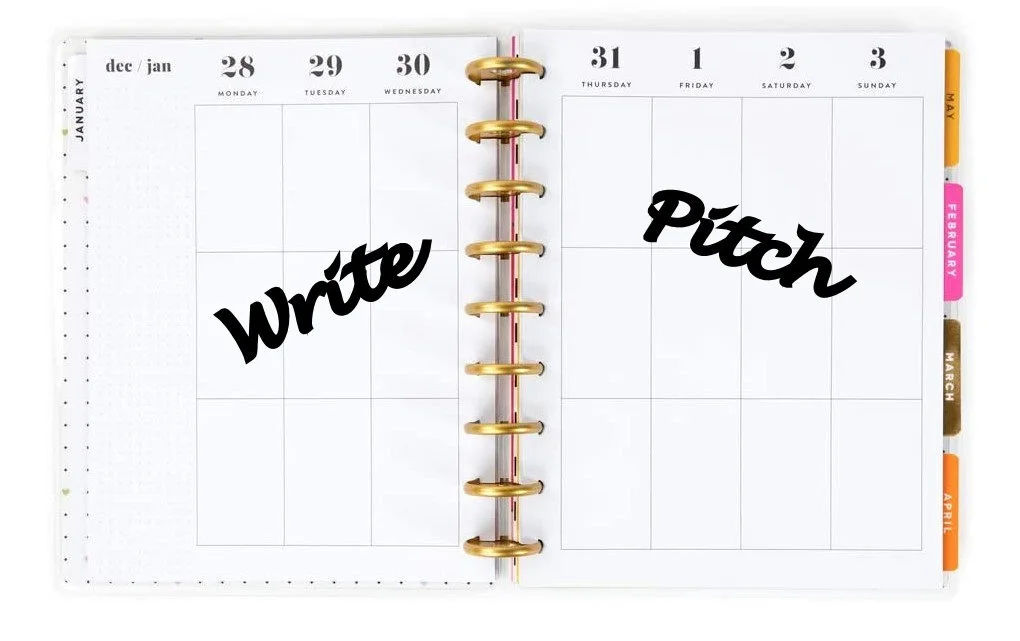
A big part of my success as a freelance writer is staying organized. It keeps me from missing deadlines or forgetting to invoice clients. This all revolves around my trusty planner. Here’s a look at how I organize my business using a planner.
By the way, I’m not saying this is the only way to plan. It’s just how I do it.
The planner I use
After trying out many planners over the years, I've fallen in love with Happy Planners, mostly because they are incredibly customizable. There are a bunch of different types on inserts you can purchase to make the planner work better for you. You can also print off free inserts to add to your planner. They also come in various themes, such as Desert Flower, Live A Happy Colorful Life, Marbled Paint, Good Habits.
Specifically, I use the Classic Vertical Happy Planner. Vertical types of these planners have three vertical boxes for each of the days. It gives you a lot of space to plan days.
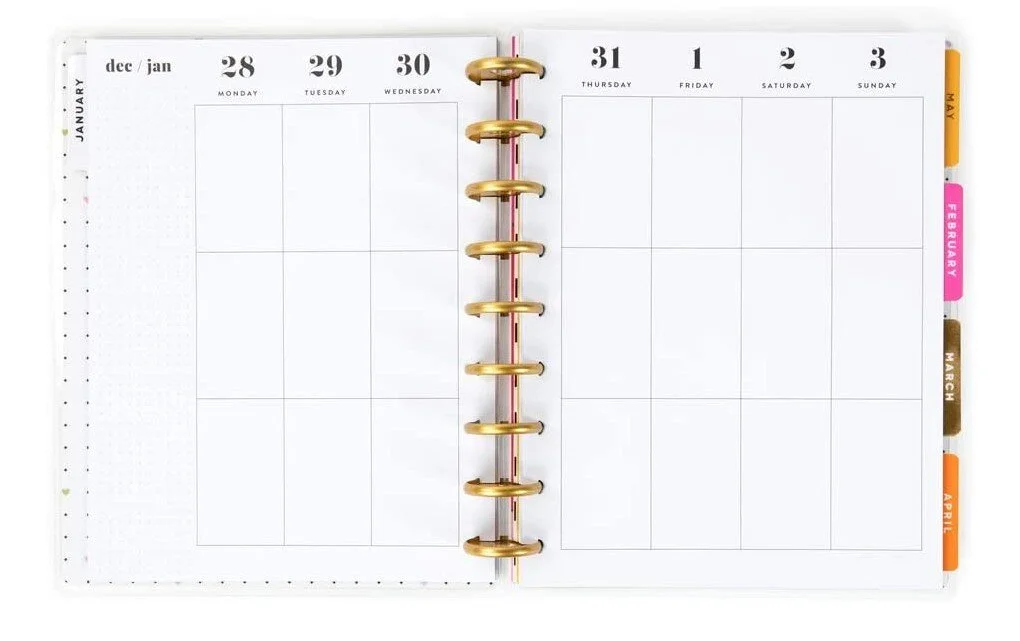
Vertical layout
Dashboard Happy Planners are a little different. For each week there are spaces to help you keep trach of emails, calls, errands, things to buy, and the focus of the week. On the second page the days of the week are laid out along with a to-do list. This style lets you plan out specific tasks. I suggest getting the style that works better for the way you plan.
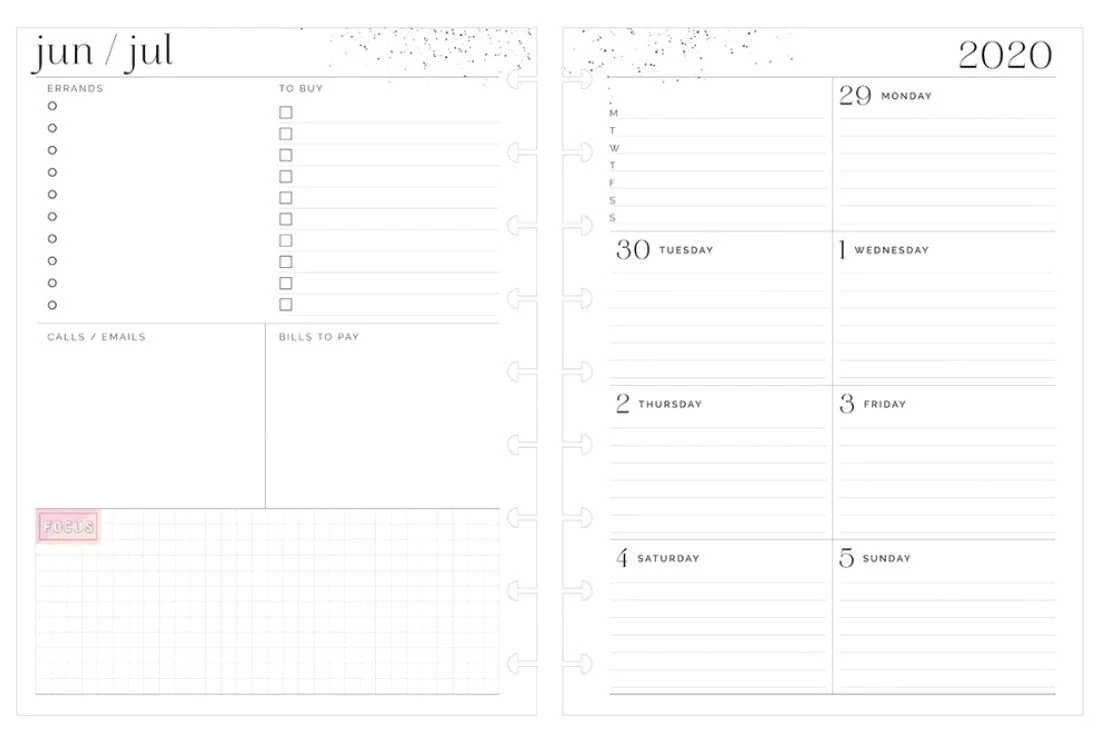
Dashboard layout
How I plan out my week
Now that you’ve gotten a feel for what type of planner I use, my method will make a little more sense. You can use my method in just about any type of planner, but I find the vertical layout of the Happy Planner gives me enough room to write everything down, though I like the dashboard style, too.
Okay, so let’s get into it. First, I write all of my assignments down in the To Do section on the left side. I used to keep a running list on a legal pad, but I find this works better. I make sure to write out the date each article is due and the time. I’ll make a smaller list for other to-dos underneath the assignment to-do list.

Next, I’ll write down any appointments that I have on the day they come up. From there I’ll do a small daily to-do list at the top of each day. Here will be the assignments I need to do that day, errands, calls to make, etc.
Finally, I tally my earnings. For each assignment I complete I will write down how much I earned and then add it up into a daily total. On Sunday I’ll tally up all of the daily totals and write down the weekly total. At the end of the month I will take my weekly totals, add them up, and write the tally on the last day of the month. Writing down my earnings in my planner helps me stay motivated and gives me a daily glimpse at how my goals are going.
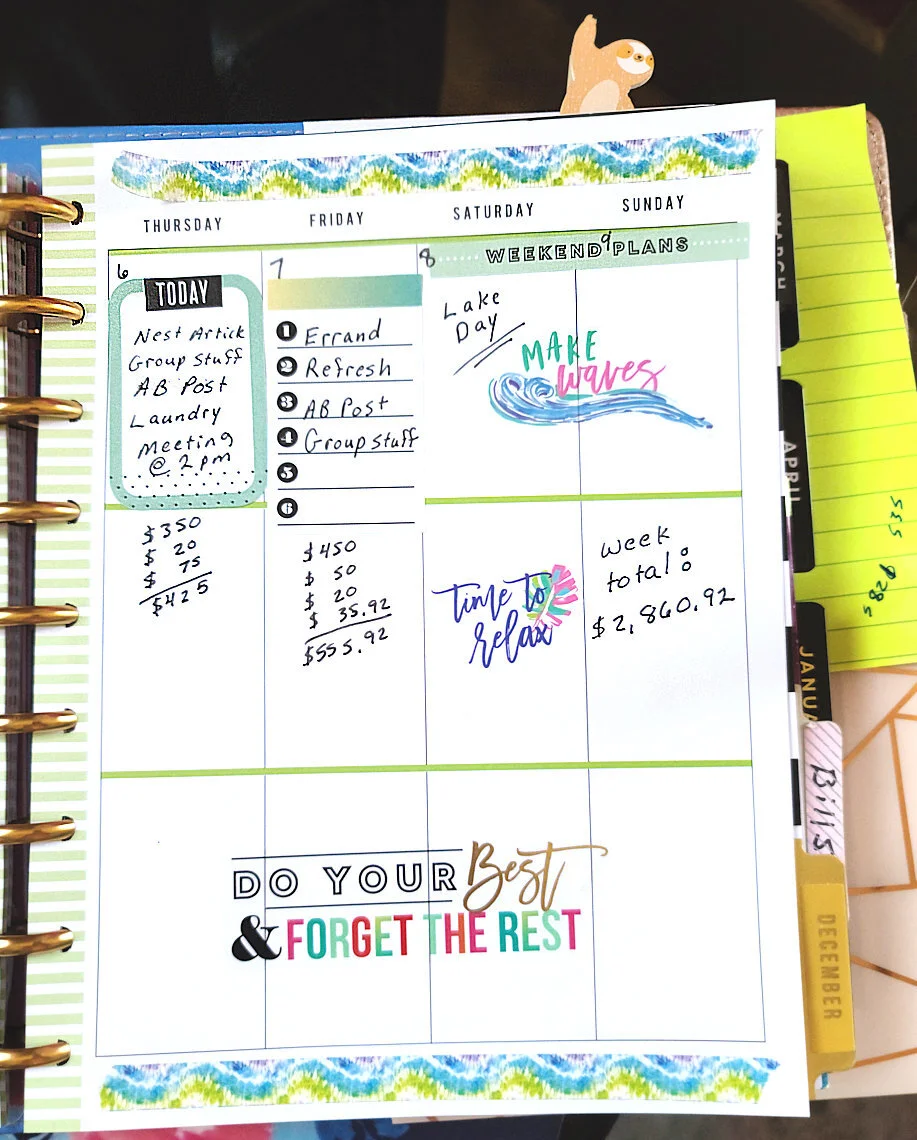
Extras
You’ll notice that I spruce up my pages with stickers. I just like customizing the pages to match my mood that week. Plus, I’m a sticker fanatic. Happy Planner has a lot of stickers designed to be used with their planners, but you can also get cute planner stickers at Dollar Tree if you’re on a budget.
I also use erasable pens because I tend to flip around when I’m going to do what. Some good erasable pens are Pilot Fixion.
If you go with a Happy Planner, I recommend getting their hole puncher so that you can add in homemade or printed inserts to your planner.
BTW, if you need more help making your freelance writing career successful, check out my book The Fluff-Free Freelance Writing Master Course Workbook: The only course that gives you concrete, actionable information to building a successful freelance business without any fluff.
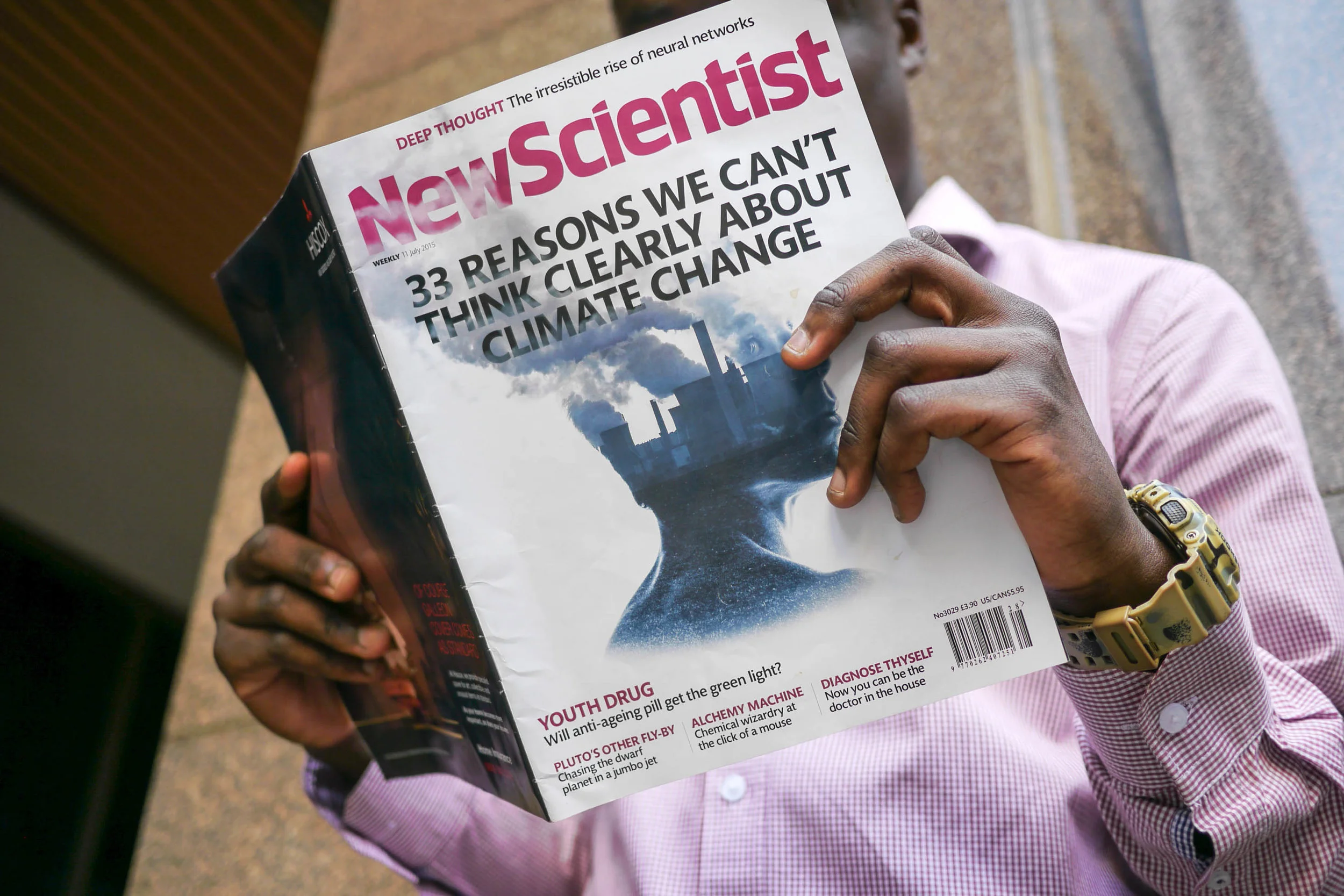
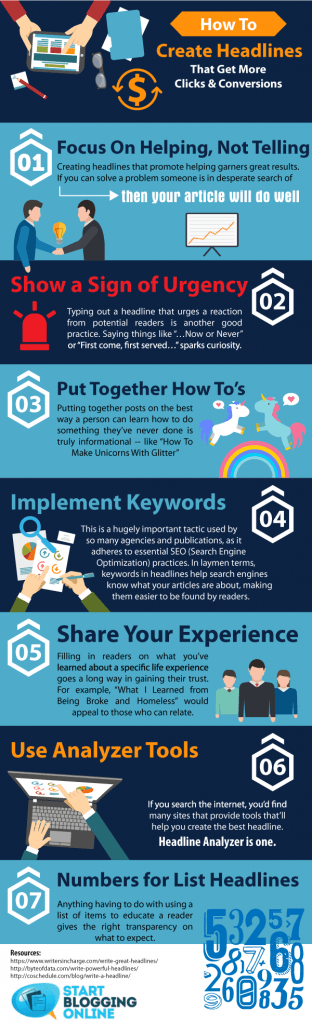
10 Tips for Creating Headlines and Titles that Get Clicked
For freelance writers, crafting great headlines that capture readers' attention increases the chance of getting a click and eventual customer conversions. Here’s how to get better at it.
It's difficult to write irresistible headlines. It's a fact, even for old pros like myself. For freelance writers, crafting great headlines that capture readers' attention increases the chance of getting a click and eventual customer conversions.
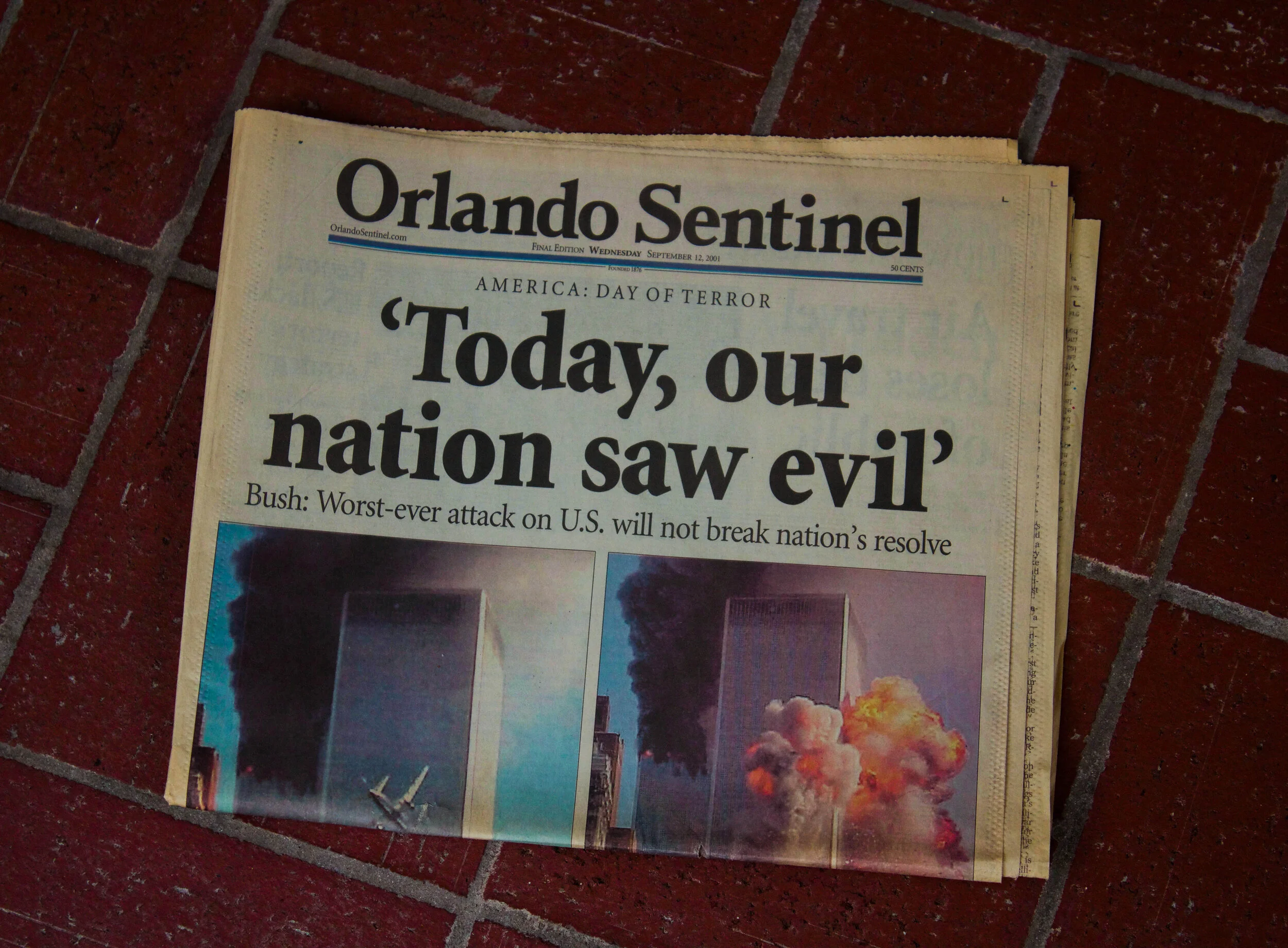
An iconic headline from almost two decades ago.
How can you ensure that you have the perfect headline? Here are some ideas from Dave McDonald and myself:
Make your headline inviting by giving them an answer to what they are looking for. Example: "This (blank) Trick Makes Your Life Easier in Just 10 Minutes."
But don't reveal everything. For example, "This Trick will Lower Your Electric Bill by 25%" tells the readers that they are going to learn something to lower their electric bill, but doesn't give any clues as to what in the title. Curiosity will get the best of most people and they'll click.
Research customer demographics so that you'll know what the visitors to your site are looking for. They might be looking for new products, practical tips, useful information or new ideas, for example.
Make sure your headline is unique, very specific, useful and presents a sense of urgency.
Do away with commercial wordings that most other e-marketers are using. Instead be prepared to take some risks.
Taglines can be used as headlines effectively.
Grab your reader's attention by starting your headline with "How to…" since this indicates you're providing them with useful information.
A number in the title ensures your readers will be intrigued by what you have to say. ("20 Unexpected ways to use dryer sheets" is one of my most popular articles on CNET.) Just ensure that the list contents fully support the headline.
Employ an element of surprise by presenting the readers with something unexpected. It can tickle your audience's curiosity. Novelty and unpredictability are things that stimulate the brain, ensuring that readers will stay and read on. "Angelina Jolie Doesn't Look Like Herself Anymore" is a good example of piquing curiosity.
Add a little humor. “Annoying 2000s Tech We Kinda Miss” is a title example that uses a little fun to draw people in.
Bonus tip: Borrow what works. Titles can't be copyrighted so you really don't need to worry about plagiarism. If you see a great headline jot it down to use as inspiration later. Integrity wise, it is best to borrow and customize headlines created for a niche outside of your own so it doesn't look like you're just copying your competitors.
Get more ideas by checking out the infographics below.
Need more help with starting your freelancing career? Take my master course on how to become a well-paid freelance writer.

No-Fluff Freelance Writing Jobs List: January 6, 2021
Make this year more profitable. Check out these freelance writing gigs.
New Year, new goals! How about making one of your 2021 goals pitching more often? Here’s some remote freelance writing gigs to get you started.
Don’t forget to check back next Wednesday for another fresh freelance writing gig list, or have it delivered to your inbox by signing up for our newsletter.

Image: Woman holding a balloon that says Pitch, No-Fluff.
D’IYANU is an exciting and growing ecommerce brand seeking a Copywriter
Looking for skilled writers to write blog content about a variety of topics ($0.02 per word)
SPY.com: Freelance E-Commerce Contributors
SCIENTIFIC WRITER
Freelance Writer for Quarterly Magazine
Mental Health Blogger — Lived Experience Required
Content Writer
Product Description Writer
Project-based Freelance Writer/Copyeditor (Contract)
Content Writer/Cybersecurity
Digital Copywriter (Remote)
Technical Writer (Contract)
Remote - Editorial Content Strategist / Content Editor
Digital Marketing Specialist – Copywriting and Design
Freelance news and features writer
Hey,
— Culness (@Culnessco) December 21, 2020
We're looking for more fashion writers for an upcoming column on our website.
Send your pitches to culness.biz@gmail.com
Content Coordinator/Writer
Long Term SEO Linkbuilding Contract Writer
Content Writer
SEO Content Writer
Technical Writer
100% Remote Freelance Content Writer
Digital Content Writer
Staff Writer
Full-Time Direct Response Copywriter
Content Writer
Experienced Content Writers for Online Business/Marketing Blog (Long Term Position)
Digital Marketing Content Writer - Virtual, United States
Multi-Skilled, Multi-Sport Journalist
Automotive Features Journalist
salary range for this is $55K-$60K https://t.co/zuU08FEoKA
— Writers of Color (@WritersofColor) January 6, 2021
Calling all #freelancewriters! We're building out our 2021 freelance network and are looking for #writers, #bloggers, and other #wedding experts to write for our Loverly News & Tips section ✍️🥰
— Loverly Wedding Planning & Inspiration (@loverly) January 5, 2021
$50 for short-form and $100 for long-form content. SEO experience is a big plus!
1099 Fashion Blog Writer
HIRING: Celebrity Writer For Long Term Work
Freelance Writer & Technology Enthusiast
MakeUseOf.com Freelance Writer
1099 Independent Tech Blogger
Science Writer & Community Advocate
1099 Independent Sports Betting Blogger
Marketing Content Writer - Scientific/Technical
Staff Writer - MakeUseOf.com
There are still a few days left to apply to @outsidemagazine's editorial fellowship! This job can be based at our Santa Fe HQ or remotely in CA, CO, NY, or IL. Pays $15/hr. cc @WritersofColor https://t.co/ovsAR4qeBQ
— Sophie Murguia (@sophiemurguia) January 5, 2021
Friends, am looking for freelance journalists who can write about the #media and #content space.
— Sachin Bhandary (@EccentricSachin) December 28, 2020
This is for a digital publication focused on narrating in-depth business stories about the industry.
Send me an email with work links to sachin@thestoryco.in
Others, please rt 🙏
Freelance Writer - Technology "How To" Articles
SEO Content Writer
Captivating Content Writer Needed for Natural Health Company
Commerce Writer
Content Writer: Storyteller with Ecommerce Experience
Freelance Writer & Analyst
Content Writer for CJ's Home Decor and Fireplaces
Technical Writer with Manufacturing Experience
Sales Enablement Writer + Project Manager
Seeking a talented writer
Pitch us!! We like daring ideas, ambitious arguments, and longform cultural criticism more generally.
— The Drift (@thedrift_mag) January 4, 2021
The majority of pieces we publish start out as cold pitches, and we read and respond to every email we receive. editors@thedriftmag.com

How I Write Articles for Big Companies
I make around $200 an hour writing articles and blog posts for websites. Want to know my process? Here it is.
I make a living writing articles and blog posts for large websites and publications like Reader’s Digest, CBS, MTV, and more. To write great articles, you need to cover all of the important details that editors and readers are looking for. Want to know my process?
Here it is.

Image: Person wrapped in a blanket writing articles on a laptop next to a mug of tea.
How to write good articles
I Google my topic and read! I make sure to go to only reputable sites for my facts, though. Sites run by the government, universities, zoos and hospitals and the like are a-okay.
Next, I just write. Like, flat-out type. I get all of the facts out of my head and into a Word document.
Once everything is down, I divide it up into sections and order the sections in a way that makes sense.
I give each section a catchy (or informative) heading, then put it in H2 heading format. (The format changes, depending on the site, but H2 is usually the go-to). Adding a heading format helps the article get found by search bots.
Now, it’s time to back up what I say. I add quotes from experts (ProfNet and HARO are great places to find experts) or I link to sites where I got the information. Links will also help your article rank in Google searches.
Finally, it’s time for photos, videos, gifs or any other multimedia experience I can add. People are visual creatures and they love lots of things to look at. I add at least two.
Last, but not least, I go over the post a backwards and forwards to spot any typos, awkward sentences and other things that look totally unprofessional. Three read-overs are my goal.
That’s it.
Want to know how I get clients? Grab a copy of my book:
The Fluff-Free Freelance Writing Master Course: The only course that gives you concrete, actionable information to building a successful freelance business without any fluff.
No-Fluff Freelance Writing Jobs List: December 30, 2020
Jump-start 2021 with this remote freelance writing gig list.
This is the time of year that I call the “jump-start” time. It’s when you plan for the new year so you can get a running start on all of the good things that the upcoming year has to bring. Pitching is a big part of that.
So, as always, I’m here with your weekly remote freelance writing job list. Don’t forget to check back next Wednesday for another fresh freelance writing gig list, or have it delivered to your inbox by signing up for our newsletter.

A major player within the urban culture is looking for a staff writer
Freelance Ghost Writer / Copy Editor Needed to Start IMMEDIATELY!
Code Ocean is looking for a Sr Content Writer
Technical Writer - Life Science
Long Term Writer for Gardening / Planting Website
Content Writer
Copywriter
Experienced Content Writer Needed for Online Marketing Company
Technical Writer - Health
Copywriter with Healthcare Background
Freelance NBA Writer
Looking for #foodwriters & any #journalists interested in #vegan #foodbrands, podcasts, TV shows & anyone writing about #Veganuary. Please email me david@rootkitchen.uk
— Root Kitchen (@rootkitchen_uk) December 21, 2020
@PressPlugs@food4media@PRJournoRequest@journoresources
#journorequest #journorequests #prrequest
Music Blog Writer (For Piano Studio)
Communications Specialist / Writer
Technical Writer
Full Time Real Estate Investing Industry Blogger/Writter
Content Writer
Freelance Writer – Men’s Fashion, Home & Office, Tech, Grooming, etc.
Content Writer
Business Editor / Writer
Blavity News Writer
Content Writer
Grant Writer (REMOTE)
Active Trader Writer Detroit, MI or remote
Licensed Real Estate Agent Writer Detroit, MI or remote
Scientific Writer
Web Content Writer (Health & Wellness)
Commerce Writer
HIRING NOW!
— Binaryic (@Binaryic) December 30, 2020
We are looking for a Content writer with relevant expertise and a creative mind. Interested candidates with a minimum of 1 year of experience can connect with us. #hiring #contentwriting #content #digitalmarketingagency #binaryic #digitalagency #jobopening pic.twitter.com/QT18h6020v
Business writer (focus on US/China and startups)
Market Researcher / Content Writer
Social Media Content Writer
ACT/SAT Grammar Question Writing - $800
E-book/ Hard Copy Writer
SEO Web Content Editor
Tech Content Writer (Mobile & PC)
Marketing Content Writer - Scientific/Technical
Writer/Content Developer
Brand Writer
We want to work with you! We’re looking for Community Researchers, Social Media Contributors and Writers. Apply here: https://t.co/uCiUYCWCOe#thediasporicnigerian pic.twitter.com/bkI9b81A1M
— thediasporicnigerian (@thediasporicng) December 30, 2020
How to Make 2021 New Year’s Resolutions that Stick
Planning for 2021? Here’s some help for setting goals.
Every year we begin a new year resolving to do (or quit doing) something and expect to be the game changer in our lives. For some it’s to workout, lose weight, cut out all carbs and sweets. For others, it’s a promise to save more money and get finances on track. For writers, it's typically to make more money or to get new clients. Regardless of what you resolve to do, according to Dr. Sanam Hafeez, there is a way to set yourself up for failure or success. The mindset we are in when deciding on a resolution determines its
Below Dr. Hafeez, a New York based neuropsychologist affiliated with Columbia University, shares key insights on how to make 2021 New Year’s Resolutions that stick.
1. Envision the end result and reverse engineer it.
According to Dr. Hafeez, neural pathways in the brain can be changed through a combination of visualization and aligned action. She encourages people to journal about what it is they want. Write it all out. “How would life improve? What would all the benefits be? Cut pictures out of magazines of what you want and post them to a wall (or if appropriate, the refrigerator). Get very clear on what you think you will feel like once you see results,” she recommends.
2. Get clear on your triggers.
Set yourself up for success by understanding what may potentially get you off track. “Sticky resolutions come with planning. If you want to lose weight, then begin with clearing out your fridge and cupboards of junk food. That in itself is an action that will tell your brain that you are serious. Get recipes and write out a new grocery shopping list. Writing plans, micro goals and ideas that serve the greater accomplishment you're reaching for creates “buy in” from your brain, says Hafeez.”
For the people resolving to save more money Dr. Hafeez says to evaluate when and why you spend. If you notice you spend $40 a week on coffee, think of alternatives. “You don’t want to cut yourself off from anything cold-turkey. The brain doesn’t respond well to deprivation. It sends brain chemicals that signal displeasure which is what makes resolutions lose their stickiness. Shift to a possibility or curiosity mindset. Asking yourself, what can I do to save $5 per day invites in inspired thoughts and creative ideas,” explains Hafeez.
3. Pace yourself.
“The reason why resolutions don’t stick is because people set the bar way too high and expect achievement way too fast. Think of every week as a win! Break it down into weekly chunks and train the brain to value quick accomplishments,” she advises. The people who resolve to lose weight and get more exercise won’t stick to it if they don’t celebrate small milestones and try to do too much too soon. Resolve to lose 1 to 3 pounds per week. Do this by cutting out soft drinks or juices and drinking water instead. After 10 weeks you will be 20 pounds lighter with great skin just because you did one thing week by week until it became your new normal.
4. Trick your brain by making it fun.
“Our language and self-talk is everything and determines if our resolution will fade or will become something we’re still doing in June,” says Dr. Hafeez. “When someone resolves to change their diet, exercise and lose weight they already envision how difficult it is going to be, so they are already dreading it before they started. However, shifting the brain to doing something fun that is in line with the goal gets you more committed," she adds. Create a playlist of great music to work out to. Look up recipes on Pinterest to build your new shopping list. When you do the advance preparation that is more fun and take small steps towards building the new lifestyle to support your resolution, you’re setting yourself up for a win.
5. Fuel your resolution with greater purpose worth committing to.
If you want to resolve to save more money, it’s is helpful to have a clear purpose for the money you plan to save. Resolving to save more money is vague making it hard to remain on track. Saving more money to take an amazing vacation or to purchase a home or car is something tangible you can stick to. “It’s common for people to commit to doing something when they connect it to a greater purpose beyond them or an experience they want to have. This explains why lifetime smokers can instantly quit when they learn they are pregnant. It’s not about them anymore. We see the man who is 75 pounds overweight lose weight when his daughter gets engaged. Whenever we can connect resolutions to a bigger purpose our minds get on board, and when the mind is all in, resolutions stick,” explains Dr. Hafeez.
About Dr. Hafeez:
Dr.SanamHafeezPsyD is a NYC based licensed clinical psychologist, teaching faculty member at the prestigious Columbia University Teacher’s College and the founder and Clinical Director of Comprehensive Consultation Psychological Services, P.C. a neuropsychological, developmental and educational center in Manhattan and Queens.
Dr. Hafeez masterfully applies her years of experience connecting psychological implications to address some of today’s common issues such as body image, social media addiction, relationships, workplace stress, parenting and psychopathology (bipolar, schizophrenia, depression, anxiety, etc…). In addition, Dr. Hafeez works with individuals who suffer from post-traumatic stress disorder (PTSD), learning disabilities, attention and memory problems, and abuse. Dr. Hafeez often shares her credible expertise to various news outlets in New York City and frequently appears on CNN and Dr.Oz.
Connect with her via twitter @comprehendMind or www.comprehendthemind.com

How to Grow Your Career and Your Life as a Freelancer in 2021
If 2020 has taught us anything, it’s that the world can change on a dime. Our goals and our dreams can shift so quickly that we can’t catch up. It has also taught us to take stock in what we have – and what we don’t – and learn what it is that’s important to us. Taking time to evaluate this year in preparation for the new one can give us goals that promote security and prosperity in 2021.

Your Career
As a freelancer, you can pivot your career path at any point; switch your specialty, try writing for new sectors… really flex your writing muscles when and where you can. Investing in your career growth is vital to staying relevant and sharp. Consider some of the following tips to help increase your success in the new year.
Invest in your equipment
Upgrading the technology you use to function as a freelancer can keep you ahead of the game. Whether it is buying a new computer, or the latest software, being at the top of your game and having the right tools at your fingertips will help put you above the rest. For example, having a dependable recorder for interviews you do and having a reliable software to transcribe (or reliable human transcriber) can help you cut down your turnaround time and strengthen the trust your client has in you and your work.
Nurture your client relationships
This year has taught us about the value of the connections we have. We all have clients that we love, and that treat us well, and ones that don’t. Maintaining strong relationships with your clients will ensure they reach out for future projects or accept pitches you send their way. Having consistently reliable content will have your client excited about new work or even send your contact info to others in their network to give you more business. Networking through your trusted clients can give you fruitful experiences with new publishers.
Know the importance of your relationships with other freelancers
Strengthening your relationships with other freelancers can also give you opportunities with new clients. Dedicating time to foster these positive relationships can help build your pipeline for a consistent client base and workflow.
Your Life

Your goals for the new year do not only have to be career-based. If 2020 has illuminated anything, it’s that our personal lives and wellbeing are as important to our success as our careers. Incorporating some general life goals into your new year plans will help increase your overall sense of accomplishment. Consider some of these areas below to focus your attention on in the year to come.
Be savvy with saving
This year has brought about the realization that being prepared for everything can seem impossible, but being as prepared as you can be, is vital. How you manage your finances matters, it’s not just about how you spend, it’s also about how you save. Being sure to have savings that you can feel comfortable with is important for your ability to live adequately during times of slow production. Deciding what type of savings account you should have can be tricky, but researching the different types and their advantages and disadvantages can help you feel confident in your choice!
Reconsider where you live and work
As a freelancer, you’ve been working remotely longer than the pandemic has been around, and you know the perk of remote work is that you can live where you want, when you want. Others are catching on. In 2020 many companies have moved to remote work, and individuals have begun to take advantage of the option to relocate because they are no longer tied down to an office job. For freelancers, 2021 is the perfect time to reassess your living situation and see if now is the right time to relocate to your dream city or state, too.
There are a number of different reasons you may want to move, such as wanting to finally own a home with more space for family and work, or to relocate to an area where you have the potential to reach a wider network of people. Maybe your current home is too small, or you are a renter and want to become a first-time homeowner.
Owning a home gives you the stability of knowing where you will be for the long term, therefore having the ability to plan for the future both personally and professionally. Of course, finances may get in the way of this, but you can plan ahead and get yourself preapproved for buying a home to know how much you can afford before knowing if you should take that big step. Owning a home has many perks, especially for freelancers. You can have an office space of your own, and may even be able to take in tenants to supplement your income, which can come in handy during any slow season.
Understand the importance of downtime
Finding time to relax is vital to a freelancer. You can work yourself down to the bone, and that can happen quickly and without warning. Bringing self-care into your life will help reduce the chances of burnout that many freelancers face. Whether you unplug for a few hours, take a long weekend, or even just have a night where you give yourself a little TLC, you can revitalize your mind and body by taking a very well-deserved break.
Making the end of the year a time of reflection isn’t a new idea, but making sure you create goals for yourself that can be attainable and successful, is something that is very hard to come by. Creating a plan for yourself that is more about improving your relationships, both with clients and with yourself, can make your goals seem more achievable.

7 Checklist Items for Success in 2021
These items are a must for meeting your goals in 2021.
No matter what your goal is for 2019, you need a plan to make it happen. Dr. Jean Gilnord Mathurin, author of 7 Checklist Items for Success: A Guide to a Richer and More Successful Life, is a Haitian immigrant who raised himself from a dishwasher to a United States’ Naval Medical Officer has developed seven checklist items from success. This strategy brought him from living in a one-bedroom home in Haiti with seven siblings to a prestigious career in the USA. Now, he’s sharing his tips to empower today’s teens and also those who know they have a purpose in life but just need the “how” to make it happen.
Below is Dr. Mathurin’s checklist for success in 2021.

7 Checklist Items for Success in 2021
Goals: Have goals for your life, short-term (daily to yearly goals) and long-term goals (1 to 10-year goals), and most importantly, daily goals.
Action: Pledge to take action on every intuition and idea you conceive about your goals during the day.
Courage: Have the courage to go the extra mile with everything that you do.
Value: Remember that human resources, starting with yourself, are the greatest resources in the industry. Be genuinely interested and enthusiastic about everyone you meet.
Invest: Seek to create value in yourself and in everyone around you.
Giving: Seek to know what people around you want in life and help them get it. The truth is most people want to be successful, but the key is also to want to help others to be successful.
Legacy: Seek to perform more acts of kindness to others and give more in terms of the time you spend with them, the smiles you bestow on them, and the words of encouragement you speak unto them.
Here are some more tips for starting off 2021 right:
Resolution: Make 2021 Your Healthy Brain Year

Freelance Writing Jobs of the Week Mega List: December 23, 2020
This week’s remote freelance writing jobs.
Happy holidays, my No-Fluffers! I hope you are having a great week. Like always, I’m here to deliver your weekly freelance writing gigs. Happy pitching!

Personal Finance Writer/Editor
Website Content Writer
Social Media Content Strategist & Writer REMOTE
Technical Writer ( Remote)
Sports Writers Needed
Long Term Writer for Car / Automotive Website
Technical Writer- Hardware experience
Cannabis Copywriter (Freelance)
Technical Writer
Video Game Strategy Guide Writer
Attention experienced audio journalists: We're looking for pitches of stories of science colliding with society for The Undark Podcast. For a 25-minute story, including a short conversation with our host, we offer $3,000.https://t.co/1PSShSoEM8
— Undark Magazine (@undarkmag) December 13, 2020
Solutionreach is looking for a prolific and talented content creator to write and produce various types of downloadable content and blog regularly
SEO Content Writer- Cannabis
Content Writer
Grant writer
Long Term Writers for Sewing and Craft Website – (US and Canada Only)
Resume Writer - Ghostwriter
Professional Business Writing Freelancer Needed - URGENT
Marketing Copywriter
Marketing Copywriter
Technical Writer – Post Sales
Men's lifestyle brand @themanualguide is looking for a freelance commerce writer. https://t.co/tBBsVKddjf #blkcreativesjobs #ReignyDayJobs
— J. Dakar (@mrjdakar) December 15, 2020
Learn and Earn is looking for a Freelance Non-Fiction Writer
Copywriter / Content Writer
Seeking an Experienced Affiliate Marketing Writer
TV and Movie Theories Writer, Inverse
Expert Children's Mindfulness Writer for Meditation and Discussion Guide
Technical Writer - LEAF Team
Content Writer
Trusty Tails is looking for freelance writers to join our team to write about various local pet care topics
Freelance Content Writer (Remote)
We’re hiring! Seeking a talented & hard-working writer for our Content Creator position! Apply here: https://t.co/GNDNWveRtW pic.twitter.com/Cg0az92JtI
— Platinum PR (@Platinum_PR) December 14, 2020
REQUEST FOR PROPOSALS: @DetroitPeoples is seeking an experienced writer (with an understanding of racial and economic justice) to develop a narrative report about DPP’s organizing campaigns on transit justice.
— Building Movement Project (@BldingMovement) December 14, 2020
Spread the word, learn more, and submit here: https://t.co/VKiIUQ77MZ pic.twitter.com/oEpDuuJWlw
💡OPPORTUNITY ALERT💡
— Telixia Inico (@telixia_inico) December 10, 2020
We are looking for 4 bloggers to write content for our new website✨
Calling all upcoming writers who have a passion for writing about Business, Finance, The Community & The Creative Industry💫
Drop me a DM to express interest #ldncreates #blogging pic.twitter.com/8M5nNHhtV5
And this is a good time to reiterate: I'm always on the lookout for great writers!
— Annie Gaus (@AnnieGaus) December 10, 2020
If you are a freelance reporter interested in writing for PC, hit me up. And tho we won't be publishing a ton of opinion for now, if you have a unique perspective on SF to share, I'm all 👂👂

Copyright Law and Writing: What Every Writer Should Know
Copyright laws can play a vital role in the safety and security of any written work.
Guest post by Tori Lutz
Copyright laws can play a vital role in the safety and security of any written work.
Whether you’re looking to protect your private blog from plagiarism or prevent any unauthorized reprinting of your multi-million-dollar screenplay, copyrights will be at the top of your to-do lists. This can be for any number of reasons, but the general consensus is that copyrights provide writers and producers with a host of useful benefits that the free market just can’t provide.

This article will help you form a better understanding of what copyrights are, how they apply to your writing, the benefits they provide, and how to get them. At the end, we’ll even provide a detailed explanation of how to choose whether or not you really need a patent attorney to handle the process.
Copyright Laws Explained
Let’s start with a little bit of history.
Most people think that copyright laws are something new. For example, when do you think the laws were written that protected digital writing and software code from being stolen? You might say some time after 1989 with the invention of the World Wide Web, but the truth is that there have been copyright laws in the United States since long before the United States even existed.
Copyright laws began for the world in 1710, spread to the Americas with the colonists, and were enshrined in the United States Constitution in 1787 (with the first copyright law being passed in 1790).
Nowadays, much about those laws has been changed; however, the general theme remains the same. Copyright laws function by granting you a government-backed monopoly on the production and distribution of your writing as well as any changes you make to that work.
The Importance of Copyright Laws for Writers
In general, the benefits far outweigh the costs of getting a copyright for your work.
But what if you don’t want to copyright your work? That’s fine, too! In fact, tens of thousands of writers choose to forgo copyrighting their work each year. Unfortunately, the reason for this is a bit of a double-edged sword.
While it’s true that anything you write is immediately protected by general-interest copyright laws, you lack many key privileges when you choose not to officially register your copyrights. For instance, if you choose to forgo securing a copyright for the book that you just wrote, somebody else who found the documents on your computer could theoretically get away with selling that draft without your consent.
Of course, you could still sue and you might win, but that “might” can be an extremely dangerous word, as any writer is well aware. Moreover, even if you do win your case, you likely won’t be able to recoup financial losses without an officially registered copyright in your name.
The Benefits of Copyrighting Your Work
There are three main benefits to securing your copyright: money, money, and more money.
It might seem materialistic to concern yourself with money or you might not even believe in the concept of money, but the fact remains that you cannot survive in our current society without it. Not to mention the fact that you deserve to be paid for your work just like anybody else with a so-called “real job.”
This increased revenue is made possible by the government-backed monopoly that copyright privileges extend to you. These monopolies, like the oil monopolies of the Industrial era, create artificial scarcity, which, in turn, enables you to drive the price up far and beyond what the natural market forces otherwise would have paid you for the production of your work.
Copyright laws are what enable writers to sue people for when they steal their ideas, regardless of whether or not the thief uses them better, more efficiently, or with lower costs. By copyrighting your work, you can increase your wealth at the expense of your competitors, killing two birds with one stone.
Copyright Requirements
In general, copyrights are far easier to obtain than patents and the copyright cost tends to come in anywhere from a few hundred dollars to tens of thousands of dollars below the average patent cost.

Fixation
The first requirement to qualify for a copyright is that your work must be fixed in a “tangible means of expression.” This means that your novel has to have already been written (whether on paper or digital). It does not necessarily have to have been printed, but it has to be physically real and more than just an idea. For example, an MP3 file is a “tangible means of expression” for a musician’s work.
Originality
If your work is seen as a copy of somebody else or so derivative as to legally fall into the category of the “next step in the evolution” of somebody else’s work, copyrighted or otherwise, you will not be able to secure a copyright for that piece of art.
Minimal Creativity
This requirement plays off of the Originality requirement. Essentially, your work can’t just be a boring, bland, obvious hunk of junk. If you want to copyright it, it has to have even a minimal semblance of creativity.
Is An Attorney Really Worth It?
It’s possible that you’re wondering if an attorney for something you’re already putting in hard work to understand yourself. Things like traffic law attorneys, medicare fraud defense attorneys, or criminal defense attorneys may seem more blatantly necessary… but what about patent attorneys for IP law?
As J.D. Houvener, a Los Angeles patent attorney, once said, “Hiring an attorney to help with the copyright process involves paying a little extra to save a lot more.”
When it comes down to it, that’s exactly what the process entails. Although the copyright process is far simpler, cheaper, and easier for the layman to navigate than the patent, trademark, or trade secret processes, there is still a high risk of doing something incorrectly and having the U.S. Copyright Office deny your request.
Typically, you can get around this denial by tweaking your work and filing again, but how much time do you have? More importantly, how much money do you have?
By hiring an attorney to nail the registration process in a single go, using their connections to expedite the review of the process, and handle all of the stress-inducing bureaucracy for you, you can save countless hours and thousands of dollars in the long run.
Conclusion
At the end of the day, every piece of art is different. That’s part of what makes it art! Of course, we don’t really have time to get into the question of “what is art,” but neither does the U.S. government (hopefully).
As long as you satisfy the three simple requirements of copyright law and hire an attorney to ace the registration and applications for you, your writing should be protected for as long as you need.
Note: This is not legal advice and should not be taken as such.
Want to become a successful freelance writer? Check this out.