

Best High-Paying Freelance Gigs of the Week: June 3rd 2019
Here are the best high-paying freelance gigs of the week!
Hey No-Fluffers! Starting today, each week I’ll post the best high-paying freelance gigs of the week here, on the site. You’ll find gigs that pay at least $100 a peice or over $50 an hour and all of these postings are looking for remote writers. That means you can work from home. In the list you will find companies looking for full-time writers, publications that need pitches for articles, and sites that need content creators.

Note: I don’t know anything about these positions other than what I post. I weed out the seedy looking ones, but it is your job to be diligent when applying. Also, please don’t message me with questions about the postings. If a link doesn’t work the posting has probably been taken down because the gig has been filled. If you have a gig for freelance writers that pays at least $100 a peice or over $50 an hour, please contact me and I will include your gig in next week’s post.
Let’s get started!
Freelance GMAT Prep Writer
Pays $100 to 300 per article depending on length + experience.
More information: FreelanceWriting.com
Vegan Cooking Articles
Pays $200 and up per article
More information: How to pitch Tenderly
Copywriter - Social Media
Salary $1000.00 to $5000.00 / month
More information: Indeed
Personal Finance Writer
$150 to $450 per piece
More information: The Motley Fool
Real Estate Investment Writer
Pay ranges from $150 - $750 per piece
More information: The Motley Fool
Scribe Remote Writers
$60-$70 an hour
More information: Scribe
Biography Package Writers
Pay ranges from $600-3000 depending on the package
More information: Story Terrace
Resume Writers
Earn up to $3,500 a month
More information: Glassdoor
Technical Documentation Writer
$2,500 signing bonus + salary
Science Writer
Full-time salary
More information: Self Decode
Freelance Journalists - Health Equity Issues
$1 per word for up to 2000 words
Review the tone, style and angle of recent stories at their online newsroom, and then direct pitches or questions to julian@coloradotrust.org.
Medical Writer
Full-time salary
More information: Envision Pharma Group
Technology Writer
Full-time salary
More information: Fit Small Business
Insurance Writer
Full-time salary
More information: Reviews.com/Red Ventures
Want to know how I find these gigs so you can search for yourself? Grab my No-Fluff Freelance Writing Starter Pack. It teaches you how I make $100 to $200 an hour at home as a freelance writer. The pack includes gig finding secrets, my two books, a social media marketing guide for writers, invoice template, contract template and more.

Fight Generic Content: How to Create Interesting Posts
I'm going to give you a sure-fire way to determine if your content is generic with one easy step.
I was recently critiquing a person's article, and something struck me. This article had everything going for it...in theory. It was on a great topic that would be interesting to the reader. The problem was, once you started reading, it was clear that the article was generic. It was a general dabbling into the subject and not the in-depth article the title promised. Of course, the average reader would click away from the article right away and never come back to the site.
To help you avoid this mistake, I'm going to give you a sure-fire way to determine if your content is generic with one easy step.

Image by Neil Kandalgaonkar.
How to Spot a Generic Article
Spotting a generic article is easy. All you need to do is see if you can swap your main keyword for something else.
For example, say your article was entitled: How Marketers can Use PayPal. Throughout your article, you should give examples of how marketers, specifically, can use PayPal. If you can switch out the word "marketers" and replace it with any other type of profession, then your article is generic.
How to Fix Generic Content
Fixing generic content is just as easy as spotting it. Simply go through your article and insert tips or ideas that are specific to your topic keyword. Remember, you want people to learn or be entertained with tidbits that pertain to their interests. If they aren't learning or being entertained, then your article is nothing but search fodder.
Nothing makes me angrier than search fodder. That's articles that are created with the sole intent of drawing in hits through keyword usage. These articles are dry, useless and infuriating because they waste people's time. Not to mention, search engines are looking for helpful content more than keywords and SEO tricks these days, anyway.
[bctt tweet="Keep it classy. Make sure that your content avoids the generic label and is something special."]

ron_burgundy_ stay classy
Keep it classy. Make sure that your content avoids the generic label and is something special. Not only will your brand gain a loyal following, you'll also get more search engine love.
Want to learn how to become a successful writer? Get a copy of my book:
The Fluff-Free Freelance Writing Master Course: The only course that gives you concrete, actionable information to building a successful freelance business without any fluff.

5 Effective Online B2B Lead Generation Tactics in 2019
Here are five online inbound and outbound strategies that will help in generating qualified leads and improving brand image and credibility.
Lead generation has undergone a radical change in the past few years. Today, online lead generation activities are more effective when compared to traditional mail and print advertising.
Effective B2B lead generation requires a combination of inbound and outbound activities. Inbound strategy can help establish credibility, while an outbound strategy will result in attracting more qualified leads.

Here are five online inbound and outbound strategies that will help in generating qualified leads and improving brand image and credibility.
1. Social Media
Social media is one of the most effective channels for both B2B and B2C lead generation. For B2B, LinkedIn has proven a very effective channel in generating leads. The platform is a whopping 277 percent more effective than Twitter and Facebook in attracting qualified leads.
You should focus on creating posts based on keywords that your target customers will be searching for and learn how to use hashtags for attracting the right audience to your post. Also, make sure that you follow the proper etiquette when posting on social media platforms. Don’t post more than twice a day, use a professional business profile, and respect customers.
2. Generate Leads by Posting Content
Posting regular blogs on internal and syndicate sites is another effective way to generate leads. Consider hiring a professional content writing team to craft quality insightful articles. The content should be informational and not promotional if you want to attract leads.
Every piece of content should be optimized for unique, semantically related keywords that are relevant to your product or services.
The content should have a clear call to action at the end that prompts users to take action, too. The article should serve as a teaser with basic information. Then, ask the readers to contact you for further details.
3. AdWords Advertising
Online advertising is another effective way to generate leads. You should put ads on popular social media sites such as LinkedIn, Facebook, Twitter and Instagram.
The ads can be customized to run in a particular geography. Also, you can customize the ad to target specific demography such as CEO, entrepreneurs, and other professionals.
4. Create Lead Generation Magnets
You can also attract the target market by using what marketers call a lead generation magnet. This refers to tools that are used to motivate individuals to interact with your offer. The tactic involves the exchange of contact details for a valuable piece of information.
Effective lead magnets for B2B lead generation include:
E-books
Whitepapers
Free apps
Online workshops
Webinar demonstrations
Consider contacting professional lead generation companies to know how to use lead magnets for generating leads.
5. Email Marketing
Email is the traditional online marketing tactic that is still effective today. You should consider using marketing automation tools to efficiently capture online leads.
Market automation tools connect with the CRM software and send targeted and personalized emails automatically. Studies have shown that email marketing automation results in a 172 percent increase in revenues.
The above tactics are just some of the ways in which you can generate qualified leads through online channels. Consider incorporating the tactics listed here in your B2B marketing strategy and build your business one step at a time.

Handy Hints For Selling Online Courses
Here are some hints and tips on how to get started in the world of selling online programs. Read on, take everything in, and put some of this advice into action - you never know where it might take you!
The online program and course industry is huge - and is still gathering plenty of momentum. According to reports last year it was worth $200 billion, and the chances are that figure is even higher as you read this. Put simply, if you have a particular set of skills and knowledge, there is a market for your expertise. All over the world, there are people clamoring to find out information on almost every subject under the sun, and, most importantly, they are willing to dip into their pockets to access it.
If you are knowledgeable about direct sales, online marketing, or any other form of making money on the web, the big question today isn’t whether or not you should start a course. It’s this - why haven’t you started one already?!
Here are some hints and tips on how to get started in the world of selling online programs. Read on, take everything in, and put some of this advice into action - you never know where it might take you!

teaching courses online
Don’t panic about the competition
A lot of experienced people are put off running online courses and programs, due to the massive amount of competition, but this is the last thing that should stop you. Yes, there might be a lot of rival courses in your field, but the very fact there are lots of them should tell you one important thing: that particular subject is popular!
The truth is that there will be a course or program on any subject you can possibly think of. And to be honest, if there are no other courses in that field, I would suggest you should think of another program idea; clearly, there isn’t much of a market for it. Never see competition as a barrier - it’s just sign of a healthy market you can access
The myth of making mistakes, lack of money and bad design
Here’s another cold truth: your first course will suck, as will your advertising efforts to promote it. But, guess what? Every mistake you make will be a learning experience. You will change your course over time, developing it to ensure people get the results they want. You will start tracking your advertising, emails, and sales funnels (more on which later) with more purpose, finding out what works - and what doesn’t.
As your course gets better, your budget will increase as a result - and you can raise your prices. It means you can start putting more money into your promotion and the design of your website, as well as the content of your course. We will take a look at some of the things you can do to make improvements a little later on. But essentially, everyone has to start from somewhere, and as long as your customers feel they are getting value, you will get results.

selling programs online
The importance of self-development
You can’t afford to stand still in business, and if you want your courses and programs to be successful, you need to stay at the top of your game. Ask any successful entrepreneur from any industry, and they will all tell you the same thing: a continuing education is a key to winning in business.
You could take an advanced course in your specialist subject, and then rework some of your new knowledge into your existing program - or launch an entirely new one instead. In every area of your business, from the day-to-day running through to the devising of new programs, there will always be someone who does it better than you. Learn from these people, and your courses, programs and business as a whole will be better off as a result.

making money online
Email, copy and sales funnels
While we are on the subject of learning, educating yourself about the power of email, compelling copy and sales funnels will be vital to the success of your product. It’s a huge range of subject matter that requires further reading, but your email list will be the lifeblood of your sales. You will need to think of ways to entice people to sign up to your list - offering free (but valuable) information in e-books is a traditional method, and even a well-run blog can attract sign ups.
Copywriting is also vital. Excellent, engaging, compelling copy can make your program; bad copy will break it. The words you use to advertise your course or program have to tap into the pain points of your ideal customer and motivate them to do something about it. You need to talk to your audience in their language, not yours, and focus every point on either being a solution, to removing barriers to purchase.
And finally, there are your sales funnels. This refers to how you capture people at every stage of the buying process, prove your value to them, and slowly nudge them down the funnel until they turn from dubious visitor to willing buyer. Again, sales funnels are a vast subject which will require more reading. But make no mistake about it - learning how to create effective sales funnels can have incredible impacts on your sales.
Find a place to sell
If you don’t want to set up your own website to sell your courses, there are plenty of online universities that allow you to sell your course using their site for a piece of the profits. SkillShare, for example, pays you for the minutes that people watch your instructional videos and you can also make money from referrals, as well. Here's one of my courses on SkillShare: How to Get Started as a Writer Without Clips. (Yes, that’s a referral link.)
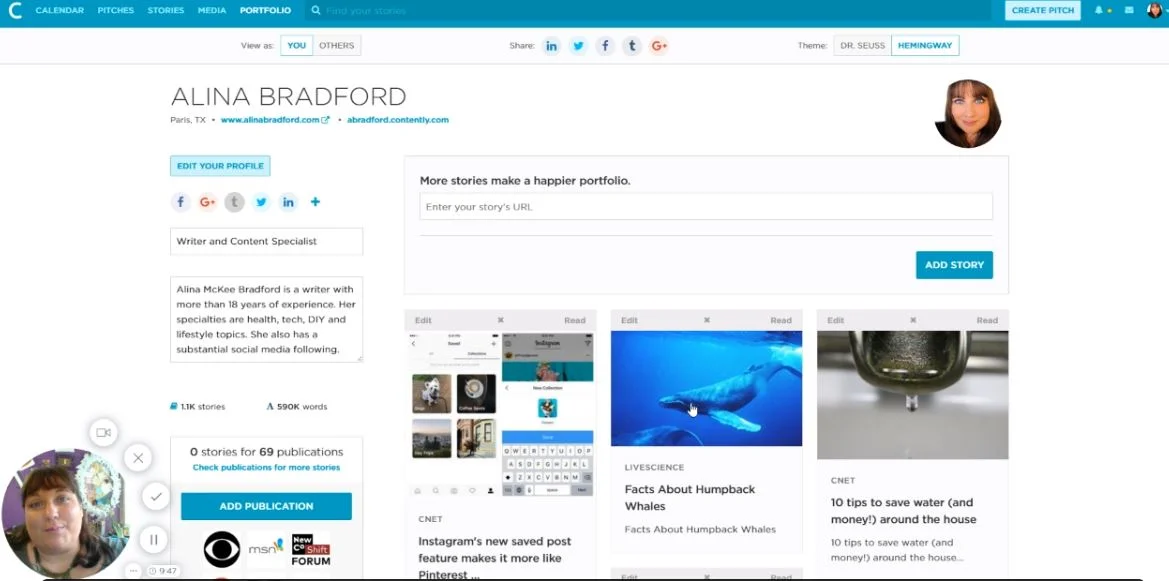
One of my videos on SkillShare.
Targeting
Of course, none of the online marketing tactics listed above will matter a jot if you aren’t putting it in front of the right people. It is critical to spend a long time researching your ideal customers so you can build up an accurate picture of them. Who are they? Are they male, female, or does it not matter? What companies do they work for - and in what position? Where do they hang out online, and in real life? What interests do they have outside of work?
Once you understand your customers, you can start finding out about their pain points. What is driving them mad, or making them worried? Then it’s a simple case of designing your program to equip your customers with the skills and knowledge they need to overcome their stumbling blocks. This will be your ‘value proposition,’ and it’s impossible to define if you don’t know who your ideal customer actually is.
Differentiation
OK, so the final handy hint is learning how to differentiate yourself from the competition. As we discussed at the beginning of the post, it doesn’t matter that your topic has been covered before - what is important is how you present it. It’s worth bearing in mind that people tend to learn in different ways, and if there is a gap in the market for, say, visual learners, it could give you a massive clue in the sort of direction you might take.
Your course could have a better design than your rivals, for example, making it easier for learners to navigate, explore, and answer questions. You might use proven gamification techniques in your program, too, instead of the same old textbook and answer sheet style employed by your competitors. Or, you could just provide a multi-platform course so that your customers can learn on any device they like, whether it’s a smartphone or a desktop.
Conclusion
As you can see, starting an online program might be a lot easier than you might think. And the sooner you get started, the better. It’s something you can refine over time, improve, and it will lead to you beginning to make a name for yourself. Yes, there is a lot of work involved, but if you believe in your program, it is possible to outsource to other companies to cover the areas in which you need the most help. Have I sold you on the world of infopreneurs yet?
Got questions? Let me know your thoughts in the comments section below!

Free at Last From Being Free: How to Stop Writing for Free
"Should I write for free?" I hear this question a lot from new freelance writers. The answer?
"Should I write for free?" I hear this question a lot from new freelance writers. The answer?

Many freelance writers start off their career thinking that they should do a little free work to build up their clips so they can get paid gigs. The problem is, once you start down the free road, it's hard to take an exit. People want to keep getting free stuff as long as they can and will baulk at paying your new rates.
Well, I say tough. If they want quality work, then they need to pay. I encourage new writers not to go down the pro-bono road, if they can avoid it at all. (Here's how to get clips and gigs, even if you've never written for a client.)

If you've fallen into the free trap and want to start earning for your work, I've come up with a script that can help:
"I really enjoy working with you, but I am advancing in my career and my time is becoming limited. I can only do work for paying clients. I would love to continue working with you. My rates are XYZ, would you be able to continue with me as a paying client?"
This script gives the client no wiggle room. Either they decide to stay with you, or they set you free to make an income. This approach is non-threatening, though, so there's a good chance you'll convert the client into a paying client.
Have questions? Ask me in the comments!

The #1 Worry For Freelance Writers (And How to Solve It)
Ensure a consistent workflow as a freelancer with these tips.
Let's face it, as a freelance writer your day may have a few more worries than those folks that have staff jobs. In particular, the number one concern for us freelancers is the work will suddenly dry up, and leave us destitute. This worry haunts our days and our nights. However, it is definitely possible to ensure a consistent workflow as a freelancer. Read on to find out more.

how to be a freelancer
Find your niche
Having a niche when you are a freelance writer is particularly crucial in securing work. Firstly a niche is a specific area that you can specialize in. It can work well for writers because we get to create work around things they are passionate about, and as we know, it's always easier to write an engaging quality piece about something that actually interests us.
Luckily, there are all sorts of fascinating niche topics that have been made accessible and in demand on the internet. This means you can successfully base your freelance writing career in areas as varied as health and fitness, wellbeing, vehicles, art, tech or computer games, as well as pretty much anything else in between.
Also by focusing your efforts in a certain area, it is easier as a writer to build up a name and reputation for themselves, as well as stay on top of all of the current affairs in that field. This will make your writing well informed and ensure that people think of you when they need a piece on that topic completed.
To learn more about choosing your niche, take a look at my article Yes, You Need a Niche, Freelance Writers.
Ensure your pitch is right
Next, a massive part of ensuring a consistent workflow as a freelance writer is the art of mastering the pitch. The pitch is that communication between you and your client (usually an editor) that convinces them to award the job to you and not someone else.

Pitches usually consist of titles, lead sentences, and a brief outline of what the rest of the piece will contain. That means these things need to be full of verve and engage the reader straight away. Cut out the generics and put in with attention-grabbing specific pieces that appeal to the readership of the company you are pitching to.
To help you with this you can take a look at their previous publications to see how they title their pieces and what sort of style their articles usually take. Then match your pitch to this to increase your win rate and ensure you have as much work as possible.
For specifics on pitching to magazines, see my article How To Pitch Magazines: A Writer's Guide for Getting Published.
Manage your reputation
Did you know that your reputation is crucial to your success as a freelance writer? It truly is, especially if you want to win the higher paying articles that will provide you with enough time to research and truly craft the pieces you are writing.

Remember that is it very easy for an editor or client to Google you and get a sense of what you are about quickly. That means you need to manage your online reputation carefully to achieve the best results.
To do this ensure that you keep your non-work social media page private, and you can even employ professionals, as this reputation service case study demonstrates, to ensure that you come across as credible and reliable online. Something that can definitely help you to achieve more work and maintain that steady workflow that so many freelancers desire.
Encourage referrals
Last of all, but certainly not least to solve the problem of getting enough work, it's vital that as a freelancer you encourage referrals from previous customers that have been pleased with your work.
Of course, this is easier said than done a lot of the time, as getting repeat business or a business to business referral often seem like something you are a freelancer have little control over.

how to get referrals as a freelancer
The answer here is a combination of incentivization and subtle reminders.
Get repeat work and referrals by offering discounted rates if pieces are requested within a certain space of time.
Remind previous clients that you are still here and ready to help them with any writing job they may need assistance with.
Some freelancers even take the time to send a handwritten thank you card as a way of maintaining a positive relationship with previous clients. Something that can often pay off in the long run.
It's often much easier to convince satisfied clients that they would like to use you for more work, remember. Instead of finding someone that you have never worked with before that is willing to take an unqualified chance on you.
Need step-by-step instructions on becoming a successful freelance writer? I've got you. Read my book:
The Fluff-Free Freelance Writing Master Course: The only course that gives you concrete, actionable information to building a successful freelance business without any fluff.
Writers, Don't Neglect Real World

how to start a blog
As a freelance writer, you can’t just focus on your writing and be done with it - you need to be able to advertise yourself and your services both online and off. This means that you need to know what your USP is, find your target market and hit them with a brilliant sales pitch before the competition can even have a chance.
You may not think it, but the freelance writing market is incredibly competitive and you need to have your wits about you! If you are struggling to make your name as a writer, you need to get your advertising hat on and drum up some business for yourself.
Go to Networking Events
No freelancer (that I know of!) really likes networking, but it is a necessity if you want to build a real network of contacts. You might think that networking is all about a group of people meeting to try and get work from one another and in a way you are right.
However, it is important that you go in with an open mind and think more about how you can help others than outwardly trying to score a contract.

Networking for clients
Above all, networking is about getting connected to a range of people. This means that even if a person you meet isn’t going to work with you, they may have another person to introduce you to later down the line and vice versa.
To make sure that people can get in touch with you later, always offer a business card. This is a great technique for shy people especially as swapping cards makes it easier to invite people to get in touch with you later on.
Go to Conventions
Almost every industry has a convention at some point in the year and if you want to make the most of it, grab a stall, set yourself up and entice people over to chat about your services. Make sure that your stall fully represents you, your services and your values with examples of your writing.

getting visitors for website
To fill your space and make posters that detail your services, you website and how to get in touch. Then all you need are some banner hangers to display your posters and you are away. You should also leave business cards on the table so that people are able to just pick one up and move on.
Work Your Website
Your website is a great way to bring new business in so you need to make sure that it is fully optimised for its purpose. Write a regular blog to add content to your site and promote it via social media to draw people in.
Similarly, you should display examples of your work so that prospective customers can see what your writing style is like and the kind of niches you go for. Build up your portfolio with your strongest pieces and keep an up-to-date resume too.
As you would during a networking event or convention, make sure that personal touches come through on your website. Remember: your customers are buying into you as much as your services.

What Makes a Website Boring & How to Make Your Website Wow
Having a boring website could put off return visitors. Here are just a few traits of a boring website that you should avoid when building your site.
We all know what a bad website looks like, but what about a boring website? These are much more common and most of us don’t pick up on the traits because, well, they’re boring. Having a boring website could put off return visitors. Here are just a few traits of a boring website that you should avoid when building your site.

Obvious template design
Wordpress has made it easy for anyone to build a website for free without coding knowledge. This has caused some people to get lazy. They choose a Wordpress template and don’t make any modifications to it. The result is a website that looks like a thousand others already out there.
It pays to spend some time playing around with design. Consider using a few plugins that will further make your website unique (but not too many, as this will cause your site to lag). Another option could be to simply hire a website designer to code one from scratch.
If you’re looking to stand out amongst your competitors, it could be worth looking for a specialist web design company. Such companies are able to cater to niches. If there are others in the area doing what you do, such a company might be able to help create a website that gives you an edge.

boring websites
Too many stock photos
Not all stock photos are boring, although many are. They’re boring because everybody uses them. These are usually royalty free images that appear at the top of the image search on Google. Try looking for photos elsewhere. Even better, pay a photographer to create unique photos that will separate your site from every other site out there.
Alternatively, no images at all
If your website is mostly text, this too could make your website look modern. A decade ago, it was alright to have websites that looked like leaflets.
Nowadays, the trend is more towards websites that look like a billboard – they’re dominated by images with a few tabs that then lead to other information. Walls of text can be off-putting, especially on company websites where people are shopping and comparing websites at a glance. These visitors don’t want to be reading through five paragraphs just to find out what your company is about.
The exception to this is blogs, which have to be text-heavy by their very design. It still makes sense to use lots of images and to possibly limit text on your homepage to previews of blog posts or titles that when clicked on reveal more.
Too much black and white

black and white images
Websites have evolved to have less gaudy colors, but some websites have taken it too far by only using black and white. This can work in some cases, but generally it takes a pop of color to add some personality.
This doesn't need to take the form of huge red banners and different coloured text – it could simply be small details here and there. Color layering can be a nightmare to get right, so take care when placing text over brightly colored backgrounds.
Complex jargon

Unless your website is for a very niche topic that only people with a certain level of know-how will look at, it’s generally a good idea to put your content in layman’s terms. Technical jargon doesn’t impress people and in most cases it sends them to sleep. Then they look for info somewhere else.
If you’re creating a website for a recruitment company, you’d be better off with a snappy description such as ‘helping to match talented people to the perfect jobs’ rather than ‘human resource sourcing and talent acquisition’.
A good test is to get your friends or family to read it and ask what they think it means – if they have no idea, you may want to simplify it.
Turn Your WWW Into WOW: Extra Tips

In order to make money from your website there are some simple rules you need to follow. When it comes to the WWW - think What-Why-Who and have a plan.
Your website should load quickly. Watch out for memory intensive plugins or conflicting plugins that may cause it to slow or lag. This is one of the quickest ways to send your customers packing.
Security from hackers is important. Fortunately these days, most hosts will do automatic backups for you (although you should always keep a fairly up-to-date backup of your site offline). Additionally never pick a web host that doesn't have 24/7 live support. If or when things go bad, you will want their help immediately.
Always use a .com. And unless there really is no alternative don’t use a dash or hyphen in between the words in a domain name. You want to make your address as easy to remember as possible.
Build an email list from day one. Simple rule, but easily one of the most important.
Facebook, Twitter & Pinterest. The key here is to pick one and dominate it, stop trying to do all three. Alternatively, hire someone to look after your social media marketing and make them responsible for the outcome.

Don’t focus on one traffic source. Google, social media, email marketing, podcasts/videos and infographics are all important.
Consistency is key when publishing content. Daily, weekly, monthly, you choose how often to post and stick to it.
Make it easy for people to contact you. What is more, be open to some criticism or less than positive comments about your website. It happens that some comments will come from generally negative people, but the overall experience is that people want to help. Never retaliate to comments or emails!
Regularly ask yourself a question. If, in 10 years (5 years, 1 year, or even 6 months), you were to look back at your actions today what would you change? Do that.
Pay Your Way. There is an increasing trend that the people who make the most money online: they buy a high percentage of their traffic (pay for advertisements). Basically, they have learned additional skills based on lead generation and adwords. If you are not also learning these skills, you could be missing out.
Invest in the future. Don’t presume what you are doing right now will be working in years to come. Keep innovating & educating.
Keep It Legal. Be sure to include a policy page on your site.
Don’t be afraid of highly competitive niche! The reason they are competitive is because there is money in that niche!
Keep moving forward. Never give up. The biggest difference between success and failure is giving up or trudging forward.

Starter's Guide to Becoming a Professional Writer
Freelancers don’t have it always easy, but if it’s the life you want for yourself, you need to aware of the inherent costs and hurdles. Here’s some things you need to know when getting started as a freelance writer.
More and more employees find themselves sitting at their desk and dreaming of becoming their own boss as a professional writer. It’s a recurring dream for all those who want it difficult to juggle with the unnecessary office politics or the toxic colleagues.

Whatever the reasoning, self-employment is at its highest level in the UK and the US, signifying more and more people have decide to move their professional career under the freelancing skies. After all, if there’s something appealing in the world of freelancing, it’s the sense of freedom that you get. For many, freelancing as a professional writer is the way out of the career or a company that didn’t suit their personality or desires.
But working for yourself comes at a high cost, in terms of money, social behavior and mental health. Freelancers don’t have it always easy, but if it’s the life you want for yourself, you need to aware of the inherent costs and hurdles. Here’s some things you need to know when getting started as a freelance writer.
The legal stuff
Do you know how to pay taxes or if you need a business license in your area? You need to research these two items before you start taking on clients. Here’s some tips on the legal part of becoming a freelance writer.
You compete against other market players
The freelancing world is that the market is a busy place. There is a lot of competition coming from a variety of places. As an independent contractor, you might find yourself competing against companies or other freelancing individuals.
In fact, if you’re not in a position where you can bring your client a competitive edge, either by your expertise or your specialist niche experience, you’ll be struggling to make ends meet. There’s no way around it: As a freelancer, you need to have top qualifications, and more often than not it’s something you need to invest either or money into. How do you gather the relevant knowledge? There are many options, depending on your area of freelancing.

For instance, if you’re a freelance copywriter and want to attract more financial writing gigs, you might need to get an MSC Accounting and Finance – and studying, as you know, doesn’t come for free.
You might also want to take on an internship in a specialist sector, just to gather the relevant market knowledge. The advantage is that an internship position doesn’t require any payment on your part. The inconvenient is that it isn’t paid either.
Another option is to find a niche in what you're already skilled at. For example, if you were a firefighter, you can write about safety. If you're a mom, you can write about a wide range of topics, from childcare tips to home organization. If you're a nurse, you can make the health field your niche.

You don't need to base your niche off of your old career or degree, either. It can also come from hobbies you are passionate about. Say, for example, you love to cook. You don't need a degree from the Culinary Arts Institute. Your resume can say something like:
"As a lifelong home cook trained by three generations of women, I have made over 5,000 recipes in my life."
This is how I started writing about tech. I don't have any kind of technical degree, but I'm passionate about learning everything about it. This gives me an edge.

Here are some more tips for standing out from the crowd.
Professional writer, be organized
When working in an office, there is only one thing that you need to worry about: Finishing your project within the deadline. When you work for yourself, you need to become a master of organization.
If you work on several projects at the same time, you may find it useful to stay on top of your client tasks in the same way that companies manage employee schedules, with a work schedule maker.
Fortunately, there are plenty of affordable or even free tools, starting with the obvious pen and paper. However, the more complex your tasks are, the more you’ll have to spend on keeping your freelancing business on track, from automated invoicing to digital task overview.
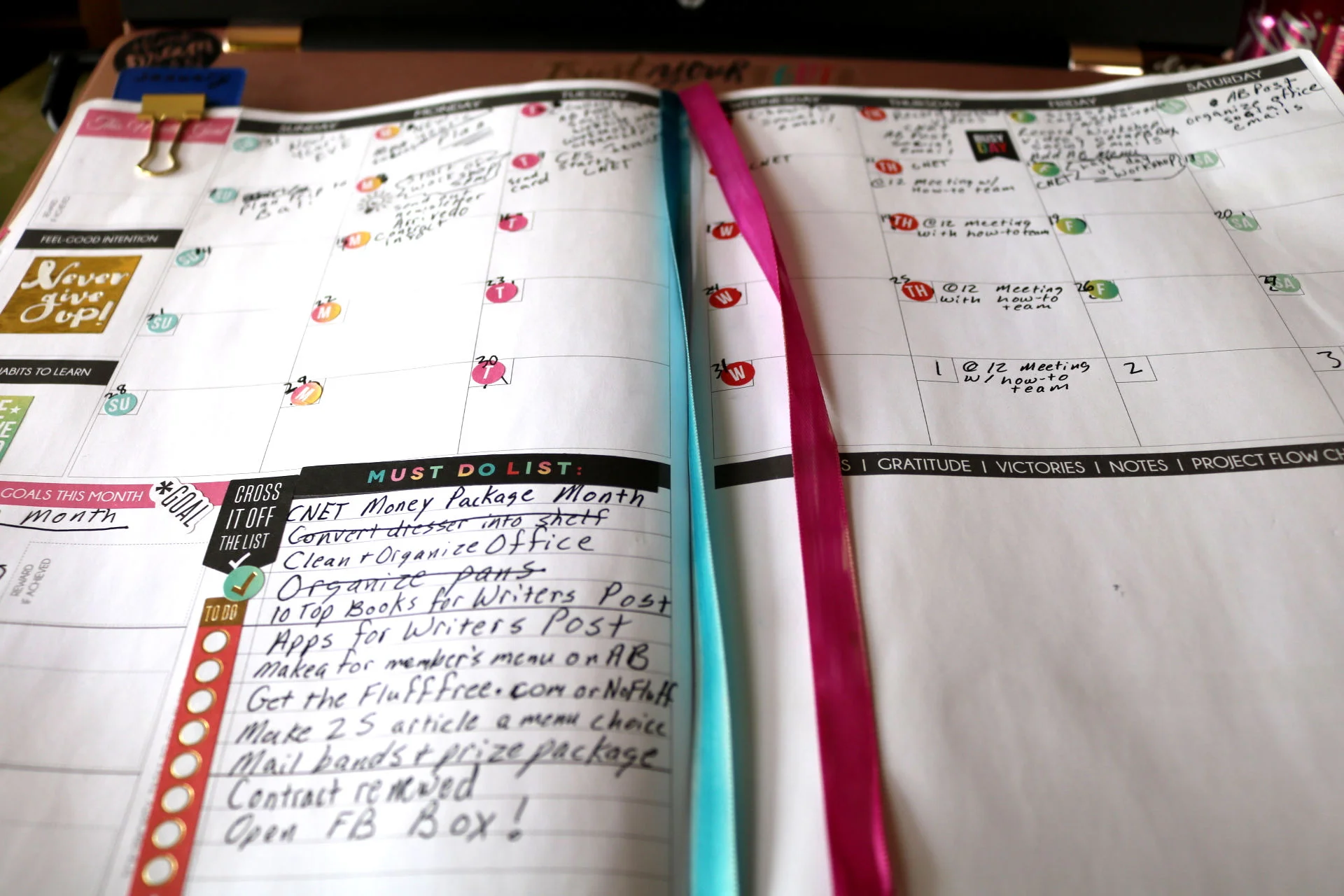
If you're a goal oriented person (I recommend setting goals to build your career, btw) get a planner that focuses on setting goals while organizing your day. I personally use the Law of Attraction Planner. If you want a digital organizer, try Google Calendar. It's free and you can set up alarms and reminders.

abundance planner
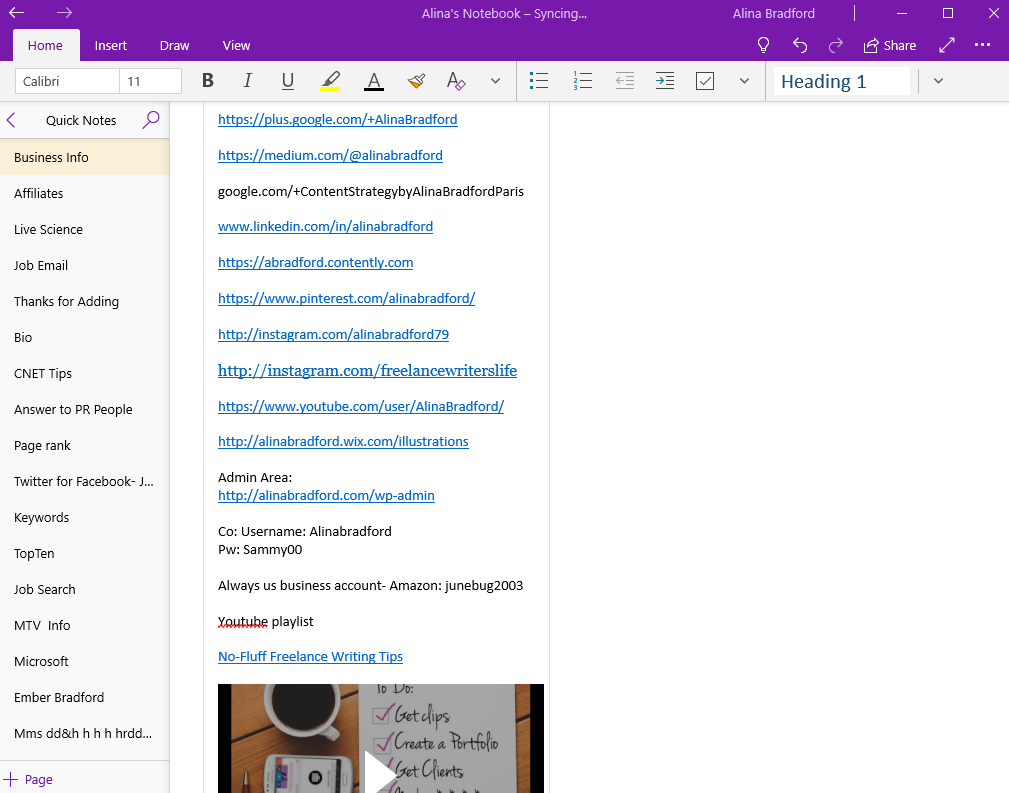
Another must have is a note taking app that you can use on your desktop, computer, phone and tablet that syncs all of your notes. I use OneNote and probably won't use anything else. I have a page with links to all of my social media and books so I can just copy and paste it when people ask for the information. I also have pages for writing guidelines for various clients, project ideas and email templates.
You create your own office
If you work from home, you will need to design a home office that is both inspiring and functional. More often than not, you’ll come across cute home office design tutorials that list all the furniture and DIY tools required to achieve “the look.” But they often forget to mention the cost of your work setting.
As a freelancer, you will need a decent desk, the relevant tech – from laptop to printer – and a storage facility. Remember that you’ll spend long hours working, so you need a comfortable and homely decor.

my desk
Here's a list of the basics:
Laptop or desktop. (I prefer a laptop so I can work from anywhere.)
Desk. (I use a standing desk, but for years I had an old door propped across small filing cabinets.)

Some kind of online portfolio or website. (I suggest just getting a LinkedIn page to start here is some more in-depth info on building a portfolio.)
If you're going to write for local businesses you'll need business cards. (Moo.com is my card maker of choice. Here are my cards, below.)

Business cards for freelance writers
Business cards for freelance writers
Need a break? It’s at your expense
Being paid by the project, you might be tempted to work almost 24/7. However, overworking yourself is not a practical solution. Not only will this decrease the quality of your work, but it can put your health at risk too. Be safe, my professional writer friend!
You do need to take a break to recharge your batteries. Holidays and sick days are not remunerated, though. What this means is that you need to evaluate your health against your finance: Can you afford to take a day off?
One of the things I love about being a freelancer is that I can do my work ahead of schedule so I can take a week or two off. My clients are happy, I get paid, and I get needed time off. I take several vacations throughout the year.

professional writer on vacation
Either you multitask, or you pay someone to do it
Working for yourself as a professional writer means that you need to be a marketer, an accountant, a sale representative and a freelancing expert at the same time. It’s not only exhausting to juggle between each job; it seems that multitasking also reduces your IQ and productivity.
If your budget is in the green (a simple monthly budget template can help you keep your finances in line), you should consider outsourcing. If it isn’t, you’ll need to rely a smart tool such as ToDoist to keep you focused on one task at a time. I ended up setting up some automated systems because I just couldn't do EVERYTHING. Now, I have an assistant.
Working alone as a professional writer affects your health
As a freelancer, you’re free from the office routine and the colleagues -- and drama! It also means that you are on your own. While it might seem like a blessing at first, it’s a lonely career, and it can become extremely depressing and stressful.
Indeed, the very nature of the gig economy undermines the need for security. Job insecurity can lead to depression, anxiety, emotional exhaustion and even heart disease, and that’s precisely what you will be dealing with every single day of your self-employed life, if you let it.

Me in my office.
My advice is to not be scarcity oriented, but abundance oriented in your freelance business. The more you think about the abundance that's coming your way, the more confident you will be, which will attract more clients. When I was starting out I called it "fake it until you make it". This mindset will not only make you more successful, it will also lessen the job security anxiety.
Additionally, loneliness is a natural feeling to experience, and it can become a burden when you can’t exchange with same-minded colleagues. Are your ideas still good if nobody hears about them?
For a lot of freelancers, hitting the wall of insecure isolation can break their career and convince them to move back to a more traditional employment situation. If you feel lonely, I suggest joining my Facebook group for writers. It helps to have others to talk to that know exactly where you're coming from.
Also, grab your laptop or your notebook and work at a picnic table at your local park or lake. Even setting up a workstation at your favorite coffee shop once a week can help with the loneliness. When I first started out, I took my kids to McDonalds and while they played on the playground I would brainstorm article ideas.

One of our trips to McDonalds.
Freelancing is freeing (haha) if you’ve got the right mindset and the appropriate expectations. It’s not a lifestyle that is best suited for everyone. Of course, the best way to find out if you like it is to try!
Need step-by-step instructions for starting your freelance business? My book, The Fluff-Free Freelance Writing Master Course, has everything you need, from how to find clients to setting up a fantastic portfolio.

3 SEO Basics You Need to Know in 2019
SEO tips that you need to know when writing articles and blogs in 2019.
If you haven't optimized your website with search engine optimization (SEO), then that may put you behind your competitors. What are you waiting for?
In today's digital world, no one questions the effectiveness of an SEO marketing strategy for attracting your ideal audience and clients. Using the right SEO basics to get your site onto the top positions on search engine result pages will not only result in more clicks for you, it will also help to build your credibility as a trusted authority within your niche. Here are the three SEO basics you need to know in 2019.

Keyword Research
Keywords may feel overwhelming to understand, but a couple tips and tricks exist to help people learn more about this topic. To optimize your site for specific keywords, you need to engage in keyword research. Of course, it helps to start with a clear company mission in mind first. Then, you want to specify your ideal audience.
Dotcom Design suggests that you want to identify keywords that are most relevant to your target audience. Once you have the background, it's time to narrow down to keywords that fit your niche and the people you are trying to attract. Then, optimize your content with the keywords you have found.
Use your keyword in the headline and once in the opening paragraph, but don’t keep repeating it thinking that it will up your SEO juice. Use synonyms when possible to expand your search reach on search engines. Also, make sure your keywords sound natural in your sentences.

Always Include a Call to Action in Every Article
Moving Company Reviews explains that SEO experts rate CTR (Click Through Rate) as a "very important signal" predicting organic search success. Calls to action (note at the end of an article or post that encourages readers to do something) are the difference between an informational and a sales-driven site. In fact, some say you can't run a successful marketing campaign without a successful CTA. This is your time to invite responses and appeal to your readers. You want your viewers to engage with your content, and your CTA invites them to do just that.
A CTA can involve various types of actions from filling out a form to downloading a PDF. They can also be subscription sign ups or buying a product. Don't forget to use active verbs for your CTA like subscribe, comment, learn more, buy, and order. You should add a CTA on every page of your site. An effective CTA increases audience conversions, and conversions are always good for business.
Remove Duplicate Content
In the past, duplicate content has been used in Black Hat SEO practices (Black Hat = Bad). Neil Patel talks about how it's vital to remove duplicate content as it will be picked up by search engine algorithms, and your site will get penalized by dropping in ranking. If your site has several pages that appear to be duplicates of each other, then you need to delete the doubles. Search engines will only present useful, relevant, content to its searchers. Duplicate content is considered spam.

Many people tend to be drawn to sites who use SEO basics like keywords to actively seek them out as opposed to cold leads. Since most people look up products and services on search engines before making a purchase, implementing the basics of SEO seems to be a logical decision for any online business.
To learn more about how to SEO like a pro read my article What is SEO: A Step-by-Step Guide for Writers.

Make it Work: Tips for Women in Small Business
You’re already an inspirational woman, who has big dreams of starting a small business from scratch. Your initial reservations are probably that many small businesses can fail within the first year of starting up, but you don’t need to worry.
You’re already an inspirational woman, who has big dreams of starting a small business from scratch. Your initial reservations are probably that many small businesses can fail within the first year of starting up, but you don’t need to worry.

If you’ve got the drive, passion and clarity for your business you will be soaring your way to the top in a flash. I believe in you!
Firstly, you need to set your initial goals and brainstorm the main innovations bubbling in your imagination. Make sure you do some market research to check out your potential competitors in the market, too. You might find a niche that you can maximize on, so roll with it if you gut is giving you good vibes.
Once your plan is mapped out in your mind you can start bringing pen to paper and get your invigorating ideas out into the world.
Inspire With Ideas
Your first ideas may well be vast and broad, but you need to come up with a plan to hone in on one clear cut idea. Don’t stray away from the goal you’ve set and try not to lose focus.

freelance life
If you’re starting up an online business you will need to get going with website and social media . These platforms can catapult your business idea from tiny to tremendous, so make sure you make the most of the prolific platforms out there.
When starting out, I overlooked the importance of having a "fan group" on social media. Don't make the same mistake I did. (Make sure your social media name echos your business name so you’re easy to find, too.)
Your ideas are what makes you the firecracker business woman you are, so don’t rush yourself on coming up with a finalized plan. Even the greatest of businesses are constantly flourishing with new thoughts, so keep a notepad with you at all times and scribble down those light bulb moments as soon as they come to you.
Refining Finances
Part of your planning stages should involve a detailed map of your finances. You may want to consider low-risk options first, so don’t throw all of your money into the business all at once.
Consider looking into a line of credit, which will make cash available to you, but has a lower APR than a credit card. Set yourself a start-up budget and write down your method for making this money back.
Don’t overlook women small business grants. These grants can get you up and started in your business without going in debt. According to NerdWallet, you should look for grants here:

how to write headlines
Research is key when it comes to setting your prices so make sure you stay competitive with your product or service. The amazing things about being a boss is that you have complete control of your own decisions and finances. Being financially independent is most woman’s goal and you have the power to make that happen. With a solid financial plan and planned out cash-flow you’ll have this in the bag.
Let Your Creative Freedom Flow
As soon as your business is ready to hit the masses you have the freedom to run with your creativity. Keep your brand on point and allow it to progress and flow freely as the industry changes. Stay one step ahead of your competitors by always listening to your clients and consumers. They will give you honest feedback on where your business needs to go.
There will undoubtedly be a few bumps in the road when starting up a small business, but you have the strength to catapult your ideas into the big wide world. You should always aim high and never hold back. Feel brave and empowered and set your business ideas free!

5 Ways to Make You Stand Out in the Writing World
There are so many writers out there. It may seem like it is impossible for you to gain any attention from potential clients and readers. Don’t worry, No-Fluffer! I have your back. Use these five tips to flood the world with your awesomeness.
There are so many writers out there. It may seem like it is impossible for you to gain any attention from potential clients and readers. Don’t worry, No-Fluffer! I have your back. Use these five tips to flood the world with your awesomeness.

#1: Create a badass LinkedIn profile
Of course, LinkedIn is a platform that is valuable for a whole range of people, but it’s a good place to put all of your key skills and writing history out there into the world. LinkedIn profiles are something that most people will check out before they decide to employ you. Don’t just add bland facts to your profile, though. You’re a writer, so get inventive if you can! Write the summary like you’re talking to a friend. Use some wit in your headline.
Here’s an example of a fab summary:
If you want cookie cutter articles, then you’ve got the wrong writer. If you need to increase your pagerank with informative, engaging content and copy that furthers your branding efforts, I can help. I shy away from bland, boring content and give readers, and search engines, what they want: SEO ramped articles that are informative and entertaining.
Also, be sure to use a good, quality headshot that spotlights your personality and use a good image for the background banner. Make sure the banner matches the feel of your brand. For example, if you are a tech writer that has a quirky writing style, you would want an image to reflect that, not a boring stock photo.
Bonus tip: Here’s how to find gigs on LinkedIn.

#2: Use SEO to push your writing up in the search engines
You may think that your writing will just never break through, particularly because most of it is sitting on the 20th page of any given Google search. How are people even going to discover you? It’s a good idea to get in touch with an SEO agency, and see what you can do to get your best pieces to the top of search engines. This will really help to improve your brand, and spread your reach.
Don’t want to pay someone? Here’s my best SEO tips for writers.
#3: Write for as many different people as possible
When it comes to getting your name out there as a writer, write as much as you can. This will give you more stuff to add to your portfolio, and it will also mean that stuff is out there for people to read. Variety is key here, so don’t just write for your own blog or website.
Unless you’re writing for yourself, though, don’t write for free. Here’s 30+ sites that pay writers.
#4: Get good at social media
Social media is one of those tools that is really useful for marketing, and as a writer, it’s great because it keeps you in people’s minds. Post regularly, about things that are important to you, and keep it clean. You don’t always have to go for those PG non-political posts, but think about whether it is going to be detrimental to you in the future before you click ‘send tweet.’
Most of all, let your personality out and connect with others. Building an online world for your business is important.
And of course, share every single article you write on your social media accounts. You may just catch a potential client’s eye with a well-written article or blog post.

#5: Ask people to review your services
Having a good deal of reviews behind you - that are accessible to people online - is a great way for you to improve your personal brand. Every time you work for somebody, ask them to give you a few sentences that sum up their experience. The more recommendations or testimonials you have, the more you look like a well-established writer on the web. Post them on a dedicated page on your website so potential clients can see how great you are. Here’s my testimonial page.

Here's the Legal Stuff You Need Before Becoming a Freelance Writer
Here’s what US freelance writers need to start their business legally.
If you wake up one morning and decide that you want to start up your own business from home, or you fancy working on some freelance jobs on the side of your full time hustle, you'll want to make sure that everything is legal before you go out and start to make money. Here’s what US freelance writers need to start their business legally.
A Name
Although you'll want to pick a name which suits you and the type of freelance writing business you want to start, you don’t need to do this straight away. Use your own name. I’ve used my own name as a business name for 20 years. That’s perfectly legal.
If you’re dead set on starting off with a business name, you’ll need to register it with the government before you can use it legally because it will become your “doing business as” (DBA) name. The US Small Business Administration lays out all of the rules for registering your small business name here.
Employer Identification number (EIN)
An EIN is the tax number that you will use to identify your business. You'll need it to work for clients, do your taxes and much more. Think of it as your business' Social Security Number.
Here’s the government site to sign up for a free EIN.
Business License
The last thing you will need is your business license. Many cities require that you have a license to own a business before you can start making money.
It will only take you a few minutes to fill out the form, and you will need to use your EIN to identify your business. To find out what licenses you’ll need for your area, contact your local courthouse.

5 Things You'll Find in Most Writing Contracts
When a client sends you a contract, there are going to be quite a few stipulations they are going to expect you to agree to. Let’s look at some of the most common terms and examine how they will affect you in the long-run if you sign the freelance writing contract.
When a client sends you a contract, there are going to be quite a few stipulations they’re going to expect you to agree to. Let’s look at some of the most common terms found in freelance writing contracts and examine how they will affect you in the long-run if you sign the contract.
*Note: I am not attorney, so please don’t take this article as legal advice.
Copyright
The copyright section (also called Assignment of Proceeds, Assignment of Inventions and Work for Hire) basically lays out who will own the work after it is accepted by the client.
There are several ways this section can play out:
They want all rights, world-wide in digital and print, which means they own your work and you can’t do anything with it after your client accepts it and pays for it.
They only want digital rights, which means you can reprint your work in magazines, newspapers or books if you want.
They only want US rights (or rights for whatever country), which means you can publish the work in other countries.
They want print rights, which means you can publish the piece online, but you can’t publish it in magazines, newspapers or books.
Here’s an copyright excerpt from a contract I took on years ago:
The Writer acknowledges and agrees that all of the results and proceeds of every kind of Work(s) rendered by the Writer for the Publisher—including, but not limited to: articles, stories, reports, memoranda, drawings, photographs, ideas, suggestions, titles, designs and other work—shall be, and hereby are, assigned to the Publisher. The Publisher shall have the perpetual and worldwide right, amongst all other rights of ownership, but not the obligation, to use and exploit the Work(s) throughout the universe in any manner whatsoever, in any and all media, now known or hereafter devised.
Typically, freelance contracts will stipulate the company you are doing the work for owns all rights to the piece (as long as they pay for it). Keep an eye out for clients that allow you to keep certain rights, though. Keeping certain rights will allow you to earn money off of the work more than once.
For example, say the client only wants digital rights. You can go on and sell the piece to a magazine or put it in a book you’re writing. You earn twice! Cha-ching!
Independent Contractor Status
This section basically states that you aren’t employed by the client and that you work for yourself. By contract, a freelance worker or independent contractor:
Is not covered by employment and labor laws
Provides their own tools and work space to complete the job
Invoices the company to be paid
Pays their own taxes
Is responsible for any legal actions that comes about due to misinformation or plagiarism in the work

It’s also important to remember the legal definition of an independent contractor. According to Business Dictionary:
To be legally designated as an independent contractor, an individual must (1) be free from the control of the client, (2) be able to exercise his or her judgment as to the manner and methods to accomplish the end-result, and (3) be responsible for the end-result only under the terms of the contract.
So, if a company tries to get you to clock in, use only their computers or work only on-site, you are an employee, and the company is committing an illegal act by calling you an independent contractor.
Confidentiality
The confidentiality section goes over what the client wants you to keep secret about their business. This can include trade secrets, how much money you make writing for them, their hiring process and more. Be sure to read this section and commit to memory what they don’t want you to reveal.

Here’s an example:
You will not disclose nor use for your own or another’s benefit, during or after the course of rendering services for the Program, any information not publicly known (hereinafter “Confidential Information”) relating to the Company or any of its parent, affiliated or related companies, unless authorized in writing by the Company. Confidential Information shall include, but not be limited to, any information or data concerning any aspect of Producer’s or Company’s operations or existing or future programming, or any other information regarding the Program; administrative and production procedures and manuals; business and financial plans, projections, results and prospects; computer programs and software; customer, employee, stockholder and supplier information or lists; Equal Employment Opportunity data, employee surveys, upward feed-back data, activities, plans; research efforts, trade secrets, Proprietary Property and technical information; trademarks under consideration; terms and conditions of the Company’s contracts and agreements; as well as any information disclosed to the Company in confidence by third parties. You must preserve Confidential Information even after your services hereunder end.
You shall not make any statements to the press, any media service or other third party or distribute or circulate any written release, promotional literature, news story, advertising publicity or communications of any kind to any other party regarding the Company or any of its parent, affiliated or related companies, its programming services, operations and activities without prior written approval from the Producer or the Company.
Services and Compensation
The services and compensation section is my favorite. It lays down what your scope of work is and how much you’ll get paid. Pay close attention. Some clients try to sneak extra work into this section that you didn’t agree to initially. If you’re not comfortable, don’t be afraid to ask for changes.

Here’s an example of this type of section:
Our agreement includes:
Blog Posts
2 Weekly Blog Posts between 300 to 500 words on the topic areas of content marketing, native advertising and audience development, including the CTA.
1 or 2 Monthly Linkedin Pulse Articles between 300 to 500 words on the topic areas of content marketing, native advertising and audience development. Articles will by posted to my Linkedin Pulse under my name and will include a link or CTA to the Ideal Media site.
1 Monthly Guest Post around 500 words on the topic areas of content marketing, native advertising (though the word "advertising" will be used sparingly) and audience development. Finding guest posting arrangements will be worked on together.
10 to 11 articles, total.
XYZ Media will be invoiced $1,000 per month.
Social Media Services
Additionally, writer will leverage social audience, especially via Twitter and Linkedin to promote these posts and the new blog site. Writer will also include any additional posts about the company needed. Included in this service will be the use of analytic tools to research the best times to post for the best engagement.
XYZ will be invoiced $500 per month.
Payment for Work
Here, your client will specify how soon you will be paid. Some will pay on delivery while others will stipulate a 15, 30 to 45 day timeframe.
Here’s an example:
Writer, for authoring said Work(s), shall receive payment agreed upon for each article completed, submitted, and accepted by the Publisher. The Publisher will pay the Writer by check on 15th day of the following month for all Work submitted and approved by the Publisher. If the 15th occurs on a Saturday or Sunday, payment will be made the following business day.
Want to get more high-paying clients so you can sign more contracts? My book teaches you how I make $100 to $200 an hour freelance writing from home with real, actionable tips: The Fluff-Free Freelance Writing Master Course

A Freelance Writer's Guide to Dealing with Digital Contracts
Here’s how to sign and send digital contracts for freelance writers.
Say you land a new freelance writing client and they send you a digital contract. How do you sign it and send it back? A few days ago, I got this email from a No-Fluffer with similar concerns:
Hi, Alina!
I'm one of your email subscribers and fans. I wanted to ask a question regarding freelance contracts:
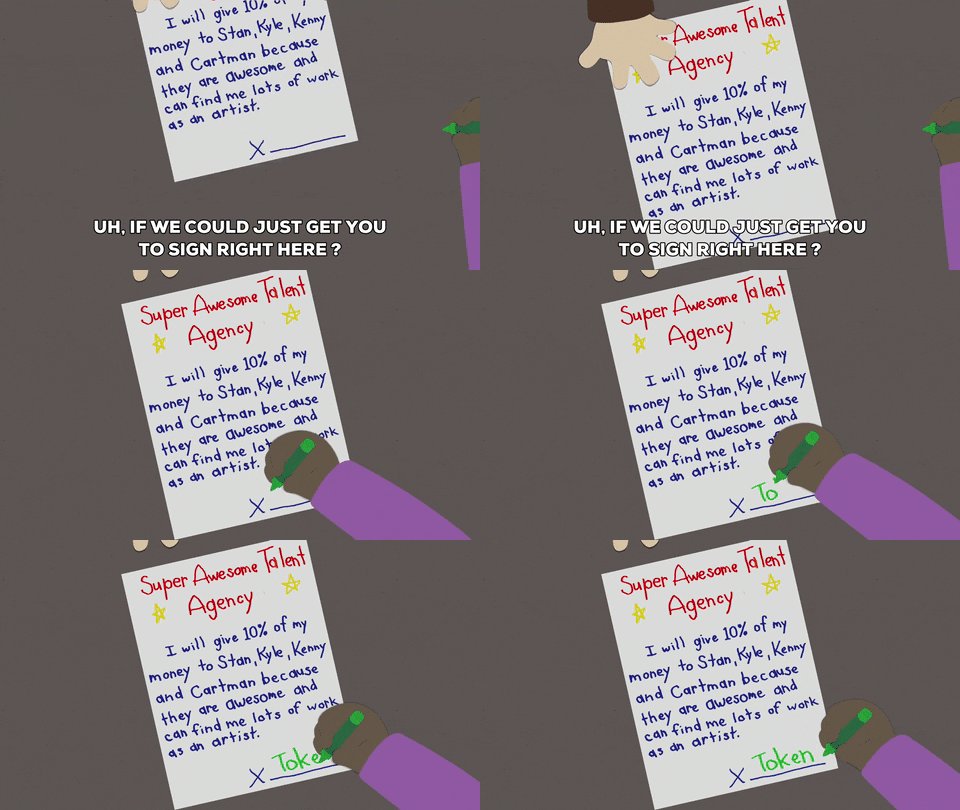
How do these contracts work? I mean, how do you actually send them? Do I need a fax machine as a freelancer? When a client says I have to sign a contract, how exactly do I do that?
Full disclosure: I don't own a fax machine.
Thanks for reading!
Tara
Those are all great questions, and I bet many other new writers want to know the answers, too. So, I decided to whip up a post about how to deal with client contracts.
How You’ll Receive a Contract
There are a few ways that clients will send you a contract. There’s the DocuSign, PDF or a Word document.
The easiest way to deal with contracts is through DocuSign. Basically:
Your client sends you a DocuSign link in an email
You sign up for the site’s free account
The site will add the client’s contract to your account automatically
You sign everything digitally
Now, not all clients will be this easy. Typically, you’ll get your contract as a PDF or Word document. This makes things much harder because you would need to print it out, sign it, scan it and then email it back.

How to Skip the Steps
I hate the print, sign, scan process (mostly because my printer/scanner is always on the fritz), so I came up with a work-around.
If the contract is a PDF, there are two ways you can fill it out. Sometimes I take a screenshot of the page I need to sign, then use a photo editing app to add my signature and date. I keep a jpeg of my signature that I can place on any contract using the layering tool, then I use the text feature to add the date. To finish, I save the page as a jpeg and email the it to the client.
If you don’t want to fool around with photo editing software, you can also use an online site called PDFEscape. It makes the document editable (meaning your can add your signature, dates, etc.) and it’s free. Once you’re done, the site lets you download a copy that you can email to your client. I used PDFEscape for one of my last freelance client contracts.
If you get a Word document, the process is much easier. You can use the insert tool on any word processor app (like Google Docs) to add your saved signature jpeg and then just type in the date. Save the document as a PDF and you’re good to go.

How to Create a Signature Jpeg
Okay, may be a little lost when I say I have a signature jpeg. It’s literally just a photo of my signature. You can make a quick one of your own by writing your signature on a piece of white paper and then taking a photo of it with your phone. Crop your signature image very closely so there isn’t a lot of white space around the letters so it is easier to place on contract signature lines. Finish off by saving the image as a jpeg.
You can also open a new, white canvas using a drawing or photo editing app and write your signature using your finger or stylus on the touchscreen. Then, just crop and save it.
Email the image to yourself so you can download it onto your computer or laptop for whenever you need it.
What About Faxing?
Thankfully, most people don’t ask you to fax anymore. If they do, you can always go to Office Depot or FedEx and they will fax your contract for a small fee.
Got any questions? Let me know in the comments!!

How Poor Personal Credit Could Affect Your Business
Whether you find yourself struggling to get approved for loans and credit or paying higher interest rates on your mortgage, bad credit will follow you around everywhere you go and complicate your whole life.
We all know our credit rating is important. In fact, our credit score is one of the most significant numbers in our lives. A poor credit score can affect your life in a multitude of ways, none of them good. Whether you find yourself struggling to get approved for loans and credit or paying higher interest rates on your mortgage, bad credit will follow you around everywhere you go and complicate your whole life.

You’re not saved by your business credit score, either!
One of the most common but fatal mistakes that new entrepreneurs make is to assume that their personal and professional credit scores are separate. While your business and personal credit scores may be maintained separately, they are intimately linked with one another. If you have a poor personal credit rating, it will still affect your ability to secure credit for your business.
Why Does Personal Credit Affect Your Business?
If you are a new and unproven entrepreneur, you will need to convince banks that it’s worth betting on you and extending you credit. If they don’t think that you’ll be able to pay them back, too bad. They’re unlikely to approve any loans. In the absence of a solid track record for business, they may well use your personal credit score as an indication of how trustworthy you are.
This makes sense.
The lender needs more than your word that you are going to stick to your payment plans. They want some kind of certainty that they will ultimately make money back on their investment. Your credit score is the best indicator they have of how reliable a debtor you are likely to be.
If you have a poor personal credit score, there are a number of problems it can cause. We’ll take a look at each in detail below. Click here to find out more about some general tips for raising your credit score.
Problems Launching Your Business
In order to launch a new business, you often need startup capital. There are numerous costs associated with starting a new business and if you aren’t able to cover even one of them, it can prevent you from launching your business at all. Finding funding to cover these startup costs is one of the biggest obstacles facing any new business. These costs include securing licenses and permits, equipment, supplies, marketing and covering the payroll.

If a business doesn’t have this finance in place from the very beginning, it will seriously struggle during its earliest and most vulnerable days. There are plenty of ways that businesses can try and work around a lack of funds, but none of these are going to be as effective as an adequately funded business.
Remember, bad credit is called bad credit for a reason. A bad credit score makes every aspect of launching and running a business that much more difficult. A poor credit score can prevent you from being able to launch an otherwise viable business and in some cases, can force entrepreneurs to give up their dreams entirely. If you want to avoid falling into this situation, make sure that you stay on top of your credit commitments, debts, and other financial obligations.
Problems Securing Loans
Credit scores in the US range from 300 - 850. If your credit score is too low when a company performs a credit check, they will deny you loans outright. Being rejected for loans can end up seriously throwing a spanner into the works as far as your plans are concerned. Although, there are high risk business loans option that you can still explore.
Banks are much more selective about who they will give small business loans to today than they were just a decade ago. You will, therefore, need to be in a better financial position to secure funding today than you would have been ten years ago. This can make securing funding from traditional lenders an uphill struggle, even if you have relatively good credit. If you can’t obtain funding through a traditional lender, look to alternative funding sources.

The drawback to using one of these alternative funding sources is that they will often charge much higher interest rates than a bank or traditional lender would. Lenders who are backed by government agencies like the SBA are able to offer much lower interest rates to borrowers.
You should treat a small business loan just like any other investment, meaning you need to weigh up how much it is going to cost and what the risks are. The lender will be doing similar calculations on their end to determine whether it makes sense to take a chance on your business or not. Lenders charge interest for this very reason; it is both a fee for the services that they provide and compensation for the risks that they take in lending money to you.
If your personal credit score is bad, lenders will see you as being riskier and will charge you a higher interest rate for any loan they provide.
Inventory and Supply Problems
Most freelance writers won’t have this problem, but I’m going to talk about it anyway, just in case you ever need the info in the future.
Business loans are commonly used when a business needs funds in order to ensure it can maintain appropriate stock and supply levels. It isn’t just lenders that care about your credit score. If you want to open a line of credit with one of your suppliers, they’ll need to be relatively sure that you will be able to pay it back.
If you want to secure some new utilities for your business, the supplying company will want to take a look at your credit score, too. If you have a poor credit score, they may well ask for an additional deposit from you to cover the extra risk that you represent. This is true for most businesses that provide you with any kind of loan, credit or long-term service.

What to Do About Bad Credit
Fortunately, if you do discover that you have bad credit then there are a number of things you can do to remedy this. Don’t let bad credit ruin your entrepreneurial dreams. Take control of your finances and start repaying your debts today.
Here are some things you can do:
Pay down the balance on your credit cards.
Pay your bills on time every month.
Pay of debts like car loans and title loans.
Take out a new credit card but only use it to pay one bill a month and pay the card off every month.

Have a Blog? Here's How You Can Profit from Your Existing Content
Blogging is a great hobby, but it can also easily be turned into a profitable business, if you try these tips.
In case you have been blogging for years just for fun -- or to connect with like minded people -- chances are that you already have built-in audience ready to listen to your opinion and recommendations. It might be time to take the next step and monetize your website to earn some extra cash while you do what you enjoy. While many websites tell you you can make money by setting up your blog, only a few experts talk about using your existing content to create profits. Read on to get some ideas.

Compile an eBook
If you have enough content on a certain topic, you could easily create a guide or an ebook you can sell online. While you might need to do some editing and extra writing, making use of your free content this way can prove to be profitable long term.
Here are two of my ebooks:
The Fluff-Free Freelance Writing Master Course
The No-Fluff Guide to Writing Web Content
Turn Articles Into a Video Training
Apart from ebooks, you can also create your own video training that you sell on your own site or through affiliates. Whichever method you use, make sure you get a professional camera (or a phone with a really good camera) and write your scripts before you sit down.
Practice video creation through blogging, and invest in editing software to make your product professionally finished.
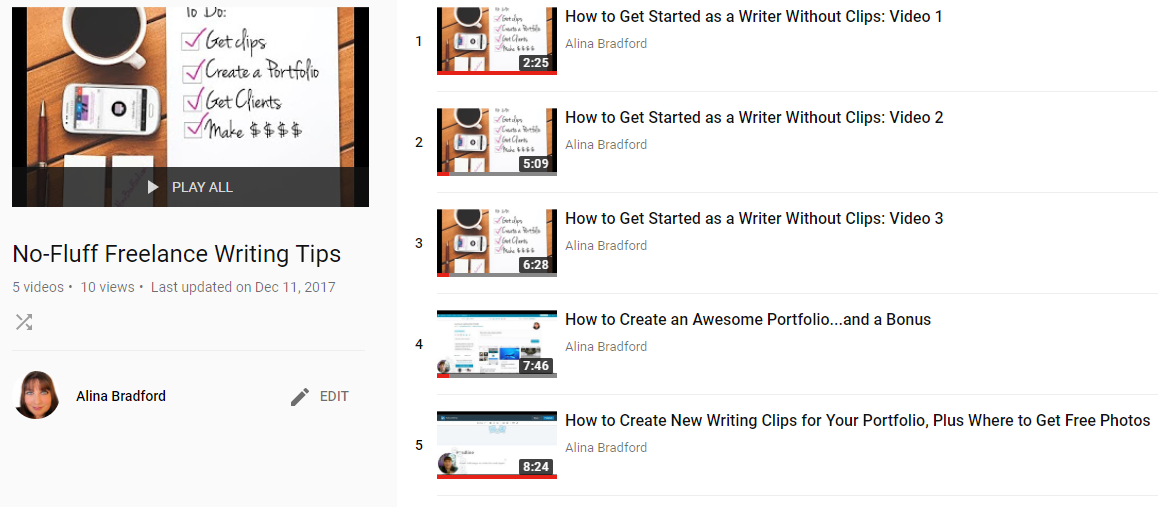
I put my videos on SkillShare and make money from ad views. Here's a look at my playlist for writers on SkillShare. I've had a lot of luck posting there.
Offer Paid Guest Posts
Having a lot of subscribers and comments on your blog doesn’t only make you feel good, but it can also help you get the attention of companies looking to place their links and ads on your site. Advertise your site on different platforms and offer a flat rate for article placements.
Be sure the company has strict guidelines and they don’t intend to spam your site with low quality links.
Add Affiliate Links or Google Adwords
The simplest way of monetizing your website is by adding Google ads or affiliate links to your page. Sign up for a CPA affiliate network and choose the offers that are most relevant to the topics you regularly feature on your blog.
If you use WordPress as your blogging platform, you might be able to automatically place your link in each past post based on the right keywords using a plugin.
Some places to get affiliate links are:
Set Up a Side Business and Promote Products
If you regularly write about home improvements and furnishings, and you have your favorite items, you can create a store on your blog where your visitors can purchase the items through you. The good news is that you don’t have to deal with shipment and administration if you use a dropshipping service.

4 Essential Survival Tips for the Self Employed
Being self employed definitely has its moments. It’s hard not to feel a slight smug satisfaction for those of us able to spend the working day sat in a coffee shop with a laptop, free to do as we please, so long as we hit the deadlines of course. However, being self employed also comes with a number of unique challenges.

First and foremost, as a self employed individual, you will need to find your own work. Whether you work as an individual freelancer or you have aspirations of starting a fully-fledged business, hiring staff, the whole works, you will need to be able to find people to buy your services. Being self employed also means that you often don’t have a guaranteed salary from one month to the next; there will be busy times and quiet times.
If you are to stand a chance of making it in today’s hyper-competitive job market, you will need to get your business off on the right foot and then do all you can to maintain good habits. Fortunately, this is more achievable than many people realize. Being self employed can be a nightmarish and incredibly stressful experience, but it doesn’t have to be.
Here are some essential survival tips to ensure that you and your business can weather any storm you might face while self-employed.
Learn to Budget
It is hard to overstate just how important this advice is. First, let’s be clear about what budgeting isn’t. Budgeting is not having a vague plan of how to spend your money, and budgeting is not knowing how much money you have. Budgeting requires you to know exactly how much money you have, exactly how much money you are going to spend, and exactly what you are going to spend it on. Budgeting also means forecasting the amount of money you expect to come in and out of your business in the near future.
The first thing you want to do is get all of your business finances in order, so that you can establish exactly how much money your business has on hand. Once you have this information, you can then work out how much you will need to spend on basic upkeep such as costs of staff and premises.

You don’t need to be a math whizz to deal with the numbers. It’s a good idea to record your financial information on a spreadsheet. Check out this handy guide that will help you create a spreadsheet for your business accounts. If you don’t have Microsoft Office, Google’s cloud-based Sheets app offers the same functionality for free.
Don’t just budget in your business life either. Budgeting in your personal life is vital when you are self-employed. Should the worst happen and your business runs into difficulty, you may well need to dip into your personal finances to keep it afloat, so make sure that this won’t have a devastating impact on your finances. If your business is just about breaking even but you need more money to live on, consider whether income based loans might be right for you. Whatever funding sources you use, make sure that you consider them within the context of your wider budget.
Don’t Skimp on Equipment
It doesn’t matter what your job is, you have to make sure that you have the right tools for the task. If you are making money teaching kids how to play the guitar, make sure that your guitar and amp are in perfect working order and well maintained. If you are an app developer, ensure that you have a capable computer to code and test your apps on. If you are a writer, make sure that you have a setup that allows you to write freely and comfortably.
Investing in the right equipment will benefit your customers, who will be able to receive a higher quality of work, but it will also benefit you. You might be surprised how much difference the smallest of changes can make to your productivity and overall happiness. Think about the tools that you use every day, whether they are literal tools, pieces of software or anything else that is integral to your business.
Shop around to make sure that you have quality equipment that you enjoy using. The more comfortable and happy you are in your job, the more productive you will be.
Get Networking
Networking is a staple part of any entrepreneur’s diet. It is through networking that you will make new contacts and find opportunities that would otherwise have passed you by. You never know which of the people you meet might be most helpful to you in the future, nor do you know what opportunities there will be for you to help them.
Every interaction you have through your business is an opportunity to form and solidify connections with other people and businesses. Don’t let these opportunities go to waste! Always be thinking about how your interactions reflect you and your business. If you aren’t the most sociable person, try your best to swallow your anxieties and get stuck in regardless. It might take you time to build confidence, but it’s better to start now than later.
Use Social Media
Social media isn’t for everybody. There are a number of reasons why we should be encouraging one another to dial back our usage of these platforms, but for businesses they are invaluable. Facebook, and to a lesser extent other social media platforms, are ultimately very sophisticated interactive advertising platforms. The purpose of social media is to target adverts as precisely as possible to individuals.
Of course, your business would be crazy not to get in on this action. It doesn’t matter whether you are operating as a sole freelance trader or you have a full team behind you, social media will help you to get your message out there as fast and efficiently as possible.

This kit will help you get started with marketing on social media.
Making it as a self employed person isn’t easy. There will inevitably be ups and downs along the way. However, for those who are able to whether the storm, being self employed is a wonderful experience. As long as you are prepared to fight to show your worth, you stand a chance of making it to the top.

The Reviews Are In! Writers Love the The Fluff-Free Freelance Writing Master Course
I don’t do this often on my blog, but I wanted to take a minute to toot my own horn. My book The Fluff-Free Freelance Writing Master Course has broken the top 100 of Amazon’s Best Seller Rank in all three categories that it is listed in on Amazon.
I don’t do this often on my blog, but I wanted to take a minute to toot my own horn. My book The Fluff-Free Freelance Writing Master Course has broken the top 100 of Amazon’s Best Seller Rank in all three categories that it is listed in on Amazon.
Plus, I’m getting rave reviews through Amazon, email, Facebook and even on Instagram.
Here’s some reviews from Amazon:
Jenny Gage reviewed: Fluff Free For the Win!! Alina! This is a complete gem!
I've taken courses, read countless "How to Become a Freelancer" freebies, and watched soooo many YouTube videos about online freelancing.
I love your straight shooter style and because of your tangible and practical action steps, I feel like I could ACTUALLY do this for real.
Having spent an entire year hearing so many differing opinions and suggestions, I was burnt out and overwhelmed by all of the decisions and methods out there.
You piece things together simply, and transfer the responsibility to the reader without requiring the purchase of thousands of dollars of add ons like other online coaches.
Can't wait to report back with my success!
Megan reviewed: A No-Nonsense "How-To" Guide and I LOVED it. As a newly minted freelance commercial copywriter, the biggest benefit of the book was finding out that I'm NOT ALONE in handling issues such as pricing, "interesting" offers, and handling challenging clients. Some practical social media steps, too! It's clear that this was written by someone who really knows what it takes to make it and I'm so happy I ran across this book! Recommended for writers at ANY stage of setting up/ running their business.

Apple reviewed: Alina Bradford has gifted newbie freelance writers with this wonderful, insightful, and useful guide. If you're serious about your writing career, this step-by-step program will get you up and running in a short amount of time.
In a nutshell, here's her approach: Avoid writing for crappy pay, especially no pay. She then gives you the tools to land well-paying gigs faster than you probably think possible.
Deanna Balestra: I’ve been a freelance writer for years but I love to support other freelancers by buying and reading their books. This is a great book for new writers looking for a place to start - from finding jobs to writing good content. Many actionable steps and direct links to resources. Also written with a pleasant and funny personality.
Kristi Weinert: Full of pertinent info to get into the Industry. All Freelancers should read before beginning, to help them along their journey.
Cin Clinton: This was the best I've found.
I feel like I've read 50 freelance writing books in the last two months, but this one had me running out to my computer late at night to get busy. I like the writing style and the way she just cuts the crap. I feel like they all make wild promises, but this book really helped me. I feel less intimidated and overwhelmed and like I can make a plan for myself. Anyway, maybe this writing style just clicks with me or something. I'm not willing to give this book back yet. I need more time with it. I'm applying to 12 different places tomorrow. I'm excited. I feel like I'm going to start making more than a penny a word soon because of this book, so thank you. I mean it.
Pen Name reviewed: This book really lit a 🔥 under my butt. So many helpful tips and links that are immediately useful. Not just theory or "fluff," but real life freelancing advice for those starting in the field.
Kindle Customer: I'm a new freelance writer and I was looking for help in where to start. This book is exactly what ideas looking for! Helpful tips for writers block, methods for looking for jobs, what to charge and how, I recommend this to anyone looking for more information on how to improve as a freelance writer!
Alexa D. reviewed: Do you wish to get out of your current job for one where you can write about whatever you want with good pay? Please read The Fluff-Free Freelance Writer Master Course Workbook. This book offers great advice on meeting clients, SEO, social media accounts, and beating writer's block.
I've read freelance writing books before. Most of their content was either too thin or overloaded. This book simply answers my questions and concerns perfectly.
Make sure you do the book's writing assignments. You'll feel better if you do!
Wanda F. Sewell reviewed: This has given me some good insight. It's been a pleasure learning from Alina ... This has given me some good insight. It's been a pleasure learning from Alina Bradford.
S. E. Lentz reviewed: New and useful ideas for freelance writers -- as easy and enjoyable to read as it was helpful. It earned its five stars.
This book gave me some great ideas for finding new freelance writing jobs -- ideas that no other book on freelance writing had offered. So, for that reason alone, this book earns its five stars. Besides that, it was as easy to read as it was helpful and encouraging. The author clearly has a passion for helping fellow freelance writers make good livings with their skills (even as they work to improve them). I'd recommend this book to any freelance writer.
Maria H Blanco reviewed: The Title Says It All Alina Bradford offers succinct solid advice on organizing your work as a freelance writer. This quick read is a roadmap to success that you will want to refer to over and over again.
A.Reader reviewed: Great E-Book for Aspiring Writers Lots of good tips for aspiring freelance writers and bloggers, including how to find your niche, SEO, and blogging. Definitely worth the read!
June Ginchereau reviewed: Excellent and concise guide for new freelance writers. I loved Alina's down to earth approach. I recommend it for all freelancer newbies.
Have you read The Fluff-Free Freelance Writing Master Course yet?

Cold Calling For Business: Tips And Tricks
If you are considering adding cold calling to your client hunt, here are some of the things you will need to do to make it work effectively for you.
Cold calling is form of marketing and sales which has been used for decades by writers looking for clients. It can often be seen as a dreaded method in gaining customers and sales, but is still one of the main tools used by freelance businesses today.
If you are considering adding cold calling to your client hunt, here are some of the things you will need to do to make it work effectively for you.

1) Focus on the goal
The first thing you need to think about is the aim of your call. It is not simply about making a sale immediately, it is about getting the trust of the customer and in turn having THE CHANCE to make a sale further down the line. Think of it like laying down the foundations for your relationship with the customer.
2) Research your market
You need to make sure that you fully research your potential markets and target your calls to the right people. It might take some time to conduct your research, but it means that you will be able to find out more about the people you are calling and make friendly conversation with them when you call. You can then use call analytics tracking to see how successful each call was for your purpose.
3) Use social media
Find people who are in the same LinkedIn group as you to call. It will give you both something to talk about and will mean you have a much better chance of getting a sale out of them due to your common bond, rather than just picking someone from the air.
4) Prepare an opening statement
You don’t want to sound like you're reading from a script (even if you are) because the person on the other end of the phone will likely hang up on you. Make sure that you can sound as personable and casual as you can, and be polite. Your opening statement could be something like ‘is this a good time?’ You are showing the person that you care about their time and you only want to have a chat.
5) What should be in the opening statement?
When you are coming up with an opening statement for your call you will need to add a few different things:
An introduction
A reference point (i.e what the call is about)
The benefit of your product or service
Transition into conversation
6) Prepare a script
Like I said earlier, the last thing you want to do is come across sounding like a robot, but in the same breathe you need to have a clear direction for your call so that you can meet your goals.
Writing a script with questions and statements will help guide the conversation in the way that you want and give you a better chance of a sale. Make sure you have detailed information about your company and products on hand because you will likely be asked a ton of questions.