

How to Use Mind Maps for Article Ideas
When you write for several different outlets, coming up with a continuous flow of article ideas can be a challenge. When I get stumped, I break out a piece of paper and draw a mind map. Mind maps are a form of brainstorming where you use colors and shapes to stimulate the brain.
Here's how I create article ideas with mind maps.

I start by drawing a shape of the thing I want to write about (or just a circle). Right now I need to come up with some art article ideas, so I drew an artist's palette.
I write the subject inside the drawing.
I draw wavy lines spiking out from the drawing, with each line a different color (usually).
On each line, I draw a word that comes to mind when I think of the central idea.
Then, I draw branches coming from those branches focusing on words I think of when I think of the words on the larger branches.
By this point my brain should be connecting words into ideas that can be turned into articles. With my mind map I came up with the article Recycled Art Studio Furniture and Gear.
Try this technique out and let me know how it works for you!
Here are some other mind maps I've made:

how to brainstorm blog posts
how to get ideas
Here's how other people do mind maps:

30+ Writing Tips from Writers Like You
I find writing ideas and inspiration in a place you may not have thought of: Instagram. Here are some of the fantastic tips for writers I've found on my feed and some from my own Instagram account.

I find writing ideas and inspiration in a place you may not have thought of: Instagram. Here are some of the fantastic tips for writers I've found on my feed and some from my own Instagram account. Remember, if you find some advice you like, follow the writer on Instagram. Show some love!

Use Google Translate to Proofread Your Writing (Seriously!)
They say one of the best ways to find errors in your blog posts, book or articles is to read the sentences out loud. An even better method is to have someone else read your piece out loud. This can be difficult if you're a typical writer, alone in your home office. Instead, use Google Translate.
They say one of the best ways to find errors in your blog posts, book or articles is to read the sentences out loud. An even better method is to have someone else read your piece out loud. This can be difficult if you're a typical writer, alone in your home office.
No problem. A bot can help.
You can use Google Translate as you’re editing co-worker. All you do is paste your text and the tool can read it back to you so you can find the flaws. Best of all, it’s free.
How to Use Google Translate to Edit
Just go to the tool at https://translate.google.com.
Copy and paste your text into the box on the left.
Click the sound button.
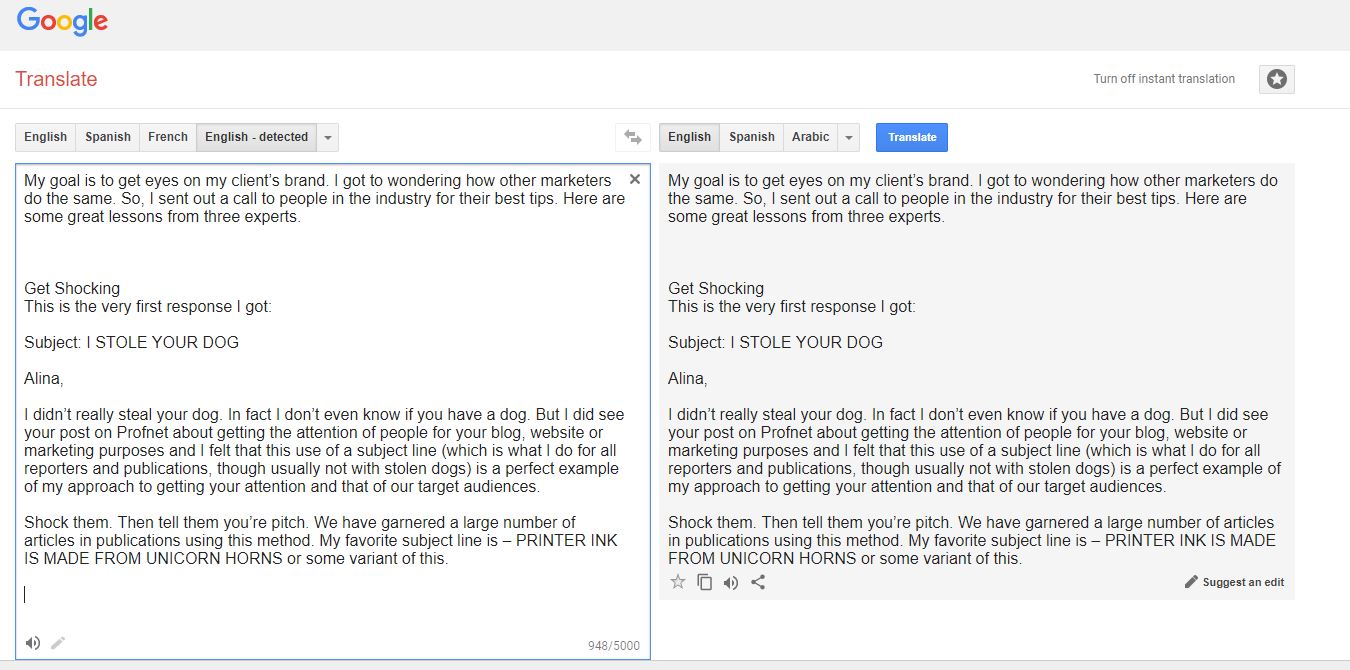
Google Translate will read your piece out loud so you can find the errors. Give it a try and let me know what you think!

Are These Creative Habits Hurting Your Success?
If you aren’t careful, the artistic streak which sent you down this path could see you packing up shop. To make sure that doesn’t happen, it’s important to recognize and manage these more destructive tendencies. And, to help you do that, we’re going to look at the creative habits which are harming your success right now.
Anyone who wants to make a career in a field like writing needs to be in tune with their creativity. It’s your creations, after all, which stand to earn you an audience, a living, and a reputation. Unlike many other businesses, your content is your product.
The trouble is that, when you get down to it, a fair few creative tendencies are at odds with the working world. If you aren’t careful, the artistic streak which sent you down this path could see you packing up shop. To make sure that doesn’t happen, it’s important to recognize and manage these more destructive tendencies. And, to help you do that, we’re going to look at the creative habits which are harming your success right now.
You Don’t Think About the Cold Business Stuff
You’re a creative. You can’t clutter your mind with cold business facts. You don’t want to think about profit margins or expenses. Who can write their best stuff with taxes on their mind? The problem is that all this stuff is essential if you want to make a real go of this.
Creative field or not, you’re never going to succeed if you don’t spare some thought here. You may even find that you benefit from doing an online mba in business intelligence or other such qualification which makes it easier for you to handle this stuff.
If you really can’t bring yourself to think about this, at least bring accountants on board. They can make sure your finances stay above the water while you take care of the creative side.
You Always Wait for the Muse

When you make art for fun, waiting for the muse is part of the process. Nothing beats that moment when inspiration strikes. But, when you’re writing for a living, waiting for the muse is asking for trouble.
Career novelists and content writers alike will tell you that, when your earnings depend on it, you have to be your own muse. If you always wait until the ideal moment, you’ll struggle to earn enough.
Instead, get into the habit of jotting down ideas when they come to you, or freewriting when you’re stuck. The more you exercise that part of the brain, the more you’ll be able to produce quality stuff at a moment’s notice.
You’re Too Far Against the Grain
In history, writers and artists who have gone against the grain have made the most impact. Think James Joyce or Virginia Woolf. They were so far from commercial that it was crazy. Now, they’re worldwide names.
If you want to make money with your writing, though, you might want to pay a little more attention to what works. Doing your own thing is fine, but you’ll struggle to find an audience for it. And, no audience = no earnings.
It’s essential, then, that you learn to rein those creative impulses sometimes. Not everything you create is going to be groundbreaking literature. Still, that doesn’t matter if it appeals to your audience.
21-time New York Times bestselling author, Jerry B. Jenkins recently released an in-depth blog post revealing the 10 steps he recommends aspiring writers take to launch their career (based on his 40+ years of experience and 190+ books written). The post also has a detailed list of all the different types of careers in the writing field. Check it out here.

Brain Hacking: Reprogram Your Brain to Create Writing Goals
To Achieve More with Your Writing Career Than Ever Before, Reprogram Your Brain with a Specific Plan!
To Achieve More with Your Writing Career Than Ever Before, Reprogram Your Brain with a Specific Plan!
“If you’ve ever attended a seminar and been inspired to make great change, only to find yourself right back where you started, you’ve experienced the enormous gap that exists between setting goals and actually reaching them,” says John Assaraf. “Whether you’re trying to do something as simple as exercise once a week or something as daunting as leaving your job to start a business, that gap is always there.”

So how can people overcome this gap between setting goals and achieving them? The key, John asserts, is in creating a specific plan.
“Plans can help bridge that gap between goals and achievement,” he says. “Without plans, your goals are really just dreams. The reason plans work so well is because of the way they impact the brain.”
Here are four distinct reasons why “Innercising” your mental-planning muscle can make all the difference.

brain hacking
HOW and WHY Work Differently in the Brain
Goals with a high emotional value can create a dopamine release in the brain. If you set a goal with a powerful why, you experience that first dopamine hit. But while that why is critically important to creating your goals, it’s only a first step on the road to accomplishing them. The old saying, “Where there’s a will, there’s a way,” isn’t quite accurate. Where there’s a will, we also need to create a clear way. We need to make sure we activate not just the parts of the brain that help us create the goal, but also the parts of the brain that help get us there.
Spend all your time in “why” and you’re a dreamer who never takes action. Spend all your time in “how” and you might be busy, but with what? When you activate these various parts, an important switch takes place. You move from your conscious mind to your subconscious mind; you move from the realm of imagination to the realms of belief, action, and, eventually, productive habits.
Your Brain Thrives on the Mini-success of Plans
The initial boost of dopamine you get from setting a goal is helpful — and you can continue to support your efforts by focusing on your goal — but that’s not enough. Big change is almost always a long-term project, and for that you need the ongoing motivation that comes from regular dopamine infusions. Fortunately, that delivery method is prewired into your brain. Every time you succeed at something, your brain releases more dopamine. It’s a reward system designed to keep you doing more of what works, and less of what doesn’t.
The secret to those tiny bursts is a clear plan created from small steps. Each baby-step success provides a dopamine boost that motivates you to take another step, and on and on. With enough doable steps, you can create a virtuous cycle that ensures you have a steady supply of motivational fuel to reach your goal.

goals with brain hacks
Goals are Loose Ends in the Brain
One of the surprising paradoxes of change is that goals can actually distract you from… well, reaching your goals. Because your brain is so goal-oriented, it keeps focusing on your goals even when you’re not actively working toward them. When you want something and you don’t yet have it, your brain continues to allocate resources to “keeping the goal alive” until you can accomplish it. This would be fine if we only had one goal to think about. In reality, though, your daily life is filled with a multitude of goals of wildly varying sizes. Even the act of brushing your teeth is fulfilling a goal.
The result is that goals become a kind of loose end in the brain, and those loose ends can distract us from the work of actually tying them up. It’s a surprising contradiction, but one we have to resolve in the brain. The best solution for this is planning.
Your Two Brains are Time-Conflicted
Imagine that you’ve set a goal to lose weight. To accomplish this, you’ve decided to change your diet. Setting the goal has likely inspired you, yet, almost without realizing it, you find yourself adding less-healthy choices to your shopping cart or sitting in front of the TV with a bowl of something sugary. What happened? How can you be so motivated in one moment and so off-track the next?
The culprit in this case is how different areas of your brain view time. You see, parts of your brain have the ability to set goals for the future while other parts are more inclined toward immediate gratification. Once again, planning is the bridge. A good plan tells you what to do next. Without one, you can feel a void that you’re likely to fill by reaching for default unhealthy habits you’ve been stockpiling over the years.
About: John Assaraf is a serial entrepreneur, brain researcher, and CEO of NeuroGym. In the last 25 years, John has grown 5 multi-million dollar companies in real estate, internet software, brain research, and life and business coaching and consulting. He is the author of two New York Times best-selling books: “Having It All” and “The Answer.” His brand-new book is called “Innercise: The New Science to Unlock Your Brain’s Hidden Power” (Waterside Press, 2018). John has made frequent appearances on Larry King Live and has been featured in eight films, including the blockbuster smash hit “The Secret” and “Quest for Success” with Richard Branson and the Dalai Lama. He is one of the leading behavioral and mindset experts in the world, with a unique ability to help people release the mental and emotional obstacles that prevent them from achieving their very best in life and business. John is a vegan who creates and eats his own hot sauces, meditates daily, and exercises six days a week. He loves skiing, traveling, taking cooking classes, listening to the Bee Gees and Enigma, and being a dad, husband, and mentor.

Edit Your Writing: How to Use Commas, Quotation Marks and Semicolons
Creating clean, mostly error-free content is important to freelance writers. Copy full of errors look unprofessional and can really turn off potential customers. You don't want to be lumped in with noobs! Edit!
Creating clean, mostly error-free content is important to freelance writers. Copy full of errors look unprofessional and can really turn off potential customers. You don't want to be lumped in with noobs! Edit!
Emails, blogs and social media encourage speed over accuracy, lulling many into the feeling that close is good enough. If you plan on being a successful freelance writer, though, almost isn't good enough. Here are some tips to help you get closer to perfection.
When to Use Commas
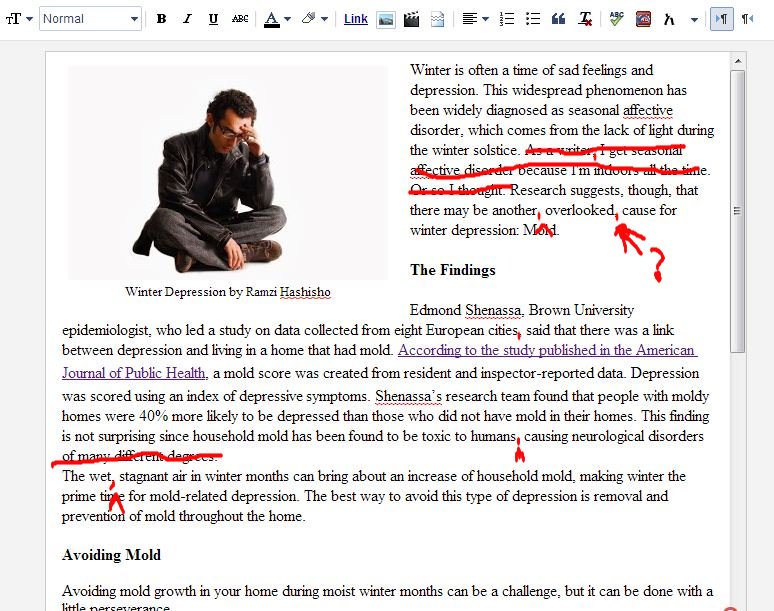
Get it right, or scare people away.
One of the most common problems even more skilled writers run into is how to use commas properly. A comma is defined as a punctuation mark used to indicate the separation of ideas or elements or a pause in a sentence.
The biggest misuse of commas is often overuse. When in doubt, use a comma when there is an audible pause while saying the sentence out loud.
For example:
Jan, can you write the story, please?
This sentence has definite pauses when said aloud. Proper use of commas also keeps the meaning of a sentence clear.
For example:
Wrong - Jan loves to draw fish and write.
Jan likes to draw fish?
Right - Jan loves to draw, fish and write.
Notice that a comma wasn’t used after the word “fish.” It has become common to leave off the comma before “and” in a series, especially if you are writing for magazines or websites.
The last use of a comma is with a direct name or title.
For example:
The writer and artist, Jan, is my old friend.
Or
Would you draw me a picture, Jan?
Or
Jan Lang, Ph.D., is the author of some impressive articles.

punctuation edit
How to Mix Quotation Marks and Punctuation
Using punctuation with quotation marks isn’t the mystery some think it is. In fact, there are only two major rules to remember:
Always use punctuation inside the quotation marks.
For example:
“The article is finished. It only took a week to do.”
And
Jan said, “It only took a week.”
Also, always use a comma before or after a quote is introduced.
For example:
Jan said, “The article is finished.”
And
“The article is finished,” cried Jan.
“Said” in the first sentence tells you that a quote is coming so it is followed by a comma.
In the second sentence, “cried Jan” tells you who just made the quote. In this case, there is a comma before “cried.” Remember, the punctuation is always found inside the quotation marks.

editing quotes
When to Use a Semicolon
Semicolons are an unloved punctuation, mostly because it is misunderstood. If used correctly, though, semicolons are an easy way to spice up a writer’s prose, or at least show an editor that the writer is competent.
The rule to follow is: If there are two sentences that are complete thoughts and don’t have a conjunction, you can use a semicolon to join them.
For example:
Jan’s article is interesting; it is full of great quotes.
Sure, you could put a period between these two statements, but it sounds so much better with a semicolon. Basically, a semicolon shows a close relationship between two sentences and a pause just a little shorter than a period, but longer than a comma.
Now that your copy is treated with respect, romance will be on the way. Your customers will undoubtedly fall in love with the work and you can ride off into the sunset with a check in-hand.

22 Ways to Create Fresh Blog and Article Ideas
Have you tried brainstorming and mind mapping and still need some creative content ideas for your blog or articles? Here are 22 ideas to get you out of your writer's block rut.
Have you tried brainstorming and mind mapping and still need some creative content ideas for your blog or articles? Here are 22 ideas to get you out of your writer's block rut.

Like this infographic? Get more content marketing tips from Copyblogger.

Fluffy Content is Bad Customer Service
Are you giving your clients and readers bad customer service by creating content that doesn't have enough meat? Here’s how to avoid fluffy writing.
I know I harp on this a lot, but I am going to say it again: Don't put fluff in your articles! I’m called the No-Fluff Writer for a reason. It’s because I like to get to the point and give readers what they are looking for without any extras.

Content fluff is bad customer service.
Fluff is content that really isn't saying anything helpful. It's basically used to fluff up the word count to appease the SEO Google gods, or a demanding client. Are you giving your clients and readers bad customer service by creating content that doesn't have enough meat?
Think about it while I tell you a little story.
Fluff and Angry Customers
The other day I was on Facebook and I saw a post by a popular women's magazine. I liked the title and preview linked in the post, so I clicked and read the article. IT. WAS. BAD.
The article was supposed to be about laundry secrets you just must learn ASAP. The article, though, gave washed up (no pun intended), old advice that anyone within their target audience would already know. A few old tips and done. Nothing meaty and useful to the reader.
I was curious to see what others thought of the article, so I clicked back to Facebook and looked at the comments on the post. Almost every single comment was about how basic the article was and how the title was very misleading.
Over the next week or so, I started checking the comments on other articles. The articles that I felt didn't live up to their title or gave simple information that most people already know had so many negative comments. What really shocked me was the multiple offenders. These publications continually drew in readers with flashy titles, then served up mediocre articles that left their readers yawning, confused, or even worse, angry.

Don't make your customers mad with crappy content.
Angry readers matter, my friends. Many of those ticked-off readers that I came across voted with their clicks. In the comments, they stated that they were unfollowing the website and/or canceling their subscriptions.
You know it didn't stop there, right? Those angry people probably told their friends, which probably lead to more bad feelings toward's the website and the brand.
How to Stop the Fluff that Leads to Bad Customer Service
Articles or blog posts aren't just a great way to bring in views to your site or your client's site. They are, in a way, a customer service. Sure, you aren't talking directly to potential customers to complete or help with a transaction, but you are talking to your customers. You're providing a service with your content.
If you don't spend time crafting a great piece that will be interesting to your readers and delivers on the promise made in the title, then you're giving them poor customer service. I don't need to tell you that poor customer service makes you lose customers. You know that already.

Give customers what they want: great content!
Here's the elements of a meaty article:
Research in the form of quotes or data
Tips that are different from the million other articles on the web on the same topic
A personal story to illustrate a point
Testimonials
Media like gifs, photos, graphs and videos
If you can't come up with ideas for new, interesting content, take a look at this article for tips. There is no reason for posting fluff. Just don't do it. Give your customers what they want.

20+ Free Ways to Get Photos and Multimedia Content for Blog Posts and Articles
There are plenty of websites out there that help you make your own GIFs, maps, charts, memes and more for free, in just a few minutes. There are also plenty of sites that let you use their multimedia content on your site.
Here are 20 of my favorites:
Search engines love when you use more than just text in your website content. Plus, media makes your content much more appealing to visitors, which is even more important. You don't want people to come to your posts, see nothing but boring text and click away!
Think creating multimedia content takes too much time? Don't worry. There are plenty of websites out there that help you make your own GIFs, maps, charts, memes and more for free, in just a few minutes. There are also plenty of sites that let you use their multimedia content on your site.
Here are 20 of my favorites:
Creative Commons for Creative Common photos
YouTube for embeddable videos
Easel.ly for infographics
PhotoPin for Creative Commons photos
DaFont for fonts
Office Sway for presentations
Pond5 for historic media files
Survey Monkey for surveys
NVD3 for charts
Mapbox for maps
OpenClipArt for clip art
GetEmojis for emojis
Pexels for modern, clean photos
PhotoPin finds Creative Commons photos
MapBox for maps
Microsoft Sway online visual creator for newsletters and more
Pexel Videos for free stock videos
Pikwizard.com is a free stock photo website
Also, here's a nifty way to make YouTube videos into GIFs:
Do you have any sites that you really like? Don't be shy! Share those suckers!

Use This Data to Get Your Best Sleep
Poor sleep equals a poor writer. This 2019 study can help you figure out which habits are inhibiting your sleep.
We all know writers need a good night’s sleep to put out their best work. Sleep Cycle, the best-selling alarm clock application, just released the inaugural report of the Sleep Cycle Institute. The new institute is a group of multidisciplinary health and wellness experts who examine Sleep Cycle’s internal data. While studying the data, the institute discovered who are the best sleepers and why.
I thought this information would be useful for helping us writers figure out habits that we need to take on, and which ones to nix, to get the best sleep. Here’s the information Sleep Cycle sent over about the study.

An Overview of the Data
The Sleep Cycle app has more than three million active monthly users, and this report looked at three years’ worth of data, for a total of 148,116,221 nights of sleep.
Americans spend an average of 7 hours and 18 minutes in bed each night. They go to bed at 11:39 p.m., wake up at 7:09 a.m., spend 23.95 minutes snoring, have an average sleep quality of 74.2 percent, and rate their wake-up mood at 57 on a scale of 100.
As a population, Americans got six minutes more sleep in 2018 than they got in 2015 — 7 hours and 21 minutes, up from 7 hours and 15 minutes. Their average sleep quality has improved from 72.9 to 75.3 percent, but their wake-up mood remains unchanged at 57/100.
Sweet Dreams Are Made of These
What do we know about the best sleepers in America? According to the data, the two factors that most significantly contribute to a good night’s sleep are exercise and simply getting enough of it.

Americans who exercise enjoy better sleep, regardless of gender or age
Americans average 10 extra minutes of sleep when they work out during the day
Exercisers snore less (21 minutes) than non-exercisers (25 minutes)
Americans who get more than 8 hours of sleep enjoy an average sleep quality of 82 percent — the highest sleep quality of all Americans
These Americans have an average bedtime of 10:45 p.m. — almost an hour earlier than other Americans
Perhaps surprisingly, daytime coffee or tea drinking also correlates to higher sleep quality: Americans sleep an average of six minutes longer when they drink tea or coffee, and their sleep quality increases by .5-1 percent.
Early bedtime — independent of sleep duration — also correlates with positive sleep outcomes: Americans who wake up in the best mood (87/100) also tuck in early (11:04 p.m.) and average 7 hours and 33 minutes of sleep.
What Poor Sleepers Have in Common
Which Americans are getting the poorest sleep? Not counting Americans with newborns, here are a few things bad sleepers have in common:
They eat late at night. Late eaters enjoy a poorer sleep quality than people who’ve had a stressful day.
They had a stressful day. When Americans have a stressful day, they get even less sleep than late eaters (7 hours and 14 minutes) and wake up in a worse mood (54/100).
They live in Hawaii. See “Geographically Sleeping” below.
Mars and Venus in Dreamland
The data suggest that there are some fundamental differences in the way that men and women sleep — and these differences are more pronounced at different life stages. For example, on average:

Women get 14-20 minutes more sleep nightly than men, depending on age
Women age 55-74 spent the most time in bed (7 hours and 35 minutes), and men age 35-54 spent the least time in bed (7 hours and 9 minutes)
At age 18-34, men are the last to bed (11:57 p.m.) and last to rise (7:25 a.m.); by age 35, they are up earliest (6:37 a.m.), and, by age 55, they are first to bed (11:07 p.m.)
Men snore 4 minutes more than women, although both will snore about 20 minutes more at age 55+ than they do at age 18-34
Men consistently wake up in a better mood than women, with men age 55+ at one end of the spectrum (67/100) and women age 18-34 at the other (56/100)
“In the research literature, we commonly see that women tend to sleep more but find their sleep less restorative than men and are at greater risk for insomnia,” said natural sleep expert Dr. Catherine Darley. “Knowing, too, the high number of women who experience sleepiness each day but push through with their activities regardless, it is not surprising that women wake with a lower mood than men.”
Geographically Sleeping
Geography also affects how Americans sleep: the Sleep Cycle data shows some interesting — and surprising — differences between states. For example:
Wyomingites go to bed the earliest
New Yorkers stay up latest and wake up latest
Ohioans and Marylanders report the worst wake-up mood (57/100)
South Dakotans report the best wake-up mood (64/100)
North Dakotans snore the least (20 minutes)
Alaskans snore the most (35 minutes)
Hawaiians spend the least amount of time in bed, are up earliest (6:34 a.m.), and have the poorest quality of sleep
Vermonters spend the most time in bed (7 hours and 29 minutes) and have the highest quality of sleep (76 percent)
“In addition to factors such as climate, seasonality and daylight times, variations in culture may account for some of the geographical differences in sleep — like what time we have dinner, when we socialize or if we stay up late to do homework,” said Dr. Frida Rångtell, Ph.D., a doctoral student in the Department of Neuroscience at Uppsala University, Sweden. “Reasons for geographical differences in sleep are most likely interlinked, and regional differences in socioeconomic status, stress, crime levels, unemployment, educational levels, and incidence of chronic disease are other probable contributors. Obesity, for instance, is tightly linked to sleep disturbances. And, of course, people living in urban environments have more exposure to things like traffic noise and light at night that can also disturb a good night’s slumber.”
About Sleep Cycle
Sleep Cycle is the world’s most popular intelligent alarm clock app that analyzes users’ sleep, records findings, and wakes them during their lightest sleep phase so they feel rested and refreshed. The app generates nightly sleep reports, tracks long-term sleep trends, and logs how daily activities impact sleep quality. With millions of users worldwide, Sleep Cycle has also become the world’s richest repository of data on global sleep habits. The newly formed Sleep Cycle Institute puts this data in the hands of five multidisciplinary health and wellness experts to provide individuals and public policy makers with deeper quantitative insights into the relationship between sleep and overall health and well-being.
For more information — and real-time, interactive sleep data from around the world — visit https://www.sleepcycle.com/.

Powerup Online: Keep Your Writing Skills Sharp With These Tips
Here are some ways to sharpen your writing skills while you’re online.
As a writer, how many times have you fallen into a spiral of despair at a mistake in a social media update? Grammar mistakes are rife online. One thing’s for sure; it never takes long for someone to spot the error and ridicule the culprit.
So few people know the difference between their, there and they're! Aggg!
Many of us are under the belief that the internet has done terrible things for the English language. It’s never been possible for so many people to publish unchecked work before. And, even us writers sometimes fall under the spell of not proofreading before we post!
The internet isn't all bad. In fact, it can be a huge help for writers looking to develop their craft. The trick is knowing how best to use it. Here are some ways to sharpen your writing skills while you’re online.

Online Courses
The most obvious way the internet can help you is through online writing courses. In an ideal world, we would all go out to a local evening class. But, who can honestly say they have time for that?
The good news is, you can now get many of the benefits from a writing class from the comfort of your home. From finding your course to downloading your course material; all it takes is the push of a few buttons!
The best thing about this is that you don’t need to settle for the nearest course to you. You can pick any course to suit your writing needs! Want to hone your freelance skills? No problem. Or, are you more passionate about writing fantasy? The internet’s got you covered there, too!
All it takes is a little research to find the perfect thing. Choose from courses that come in modules and last a few months, or one time Skype sessions with other writers.
Create Your Own Group
If it’s writerly interaction you’re after, you could set up your own group on Facebook. Get the word out on social media and see if anyone’s interested. That way, you’re not writing into the void. Editing the work of other writers can also be a huge help with your work. Seeing what they’ve done wrong will save you making the same mistakes.
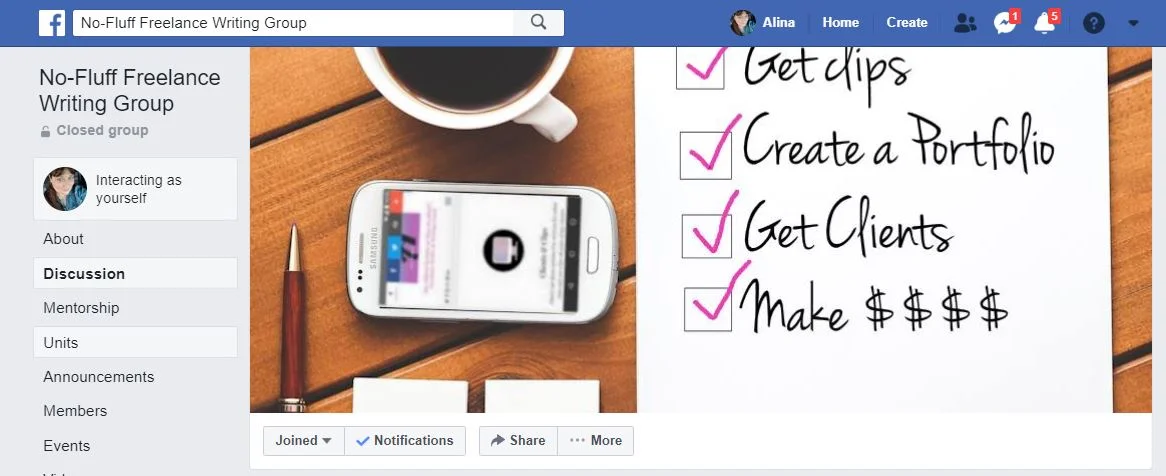
Don’t forget to join the No-fluff Facebook Group while you’re at it.
Social Media
Speaking of social media; that can be a huge help as well! Building an audience is important for any writer. Any potential publisher will feel more comfortable to work with someone with a guaranteed readership. It makes their job a hell of a lot easier!
Plus, it can be a boost to know there’s people out there who want to read what you write before it’s written! Social media can also be an excellent way to get yourself noticed. Sites like Twitter are fantastic for interacting with other writers. Here's my tips on getting a big Twitter following.
Here’s an example of my Instagram feed:
You could even get your face known by agents and publishing houses. And, they do say it’s about the people you know! Build an audience by posting often and getting involved in conversations.
And, don’t think you have to stick to traditional social media routes, either. Youtube is a popular platform for budding writers to talk about what they read and write. The correct term for it is Booktube. Or, a more recent addition, Authortube! Authors such as Jen Campbell have developed an audience nearing 30,000 viewers. Find out about the best vlogging cameras and set up a channel. Watch videos from other Booktubers to get some idea of how to do it, and then take the leap! And remember, get involved in conversations to get your face seen. It’s the fastest way to get subscribers of your own.
Practice and Perfection
The internet also offers a fantastic opportunity to practice and perfect your writing. What better practice than blogging? Knowing your writing will be out there for the world to see will put added pressure on getting it right. It’ll be a huge help in honing your skills.
Short blogging on social media can also help you hone your skill. When you only have 140 characters to work with, every word counts. Set yourself a challenge of posting a small story on Twitter each day. If you like it, micro fiction could be for you!
There are also some fantastic websites out there to help with writing. Hemingway app tests the readability of your work. It's wonderful if you’re guilty of overusing adjectives. Or, head to a site like Grammarly, which makes sure there are no grammar errors in your online writing. It’s a great way to avoid embarrassment. Let’s be honest, a lot of people could do with a grammar check before they post!
Finding and Sending Work
The world wide web is also a huge help in finding and submitting work. If you’re working freelance or writing short stories, most business will be online. Freelancers can join sites where they bid for work. The competitive aspect will force you into being the best you can be! Or, you can find out about magazines looking for articles. Short story writers can learn about writing competitions galore online. Signing up to sites like Submittable allows you to send stories hassle-free. You'll also be able to track them without worry. Here are some places that list jobs for writers. So, there you have it. The worries about what the internet is doing to language are largely unfounded. It can be a huge help if you use it right.
And remember to always check your work. A writer making a public grammar mistake will be a difficult thing to live down!

Writers! This Multitasking Tip will Make You More Productive
I've found one multitasking solution that gets me up and makes me more productive as a writer. You'll find this tip particularly helpful if you are a work-at-home mom or dad.

Okay, I have a bad habit of sitting on my bum all day. I mean, I'm a writer, so it's hard not to. I sit until I finish my article, or my blog post, or my whole day's worth of work. Research shows, though, that taking regular breaks make people more productive. Also, sitting all day can make you sick. I know it's given me a plumpness never seen before on this body! So, I've found one multitasking solution that gets me up and makes me more productive. You'll find this tip particularly helpful if you are a work-at-home mom or dad.
SET A TIMER!
You've heard this one before, I'm sure, but my tip has a twist. Be sure your timer is connected to something important. For example, before I start a work project, I throw a load of laundry in the washer. When the timer goes off, I make myself get up and put the laundry in the dryer. When the dryer buzzer goes off, I get up and put the laundry away. Then, I start the whole process over again.

This works with cooking, too, if you're a home chef. After you put food in the oven, sit down and start a task. When the oven timer goes off, get up and check your dish.
This way, I get stuff done around the house, plus I give my mind a break and give my body a break from sitting.
DO YOU HAVE ANY TIPS FOR GETTING UP OUT OF THE OFFICE CHAIR?

Making the Leap from Full-Time Worker to Full-Time Business Owner
Leaving the comfort and security blanket of being a full-time worker can be extremely daunting, however, there are so many great benefits to look forward to including independence, flexibility, more money and, of course, it really is the dream for most people to simply be your own boss. Here, we are taking you through the essentials you need to know when starting your own business.
Guest post by Michael Deane
Are you thinking about making the leap from full-time worker to full-time business owner? You are not the only one! Self-employed workers now make up around 15% of the UK’s working population, with the numbers of self-employed 16-24 year-olds almost doubling since 2001. Leaving the comfort and security blanket of being a full-time worker can be extremely daunting, however, there are so many great benefits to look forward to including independence, flexibility, more money and, of course, it really is the dream for most people to simply be your own boss. Here, we are taking you through the essentials you need to know when starting your own business.

Are you ready to be the boss?
Make a Business Plan
When starting up your own business, the first thing that you will need to do is draw up a business plan. This is an absolute must-have for any new start-up and should outline not only the initial phase of your business, but also its longer-term growth. The type of plan you must write all depends on your business. Are you looking to get financial support for your new start-up? If yes, then a longer, very detailed plan will be required in order to get others to back your idea. If you are starting this new business on your own, a one-page document giving you direction and purpose will suffice.
Your Business Structure
An important decision that you will have to make for your business is what structure it will take on as this will determine how your taxes are filed, your liability for the business and even your business name. Don’t worry too much about this, however, because as your business grows and changes you can change your structure at a later date.

What will your sign say?
Registering Your Business Name
When you have a name for your business and begin trading, you will need to register it, whilst making sure that it is not already trademarked or in use.
Sole Traders – This is the easiest business structure to register. You are required to register for self-assessment tax and must have a National Insurance number. On all paperwork you must include both your name and business name.
Limited Company – When forming a limited company, your personal finances will be separate from the business. This requires more management responsibilities.
Partnerships – If you are setting up a business with other people, then you will have to register your business as a partnership. This means shared responsibilities for business debts and you will have accounting responsibilities.
This will ensure that your new business is now a legal entity that operates within the law. Not doing this can result in serious consequences with the tax office. Depending on what your business does, you will also need to check if you need any licenses, permits or insurance.
Where to Set Up Your Business
As a new business owner, it will also be your decision as to where to set up your business. For many just starting out, a home office is the perfect solution as you will not have to worry about renting costs eating away your finances. As your business grows, you can then start to think about moving to an office space or a retail location, but you will also have to take into consideration any business rates that you will owe. Coworking or hot-desking can be a good transition from the home office to a long term commercial lease, especially if you are looking for office space in San Francisco or other high yielding locations.
Marketing Your Business
As a new business, it is rare for floods of clients to come straight to you. Marketing your new business is extremely important and what’s great about the new digital age is that promoting your business does not need to cost a great deal of money. Explore different marketing possibilities that will be best for your business. This could include the use of social media, improving your website so it ranks better online or posting leaflets through doors if your business offers local services. There is a plethora of great marketing options to choose from that will help you spread the word about your new business launch and what you offer.
Maintaining a Good Work/Life Balance
While running your own business can offer you a lot of flexibility with your schedule, many people find that, especially within the first few years of starting their own business, that it can be difficult to maintain a good work/life balance. When you are solely responsible for the success of your business, it can be hard sometimes to justify taking a day off from your emails. If you do not want to burn out quickly from your new career change, having quality time away from your business is vital. Remember the reasons why you decided to start your own business in the first place. It is likely that the flexibility and opportunity to spend more time at home with your family was a big appeal. Make sure to take advantage of this and schedule time off that is mandatory for you to stick to.
Setting up your own business is an exciting time! Follow these top tips to make sure you get your new business off to the best start possible.
Bio:
Michael Deane is one of the editors of Qeedle, a small business magazine. When not blogging (or working), he can usually be spotted on the track, doing his laps, or with his nose deep in the latest John Grisham

SAD: How to Keep Seasonal Affective Disorder in Check
During the wintertime (and other times throughout the year) many writers feel down or depressed. This is probably because we don’t get out of the office enough. The amount of sunshine or intense light we get a day can directly affect how we feel. Lack of sun during the winter months can even cause a condition that is called Seasonal Affective Disorder (SAD).
During the wintertime (and other times throughout the year) many writers feel down or depressed. This is probably because we don’t get out of the office enough. The amount of sunshine or intense light we get a day can directly affect how we feel. Lack of sun during the winter months can even cause a condition that is called Seasonal Affective Disorder (SAD).
Dr. Sanam Hafeez, an NYC based licenses clinical psychologist and faculty member at the prestigious Columbia University Teachers College, explains that “a cell in the retinas of our eyes called a ganglion cell contains the photopigment melanopsin. When we are exposed to sunlight, melanopsin signals a pathway to cells in the hypothalamus specifically responsible for regulating our bodies biological functions. This process then triggers the pineal gland which is in charge of melatonin secretion which peaks at night and wears off during the day. In simpler terms, the less light exposure we get, more out of whack we feel.”
To help you understand the concept of SAD better, and to help you combat it, take a look at this infographic:


A Free, Simple Way to Boost Your Mood
Running your own freelance business can be stressful, but there is one simple, free way you can boost your mood every day. In today’s guest post, Dr. Jamie Reynolds shares what you can do consistently to keep your mood high, even when you’re stressed.

Smile!
In case you haven’t noticed, the world is messed up. Like crazy messed up. And, as human beings, most of it is our fault. Crazy nuclear-obsessed dictators. Hyper-divisiveness in the American political system. Bigotry. Suicide bombers. Children unsafe at schools. The rich getting richer. The poor getting poorer. Social-media bullies. Cancer. TMZ. The list goes on…
And, just for good measure, mother nature decides to visit us with a record polar vortex and a flu season that affected millions more than normal (including yours truly). Not to mention the fool that cut you off in line for your latte this morning, or a million other of life’s trivial annoyances that get our blood pressure out of control. It is a wonder any of us are remotely sane.
Or is it? If you listen to a guy like Gary Vaynerchuck--and if you don’t you should--he correctly rants that we as human beings live in the greatest time to be alive in the history of humans. And even though life seems and is challenging, we have never collectively had it better. Remember, it wasn’t all that long ago where the world was much more like Game of Thrones and a lot less like spoiled brat reality TV. And, as annoying as Honey Boo Boo and everything ‘Housewives’ seems to be, humanity continues to trend up.
So what can we do to realize and appreciate what we have? Most of us have little influence in the goings on of the world. However, my belief that if we each make a small effort to treat each other a little better, our lives will continue to improve. Something as seemingly insignificant as a smile can brighten people’s day.
Remember, it is really difficult to be around people who are smiling without smiling. Why? There is actually a mountain of interesting science behind it.
Studies on Smiles
In one of my favorite studies of all time, researchers (Kraft and Pressman) used chopsticks to position people in various facial expressions then put them through a series of stressful tasks. The results? The people whose face was positioned into a smile had the lowest stress of any group. So, even if you don’t smile on purpose, the act of positioning your face into a smiling posture actually decreases stress. ‘Fake it till you make it’ actually works here! The next time someone cuts you off in line, try forcing yourself to smile. Science says it will actually reduce your stress level.

Naturally smiling also creates a cascade of naturally occurring feel-good neurotransmitters to be released automatically. Seretonin, dopanine, and endorphins--the same hormones we artificially stuff into the ever increasing amount of happy pills Americans digest on a daily basis--are naturally released every time you smile. Free happy hormones. No trip to the doctor or prescription required.
What about for the uber career-focused people who are in too big of a rush to snap a smile at Starbucks? A 2004 study from Penn State showed smiling employees come off as more friendly and likeable (not surprising) and also increased perception of competence (surprising!!!). Smiling frequently gives people the perception that you are better at your job!
Another study from the University of Pittsburgh compared people with various smile postures, and the bigger the smile the higher the person was graded on trustworthiness (again, surprising!).
So, science suggests that if you want to be seen as more competent and more trustworthy--factors that weigh heavily in any boss’s performance evaluation--you should smile more.
And, just in case the scientific case for smiling wasn’t strong enough, a recent Harvard study found ‘social connection’ is directly linked to happiness and longevity. The more people in your social network, the more likely you were to live longer. What is the number one way to increase social connections you ask? Smiling. Live long and prosper, smile grasshopper.
Take the Challenge
My challenge to you: Get a sharpie. On the mirror in your bathroom, write the words ‘5 Smiles’ on your mirror. Look at the words in the morning while you are brushing your teeth (the dental professional in me couldn’t resist reminding you to brush) and say out loud “I will smile at 5 people today”. Then, throughout your day, smile at 5 people. It’s the easiest challenge of all time. Instead of texting while you are ordering your morning caffeination, greet the barista with a smile before requesting your morning half-soy triple foam. If you are a perpetual grouch, turning the frown upside down may seem forced at first. Remember the chopstick study above--it still works.
Again, science is on your side here. A part of your brain called the premotor cortex has ‘mirror neurons’ that respond particularly strongly to smiling? What does that mean in normal language? Smiles are contagious. We are genetically predisposed to want to smile when we see someone else smiling. So, your smile could actually create a response in someone else that makes them feel better and brightens their day. Pretty good trick when you catch your boss in a grumpy mood.

There are hundreds, if not thousands, of daily opportunities to show off your smile a few extra times. And, if you sleep 9 hours per day (way more than I get) this is only one smile every three hours. Insomniacs may have to smile a touch more frequently at one smile per two hours. Repeat the 5-smile challenge daily.
You may not be able to change Korean dictators, our President’s hair, or the path of a polar vortex, but you can change the frequency with which you share a smile. This isn’t push-ups or sit-ups we are talking about here. Deciding--notice that it’s your choice--to smile literally couldn’t be easier. The result of choosing to smile? You feel better and 5 other people do too. And many, many more by the transitive property. Scientifically proven and mother approved.
Imagine if something so simple, so trivial, actually caught on. Thousands or millions of extra smiles creating intermittent bursts of stress reduction and happy hormone release. Changing the temperament of the world, 5 smiles at a time. Possible? Grin and bear it? Maybe give it a try. Science is on your side.

What is SEO: A Step-by-Step Guide for Writers
SEO is a big deal for writers that want to make money writing articles and blogs online. Without SEO skills you won't keep up with your competition. You've probably seen job ads looking for writers that know SEO. If you don't know what those three letters mean, don't worry. I'm here to help!
What is SEO?
SEO is an abbreviation for search engine optimization, which, in a nutshell, means anything that helps a search engine find an article and rank it on the first page of search results. Go to Google and search for your favorite topic. See the first result? That article has excellent SEO. Some sites hire companies like whitehat-seo.co.uk to build their site rank, but most rely on writers like us.
So, how do you get these magical results? Well, only so much of it is in the hands of the writer. A lot of SEO has to do with the website's reputation. I'm going to cover what you, as a writer, needs to know about it to make your articles rank.
What is seo
Research Keywords
The first thing you do before you write an article is to research. Now, as an expert on your niche, you should have a pretty good idea about what people want to read. There's more to it than that, though. Keywords are a big way search engines know what your article is about and how to rank it in search.
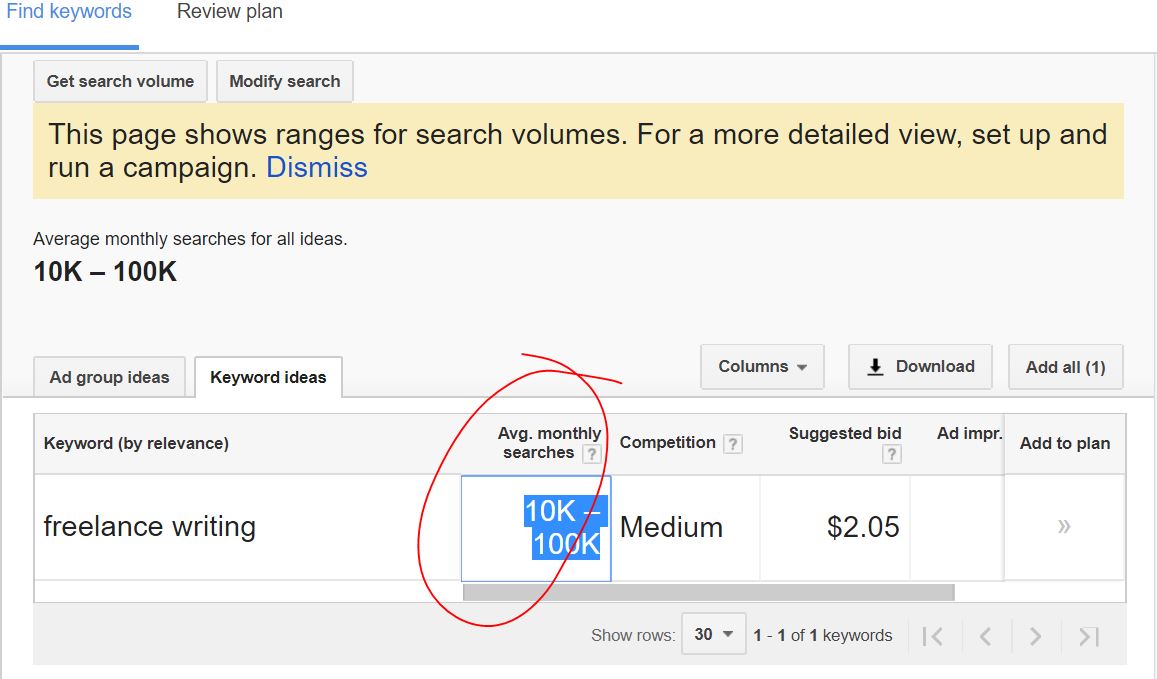
To research keywords, go to Google Keyword Planner> Go to Keyword Planner > Discover new keywords. Then, type in a word or phrase that describes what you want to write about and click, Get Started.
tips for seo keywords
A list of keywords will pop up. Look for keywords and phrases that have 10 to 100 thousand monthly searches. This means that people are actively typing these keywords into Google each month looking for articles on the topic. And in turn, Google actively searches for articles that provides information on these topics.
So your articles should have keywords here and there throughout. Most of the time, keywords will naturally pop up in your writing. You don't really need to think about it too hard.
Just be sure that:
You have a keyword in the title of the article or post and that it is close to the beginning
There is a keyword in the name of the image files you use and in the captions
Keywords are in the headings
There is a least one keyword in the first or second sentence of the post
DO NOT litter your article or post with keywords, though. Other than the areas I've highlighted, let them come naturally. If you spam an article with the same words over and over you'll get a penalty, which will make your post rank lower in searches.
SEO-Friendly Headings
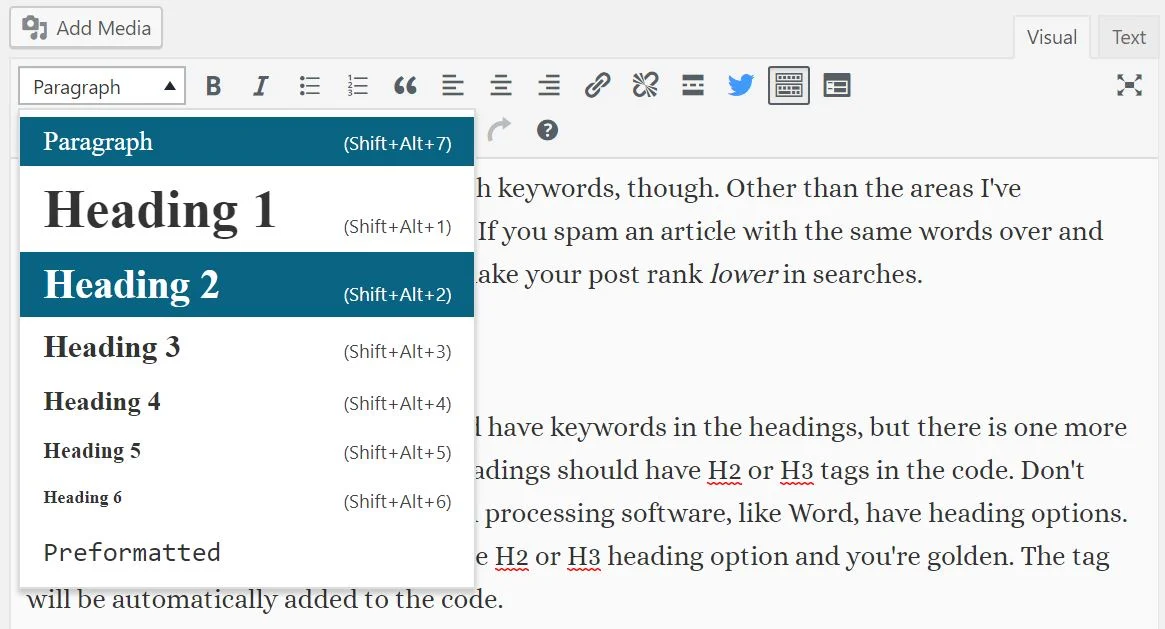
Now you know that your posts should have keywords in the headings, but there is one more thing you should know. All of your headings should have H2 or H3 tags in the code. Search engines look at your heading to figure out what your article is about. These tags help search engines know where your headings are.
Don't freak out! You don't need to know coding. Most post editors and word processing software, like Word, have heading options. Just highlight your heading, tap on the H2 or H3 heading option and you're golden. The tag will be automatically added to the code.
wordpress headings
Add Media
Search engines LOVE media. Media in a post tells the search engines that you are providing added value to the reader.
The rule is to add at least two images to your post for good ranking, but the more the merrier. Some media you can add to a post are:
Embedded YouTube videos
Gifs
Image galleries
Audio recordings
Videos of yourself explaining a concept
Infographics
Memes
Surveys
Maps
Where do you get quality media? Here are some free places I use:
Consider Length
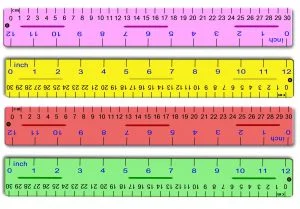
The length of your post or article makes a difference, too. Search engines seem to prefer posts that are 400 words or more. The longer, the better, though. Once again, search engines are looking for value.
Best Article length
If you have a post that is a gallery of images and very little words, don't worry. If there is a lot of media it seems to cancel out the word count requirement.
Quality Links Make SEO Better
Finally, you need to add quality links in your articles. Link to reputable sites throughout your articles.
So reputable websites that search engines love are:
Government sites like the FDA, National Library of Health, or the CDC
Groups like the World Health Organization, American Dental Association or the American Cancer Society
Science and health journals and magazines like JAMA and Scientific American
Trusted health sites like the Mayo Clinic
University websites
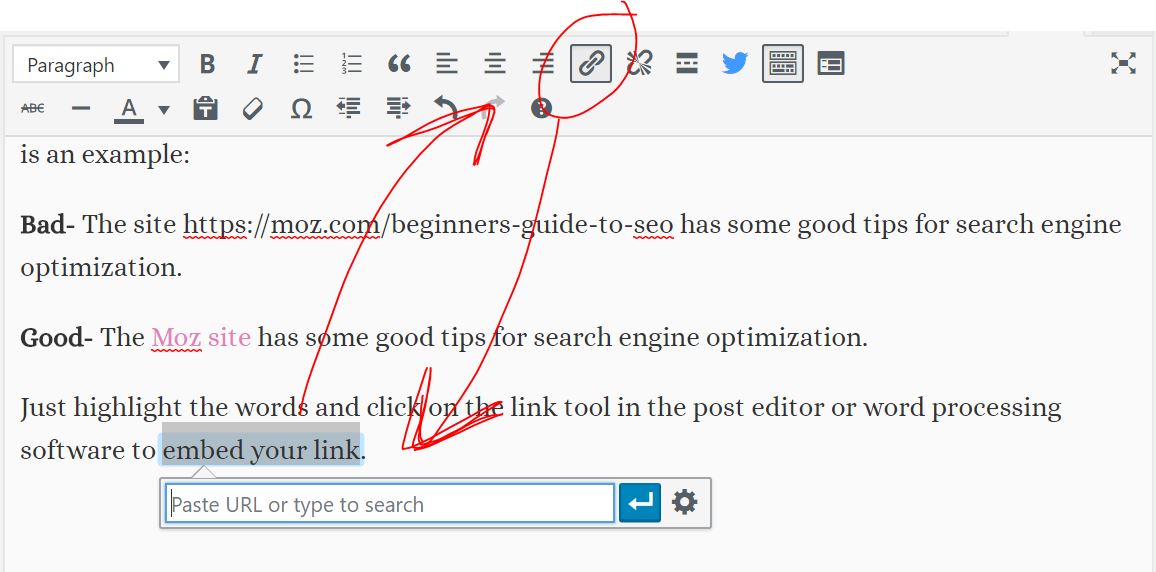
Search engines like it when the link is embedded in words, not just a typed out address. Here is an example:
Bad- The site https://moz.com/beginners-guide-to-seo has some good tips for search engine optimization.
Good- The Moz site has some good tips for search engine optimization.
Just highlight the words and click on the link tool in the post editor or word processing software to embed your link.
linking for seo
Also, make sure you link to other articles or blogs on your site. Try to put two links to your own content in the first two paragraphs of every piece.
Be a Good Writer
Search engines also rank posts higher if they contain good spelling. This should go without saying, since you're a professional writer and all, but ALWAYS check your spelling.
That's It!
That's basically all writers need to know about SEO. Remember, as long as you're thinking about your reader and providing quality, then most of your worries are taken care of already.
Want to know how to get more clients and become a well-paid writer? Read my book!
The Fluff-Free Freelance Writing Master Course: The only course that gives you concrete, actionable information to building a successful freelance business without any fluff.

Yes, Even Freelancers Can Take Breaks From Work
Some people are worried about making the transition to freelance work because they know it means no paid days off for vacation. You don’t have to see no paid time off as a massive negative. There are ways you can get around it. Sure, the stereotypes of freelancing may include not taking any vacations and working long, long hours, but I know lots of freelancers who are able to take time off when they need to. Including me! If planned correctly, taking a vacation as a freelancer shouldn’t hit the bank balance too hard either. Want to know how to set up your own freelance vacation? Read on!
Plan Well in Advance
One of the key factors in being able to take time off from your freelance business is planning your escape well in advance. Once you know which days you are going to be away, you should block those days out in your calendar so that you don’t accidentally sign up for any work or projects.
You might also want to try to book in a bit of extra work in the weeks running up to your vacation. That way, you still get paid while you take time off. Planning well in advance also gives you enough time to save up a bit of extra cash so that your bank isn’t strained by a few days of no work.
View this post on Instagram
A post shared by fam vibes (@famvibes) on Jan 18, 2019 at 1:41am PST
Consider Handing Some Tasks Over to A VA
If you are worried that your inbox will be flooded with important emails while you are away, you could always hire a freelance virtual assistant (VA) to manage your inbox for you while you are away. This could be especially important if you won’t be checking your emails at all during your vacation. If you use a company like Virtual HQ, you would also get the benefit of their efficient telephone-answering service.
You might even want to hire a virtual assistant who is able to take care of some of your projects for you while you are away. Outsourcing your work will mean that your clients won’t notice any disruption in the services that you provide. However, it does mean that you need to find a VA who you completely trust with all of your work projects.
Have Some Projects Planned for Your Return
It’s a good idea to have a few projects lined up that you can start as soon as you get back to the office. You’ll then be able to start earning right away. If you don’t do this, then you may spend a couple of weeks hustling for some new work, which means even more time not bringing in an income. Plus, having some work to start with as soon as you are back will help you get into the swing of running your business. Your post-vacation blues won’t last for too long if you are busy working!

how to take a vacation when you freelance
Take Advantage of Weekends
Most freelancers are able to work to flexible schedules. So, if you do need to take a few days off during the week, at least you will be able to make up for them at the weekend. If you take advantages of weekends in this way, then you should find that you are able to take more breaks through the week.
Let All Your Clients Know
Make sure that all of your clients know you will be taking some time away from the office. They will understand. Trust me! After all, you are only human and will certainly deserve a break sometimes!
Turn on Your Out of Office Email Notification
Don’t forget to turn on an out-of-office automatic email reply before you leave the office. Most email providers will offer this service free of charge. Just go into your email settings and look for the Vacation Responder option.

how to take a vacation when you're a freelancer
You will be able to customize the message, so it’s a good idea to mention how long you will be away and if there is an alternative way to contact you. Once your out of office is switched on, anyone who tries to contact you will be reminded that you are away when they send you an email. This way no one will be annoyed if it seems like you are ignoring them!
It’s Ok to Check in During The Break
It’s perfectly fine to continue checking your emails while you are on your vacation. In fact, you might want to even take your laptop with you so that you can carry on with a small amount of work on your travels. Quite a lot of freelancers follow the 80-20 rule of vacationing. It basically means that you spend 80% of your time relaxing and enjoying yourself, while the other 20% is dedicated to work. Your whole vacation won’t be completely spoiled by constant work, but you'll still get things done.
Relax!
Of course, you should ensure that you do have plenty of time to take a breather and relax while you're on vacation. Recharging your batteries allows you to return to your desk a lot more energized and rejuvenated.
Taking a break is perfectly reasonable and acceptable even if you are a freelancer. I’m sure you deserve to get away for a few days, just make sure that you enjoy yourself!

7 Ways to Make Your Site Traffic Soar in 2019
If you're looking for more traffic to your website in 2019, get going. It won't happen on its own. Here's what you need to do to make 2019 your blog or website's best year yet.
Update Your Content
With changes in rules, regulations, laws and the way technology is advancing at an amazing pace, something you wrote on your website 6 months ago could be totally out of date and mislead anyone that reads it. You need to reread all of the past articles and blogs and update any of them that fall into this category. Search engines will see the post as still being relevant and that can help with your SEO rankings.
The trend seems to be that long articles attract more attention too. One that is between 2000 and 3000 words gives the impression of being more informative than a 500-word blog and this means that more people go to your site to read it. Of course, don't stretch out articles or blog posts unless you have great information to add. Remember my manta: No fluff!
Optimize Your SEO
It is no secret that SEO is one of the most successful ways to drive traffic to your website, but the way SEO works changes all the time. Some of it has to do with keywords. Search engines try to discover the topic of a piece by looking for keywords in the article. If you use keywords no one is looking for, then your article will rank poorly. On the other hand, if you use too many keywords, your article will also tank.
SEO
They also look for other sites that have linked to the article and how well it is shared on social media. When the information, and it's good, they move you up the rankings. As most people only look at the first couple of pages of search results, the higher you are in the rankings the better.
There is more to it than written content though. As technology has advanced so have the capabilities of the tools used by the search engines. They can now take account of video and image content as well, and can even move you up the rankings if you get a good amount of followers on social media.
To learn more about SEO, check out my step-by-step article.
Use Ads to Move Up the Rankings
Most times, when you put something into your search engine, the top few results will say ‘ad’ at the side. This is because businesses have paid to be in one of the top spots. This can be well worth the money invested because then your page is much more likely to be linked to by viewers, raising your rank.
This is just one way the likes of resources such as Google Ads can help to increase the traffic to your website and with Adwords scripts collection you will have an automated service that will control your Google Ads data. That way, you can do more and reach more people with less effort.
Make the Most of Social Media
Social media is a must for all businesses. It is a vital way of getting your brand known and of sending more traffic to your website.
You should post every day, at least, but do not make all your posts promotional. If you do, users will start to scroll past your posts without bothering to read them. One promotional post out of five is a good rule. Some people post 20 percent promotional content and 80 percent other content. Your mix will depend on your target audience.

Don't just use memes, photos and text posts. Videos are sometimes the best way to attract attention to your brand, and if they contain some humor they are likely to be shared many times.
Always respond to any comments in a positive manner, as this will help to build trust in your business. Nobody wants to deal with rudeness.
Also, put a link to your site on all your posts, and then you will get people go to it more often. Here's an example of how I do that on Instagram. When they get to your website, it should be engaging immediately. You only have 3 or 4 seconds to grab their attention and if your website does not do that, they will move elsewhere.
Email Marketing
Email marketing fell out of favor for a while but now it is back. It is a great way to stay connected with existing customers or to make connections with new ones. Each email has to be of interest or solve a problem for your audience, and it should always have a link to your website included.
There are online resources that will send out thousands of these for you at very little cost. You set the email up, add new email addresses, and they do the rest.
Run a Contest
Running a contest is a great way to attract new traffic. You just have to make linking to your site as one of the rules of entry. Another rule is they must enter with their email address so you can add this to your mailing list.

Consumers of all ages love something for nothing and if the prize is something they would like they will not only enter themselves, they will share it so their friends and family can enter as well. It seems from surveys that the favorite prizes have something to do with travel or something digital. The cost of putting someone up in a hotel for a few nights is nothing compared to the amount of new traffic these competitions can bring to your website.
Optimize for Mobile First
Around 80 percent of internet use is done on mobile devices. This percentage is likely to grow, as smartphones have become little more than handheld computers. There is very little you cannot do on a smartphone now and so it makes sense to optimize your site to suit them before anything else.
mobile optimization
Make Sure Your Business Deserves the Attention
It is no use in increasing your website traffic if once viewers get there the quality of the product or service is not up to standard. You have to ensure that your business deserves all the extra attention you are attracting and that it can cope with the extra sales when those viewers convert to customers.
Above all else, you have to give them a good buying experience if you want them to become loyal customers for the future. Keeping customers is as important as finding new ones, less time consuming than finding new ones and much cheaper than finding new ones. Look after the customers you already have, implement some of the suggestions above and your business will flourish.

Why the Biggest Myths About Earning From Home May Actually Be Right
Guest post by Patrick Foster
Did you know that you can make thousands of dollars each month working from home? You barely need to do anything and the money just rolls in! We’ve all seen the spam that tends to appear in comment sections across the internet, but no one takes it seriously. In fact, that generic comment has become something of a running joke, reflecting a broader perception.
That broader perception? That earning from home is a big deception. Today, the average internet user is more likely to be too skeptical about earning from home than anything else. Can you really blame them? With so many claims flying around, it’s easier to conclude that anything that sounds like it might be too good to be true is definitely false.
That’s why you’ll find plenty of articles dedicated to tearing down the biggest “myths” about earning from home… only there’s a slight problem with that: plenty of them aren’t myths at all. Shockingly enough, they’re actually true — and here’s why.
Passive doesn’t mean comatose
People like to talk about how important it is to have passive income streams. Instead of spending hours every day working on something, you can relax and profit in the process. And it certainly is important, particularly if you’re working on multiple projects at the same time (your free time is limited, of course).
But plenty of naysayers like to kick back against the notion that you can get anywhere with passive income. They’ll say that no one can just set something up online, relinquish control, and make money as a result — and that anyone who says you can is a liar and a cheat.
The issue with that objection is simple: passive doesn’t mean comatose. Even the best passive income stream you can imagine will require you to do something to keep it going. Income streams fall on a spectrum: how much work do they require? How much time? And the distinguishing factor of passive income streams is that they’re very low-maintenance.
All that means is that maintaining your passive income streams won’t eat up your schedule or cause you undue stress. They’ll take work on occasion, but for the most part they’ll stay out of the way of any other ventures you’re pursuing. So is it possible to have valuable passive income streams? Absolutely — they’re not easy to build, but they’re absolutely achievable.
That you can do something doesn’t mean you will
Isn’t it ridiculous when someone says that anyone can make money online? Plenty of people will never make a dime in the online world. They have nothing in particular to offer, and no ideas (more on those things later), and saying that anyone can do it is a sure sign that you’re just trying to exploit someone’s hopes to make some easy money.
But, again, there’s a critical distinction that people miss: between being able to do something and actually doing it. It’s inaccurate to say that anyone can become an NFL quarterback, because if you’re short, thin and in your 80s, then I’m afraid you don’t stand a chance — but it’s entirely fair to say that anyone can earn money online, because there’s no major barrier to entry.
Do you have a computer of some kind, or a smartphone? Access to the internet? Then you can make money online, even if only through offering up your services through a site like Fiverr. You can sell ad space on your website, or sell an ebook, or get monetized on a video-sharing site. You can even do something else entirely and pick up support through a Patreon-style crowdfunding platform.
Ultimately, the most successful people are those who fully commit and branch out as much as possible. And sure, most people are unwilling to be that dedicated — but they could do it if they really tried, and you’re no different.
The internet is bigger than you think
You have to spend money to make money, some readily contend, so the idea that you can bring in revenue online with no startup costs is clearly mistaken. After all, it costs money to run PPC advertising, or hire a copywriter, or use a graphic design service, right? And as for the timeline, it isn’t some get-rich-quick method as some claim: you need to work for months and months just to get the slightest hint of progress.
Well… not quite. There’s some truth there, but it’s quite far off base. Here’s the truth of the matter: the internet is huge, and absolutely packed with tools and resources that are varied, powerful, and often either free or extremely cheap. Start looking for them, and you’ll often be amazed by what you can get done with no meaningful investment.
And if a quick turnaround is what you’re looking for (maybe you’ve quit your job in a rage and you have bills to pay), then you’re still in with a chance: you just need to go about things in the right way. If you can use PPC cost-effectively, it can get your name out there really quickly, as can using social influencers. And through the magic of marketplaces, where you can trade ready-to-go ecommerce stores (combined with the practice of dropshipping, something that allows you to sell products without ever having to buy or stock them), you can become an online merchant within days. Legitimately.
Ideas aren’t that hard to find
Saying that you don’t need an idea to make money online seems bizarre to some. Of course you need an idea! Otherwise, you’re just doing what others have already done, and you’ll never be successful that way — originality is the name of the game.
Wrong! I’ve mentioned how damn big the internet is, and that size makes opportunity. People still open coffee shops and restaurants, even though there are plenty of those already, because they reliably make money and it’s difficult to saturate those markets. And since internet stores don’t take up physical space, it’s even harder to tap out a particular niche (there will always be something that others are missing).
Smart entrepreneurs understand that it’s the execution of a concept, and not the concept itself, that really matters in the end. So if you’re looking for a way to make money online, don’t lock yourself in a room with a pen and paper until you have a radical never-before-seen business idea: see what other people are doing, see which fields are currently successful, and get inspired. By taking a common idea and tweaking it very slightly, you’ll quickly and easily be able to find a workable path to online financial success.
So what “myths” have you read about earning from home, and how convincing do you find the arguments? It certainly isn’t easy to make money online — and anyone who says otherwise definitely is trying to sell you something — but it’s absolutely possible, and totally realistic if you’re smart and follow good advice. So why not give it a try?

The Problems of Going it Alone as a Freelancer
The idea of stepping out there and going it alone as a freelancer can certainly be scary. It’s a brave step to take, but it can also be a wise one because the rewards are often huge too. If you’re thinking of taking the freelance route in your career, here are some of the most daunting parts of doing so you should be aware of.
Finding Those First Few Clients
When you’re just starting out, your first challenge is to get enough clients. It’s tricky to start with because you have no track record to point to and people can have trouble trusting your credentials. But once you’ve proven yourself, finding more clients will become progressively easier for you, so don’t worry about it too much.
No One Having Your Back at Work
As a freelancer, you’re pretty much all alone and there’s not much you can do about that. You can’t turn to your manager when you have a problem and you don’t have colleagues who’ve got your back and can help you out when you need assistance. It would be nice if that were the case, but you’ll just have to get used to being independent if you want to succeed as a freelancer. Plus, there are plenty of online groups, like The No-Fluff Freelance Writing Facebook Group, that can help with advice.
Investing in Your Solo Business
When you’re a freelancer, you’re essentially running your own solo business. This means that you have to invest in yourself and what you’re offering to clients if you want to grow over time. Of course, spending on things like this can be daunting if you haven’t done it before. In some instances if you want to start something like a freelance private medical practice or a dental facility, you have to spend big to even get started. Look into medical and dental practice sales and understand the costs. Freelance writing, on the other hand, has a very low overhead, so it's not quite as worrisome as other freelance businesses.
Financial Management
Financial management is really important to any freelancer because if you’re not correctly managing your money, you could find yourself really struggling. Remember, you won’t have a regular income, so you’ll have peaks and troughs in your income. You need to balance these out throughout the year so that you are never left with financial problems to contend with.
Motivating Yourself Each Day
One of the things that’s most challenging of all is motivating yourself each day for the task ahead. You need to find ways to push yourself and succeed even when you feel that pressure on you. If you just switch off and let yourself waste time and procrastinate, you’ll never go far as a freelancer. So find ways to keep yourself motivated because no one can do it for you.
As you can see, becoming a freelancer isn’t easy. However, that’s not to say it can’t go right for you with the correct approach. Many people experience great success after leaving their regular jobs and going freelance; there’s no reason why you can’t too. So get out there and make it happen if that’s what you want.