
Rewriting Your Story With Travel In Mind
Whether you’re a travel writer or an author, the chances are that you spend time on the road in some capacity. After all, making money is all about getting out there, meeting people, and proving to them why our writing is worth investing in. The only trouble is that, with most writers having to travel pretty long distances, ensuring a realistic return/hourly rate isn’t easy.
Most writers work with relatively small-scale salaries in the first place. When you add the time and travel expense of moving around the country, you’re at risk of eating up profits before you even have them. Luckily, many writers do manage to offset the cost of travel so that it doesn’t nibble its way into their profits. And, we’re going to look at some of the simple ways that they make it work.

Seek only lucrative opportunities
Except for some writer festivals and workshops, things like talks in bookshops, etc. are almost always reliant on resulting sales. As such, before accepting any appearance that requires extensive travel time, writers need to think about how lucrative each opportunity could be to ensure travel is never at a loss. Most importantly, consider whether an appearance is paid, if so, how much of that money will be spent on travel and, if not, how many sales you could realistically make vs the money you’ve already spent.
Put it through the books
Appearances might not always be paid, but that doesn’t necessarily mean you need to be left out of pocket for the privilege. Admittedly, you are going to need to pay for things like train tickets, fuel costs, etc. upfront, but these are all additions that can go through your books at the end of the tax year.
In fact, many more travel expenses than people realize are claimable on expenses. If you eat out while you’re on the road, for example, you should keep your receipts and claim later. Equally, if you’re involved in an accident while traveling for business purposes, there’s a strong case for claiming the expense of a personal injury attorney later on.
Perhaps the best thing to do in this sense is to simply develop a ‘travel pot’ from which all your travel expenses are paid. Then, make sure to organize your files and receipts so that you’re easily able to top that pot up again without feeling the sting of doing so.
Use your travel time wisely
Missed productivity is too often the real issue in terms of monetary losses during travel. In fact, for writers who tour the country or even travel abroad, as many as a few months away from dedicated writing can have a significant knock-on effect. This is especially the case if you struggle to meet deadlines/accept new work in the interim, and is something that should always be considered in light of the financial viability of travel overall. Luckily, many writers manage to work well and attend events/long-distance meetings, and they generally do so by writing on the road wherever possible.
Travel writers are especially adept at this, but even novelists, journalists, etc. should practice the art of working wherever they are. Most obviously, catching the train with your laptop/notes in tow is the best way to achieve this goal. Equally, it’s worth seeking peaceful accommodation with wifi included so that, between meetings or appearances, you’re able to get to work in much the same way as you would back home.
Carve out time at home
Let’s not forget, either, that it’s still important to carve out time at home where possible. Sometimes, especially in light of a book launch or other extreme moment in your career, you may feel the urge to stay on the bandwagon and keep doing the rounds. However, writers have to write, and even if you’re writing on the go there will inevitably come a time when you need to return home and gather your thoughts/materials. As such, it’s always worth making sure to spend no more than a month or so on the road at any given time where possible. Even if this means spacing out long-distance meetings, etc., it’s worthwhile for the longevity and continued profits that it can provide.
For writers, traveling is an amazing way to meet new readers, clients, and opportunities, and that’s before we even consider the value of seeing people out in the real world. Still, steps should always be taken to ensure travel doesn’t eat too far into profits overall, and these pointers can help you to avoid precisely that.

How Yoga Helps Writers During Times of Stress and Constant Sitting
There are poses you can do that will ease the strain on your body from sitting for long periods of time. It also reduces stress, especially through the breathing aspects of the practice. You may even find that you have greater clarity to write more efficiently. Here are some of the ways that yoga can help you with all that sitting and stress.
Being a writer means sitting for long periods of time. You tend to focus to intently on creating content that you don’t sit up properly. It’s likely you spend hours at a time sitting down and typing. This can wreak havoc on your body. When you’re in pain, it’s harder to feel creative and inspired to write. If you have deadlines to meet, this can bring on stress. So what’s the answer?

Incorporating yoga into your daily routine. There are poses you can do that will ease the strain on your body from sitting for long periods of time. It also reduces stress, especially through the breathing aspects of the practice. You may even find that you have greater clarity to write more efficiently. Here are some of the ways that yoga can help you with all that sitting and stress.
How Yoga Helps Release Tension from Sitting
When you sit over your keyboard for many hours, you will probably experience tightness all over your body. Primarily, you hips, legs, neck, shoulder, and back will take the brunt of the pain. The postures we sit in are not ideal as we hunch and put our neck forward. It’s an interesting fact that when you have your neck in that forward position, it sends a message to your flight/flight response letting you know you’re under stress.

There are a lot of negative physical symptoms you’ll experience when the body doesn’t move for long periods of time. So how does yoga help? It targets areas of that tension that is caused by sitting at your desk.
How Yoga Reduces Stress
Being a writer can be stressful at times, especially when you have deadlines looming. Stress that leads to anxiety can wreak havoc on your memory, clarity, and creativity. It’s pretty important that you ensure you remain as relaxed as possible so you can do your job optimally. Within yoga lives a mind-body practice that can help you manage the stress that writing may be causing. You begin to learn to calm the mind and quiet the racing thoughts that prevent you from being productive.

Yoga teaches you to tap into the place between your thoughts where you can quiet your mind and be more aware. This helps you to see that stress is a choice and you don’t have to react to it. Also, the poses release tension which eases the mind as well.
Here are some poses you might want to try. They are designed to both relax you and stretch out the parts of the body that suffer when you sit at a desk all day.
Downward Facing Dog
If you don’t have a lot of time, Downward Facing Dog is the ultimate pose to do in the middle and end of your work day. Honestly, every time you take a break, you should consider going into this pose to counteract the damage of sitting. It stretches and strengthens many areas in the body.

Your hamstrings, back, shoulders and neck get a good stretch. With this pose, you’ll reduce tension in the shoulders. The neck will become relaxed and you send more blood flow your brain. It also helps to stretch out your wrists which can become quite sore from typing all day.
Forward Bend
A Forward Bend is another quick pose you can do quickly while on a break. The hamstrings will get a nice stretch as well as the lower back. It will give you a really nice feeling of release the minute you do it. The pose is good for stress and anxiety. If you choose to hold your elbows, it also gives you a nice shoulder stretch. This pose is also highly effective to bring the blood back to your brain as you go upside down.

Butterfly Pose
The hips suffer greatly when you sit all day. Sciatica problems have become more prevalent in our society because of posture issues. Butterfly Pose opens up your hips and eases discomfort in the sciatic system. The sciatic nerve starts in the lower back and goes down both legs. If you experience pain in these places, the nerve may be getting compressed because of the amount you sit. This pose will help counteract the compression issues and ease the pain.

Cobra Pose

Cobra Pose is a sweet, gentle backbend that lengthens the spine. The spine requires a lot of movement to stay healthy so poses like this are really essential. You also open your chest which helps counteract the hunching over your desk all day.
Breathing for Relaxation
There are a variety of different yogic breathing techniques that will greatly benefit you. Probably one of the greatest benefits is that you can relax the nervous system. This helps prevent the onset of cortisol taking over your body and causing health issues. Cortisol is released when we go through moments of anxiety.

When you sit at a desk all day, the cortisol has nowhere to go and it begins to wreak havoc on the body’s systems. Although it’s a natural chemical in the body that we need in times of fight/flight, if there is too much released, it damages areas of the body. Through yoga and especially the breathing, we focus on calming the nervous system which decreases the levels of cortisol swimming around in the body.
Make the time to do just a few poses a day. You’ll notice a change in how you feel both mentally and physically. It can help keep you calm and it only takes a few minutes. You may want to start a morning yoga routine or even do some relaxing poses before bed. Just commit to a little bit of self-nurturing daily and get on the mat.
About the guest author:
Meera Watts is a yoga teacher, entrepreneur and mom. Her writing on yoga and holistic health has appeared in Elephant Journal, CureJoy, FunTimesGuide, OMtimes and others. She’s also the founder and owner of SiddhiYoga.com, a yoga teacher training school based in Singapore. Siddhi Yoga runs intensive, residential trainings in India (Rishikesh, and Dharamshala), Indonesia (Bali). You can take a look at her website here.
Youtube: https://www.youtube.com/user/siddhiyogaacademy
Instagram: https://instagram.com/siddhiyogainternational
Pinterest: https://pinterest.com/siddhiyogainter
Twitter: https://twitter.com/meerawatts
LinkedIn: https://www.linkedin.com/in/meerawatts

Passive Income Ideas To Support Your Freelance Work
Wouldn’t it be nice to be able to make some extra income on the side without having to continuously work for it? A passive income is just this. While it may require an initial investment upfront, you can sit back and let the money flow in afterwards. For freelancers who may not have a steady income, a passive income can be very useful for ensuring that some money is constantly coming in. Below are just several ways in which you can make a passive income.

Ad revenue
If you own a blog, one way of making a passive income could be to display adverts on your blog. Every time a reader clicks on these ads, you can generate some ad revenue. You’ll have to be making a lot of traffic to make any decent ad revenue, which involves creating successful blog content. Sometimes a single viral post is all that is needed to start making you money. Ad revenue can also be earned through general websites and YouTube videos.
Affiliate marketing
Affiliate marketing involves promoting a product or a service for a company using a blog post or a video. You make money every time someone stumbles across your content and then buys that product/uses that service. This is measured by how many people buy the product/use the service after having clicked on your content - usually after clicking on a link leading to the product/service. The amount of commission you can earn per lead can vary. Some people have made hundreds or even thousands via an affiliate blog post (especially when it comes to expensive products, which offer higher commission).
Renting property/land
Renting out property or land to someone is a common form of passive income. This could involve renting out an entire property to tenants, or it could involve renting a room out to a lodger or even renting your driveway out as a parking space. When it comes to renting property to tenants, it could be worth going through a tenancy agency to reduce the stress of managing tenants.
Stocks and shares
You can make money over time by investing savings into stocks and shares. As the value of the company increases, so will the value of your share. Some companies also pay out dividends, allowing you to make free extra money simply by having a share. On top of the stock market, there are other investment options that you can look into such as venture capital for consumer brands, peer-to-peer lending or even becoming an angel investor. It depends on how much money you have to invest.
E-books
E-books can be an effective way of making a passive income. Every time someone downloads your e-book, you can make some money. Unlike a physical book, you don’t have to worry about printing off extra copies to keep up with demand, plus publishing fees aren’t as high. Of course, launching a successful e-book isn’t easy - it could be worth reading these tips on creating a profitable e-book.
Online courses
Launching an online course could also be a way to make a passive income. Creating your course will take a lot of work, but once it’s created you can practically sit back and make money from it without having to lift a finger. This course could be on anything that you have expertise in.

Do You Have What It Takes To Own A Business?
Starting a business is not rocket science but trying to make it into a success, could very well be just as difficult. It's hard to get your brand off the ground and get recognized. It's hard to make a profit in your first 2 or 3 years of being open. However, if you plan everything carefully, stick to the plan you make and stay headstrong, you can get to the end of the tunnel. The issue for many who don’t know-how is, they conjure up thoughts about how hard it will be before they even try. So, let's look at the things you need to get your own business off the ground without drowning you in the finer details.
An idea you believe in
So many people start their own business for the wrong reasons. Money is the driving factor but you’ll learn that money will not help you sustain a business. It's the ideas that generate the money that will. So the key first is to believe in the idea you are selling. Whether it's a product, service or both, you need to believe in what you are doing. It will help you to stay up late some nights to get a project or task finished. It will motivate you when you are going through personal and financial tough times.

The time to work for yourself
Working for yourself sounds fun in the beginning. But in the end, you realize that working for yourself doesn’t mean you can work whenever you feel like it. You’re going to need to put the same amount of hours in, if not more than your current job. You will need to do about 9-10 hours in the beginning, and this can last for 2-3 years. However, like we mentioned above, if you have an idea you truly love and believe in, this won’t be an issue most of the time.
The knowledge
If you have skills that you can use such as being a home decorator, renovator, or home improvement professional, you can start a home improvement business with the knowledge of how to market correctly, understand the industry and compete with other entrepreneurs. The key is to learn the industry and know your customers. Take a look at the home improvement websites like Zillow, Elle, Home and Garden etc. check out the kinds of trends that are going on and see how you would market your work on those websites. It's crucial you know how social media in your industry works, the types of photos people want, video explanations of your skills, etc.
Mental fortitude
You will soon realize that being mentally tough will get you through a lot of hard times. When the business takes off it feels great but when it doesn’t, you will doubt yourself. The key is to remember why you began working for yourself and where you want to go.
Everyone would like to be their own boss, but not everyone has the skills to run their own business. Remember to keep all these things in mind if you decide to go for it.
Here's What an Editor Wants You to Say in Your Pitches
Ever wonder exactly what editors think about pitches or what advice they would give writers? This editor shares his thoughts.
Ever wonder exactly what editors think about pitches or what advice they would give writers? Sam Dylan Finch created a Twitter thread to give you some insights into an editor’s mind. It was started in July of 2019, but I think the advice never grows old. I’ve embedded the thread here, or you can scroll to the bottom of this page and click on the thread roll for easier reading.
I've spent the last couple weeks going through hundreds of pitches from writers (literally! HUNDREDS). And I'm noticing some common mistakes that writers are making when they pitch.
— Sam Dylan Finch 🌿 (@samdylanfinch) July 30, 2019
So here's a thread about pitching an editor, and some stuff you should consider! 🧵✨
Before I get into it, if you're a writer and you've done something on this list, HELLO! ME TOO! I've done everything I'm about to outline here. Except nobody told me not to. So instead of going into self-deprecation mode, allow me to say, "Welcome to the club! It's not just you!"
— Sam Dylan Finch 🌿 (@samdylanfinch) July 30, 2019
I'm sharing this info too bc a lot of the folks who pitch me are marginalized in some way, and they weren't given this information or access to the places this kind of info is shared. (That's why I think it's so important for editors to be active and transparent on social. 🌸)
— Sam Dylan Finch 🌿 (@samdylanfinch) July 30, 2019
So let's get into this. Here's a list of "hey, maybe don't do this, try this instead" uh, things, when you're pitching an editor. (I'm so eloquent! Look at meeeeee!!)
— Sam Dylan Finch 🌿 (@samdylanfinch) July 30, 2019
What you're saying when you inform me that this is your first pitch is something like, "This is the first time I've had access to an opportunity like this and/or felt safe enough to pursue it." That's not about YOU, the writer! That's about the industry.
— Sam Dylan Finch 🌿 (@samdylanfinch) July 30, 2019
The wrong editor (boo them!) will hold it against you, so it's a habit I very much want you to break. But also, more importantly, you don't owe this information to ANYONE. Because your ideas can hold their own. You can hold your own. Industry access is a systemic issue!
— Sam Dylan Finch 🌿 (@samdylanfinch) July 30, 2019
Instead of saying it's your first pitch, just Google "how to pitch an editor" & poke around online. And then? Just go for it. There are seasoned writers who send me the sloppiest pitches and newbies who absolutely kill it. Just focus on doing your best! No need to apologize.
— Sam Dylan Finch 🌿 (@samdylanfinch) July 30, 2019
You are allowed to be new at something! And you don't need to apologize for being new at something. Everyone starts somewhere, and most writers started by following the oft-quoted mantra "fake it 'til you make it." I did. You can. We all do! It's okay. ❤️
— Sam Dylan Finch 🌿 (@samdylanfinch) July 30, 2019
(2) "I've never been published before, I hope that's okay!"
— Sam Dylan Finch 🌿 (@samdylanfinch) July 30, 2019
Kind of the same as above re: pitching... but ALSO, that's probably a lie.
More than likely, that's a lie, because most of us have written words somewhere on the internet. (Stay with me, I'll explain.)
Have you written a Twitter thread before? Bam, there's a clip or like, ten. You can use an app like Threader and it will convert it into an article format, or you can just send the thread you wrote!
— Sam Dylan Finch 🌿 (@samdylanfinch) July 30, 2019
A lot of my own threads were saved like this! https://t.co/emWENijFdS
Facebook posts! Blog posts! Newspaper articles! Instagram captions! If you've written words and put them somewhere, you are published.
— Sam Dylan Finch 🌿 (@samdylanfinch) July 30, 2019
And even if you aren't? It doesn't matter. If you have a strong pitch that shows me you can write and that you've got an awesome idea? Amazing.
Share the content you DO have, and even if it's not "relevant," focus on what you're demonstrating with the clips. Example: "I'm sending along a Twitter thread I wrote — I'm including it because it offers (a glimpse into my voice/perspective/expertise/etc)."
— Sam Dylan Finch 🌿 (@samdylanfinch) July 30, 2019
Basically, don't insult yourself when pitching. Focus on your strengths! You don't need to dwell on what you think is "lacking." Even if you don't feel "writer enough," that's fine — you are "hidden gem" enough today, okay? Hold yourself in respect! You have value regardless. 🌸
— Sam Dylan Finch 🌿 (@samdylanfinch) July 30, 2019
(3) "I want to write about every single aspect of my life experience as it relates to this topic!"
— Sam Dylan Finch 🌿 (@samdylanfinch) July 30, 2019
You THINK you do, eager beaver. But what you actually want to do is either write a book, OR write multiple essays.
When you're crafting a pitch, think about SCOPE. Meaning, how "big" does this topic feel? If it could be a book, it's not an article pitch! If it feels like it could be multiple essays... it probably *is* multiple essays.
— Sam Dylan Finch 🌿 (@samdylanfinch) July 30, 2019
This is the one that I still struggle with. Our excited, writerly brains want to do it ALL. BUT! We have an audience to keep in mind! We need articles to still be digestible. We want them to have a "takeaway," some kind of message that feels succinct and satisfying for a reader.
— Sam Dylan Finch 🌿 (@samdylanfinch) July 30, 2019
So when you're crafting a pitch, think less about "this is what I want this article to say about ME" (which is more of a blog post, yeah?), and more about "this is what I want this article to say TO a specific audience."
— Sam Dylan Finch 🌿 (@samdylanfinch) July 30, 2019
And really distill down that message. It's less about "here's the story I'm telling" and more about "here's what I want a reader to learn from me." And ask yourself, "Is it reasonable to think I can teach someone that in a single piece? And if so, how do I plan on doing that?"
— Sam Dylan Finch 🌿 (@samdylanfinch) July 30, 2019
I know that when you are multiply-marginalized, it's very tempting to include every facet of our identities in every pitch that we write. In actuality, it can really blur the takeaway. "But Sam," you ask me. "I want to be my whole self. How?" I'll tell you! It can be done.
— Sam Dylan Finch 🌿 (@samdylanfinch) July 30, 2019
Which leads me to (4) "I have this, this, this, this, AND THIS experience, which will all be present in my essay, I swear."
— Sam Dylan Finch 🌿 (@samdylanfinch) July 30, 2019
All of those experiences matter. All of those experiences are valid.
Not all of those experiences make sense as the FOCUS of your pitch.
I'm going to use myself as an example. I am queer AND mentally ill, and those things absolutely are inseparable for me.
— Sam Dylan Finch 🌿 (@samdylanfinch) July 30, 2019
However, that's not how I go about writing a pitch. Because that's... a really, really big topic.
How can we get more specific than that?
— Sam Dylan Finch 🌿 (@samdylanfinch) July 30, 2019
Rather than saying, "Being queer impacts my experience of mental illness," I might try, "Being queer impacted my PTSD."
Still big. So let's try, "Being queer impacts how/when/why I was diagnosed with PTSD."
Think of it as taking a big idea and letting it branch off into smaller ideas, until you have something that feels truly doable. And from there... think about HOW you're going to tell that story.
— Sam Dylan Finch 🌿 (@samdylanfinch) July 30, 2019
Because a lot of pitches introduce a topic, but they don't really unpack HOW the writer intends to invite readers in.
— Sam Dylan Finch 🌿 (@samdylanfinch) July 30, 2019
Which leads me to (5) "I'm going to write about this specific topic... somehow."
Can we paint a picture for a minute, to help our dear editor envision it?
Going back to our previous example, let's say I'm going to write about how being queer delayed WHEN I was diagnosed with PTSD (because queerness is sometimes considered synonymous with trauma/expected, yeah?).
— Sam Dylan Finch 🌿 (@samdylanfinch) July 30, 2019
That's the topic. But there's a lot of ways I could write it.
It could be a listicle, "X Ways That Being Queer Can Delay a PTSD Diagnosis." It could be a personal essay, where I share the story of being diagnosed, and how being queer led me to invalidate the legitimacy of my own diagnosis.
— Sam Dylan Finch 🌿 (@samdylanfinch) July 30, 2019
It could be a reported feature, where I went and interviewed lots of queer people with PTSD, and clinicians who are experts in working with that population, all about the phenomenon of delayed PTSD diagnosing in LGBTQ+ populations!
— Sam Dylan Finch 🌿 (@samdylanfinch) July 30, 2019
When you pitch, try to help your editor VISUALIZE what your piece is going to look like. And go to the publication itself to see some of the formats they've published in before, or peruse your editor's Twitter account and see what sorts of stuff they've recently worked on!
— Sam Dylan Finch 🌿 (@samdylanfinch) July 30, 2019
And here's the key... you want to keep all of this concise.
— Sam Dylan Finch 🌿 (@samdylanfinch) July 30, 2019
So (6) "-insert 6000 word pitch that could've been an essay all by itself-"
You want to keep it snappy! It doesn't have to be a long pitch. You just have to be a little clever about how it's all pulled together.
So with my previous example, let's say I'm going with the personal essay format.
— Sam Dylan Finch 🌿 (@samdylanfinch) July 30, 2019
I quickly wrote a sample pitch for this, just to give you a sense of what that pitch might look like, all condensed and stuff!
(I'll break it down, transcribed, in my next tweets!) pic.twitter.com/gYhPCK8z0i
For starters, I opened up by identifying how I found that particular editor. I don't sir/ma'am/Mr/Ms or use any gender identifiers. I keep it neutral:
— Sam Dylan Finch 🌿 (@samdylanfinch) July 30, 2019
"Hi EDITOR’S NAME,
I saw your call for pitches and wanted to reach out, as I think I have a piece you might be interested in!"
"I’d like to write a personal essay on how, as a queer person, I struggled to accept that I could have PTSD."
— Sam Dylan Finch 🌿 (@samdylanfinch) July 30, 2019
Snappy. This tells me format (personal essay), the POV I'm coming from (lived experience), and the theme that pulls it all together (struggling w/ acceptance).
"So many of us just assume that trauma is expected, which leads us to invalidate and normalize our own experiences of it."
— Sam Dylan Finch 🌿 (@samdylanfinch) July 30, 2019
This is where I give it a little more nuance. What is the unique perspective I'm bringing to the table? What is the reader takeaway? Why does this matter?
"I want to use my personal story as an entry point into a larger conversation about how queerness complicates our experiences of PTSD."
— Sam Dylan Finch 🌿 (@samdylanfinch) July 30, 2019
BOOM. There's the "how." Yes, I'm telling my own story, but here's WHY I'm telling it. This is why it matters and how readers will benefit.
"I think this would be a great fit for (PLATFORM)’s readership. You’ve really been opening up some important conversations around trauma, and I’d love to add a little nuance to it!"
— Sam Dylan Finch 🌿 (@samdylanfinch) July 30, 2019
This is where I acknowledge that I'm familiar with the publication, and why it's a good fit!
"Let me know if you’d be interested in this! I have some clips you can check out, here, here, and here [each here is hyperlinked]."
— Sam Dylan Finch 🌿 (@samdylanfinch) July 30, 2019
Link out to other content! And if needed, explain why, if the content isn't an article (like I mentioned above with the Twitter threads).
Now this is just a made-up example, and your pitch might look a little different depending on the topic, your experience, and the platform you're pitching to. But this should give you a sense of how to pull this stuff together, especially if you're pitching for the first time!
— Sam Dylan Finch 🌿 (@samdylanfinch) July 30, 2019
In a nutshell: Your pitch should exist to help the editor understand what you'll be writing, how you'll do it, who you're speaking to, and why it's a good fit for that particular platform.
— Sam Dylan Finch 🌿 (@samdylanfinch) July 30, 2019
It says, "This is what I have to offer and how I'll pull it off."
There are exceptions to every rule, but often times in publishing, you need to have a solid grasp of The Rules before you start breaking them. So the general stuff I've outlined here will hopefully give you that grasp, so then you can carve out your own approach. ❤️
— Sam Dylan Finch 🌿 (@samdylanfinch) July 30, 2019
Which leads me to (7) "You don't know anything about baseball but I'm going to use a bunch of insider terminology!"
— Sam Dylan Finch 🌿 (@samdylanfinch) July 30, 2019
Make sure you don't assume that your editor shares the level of expertise that you have!
That's my final bit of advice, really. It's okay to showcase the fact that you know stuff, but there's a fine line between "I know a lot about this topic" and "my pitch will only make sense to someone who knows a lot about this topic."
— Sam Dylan Finch 🌿 (@samdylanfinch) July 30, 2019
It's hard to refine that balance! So unless I have an established relationship with an editor or I'm 100% sure of their background, I tend to hold back a little with "insider language." If my teenaged cousin wouldn't totally get what I'm saying, I likely need to simplify.
— Sam Dylan Finch 🌿 (@samdylanfinch) July 30, 2019
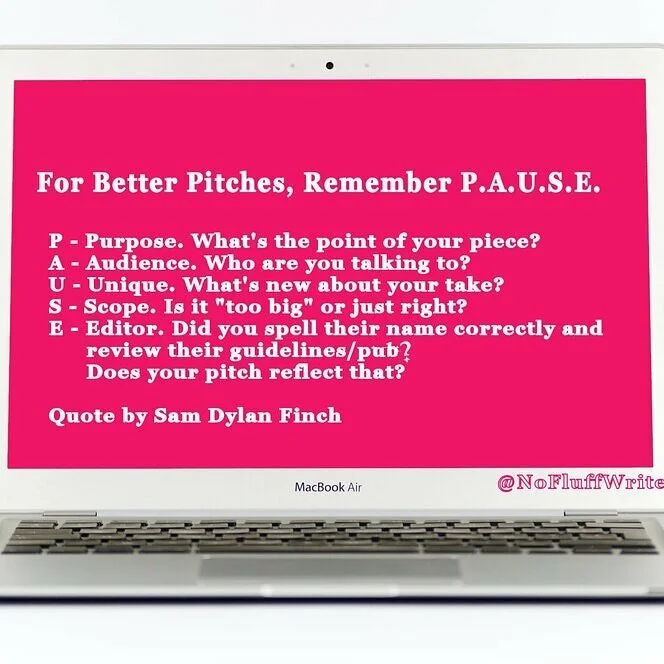
At the risk of turning this Twitter thread into an overwhelming mess, just remember this acronym. PAUSE before you pitch.
— Sam Dylan Finch 🌿 (@samdylanfinch) July 30, 2019
P - Purpose. What's the point of your piece?
— Sam Dylan Finch 🌿 (@samdylanfinch) July 30, 2019
A - Audience. Who are you talking to?
U - Unique. What's new about your take?
S - Scope. Is it "too big" or just right?
E - Editor. Did you spell their name correctly and review their guidelines/pub? Does your pitch reflect that?

Reasons To Automate The Financial Reporting Process
Author: Contributing Writer
Financial reporting is a critical part of any business’s internal operations, as it creates an effective platform for financial analysis and budgeting. This is why it is vital for all companies to invest in online reporting software, irrespective of their size or the industry they operate in. One of the important features of such software is automation, which is what we will discuss below.

When searching for reporting software, you should always select a solution that gives you the ability to automate financial reporting. This is beneficial because you can simplify financial analytics, speed up the process, and perform in-depth analyses.
Think about how reports are conducted at your business at present; it probably takes one individual a considerable amount of time to put a report together. They will have to sift through an abundance of information, using various platforms in the process.
With a financial dashboard, all of your data will be in one place, from profits to ERC, and you will be able to create reports with the click of a button. This reduces the amount of work your employees need to do, thus allowing them to focus their efforts elsewhere. You can also increase regulatory compliance and you will reduce the margin for error when using such software.
You will be able to find solutions that are completely customizable, and thus you will have control over the reports you want to create and the KPIs and metrics you utilize.
What Business Reports Can Tell You
Nowadays, all businesses need to invest in financial management reporting software. The insight they provide can be invaluable. Just think about the amount of data your company generates. Reporting software will ensure that all of this is processed and utilized intelligently.
The best software will give you the ability to create an abundance of reports, and with customization options, the possibilities are well and truly endless, enabling you to compare all elements of your business. Nevertheless, let’s take a look at some of the most common.
Firstly, you will be able to track your sales trends. Sales will vary from week to week, month to month. Is there a pattern to this variation? This is something you will be able to determine, and, therefore, you could adjust your staffing and marketing budgets accordingly.
You can also improve your cash flow, as you can see what jobs are ready for billing, and you will be able to decipher to net profitability for each one. A lot of businesses waste time by not invoicing as soon as they are able to, yet reporting solutions can eliminate this. You can also identify late payers with a report that shows outstanding payments and all applicable data.
Finally, you can determine your most profitable products or services with a report that shows you all of your margins for each product or service offered.

Life’s Simple Luxuries: 5 Lifestyle Hacks to Make Your Day That Much Brighter
By Arsiak Vartenian
If your experience during the COVID-19 pandemic has been anything like mine, I think we can agree it's been difficult— and in many ways, it will continue to be.
In my view, these are the peaks and valleys where authentic personal growth happens. I’ll even go as far as to say it has been a period of self-discovery amid loss, fear, and unrest in my personal life.
I’ve even had to relearn my day-to-day routine; what came into focus was that it was the little things that truly keep me going. I call them “life's simple luxuries,” and here are 5 hacks to make your day that much brighter:
Move your body every day
Simply put, I need to move my body every day. While there are physical benefits to being in shape, I do it for my peace of mind. Here’s the hack: it doesn’t have to be a fancy gym or fancy trainer. It can be a walk outside on a warm day or standing up and marching side-to-side while watching your favorite show.
Regular exercise maintains healthy blood pressure and weight, helps you feel more energetic, lifts your mood, and lowers stress and anxiety. The best part? You will never regret taking a few minutes to take care of yourself.
2. Start each morning with meditation or gratitude
Each morning I think of how grateful I am for the people in my life. I’ve gotten in the habit of carving out time in my morning routine to count my many blessings every single day. The air I breathe, the life and love of those around me, or the new pair of earrings that stylist George Ramirez picked out for me. I’ve got it all — and so do you.
Be sure to sit with this regularly before you hop onto your first Zoom meeting or complete a to-do for the day. I picture it like charging myself with positive energy for the day. It creates alignment and better flow throughout the day. It’s all about your mindset.
3. Brows, Perfume, Lotion
If you are on the go and, like me, have fallen out of the getting ready for work routine (hello, Zoom fatigue), start with three things: eyebrow gel, perfume, lotion. Something about those three has made my mind and mood switch into feeling like I’m put together and ready to conquer the day.
4. Keep it Clean
In my view, if you clean your living space or workspace before the day begins, you're starting your day off right. Make your bed up every day. This has been my routine since I was a little girl and it is key to what I believe is the right start to the day for me.
No matter your cleaning routine, square footage or storage opportunities —trust me when I say that your productivity will thank you when your mind and space is clear. Plus! Assuming you get nothing else done that day, at least you will have checked off “making your bed,” and that’s still an accomplishment. My routine? I do a quick house scan for 20-30 minutes/day. I take care of anything to make sure the house feels and smells fresh.
Take it from Libby Sander, Assistant Professor of Organizational Behavior at the Bond University Business School who’s research into this same topic confirmed that “the physical environment of the workplace has a significant effect on the way that we work.”
5. Connect with a loved one
I connect with someone I love every day — even if it’s only for 10 minutes. I’m not kidding when I say that I have conference calls every morning with my mom and aunts. With our daily use of social media, emails, and texting, we are more connected to each other than ever before — but ask yourself, when was the last time that you heard their voice or a story that was tailor-made just for you? I have recognized the value in talking to one person I love each day, whether it’s having a conversation with someone I live with, calling an old friend to check-in, or going on a walk with a neighbor. I’ve also been using voice memos to connect with them. It captures the essence of conversation for when you are in a pinch.
_________
Arsiak Vartenian is the Founder and Host of Smart Is the New Sexy, an uplifting talk show and online platform that highlights the power of dreaming big through storytelling, connection, community, and heart.
Making Your Writing Business A 5-Star Venture
There’s a lot of demand for writers now, but that doesn’t make it any less competitive for people who provide writing services. In order to maintain a steady stream of business and develop great relationships with your clients, the quality of service you offer is crucial to your success.

As a professional writer, it’s important you provide a professional service. Here are some pointers to help you make your writing business a 5-star venture.
Image Credit: Unsplash under Creative Commons
Sell yourself
With so much competition in the writing world, you’ll need to really sell yourself to help you win new clients. Be clear about the services you offer, listing them on your website and also including a portfolio of your previous projects.
You can also use social media to help market your freelance services online. Social media can be a great way to connect with others, helping you introduce yourself to a wide audience.
Be clear about your terms and your deadlines
When you work as a freelancer, you’re responsible for your workload and your deadlines, which means it’s important that you stay organized. Be clear with your clients about your terms, and when they can expect the finished work. It’s also important that you’re upfront about payment terms, making sure there are clear expectations on both sides for successful completion of the work.

Stay on top of your communications
Fast and effective communication is important to your business. You should aim to respond quickly to queries to maintain professionalism and to help you secure work. Having an online chat function can also help clients and prospective clients get quick answers, and the best live chat provider can make it quick and easy for you to get started. This can also help you set clear availability so that people will know when you’re available to speak to.
Clients appreciate progress communication, and providing them regular updates, especially about ongoing work, can help develop better trust and confidence in your services. If you foresee any deadline issues, such as if you’re sick, let them know immediately. It’s not unprofessional to be sick, and most clients will be very understanding about a delay.
Ask for reviews
Reviews are important for any business. They provide you with valuable feedback, but they also help others make decisions about whether to use your business. Reviews provide word of mouth that can be very valuable when using an online service, and can improve your SEO too. Display client testimonials on your website - they can be very influential for people looking to use your services.
Running a successful writing business makes for an interesting, creative and fast-paced career. With so many people needing writing services today, you could find yourself enjoying a lot of success in this area. Make sure you provide a 5-star service and let people see the professional you are.

11 Fabulous Laptops Worth Buying in 2021
Guest post by Steven Fort
Laptops are one of those wonderful devices that can open up the world before you. A compatible laptop for your work and productivity is unavoidable. And, when you are about to buy the next laptop for your job, gaming, or binge-watching, you should be careful about the flaws. Generally, you won’t settle for a laptop that contains non-compatible features for your day-to-day tasks.

However, laptop manufacturers surprise us with cutting-edge technology. When you are up to working for a stretch of long, tedious hours, only a laptop can be your perfect partner; not a tablet or mobile. However, tonnes of specifications, advanced features, and sharp resolutions are making it tough to decide on the right laptop for you.
Well, we are at your rescue with 11 brilliant laptop choices for 2021 and beyond. Keep an eye on them and go with a reliable one.
MacBook Air
Wait, wait! We are talking about the latest 2020’s MacBook Air. In case you are a fan of the MacBook and want to taste its own M1 processor, then you shouldn’t miss the opportunity. According to Laptop Repair Dubai experts, the base variant of MacBook Air starts with a RAM of 8 GB and secondary storage of 256 GB. However, you can avail features such as crisp display, TouchID, scissor-switch keyboard, and a webcam of 720p.
The M1 processor steals the show with its immense performance. When you are editing photos and videos, then this device won’t let you down. On the other hand, the processor is powerful enough to handle top-rated and bulky games on the go. Additionally, the battery sustains for eight to ten hours. Your new MacBook Air is compatible with other iOS and iPadOS devices, too. So, grab full precise control of your Apple devices efficiently with MacBook Air.
Dell XPS 15
Dell is again on the buzz with the latest launch of Dell XPS 15, launched in 2020. In case you are looking for a perfect Windows laptop, then this is the one. With a terrific display of Full-HD and Ultra-HD screen, the laptop’s processor is from Intel 10th generation. The RAM ranges from 8 to 64 GB. On the other hand, the secondary storage of Dell XPS 15 lies from 256 GB to 1TB, confirms a Laptop Repair Dubai professional.
The design appears eye-catching, and this makes the laptop a must-buy. You can configure the laptop with a discrete GPU, too. The battery life of Dell XPS 15 is decent, as well. However, Dell XPS 15 is quite bulky as the display is 15-inch. If it doesn’t come under your reliability list, you can go with Dell XPS 13.
MacBook Pro (M1, 13-inch)
Are you looking for a stellar MacBook? Then, you should consider the Apple MacBook Pro with the specification of the M1 processor and 13-inch scalability. Apple introduces you to the new digital age of the M1 processor with its custom SoC. Moreover, Apple has placed the maximum number of transistors on a single chip ever. And, this has made the MacBook Pro one of the most powerful laptops to date.
Additionally, unified memory architecture, advanced image signal processor, integrated graphics, and Apple’s neural engine implementation are a few perks of the device. Its fastest ever SSD of size 1 TB assures you of the best performance. Moreover, the RAM of 16 GB won’t underwhelm you at any instance. However, the lack of enough ports might interrupt your work.
Asus ZenBook 13
Are you sneaking into the budget options, too? Well, finding a tech-savvy laptop under a fixed budget is kind of impossible. But, Asus ZenBook 13 has made the impossible possible with a portable laptop option. With 11th Gen Intel or 10th Gen Intel processor, with Core i7, this laptop option is now trending.
Achieve your fast browsing, documentation checking, school assignments, and everything with Asus ZenBook 13. The whopping battery life of twelve hours makes the device a competent laptop in the industry.
HP Envy X360
In case you are searching for chic design and convertible options under budget, you shouldn’t miss out on HP Envy X360. Additionally, you need not make a hole in your pocket for purchasing this laptop. HP has imported the Spectre X360 flagship from 2019 into this laptop. And, it has benefited almost the bezel-less display of the laptop.
Additionally, you can avail displays of 300, 400, and 1000-nit panels while choosing the laptop. You can find a convenient row of hotkeys and kill switches for the laptop webcam and microphone. Furthermore, the laptop is boosted with AMD Ryzen 4000 series. The integrated Radeon graphics card is capable of offering valuable gaming performances.
Asus ROG Zephyrus G14
Are you a hard-core gamer with a passion for travelling? Then, you might be looking for a portable gaming laptop, and we have Asus ROG Zephyrus 14 for you. Powered by the latest AMD Ryzen CPU and graphics support from NVIDIA GeForce RTX, it’s a glamorous deal to steal. In addition to this, you can avail a compact 14-inch display.
The uncluttered and clean look would impress you. And, you can experience hard-core gaming at 60fps and a screen refresh rate of 120Hz. It comes with great specifications at a comparatively lower price. The only con of the laptop is that you can notice a loud sound from the fans under immense pressure.
HP Elite Dragonfly
We have got a premium choice for you, especially when you are a businessman. The only thing that you need to compromise to purchase this super laptop is money. Otherwise, the HP Elite Dragonfly of 2020 is the best-secured laptop when you are working in public. The SureView Reflect technology hardly allows anyone to sneak into your laptop.
This HP laptop has got a built-in Tile tracker. In case you lose the device, you can track the laptop with the smartphone application named Tile. But, the device should be in the range of Bluetooth connectivity with your smartphone. Additionally, the laptop is a 2-in-1 convertible device with a battery life of 11 hours and more.
Microsoft Surface Pro 7
If you are addicted to the classy touch-up and heavy features of the Microsoft Surface series, then we have the most-suited solution as a laptop for you. Take down your notes and keep them handy with this Microsoft Surface laptop. Additionally, if you prefer Windows, then you can obviously go with this laptop.
Moreover, the 10th Gen Intel processor, enormous battery-life, and Wi-Fi 6 connectivity are the highlighted features of the device. The base model of Surface 7 is available with 4 GB of RAM and 128 GB of secondary storage. However, you have to spend extra bucks to grab a stylus and keyboard cover.
Lenovo Chromebook Duet
Locating a budget-friendly laptop for kids can be quite troublesome. Well, you can now bid goodbye to all woes with Lenovo Chromebook Duet. Interestingly, it is a convertible laptop, and it’s perfect for your child who spends time browsing for studies and playing games. Moreover, the laptop weighs only 2.03 pounds, and it makes it highly portable.
But, you need not compromise on the battery lifetime. The MediaTek processor is capable of tackling minor lags. However, you can enjoy Netflix binge-watching and browsing websites without any interruption. The Chrome OS features the Tablet mode for a more convenient view and layouts, just like Android devices. And, Chromebooks are really feasible when you are within a tight budget.
LG Gram 16
LG surprises us with its 2021 innovation in the laptop industry. LG Gram 16 (2021) has an 11th Gen Intel processor. Additionally, the graphics are supported by Intel Iris Xe. Well, you can go with either 8 GB or 16 GB of RAM with this laptop. The screen measures 16-inch, and that’s pretty huge.
However, the device is not bulky at all; rather, super light. Coming to the SSD specifications, you can avail a SD of 1TB in size. Moreover, the battery is going to exist for almost twelve hours. The design might appear quite plain, although and the laptop is a bit pricey, too.
RazerBook 13
Razer merely requires any introduction in the world of laptops for productive workers and enthusiasts. Equipped with an 11th Gen Intel Core i5-i7 processor, the laptop is compatible with Windows 10. It flaunts a 13.4-inch screen that is perfect for experiencing your lively work.
On the other hand, the solid build quality and a 4K resolution are the talks of the town. You can customise the keyboard backlighting, as well. The base model comes with a RAM of 8 GB, and you can upgrade it up to 16 GB.
Basic Checks before you Buy…
It deploys time, effort, and money for purchasing a laptop that’s worth your compatibility, reliability, and productivity. So, choosing the perfect laptop depends on the CPU, GPU, screen size, RAM, secondary storage, and other additional features. Take help from the above-mentioned laptop to come to the right decision for you.

What To Do If Your Business Website Starts To Lose Traffic
It is seldom talked about, but failure is a common part of the business environment both online and offline.

Websites are now firms within themselves in many situations, referred to as ecommerce ventures. The trading of goods or the providing of a service is often exclusively digitized today, and failure in this arena can mean something a little bit different when it comes to brick-and-mortar ventures.
If your website starts to lose traffic, that is when panic mode sets in. It can be a sign of disinterest, or worse, irrelevance. Keep reading to for a few tips on how to quickly turn things around here.
Keep Some Perspective
Failure is many people’s biggest fear, and when it rears its head your way, it can be an all-consuming force of negativity in your life.
The first thing you should do is adopt a healthier perspective. Every entrepreneur has lost out on opportunities, every road to success has the occasional setback somewhere along the way. There are many failure to success stories for you to take heart in, and many of them offer up valuable lessons in the way of persevering until you triumph.
Only when you are in the right frame of mind can you hope to make significant improvements to your website. Otherwise, you will be distracted by your own misery, and thus lose grasp on any semblance of rational thought. Stay positive, and you will remain productive.
Retool the Website
Whether it is your SEO strategy, or even if the site is a bit too hard to navigate, a timely and efficient overhaul may set things right.
ASTOUNDZ are often thought of as the best SEO company in Houston, TX judging by the swathes of full five-star reviews under their belts. They can help you design a website that is truly accessible to all, even so that users on any device can browse your content. Additionally, they will ensure your URL is on the first page of relevant search engine results 100% of the time.
Hitting the reset button can refresh your passion for what you do. With an expert support service in tow, there is no milestone you cannot conquer. Be brave, rip off the band-aid, and start afresh if your gut feeling is to do so.
Appeal to People’s Interests
Of course, much of SEO is about appealing to the masses, ensuring that you are publishing relevant content on your website.
This is something even the big names struggle with. In 2017, Buzzfeed lost traffic due to an uptick of people favoring real news over ‘viral’ material, illustrating how people’s appetite for content changes quite suddenly. Therefore, it might be best to structure your website in a way that means you can cover a range of content, rather than being committed to a handful of topics only.
Even if you are making light use of referential humor or delve fully into a left-field topic, the subject matter you choose to talk about online will be a big draw for clicks. Consult resources like Google Analytics to gain more insight into what people are currently discussing, and tailor your web’s content around the public mood.
Our team does it all – develops beautiful, easily navigable websites, achieves first -

No-Fluff Writing Jobs List: March 15, 2021
Here’s this week’s list of remote writing gigs. Get to pitching!
Here’s this week’s list of remote writing gigs. Get to pitching!
Also, don’t forget to check back next Monday for another fresh freelance writing gig list, or have it delivered to your inbox by signing up for our newsletter.

Contract Paid Media Copywriter
Freelance Content Writers (Personal Finance Niche)
Freelance Copywriter-Technology
Staff Writer on Safety and Security Topics– SafeWise.com
Experienced Personal Finance Writer
Home Décor Writer
Writer
Freelance Writer
Web Content Writer - Addiction & Mental Health
SEO Content Writer
Researcher/Writer
Writer (Romance Story)
Part-Time SEO Editor/Writer (30 hours per week)
Freelance SEO Copywriter
Freelance Content Writer Wayfair (Remote)
Technical Writer- MadCap Flare and Zendesk experience
Lifestyle Writer, Bustle
TV Writer, Bustle
Content Writers
Content Writer/Marketer for eCommerce Business (Remote)
Writer for Math Story Problems (Middle School Education)
SEO, Website, Blog, Social Media Content Writer
Sports Writer - NHL, Southwest Clubs
Freelance Software Engineering Copywriters / Tech Journalist...
Staff Writers
Resume Writer
SEO Blog writer
Content Writer For Affiliate Marketing Website

Freelancing: Is the Grass Really Greener?
Did you know that 69% of office employees have considered becoming freelancers? And they could be on to something where happiness is concerned. But, is the grass truly greener on the other side?

Guest Post
Did you know that 69% of office employees have considered becoming freelancers? And they could be on to something where happiness is concerned. But, is the grass truly greener on the other side?
For the roughly 44 million Americans rocking a side hustle outside of their standard office hours, banking a few extra dollars every month isn’t just a nicety—sometimes it’s a necessity for getting by. But if you’ve got skills you’ve been dying to put to good use—everything from writing and editing to data entry or tutoring—freelancing can be among the most lucrative side job success stories. It might even just be fun to daydream about the perks of being a full-time freelancer instead of punching in and out five days a week at your “real” job. Giving up the commute, working in your pajamas, setting your own schedule, and being your own boss are just a few of the commonly touted benefits of taking what might start out as a side gig and become a primary source of income. But is the grass truly greener on the other side? To uncover the truth behind some of the most common myths and perceptions of full-time freelance work compared to office life, we surveyed 955 people—485 working freelance jobs and 470 working in a more traditional office environment. Thinking about making the switch for yourself? Read on to discover who’s happier, who’s making more money, and how many of your co-workers might take the plunge next.
Make money money

Whether it’s the stress of looming deadlines or the impact of long hours on your health and home life, there are plenty of reasons why you might go to bed on Sunday dreading the workweek ahead. Office life isn’t just sometimes a drag; in some cases, it can actually be bad for you. Somewhere between a distaste for their current employment or the allure of something much better, 69 percent of surveyed office employees confessed to considering going freelance. And they could be on to something where happiness is concerned. As our study found, full-time freelancers saw a seven percentage point increase in job satisfaction. Of course, happiness isn’t the only consideration when it comes to major career choices. Full-time freelancers might be happier with their work status, but they could be making a sacrifice in dollars and cents to achieve that bliss. Compared to office employees, full-time freelancers were much less likely to earn $50,000 or more annually from their work. In contrast to the more than 1 in 10 office workers earning between $75,000 and $99,999 or $100,000 or more, less than 4 percent of full-time freelancers managed to pull in six-figure incomes. Roughly 20 percent of full-time freelancers reported annual incomes less than $15,000 which doesn’t leave very much for a home office remodel.
Priorities over deadlines

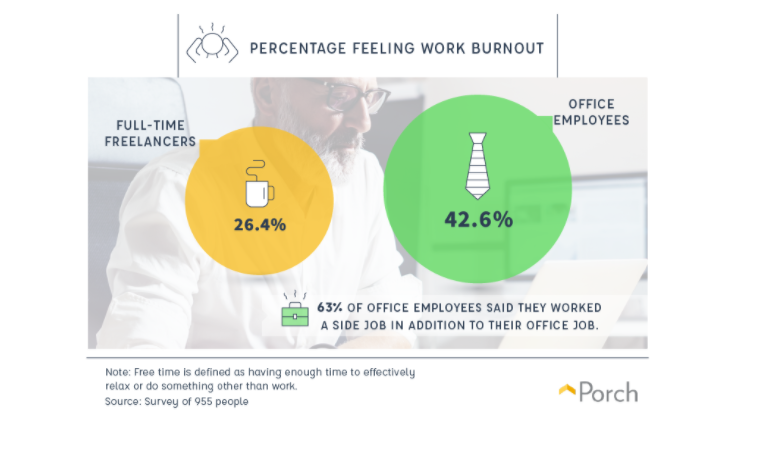
Our findings revealed time off could be one of the undeniable perks of full-time freelancing over office life. Compared to the roughly 31 percent of office employees who said they frequently had free time, closer to half of freelancers said the same. That shift in work-life balance could be a part of what helps freelancers feel less burnout from their jobs. A 61 percent change, only about 26 percent of full-time freelancers felt fatigued by their daily assignments, while nearly 43 percent of office employees reported feeling burnout. According to one 2017 study, fewer than 1 in 4 employees utilize all of their available time off from work. Even though experts say taking time off and traveling is good for both health and productivity, the average American only uses about half of his or her total vacation time. Even the ones who do clock out to get away are more likely to be guilty of bringing their work along for the ride instead of leaving it at the office. So why go into work when you have paid time off waiting to be taken advantage of? For a majority of people, the answer is simple: fear. Fear of falling behind or fear of being replaced—this heightened anxiety leads people to consider cashing in their vacation hours or letting them expire instead.
All that glitters isn’t gold

No matter how you slice it, certain elements of being a full-time freelancer are bound to seem enticing from the outside. Having a certain level of flexibility and independence over when you work, where you get the job done, and whom you take on as a client has its privileges over a more rigid office environment. But what about the perks of office life that you might miss once they’re gone? Over 82 percent of office employees enjoyed the singular aspect of their professional lives that 75 percent of freelancers missed having: a steady income. While there’s always the potential to earn more as a freelancer, it isn’t guaranteed, and you might have to put in some extra legwork at the end of the month to track down your invoices when you aren’t on the payroll. Full-time freelancers also confessed to missing having co-workers with whom to share their days (49.9 percent), feeling connected to the people they worked with (43.9 percent), and being part of a team (29.4 percent). If the isolation really bugs you or starts to affect the quality of your work, analysts say that could be one of the most important signs that freelance work might not be for you.
The hunt continues


While you might still find yourself of the job hunt as an office employee, people with more conventional professions typically enjoy a certain level of comfort the average freelancer can’t. Compared to 1 in 10 office workers who always felt like their jobs were on the line, more than 1 in 4 full-time freelancers lived with the concern they might lose their work at any given time. And while nearly 55 percent of full-time freelancers were frequently looking for new jobs, less than 16 percent of office employees consistently looked for work. Office employees more commonly either only rarely (42.8 percent) or occasionally (30 percent) felt the need to pursue new opportunities for employment.
The changing tide
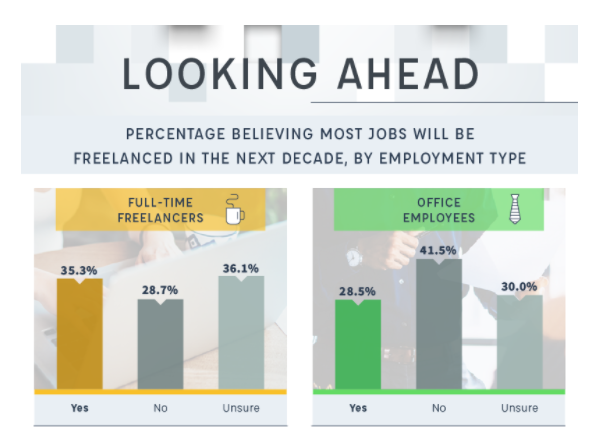

In today’s digital climate, you don’t have to commit to full-time freelancing to get some of the benefits. The widespread availability of mobile devices and powerful video conferencing technology means companies that previously brought all of their employees into the office on a daily basis can now consider partial or even total telecommuting work. These trends may continue evolving, too. Nearly 29 percent of people working in an office environment believed most jobs would transition to freelance work in the future. Our analysis found employees in information services (72.5 percent), technology (63.6 percent), finance and insurance (59.2 percent), and manufacturing (45.5 percent) largely believed their jobs could be done as freelance (rather than permanent) positions.
Things you shouldn’t have to worry about
If you work from home in your pajamas or clock in and out for the traditional 9 to 5, it’s entirely possible the grass could look greener on the other side. The truth probably lies somewhere in the middle. While full-time freelancers reported having more free time and feeling less burnt out by their jobs, they also generally made less money and had more stress about securing a regular income. And as lonely as being a full-time freelancer might be, certain employees surveyed felt their jobs could transform from permanent employment to full-on freelance work.
Methodology and limitations
To gather the data presented in the above study, a survey was conducted using Amazon’s Mechanical Turk Service. Respondents were asked if they worked in an office full time or worked as a full-time freelancer, and all others did not qualify for the survey. Of the 955 respondents, 470 were full-time office employees, and 485 were full-time freelancers. 459 respondents identified as female, 493 identified as male, and 3 chose to identify as neither. 99 respondents were Baby Boomers, 273 were from Generation X, 566 were Millennials, and 17 from generations outside those. For the data regarding what freelancers miss about working in an office, only current freelancers who have worked in an office before were taken into account. All responses gathered are based on self-reporting, and there are many issues that can be found within self-reported data, such as telescoping and exaggeration. To make sure respondents were paying attention and to ensure the most accurate data possible was obtained, an attention-check question was included.
This article was originally posted on Porch.com.

No-Fluff Writing Jobs List: March 8, 2021
Here’s this week’s list of remote writing gigs. Get to pitching!
Here’s this week’s list of remote writing gigs. Get to pitching!
Also, don’t forget to check back next Monday for another fresh freelance writing gig list, or have it delivered to your inbox by signing up for our newsletter.

b2b Copywriter
GameRant - Freelance TV/Movie Features Writer
Blogger for Language Learning Website
Writer Editor
ASSOCIATE SCIENTIFIC WRITER - VACCINES
Direct Response Copywriter
Technical Writer - Splunk On-Call (Remote)
Marketing Copywriter
Technical Writer
Long-Term Freelance Writer/Editor for Established Parenting Website
Substance Abuse/Addiction Writer (Remote/Freelance)
College of Science Marketing - Editorial Writer
Nursing CEU writer
Grant Writer/Consultant with Federal Experience
Technology News editor Team Lead– Breaking News
Updates Editor, Verywell Family
Content Writer
Marketing Copywriter
Seeking Freelance Writers for Accounting Content Production
Contract Curriculum Writer, Social Studies, Remote
Wide Open Spaces Content Writer
Content Writer
Backyard & Outdoor Content Writing
Content Writer for Law Firm
Freelance Blogger
Item Writers in the field of Biology
Marketing Copywriter (Insurance Industry)
Tech Writer (JPL) - Remote Work
Social Media Content Writer
Public Relations Specialist and Writer
Neuro Linguistic Programming NLP Copywriter - FB Ads
Freelance Journalist
Investigator Reporter/Blogger
WordPress Blog Editor and Writer (Full-Time Remote Position)
Content Writer/ Content Creator, SaaS, MarTech -remote
Tech/Media/Wellness Startup - Publicist, Ghost Writer
UX Writer / Tech Writer
Kitchen Appliances Writers
Sales Enablement Writer + Project Manager
Staff Writer
Narrative/Persuasive Writer
Article Writer
Freelance Content Writer
Freelance Writer
Food Safety Plan Writer
Senior Medical Writer (Publications) with Global MedComms
Sports Writer
Rockstar Writer for Food Blog

No-Fluff Writing Jobs List: March 1, 2021
Our weekly remote writing jobs list is moving from Wednesday to Monday. That way, you can start your week off right! Here’s this week’s list of remote writing gigs. Get to pitching!
Also, don’t forget to check back next Monday for another fresh freelance writing gig list, or have it delivered to your inbox by signing up for our newsletter.
Crypto Content Writer
Part-time Copywriter for Online Art Gallery
Freelance Writer
Technical Writer/Business Analyst
Commerce Beauty Writer, BDG
Recruiting Resume Writing Consultant
Medical Website & Blog Content writing
Staff Writer/Art Reviewer
Web Content Writer I
Freelance Content Writer - Restaurant Industry
Creative Writing Consultant
Ecommerce Writers
Staff Writer/Editor
Freelance Writer for Guitar Website
NONFICTION WRITER | LONG-TERM
Beauty Professionals Bloggers
Staff Writer/Editor
Remote Writers Needed for Tech-Freelancing-Infotainment Site
Content Writer - Grade 4/5 Science
Freelance Grant Writer
Staff Writer - Deals
Content Writer
Freelance Legal Copywriter
Content Writer Grades 4/5 ELA
AUTOS QUALITY EDITOR
Sales Copy Writer (Marketing Agency)
Staff Writer/Editor
Marketing and Technical Content Writer
Technical Writer
Content Strategist & Copywriter
Copywriter/ Content Writer (Remote)
Freelance Content Writer
Web Page Content Writer
Content Writer - Entertainment/Pop Culture
Resume Writer
Marketing Copywriter
Freelance Writer
Freelance Writer/Reporter
Outdoor Writer
Science Writer (On-call - Remote)
Web Content Writer
Blockchain Writer & Researcher
Brochure Copywriter
Blog Writer
Junior Content Specialist, Editorial
Staff Copywriter (Financial, Precious Metals, & Crypto)
Marquee Staff Writer (Remote)
Content Writer
Staff Writer - Deals
Content Specialist, Editorial
IT Blogger - Freelance - Work from Home
Medical Technology Writer | Digital Marketing (Remote)
Email / SMS Manager and Content Writer
SEO Copywriter Needed For Legal Marketing Company
Content Writer - RV Tech & Maintenance
Industrial Technology Writer | Digital Marketing (Remote)
Nursing / Allied Healthcare Blogger - Freelance
Nursing HiEd SMEs & Writers - CRNA, CEN, PCCN, CCM, EFM, ION...
Minecraft Content Writer
Content Writer/Strategist
Writer
Content Writer Specialist
Slack Writer
Freelance Content Writer
Commerce Update Editor, Luggage, TripSavvy
Freelance Email Copywriter
Freelance MMORPG Game Guide Writer - Seeking FFXIV, ESO, GW2...
Stock Market Writer
Temporary Commerce Writer
Games Writing Co-op
Freelance Maui Travel Blog Writer
Contributing Writer-Remote, Contract Position
Content Writer
Business Writer
Freelance Writer for Corporate eLearning Course Development...
Technical Writer and Digital Content Expert for an IT Company...
Intermediate Tech. Writer- Git and CMS experience
Cyber Technical Writer
Trending News Writer, Bustle

Writers! It's Not Unprofessional to be Sick
You’re only human. No need to fake it when your clients will respect your honesty.
You've probably heard that to keep up in the business world you need to be tough and never show weakness. Especially if you’re a woman. You’ve got to hide all weakness to keep up with the fellas, right?

I call hogwash.
I used to think this way, too. I would force myself to work with a fever. You know what? My work suffered and my clients noticed. It is much more professional to give yourself plenty of cushion when it comes to deadlines so you can give yourself a break.
If you don't have any wiggle room, be honest. Say to your editor or client, "Here's the assignment. I've been under the weather, so if you see anything that's off, I apologize. Let me know and I will fix it ASAP. " I've used this exact line. Clients don't get mad. They understand you're human. They appreciate that you worked hard for them through your sickness and that you're honest and willing to make corrections right away.
There are a few times that I've made colossal blunders while sick or while in a stressful family emergency. It's better that the client know you're compromised, not incompetent.
By the way, it's also much better that the client knows right off. If you tell them after they find a problem it will sound like you're making up an excuse, which WILL look unprofessional.
And hey, if your client loves the work you did and there's no problem they will see you as a superstar that can get sh*t done even when you're sick. Win-win.
There will be the few jerks who will reprimand you or give you attitude for being sick. To that I ask, “Do you really need people like that as clients?” Probably not, because those types of people tend to love to pay you very little and expect way too much.
Have you ever had to write while sick?
No-Fluff Writing Jobs List: February 17, 2021
Here’s this week’s list of remote writing gigs. Get to pitching!
Here’s this week’s list of remote writing gigs. Get to pitching!
Also, don’t forget to check back next Wednesday for another fresh freelance writing gig list, or have it delivered to your inbox by signing up for our newsletter.
$150 per https://t.co/9CvHBzhJVx
— Kaitlyn Arford — Freelance Writer (@kaitarford) February 17, 2021
We're building up our roster of freelance writers and photographers.
— Capital & Main (@capitalandmain) February 12, 2021
Send us your pitches: https://t.co/5FR9m7wlY9 pic.twitter.com/ONVWD77UHb
I am commissioning for @Intrepid_AdvMag - send me your pitches!
— Emily Woodhouse (@TravellingLine) February 12, 2021
Our first 3 months' themes are Polar, Kayaking and Hiking.
Read the Contributors section of this page for details: https://t.co/N2tlFSQ4kw
All experience levels welcome, best idea gets commission!
Remote content writer - Content marketing for IT companies
Cryptocurrency Personal Finance Writer
Grant Writer
Technical Product Marketing Content Writer
Freelance Technology News Writer
Freelance Content Writer
Legal Writer/Cannabis Dispensary Subject Matter Expert (SME)
Hip Hop Nightlife Website Staff Writer
Freelance Reality TV Realtor Show Writer
Beauty Copywriter & Blog Writer
Writer-Editor (Scientific), GS-1083-13 MP (Science Writer)
Freelance Copywriter / Social Media Specialist
Online Video Game News Journalist
Senior Health Writer
Direct Response Copywriter
Copywriter (Content, Marketing, Digital,Technical)
Content Writer
Content Writer
Resume Writer
Freelance Writer
Yoga Writer
SEO Content Writer
Intellectual & Developmental Disabilities Writer, Reviewer,...
Web Content Writer - REMOTE - Japanese C2 - Salary USD 60k
Freelance Blogger
Script Writer
Freelance Writer for Career Blog
Social Media | Copywriter | Comedian
Content Writer

Zen Office Space Ideas That Take Your Productivity To The Next Level
What is a company?
At root, it’s nothing more than a collection of people allied in their pursuit of a common goal. For the most part, that goal is selling a product or service, but it can also be the completion of a mission or even something wholly altruistic.
People - not stuff - therefore, is what drives companies forwards. And the quality of their work directly reflects the success of the company. The better they are at what they do, the faster you can move forwards.
Companies, therefore, need to focus on creating office spaces that are conducive to work. The more congenial they are to getting into a “flow” state, the more likely people are to be at their best.
But how do you achieve a sense of flow in a busy office?
The answer is to use Zen principles.

Zen is the idea that people can be at peace with the universe. It’s actually a very ancient idea - and not well-known in the West - but it can have powerful effects on the mind and body. People working in Zen offices feel calmer and more productive. They’re at their best more often, instead of worrying endlessly about their deadlines.
So how do you create a Zen office and achieve the benefits of this ancient practice?
Let’s take a look.
Add A Zen Garden
A Zen garden is supposed to be a place that facilitates meditation - or “emptying of the mind.” But even if you don’t go in for that kind of philosophy, it can still be a place where people achieve peace and bliss. That might sound hard if your office is in the middle of a big city, but a Zen garden doesn’t have to be something literally outside. It can also just be a garden-like space in the office somewhere.
Ideally, you want a location that reflects the themes of the natural world. Making the colour palette green, for instance, can help a great deal. As can adding sounds or images of birds - something which proven relaxative powers.
You can also try including water features to create the sound of swooshing, running water in your environment.
Create Better Lighting
Modern science knows that adding better lighting to offices makes people feel happier and work more productively. Installing the best office lighting you can isn’t about squeezing every last ounce of effort out of your people. Instead, it’s about putting them in a mental state that makes their work effortless.
We find it hard to imagine doing work without the associated effort. But it is possible. With the right lighting, you can replace tension with ease, and allow people to “flow” according to their potential.
Improve Your Sound Environment
The noise associated with modern workplaces can be disruptive to individual happiness and fulfilment. Constant conversations, banging and clattering can all make people feel off balance.
Changing the interior noise environment, therefore, can be a great step towards a more Zen environment. You want some conversation. But you also want quiet spaces where people can go away from the noise.
Sometimes, just piping relaxing sounds into the environment can help. The sound of birds singing or the rush of falling water help to change your colleague’s frame of mind and makes them more attentive to the moment.
Add A Water Feature
If you wanted, you could go all the way and add a water feature to your office. You regularly see this approach for high-end offices. They’ll include water features in the reception and communal areas to set the tone of the rest of the building. The sound of running water changes your perceptions on a subconscious level, totally changing the way that you feel.
Adding water features can be expensive, but it doesn’t have to be. A simple system that recirculates water over pebbles is within the budget of most enterprises.
And it can make a tremendous difference in how people feel about coming to the office. It changes the psychology, making the workplace more like a retreat (or a place of excellence), and less like somewhere to grind away the hours. What a difference that could make to the well-being of your team.
Add Meditation Spaces
All the biggest and most successful companies in the world know that meditation is the key to success. Google and Apple both now provide meditation classes for their employees.
Meditation, therefore, is something you might want to actively include in your workplace environment. When people feel free to open their minds, their entire approach to work improves. They get a sense of relaxation and everything feels calm. Suddenly, they’re able to achieve a state of “flow.”
So, should you use Zen principles to improve your office space? The overwhelming answer seems to be “yes.” As a group, we forget ancient wisdom at our peril.

No-Fluff Writing Jobs List: February 10, 2021
There are a lot of gigs this week from a wide range of niches.
There are a lot of gigs this week from a wide range of niches. There’s travel, parenting, fishing, food, beauty, style, health, horse racing, and many more niche writing jobs. You’re going to find something that works for you for sure! Here’s this week’s list of remote writing gigs. Get to pitching!
Also, don’t forget to check back next Wednesday for another fresh freelance writing gig list, or have it delivered to your inbox by signing up for our newsletter.

We're looking for pitches about all things food & ag. We're especially interested in hearing from writers w/ experience focusing on: policy, climate, school meals, race, and science. Rates start at $500 for reported features & $400 for shorter interviews. https://t.co/uUlKi0u2dL pic.twitter.com/nkX5LUVkXl
— Civil Eats (@CivilEats) February 2, 2021
Experienced Copy Editor for Baby Shower SaaS Brand
Staff Writer - Beauty
Staff Writer, Deals
Staff Writer, Parenting
Experienced Welding Writer Wanted – Long Term
Staff Writer - Electronics
Senior Staff Writer - Trending
Long-term Home Improvement Writer (Stable with Competitive Rates)
Content Writer
Copywriter/ Content Writer (Remote)
GameRant - Video Game List Article Writer
Opinionated writer about Power Transmission parts
GameRant Video Game Features Writer
Content Writers
Experienced Book Reviewer
We're looking for writers! Come join our team!
— Nerds and Beyond (@nerdsandbeyond) February 2, 2021
✨💫😊
Check out all the details here: https://t.co/sxzmt1Xygc
Academy Content Writer
Sports Writer
GameRant - Video Game Strategy Guide Writer
Part-Time SEO Copy/Blog Writer (Contract - Remote)
Blog Writer
Marketing Strategist/ Content Writer
GameRant Video Game News Writer
Lead Content Strategist & Writer at Fully Remote SaaS Startu...
Crystal Reports Writer
Freelance Writer
Resume Writer and Reviewer
Outdoors & Guns Writer Wanted (Long-Term, Consistent Work)
Marketing Writer
Freelance Digital Marketing Content Writer
Basketball Writer/Contributor
Writer and Content Creator
Freelance SaaS Writer
Content Writer - Franchise Development
Employee Experience Content Writer
Fisherman Writer Wanted To Write Fishing Equipment Reviews
Content Writer(Insurance)
Content Writer/Specialist
Freelance Grant Writer
Tech writer
Technical Writer (Biotech)
Cannabis Science Writer
REMOTE Technical Writer - IT
Writer, Personal Finance
B2B Copy Writer
Personal Technology “help desk” Writer
Communications Journalist
Content Marketing Writer
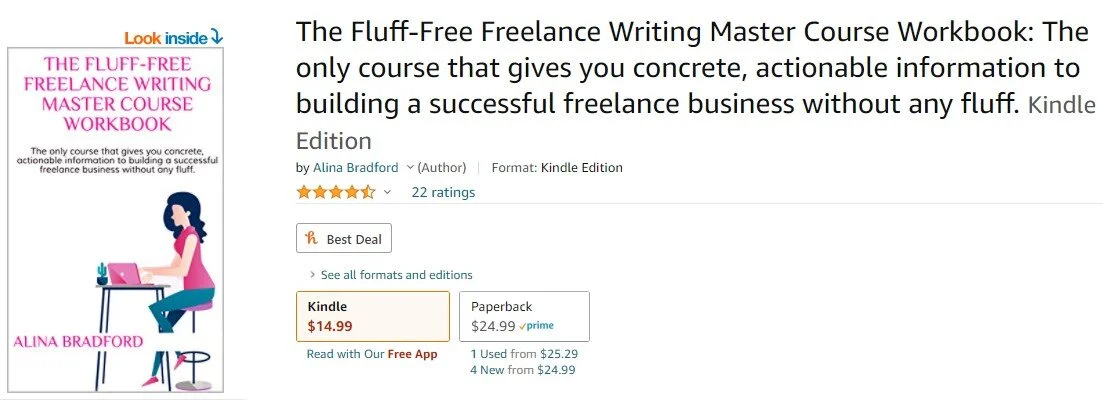

The Freelancer Writer’s Guide to Dealing with Clients
As a freelance writer, for me, the work is easy. It’s dealing with the clients that's hard. So, over the past few years I have developed a strategy for dealing with clients, and ensuring I get paid every time!
No matter how put together you think you are as a business person, one day, someone will come along and make your question your sanity, restraint, and professionalism. As a freelance writer, for me, the work is easy. It’s dealing with the clients that's hard. So, over the past few years I have developed a strategy for dealing with clients, and ensuring I get paid every time!

How to Spot a Scam
There are a lot of scammers out there that would just love for you to write something great for them, and then disappear without paying. You can spot the tricksters with these tips:
They don’t want to tell you their budget in the ad.
Their ad is full of typos.
It doesn’t seem like the person who wrote the ad speaks English very well.
The ad is very vague about what the gig is about or payment.
They try to convince you that your rates are unreasonable and they could get someone else to do it for $3.
They disappear for weeks at a time in-between emails.
Here are some more signs that a client will be a PITA (pain in the ass) or a straight-up scammer.
Get Paid Upfront
This may be the most important thing someone will ever tell you about being a freelance writer: ALWAYS get paid at least 50% upfront. If a client doesn’t want give you money upfront, then give them a hard pass. You never do work on a promise. If you do, there’s a big chance you’ll never see your money.

You don’t go up to Walmart and tell the cashier, “I’m going to take this food home. If I like it I’ll come back and pay you for it.”
“But, Alina,” you say, “this is a service job and you pay for those types of jobs after the work is done.” Yes, sometimes you pay for services afterwards, but many smart contractors, like doctors, dentists, landscapers, janitorial services and such make clients pay a deposit, or don’t let them leave the building without at least paying a deductible or making payment arrangements.
What should you say to a client who doesn’t want to pay upfront? Tell them that your time is valuable. A deposit ensures a place on your client list and in your schedule.
The only exception I make to my rule is when I work for large companies that pays their freelancers and employees once a month through direct deposit and I have a contract stating when the money will be deposited each month.
Get Everything in Writing
You’ll find that most clients want to talk things over on the phone. I avoid this in most cases. It is much better to have everything written in an email so you can refer to it when problems arise. Taking a screenshot of an email and sending it to a client to prove what they said is much more effective than, “But you said on the phone…”

I had one client decide that he wanted a refund, basically for no reason. He filed a complaint with PayPal. Luckily, I had proof that I fulfilled my end of the agreement. All I had to do was send PayPal the emails with the client.
If a client REALLY wants to talk on the phone, open up a new email and summarize everything that is agreed upon in the phone conversation. Then, add at the bottom, “Please email me back with confirmation that this information is correct. Send the client the email with the subject line: Summary of Our Phone Conversation. This basically works like a simple written contract.
Here are some more contract tips for freelance writers.
What to Do if You Don’t Get Paid

Unfortunately, this section will be interesting to a lot of you. When you’re an employee and working for someone else, the roles are clear; you’re responsible for doing your job and showing up on time, while your employer is in charge of making sure you get paid. It’s simple and plain. Too bad it's not always that simple when you’re freelancing.
When you’ve told your client that you’d want some of the payment up front and you receive no payment, the course of action is clear. Just tell your client that you’re not doing the work until the payment has cleared.
If you get halfway through the project and another milestone payment is required and they don't pay, stop doing the work.
Give them a friendly reminder. It could have been an honest mistake and you want to keep a courteous tone if this is the case. One reminder is enough, though. If they don't pay up, then remove them from your client list. You don't need someone who is slow in performing the one duty they have towards you.
I like using the invoicing system through PayPal, because I can open a dispute with non-payers and I usually win.
Avoid Scope Creep
Scope creep is when a client keeps asking for more and more without paying you for the extra work. When you’re coming to an agreement, set limits. Here are some rules to prevent scope creep:
Limit how many times a client can ask for revisions. Two revisions is usually standard.
Set word count or page limits. They want it to be longer? Great, then they must pay more. Let them know what extra pages or words will cost them in your agreement.
Charge extra for graphics, photos, video or any other extras or work it into the price.
If the client wants weekly in-person meetings, put that in the agreement and charge him for it.

Don’t Be Bullied
Some clients will try to force you to do things their way. Don’t let them. They wouldn’t go to a doctor’s office and tell the doctor, “Oh, it’s not in the budget to get a colonoscopy, so I’m going to need you to give that to me for free. I’ll give you a lot more paid work down the road, though.” Clients need to give you respect or you shouldn’t do business. Let them go stress out someone else. You don’t need that.

Trust me.
The right clients are out there and they are willing to pay you what you’re worth.
Protect Your Work
Always show clients ongoing projects by sending them a link to a Google Doc that is set as “Read Only.” This way, the client can make suggestions, but won’t be able to steal the work without paying. When a final payment is made, simply unlock the document.
Be Professional

My last advice deals with how you present yourself as a professional. The better you are at building an image of yourself as proper, polite and experienced in the work you do, the higher your chances are of getting high-paying, trustworthy clients.
Stay polite and professional, build an online reputation with loads of great reviews and showcase a solid network of other professionals - it will scare those amateur clients away.
Need more tips on getting great freelance gigs? Grab my No-Fluff Freelance Writing Starter Pack. It has everything you need to become successful as a writer.

What is Freelance Writing?
Even if you are a freelance writer, you may not be 100% on exactly what freelance writing means. I’m going to break it down for you.
Even if you are a freelance writer, you may not be 100% on exactly what freelance writing means. After more than 20 years as a freelance writer, I think I’m qualified to help you out. So, I’m going to break it down for you.

Photo by Keira Burton
You’re a contractor
A person that is a freelance writer writes one or more articles, blog posts, or other forms of writing for clients. Some other forms can include:
Ebooks
Emails
Ghostwriting
Brochures
Ad copy (People who write words that are used to advertise something are usually called copywriters.)
Freelance is another way of saying someone is a contractor. It can also be used instead of saying someone is self-employed or an independent contractor. Freelance means that, basically, you are not someone’s employee. Typically, you and the person you write for have a contract, but they can’t really tell you what to do (we’ll get more into that in the next section). Here are some contract tips.
Your have rights
As a freelancer, you have certain rights under US law. Here are some of the rights and laws for freelance writers (these can vary from state to state):
Your client can’t tell you what times you have to work.
Your client can’t tell you where to work.
Your client can accept or reject the finished product (or milestones), but otherwise they don’t have control over the work.
You can work with as many, or as few clients as you like.
You pay your own business expenses.
The client can’t force you to use their computers or other equipment.
Should freelancers have business names?

Photo by Zen Chung
As a freelance writer, you get to pick a name for your business…or not. You can just use your own name and you don’t have to register a business name, if you don’t want to. For example, I use my name, Alina Bradford, on my tax documents instead of a business name. Just using your name saves money when you start up, and you can always register a business name later.
I’ve never picked a business name because, well, I’m a writer. People see my byline on my finished product and I want them to be able to find me to hire me. If I run my website under a business name, it would be harder for potential clients to find Alina Bradford.
You should, however, sign up to get an EIN. This is your tax identification number and you can use it instead of your Social Security Number when filling out paperwork for clients. This will keep your SSN private and secure. You can sign up for an EIN on the IRS website.
Want more information on how to get started as a freelance writer? Get your copy of The Fluff-Free Freelance Writing Master Course Workbook on Amazon today.
Note: This article is not legal advice and should not be taken as legal advice.