

10 Busted Myths to Keep Writers Well This Winter
Freelance writers don't get sick days and clients don't care if you're high on cough syrup. They just want their projects on time. That's why it is important for writers to know how to keep themselves well this winter.
Freelance writers don't get sick days and clients don't care if you're high on cough syrup. They just want their projects on time. That's why it is important for writers to know how to keep themselves well this winter. There are endless winter health myths that we have heard from well intentioned grandparents and parents. They have become so ingrained in us that we take them as cold hard facts. Many of these myths have no more basis in reality than Santa Claus. Of course, everyone wants to stay as healthy as possible during the frosty months. Here's the facts from Board Certified NYC internist and gastroenterologist Dr. Niket Sonpal.

Myth: Allergies Go Away in the Winter
Allergies might be the real source behind your stuffy nose and scratchy throat this season. According to the Asthma and Allergy Foundation of America, one in five people suffer from indoor/outdoor allergies, and the indoor variety can actually be worse in the winter. Dr. Sonpal cautions that, “If your symptoms last longer than 10 days or ease up after taking an antihistamine, it might be time to visit an allergist.”
Myth: I Wash My Hands All the Time With Wand Sanitizer, So I Should Be Fine
Hand sanitizer will kill most viruses, but not all. You must make sure you use the right amount of hand sanitizer and let it dry completely. Dr. Sonpal points out that,” Some viruses, like norovirus, which causes vomiting, is not killed by hand sanitizer. Soap and water are best to get rid of all bacteria and viruses, but the hand sanitizer is better than nothing at all.”
Myth: It’s Cold Out, I Don’t Need Sunscreen
The sun’s rays are just as strong in the winter months as they are in the other seasons. Snow and ice can reflect even more sunlight, up to twice as much. Grab the SPF 30 and put it on, regardless of the temperature. Don’t forget those sunglasses to keep your eyes safe as well.
Myth: I’ll Just Drink Some Alcohol to Keep Myself Warm
Although it may feel like drinking alcohol is making you warmer, it does not. Dr. Sonpal says that, “when you drink, the blood vessels dilate or get bigger, and blood flows to your skin and away from your internal organs. So, it may feel like you are getting warmer, but you are not.”
Myth: The Flu Shot Gives You the Flu
According to a new survey from the National Foundation for Infectious Diseases and Rite Aide, 44 percent of American women view the flu as a serious threat to their health. Yet nearly half (49 percent) do not intend to get a flu shot this year because they believe the vaccine can give them the flu. The U.S. Centers for Disease Control and Prevention recommends the flu shot for anyone older than 6 months of age. Dr. Sonpal stresses that, “The shot does not contain a live virus, making catching the flu from it impossible.”
Myth: Winter Weather Makes You Store Fat and Gain Weight
Our bodies do not go into some kind of winter hibernation mode, stockpiling every ounce of fat to use for the lean times. It seems logical, like a throwback to our days living in caves foraging for food, but in reality, any weight gain comes from our winter habits. Dr. Sonpal points out that, “we tend to exercise less in winter. We eat more hearty meals and comfort foods, including more sugary snacks and desserts (especially around the holidays).”
Myth: You Lose Most Heat Through Your Head
The saying goes “we lose 90 percent of our body heat through our heads.” But a 2006 study found that the head accounts for about 7 percent of the body's surface area, and that heat loss in the region is fairly proportional, according to LiveScience. "Your head is another extremity, and it's susceptible to cold, so you should wear a hat, but it doesn't lose any more heat than another part of your body," says Dr. Sonpal.
Myth: Chicken Soup Will Cure Colds
Many cultures teach us to drink warm liquids like tea, hot apple cider, and soups when we’re dealing with colds. It’s true that something like chicken soup may help soothe and ease congestion, but much like vitamin C, hot soup won’t do immediate wonders.
Myth: Being Cold Gives You a Cold
No matter what your grandma might have told you, spending too much time in the cold air doesn’t make you sick. One study found that healthy men who spent several hours in temperatures just above freezing had an increase in healthy, virus-fighting activity in their immune systems. In fact, you’re more likely to get sick indoors, where germs are easily passed.
Myth: Feed a Cold, Starve a Fever
Dr. Sonpal says that, “This is another myth that comes from a time when people didn't understand the science of body chemistry. The thought was that if you had a cold, food would warm you up. Conversely, if you had a high fever, not eating would cool you down. This is just patently bad medical advice. In both cases, good nutrition gives your body the fuel it needs to fight infections and recover from an illness. When you have a fever, your body is burning energy at a rapid rate, and that needs to be replenished. So, by all means feed your cold; but also feed your fever, or any other illness. Even if you have stomach issues, find a way to take in lost fluids and electrolytes.”
About Dr. Niket Sonpal:
Dr. Niket Sonpal is a native of Long Island NY and a graduate of Medical University of Silesia – Hope Medical Institute in Poland. After completing his residency in Internal Medicine at Lenox Hill Hospital, he was selected to be the 2013‐2014 Chief Resident at Lenox Hill Hospital–Northshore LIJ Health System. He is an Adjunct Assistant Professor at Touro College of Osteopathic Medicine and Clinical instructor at Kingsbrook Jewish Medical Center, Brooklyn. Dr. Sonpal has completed his Fellowship in gastroenterology & hepatology at Lenox Hill Hospital and will continue his work in the field of medical student and resident test preparation. He now serves as the associate program director for the Internal Medicine Residency Program at Brookldale University medical center.
He is the co‐author for the best-selling Master the Boards: USMLE Step 2 CK, Master the Boards Step 3, And Master the Boards: Internal Medicine. He is also the Chief Operating Officer for Medquest Test Prep, Director of Medical Education for Picmonic Test Prep, and a recognized expert on medical test prep.

How Writers Can Keep Workouts Hot During the Cold Months
According to Schwinn Fitness -- the most respected name in exercise equipment —it is also a perfect time to start setting good habits for indoor exercise that will carry you through New Years resolutions and beyond. Here are a few indoor exercises to try when the days get colder and darker:
With fall comes the impending holiday season filled with extra good cheer (re: calories, carbs, and double portions of dessert). With being a writer, it's hard enough to stay in shape.

According to Schwinn Fitness -- the most respected name in exercise equipment —it is also a perfect time to start setting good habits for indoor exercise that will carry you through New Years resolutions and beyond. Here are a few indoor exercises to try when the days get colder and darker:
>> TABATA TABATA TABATA Tabata is a workout done in eight one minute bursts of activity with a 30 second rest in between. Then, you repeat. The exercises themselves can be anything you like but we’re partial to crunches, pushups, squats, leg lifts and (if you’re feeling motivated) burpees.
>> BECOME A STAIRMASTER You don’t need a fancy machine to get the most out of climbing stairs. If you’ve got a set of stairs in your home or office climb them at a brisk pace. Or quickly step up and down a single step. You’ll increase your heart rate and tone your core, legs, and glutes.
>> DANCE DANCE RESOLUTION Making exercise fun will help you stick with it throughout a cold winter. Try some exercise videos that let you dance a long with the trainers. Zumba and Capoeira are some of the best known but there are plenty of them out there and many of them are free on YouTube.
>> GET ON YOUR BIKE AND RIDE I know, it’s cold, you don’t want to go outside. But you don’t have to. A stationary bike like the Schwinn stationary bike will help you get fit right in front of the TV. And it's integrated VR-compatible RideSocial app lets you stay competitive while riding in classic and exotic locales.
>> JOIN A CLASS There’s no better way to keep yourself accountable than signing up for a group exercise class. Find a local gym or recreation center and connect with some compadres to sweat alongside. There are tons out there but we love pilates, barre, and boxing.

Your Voice Can Change The World... But Who Can Hear It?
Blogging is a wonderful thing. It has been a huge and influential step in the democratization of our media. It has empowered many to shake off the shackles of wage slavery and go into business for themselves, turning their blogs into a steady source of income. What’s more, a blog can be an extremely potent marketing tool for the nascent entrepreneur. It can humanize their brand by giving them a voice and allow them to share their insights, experience and advice. This not only builds value in their brand but engenders trust in prospects, helping to facilitate conversions. For freelancers it can promote awareness of the services they offer and showcase their talents to prospective clients.
A blog can raise awareness of an important issue. It can help to promote a charitable cause. It can give a voice to the voiceless and enlightenment to the unenlightened. But in order for your blog to achieve it’s true potential, the right sets of eyes need to get in front of it. Here are some time honored ways in which bloggers of all shapes and sizes can ensure that their voice is heard by those who need to hear it the most.

eyes on your blog
Get to know your SEO
If you run a small business for which you blog, it’s likely that you’re familiar (at least in principle) with Search Engine Optimization. This means ensuring that your blog appears as highly on search engine rankings as possible to reach the people who are asking the questions to which you and / or your business provide answers. If you’re blogging to promote your small business or your freelance services, it’s recommended that you liaise with an SEO agency to help you to maximise your impact. However, if you don’t have the resources to do this, there are still a number of ways in which you can improve your SEO such as;
Install a plugin like Yoast that will help you to make your writing more SEO friendly.
Research your keywords to ensure that they make for maximum engagement.
Try to get trusted high authority domains like local businesses and newspapers to backlink to you.
Embed internal links throughout your content.
Join the community
Whatever your chosen niche, whether you’re writing for promotion or passion, it’s highly likely that your blog is aimed at a certain subculture of people who will have their own communities on social media platforms. Join these communities and be a reciprocal member. This means not just using the community to promote your own content, but also helping to promote that which others have created.
Develop a strategy
Many bloggers and businesses alike fail to get the most out of their blogs because they produce content on an ad hoc basis with no strategy behind it. This can prevent them from capitalizing on important opportunities like trending topics. Whatever your reasons for blogging, make sure that you have a clear content strategy that capitalizes on changes in user interest e.g. seasonally themed posts or posts that coincide with key events in your chosen industry.
Your voice has the potential to change the world. It’s just a case of making sure that the right people hear it.

How to Build Saleable Content in 10 Steps
If you want to be a successful freelance writer, you need to create content (articles, blog posts, etc.) that's quality. Here's how I do it and you can, too.
If you want to be a successful freelance writer, you need to create content (articles, blog posts, etc.) that's quality. Here's how I do it and you can, too.

how to write content
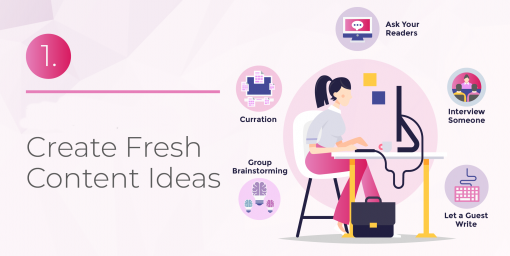
Here's more help for coming up with fantastic content ideas:
Need Creativity? Brainstorm by Sleeping
22 Ways to Create Fresh Content Ideas
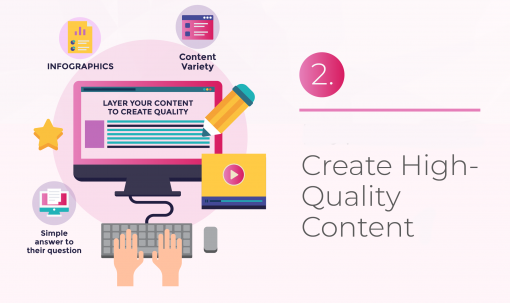
Here's some in-depth plans for creating quality:
30 day blogging challenge
Here's the link to my challenge:
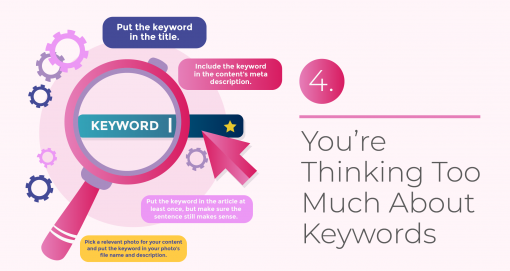
SEO tips
You can check out more keyword tips here:
SEO
Don't know much about SEO? Here are two guides for writers:
editing tips for articles
Get more editing tips, here:
Edit Your Writing: How to Use Commas, Quotation Marks and Semicolons
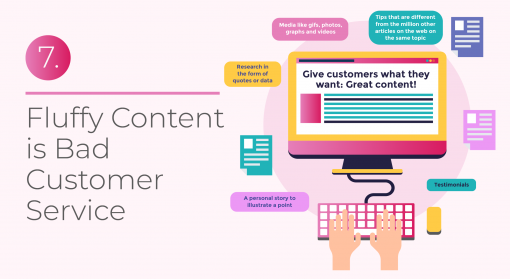
How to create quality content
Is your content fluffy? Read this article to find out:
your writing voice
Here's some help for finding your voice as a writer:
media for articles
These sites will supply you with tons of free visuals:
generic content original articles
Here are some final tips to prevent generic content:
Fight Generic Content: How to Create Interesting Posts
Want more ways to become a successful freelance writer? Read my book:

Is Your Website Hurting Your Brand In More than One Way?
Having a website is a good way of building your brand as a person and a professional. However, if you don’t get it right, you might be hurting your online image, and do more harm than good. Below you'll find a few tips on how to fix your poorly performing website and make sure that you are able to strengthen your brand, get the word out about your services, and cash in at the end.
Having a website is a good way of building your brand as a person and a professional. However, if you don’t get it right, you might be hurting your online image, and do more harm than good. Below you'll find a few tips on how to fix your poorly performing website and make sure that you are able to strengthen your brand, get the word out about your services, and cash in at the end.

Poor Design
The first thing visitors will notice when landing on your site is the design of your pages. If you're using a standard or a cheap old template, it might be time to get rid of it. Always check how your site looks on different screens, as chances are that some of the fonts will not be displayed correctly. This means that you will lose up to 50 percent of your visitors and your site will suffer from high bounce rates and low rankings in search engines.
Slow Speed
Another important thing you have to check is the speed of your pages. If it takes more than a second to load a page or a graphic, visitors are more likely to turn back. You might have an issue with your host or server, maybe you will need to reduce the size of images and files you display on your pages. Get in touch with vps europe to find better and faster hosting options for your needs.
Lack of Call to Action
If people don’t know what you want them to do once they land on your site, they will never take action. Make sure that you build an effective sales funnel that will convert online visitors into leads and eventually customers. You will need to automate your online communication and provide enough information for people visiting your site to make a decision whether or not what you offer is for them. This will make your entire marketing more effective.
Spelling Mistakes
If there is one thing that is the pet hate of blog visitors it is spelling mistakes. Most blogging platforms now have a built in spell check and grammar software, but if you are not confident that they will fix all the issues, you might sign up for Grammarly or Ginger and get rid of the mistakes that can annoy some of your readers.
Lack of Engagement
If you want to make your visitors love you and connect with your brand on a personal level, you might want to add a personal touch. This can be an anecdote a behind-the-scene interview, or a case study that will let people in and make them feel as if they knew you forever. Talk to your audience instead of simply publishing content, and you will get more interaction on your pages.
If you have an ugly, outdated, or low quality website, you can damage your brand and reputation for years to come. Fix the issues, check the page loading speed, and make sure that you deal with the grammar and spelling errors on the go. Feel free to share your website in the comments!

Is Your Back Killing You? Here Are 5 Tips That Can Help
He offers a few tips for those whose jobs require them to sit, sit and sit some more:
The work day ends, but the back pain doesn’t. Sitting all day at a computer takes a toll on our backs, yet for a large percentage of Americans (like us freelance writers!), sitting in front of a computer sums up their job description.

And that work-related back pain that starts out minor can soon become severe, causing problems in all areas of your life.
“The longer you have a back problem, the more damage it will create, the more it will resist getting better, and the more time it will take to heal,” says Bradford Butler (love that first name!), a chiropractor and author of The Blueprint for Back Pain Relief: The Essential Guide to Nonsurgical Solutions (www.drbradfordbutler.com). “So, the best course is to prevent back problems from happening to begin with.”
He offers a few tips for those whose jobs require them to sit, sit and sit some more:
Watch how you sit. Most people are putting pressure on their backs, necks and shoulders because they don’t work in an ergonomically correct position, Butler says. Here’s how to achieve the optimal position: Sit with your body no more than an arm’s length from the computer and mouse, and don’t lean your head and neck forward. You should be able to rest your hand comfortably on the mouse with the elbow at the same height as the mouse pad. The monitor should be 2 or 3 inches above eye level.
Choose the right chair. Ideally, you want a chair with lumbar support. “If there is no lumbar support, you can place a pillow behind your lower spine,” Butler says. Chairs that can tilt back also take pressure off the base of the spine and help prevent back pain. But if back pain has already started, Butler suggests placing ice between the lumbar support and the back for 20 minutes to reduce inflammation.
This is the chair I (Alina) use in my home office, in case you were wondering:

office chair for bad backs
Don’t cradle your phone. Have you ever pinned your phone between your shoulder and your ear so you can type while you talk? Butler has a one-word piece of advice: Don’t. “The intense strain from holding the phone that way for more than a couple of minutes can have a lasting effect on your posture and add to your back and neck pain,” he says.
Take a break. For about five minutes every hour, get up and move around. Take a walk, stretch or do anything that takes you away from the computer and lets your body escape all the sitting and staring you’ve been doing, Butler says.
Unload some baggage. Do you carry to work a bag or briefcase that’s so heavy even an Olympic weightlifter would feel the strain? If it weighs more than 10 percent of your body weight, then it’s putting too much of a strain on your back, Butler says. He suggests you lighten the load or get a different bag, preferably one with a long strap so it can be carried across your chest like a messenger bag. That can reduce the diagonal load on your back.
“It’s important to understand that your spine was designed to move,” Butler says. “If you are sitting for a good part of your day, you are effectively doing the opposite of what keeps your spine healthy.
“The old saying ‘an ounce of prevention is worth a pound of cure’ couldn’t be truer, especially when it comes to your back. Prevention is a mindset. You probably already do it in other areas of your life. When it comes to your back, you just need some new thinking and new habits.”
About Bradford Butler
Bradford Butler, a chiropractor and author of The Blueprint for Back Pain Relief: The Essential Guide to Nonsurgical Solutions (www.drbradfordbutler.com), is owner and director of Oakland Spine and Physical Therapy, which has three locations in northern New Jersey. Dr. Butler, a graduate of the New York Chiropractic College, has twice been named one of America’s top chiropractors by Consumer Research Council of America and his offices have received the exclusive NJ TopDoc Award for eight consecutive years.

Ladies, Make Sure You’re Getting the Right Nutrients to Fight Depression
Writers are prone to depression, particularly female writers. I'm no exception. Here's some help from Joy Stephenson-Laws JD. Joy is the founder of Proactive Health Labs (www.phlabs.org), a national nonprofit health information company that provides education and tools needed to achieve optimal health. She also is founding and managing partner of Stephenson Acquisto & Colman (www.sacfirm.com), one of the nation's leading health care law firms. Her most recent book is Minerals - The Forgotten Nutrient: Your Secret Weapon for Getting and Staying Healthy, available through Amazon, iTunes and bookstores. She is based in California.

Various credible sources including Harvard Health, states women are about twice as likely as men to develop major depression. It appears our biological or hormonal makeup may be partly to blame.
When We're More Likely to Be Depressed
There are certain periods during our lives when we are more susceptible to depression like before our period or after pregnancy.
Premenstrual Dysphoric Disorder (PMDD)
This disorder can occur a week or two before a woman’s period starts.
“PMDD is a serious condition with disabling symptoms such as irritability, anger, depressed mood, sadness, suicidal thoughts, appetite changes, bloating, breast tenderness, and joint or muscle pain,” according to the National Institute of Mental Health.
Perinatal Depression
“Perinatal depression is depression during or after (postpartum) pregnancy. It is much more serious than the ‘baby blues.’ The feelings of extreme sadness, anxiety, and exhaustion that accompany perinatal depression may make it difficult to complete daily care activities for a new mom and/or her baby,” the NIH reports.
It is one of the most common medical complications during pregnancy and the postpartum period, affecting one in seven women, according to The American College of Obstetricians and Gynecologists.
Perimenopausal Depression
“Perimenopause (the transition into menopause) is a normal phase in a woman’s life that can sometimes be challenging. If you are going through perimenopause, you might experience abnormal periods, problems sleeping, mood swings, and hot flashes,” according to the NIH.
Perimenopausal depression may be caused by changes in hormone (like estrogen) levels.
Oprah, the woman who does it all, openly discussed menopause and her experience with a hormone specialist.
But despite the likelihood of depression, it is a myth that it is ‘normal’ to feel depressed.’ There is nothing normal about depression. If we have symptoms of depression, we need to take it seriously and get help. And we need also need to take steps to be proactive so we reduce the likelihood of being depressed.
Nutrition to Fight Depression

nutrition for depression
And one way to reduce the likelihood of depression is nutrition.
Credible research shows that nutrition can play a key role in preventing and managing depression. As women we have to ensure we absorb adequate amounts of the right nutrients in order to increase our chances of not becoming depressed. Below are examples of nutrients we need to to be mindful of. Many of these nutrients can be obtained through a proper diet and/or supplementation (with medical supervision).
Magnesium
Several studies have shown an improvement in the severity of symptoms of depression when study participants were given 125-300 mg of magnesium with each meal and at bedtime. Foods containing magnesium include spinach, pumpkin seeds, yogurt, kefir, almonds, black beans, avocado, figs, dark chocolate and bananas.
Chromium
Many studies have been done to assess the benefit of chromium picolinate in depression. One study showed that 70 percent of those who took 600 mcg of chromium picolinate had improvement in their depressive symptoms, including emotional stability. Foods high in chromium include broccoli, free range eggs, sweet potatoes, corn, oats and grass fed beef.
Iron
Decreased levels of iron can result in apathy, depression and fatigue. Iron is also important for oxygenation of the brain and necessary for all its functions. Studies need to be done to find out how common iron deficiency anemia is in patients with depression, and once corrected, to determine which symptoms would be improved. In the meantime, if you are depressed you should check your iron levels. Keep in mind, many women tend to have a higher chance of iron deficiency due to losing blood during their menstrual cycles. Iron-rich foods include red meat, pork, poultry, seafoods, beans, spinach (and other leafy greens), peas, cherimoyas and iron-fortified cereals.
Selenium
Depression due to selenium deficiency has been established in at least five different studies. Depression may be the result of oxidative stress, which is why selenium may be helpful. Selenium is a powerful antioxidant. Numerous studies done on different populations and age groups suffering from depression showed improvement in mood and anxiety when given selenium. Overall, mood was also improved when selenium was given to those with depleted levels. Foods high in selenium include Brazil nuts, yellowfin tuna, halibut, sardines and chicken.
Zinc
This trace element is essential to the human body. It is involved in over 300 reactions in the body and is abundant in the brain. Many clinical studies have been done to determine the relationship between zinc and depression. Zinc levels are generally low in those with major depression. Zinc supplementation along with antidepressant therapy has been studied and has shown benefits. You can eat lamb, pumpkin seeds, grass fed beef, mushrooms, chickpeas, spinach and chicken to get more zinc in your daily diet.
Copper
This mineral is important in depression, because it is a component of the enzymes that metabolize the brain chemicals that help you respond to stress, feel happy and be alert. These enzymes, and the associated chemicals, are responsible for the causes and treatment of anxiety and depression. Several studies have been done on copper levels and depression, and there is an association between high levels of copper and lower rates of depression. Copper rich foods include sunflower seeds, lentils, almonds, dark chocolate, beef liver and asparagus.
B Vitamins
Deficiencies in various vitamins, including B vitamins are reported to have a negative effect on the brain. There are a total of eight B vitamins. There is a wide range of foods containing B vitamins. If you are vegan or vegetarian, you have to be especially proactive about making sure you get enough B12 (which is mainly found in animal foods).
Vitamin C
Various studies have suggested that depression may be a consequence of inadequate levels of vitamin C. It can usually be found in a variety of fruits and vegetables such as oranges, watermelon, green and red peppers, grapefruit, tomatoes, spinach, papaya, Brussels sprouts and cabbage.
Being nutritionally balanced puts our bodies in the best position to manage or beat depression. And when you consider being physically active is another way to combat depression, being nutritionally sound enhances our ability to be physically active.
Finally, it also important that we objectively assess our nutritional status on a regular basis throughout our lives. A great first step is getting a better idea of our nutritional status is by taking a comprehensive nutritional test and talking with your healthcare provider about our results. This way, if we have nutritional imbalances, we can work with a competent healthcare professional to make dietary changes and/or take quality supplements.

How to Cope When Your Product Goes Viral
Many businesses have their moment. There is just something about their online content that POPs. All of a sudden one of your products are selling out faster than you can restock, make, or you’ve been booked for more calls than you can physically fit in.

You’ve been waiting for this moment, and yet you find yourself chasing your tail to keep on top of the boom in your business. You start having to move the calls to a later date, just to complete work on the calls that came before them. Your stock system isn’t working and is allowing orders to go through. When the time comes to pack and ship, you find yourself flustered. Or worse, you have stocked up perfectly well, but you don’t have Ipswitch's WhatsUp Gold monitoring the downtime on your website - and you are missing orders.
Slowly the spark, the word of mouth that saw you become viral starts to wane. People begin to complain that they haven’t received their products, that you’ve taken their money and they are empty-handed. Your Facebook becomes a slew of negative comments, and the orders stop. The refund requests pour in.
What happened? What could you, or should you have done differently?
The truth is, supply and demand can be tricky at the best of times. But these steps will help you optimize when your product goes viral.
This is no time to relax. Jump on the activity, push other products. Join the conversation that will be taking place on social media. You are likely never again going to have so much interaction until you are a highly successful brand.
Bubbles burst. That big fat number on your sales and the ones in your business bank account are not your typical day. Not yet anyway. So don’t make any irrationally large spending decisions while you’re in that bubble.
Call your suppliers as early as you can. If you can see your numbers trending upwards and quickly, get in touch with suppliers and talk about how you can handle your new found fame (and the fact you’re going to need to move to a scalable supply model).
Keep testing all of your digital systems. One faulty cog, one product not displaying and you will soon find people will find a similar product elsewhere.
Keep your promises. Now is not the time to tell people you can’t fulfill orders. If there is going to be a delay in shipping, take to your social media and tell people. Use your website to display any urgent messages. Be clear.
Stay organized, and call in extra friends to help if you need it. Going viral is a two-fold thing, the sales and notoriety can do wonders for your company, but you can also find yourself stressed and stretched. Ask for help.
Utilize all of those new signups and customers. Ask them what they want, interact, lay the foundations for your next new releases.
Going viral is fantastic, but only if you manage it like a pro.

Time Management Advice For Small Business Owners
One of the most difficult aspects of project management is keeping on top of time management. A lot of small business managers make the mistake of overestimating when it comes to timelines and deadlines, which gets things off to a bad start, to begin with, as it sets up the project team for failure.

But, once you get the deadline right that is only the start of the process. You need to implement effective time management to make sure that everything runs smoothly. With that being said, read on for some top tips to follow.
Avoid micromanaging – Have faith that you have chosen the best team for the job, and let them get on with what they are good at. You can waste a considerable amount of time by getting into the finer details when it really is not necessary.
Make sure your meetings are productive – You need to extract true value from every meeting by identifying opportunities, issues, and risks, and getting the team to brainstorm ideas and solutions. It is also important to set a time for the meeting, say an hour, and stick to it, and make sure you have an agreed agenda beforehand.
Choose the right tools - Another important part of the project management process is ensuring you have the right software in place - software that is going to enable you to run your projects more efficiently and make more intelligent decisions. BPM cloud is a great example of the sort of solution that could help you to get more done in a shorter space of time.
Have an effective plan in place – You may be wondering what having an effective plan has to do with time management, but it is actually the most important point. A good plan will have regular milestones in place, giving all team members something to focus on. This means that everything is crystal clear, and you are thus going to spend much less team dealing with problems that occur because of a lack of clarity.
Make a to-do list and stick to it – More often than not, we waste time doing things that really are not of immediate importance. Email fixation is a modern-day issue, and it is a prime example of this. We constantly check our emails, replying to them as soon as we receive them, which can distract you from carrying out important tasks. This is why it is a good idea to create a daily to-do list. You can work through this list, which will ensure you remain focused on your goals for the day. This will drive further activity, as you tick things off the list.
Don’t do the work – A lot of small business managers fall into the trap of trying to do everything themselves. However, your full-time job is to manage the project, and you should have assigned team members to carry out all of the other roles. Of course, when a deadline is looming, it can be tempting to take over. But, you should avoid this at all costs. Focus on managing your team so they can get the job done.
Follow the tips above and you will achieve time management success!

Watch Out Writers, Fall Headache Triggers Are Coming
A change in seasons introduces many new environmental factors that can trigger additional migraine and headache, such as cooler weather, changes in barometric pressure and humidity levels, wind and allergens. Just what us writers need, right? Dr. Vincent Martin, director of the Headache and Facial Pain Center at the University of Cincinnati Gardner Neuroscience Institute and president of the National Headache Foundation, has the details on why your head may be hurting this month.

Changes in Weather
Weather changes are a common migraine and headache trigger, and the cooling temperatures in the fall are a primary trigger. While it is not clearly understood why this happens, there are a number of studies being conducted to understand this correlation. It has even been suggested that factors such as changing barometric pressure, humidity and temperature can be triggers. Since these factors tend to occur at the same time, it is difficult to pinpoint which is the culprit.
Allergens
Perhaps the most common headache and migraine trigger are allergens, and fall is full of ragweed and mold. Allergies will increase the amount of histamine our bodies produce when allergens are high, which can trigger migraine by inflaming sinuses. Individuals with migraine and headache should take a number of precautions during the fall to lessen the impact of allergies. A few ways are to use a HEPA air filter, mattress and pillow encasings and doctor prescribed allergy medications to reduce aggravation of the sinuses.
Daylight Cycle
The fall is also met with less daylight, and this commonly shifts sleep schedules. Maintaining a consistent sleeping pattern is essential for migraine and headache sufferers, as their chance of an oncoming attack significantly rises when the pattern is disrupted. Additionally, as days grow shorter, it tends to have a neurological effect on people, potentially triggering a migraine.
About National Headache Foundation The National Headache Foundation has furthered awareness of headache and migraine as legitimate neurobiological diseases for the past 48 years. They collect the most comprehensive information on headache and migraine and connect with patients, who have just begun to seek treatment or those who are looking for more options. Visit www.headaches.org for more information.

Top three Cybersecurity Vulnerabilities Your Business Faces Right Now
The business world has become more competitive than ever. Not only is there increased pressure on companies to be profitable, but also to keep information safe. For many companies, cybersecurity is an area that’s easy to cut back on, but that can prove to be an expensive mistake. According to the PwC Global Economic Crime Report, cybercrime is now the second most reported economic crime, affecting 31 percent of organizations.

The percentage is high, and if cybersecurity doesn’t become a priority in business, it will certainly get higher. As the leader and owner of a company, do you know which cybersecurity vulnerabilities your organization may have right now? Let’s take a look:
1. Lack of Policies that Prevent Most Common Threats
The first and most apparent vulnerability in any system relates to security fundamentals. Today, every company needs a cybersecurity policy to set security standards. Specific, well-established practices such as Bring Your Own Device (BYOD) have proven risky and need to be strictly governed. According to the 2018 Verizon Mobile Security Index, 74 percent of businesses say that their mobile security risks have gone up in the past year. Therefore, if you haven’t set strict security standards for your employees to follow, it’s time to start.
2. Reactive Mindset
Due to resource constraints, many organizations will do only the bare minimum when it comes to cybersecurity. However, in this day and age, covering the basics is not enough. Waiting for an attack to happen and then reacting is a sure-fire way for you to be much worse off when everything is over than if you had taken proper steps to protect your assets.
While having a reaction plan in place is generally considered good practice, that can’t be the extent of your cybersecurity solutions. Considering how fast cybersecurity threats are evolving, investing in proactive security solutions is quickly becoming a must for businesses.
3. The Human Factor
According to Experian’s 2018 Managing Insider Risk Through Training and Culture Report, 66 percent of surveyed professionals felt that employees posed the greatest vulnerability when it came to cyberthreats.
This isn’t unexpected, considering that the human factor is usually the weakest link in any security system. While training can help to eliminate the most common causes of human error in cybersecurity, described as “general carelessness,” it isn’t enough.
When you take into consideration the fact that a majority of organizations face phishing email attacks frequently, the scope of the problem falls into perspective. Even when employees are rigorously trained, mistakes happen. All it takes is one careless reaction to a suspicious email.
This is why we must work on solutions that prevent phishing cyberattacks before they even reach your employees’ inboxes. Area 1 Security’s Anti-Phishing solution offers precisely that, by spotting phishing attacks days in advance.
Businesses today might be even more vulnerable than they seem to their owners. It’s crucial for every C-level executive to know precisely what type of damage a data breach can inflict, and which proactive solutions can prevent it from happening. When it comes to phishing attacks, you’ll be far safer with Area 1 Horizon, the anti-phishing technology that neutralizes today’s most dangerous cybersecurity threats.
Guest article by Kim Del Fierro, VP of Marketing for Area 1 Security

7 Mistakes Small Businesses Can’t Afford To Make
Like it or not, it’s just a fact that most new small businesses don’t make it to their five year anniversary. While there’s no guaranteed pathway to success, sometimes these businesses don’t help themselves. They make small mistakes which, all tallied up, can cause a significant dip in potential earnings. We outline some of the errors below that small businesses can’t afford to make.
Like it or not, it’s just a fact that most new small businesses don’t make it to their five year anniversary. While there’s no guaranteed pathway to success, sometimes these businesses don’t help themselves. They make small mistakes which, all tallied up, can cause a significant dip in potential earnings. We outline some of the errors below that small businesses can’t afford to make.

Ignoring the Competition
You’re not out there in the world of business, doing your own thing, devoid of the influence of other people and businesses. Everything is interconnected. Unless you have a unique business - which is unlikely - then you’re going to have competitors. As such, you need to ensure that you’re keeping an eye on what they’re doing: they could be taking great leaps forward, ever improving things, while you’re happy to plod along. We’re not suggesting you copy what they’re doing, but you do need to be aware of how they’re running things.
Web Design
Sometimes, you arrive at a webpage and just know that they’re the real deal. It gives off an impression of trust straight away. Of course, this seldom just happens: it all comes down to the web design process. If you hire the best people to develop your online presence, then you’ll end up with a look that reflects the modern age. If your site design is treated as an afterthought, then you can’t have too many complaints if people aren’t sticking around too long to see what you have to offer.
Focusing Too Much on Social Media
You won’t hear from us that your social media channels aren’t important: they absolutely are. However, they’re not more important than your website. The success of your Facebook, Instagram, and Twitter accounts should be the end result; they should function as vehicles to transport people to your website. That’s where all the business will take place. Make your website your prime online responsibility, and your social media channels second. It’s a funnel to get people to your site, fundamentally.
Not Making the Most Of Leads
Did you know that you’ll never know anything about the majority of visitors to your website? A small minority will submit a form or ask for further information, but the bulk will click X without giving anything away, even if they were interested in what you had to offer. This is where a tool like Visual Visitor can help. It’ll help reveal who is visiting your site, how many times they’ve visited, and what they’re looking at. From there, you’ll have a bona fide lead: you’ll have the details who is on the hook. All you’ll have to do is follow up their interest and close the sale.
Ignoring Customer Feedback
You may have a one-track mind when it comes to how you want your business to function, but it’s always worth remembering that your company isn’t a vehicle for all your thoughts and ideas: it’s bigger than that. If you’re open and willing to listen, then you’ll find that many of your customers just tell you the next move you should make! It can be tricky to get feedback, but it’s possible. Once you have it, it’s imperative that you act on it! There’s little use in getting a customer’s opinion if you’re only going to disregard it.
Cybersecurity Issues
Cybercrime is on the rise and, unfortunately, criminals are mostly targeting small business; the bigger ones have a robust defense, while small companies tend to be vulnerable. While it’s not the most exciting thing in the world, it’s important that you take steps to ensure that your online security is watertight. There have been companies who have lost a lot of money all because they didn’t take the online threat seriously enough. Don’t be one of them!
No Path Towards Success
And finally, remember that the future is coming whether you like it or not! While it’s important that you focus on the here and now, you should also keep half an eye on the future. A company that doesn’t plan for where it’ll be five years down the line might find that the moment arrives and they’re left behind. Always plot your future, it’ll be your path to success!

Put Selfcare First to Make Your Business Better
The App to Harmonize Your Hectic Lifestyle is Now Available on Google Play Recently, I was sent information about a new app, and I think it is a really good one for writers. As part of our jobs, we're constantly using devices, making calls, answering emails, filling in spreadsheets... Sometimes, though, we need to chill before we suffer from burnout. The #SelfCare app was designed to help people destress and center themselves by using calming music and animations.

I had absolutely no idea what to expect when I downloaded the app. I just knew I liked the sound of "selfcare." As soon as you open the app, it starts playing what I like to call "meditation music." It then guides you through some exercises and minigames to calm and relax you.
It sounds a little woo-woo, but I actually really like it. In just seconds the app makes you feel cozy and happy. Okay, that's sounds weird, but give it a shot. You might like it. (No, I don't get paid for saying that. I really like it!)
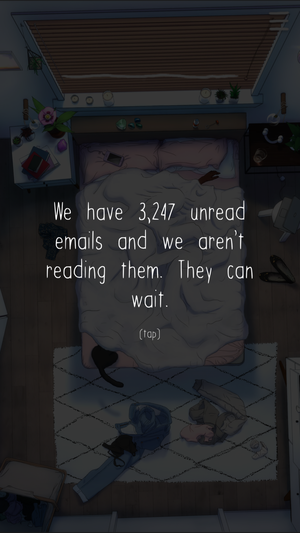
Tru Luv app selfcare
Here's more about the TRU LUV #SelfCare app.
What is The TRU LUV #SelfCare App?
Just six weeks after its immensely successful launch for iPhone that placed it in the Top 50 free games in the App Store, today #SelfCare hits the Google Play store for Android devices. Developed by the team at TRU LUV, #SelfCare’s playful innovations to digitally engage and personally disconnect are changing the game of mindfulness.
With our lifestyle technologies overwhelming our reality, more of us are choosing to find a rare moment to shut off with a yoga or meditation class. #SelfCare flips the script, empowering your phone to become your tool and guide to finding quick calm any time. As you stay in your virtual bed all day surrounded by your favorite gentle things, you select calming tasks that generate simple satisfaction and uncomplicated harmony. Unlike traditional games that get increasingly more stressful as you progress, the #SelfCare interactions begin disorderly and awkward and become more orderly and satisfying with the simple goal of feeling better.
“We have a love-hate relationship with our phones, and often feel stressed and manipulated by them,” inform #SelfCare co-creators Eve Thomas and Brie Code. “We want to create experiences that doesn’t waste our time and that truly leave us feeling relaxed and invigorated and more ready for life.”
Further enhancing your #SelfCare experience is the ability personalize your virtual sanctuary with unique additions contributed by guest artists working in themes of self-care, updating your space to reflect the evolution of your goals and outlook. The more time you spend on yourself, the more self-care techniques are unlocked for a deeper and more impactful practice. This Android release of #SelfCare coincides with the introduction of a new in-app minigame in which you tend to your bedside plant and receive its guidance.
To develop #SelfCare upon an evidence-based foundation, the team collaborated with research advisor Dr. Isabela Granic — creator of the renowned anxiety-reducing children’s game MindLight, Professor and Chair of Developmental Psychopathology at Radboud University in the Netherlands, and Director at Games for Emotional and Mental Health Lab.
Download #SelfCare on Google Play or the App Store. For more information visit TRULUV.ai.

Never Give Up! Or Maybe Your Should
A few years ago, there was a lot of buzz about Copyblogger quitting Facebook. The general consensus about the situation is that Copyblogger gave up way too easily. (If you want to read some commentary, take a look at "What Copyblogger Could have Done with Its Facebook Page" by Jon Loomer.

The comment section is...well, go look for yourself.) I understand wanting to move on. I recently sold a website I created for a nice tidy profit. I loved the site, but wanted to concentrate on other aspects of my business. I imagine that's how Copyblogger felt about Facebook. It was obvious they had a lot of followers, but they just weren't getting the love that made spending time on their Facebook page worth it to them.
I get that.
You Can't Ride Two Horses with One Ass

pick a social media platform
Have you ever heard that expression? It basically means that you have limited resources, so you need to make a choice. No matter what many social media marketers tell you, you can't be everything to all social media sites. If you tried to keep a community going on Facebook, Google+, Twitter, LinkedIn, Pinterest and Instagram then that would probably become your full-time job. It's better to choose which social media platforms work best for your brand and roll with it.
For example, like Copyblogger, I have found that people pay way more attention to my posts on Twitter and Pinterest. I like to concentrate my efforts there. I still use the other platforms, but I know where my audience is.
Choosing a Horse...Er, Social Media Platform
You also need to pay attention to where your traffic is coming from. I don't like to focus on likes or +1s. I pay attention to whether or not a person clicked on the link and made it to my site or article. If that happens, then the media platform you've chosen is a success, because that's the goal. Isn't it?
I'm not saying comments and a strong fan base isn't important, because it is. It's just that too many people feel like they are failures if they don't get tons of comments or likes. If you want conversions, then the goal is to get the readers to your site. If you are doing that then you're ahead of a lot of your competitors.
So quit a few social media sites. Or don't. Do what works for you and don't listen to those who say you need to be everywhere at once. Shortsighted or not, I commend Copyblogger for not trying to straddle two horses and making a choice.

Global CMO Says Nike Featuring Colin Kaepernick Will Prove Genius
Colin Kaepernick, the former N.F.L. quarterback who inspired a player protest movement but who has been out of a job for more than a year, has signed a new, multiyear deal with Nike that makes him a face of the 30th anniversary of the sports apparel company’s “Just Do It” campaign, reports the New York Times (story here).
In a not-so-unexpected backlash, #NikeBoycott is already trending on Twitter and customers have started burning their sneakers (CNBC story here).
“But it’ll be worth it,” says Fortune 500 Chief Marketing Officer, Peter Horst, MBA, a Harvard & Dartmouth grad who led the marketing teams at Hershey, Capital One, General Mills, and is ranked on Forbes’ Top 50 Global CMO list.
“There’s an increasing need for brands to be relevant by taking a strong point of view in politics and in a market where competition is fierce and rivals are gathering strength, this campaign has made Nike more relevant than ever,” explains Peter, who is the author of the new book Marketing in the #FakeNews Era: New rules for a new reality of tribalism, activism and loss of trust (June 2018).

• Will The Backlash Be Worth It? “Leadership undoubtedly anticipated the predictable backlash that we’re already seeing: #BoycottNike, shoe burning, irate posts, drop in share price, but the fact that they made this decision anyway shows a powerful commitment to the long-term health of the brand.”
• Can Nike Win Over More Passionate Followers? “There’s no doubt that they will alienate some customers but I have no doubt that they’ll come out of this short-term pain a much more vibrant brand with an even more passionate customer base.”
• Will This Also Boost Colin’s Brand Too? “In many ways, this is the story of two brands. Both Kaepernick and Nike took a strong and controversial point of view. After suffering a great deal of pain, we’re now seeing a kind of resurgence of strength behind the Kaepernick brand—in many ways illustrated by Nike’s campaign featuring him.”
• Should Other Companies Take Political Stances? “The highly charged, polarized environment keeps raising the ante on brands and the need to put their values on display. In order to build powerful, authentic relationships with customers, brands will need to find their voice and decide where they’re willing to take risks and take a stand. The alternative is to become bland, irrelevant and uncompetitive.”

The Saga of Bogus SEO and Optimization Tactics
Okay, I want to shout it from the rooftops: Most of your SEO and optimization tactics are hugely, utterly wrong! I have talked with many website owners over the years, and it seems like they all have been drinking the same content Kool-Aid. You can't blame them for believing horrible optimization tactics. They were just hungry for some search engine love.
It's time to end the madness, though.
Cutts Says Cut it Out with the Article Directories
First, don't use article directories to build links. Oh, I've known so many people that have wandered into this trap...and then Google gave them the website smack down. Finally, Matt Cutts of Google confirmed what I had always suspected. Article directories are slimy, spammy places. Don't believe me? Take a look at this video:
Keywords Aren't as Important as You Think
Keywords were once the best way to draw search engine attention. That was a long time ago. It's time to get up to speed, people. Search engines are smart enough that they can figure out what your content is about without a liberal smattering of keywords. Just add great content to your site and people will come. Trust me. Here is a more in-depth article I wrote on the subject: You're Thinking Too Much About Keywords.
Guest Blogging Equals Trash...Most of the Time
If you are using guest blogs specifically for links, then put a fork in it, 'cause it's done! For the past year or two, all anyone could talk about is how valuable it is to guest blog. Cutts has revealed, though, if you're doing it for the links, then it's just spam search engines will penalize you for.
On the other hand, if you use guest blogs to add valuable, entertaining content to your site, then by all means, go ahead. Adding good content to your site is always a good idea.
End the Crapfest
A few weeks ago, I ran across a website owner that employed a "content editor" to look over all of the content he put on his site. This is a great practice! Search engines are cracking down on sites that consistently put up content with spelling and grammar errors. The only problem was his "content editor" was adding more problems to the site then she was fixing.
Moral of the story?
Yes, please, please, please check all of your content. Make that blog or article or webpage shine! If you want to hire an editor to do it for you, more power to you! Just make sure the "editor" is actually good at his job by checking references and testimonies. You'll find references and testimonies on my website and on my LinkedIn, for example. Have you been doing any of these optimization tactics? Well, throw all those suckers out the window. Next time, close your eyes and hum when someone tries to tell you a new SEO tactic. All you ever really need to draw people to your site is entertaining, well-written content.
Need some help? Feel free to contact me.

A Brief History of ASR: Automatic Speech Recognition
As a writer, you probably use automatic speech recognition when you're dictating ideas on your phone or using Google's dictating app. Here's how the technology came about.This moment has been a long time coming. The technology behind speech recognition has been in development for over half a century, going through several periods of intense promise — and disappointment. So what changed to make ASR viable in commercial applications? And what exactly could these systems accomplish, long before any of us had heard of Siri?
The story of speech recognition is as much about the application of different approaches as the development of raw technology, though the two are inextricably linked. Over a period of decades, researchers would conceive of myriad ways to dissect language: by sounds, by structure — and with statistics.
Early Days
Human interest in recognizing and synthesizing speech dates back hundreds of years (at least!) — but it wasn’t until the mid-20th century that our forebears built something recognizable as ASR.
asr
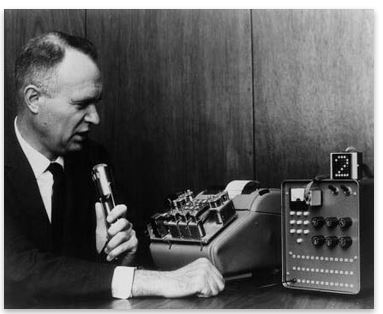
1961 — IBM Shoebox
Among the earliest projects was a “digit recognizer” called Audrey, created by researchers at Bell Laboratories in 1952. Audrey could recognize spoken numerical digits by looking for audio fingerprints called formants — the distilled essences of sounds.
In the 1960s, IBM developed Shoebox — a system that could recognize digits and arithmetic commands like “plus” and “total”. Better yet, Shoebox could pass the math problem to an adding machine, which would calculate and print the answer.
Meanwhile researchers in Japan built hardware that could recognize the constituent parts of speech like vowels; other systems could evaluate the structure of speech to figure out where a word might end. And a team at University College in England could recognize 4 vowels and 9 consonants by analyzing phonemes, the discrete sounds of a language.
But while the field was taking incremental steps forward, it wasn’t necessarily clear where the path was heading. And then: disaster.
automatic speech recognition
October 1969 —The Journal of the Acoustical Society of America
A Piercing Freeze
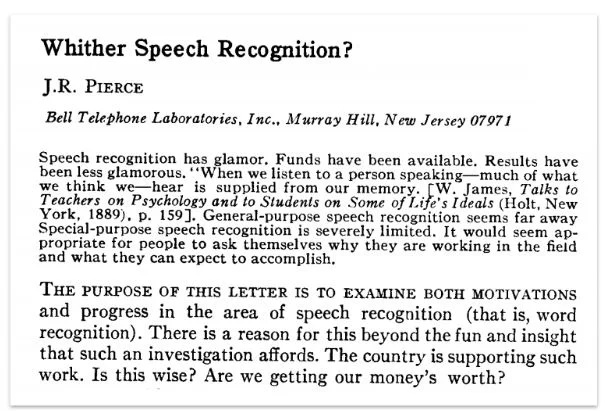
The turning point came in the form of a letter written by John R. Pierce in 1969.
Pierce had long since established himself as an engineer of international renown; among other achievements he coined the word transistor (now ubiquitous in engineering) and helped launch Echo I, the first-ever communications satellite. By 1969 he was an executive at Bell Labs, which had invested extensively in the development of speech recognition.
In an open letter³ published in The Journal of the Acoustical Society of America, Pierce laid out his concerns.Citing a “lush” funding environment in the aftermath of World War II and Sputnik, and the lack of accountability thereof, Pierce admonished the field for its lack of scientific rigor, asserting that there was too much wild experimentation going on:
“We all believe that a science of speech is possible, despite the scarcity in the field of people who behave like scientists and of results that look like science.” — J.R. Pierce, 1969
Pierce put his employer’s money where his mouth was: he defunded Bell’s ASR programs, which wouldn’t be reinstated until after he resigned in 1971.
Progress Continues
Thankfully there was more optimism elsewhere. In the early 1970s, the U.S. Department of Defense’s ARPA (the agency now known as DARPA) funded a five-year program called Speech Understanding Research. This led to the creation of several new ASR systems, the most successful of which was Carnegie Mellon University’s Harpy, which could recognize just over 1000 words by 1976.
Meanwhile efforts from IBM and AT&T’s Bell Laboratories pushed the technology toward possible commercial applications. IBM prioritized speech transcription in the context of office correspondence, and Bell was concerned with ‘command and control’ scenarios: the precursors to the voice dialing and automated phone trees we know today.
Despite this progress, by the end of the 1970s ASR was still a long ways from being viable for anything but highly-specific use-cases.
Markov model
The ‘80s: Markovs and More
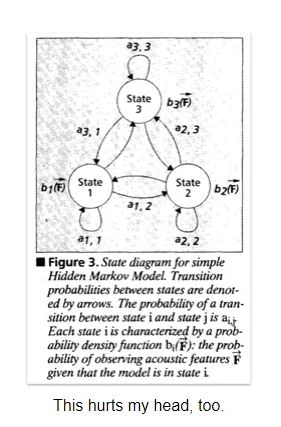
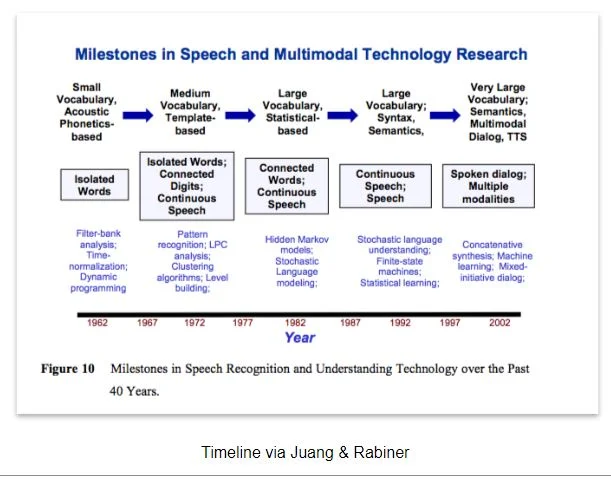
A key turning point came with the popularization of Hidden Markov Models(HMMs) in the mid-1980s. This approach represented a significant shift “from simple pattern recognition methods, based on templates and a spectral distance measure, to a statistical method for speech processing”—which translated to a leap forward in accuracy.
A large part of the improvement in speech recognition systems since the late 1960s is due to the power of this statistical approach, coupled with the advances in computer technology necessary to implement HMMs.
HMMs took the industry by storm — but they were no overnight success. Jim Baker first applied them to speech recognition in the early 1970s at CMU, and the models themselves had been described by Leonard E. Baum in the ‘60s. It wasn’t until 1980, when Jack Ferguson gave a set of illuminating lectures at the Institute for Defense Analyses, that the technique began to disseminate more widely.
The success of HMMs validated the work of Frederick Jelinek at IBM’s Watson Research Center, who since the early 1970s had advocated for the use of statistical models to interpret speech, rather than trying to get computers to mimic the way humans digest language: through meaning, syntax, and grammar (a common approach at the time). As Jelinek later put it: “Airplanes don’t flap their wings.”
These data-driven approaches also facilitated progress that had as much to do with industry collaboration and accountability as individual eureka moments. With the increasing popularity of statistical models, the ASR field began coalescing around a suite of tests that would provide a standardized benchmark to compare to. This was further encouraged by the release of shared data sets: large corpuses of data that researchers could use to train and test their models on.
In other words: finally, there was an (imperfect) way to measure and compare success.
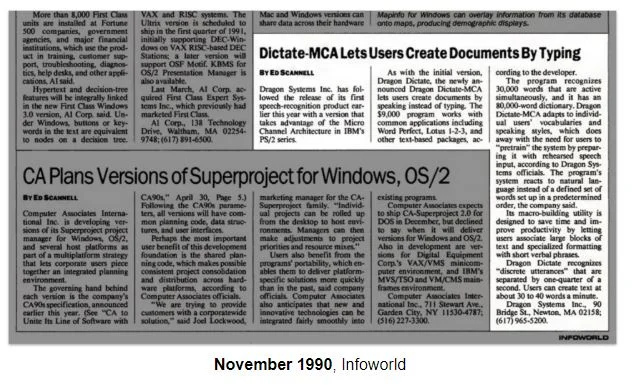
Consumer Availability — The ‘90s
For better and worse, the 90s introduced consumers to automatic speech recognition in a form we’d recognize today. Dragon Dictate launched in 1990 for a staggering $9,000, touting a dictionary of 80,000 words and features like natural language processing (see the Infoworld article above).
These tools were time-consuming (the article claims otherwise, but Dragon became known for prompting users to ‘train’ the dictation software to their own voice). And it required that users speak in a stilted manner: Dragon could initially recognize only 30–40 words a minute; people typically talk around four times faster than that.
But it worked well enough for Dragon to grow into a business with hundreds of employees, and customers spanning healthcare, law, and more. By 1997 the company introduced Dragon NaturallySpeaking, which could capture words at a more fluid pace — and, at $150, a much lower price-tag.
Even so, there may have been as many grumbles as squeals of delight: to the degree that there is consumer skepticism around ASR today, some of the credit should go to the over-enthusiastic marketing of these early products. But without the efforts of industry pioneers James and Janet Baker (who founded Dragon Systems in 1982), the productization of ASR may have taken much longer.

wither speech recognition
Whither Speech Recognition— The Sequel
25 years after J.R. Pierce’s paper was published, the IEEE published a follow-up titled Whither Speech Recognition: the Next 25 Years⁵, authored by two senior employees of Bell Laboratories (the same institution where Pierce worked).
The latter article surveys the state of the industry circa 1993, when the paper was published — and serves as a sort of rebuttal to the pessimism of the original. Among its takeaways:
The key issue with Pierce’s letter was his assumption that in order for speech recognition to become useful, computers would need to comprehend what words mean. Given the technology of the time, this was completely infeasible.
In a sense, Pierce was right: by 1993 computers had meager understanding of language—and in 2018, they’re still notoriously bad at discerning meaning.
Pierce’s mistake lay in his failure to anticipate the myriad ways speech recognition can be useful, even when the computer doesn’t know what the words actually mean.
The Whither sequel ends with a prognosis, forecasting where ASR would head in the years after 1993. The section is couched in cheeky hedges (“We confidently predict that at least one of these eight predictions will turn out to have been incorrect”) — but it’s intriguing all the same. Among their eight predictions:
“By the year 2000, more people will get remote information via voice dialogues than by typing commands on computer keyboards to access remote databases.”
“People will learn to modify their speech habits to use speech recognition devices, just as they have changed their speaking behavior to leave messages on answering machines. Even though they will learn how to use this technology, people will always complain about speech recognizers.”
The Dark Horse
In a forthcoming installment in this series, we’ll be exploring more recent developments and the current state of automatic speech recognition. Spoiler alert: neural networks have played a starring role.
But neural networks are actually as old as most of the approaches described here — they were introduced in the 1950s! It wasn’t until the computational power of the modern era (along with much larger data sets) that they changed the landscape.
But we’re getting ahead of ourselves. Stay tuned for our next post on Automatic Speech Recognition by following Descript on Medium, Twitter, or Facebook.
speech recognition timeline

Open Sesame! Baiting The Hook For Emails
An email blast has become one of the leading marketing methods for businesses and entrepreneurs. Why? It’s because an email isn’t as formal or intrusive as a cold call. When it lands in an inbox, there is no reason to open it other than to see what’s inside.

This is good and bad. Produce a quality structure with valuable content and a blast can revolutionize your advertising effort. On the other hand, make it boring and uneventful and no one will open it up and click-through. Emails aren’t effective if no one reads them, which is why you need to bait the hook. Here are four ways to open sesame if you've decided to start a newsletter or you like to send clients email updates or offers.
Catchy Tagline
Newspapers used to work in the same way when they were the powerful force in media. A bold, catchy headline dominated the front page and was the first thing anyone saw. Emails don’t have the same space, but they can still use this method to their advantage. After all, a small notification appears on mobile devices and concentrates a person’s vision. The trick is to use contrast. Take the headline and make it big and bold and then leave the rest of the text normal to grab their attention. Don’t use clickbait as it will turn your subscribers off.
Money Saver
Email marketers that are super effective are the ones who save their customers money. Think about how many Groupon promotions you get on a daily basis. Do they drive you around the bend? Usually, the answer is no because they have added value. You know the contents may be able to cut a restaurant bill in half, which is very appealing. Use this concept to your advantage by making sure there are promotions and discounts within your content. There is nothing shoppers like to see more than a bargain.
Correct Content
A platform for creating emails is essential to save money and time. However, the folks at https://www.palomasoftware.com/postman/email-newsletter-software says there is a problem. The issue is with entrepreneurs who sacrifice their content for an automated system. Sometimes, the text won’t fit right so changes have to be made, which people do willingly. Don’t make the same error. When the content doesn’t make sense, the whole email is a bust. It’s a far better option to find a provider that can work with you rather than against you. Https://www.tonyherman.com/how-to-figure-out-where-email-is-hosted/ has advice if you need guidance.
Entertainment
A weak email can hide its flaws with the right multimedia. After all, some people just want to be entertained and watch a video. With this in mind, don’t be afraid to include anything which is engaging. For example, you can use gifs to underline the point in the same way www.huffingtonpost.com does. Some emails are creative to the point where they spell out the message in emojis. The process of having to follow the clues is exciting to their audience. Of course, there needs to be some substance. Plus, everything should work in conjunction with the brand.
How do you get subscribers to open your email?

Buff Your Brain: Innercise Your Three Core Neuro-Muscles
Before anything else, writers need strong brains. Like any other muscle, it can be trained and beefed up. To transform outmoded behaviors that aren’t serving your current health and wellness goals, brain researcher and New York Times best-selling author John Assaraf says you’ve got to “Innercise” your brain just like you exercise your body.

“Lift your hand up and look at your palm,” John says. “This simple act of lifting your hand is actually incredibly complex. It involves hormones and cells and nerves and electrochemical signals. Blood flow and oxygenation. Tendons and ligaments, muscles and bones. And it’s almost entirely subconscious. Yet you can do it with ease. What’s more, each time you do it, you flex your bicep muscle. Do it enough times, or add weights to give resistance, and your bicep will strengthen. You don’t need to fully understand how this all works. When it comes to exercise, really you just need to show up and do it. Then commit to repeatedly showing up and doing it to make your muscular and cardiovascular systems stronger. Innercising is much the same: You work out different ‘neuro-systems’ — different neural ‘muscles’ and ‘circuits’ — and over time they become stronger.”
John says there are three “neuro-muscles” that are most critical to your success…

Your Three Core Neuro-Muscles
1. Awareness: Awareness in Innercising most often refers to self-awareness — your ability to monitor your own mental, emotional, and physical state. Awareness is critical because it allows you to observe your habitual patterns and make changes.
2. Intention: How do you want to think, feel, and act? When you begin to realize your thoughts, feelings and actions can be choices you make, you can then begin to choose more of what you want, as well as deciding what you don’t want!
3. Action: This is all about executing new ways of thinking, feeling, and behaving. Taking healthy, consistent, constructive action is one of the best ways to build your brain fitness. When you take the right actions in the right order at the right time, you increase your chances for success. But whether you succeed or fail, the action will strengthen your brain by learning. Strengthening is not a matter of chance but rather one of certainty when you take action.
“Together, these three neuro-muscles form a powerful combination,” John asserts. “They’re a winning combination for achieving your goals.”
About: John Assaraf is a serial entrepreneur, brain researcher, and CEO of NeuroGym. In the last 25 years, John has grown 5 multi-million dollar companies in real estate, internet software, brain research, and life and business coaching and consulting. He is the author of two New York Times best-selling books: “Having It All” and “The Answer.” His brand-new book is called “Innercise: The New Science to Unlock Your Brain’s Hidden Power” (Waterside Press, 2018).
John has made frequent appearances on Larry King Live and has been featured in eight films, including the blockbuster smash hit “The Secret” and “Quest for Success” with Richard Branson and the Dalai Lama. He is one of the leading behavioral and mindset experts in the world, with a unique ability to help people release the mental and emotional obstacles that prevent them from achieving their very best in life and business. John is a vegan who creates and eats his own hot sauces, meditates daily, and exercises six days a week. He loves skiing, traveling, taking cooking classes, listening to the Bee Gees and Enigma, and being a dad, husband, and mentor.

15 Tutorials for Creating Amazing Content for Websites

how to write better content
Do you know how to write content for websites? Here is a list of my top 10 articles on creating website content that rocks.
How to Edit Your Site Copy: Commas, Quotation Marks and Semicolons
20 Free Ways to Get Photos and Multimedia Content for Blog Posts and Articles
Here are some bonus videos to help you out with your content quest, as well: