Freelance writing jobs of the week mega list: September 9, 2020
Here’s this week’s mega freelance writing jobs list.
Hi No-Fluffers! Here’s this week’s mega freelance writing jobs list. There is so much variety this week. There’s jobs for science writers, script writers, social media writers, comic book writers, and many more.

Are you a local writer who wants to help promote Prince William and Greater Manassas?
More information: Prince William Living
Experienced Romance Writers Wanted ASAP
More information: HotGhostWriter Ltd.
FOS recrute Freelance Seo Writer https://t.co/Ys5utrhLsg
— offre-emploi.tn (@OffreEmploiTn) September 8, 2020
Copywriter
More information: CIENCE
Health Care Resume Writer
More information: MyHireRoad.com
Alexander Technology Group is looking for a skilled, client-focused Technical Writer
More information: Alexander Technology Group
Social Media Specialist / Copywriter
More information: Alpha Media 1
MARKETING/ WRITER/ PROJECT MANAGER /PUBLIC AFFAIRS
More information: Brigid Ward & Co.
Technical Writer – IT Life Sciences
More information: The American College of Radiology
Here's one for the Technical Writers https://t.co/fVm9D8Hduw pic.twitter.com/ofGgzeoKPd
— FreelanceWritingJobs (@FreelanceWJ) September 8, 2020
Travel Content Writer – Flexible Work
More information: The World Was Here First
Enthusiastic Writer Wanted for Lifestyle Blog
More information: Career50
Content Writer
More information: ExeedFit Inc
Wide Open Eats Content Writer
More information: Wide Open Media Group
Celebrity Writer, Elite Daily
More information: Bustle
FREELANCE WRITER needed!!!
— Virtual Career (@career_virtual) September 8, 2020
Apply here: ⬇️https://t.co/yHXQVmcuH5
#workfromhome #workfromhomemomworkfromhomemoms #workfromhomemom #workfromhomedad #virtualcareers #workfromhomejob #workfromhomelife #workfromhomemomworkfromhomemoms #work #writer pic.twitter.com/cPZ2YYE41U
SEO-enhanced product listings, branding, product manuals, website copy, and everything in between
More information: Webstore Group
FanBuzz Sports Lifestyle Content Writer
More information: Wide Open Media Group
Looking for a content writer to help us share our value with the affiliate marketing world
More information: FMTC
Looking for a Lead Content Writer/Editor/Strategist and Creator of Story
More information: Happen To Your Career
We are looking for a freelance content writer. Interested can share their portfolios to marketing@dnetsoft.com #openings #freelance #contentwriter #chennai pic.twitter.com/FpC8cKTsA6
— Dynamic Netsoft Technologies (@dynamicnet_soft) September 9, 2020
Security Journalist
More information: Prowess Consulting
Do you have work experience in the cannabis space?
More information: Menu Monster
Blog Writer & Ad Writer
More information: Online Learning Center
Freelance Script Writer
More information: Filmless
RT lisastylegirl "RT @Sarah_Efron: I’m looking for smart 750-word columns for The Globe and Mail’s Opinion page. Ideally on newsy topics (Canadian and int’l politics, economy, health policy, social issues) from authors with expert knowledge. Pitch me at sefron@globeandmail.com."
— LisaStyleGirl's Echo (@lisastylgrlecho) September 9, 2020
Expert content writer in all the major domains & industries like Business, Health, Food, Psychology, Travel, Technology, Lifestyle, Beauty, Social, Movies & Photography
More information: Lens Feedy Photography
Copywriter for a Digital Marketing Agency
More information: AutoGrow
Freelance News Writer
More information: Techtonic Consulting, LLC
Scientific Writer
More information: Alcyone Lifesciences, Inc.
Scientific Technical Writer
More information: Wyatt Technology
PickComfort is looking for Remote Freelance Home Improvement Writers | pay: 4-7 cents per word https://t.co/oxDpGyz2pw
— Writer Jobs (@writerjobsnow) September 8, 2020
B2B Blog/Content Writer
More information: Route4Me, Inc
iPhone Experts Needed for Writing How-to Guides
More information: FoneHow
Seeking a Martial Arts Strength and Conditioning Writer with 5 years Experience
More information: Fighting Arts Health Lab LLC
HelloConvo is looking for a Remote Freelance Writer / Editor | pay: $15 per hour https://t.co/2aMKeueyOQ
— Jobs for Proofreaders and Editors (@proofandedit) September 8, 2020
Fun, Enthusiastic Writers Wanted for Outdoor Lifestyle, Farming, and Homesteading Blog
More information: Outdoor Happens
Comic Book Writer
More information: Crealon Media
Looking for something new to do to inspire your #MondayMotivation? Why not write for The F-word!
— The F-Word (@thefworduk) September 7, 2020
We're looking for new reviewers for our fiction and film & TV sections, but we're always happy to hear pitches for articles for our other sections too. https://t.co/h6QbT0IlSj
Artists, creatives, performers and activists working in any medium; How would you intervene in the way Black people are/are not represented? Together with @ArtesMundi we're developing Lates: PITCH BLACK, and looking for artists to commission. More here: https://t.co/F1RFpcZ9xv pic.twitter.com/q4ljtEUzhB
— Amgueddfa Caerdydd (@Museum_Cardiff) September 7, 2020
First-person stories we ade looking for at the moment: true-life for Lacuna Men and World, as well as Christmas and New Year tales. They need vibrant collect pix, to be exclusive and authentic. No gimmicks here. Here’s how to pitch... https://t.co/iMDqSTS93D
— Lacuna Voices (@LacunaVoices) September 7, 2020
Join Investigate Europe's next investigation by applying for this grant. Work with cross-border journalists and hone your reporting skills. We take your career development seriously. Deadline to apply: September 20, CEE-based #JournoJobs https://t.co/uPQ26EknBP
— Investigate Europe (@investigate_eu) September 7, 2020
I’m looking for a PR freelancer / journalist with amazing US broadsheet contacts. Security and defence / political / foreign / business correspondents all relevant. Few days per month for 12 months. DM me if this is you #prrequest #journorequest #journojobs #freelancer #pitching pic.twitter.com/JwY0cQ25Nc
— Lindsay Compton (@CannyCompton) September 7, 2020
Freelance Writer Wanted – Pay $50 per articlehttps://t.co/XudkdU7KNg#jobs #Employment #get2work
— JustInfo4us (@JInfo4us) September 7, 2020
I’m hiring a paid freelance newsletter writer. Ideally you have experience with writing for startup audiences and mailchimp or similar email marketing fluency is a MUST. Please email sarah@cleocap.com with cover letter, resume, social media links&work samples. Pls rt!
— Sarah Kunst (@sarahkunst) September 6, 2020
Can I Play That — A Call For Pitches From Disabled BIPOC Writers
More information: Can I Play That
The Polymorphous per Verse Call for Submissions
More information: Arc
Join Investigate Europe's next investigation by applying for this grant. Work with cross-border journalists and hone your reporting skills. We take your career development seriously. Deadline to apply: September 20, CEE-based #JournoJobs https://t.co/uPQ26EknBP
— Investigate Europe (@investigate_eu) September 7, 2020


Freelance writing jobs of the week: September 2, 2020
This week’s freelance writing jobs list.
We didn’t have a list on Monday, so this freelance writing job list will be extra long. Enjoy!

Hey we are looking for a grant writer and someone to help with our fund raising efforts you can drop your resumes in at DeadlyScience1@gmail.com
— DeadlyScience (@DeadlyScience) August 31, 2020
Seeking black writers and journalists for a new platform. #journorequest pic.twitter.com/aLspaK8Kmb
— Soul And Joy (@SoulandJoyLife) August 30, 2020
SUBMISSIONS OPEN! we are looking for writers and thinkers seeking a substantial publication. Left Side Up Press would welcome your proposal. Get in touch! And check out the website. pic.twitter.com/bT4H6mkbJe
— Left Side Up (@LeftSideUpNI) August 30, 2020
Soon seeking blind writers for an upcoming #OwnVoices anthology about Artificial Intelligence. https://t.co/5vk1XfmdrX #DLit #DisabilityLit
— Robert Kingett (@wweirdwriter) August 31, 2020
The call for pitches for @thisisgrimmag's Feb issues has gone out. Who's gonna write about DINK horror? https://t.co/lDKSFte4ee
— Joe Lipsett (@bstolemyremote) August 30, 2020
Hey #nepa pals (or people who know #nepa people). I'm looking for freelance journos who can take a decent photo. I have the story ideas for a community weekly paper and I can pay for work; I just need reliable writers. Know anyone? Reply or send me a dm!
— Erin Nissley (@ErinNissley) August 29, 2020
WANTED: Club writers for LastWordOnFootball!
— LWOF Transfer News (@lwoftransfers) August 30, 2020
Are you serious about a career in journalism? Do you love your club and want to write about them?
Build a CV & earn £££ at the same time!
DM us or reply for more info!#JournoJobs #ACMilan #Barca #Juventus https://t.co/8FWpwX2RAD
My team @businessinsider is looking for freelance writers for a quick project on unemployment in these states:
— Laura Casado (@laurapcasado) August 27, 2020
- Kentucky
- Alabama
- Arkansas
- Indiana
- Kansas
- Nebraska
- Vermont
- Arizona
- Rhode Island
- Connecticut
- Georgia
- South Carolina
Rate is $250, pls reach out!
🚨 COME WRITE FOR US! 🚨
— Lady Science (@ladyxscience) August 24, 2020
We are OPEN for non-feature pitches, and we’re especially interested in the following topics:
☑️MEN & MASCULINITY
☑️GENDER & DEMOCRACY
☑️SCIENCE FICTION
PITCH 1-2 grafs to anna@ladyscience.com. Put PITCH in subject.
(We pay.)
✨ We’re commissioning again! ✨
— euronews Living (@euronewsliving) August 27, 2020
We had a brilliant response last time we asked for pitches, so we want to see more of your eco news and green views.
Want to pitch? Take a look below 👇
[1/8]#JournoJobs #journorequests #callforpitches pic.twitter.com/0eOd46X35B
Magazine Writer
More info: AMC Publishing, LLC
Trending News Writer
More info: Equities.com, Inc.
SEO Food Content Writer
More info: Food & Craft Website
Technical Writer
More info: Innovien Solutions
Copywriter & Content Specialist
More info: Stanley Black & Decker
Content Writers
More info: Sacha Agency
Creative Content Writer
More info: Formosi
Copywriter
More info: Icon Fitness
Contract SEO Writer
More info: Academic Partnerships
Enterprise Technology Writers Needed
More info: SiliconANGLE Media, Inc.
Part Time Telehealth Writer
More info: Bluestream Health
Head Writer and Content Developer
More info: Happen To Your Career
6 Month Writer/Editor Position (Fully Remote Position)
More info: Strategic Innovative Solutions (SIS)
Beauty Writer / Editor
More info: Formulyst
Freelance Content Writer/ Outdoor Lifestyle Blogger
More info: Cedarcide
Freelance List Article Writer - HotCars
More info: Valnet Freelance
Part-Time Freelance Blog Writer
More info: 3STEPS4WARD LLC
Handicapping writer
More info: Horse Racing Nation is looking for a talented individual to add to our writing team, with a focus on handicapping. Horse racing experience is required. The ideal candidate will have a proven record of wagering success and be able to write about a variety of topics. If you think this description fits you, send us some topics that you would like to write about. Send us your resume to mail@horseracingnation.com. From Indeed
Travel writers for California and New York
More info: The Millennial Source
Fashion Blogger/Journalist
More info: Sincerely, Ritchurd LLC
Business Finance Freelance Writer
More info: Tempesta Media, LLC
Freelance Writers
More info: Burness
Freelance Writer - Financial News Website
More info: JPM Media Corp
Freelance Writer (3D Printing/Additive Manufacturing experience a MUST)
More info: Shapeways
Sports Blogger
More info: Scout My Game
Content Writer (California employment law)
More info: Drew Lewis, PC
Freelance Entertainment News & Celebrity News Writers Wanted
More info: The Inquisitr


Freelance writing jobs of the week: August 24, 2020
Jobs, jobs, jobs!
Check out these freelance writing gigs and don’t forget to check out the gigs listed last Monday.

Freelance TV and Movie News Writer
More info: Valnet Freelance
Freelance Reality TV Features Writer
More info: Valnet Freelance
Freelance Gaming News Writer
More info: Valnet Freelance
Freelance Gaming Features Writer
More info: Valnet Freelance
Telecommute Technology and Legal Writer
More info: Impactian - Top 2% Extraordinary Talent on Demand
Freelance Writer Required for Cycling Website
More info: Cycling Website
Looking for fast, energetic writer to work on fun content
More info: SteadyContent.com
WordAgents Needs Freelance Writers for Ongoing Blog Posts, Website Content, Product Descriptions, and Product Reviews
More info: WordAgents.com
[Pest Control] Hiring Full Time Writers For Authoritative Resource
More info: Three Ships
We are looking for freelance grant writers
— ZimmerandPeacock (@ZimmerPeacock) August 27, 2020
ZP Ltd is the UK’s leading independent contract developer and manufacturer of biosensors and IVDs, and we are delighted that we have been successful in receiving UK grants;
Read Morehttps://t.co/WtiN9ORU6z pic.twitter.com/Je4MVBgdKI
A website that that was incredibly formative in my early years, @ebaumsworld, is looking for some video game writers. And they are using OutVoice's new editor tool to do it. Pitch them today! https://t.co/7x6Ln19D3l
— Matt Saincome (@MattSaincome) August 26, 2020
👀KNOCK is looking 4 writers 2 pitch us stories (& we pay). We’re looking for people w/ an ear 2 the ground in LA to write about arts/culture, local political coverage, & front-line experiences. We’re @ pitches@knock.la, or knocklatips@protonmail.com for pitches w/ sensitive info
— KNOCK.LA (@KNOCKdotLA) August 26, 2020
✍🏾WE'RE LOOKING FOR QPoC CONTRIBUTORS✍🏾
— AZ Magazine (@azmaguk) August 27, 2020
Are you a writer who wants to pitch us an article? A graphic designer or photographer who wants to showcase some work?
Please email: 'christania@azmag.co.uk'.
Find out more information here: https://t.co/HPuzuXYuhh
🌎We're looking for SEPTEMBER pitches
— Ours to Save (@ourstosave) August 26, 2020
🌎£30 for short profiles of global climate movers and shakers
🌎£80 for longer features
🌎Email hello@ourstosave.com by Sunday evening
NOW HIRING: Fashion & Beauty Writer (remote) To apply, check this link: https://t.co/4b0iju8bcY #jobopp #nowhiring #FashionAndBeautyWriter #remote #remotework #telecommute #telework #homebased #homeoffice #freelance #freelancer #freelancevirtualspot #BustleDigitalGroup pic.twitter.com/wXsC3H7M1H
— FreelanceVirtualSpot (@Freelance_Spot) August 25, 2020
We are #hiring Junior Esports Content Writer (Freelance) in Las Vegas, NV https://t.co/mgM1Uhjja6 #jobs #LasVegas
— Jessica Campos (@Jessica55309287) August 25, 2020
If you have expertise in how to make money, how to save money, personal growth, and blogging, you belong at Miss Millennia Magazine. We’re looking for freelance writers to join our team now! #MissMillMag #Blogging #FreelanceWriter https://t.co/qey58jZjXb pic.twitter.com/XeoLRnpW2G
— Miss Millennia Magazine (@MissMillMag) August 25, 2020


The best high-paying freelance writing gigs of the week: August 24, 2020
$$$$$$$
Hey, No-fluffers! It’s the last week of the month of August. Let’s finish strong with some high-paying freelance writing gigs. These opportunities pay at least $50 an article, offer a full-time salary, or pay more than $20 an hour. They are also all remote (also known as virtual jobs or work-from-home jobs). Be sure to check back each week for a new list of remote writing jobs.

Note: I don’t know anything about these positions other than what I post. I weed out the seedy looking ones, but it is your job to be diligent when applying. Also, please don’t message me with questions about the postings. If a link doesn’t work the posting has probably been taken down because the gig has been filled. If you have a gig for freelance writers that pays at least $50 a piece or over $20 an hour, please contact me and I will include your gig in next week’s post.
Part-Time Creative Writer
Pay: $14 - $43 an hour
More info: Maxwell Biosciences
WEEKEND Staff Writer
Pay: $280 - $480 a week
More info: Outsider
Junior Web Content Writer
Pay: $30,000 - $35,000 a year
More info: AutoLoanDaily
Technical Writer
Pay: $32 - $36 an hour
More info: Digital Matrix Systems
Sport Writer
Pay: $21.00 / hour
More info: Salute Hockey Academy
Instructional Tutorial Copywriter
Pay: $20 - $25 an hour
More info: Patrick Wallis & Co
Real Estate Writer
Pay: $175.00 - $350.00 per month
More info: Crittenden Research, Inc
Grant Writer
Pay: $21 - $28 an hour
More info: semscio
Debt Collection Writer
Pay: Full-time
More info: TrueAccord
Creative Copywriter
Pay: From $70 an hour
More info: Pharmaceutical Advertising Agency
Copywriting (Financial)
Pay: $20 - $25 an hour
More info: Issuance, Inc
Brand Copywriter
Pay: Full-time
More info: Calm.com
Freelance Entertainment Writer
Pay: Full-time
More info: Refinery29
Master Of Viral Content And PR Superstar To Join Our Writing Team And Help The Underdog Find Its Voice
Pay: Full-time
More info: AmpiFire
milk + honey is searching for freelance writers who want to shape and define the growth of our brand’s content marketing
Pay: $50-75 for standard posts (500 - 2000 words) and $150-175 for longer-form writing (2000+ words)
More info: milk + honey spa
Content Writer
Pay: $275 per completed workshop
More info: Clerisy
Women's Lifestyle News writer
Pay: Full-time
More info: The List
Celebrity Magazine Writer
Pay: Full-time
More info: Celeb Magazine
WordPress Content Writer
Pay: Full-time
More info: Awesome Motive
Freelance Content Writer / Blogger
Pay: $50 per article
More info: Atlantic Health Solutions
Freelance Content Writer
Pay: Full-time
More info: Gemini Trust Company


Freelance writing jobs of the week: August 17, 2020
Gigs from around the world!
Here’s this week’s second freelance writing job list. Check out Monday’s writing gig list here.

LoveToKnow.com Staff Writer- Antiques
More info: LoveToKnow.com
LoveToKnow.com Staff Writer- Family
More info: LoveToKnow.com
Content Writers Needed for Digital Marketing Agency
More info: RPM Web Media
We want to hear story pitches about the environment, climate, & Covid-19 from journalists based in the Asia-Pacific region. Due Aug. 28. Apply today!@SapnaGopal @shaibaba @rishpardikar @GargiRawat @OmairTAhmad @patpichatan https://t.co/DbUwkrqsaq
— Earth Journalism Network (@earthjournalism) August 12, 2020
Black Girls Anime needs writers! As you guys know we recently launched our website (be sure to check it out!). Currently we are taking pitches from writers at all levels. Pieces must be between 750-1200 words. Please submit writing via word doc to bgapitches@gmail.com. 1/3 pic.twitter.com/cOaZ3kuVUr
— 💓 your favorite anime Auntie 💓 (@blackgirlsanime) August 12, 2020
We're still accepting pitches from Black writers!
— Social Soundtrack LLC (@_SocialSoundtrk) August 12, 2020
- Pay is $50
- No DMs... really
- Please read the submission guidelines before you email
-Hug/pay a Black woman today, or every day. @WritersofColor @blkcreatives https://t.co/xOu8Qd8fAO
CBR is looking for a writer to contribute dynamic list-based articles
More info: Valnet Freelance
Freelance Writer
More info: BlackDoctor.org
Freelance Writer, Parenting website
More info: Affinity Sites
Blavity News Writer
More info: Blavity
Freelance Journalist
More info: The Millennial Source
Seeking Passionate & Experienced WordPress Writers
More info: WPLoaded
LGBTQ Addiction Treatment and Wellness
More info: La Fuente Hollywood Treatment Center
Dialogue writers for interactive novels (romance)
More info: SWAG MASHA
Content Marketing Specialist for Software as a Service Company
More info: Billsby
Join our content team! Content writer needed for pet website
More info: Data Spark Studio
I’m looking to commission a first-person piece for @metroopinion about those who were affected by the last recession - Send your pitches to leah.sinclair@metro.co.uk ✨ #callforpitches #journorequest
— Leah Sinclair FRSA (@LeahSinclairr) August 12, 2020
📣 @ForumRIDM's FIRST PITCH Call for Projects! 📣
— Catbird Productions (@CatbirdProd) August 12, 2020
This event allows 10 emerging Quebec directors (3 years or less of experience) to meet 10 established producers from the Quebec documentary industry.
⏲️ DEADLINE: September 2, 2020https://t.co/Gn63v3Qjov
Axis Electrical Components (I) Pvt. Ltd. is looking for a remote Freelance Technical Writer #workathome #remotework #digitalnomad #remotejobs #remoteworking #techjobs https://t.co/mrtXkX91lP
— BestRemoteJobs (@BestRemoteJobs1) August 13, 2020
Journo friends in Asia or Australia: VICE News APAC is looking for a temp writer or intern to cover APAC News for an immediate start. I'm also taking freelance pitches. Please shoot me a dm or email me at rosie.perper@vice.com.
— Rosie Perper (@RosiePerper) August 14, 2020
Interested in developing long-form stories about #Africa for a global media outlet? @csmonitor is looking for an Africa reporter to work with them on a part-time basis. She/he will work in tandem with another half-time writer. https://t.co/qY8kLI84Fx@ryanlenorabrown#journojobs pic.twitter.com/X3WsHRnkam
— GIJN Africa (@gijnAfrica) August 13, 2020


The best high-paying freelance writing gigs of the week: August 17, 2020
These opportunities pay at least $50 an article, offer a full-time salary, or pay more than $20 an hour. They are also all remote (also known as virtual jobs or work-from-home jobs).
Hey, No-fluffers! Let’s get to the freelance writing gigs. These opportunities pay at least $50 an article, offer a full-time salary, or pay more than $20 an hour. They are also all remote (also known as virtual jobs or work-from-home jobs). Be sure to check back each week for a new list of remote writing jobs.

Note: I don’t know anything about these positions other than what I post. I weed out the seedy looking ones, but it is your job to be diligent when applying. Also, please don’t message me with questions about the postings. If a link doesn’t work the posting has probably been taken down because the gig has been filled. If you have a gig for freelance writers that pays at least $50 a piece or over $20 an hour, please contact me and I will include your gig in next week’s post.
Successful Freelance Mom needs article pitches
Pay: $75 to $100 per article
More info: Writer’s Guidelines
Social Media Wizard/Designer/Writer/Creative
Pay: $45 - $50 an hour
More info: Organicare
PTO Today needs pitches
Pay: $125 to $500 per article
More info: Writer’s Guidelines
iD Tech is looking for a talented and self-driven Content Writer to join the Growth Marketing team
Pay: Full-time
More info: iD Tech
Contract Writer
Pay: $35 - $50 per article
More info: Top Class Actions
Writer researcher with plant/botanical/herbal/science background
Pay: $18 - $24 an hour
More info: Herbal Academy / Perch on Bedford Common, LLC
Brand Writer
Pay: Full-time
More info: ChowNow
Zift is looking for articles
Pay: $100 per article
More info: Writer’s Guidelines
MoneyPantry wants articles
Pay: $30 to $150 per article
More info: Writer’s Guidelines
DivvyHQ needs pitches
Pay: $250 to $400 per article
More info: Writer’s Guidelines
Staff Writer
Pay: $35,000 - $60,000 a year
More info: Outsider
Lisa Tanner Writing needs articles
Pay: $50 per article
More info: Writer’s Guidelines
CopyHackers is looking for article pitches
Pay: $300 to $1000
More info: Writer’s Guidelines
Asia-Pacific Story Grants 2020-21
Pay: $1,500
More info: Earth Journalism Network
Outside needs stories about adventure sports, gear, travel, fitness, health, culture, and the environment
Pay: $0.50/word and up
More info: Guidelines
Writers Weekly is looking for pieces
Pay: $60 per article
More info: Writer’s Guidelines
Landing Page Copywriter - Health/Apparel/Beauty
Pay: $45 per hour
More info: Thesis
Freelance Content Writer - cryptocurrency ecosystem
Pay: Full-time
More info: Gemini
Remote Content Writer
Pay: Full-time
More info: TMG / Quad W
Funds for Writers wants pitches
Pay: $50 per article
More info: Writer’s Guidelines
Freelance Remote Tech Features Writer
Pay: Full-time
More info: Valnet
Freelance Smart Home Guides Writer
Pay: Full-time
More info: Digital Trends
Technology and Venture Capital Writer
Pay: Full-time
More info: Animalz


Here's a New Type of Time Management Solution for Working at Home
This fascinating way of managing your time may just be the answer to your slump.
Guest post by Dr. Caro Williams-Pierce and University of Maryland College of Information Studies
I have always struggled to be on time. Somehow, my natural tempo sends me to places either 10 minutes early or 5 minutes late, leaving me bored out of my skull (what can you actually do in 10 minutes?) or harried and flush with embarrassment. I have always assumed that this was my superpower (hey, superpowers can be bad — just because they’re not good doesn’t mean they’re not superpowers), and all I could do was fight to be the person that shows up annoyingly early every time. It was exhausting, and I never understood why others found it so effortless.
Then, the pandemic taught me that my bad superpower has a flip side, and in a situation like the one we are currently in, it’s a good superpower. And, like many superpowers, I got this one from my parents.

What unschooling taught me
I grew up unschooled in an off-the-grid home in rural Maine, with a feminist mother who took flack for deciding to be a full-time mom and a self-employed dad who kept us safe and fed. Unschooling varies by household, but in ours it meant that we spent most of our time doing whatever we wanted. We read books, built unstable treehouses, roasted apples over an open fire, played in the swamp, went over rickety bicycle jumps we constructed out of half-rotten boards and a couple large rocks, etc. So our sense of time was thoroughly disconnected from what the rest of society called ‘time’ — because it was based upon the emergent rhythms of our activity.

The Williams kids, corralled momentarily for this photo in the late 1980s.
At the same time that we were throwing rotten apples at each other until we got bored and decided to go pick blueberries on the barrens because we wanted a snack, children our age were having their activities dictated by an external clock (we are doing Science now, but in a couple minutes a bell will ring and we’ll have three minutes to fully switch from doing Science to learning how to type, and no snacks because it’s not 11:32 a.m. yet, which is the Time For Food). In other words, we obeyed our interests and bodily desires — and, sometimes, our parents — while other children were being taught to obey the bell.
As we grew up, those children transitioned to obeying other proxies for society’s time: their watch, the machine for punching into work, the exact moment that the bus will pass your stop if you’re not there to catch it, the time their kids have to be at school or risk a tardy slip. I, on the other hand, grew up to be finally introduced to the fact that an invisible and intractable force was now running my life — and I always struggled to be on time.
The time management breakthrough
Then, many years later, in graduate school, my friend and colleague, Crystle Martin, introduced me to Gell (1992). Gell “divided time up into what he termed A-series time, or standardized time as measured by a clock, and B-series time, or time that is run by the punctuation of activity” (Martin et al., 2012, p. 229). I remember thinking, “Hah — I grew up in B-series time!” Now, the pandemic has upended the structures I had developed in the A-series time of universities, and I’ve realized just how much I relied upon various proxies for time to stay productive.
At first, I couldn’t focus on anything, and all the little rituals and plans and ways of keeping myself working (most of which focused on where I was when) were useless. After all, while society as a broad structure is still running on A-series time, our individual lives are running on B-series time — with all the familiar A-series structures fallen by the wayside. No longer is there a place that indicates work (driving to the office signifies that it is Time to Work) — there is only this one place (home) that signifies everything, and thus nothing. And the nearest proxy for time — my computer clock — does not anchor me into the familiar pattern of a day. It’s 9:50 am eastern, and who cares?
The way it works
So, I have let myself fall back into the soft fluffy B-series time of my childhood. Rituals and plans have drifted away. I haven’t worn my watch in weeks, and I ignore the little proxies for time sprinkled around my home. Instead, I have reverted to obeying my interests and bodily desires, just as I did as a barefoot, curious, creative kid. For those of us academics learning to work away from the Ivory Clocktower (brilliant phrase coined by the brilliant Ana Ndumu) and needing to learn (or re-learn) how to strive in unstructured, organic rhythms, I’ve outlined how I manage in this new B-series world.
First, I am fortunate enough that I have a job that I generally enjoy — so I have projects that are interesting and make me want to get right into B-series time and a sense of flow (e.g., Nakamura & Csikszentmihalyi, 2005). But even interesting projects have to be organized, so I have a Magic Method from the brilliant Susan Winter — but you have to promise to continue reading past the first sentence of the next paragraph, because it will make you snort in disbelief. (I know this to be true because the first time Susan Winter explained it to me, I snorted in disbelief. Then came back to her two months later and said, “I can’t stay organized — what should I do?!” And she explained it again, and I didn’t snort, and now I’m a firm believer.) So just give me a little time to properly explain before you dismiss the Method. Promise? Okay, here we go!
I use a Google spreadsheet. (Yep, let that snort out — get it over with!) Each column represents a week of time (proxies for time are useful, sometimes), and each row represents a different type of obligation, grouped within a meta-goal (e.g., Goal 6: teaching INST 728F). So today (a Tuesday), I had this week’s column to guide me, and then I had the beautiful luxury of choosing which project or obligation I want to work on right now — which activity should I punctuate my life with? Which makes me feel excited about jumping in and getting busy? Below are two of my meta-goals for this week and next — and you can see that there are obscure notes to myself alongside hyperlinks to make sure I have quick access to the most relevant digital information about that cell or row.
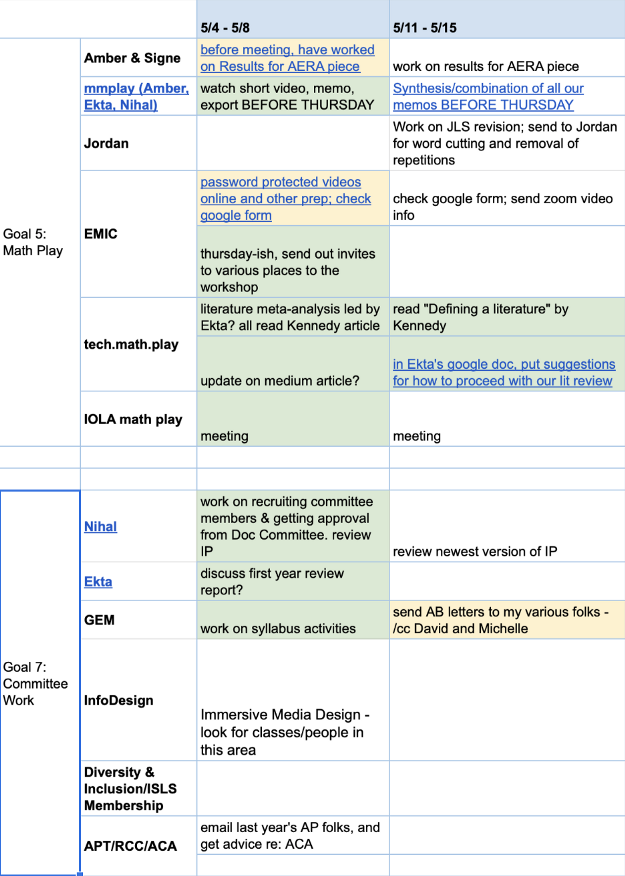
My spreadsheet: metagoals to the far left, subdivided into smaller obligations one column to the right of that, then weekly tasks for those obligations.
So within today (a Tuesday), I had the current week’s column to guide me: this is what I want to accomplish this week. And then I allowed myself the beautiful luxury of choosing which project or obligation I want to work on right now — which activity should I punctuate my life with? Which makes me feel excited about jumping in and getting busy? When I do some work on a cell (say, Project mmPlay for this week — memoing video data), I highlight the cell yellow to indicate I’ve done some of it. When I complete the task (memo the entire second video, and export memos to share with the research team), I highlight it green — and then I ignore it for the rest of the week!
I also have a couple of odd rows, like “One-Off Service” — if an editor asks me to review a journal article, I can go directly to that row and see if I have a spare cell to tuck it in. All the cells are full for the next two months? Welp, too bad, can’t review. There’s also a row called “Annoying Bits” where I put the administrative paperwork (like filling out the travel reimbursement paperwork that has stopped piling up but is still piled up). Committees sometimes share a row, but my doctoral students get their own– sometimes it just says “weekly meeting,” but other times it says “Don’t forget to read that draft BEFORE the meeting!”
Then, at the end of the week, I move over any task I’ve left incomplete to the next week’s column (or ignore it as ultimately unnecessary), and “hide” the column so that my new week is the most prominent column. And, just to add a dash of gamification, before I hide the old column, I count up the green cells — total number of tasks I completed that week, which tends to be between 12 and 20—and transfer that number of dollars into my bank account that is for FUN STUFF ONLY. If the slow accumulation of guilt-free money into a fun-only stash doesn’t motivate you, find something that does. Maybe 5 minutes of pleasure reading for each completed task, so you can store them up and finally dig into those cozy mysteries you’ve been putting off. Or 5 minutes of Netflix—I recommend Keeping Up Appearances for an oldie-but-goodie (completing six tasks gets you an episode!). Or 5 minutes of the peculiarly peaceful Animal Crossing. Whatever you choose, take pleasure in adding up your completed tasks each week, and using your thoroughly deserved awards regularly.
So each individual day of my week is guided by my spreadsheet, but driven by my immediate interest (and see the Footnote and image below) — and I can work on what I’m most interested in until B-series time bops me on the head and says, “Your stomach is growling! Punctuate this activity with the activity of eating!” Often, after such a call by my bodily functions, I realize that I’m tired of working on that project — so I scribble a few notes to remember where to pick up next time, color the cell in appropriately, and move on to something else I feel like doing. Or I bite the bullet and do one of those Annoying Bits, just to give my brain something different-feeling to focus on.
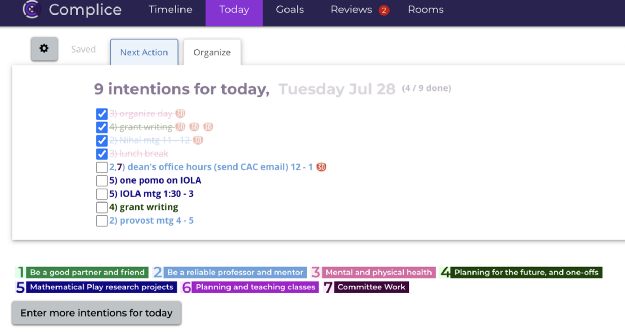
My Complice list for a single day — meetings and goals from my spreadsheet.
Now, here are is the single concession I make to A-series time: every single A-series time commitment I make (whether the weekly family zoom session, teaching my online class, a research meeting, a planned grocery trip, etc.) goes directly on my calendar, and I get alerts on my phone 10 minutes beforehand. (The school bell that kept kids on track in school, and reminded them that A-series time runs their lives, has now transitioned to a phone ding!) This way, I can otherwise ignore proxies for time, and I have 10 minutes to help myself transition from the interrupted B-series activity to the upcoming A-series one. That’s it — that’s all the A-series concessions I make. The rest of my life is B-series.
The world is a complicated mess right now — but accepting that my life is now B-series time has helped me ebb and flow with the new normal. Embrace motivation, interest, enjoyment, and necessities, and try a life that isn’t wrapped around your familiar proxy for A-series time. Give into the urge to do what you feel like doing, in the moment that you feel like doing it, and see what happens. It might just turn out that B-series time is your new favorite tempo.
Footnote
As I’m looking over my spreadsheet each morning, and letting my interests guide me (or any hard deadlines for the day, like reading that integrated paper), I put the things that seem most interesting into my daily task list in https://complice.co. Complice was designed specifically to avoid stale task lists — that is, the constant accumulation of additional un-done tasks from day to day until your list is 3,007 individual tasks long and you decide to never look at it again. If you tend towards guilt-inducing stale tasks lists, try Complice — it complements the spreadsheet perfectly, because the spreadsheet gives you the long-term view and the weekly view, and Complice gives you the daily view (and some lovely co-working rooms!).
References
Gell, A. (1992). A-series:B-series::Gemeinschaft:Gesellschaft::Them:Us. The anthropology of time: Culture construction of temporal maps and images (pp. 286–293). Oxford: Berg.
Martin, C., Williams, C., Ochsner, A., Harris, S. King, E., Anton, G., Elmergreen, J. & Steinkuehler, C. (2012). Playing together separately: Mapping out literacy and social synchronicity. In G. Merchant, J. Gillen, J. Marsh & J. Davies (Eds.), Virtual literacies: Interactive spaces for children and young people (pp. 226–243). London: Routledge.
Nakamura, J., & Csikszentmihalyi, M. (2002). Concept of Flow. In C. R. Snyder & S. J. Lopez (Eds.), Handbook of Positive Psychology (pp. 89–105). New York: Oxford University Press, Inc.
Acknowledgements: Thanks to: Joan B. for helping me realize that my bad superpower had turned good; the fall semester’s students in my Games & Learning class for our discussion about A-series and B-series time; and my old research lab’s chapter Playing Together Separately (Martin et al., 2012) for getting my brain to mesh the two together. Additional thanks to Ana Ndumu and Jordan T. Thevenow-Harrison for their brilliant feedback on the original version, and to Mia Hinkle for her encouragement to dust this off and get it out there. #BlackTransLivesMatter

5 Ways to Manage and Cope with Anxiety and Stress During COVID-19
Ways to manage and cope with the anxiety and stress that you might be experiencing from the pandemic.
During these challenging times, we all have a rollercoaster of emotions during the day. Sometimes we wake up feeling hopeful and by lunchtime, that notion is down the drain. That’s completely normal. We are worried about so many things including getting sick, losing our jobs, not being able to pay bills or put food on the table. Our stress is real and if you feel out of sorts, you aren’t alone.
While we can’t control many things right now, we can control how we handle our stress. Dr. Divya Kannan, Cure.fit’s lead psychologist offers tips on how to cope with anxiety and stress during the pandemic.

1. Being in the present and anchoring the mind
The frequent what-if thoughts that keep plaguing us, and distracting us from our daily tasks. Can we learn how to anchor these thoughts so that our attention isn't constantly being compromised? It’s not easy, because on average our minds are lost in thought close to 50% of the time.
Meditation helps our mind to allow thoughts and feelings to come and go, and for us to observe these from a distance, and in a way accept the natural rhythm of our thoughts. It is not about stopping our thoughts or avoiding our emotions, but about experiencing them present, with a calmness or focus. Our breath or breathing helps us achieve this calm and focus. Think of the role of meditation as a way to achieve intimacy and connection with your mind, in the present.

With anxiety, we are more focused on connecting with what might happen, that we lose sight of what is happening right now and we miss out on many possibly great moments. This tips the balance between the positive and the negative and makes us feel as though most of our moments are lived within a negative space.
But, if you spend just 10 minutes a day cultivating the practice of living in the present moment, then you can deal with difficult thoughts in a calmer and grounded manner, and feel a greater sense of mental fitness as you continue this practice.
2. Experiencing vs. Avoiding
The key to navigating difficult feelings is being open to experiencing feelings rather than avoiding your feelings or fighting them. And most importantly, not judging them as good or bad, but paying attention to them and finding a way to express those feelings.
So, I have to say to myself on a daily basis now, that, yes I guess the pandemic is still here, and in this moment I also have to accept that I don’t have control over the situation or over what happens tomorrow, which makes me feel scared, but also makes me turn to things that I CAN control, such as taking care of my emotions and being able to reassure the scared part of myself - this, in turn, frees me up to focus on other activities.

Your feelings always need an outlet, whether it’s through writing, meditation, or through talking with a friend or therapist. Your feelings need somewhere to land. Knowing how you feel, and why you’re feeling it, sets the tone for making effective decisions and choices. You can figure out which method works best for you, and start to practice good emotional hygiene in this way.
3. Finding your balance
The third aspect of coping is finding balance in a situation that feels extreme. A sense of disequilibrium happens when you begin to see things in the world that don’t make sense to you. It leaves you feeling uncertain, confused, because the things you thought you knew about the world, about yourself, may now feel like they’re in question.
So, this shift in balance can be a struggle. Why? Because we all crave a state of equilibrium, of balance, of certainty, of having some level of predictability about how the world works.
That said, it is an important struggle, to move from this uncomfortable state of disequilibrium to a more balanced state - How do we do this?
Ask yourself:
What you are learning from the situation at hand, at present. How has it changed your understanding of yourself? How has it reshaped your sense of purpose? Has it brought you closer to others? What has it taught you about life as you know it?
This process is called making meaning, where we are constructing a new understanding of something previously unfamiliar. This is how we learn. We come to a new state of equilibrium when we self-reflect in this way.
4. Embracing Change
Right now, and at many moments in our lives, the only constant is change. It's tough to wrap our minds around this, but letting go of the things you can't control will help you focus on the things you can. It’s important to try to balance what you envision and imagine about this change—is the association of change is all negative for you, think about some of the positives that have come with it perhaps in past experiences where you have had to deal with some kind of uncertainty or change.
How we deal with change can ultimately help us be more flexible, adaptable, and can help to create a path for yourself in being resilient to tough situations. I think sometimes we also expect that we should handle change in a certain way, meaning we expect ourselves not to have anxiety about it and in some ways feel we should deal with change expertly or in a perfect way. It’s also important to have compassion towards yourself and allow yourself some leeway in terms of the time you take to adjust to an ongoing stressful situation.
5. The Practice of Gratitude
Gratitude is a feeling, which is often simply the acknowledgment of what is good in one’s life. It is also the idea that, what we do have, can be enough. It’s shifting focus to the things that are, rather than only on the things that aren’t. This is an important positive emotion to cultivate, which has positive effects on our brain and this can go a long way in enhancing our well-being.
More info: Cure.fit is an integrative health app that includes all facets of a healthy lifestyle on one platform. It has holistic health offerings across physical fitness and workouts, healthy food, and mental well-being. Under its Mind.fit vertical, the app offers training modules in mental well-being which aims at helping people to deal with issues like stress, anxiety, sleep disorders, etc. through a combination of yoga and meditation.

Freelance writing jobs of the week: August 10, 2020
Check out these great jobs!
It’s Wednesday and you know what that means, more job leads. Also, don’t forget to check out Monday’s list of high-paying freelance writing jobs if you missed it.

Recipe Writer / Recipe Editor / Recipe Contributor
More info: Cozymeal
News Desk Reporters, Editorial
More info: Financial Writers Society
Script Writer
More info: Starry Eyed Education Inc
SEO Content Writer
More info: Photography to Profits
Sports Blogger
More info: Scout My Game
Freelance Content Writer (blogs, landing pages, etc)
More info: Web Tech
We are looking for entertainment and features writers for the Colorism Issue ✨ Pitch your own piece at rehana@overachievermagazine.com! 🧡 The Colorism Issue will be out on August 15.
— Overachiever Magazine (@OverachieverM) August 9, 2020
.@StarryMag is looking for #writers! If you are into writing & tweeting about #TV, #videogames, #music & more send an email: StarryMag@me.com
— Jamie Steinberg (@NotYerAvgChick) August 9, 2020
We are searching for writers & contributors to join our Kraken team. We're looking for folks who want to cover the newest #NHL franchise. Join #THW today and share your opinions, analysis & knowledge of everything #SeaKraken with our readers. https://t.co/ozi6W94C8j pic.twitter.com/ZBV0YfqfD3
— The Hockey Writers (@TheHockeyWriter) August 10, 2020
CALL FOR PITCHES/SUBMISSIONS: now seeking contributors for an anthology of work about New Jersey! All the info is at https://t.co/HHrD1mefp5. #newjersey #njwriters @WritersofColor @DisabledWriters #lgbtqwriters #CallForSubmissions #callforpitches pic.twitter.com/EJtQNfF4Vr
— Kerri Sullivan (@ksulphoto) August 9, 2020
Experienced writers for a reading app
More info: SWAG MASHA
Experienced Content Writers for Free Stock Photo Website
More info: Wunderstock
Need Experienced Digital Marketing/Online Business Expert
More info: Confidential
Contract B2B Writer
More info: Stone Press
Technology and Legal Writer
More info: Impactian
Website Content Writer
More info: Vision
Independent Contract Editor--Earth Sciences
More info: American Journal Experts (AJE)
Fashion Consultant & Writer
More info: DressEdit
Kick Butt Copywriter for Membership Site
More info: IdealMe Inc


The best high-paying freelance writing gigs of the week: August 10, 2020
A lot of great, high-paying opportunists this week!
Hey, No-fluffers! There are a lot of great, high-paying freelance writing opportunists this week! These gigs pay at least $50 an article, offer a full-time salary, or pay more than $20 an hour. They are also all remote (also known as virtual jobs or work-from-home jobs). Be sure to check back each week for a new list of remote writing jobs.
Note: I don’t know anything about these positions other than what I post. I weed out the seedy looking ones, but it is your job to be diligent when applying. Also, please don’t message me with questions about the postings. If a link doesn’t work the posting has probably been taken down because the gig has been filled. If you have a gig for freelance writers that pays at least $50 a piece or over $20 an hour, please contact me and I will include your gig in next week’s post.
Social Media Copywriter for a web development company
Pay: $30 an hour
More info: Direct Line Development
Copywriter for a web development company
Pay: $50 per hour
More info: Direct Line Development
Bilingual MOMMY Copywriter, Brand Ambassador (Korean)
Pay: $43,000 - $73,000 a year
More info: Bebememo
Full Time Content Writer/Editor
Pay: $10 - $25 an hour
More info: The MarketBurst Group
Content Strategist and Writer
Pay: Full-time
More info: Brex
Freelance Content Writer
Pay: $1,000.00 - $5,000.00 per month
More info: Louis Lehot | L2counsel
Technical Content Marketer (Copywriter)
Pay: $35 - $45 an hour
More info: UpChannels Inc.
Copywriter
Pay: $50 an hour
More info: Scribe Media
Technical Writer (REMOTE)
Pay: $70,000 - $85,000 a year
More info: Piper Companies
Vibrant Life needs pitches
Pay: $100 to $300
More info: Writer’s Guidelines
Call for pitches on prisoners during COVID-19
Pay: $500-1,000 per article
More info: Guidelines
How do prisoners and their loved ones cope during COVID-19?
People in prisons, jails, and immigrant detention centers are at an exceptionally high risk for coronavirus. Meantime, family members of those locked up are worried sick.
Relatives along with advocates and prisoners themselves organize to limit the spread of the virus. They demand prisoner releases and reimagine a world without humans in cages.
But releases are slow. By some estimates, over half the prison population is non-violent drug offenders. How do advocates challenge the trope of “good prisoners vs. bad prisoners” to call for a fundamental change?
What is happening in prisons and outside of them?
We want to know how prisoners as well as family members organize. How are concepts of restorative justice or “Health Instead of Punishment” being applied? What is happening at the grassroots level?
Additionally, what issues do prisoners released and re-entering face? What resources and solution systems are available to help them, especially during this pandemic?
Lastly, what are the links between released prisoners and unhoused people?
Making Contact seeks unique feature pieces that center the voices of people in prison, their families and advocates. Race, class, gender, language, and power are the guiding lens to use.
Submission details
Submit your pitch for an 8-minute feature segment on prisoners during COVID-19.
High-quality remote interviews and the creative use of archival ambience or other audio may be acceptable.
We will commission 2 or 3 pieces. The work does not have to be exclusive to Making Contact. It can be a new audio piece or material previously aired non-exclusively from features, documentaries and/or sound-rich podcasts.
Take your local story national with us. We encourage stories from anywhere in the U.S. We are especially interested in CA and Louisiana, a COVID-19 hotspot with the highest pretrial incarceration rates in the world.
Please see our submission guidelines for more info on our style guidelines and pay rates. Your work will air on our 151 affiliate stations and on our podcast.
Please submit pitches to pitches@radioproject.org by September 5, 2020.
Call for Pitches — How Disinformation Impacts Ordinary Lives
Pay: $1,000 per article
More info: On Spec Podcast
Radish Magazine needs pitches
Pay: $50 to $150; $25 for their “Rooting Around” department
More info: Writer’s Guidelines
Upworthy health magazine needs pitches
Pay: $200 per article
More info: Writer’s Guidelines
Family Fun Magazine needs pitches
Pay: $1.25 per word
More info: Writer’s Guidelines
HoneyColony needs writers
Pay: $75 for listicles (700-1000 words) $75 for curated stories (1000-1800 words)
More info: HoneyColony General Writing Guidelines
Looking for some fresh and original pitches for the AskMen dating vertical! Email me any and all ideas sean.abrams@ziffmedia.com ✒️@WritersofColor @DisabledWriters @LGBTQWriters
— Sean Abrams (@seanybrams) August 4, 2020
Friends, I'm helping out with @glamourmag's culture section for a few weeks. Seeking some thoughtful essays from teachers or parents about school reopenings. Pitch nina_bahadur@condenast.com, ideally by 8/11 please! cc: @WritersofColor
— Nina Bahadur (@nbahadur) August 4, 2020


Freelance writing jobs of the week: August 3, 2020
Here’s some more freelance writing jobs that are 100% remote.
Hey No-Fluffers! Here’s some more freelance writing jobs that are 100% remote. Also, don’t forget to check out Monday’s list of gigs.

Indonesian Content Writer
More info: CULTURE FLIPPER
Technical Content Writer | Introductory Role
More info: Pint. Inc
Freelance Legal Marketing Writer
More info: BluShark Digital
Copywriter, Direct Response
More info: AlgaeCal
Reminder: We're looking for some new freelance video game news writers. All the details are in the linked post, but a short thread with the important bits... https://t.co/HpxevSZ4EQ
— Thumbsticks (@thumb_sticks) August 5, 2020
The Custom Boxes is looking for Experienced, Skilled, Passionate, and Extremely good content writers on a freelance basis.
— TCB is Hiring (@TCB_is_Hiring) August 5, 2020
Flexible work hours, Write as much as you want, earn as much as you can.
Send CV to Jobs@TheCustomBoxes.com with Subject "CONTENT WRITER POST" pic.twitter.com/VkLRD1Ka6O
Hi evening Twitter! I have a story meeting coming up, and would love to assign some ambitious and/or creative Covid-19 stories. ✍️ I'm threading some recent stories I edited and really enjoyed! If you have ideas/pitches in this vein, please email me at alexandra@medium.com ✉️
— Alexandra Sifferlin (@acsifferlin) August 5, 2020
NEW: @TBIJ are looking for an algorithms reporter for maternity cover, where you'll be part of a two person investigative team. #journojobs https://t.co/2zUcmehBfm
— Journo Resources (@journoresources) August 5, 2020
Commerce Cluster Writers
More info: DotDash
Journalist/Contributing Writer
More info: The Buttonwood Tree
Product Description Writer
More info: SEFA | Supply and Equipment Foodservice Alliance
Native English Writers
More info: Facilius Inc
Freelance writer for Psychics Website
More info: eFolio
[Pest Control] Hiring Full Time Writers For Authoritative Resource
More info: Three Ships
Native Writers for PC Builds, Hardware Reviews
More info: 7iy
Writers/Editors: We are looking for more freelancers for steady, long-term freelance writing and editing positions @bestreviews Pay ranges from $25-$100 each for most articles depending on length. Work appears on our site and in Tribune publications. DM me for more info.
— Katie Reseburg (@katiereseburg) August 4, 2020


The best high-paying freelance writing gigs of the week: August 3, 2020
New month, new freelance writing gigs.
Hey, No-fluffers! New month, new clients! Let’s get started. These gigs pay at least $50 an article, offer a full-time salary, or pay more than $20 an hour. They are also all remote (also known as virtual jobs or work-from-home jobs). Be sure to check back each week for a new list of remote writing jobs.

Note: I don’t know anything about these positions other than what I post. I weed out the seedy looking ones, but it is your job to be diligent when applying. Also, please don’t message me with questions about the postings. If a link doesn’t work the posting has probably been taken down because the gig has been filled. If you have a gig for freelance writers that pays at least $50 a piece or over $20 an hour, please contact me and I will include your gig in next week’s post.
Fashion Consultant & Writer
Pay: $60,000.00 - $70,000.00 per year
More info: DressEdit
Captivating, Research-Savvy Content Writer Needed for Natural Health Company’s Growth - is that you?
Pay: Full-time
More info: AlgaeCal
Freelance Copywriter
Pay: Up to $45.00 per hour
More info: Flocksy
Technical Writer
Pay: Full-time
More info: Educated Solutions Corp
Content Writers Needed for Digital Marketing Agency
Pay: $500 - $1,000 a week
More info: RPM Web Media
100% Remote Job for Amazon Listing Copywriter
Pay: $110 - $200 a day
More info: Ignite Brands
Wealth Management Writing
Pay: $600.00 - $2,400.00 per month
More info: NE Day Inc.
Researcher and Writer for Government RFP
Pay: $65,000 - $70,000 a year
More info: SimplerJobs
PRODUCT DOCUMENTATION WRITER
Pay: $40,000 - $45,000 a year
More info: RedTeam Software
Healthcare Industry Writer- Insurance Knowledge a plus
Pay: $100 per hour
More info: NE Day Inc.
Insurance and Healthcare Admin Writer
Pay: $100 per hour
More info: NE Day Inc.
Technical & Content Writer
Pay: $25 an hour
More info: Relevant Law
Cimmaron Software is looking for a content marketing writer
Pay: $40,000 - $60,000 a year
More info: Cimmaron Software, Inc.
Content Writer and Blog Writer
Pay: $32 - $45 an hour
More info: SW & Associates
Digital Business Content Writer
Pay: Full-time
More info: IIBA
Hysterical Women looking for writers
Pay: GBP £100
More info: Guidelines What they need right now
World Politics Review is looking for a freelance writer to contribute the lead story to our weekly China newsletter
More info: Contributor guidelines
Outside/In is looking for writers
Pay: $800 to $2,000 per article
More info: Guidelines


Freelance writing jobs of the week: July 29, 2020
Here’s the second freelance writing job list of the week.
Hey No-Fluffers! Here’s this week’s second job post. Be sure to check out Monday’s post.
Content Writer - Google Web Stories
More info: A Better Today Recovery Services LLC

Experienced news reporters (remote working) - Fourth Estate Alliance. A non-profit organisation dedicated to helping independent journalists succeed seeks experienced news reporters to work remotely from anywhere in the world https://t.co/VSvn7qfZqx #journojobs #journalismjobs
— Journalism.co.uk (@journalismnews) July 22, 2020
Freelance Gaming Copywriter
More info: MBO Partners
Freelance Content Writer - Gaming
More info: Column Five
Contributing Writer - Transportation & Mobility
More info: CoMotion
Freelance Magazine Writer
More info: LasVegas.Net
Journalist - Michigan/Midwest
More info: Gambling.com Group
The HOTH is looking for Freelance Content Writer https://t.co/skYxDopbXZ
— Remotify (@_remotify) July 23, 2020
Call for pitches: "Cyberspace" issue of "Take Space." Seeking longform journalism, interviews, creative nonfiction + interactive, virtual environments: https://t.co/mTMrxtovHw pic.twitter.com/XXeEUJzMb0
— Eric Schmaltz (@eschmaltzzz) July 23, 2020
Freelance DIY Writer
More info: Collective Press
News Writer, Input
More info: Bustle
Cybersecurity Product Writer & Editor
More info: New Context Services
Freelance Writers for Men’s Lifestyle Website | Multiple Roles | Style / Grooming / Dating / Fitness / Self-Development
More info: The Adult Man
College / Education Content Writer
More info: Northwest Ventures
Diligent Corporation is looking for: Freelance Writerhttps://t.co/ml4xKymvv1 #job
— William Bailey (@WbaileyWilliam) July 23, 2020
Experienced Home Improvement Writers (Project-Based & Consistent Work)
More info: Pangolia Ltd.
Native English Writer For PC Website
More info: PC Builderz
Freelance Writer For Parenting Website
More info: RMCM Holdings
Freelance Writer for Renewable Energy And Sustainability Website (Long Term Regular Work)
More info: Green Coast


How to Deal with Distractions When Working from Home
If you’re among those who telework, you’re probably familiar with these struggles. Let’s dive into more details about each issue and show you how to deal with them.
Guest post by Marija Kojic
Working from home has many benefits, such as the fact that there’s no commuting, so you can sleep longer, and you can wear cozy clothes all day long. And, almost everything you need for work is within a hand’s reach. But, your personal belongings are also nearby, which means that your attention can easily be disrupted.

Working from home involves many distractions, which are quite different from those in a traditional office setting. There was a recent survey by the research firm Valoir, which interviewed 327 participants who telecommute. According to their answers, the major distractions when working from home are:
Social media - 32%,
children - 24%,
other adults - 18%,
other distractions - 16%, and
traditional media - 10%
If you’re among those who telework, you’re probably familiar with these struggles. Let’s dive into more details about each issue and show you how to deal with them.
Social media
Knowing that your boss or manager is not around gives you the freedom to check your phone whenever you hear a notification from social media channels. But, the famous “just checking” behavior can quickly evolve into spending 15 minutes or more browsing your Instagram or Twitter account. Next thing you know, you still haven’t finished an important task that needs to be done by noon.
To avoid stressful situations like this, you can do the following:
Turn off notifications for social media apps.
By doing so, you’ll save your valuable time and leave social media explorations for later. In addition, you can mute your phone calls and text messages.
Schedule your social-media-dedicated time
For instance, set a reminder and have a 5-minute break every hour. These can be the moments when you catch up on the latest social media posts.
Try website blockers.
If you prefer visiting social media sites on your laptop, this is an ideal option for you. Website blockers can keep you away from entering predefined sites. All you need to do is add the sites that you want to block and choose for how long these sites should be banned. We suggest apps and extensions such as StayFocusd, WasteNoTime, and Freedom.
Children

We bet you remember that viral video of children interrupting a BBC news interview. We all laughed while watching this scene that’s quite common when working from home. Now, you might not be a journalist broadcasting from your home office, but if you have kids, you’re aware they can sometimes disrupt your work.
Here are some steps you can take to overcome this problem:
Create a dedicated workspace.
If you have a spare room that you can turn into your home office, that would be the best solution. Let your children know that, when you’re in that room, you’re working and shouldn’t be interrupted. Also, prepare some fun activities, or even chores for kids to keep them occupied during your work hours.
However, if you live in a small apartment, you may not have a separate room for work. Instead of modifying an entire room, choose a quiet corner where you can put your laptop, your notebooks, headphones, and everything else you need for work.
This setting is also useful if you need to constantly keep an eye on your baby. In case your children are older, hopefully they’ll understand that you have job duties, and they’ll behave properly.
Learn how to manage your tasks.
Organize your tasks in accordance with your children and their daily routine. So, whenever they’re sleeping or napping, that’s when you should focus on deep work, or try to finish more complex assignments.
On the other hand, leave all your tedious tasks for the times when your kids are having lunch or spending time with you in the same room. For example, you can check your email at that time.
If you have a lot of meetings on your plate, try scheduling them during the times when your children are sleeping. Besides, you can create a spreadsheet for all your colleagues who are also parents, so that you can manage your meetings time together. You can try Doodle, an app for coordinating meetings or check out other work from home apps that can help you automate work.
Other adults

Besides children, you might be distracted by adults living with you - your roommates, your partner, parents, or other family members. Now, they won’t disturb you on purpose, but maybe they don’t realize that even a quick chat can affect your productivity.
Here’s what we suggest you do:
Set clear boundaries.
We mentioned before and we’ll emphasize again - having a separate room for work, or at least some quiet place in your home is crucial for your productivity. The people you live with need to know that your working area is only yours.
The rules are simple - if they see that your office doors are closed, you’re working. Also, if you put on noise-canceling headphones, that’s the sign that you want to focus and you won’t tolerate any interruptions.
Let them know when you are and are not available.
Keep your working hours transparent. That way, your family members will know when you’re busy and when you’ll be available again. Ask them to respect your working schedule and not to bother you during busy hours.
Whenever you need a quick break from work, you can have coffee or lunch with your loved ones. Besides, this is one of the main perks of working from home.
Other distractions
When it comes to the “other distractions” choice in the Valoir study, there was no precise data about this box and what distractions it includes.
So, we’ll cover some additional diversions that can decrease your productivity. These can be outside noises, visual distractions, and internal distractions.
Outside noises
Dogs barking, neighbors yelling or singing, construction works outside your building, or simply the sound of a traffic jam. These are all outside noises that are usually out of your control. Except when it comes to your neighbors, you can try talking to them about the noise they’re making.
Speaking of the other outside noises, here’s what you can do:
Use noise-canceling headphones.
The most effective way to deal with this issue is to use noise-canceling headphones. This is an investment that will make you less nervous and more productive.
Enjoy some music.
Also, you can find some soothing music that will keep you away from noises. We suggest some classical music playlists, movie soundtracks, or instrumentals. If you don’t mind listening to the music that has lyrics, go for it. Plus, you can also listen to some interesting podcasts when dealing with some less-demanding tasks.
Aside from music, you can try noise generator apps, such as Noisli, MyNoise, or Coffitivity. These tools offer diverse sounds, like rain sounds, or waterfalls, or even sounds from a busy coffee shop.
Visual distractions

If you tend to keep a lot of things on your desk, especially those that are not work-related, you might get distracted by them. But, visual distractions include all other items across the room, the ones you use in your free time. So, whenever you don’t feel like working, these items can draw your attention away.
How to avoid these diversions?
Organize your workspace and working area.
Try keeping your desk as clear as possible. If there are a few things you need during your daily job activities, leave only them on your desk. Everything else can be stored in a drawer or in any other room.
When it comes to other items in the room, hide them from your sight if possible. If you don’t see them, these items won’t interrupt you.
Internal distractions
If you don’t feel well or you’re experiencing a personal problem, you likely won’t be able to focus. Thus, your productivity levels will drop, and your mind will start wandering around.
So, whenever you’re feeling down, here’s how you can deal with this issue.
Take frequent breaks.
By having quick breaks every hour or so, you’ll feel a bit more focused and more productive. If you don’t have time to take a walk around the block, at least you can take a few minutes to close your eyes and relax.
You can also try meditation, yoga, or pilates in the evening, after you’re done with work.
Try the Pomodoro technique.
This method will help you stay productive and less distracted by your problems. To get started with the Pomodoro technique, you need to use a timer and work in 25-minute intervals, along with a 5-minute break after each interval. Then, after four cycles, you can have a longer, 20-minute break. This way, you’ll be able to finish your tasks with ease.
Traditional media

Traditional media are all those media channels that were here before the Internet - radio, print, and broadcast television. Some sources even add billboards, film, and music to this list.
Now, listening to the radio probably won’t bother you during your work hours. After all, you can find a radio station that won’t affect your productivity.
When it comes to print media, newspapers and magazines can rather be a visual distraction. So, just like we mentioned, be sure to store them somewhere out of your sight.
That brings us to the third element of traditional media - broadcast television. When you or a family member leaves a TV on, this will surely distract you from work.
How to prevent interruptions caused by traditional media?
Keep them away from you and your workspace
If you can, work in a room without the TV and be sure to keep newspapers and magazines out of that room, too. Let your family members, your partner, or roommates know that television affects your productivity.
This way, you won’t be tempted to turn on the TV during your work hours. Therefore, your productivity levels will remain high.
One bonus tip

Aside from your children and adults living with you, your pets can sometimes distract you from work, too. But, there are ways you can prevent this.
If you have a dog, try taking him/her for a walk before you start working. This way, you’ll get some fresh air, too. Then, you can play with them during your quick breaks.
We recommend that you keep your pets outside of your workspace area. This is especially important if you have calls with your colleagues and clients often.
It’s also vital to keep your pets occupied while you’re working. Give them something they can play with so that they won’t bother you.
Wrapping up
When working from home, you’ll sometimes have to deal with your children running around, or other family members who always feel like chatting with you. In addition, you might be tempted to check your social media accounts or turn on the TV to get some inspiration for lunch from your favorite cooking show. In some cases, the construction work in front of your building might be the reason why you can’t finish an important project.
One thing’s for sure - telecommuting doesn’t have to be hectic. By changing your workspace and your work habits, you’ll be able to maintain your productivity. Hopefully, the tips we’ve covered in this article will be your first steps to accomplishing this goal.
About the author:
Marija Kojic is a productivity expert specialized in time management techniques. She works at Clockify, where she enjoys helping people discover meaningful and effective ways to work smarter.

The best high-paying freelance writing gigs of the week: July 27, 2020
Get paid more with these gigs-of-the-week.
Hey, No-fluffers! Looking for some great freelance writing jobs? Here’s some places you can pitch. These gigs pay at least $50 an article, offer a full-time salary, or pay more than $20 an hour. They are also all remote (also known as virtual jobs or work-from-home jobs). Be sure to check back each week for a new list of remote writing jobs.
Note: I don’t know anything about these positions other than what I post. I weed out the seedy looking ones, but it is your job to be diligent when applying. Also, please don’t message me with questions about the postings. If a link doesn’t work the posting has probably been taken down because the gig has been filled. If you have a gig for freelance writers that pays at least $50 a piece or over $20 an hour, please contact me and I will include your gig in next week’s post.
Contract Copywriter or Blog Writer, Dental Background Preferred
Pay: $15 - $25 an hour
More info: Identiwrite Creative
Copywriter - Social Media
Pay: $1,000 - $5,000 a month
More info: SPRAD
Freelance Writer
Pay: Full-time
More info: Star Local Media
Technical Writer
Pay: $32 - $36 an hour
More info: Digital Matrix Systems
I've had loads of great responses to this, but still open to more! At Business Insider, we're looking for UK/Europe-based freelancers to write business stories on interesting trends, ideas, and people, as well as scoops. Details below 👇 @weblackjournos #journojobs https://t.co/r6XjZepq30
— Samuel Horti (@SamuelHorti) July 22, 2020
Elementary Math Content Writer
Pay: $20 an hour
More info: Exceptional Educational Services
Content Specialist / Copywriter
Pay: $38,000 - $50,000 a year
More info: Merch Monster
Content Writer
Pay: Full-time
More info: Southern Careers Institute
Hello. While I can, I’d like to widen the pool of profile writers I commission at the Observer Magazine. If that’s you, get in touch with clips. alex.moshakis@theguardian.com (cc: @weblackjournos)
— Alex Moshakis (@alex_moshakis) July 17, 2020
We are looking for contributions to the second edition of the Lockdown Gazette from North East artists, writers, etc! There's a fee of £50 for existing work, or £100 for a new piece. Deadline for submissions and ideas is 30 July: https://t.co/ak7gpwuIXs
— The NewBridge Project (@N_B_Project) July 16, 2020
Freelance writer to assist in developing resumes
Pay: $50 - $100 a day
More info: Occupation Optimist
The Take is looking for writers to script smart, entertaining video essays
Pay: $15 - $47 an hour
More info: The Take
Technology Writer
Pay: $40,000 - $50,000 a year
More info: Solutions Review
Grants Writer
Pay: $25 - $26 an hour
More info: Charitable Ventures
Memoir Book Writer and Editor
Pay: $25 per hour
More info: Flow
Writers/Editors: We are looking for more BIPOC voices for steady, long-term freelance writing and editing positions @bestreviews. Pay is $100+ for most articles depending on length, and work appears on our site and in Tribune publications. DM me for more info.
— Heather MacKenzie (@fashionmac) July 23, 2020


How to Get Admin Access Back to Your Facebook Business Page
Here’s the process for getting your admin controls back on your Facebook business page.
Recently, I accidentally removed myself as administrator on my own Facebook page. I didn’t even know you could do that! Why does Facebook even have that option?! I searched everywhere trying to figure out how to get my page back. Turns out this information isn’t readily available for some reason.
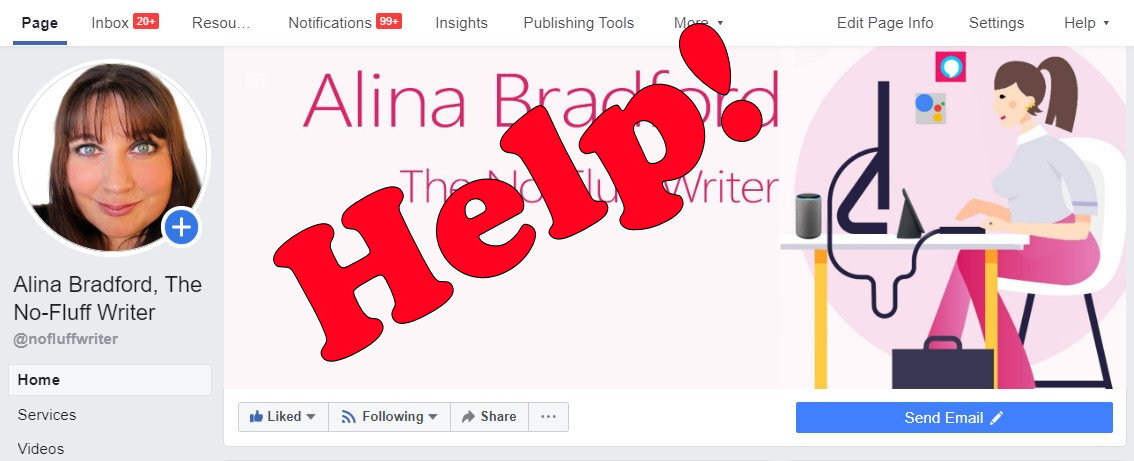
Eventually, I was able to figure everything out with some help from my FB friend, Angélica Moss (she’s a fantastic brand designer, btw), who figured out how to get a page back from her own struggle with de-admining herself.
Turns out the process is really simple and easy. Here’s the process for getting your admin controls back on your Facebook business page.
Step one: Ask for help
The first step is to ask for help in a way that Facebook will actually reply to. Here’s the steps:
Go to the help center https://www.facebook.com/help.
Hover over the tab Using Facebook and click on the Pages option.

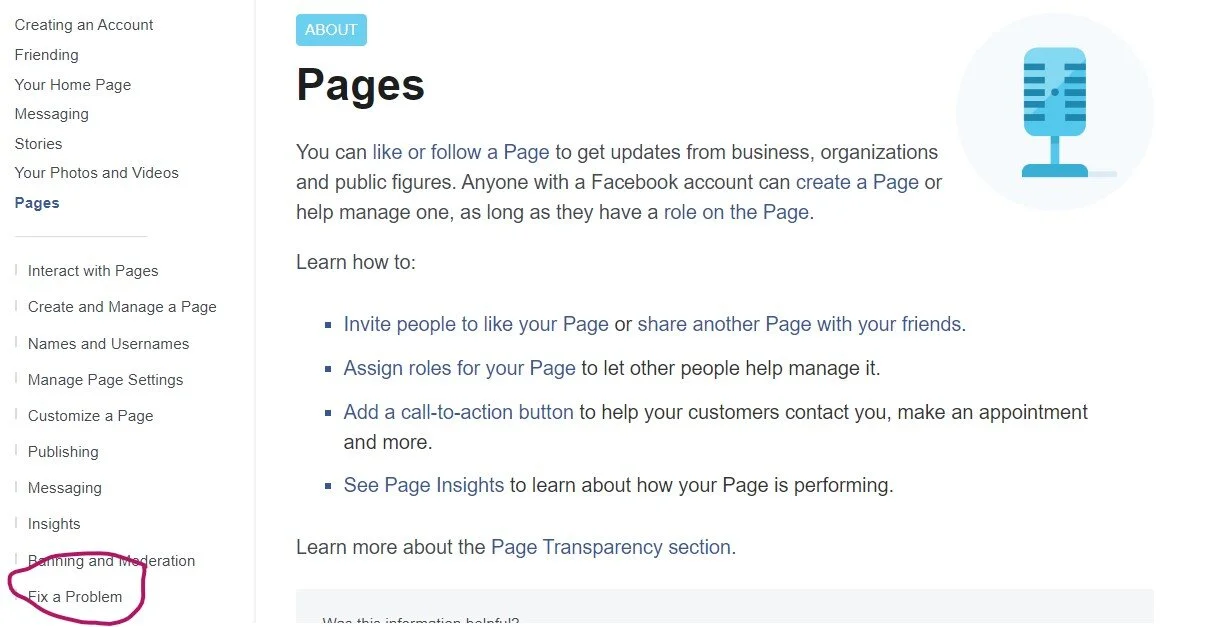
Click on Fix a Problem, then I think my Facebook Page was hacked or taken over by someone else.
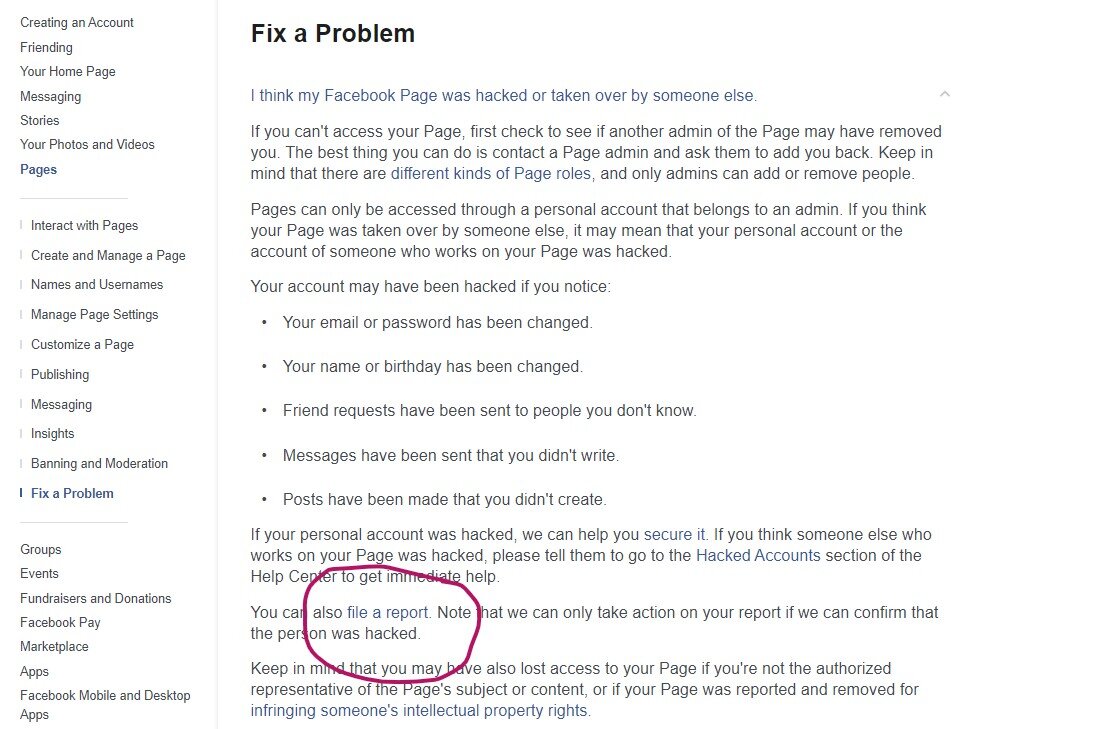
On the new page that pops up there will be a long bunch of text. Click on the link that says file a report.
This will take you to a page called I Have an Issue Accessing My Page. Click on the Send button.
Step two: Send in proof
After around 24 hours you will get an email from Facebook. Here’s what mine said:
Hi Your Name,
Thanks for contacting us. We've received your request to gain access to the Page Alina Bradford, The No-Fluff Writer at /196019060445190/. We’d be happy to look into this, but please keep in mind that we are not in a position to resolve disputes between third parties.
If you’d like us to help, please provide all of the following:
1. A copy of a valid government-issued photo ID, such as a current driver's license or a passport, of the individual signing the statement. You can find the different kinds of IDs we accept in the Help Center: https://www.facebook.com/help/159096464162185?ref=cr
2. A signed statement from a person with sufficient knowledge and authority over this matter that includes all of the following:
a) A description of your relationship to the Page (including your authority to request a change in the person(s) who manage the Page, as applicable);
b) The name of the current person(s) who manage the Page, as applicable;
c) The relationship of the above person(s) to the Page;
d) An explanation of your request, and whether there has been a termination of the employment and/or business relationship with the named person(s), as applicable;
e) All documentation supporting your request;
f) The Facebook account or email address associated with the Facebook account that you wish to have added as the new admin of the Page; and
g) A declaration that the information you have provided is true and accurate (e.g. "I certify that the information provided is true and accurate") - your statement must include similar language.
Please understand that if we do not receive a signed statement with all of the requested information, we won't follow up. If the statement is not signed or doesn't contain a declaration attesting to its truth and accuracy, we won't be able to help. Once you have provided all of this information, we may follow up with additional requests for information or documentation. Please keep in mind that providing us with this information doesn't guarantee that we'll be able to fulfill your request. If we are able to process your request, only one admin will be added to the Page, and it will be the admin's responsibility to manage the Page roles.
That sounds complicated, but it’s really not. I sent them a statement explaining what happened from both me and my husband and a copy of our drivers licences.
Step three: Finishing up
After I submitted proof, they sent me this message around 10 minutes later:
Hi Alina,
Thanks for providing the requested information. We reviewed your request, and based on the information you provided, we added Alina Bradford as an admin for the Page Alina Bradford, The No-Fluff Writer at www.facebook.com/196019060445190/. If you have any questions about the different Page roles and what each can do, you can learn more in the Help Center: https://www.facebook.com/help/323502271070625
Thanks,
I went to my page and sure enough, I had access to it again. Super simple process once you know what you’re doing! Did this post help you? Please let me know in the comments!

Personal Finance Tips Every Business Owner Should Know
Financial management is one of the top skills every business owner should develop before starting their business. If you’re unsure how to do it, these personal finance tips for every business owner should help.
Guest post by Michael Deane
You may excel at managing your business and knowing where every dollar goes but you might not think much about your personal finances. Maybe it’s simply not something you enjoy doing, unlike running your business, which is your true passion.

We understand. In fact, many home business owners are in the same position. This is because the line between your business and your personal life is easily blurred when you work from home. But keeping your personal finances in good shape is a priority if you want to avoid trouble later. Financial management is one of the top skills every business owner should develop before starting their business.
If you’re unsure how to do it, these personal finance tips for every business owner should help.
Never Mix Personal Finance With Your Business Finance
We start with the most obvious tip precisely because business owners make this mistake all too often. Mixing personal and business finance almost never ends well.
Separating your personal and business finances requires setting up separate bank accounts, keeping business expenses separate from your own, giving yourself a fixed salary every month, etc.
This may sound difficult when you run a home-based business and you basically live and work in the same place. But even so, you should try to separate the two.
The benefits of keeping your finances separate go far beyond tax purposes, although this is reason enough to stick to this rule. You can take advantage of various tax deductions to reduce the tax bill for your business. Additionally, you can write off most of your spending as business expenses.
Now imagine the added stress of having to go through all the expenses, personal and business, trying to calculate your taxes? This would take significantly more time. Keeping your business expenses separate makes everything much easier. Also, if you happen to be audited, the authorities will audit both your records: personal and business. Naturally, you want to avoid this.
Give yourself a fixed salary every month, even if you are running an online business, and don’t use your business credit card for small personal purchases now and then. You’ll be thankful later.
Manage Your Spending
Unless your business is bringing in millions every year and finances are the least of your worries, you need to be careful with your spending. Even though you run a business and may want to keep certain appearances, you should really try to keep track of how much you spend and where your money goes.

Creating a personal budget helps. It enables you to live within your means and gives you structure. You know how much you make every month, you know how much your mortgage and bills are, and how much you can splurge on luxuries. Clear and simple, no philosophy about it.
You’re already managing a remote team so you’re saving money on rent and office supplies. Think about how else you may cut your spending. Perhaps quit that gym you paid for in advance if you don’t really use it. The idea is to see whether you’re spending more than you earn every month and how to remedy that. Putting everything on paper gives you perspective.
There are countless practical ways to manage your spending, such as budgeting apps. You can download one to help you track your expenses. Many of them are completely free so take your pick.
Create a Strategy for Your Debt
If you’re in debt, you should tackle that as soon as possible. Debt can prevent you from meeting your financial goals and can really hinder both your personal and business efforts. As long as you’re in debt, you can’t focus on your retirement plans, purchasing a bigger home for your family, etc.
Choosing a debt strategy is extremely helpful in this situation. For example, you should strive to make at least minimum payments towards your debts every month, regardless of how small a payment we’re talking about. As you pay off a debt, you can use that money and put it towards your next bigger debt. This method is called a debt snowball strategy.
This is another reason why budgeting is such a smart choice. Include your debt payments into your personal monthly budget to ensure that you make payments toward the debt every month.
Seek a Financial Professional

You may think that hiring financial professionals is reserved for big companies and not small home-based businesses. But if you’re really not eager to delve deeper into money management or you’re simply overwhelmed, you can skip our tips and talk to a professional. They’re likely to give you some guidance when it comes to managing your finances and you’ll be able to get confirmation that you’re doing everything right.
One purposeful talk with a financial advisor can make a huge difference in your life. It’s a small investment compared to the benefits you will get.
Start an Emergency Savings
We all might be one emergency savings away from a disaster. There have been too many examples of failed businesses and bankruptcies all because these business owners and individuals didn’t bother to set up an emergency fund. Or they believed they couldn’t afford it.
But given the importance of having emergency savings, you can’t afford to not have it.
You might be a huge medical bill away from bankruptcy. We need not look further for examples than what’s going on right now in the world. The COVID-19 pandemic has swept the world leaving countless small businesses with their doors shut and even managing to jeopardize some of the big names.
If your business happens to fail and you don’t have any savings, you’re in trouble. However, if you manage to save at least three months’ worth of expenses, you’ll have the time to think about your next move without pressure.
About the Author
Michael has been working in marketing for almost a decade and has worked with a huge range of clients, which has made him knowledgeable on many different subjects. He has recently rediscovered a passion for writing and hopes to make it a daily habit. You can read more of Michael's work at Qeedle.

Freelance writing jobs of the week: July 20, 2020
Wednesday freelance remote writing jobs list.
Hey No-Fluffers! Here’s this week’s second job post. Be sure to check out Monday’s post.
Freelance Writer - Drone Industry
More information: XDynamics LLC
Columnist, At Work
More information: Dow Jones
Freelance Medical Writer
More information: Custom Learning Designs
Initial Design Group is looking for a freelance contributor to our blog covering business and growth strategy, branding, marketing, and social media topics.
From Indeed:
Success in this role may lead to additional, client-facing copywriting and copyediting opportunities.
Specific responsibilities include:
– Pitch, research, and write original blog posts that engage an audience of entrepreneurs, executives, and managers of startups and growing small- and mid-sized businesses
– Articles should cover business current events, trends, and topics of interest that offer real value to readers
– Write 500-700 word blog posts two to four times per months
– All written pieces must consist of 100% original workRequired Skills and Characteristics
– Demonstrated ability to capture the audience’s attention and convey clear, engaging concepts in short format pieces
– Experience writing about business, marketing, and branding topics or other related subjects
– Comfort working with a team, collective brainstorming, and incorporating feedback and creative direction into a final product
– Ability to work remotely using your own computerExperience and Educational Background
– Bachelor’s degree required, graduate school experience beneficial
– Prior work experience with marketing, advertising, or public relations agencies a plus
– Current graduate students in business or business administration are encouraged to applyCompensation
Compensation for this part-time position is competitive and commensurate with candidate experience and qualifications.
To Apply
Please send a cover letter, resume, and samples of relevant writing samples to careers@initialdesigng.wpengine.com. Samples of desired products can be found at http://initialdesigngroup.com/insights/.
Freelance Banking/Finance Writer
More information: Wpromote
Sports Blogger
More information: Scout My Game
Copywriter / SEO
More information: NM Digital Marketer
B2B Blog and Social Media Writer
More information: Civilis Consulting
ALAIK Mag gives emerging writers, photographers, and artists of color a platform to share their work. They're currently seeking submissions for Issue 2.
— Galleyway (@Galleyway_) July 14, 2020
Submit 👇https://t.co/nhN3U1obOO
WE ARE HIRING!!!
— THEWILL NIGERIA (@THEWILLNG) July 14, 2020
We are looking for writers in the areas of Current Affairs, Business and Lifestyle for immediate employment. We’ll consider freelance, ghostwriter applications too. Interested? Submit applications to info@thewillnigeria.com #hiring #jobs #newsroom #journalists
Looking for writer for E-Books
More information: Net Solutions
Looking for Photography product review and comparison writers to join our team
More information: Sky Pix
Have you wanted to write for a larger audience? You can write a guest post on Blogchatter website! We are accepting pitches for the month of August. What's more, this is a paid opportunity!https://t.co/ZM3hZbRXcF pic.twitter.com/4JZskKhyYC
— Blogchatter® (@blogchatter) July 14, 2020
As @newhumanitarian #LatinAmerica editor-at-large I look forward to receive #pitches from #writers based in the region. Particularly interested in stories from Central America, other countries receiving little attention, and anyone at Mexico’s borders paula.dupraz@gmail.com
— Paula Dupraz-Dobias (@pauladdobias) July 16, 2020
OPEN CALL: @GameCrate is looking for remote freelance writers! If you know PC hardware and/or love gaming, we want to hear from you. https://t.co/lVZ13nhvfW
— Newegg (@Newegg) July 15, 2020
The Spectator is growing fast: we now outsell two national newspapers. We’ve returned our furlough money, now we’re hiring. Details: https://t.co/9bJYIVSs3i
— Fraser Nelson (@FraserNelson) July 10, 2020
Outdoor Content Writer
More information: Moore Enterprises
Native English Writer For PC Website
More information: PC Builderz
Seeking a Strength and Conditioning Writer with a focus on MMA/Combat Arts
More information: Fighting Arts Health Lab LLC
Experienced Romance Writers Wanted ASAP – Remote Opportunity
More information: HotGhostWriter


The best high-paying freelance writing gigs of the week: July 20, 2020
Monday’s list of high-paying freelance writing jobs.
Hey, No-fluffers! Looking for some great freelance writing jobs? Here’s some places you can pitch. These gigs pay at least $50 an article, offer a full-time salary, or pay more than $20 an hour. They are also all remote (also known as virtual jobs or work-from-home jobs). Be sure to check back each week for a new list of remote writing jobs.

Note: I don’t know anything about these positions other than what I post. I weed out the seedy looking ones, but it is your job to be diligent when applying. Also, please don’t message me with questions about the postings. If a link doesn’t work the posting has probably been taken down because the gig has been filled. If you have a gig for freelance writers that pays at least $50 a piece or over $20 an hour, please contact me and I will include your gig in next week’s post.
Resume Writer
Pay: Up to $3,500 a month
More info: Simpler Jobs
Project Specialist- Writing about deaf-blindness or human services
Pay: Full-time
More info: Helen Keller National Center
Content Writer
Pay: $45,000 - $50,000 a year
More info: Catsy
Blog Manager/Content Writer
Pay: $10 - $30 an hour
More info: My Trainer LLC
SCIP Imaging Tech Writer
Pay: $19 - $25 an hour
More info: Persistent Technology, Inc.
Internet Researcher / Writer for a Career Blog
Pay: $20 an hour
More info: Career Blog
Staff Writer: B2B Partnerships
Pay: Full-time
More info: Crossbeams
Apple & iPhone SEO Topic Writer and Product Reviewer (Work from Home)
Pay: $30,000 - $36,000 a year
More info: AppleInsider
Entertainment News Magazine Hiring Experienced Music Critic / Journalist
Pay: $15 - $20 an hour
More info: Entertainment Voice
Content Writer, Remote
Pay: Full-time
More info: Achieve3000
Freelance Writer
Pay: $17 - $24 an hour
More info: Holy Trinity Home Health Care
Social Studies Content Writer, Remote
Pay: Full-time
More info: Achieve3000
Freelance Multimedia Journalists Dallas, TX
Pay: $20 - $25 an hour
More info: Diamond Diaspora Media
SEO Content Copywriter
Pay: $15 - $20 an hour
More info: SAINT CHIC INC
Experienced Senior Living Writer For Long Term Position
Pay: 12 cents per word
More information: Purecontent Limited
CONTRIBUTING WRITERS - GENDER JUSTICE & WORKERS’ RIGHTS
Prism is a BIPOC-led nonprofit news outlet that centers the people, places, and issues currently underreported by national media. Through our original reporting, analysis, and commentary, we challenge dominant, toxic narratives perpetuated by the mainstream press and work to build a full and accurate record of what’s happening in our democracy.
Prism is hiring contributing writers, on a contract basis, to regularly contribute to our coverage of gender justice and workers’ rights in the United States. Gender Justice contributing writers will cover issues like reproductive justice, trans and queer liberation, women’s rights, intersex rights, and sex work. Workers’ Rights contributing writers will cover issues like economic justice, workplace discrimination and inequity, and the fight for fair and living wages and paid leave. In both verticals, contributing writers will write about their subject areas with an eye toward the intersections of gender justice and workers’ rights with Prism’s other major areas of coverage: racial justice, immigration, criminal justice, and electoral justice. Contributing writers’ work will center the voices and perspectives of BIPOC people most impacted by the issues Prism covers, producing stories that focus not only on the many pressing challenges in gender justice and workers’ rights, but also stories of leadership and resilience.
Contributing writers will publish 1 to 2 pieces per month at approximately 1200 words per piece, capped at 9 pieces per six-month contract, with a mix of articles assigned by Prism editors and those proactively pitched by the writer. We are seeking reporters who are fluent in a number of different modes of reporting and writing, including feature-style stories, Q&As, profiles, shorter news briefs, explainers, and news analysis. Contributing writers should possess a deep well of story ideas, and must excel at working independently in a deadline-driven environment.
Applicants should have at least three years of experience covering gender justice, workers’ rights, and/or related issues. If you don't fit perfectly into this criteria but have a strong writing background and want to tell us about the interest and unique skills and experience you would bring to this coverage area, we encourage you to apply. Your application should reflect what you’ve done, what you can do, and what you would — or would want to — do as a contributing writer at Prism, and your vision for how you would shape your reporting beat.
COMPENSATION
Our contributing writers are freelance, contract, and remote positions paying $1000/month. Writers selected for the position will be offered a six-month contract with an option to renew for an additional six months.
Contributing writers will also receive first notice of staff positions opening at Prism.
TO APPLY
To apply, please create a single-document file that includes the following, in this order:
a cover letter that indicates whether you are seeking a contributing writer role in Gender Justice or Workers’ Rights, and outlines how you would approach the position and why your lived experiences, identities, and skills make you best suited for the role;
your resume—one to two pages—including a link to your LinkedIn profile and personal website, if you have one;
links to no fewer than three published pieces you’re proud of; and
two references.
Email join@ourprism.org with your single-document file containing what’s outlined above, along with the subject line: Contributing Writer - Gender Justice OR Contributing Writer - Workers’ Rights, by the conclusion of July 27. Applications will be reviewed on a rolling basis.
CALL FOR PITCHES
Prism is looking for freelance pitches. We cover range of subjects, including voting rights and electoral justice, criminal justice, gender and LGBTQIA+ issues, racial justice, workers’ rights, and the environment. Currently, Prism is covering these topics as they relate to the U.S. and U.S. territories. We accept reported news stories, features, and profile (up to 1200 words), along with op-eds, commentaries, and short personal essays (700 to 900 words) on those topics and others that relate more broadly to our focus on reflective democracy.
Consistent with our mission, Prism aims to feature perspectives and stories not currently centered in traditional media, so we especially encourage pitches from people of color, women, LGBTQIA+ people, and others from marginalized and underrepresented groups. Whether from emerging voices or experienced writers, we’re interested in well-researched, topical pieces with a compelling voice and strong narrative.
To learn more about the kinds of stories we’re looking for, check out our website and also check out the things we share on our Twitter and Facebook feeds to get a feel for the kind of work that moves us. Stories written for Prism also appear in Daily Kos, leveraging its multi-million reader reach to educate a growing progressive readership.
Email pitches to pitch@ourprism.org with the word “Pitch” in the subject line. Include links to your previously published works if you have them, but don’t worry if you don’t - if you don’t have published clips to share, send writing samples that you feel best represent your voice and writing style. Please do not send full or finished articles for consideration. Pay for accepted pieces is $.40/word.
Supermajority Education Fund is seeking experienced freelance writers to contribute to our content platform
Pay: Prices range from $175 (for social-first content) to $400 (for longer features).
More information: Indeed


Freelance writing jobs of the week: July 13, 2020
I’m back with this week’s second freelance writing gig list of the week.
Hey No-Fluffers! I’m back with this week’s second freelance writing gig list of the week. There’s a lot of great options, no matter what your niche.

NFL Writer
More information: Rams Headquarters
Social Media / SEO writer
More information: WDAM
CBD Blogger
More information: Flavors CBD
Just a reminder that @HuffPostUK Opinion is always accepting news-pegged pitches. Send your Hot Takes to ukopinion@huffpost.com. Commissions are paid. #journojobs #freelancewriting https://t.co/qjICiKQTWA
— Lucy Pasha-Robinson (@LucyPasha) July 6, 2020
Grant Writer
More information: Leswee
Sports Writer
More information: Daily Best Odds
Remote Gaming Features Writer
More information: Valnet Inc.
Sports Blogger
More information: Scout My Game
Remote Comics Feature Writer
More information: Valnet Inc.
We are looking for freelance writers for our Codemagic blog (https://t.co/lCZCEFJ8ds). All your ideas concerning Flutter, CI/CD & the hottest new features (as well as your own angles) welcome.
— C💙demagic (@codemagicio) July 6, 2020
Have an interesting idea? Connect with us. https://t.co/Bpdo0hKS4U pic.twitter.com/y4uvNY2ylN
Remote TV/Movie Feature Writer
More information: Valnet Inc.
Strategic Content Writer
More information: Medline Industries Inc
Verywell Needs Writers
From MediaBistro:
Verywell Health, one of the largest health information sites on the internet, is looking for new writers!
About the Role:
Most of our users find us after Googling a health condition. Therefore, we are very SEO-driven and have quite a few templates to help writers structure their articles.
There is sometimes confusion about people hoping to contribute fitness, nutrition, mindfulness, and parenting content, but those live over on our other verticals (Verywell Fit, Verywell Mind, Verywell Family). Verywell Health is a disease, condition, and treatment-specific site.
About You:
With that in mind, we’re looking specifically for writers who:
Have a health or medical background, proven by credentials (e.g. LPN, RN, MPH)
Are medical journalists with proven experience writing for a consumer audience
Have experience and/or are comfortable covering public health issues
We require research and primary sources, like journals, but interviews are not required.
Owned by Dotdash, Verywell has a traditional freelance model that pays writers to create content on their own schedule without limiting their ability to work on other projects.
As a writer for Verywell, you should be able to navigate complicated topics and present them in a way that is understandable for a lay audience while providing actionable next steps for all levels. If you would like to know more about this opportunity, tell us about yourself at writeforus@verywell.com. Please include your relevant credentials as well as links to previous content you’ve written related to your particular topics of interest.
About Us: Dotdash brands help people find answers, solve problems, and get inspired. We reach over 100 million people each month, more than 35% of the U.S. online population, according to comScore, and are one of the largest content publishers on the Internet. Dotdash brands collectively have won more than 50 industry awards in the last year alone, and are among the fastest-growing in their categories. Our brands include Verywell, Investopedia, The Spruce, The Balance, Byrdie, MyDomaine, Brides, Lifewire, TripSavvy, Liquor.com, Treehugger and ThoughtCo.
Please be aware of fraudulent recruiters offering opportunities at Dotdash. Note that any correspondence with a member of the Dotdash recruiting team will come from a @dotdash.com or a notification@jobvite.com account belonging to a Dotdash Recruiter. If you are in conversations for a job opportunity and wish to confirm its validity, please reach out directly to security@dotdash.com.
Dotdash embraces inclusivity and values our diverse community. We are committed to building a team based on qualifications, merit and business need. We are proud to be an equal opportunity employer and do not discriminate on the basis of race, religion, color, national origin, gender, sexual orientation, age, marital status, veteran status, or disability status.
Personal Finance Writer
More information: Launch Potato
Top Notch Content Writer/Marketer for SaaS Service
More information: Opinion Stage
Technology / Office Products Content Writer
More information: DL Media