
What is Evergreen Content?
No matter what kind of writing you do, you’ll probably come across a client or publication that needs “evergreen” articles or blog posts. This is an important term to know since it is a very specific type of content. It’s easy to screw up if you’re not 100% sure what evergreen means. No worries, I’m here to help.
What is evergreen content?
An evergreen is a tree that stays green all year round. There isn't a specific season where it has leaves. Evergreen content is the same way. These articles and blog posts are intended to be useful all year, not just during a certain time. Usually, these articles are SEO optimized.
Evergreen content vs. non-evergreen
The opposite of evergreen articles are “timely” articles or articles focused on a certain time, holiday, news item, or event. Let’s compare the two.
Examples of timely article titles:
This Holiday Trick will Save Your Turkey
The FDA Just Approved the XYZ Drug for Aneurisms
This New Alexa Feature Lets You Sing with Lady Gaga
10 Tips to Make Your Summer Better
Tax Season is Coming: Use These 5 Tips to Avoid Audits
Examples of evergreen article titles:
How to Fix a Leaky Bathtub Faucet
10 Relationship Tips to Keep the Home Fires Burning
5 Reasons Why You Need a Bidet
Never Mention These 5 Things to Your Boss
Examples of evergreen articles that I have written that you can study:

Why publications want evergreen content
Evergreen articles and blog posts are a common ask because they are the foundation of the traffic scheme of a publication. Timely articles typically bring in a lot of traffic, but only for a limited time. Evergreen content may not have an explosion of traffic, but it brings in a steady flow over time, if done well.
These articles also tend to help a site with search ranking because they are still relevant year after year, giving the site authority points with search engines like Google. Older articles are often given seniority over newer articles, as long as they are still relevant.
Elements of evergreen content
Evergreen content should include information that is useful whenever the article is accessed by your reader and should never feel dated. Generally, you want to avoid anything that will make the article become outdated or specific to a certain time frame. There are several things you need to exclude from an evergreen piece to achieve this. Here are some things to avoid:
Commenting on how something is coming in the future. Eventually, the future will be the past, making the article outdated. For example, don’t say something like, “Spring is coming soon.”
Saying “this year.” Instead, say something like, “In (the year), xyz happened.”
Including statistics from more than a year ago. Use statistic from as recently as possible so the information stays fresher, longer.
Talking about a sale. Sales expire, so they aren’t evergreen.

Common types of evergreen articles
Generally, there are certain types of articles that are more likely to be evergreen. These include:
How-to
Tips
Listicles
Reviews
Reference
Guides
Case studies
Round-up
Generally, news articles, articles about new features of a product or service, time-based round-ups or listicles (like The Best SEO Tips of 2001), and announcements are not evergreen.
If you’d like a step-by-step guide on how to become a successful writer, check out my book The Fluff-Free Freelance Writing Master Course Workbook: The only course that gives you concrete, actionable information to building a successful freelance business without any fluff.
10 Tips for Creating Headlines and Titles that Get Clicked
For freelance writers, crafting great headlines that capture readers' attention increases the chance of getting a click and eventual customer conversions. Here’s how to get better at it.
It's difficult to write irresistible headlines. It's a fact, even for old pros like myself. For freelance writers, crafting great headlines that capture readers' attention increases the chance of getting a click and eventual customer conversions.

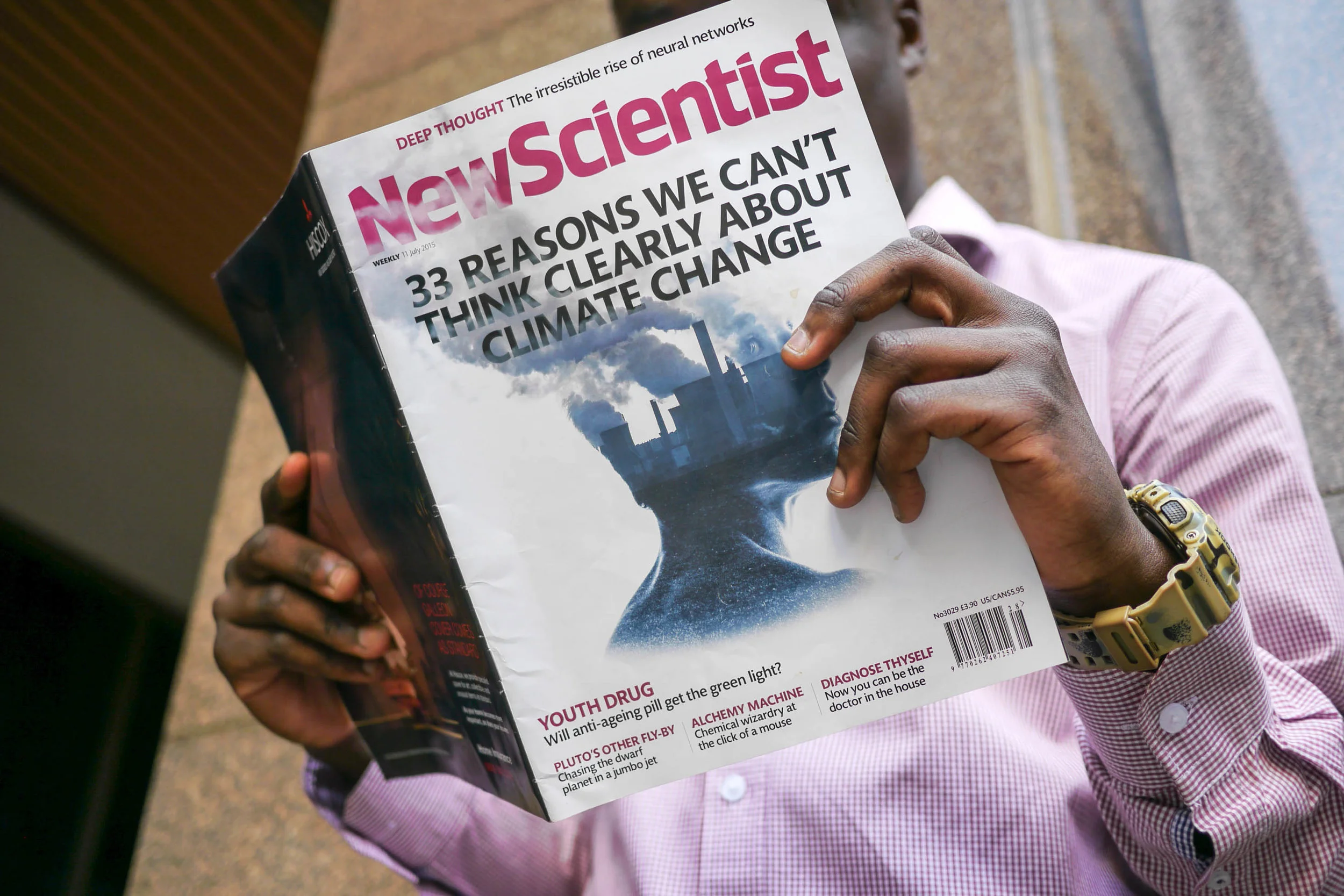
An iconic headline from almost two decades ago.
How can you ensure that you have the perfect headline? Here are some ideas from Dave McDonald and myself:
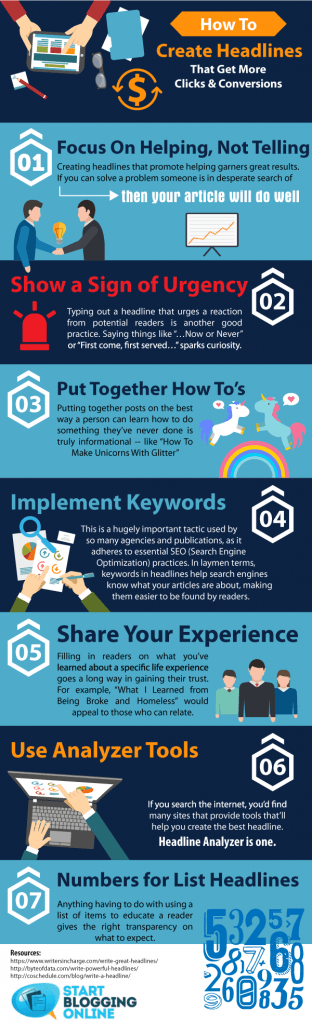
Make your headline inviting by giving them an answer to what they are looking for. Example: "This (blank) Trick Makes Your Life Easier in Just 10 Minutes."
But don't reveal everything. For example, "This Trick will Lower Your Electric Bill by 25%" tells the readers that they are going to learn something to lower their electric bill, but doesn't give any clues as to what in the title. Curiosity will get the best of most people and they'll click.
Research customer demographics so that you'll know what the visitors to your site are looking for. They might be looking for new products, practical tips, useful information or new ideas, for example.
Make sure your headline is unique, very specific, useful and presents a sense of urgency.
Do away with commercial wordings that most other e-marketers are using. Instead be prepared to take some risks.
Taglines can be used as headlines effectively.
Grab your reader's attention by starting your headline with "How to…" since this indicates you're providing them with useful information.
A number in the title ensures your readers will be intrigued by what you have to say. ("20 Unexpected ways to use dryer sheets" is one of my most popular articles on CNET.) Just ensure that the list contents fully support the headline.
Employ an element of surprise by presenting the readers with something unexpected. It can tickle your audience's curiosity. Novelty and unpredictability are things that stimulate the brain, ensuring that readers will stay and read on. "Angelina Jolie Doesn't Look Like Herself Anymore" is a good example of piquing curiosity.
Add a little humor. “Annoying 2000s Tech We Kinda Miss” is a title example that uses a little fun to draw people in.
Bonus tip: Borrow what works. Titles can't be copyrighted so you really don't need to worry about plagiarism. If you see a great headline jot it down to use as inspiration later. Integrity wise, it is best to borrow and customize headlines created for a niche outside of your own so it doesn't look like you're just copying your competitors.
Get more ideas by checking out the infographics below.
Need more help with starting your freelancing career? Take my master course on how to become a well-paid freelance writer.
Get Paid: A Freelance Writer's Guide to Invoicing
When you work as a freelancer, it might take a while for you to get used to the throughout of having to handle your own invoices and chase up payments if they don’t come on time. Here are some tips.
This is one of the things I hate most about being a freelance writer. It took me a while to get used to the thought of handling my own invoices and chasing up payments if they don’t come on time. It’s not as hard as it sounds, though. Here’s my quick guide to help you out.

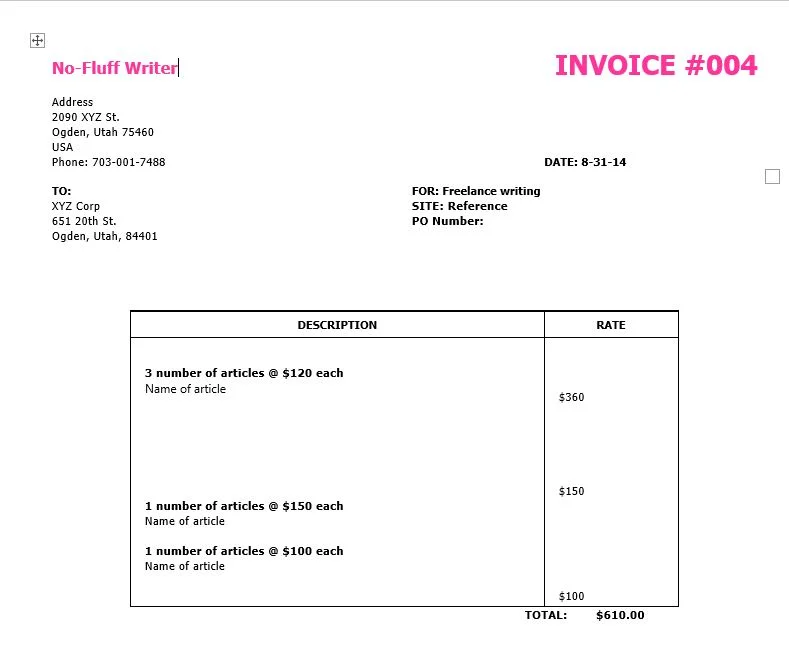
What needs to be on an invoice?
If you have never made your own invoice before, you’re forgiven for thinking that you simply write down the price for the work and the clients details. It's not that easy!
Here are all the elements that need to be added on to the invoice to make sure you get paid:
The clients order number if they have purchased a physical product
The name of the project or product which was purchased by the client
Details about the work completed, including hours worked, if needed
The total sum which needs to be paid to you by the client
Your payment terms- add a payment deadline
You bank details or Paypal info so that they can transfer you the money over
Your client's name and address
Your name and address
Invoice number and date
Registered business number and address
Contact information
How to create an invoice
Now that you know what should be on an invoice, how do you wrap it up into a professional looking package that screams ‘pay me’? You can use an automated invoicing system like chaserhq.com or PayPal’s invoicing system to make sending out invoices and receiving payments easier.
I like to use PayPal’s invoice system when my clients agree to pay me through PayPal, but for checks or direct deposits, I use an invoice template I created in Word. You can use my template. Here’s the download. (If you’d like more templates like this to make your job as a freelancer easier, be sure to check out my No-Fluff Freelance Writing Starter Pack.)
How to chase up your invoice
When it comes to chasing up the payment of your invoices you might feel a little uncomfortable. Don’t worry, it is totally normal for you to feel a little weird about demanding money from your client, but just bear in mind that you need the money to finance your business and your life. Plus, you did the damn work, so you deserve it!
If you have several freelance jobs going on at once, it would be helpful for you to create a calendar with reminders on when certain payments are due. (I use Google Calendar.) If the due date comes and the invoice has not been paid, you will need to contact your customer to find out what is going on.
It could be that they simply forgot, or they have another reason for not paying you. Send a gentle reminder and a copy of the invoice in an email.
If they ignore you, I've found that sometimes it helps to send a notice to a client's boss in the company to get things moving. For example, if you usually send your invoice to your editor, contact HR or the editor’s boss.
What to do when a client won’t pay
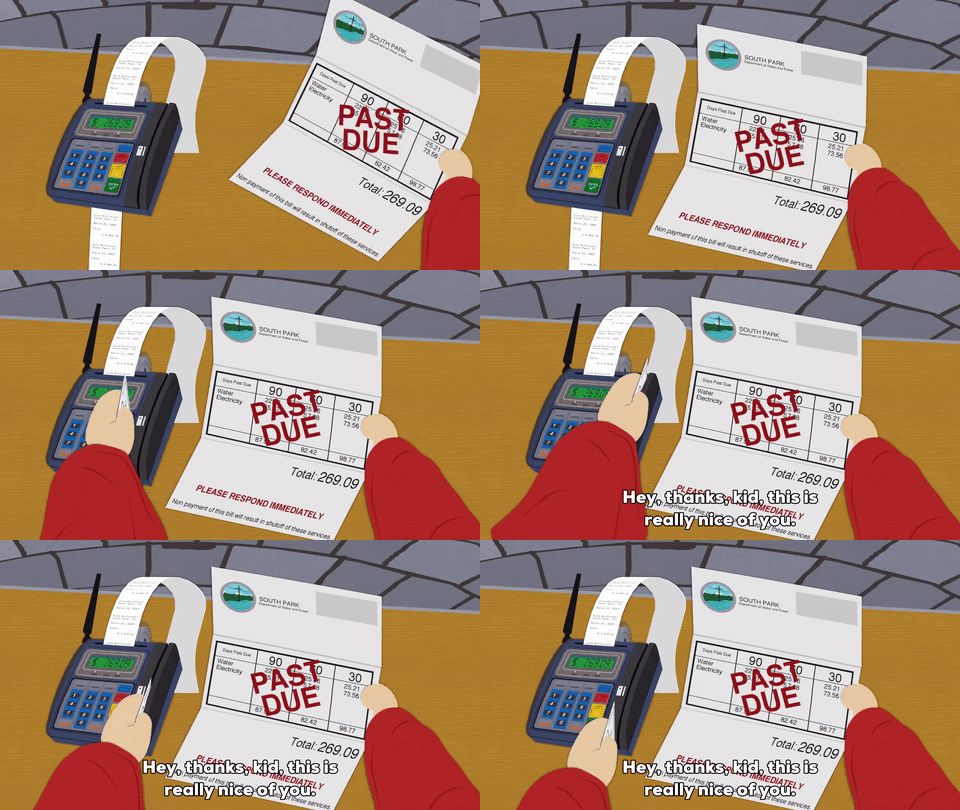
If they refuse to pay, there are several things you can do. Pick the option that feels right to you:
You can get the law involved since you sent them an invoice with a payment agreement on it. Send them a certified letter stating that you intend to take them to small claims court if they don't pay by a certain day. Typically, clients will get scared into action.
You can open a payment dispute with PayPal if you sent the invoice through their services. All you need for proof is a screenshot of the email you used to send the finished article, blog post or whatever. A screenshot of the finished work on your client’s website and a copy of your contract are also good things to send over to PayPal as proof of services rendered.
Use the non-payment as a tax write-off. Be sure to contact your tax professional for more information on this option.
For more advice, here’s my guide to dealing with clients.

Steps You Can Take To Become The Ultimate Travel Writer
Here are some tips to consider to become the ultimate travel writer. Guest Post by Jennifer Ranking
Guest Post by Jennifer Ranking
When you scroll through your Instagram timeline it’s almost as if everyone’s out travelling except you! It appears to be the trend nowadays and it’s no surprise why it is, the world is a beautiful thing and something that should be explored when you’re given the opportunity. Audiences love to read about experiences as inspiration and knowledge of what to expect for their travels. Travel writers are seen as influencers who have been around the block and know they’re stuff.
So, how do you become one of them people too? Here are some tips to consider to become the ultimate travel writer.

Be Dedicated To Your Writing
In order to become a travel writer, you first need to build the foundations of being a successful writer first. Travelling is the knowledge, but writing is the skill you have to get to spot on in order to be successful. You need to be able to communicate your experiences well and in a way that will engage your readers with what you have to say. Start by writing creative pieces and gradually improve your vocabulary and skills as a writer before you begin to write about your travelling experiences.
Consider Writing School or Journalism
A great advantage of journalism is that you slowly begin to learn how to make notes quickly and write great pieces in a short space of time. This means you won’t be spending too much time on writing the pieces and instead, you can enjoy telling your story without it taking too much of your time and continue your experiences of travelling. Get yourself in with the local newspapers or see if there are any writing schools that you can attend to improve on the skills that you’re developing.

Start Off Writing On Subjects That Aren’t About Yourself
Writing helps to get your name out there and gets your work published easily, almost satisfying the ego that people want to hear from you and what you have to say. What’s ironic about this though is that the skill to write about yourself can be rather difficult and sharing something about what you’ve done may not come across the best. Therefore, when you first start out why not try writing interviews or profiles instead and this way you can easily identify a theme and prevent getting sidetracked.
Review Your Writing Over And Over Again
The biggest waste when it comes to writing is that writers tend to use up too many words for a sentence which they could have articulated in a more efficient way. Writers feel as though revising the work that they’ve completed contradicts their creativity, but when you read over your work again you can easily find that your point is not as effective as what it could be. Revise and rewrite until your story flows and makes perfect sense.

Develop A Network
The biggest driver of being successful as a travel writer is developing a network in your field. There are plenty of travel writers across social networks and blogs that are easy to connect with. In doing so, it can help build your own reputation as a travel writer and have you integrating with the correct people. Over time, you’ll find yourself writing to a mass audience that you’ve created.
Keep Motivated
Most important of all, remain persistent. If there’s one downfall of writers that don’t make it it’s because they fell at the first hurdle when it arrived. It’s going to take time to build your reputation and get your stories shared in the masses, but how bad do you really want it?
The travelling influencer market is forever growing and there are still plenty of writers who are yet to master their trade. What’s written today is probably forgotten by tomorrow. Your stories have the chance to make a difference, to provide knowledge and form education for your readers. So, before you begin writing about your travelling experience from your luxury Algarve villa, take a step back and dedicate your time to learning your craft. After that, the world is your oyster from a travelling and writing point of view.

15 Places Where You Can Find Freelance Writing Jobs
Looking for a freelance writing job? Try these free freelance writing job boards.
Looking for a freelance writing job? Try these free freelance writing job boards. Some of the links are custom-made searches I set up on popular sites so you’ll only be presented with remote writing jobs you can do from home.
Also, don’t forget to check back at nofluffwriter.com every Wednesday for writing gigs that are 100% remote.


What to Do When You Have Haters: How to Deal with Online Trolls Without Losing Your Cool
Here’s how to deal with people that don’t like what you write.
At one point, you’re going to get hit with comments about your articles that hurt. They say that you know you've hit the big time when you have haters. No matter how good you are or how eloquent you are, you're going to have some hateful comments on your website or social media content. It happens. Some people have nothing better to do than to be negative.
How to deal with online trolls
For example, I wrote an article for CNET about unusual things you can wash in the dishwasher. People got irate, to say the least. I was dumbfounded. It was an article about washing objects like kids toys in the dishwasher for Pete's sake. Someone on Twitter said that my dishwasher article was "irresponsible journalism, almost criminally so." People really take their dishwasher how-to tips too seriously. Criminally? It's not like I told people to wash their baby in the dishwasher. I didn't even suggest that puppies could be put in the dishwasher. The article was researched and tested.
Oh, well. You just have to shake it off and remember that even angry people are giving you page views, comments and other interaction that can help your content be successful.
Should You Answer a Comment?

how to reply to comments
The best way to respond is with silence. These type of people are looking for attention, begging for a fight. Answering them just fuels their little troll fire.
Of course, if the person commenting has a legitimate problem or question, address it. Make sure to be tactful, though. Thank them for their comment and answer with as few words as possible. The briefness will give them little room to argue if the person was just baiting you.
Put It Out of Your Mind and Your Social Media Account

you mad bro kermit
It's really hard to walk away when Facebook or Twitter alerts you to every reply on a post. I know it's a struggle for me! On Facebook you can turn off notifications for certain posts or you can block troublemakers. On Twitter you can put people on mute, which means you won't see any more comments or posts by that person, or you can block them.
Keep Cool, Calm and Collected

Above all, it is important to keep your cool and not to engage in a back-and-forth argument. People love sharing internet arguments and you may just find your comment battle going viral, which can destroy you or your brand's reputation.
Warning: Your Byline May Not Be Your Byline Forever
Bye, bye byline? Maybe! Here’s how to protect your byline.
As you may or may not know, I have been a writer for well over two decades. During that time I have written thousands of articles. A large portion of them no longer have my name as a byline. No, they weren’t ghostwritten. Losing your byline is a common problem in the content writing world, and I’ll tell you why.
Contracts and loopholes
When you create work for a website, unless you have a contract that states you retain rights, in the US the work is considered “work made for hire.” In this case, your client, the online magazine or site, gets the copyright for your work one it is paid for in full.
According to the US Copyright Office:
For legal purposes, when a work is a “work made for hire,” the author is not the individual who actually created the work. Instead, the party that hired the individual is considered both the author and the copyright owner of the work.
Whether a work is a work made for hire is determined by facts in existence at the time the work is created. There are two situations in which a work made for hire is produced:
(1) when the work is created by an employee as part of the employee’s regular duties and (2) when a certain type of work is created as a result of an express written agreement between the creator and a party specially ordering or commissioning the work. When a work is produced under these conditions, the employer or the party ordering or commissioning the work is considered the author and copyright owner.
What does this have to do with your byline? Very simply, once you have written the article and the site has paid for it, they can put whatever name they want as the byline because they own the article.
Why sites change bylines
Now, most sites don’t change the bylines to be sneaky and take credit for work that you did (though some do!). Most of the time, over the months or years after the article is live, publications will bring in other writers to update the article. The publication will then put that writer’s name as the byline. I’ve had this happen to my articles more times than I can count.
How to save your bylines
By this point, you’re probably a little disturbed. How are you supposed to build clips for your portfolio if a publication changes your byline? Years ago I would have suggested making sure that you retain rights to your articles, but most large sites and companies these days require that all contracts be work made for hire contracts. When it’s company policy, most editors don’t have the ability to change the contract for writers. So, what’s another option?
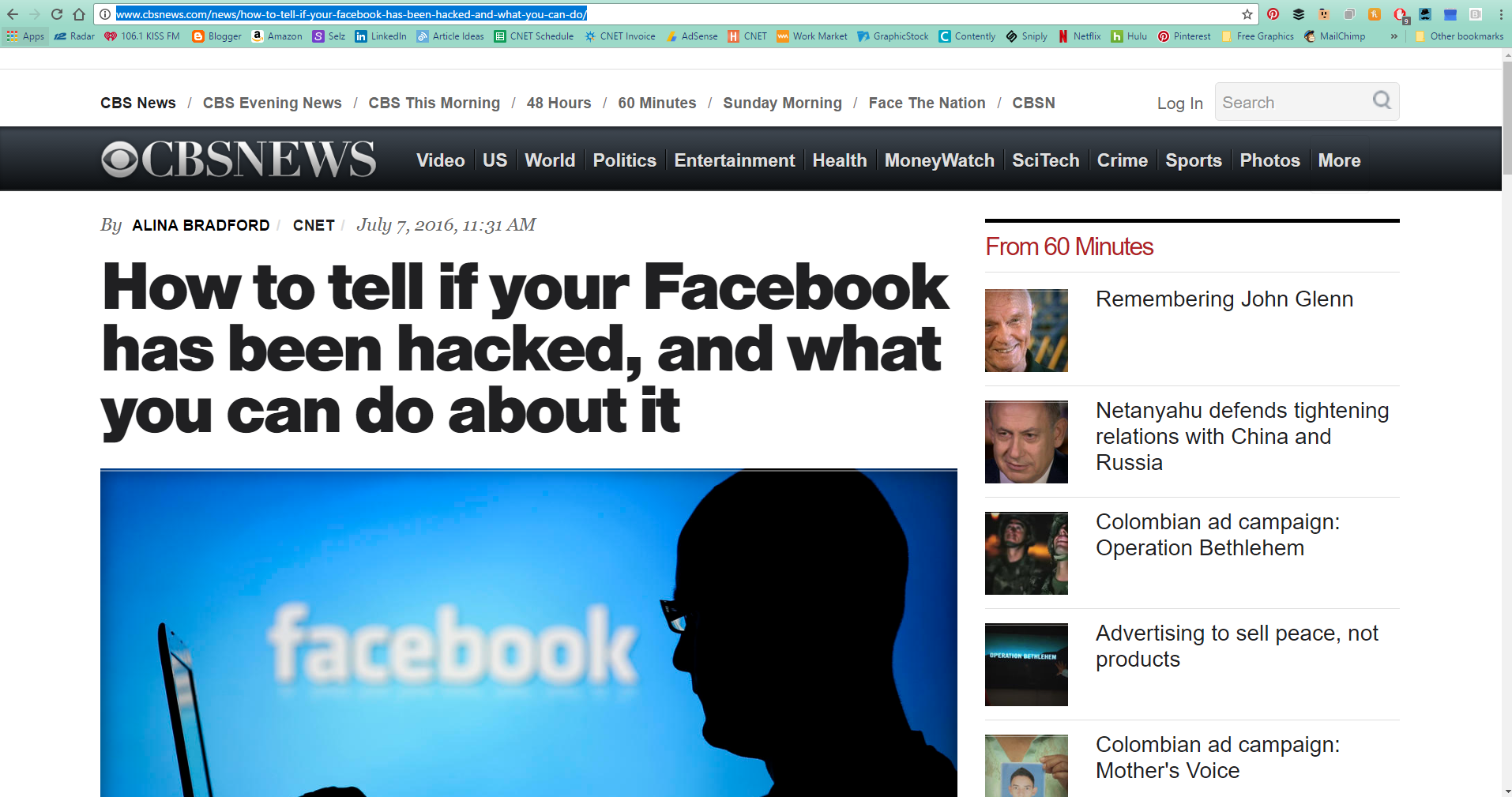
As soon as the article is published, take a full-page screenshot, including your byline and the site name or logo. Then, add the screenshot to your website.
To take a full-page screen shot that includes your entire article, there are several options. If you have Chrome as your browser you can use the GoFullPage extension. You can also use software like Snagit or a website like Web-capture.net. No matter what option you choose, be sure to save your clips so you can use them later.

Getting Ghosted by an Editor? Here's Why
Just about any writer that has been working with publications for a year or more has run into the magical disappearing editor. Here's why they disappear and how to solve the problem.
One of the most frustrating things that happens to us freelance writers is an editor that ghosts for no apparent reason. They loved your work and you had a great relationship. Why the silence all the sudden? Why can’t they email you back? Is it your pitches? I’ve had this happen to me many times, and there’s one major reason why editors don’t reply.

Change happens…often
First of all, it’s probably not your fault. In the publication world, editors come and go frequently. And when an editor joins a publication, they get an email address that is specifically for that publication. When the editor moves to a new publication, no on is checking that old email address anymore, so all of your emails go unread.
Why some editors just leave and don’t tell their writers is beyond me. (You’d think they would want to keep their writers happy just incase they need them again in the future.) Once they leave, your connection with that editor is severed…unless…
You keep connected with editors

You need to take action when you make a connection with a new editor. Once you’ve made contact with an editor at a publication, make sure to connect with them on LinkedIn. That way, no matter where their career takes them, you can still get in touch with them about an article idea.
When reaching out, make sure to remind them about who you are in the connection message. Something like, “Hi, Amy. We recently worked together at XYZ Magazine on an article about ghosts in Texas boarding houses. I would love to connect here on LinkedIn.” Chances are, your connection will be accepted, and who knows, they may even offer you another chance to pitch an article.
BTW
If you haven’t heard back after just one email, an editor could have just missed your email. Sending a follow-up with your original message copy and pasted in the new email is always smart after about a week with no reply. If you don’t hear back after a follow-up, the editor may have moved on.

Writers: Here’s The Best Time to Talk About Your Rate
Don’t know when to mention your rates to a potential client. Here’s the best time.
Ah, the dreaded potential client call or email. I'm not sure that any writer likes to negotiate with clients. When's the best time to talk about your rate without scaring customers off? “First of all, if the first time price comes up is at the end of conversation, it’s far too late,” says Weldon Long MBA, CEO of a multimillion-dollar business that landed on the Inc 5000 list of America’s Fastest Growing Companies.

“What’s worse, addressing price only after your prospect brings it up themselves will diminish trust and kill your chances at a successful sales interaction,” adds Weldon. Weldon Long is a top sales expert consulting for some of the world’s biggest companies – but he has a very unique personal history.
A high school dropout, Weldon spent 13 years in prison for robbery, money laundering, and mail fraud. While in jail, Weldon started studying; earning his GED, BS in Law, and MBA in Management. Then, at 39 years old, Weldon was released. While living in a homeless shelter, Weldon landed a commission-only sales position and quickly became the company's top sales leader. In 2004 he opened his own heating and cooling business and grew it into a multimillion-dollar enterprise.

When to Talk About Your Rates
Address price first: “If you talk about your product or service’s price at the very beginning of your conversation, when your prospect is naturally feeling less trepidation than they’ll feel at the closing, you benefit from having time to build rapport by empathizing with them about cost, as well as have more time to combat inevitable objections while building trust."
“So if you want to be more successful in sales, discuss price at the beginning of your meeting, not the end. Here’s how to do it with without feeling awkward.”
So Does This Work for Writers?
Yes! After 20+ years as a writer, I have found this technique to be very useful. Typically when someone contacts me for potential work, I mention my rates up-front. This weeds out people who don’t have the budget for my services, saving me time, but it also puts me in the position of power. I control the conversation as a professional and the client takes me more seriously.

Freelance writing jobs of the week mega list: November 18, 2020
This week’s mega freelance writing jobs list.
I hope your week is going great!! Have you been pitching? I hope so! One thing I know for sure, something that is universal for every writer, is that you need to be consistent to become successful. Let’s do this!

Wanna work with us!? 🦄 .@simplysecureorg is looking for a Design Researcher (part-time), Project Manager (part-time) & Writer (short-term contract) -- all remote --https://t.co/b3Pcb6qZL0 pic.twitter.com/XhWjUQalRq
— Simply Secure (@simplysecureorg) November 18, 2020
Dear Twitter - we are looking for new writers at @raconteur! Would love to hear from some fresh, dynamic voices on all things business - people from diverse backgrounds/experiences particularly welcome. Upcoming themes include: HR, AI, IoT, Retirement and Fintech.
— FranCassidy (@FranCassidy4) November 11, 2020
We have a Star Wars section of our site called @WhatsNewOnJakku. Feel free to reach out to us via DMs to discuss writing for us.
— FanaticMedia (@FanaticMedia1) November 18, 2020
We aren’t currently looking for page management but we’d always love to showcase new writers and bring more voices to the team!
*New job announcement* Thrilled to share I'm now the Head of Content and Social at @sweatybetty. That means no more travel commissions, but I'm currently looking for brilliant lifestyle writers with a knack for telling inspirational, human interest stories. Send portfolios! (RT)
— Matilda Egere-Cooper (@megerecooper) November 16, 2020
We are looking for freelance writers for some upcoming large writing projects ranging from fleas to politics.
— Brent D. Payne (@BrentDPayne) November 18, 2020
You can literally set your own price and hours.
Apply here:https://t.co/LeuHvQB9cT#journalismjobs #journojobs #freelancework
Seeking strong persuasive content writer with journalistic flair for killer finance/tech copy
Writers Needed for High Volume, Long Term Work on Multiple Niches
Writer for the Illustrated Annual Report
We are looking for talented screen writers
Tax Industry Writer / Copywriter
GERMAN Creative Writers Wanted – Long-term Work
SEO/COPYWRITER
Multimedia Journalist
Freelance Mortgage Writer
Enterprise & Investigative Writer - Everyday Health
[PLUS+] Looking for reflection pieces from veterans, service/family members | pay: $300 per piece #freelance #writer https://t.co/baow2QlxXR
— Writer Jobs (@writerjobsnow) November 10, 2020
Friends/mutuals! I’m looking for freelance writers with experience in tech writing or SEO copy. Hourly rates start at $25/hr. DM me for details! ✨
— Deanna Nguyen (@deannawhen) November 18, 2020
loanDepot is looking for a remote Technical Writer #workathome #remotework #digitalnomad #remotejobs #remoteworking #techjobs #remote #nomad #jobs #job https://t.co/ve8n3kVGpW
— BestRemoteJobs (@BestRemoteJobs1) November 18, 2020
We're looking for a #contentmarketing writer at Ripley PR! If you have top-notch #writing skills and the flexibility to create across platforms, we want to hear from you. https://t.co/Y8N1y0Zkb5
— Ripley PR (@RipleyPR) November 18, 2020

10 Free Sites for Creating Amazing Article Content
You don't need to hire a designer to create memes, website images and infographics to make your content go viral, either. Here is everything you need in one list.
I know a lot of you want to design your own visuals for your client's articles or blog content. It just makes you look good as a writer. If you listen to many website gurus, you may think you need Photoshop to create fantastic images for your content site. Not true!
There's no reason to spend almost $700 on software that will take you months to learn when there are free photo editing tools online that take no skills what so ever. You don't need to hire a designer to create memes, website images and infographics to make your content go viral, either. Here is everything you need in one list.

Free Photo Editing Software
Let your photos no longer be boring and unedited. Try out a couple of these free photo editing tools. You'll be adding some snap to your content in no time.

pablo photo editor
1. Pablo
Have you ever lusted after those sites that have beautiful article images overlaid with pretty quotes or the titles of their articles? Well lust no more. Pablo by Buffer provides you with the beautiful stock images, the fonts and the layering capability. All you need to do is come up with the text.
be funky photo editing
2. Be Funky
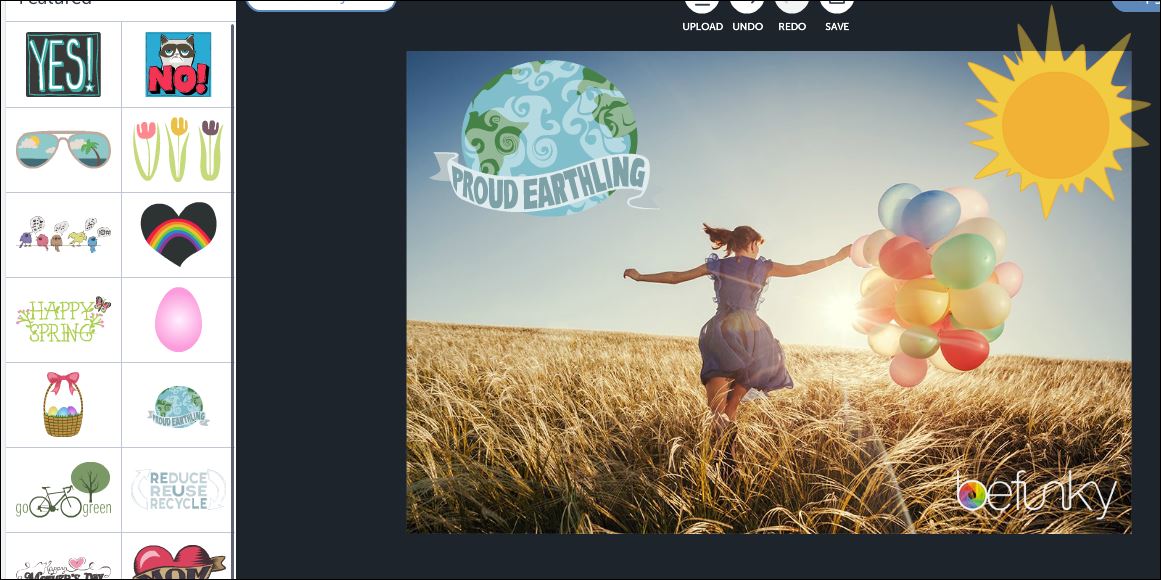
I love Be Funky. You can use their tools to make your photos totally retro, in a good way. Groovy! They also have stock photos you can use for free.
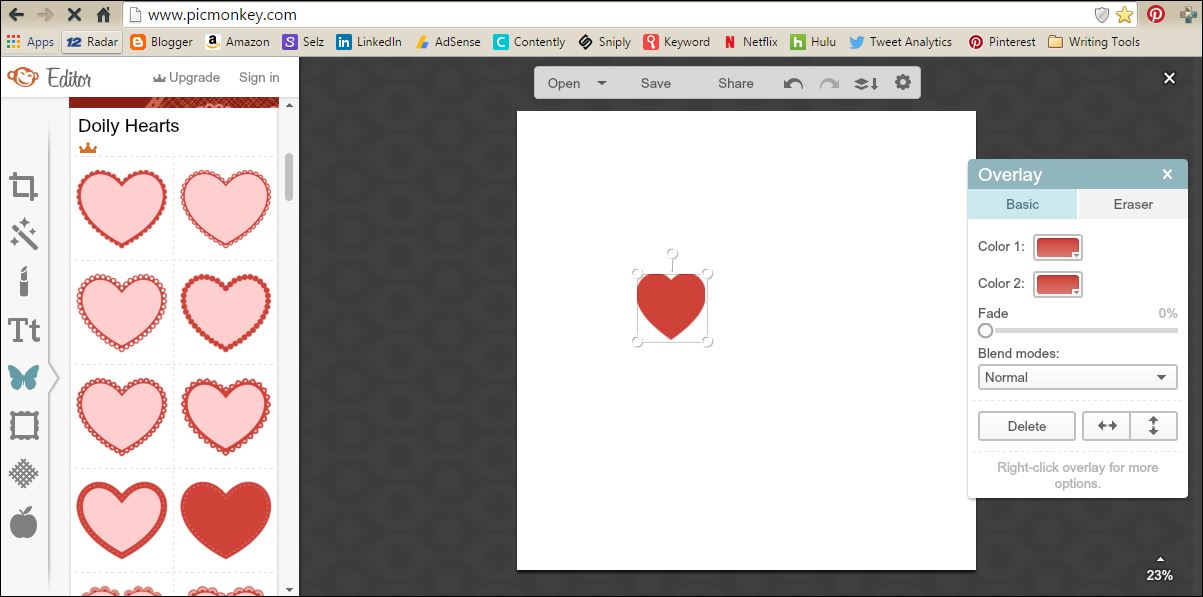
pic monkey photo editing
3. Pic Monkey
Pic Monkey is one of the most popular free photo editing software sites out there, and for good reason. Not only does it give you the capability to edit photos, you can also use it to create far out photo projects with overlays, frames, textures and more.
4. GIMP
When you need a huge amount of editing tools, but like a zero on the price tag, consider downloading GIMP. Think of GIMP as Photoshop's ugly twin. They both have tons of features, but GIMP is a little clunkier to use. Hey, the price is right, though!
Free Tools to Make Memes, Infographics and More Content
Memes, infographics, gifs and other visuals can help make your content go viral. A lot of the bigger sites hire people to create these visuals for them, but if you are on a tight budget, these free tools can get the job done in a pinch.
free photo editing software
5. Meme Generator
Everyone is mad for memes and the Meme Generator makes creating your own simple and quick. Just browse through premade memes, add your own text, download them, and you're in business. Or, you can start from scratch with your own photo. Just upload your photo, fill in the text fields and boom! You've made your own meme.
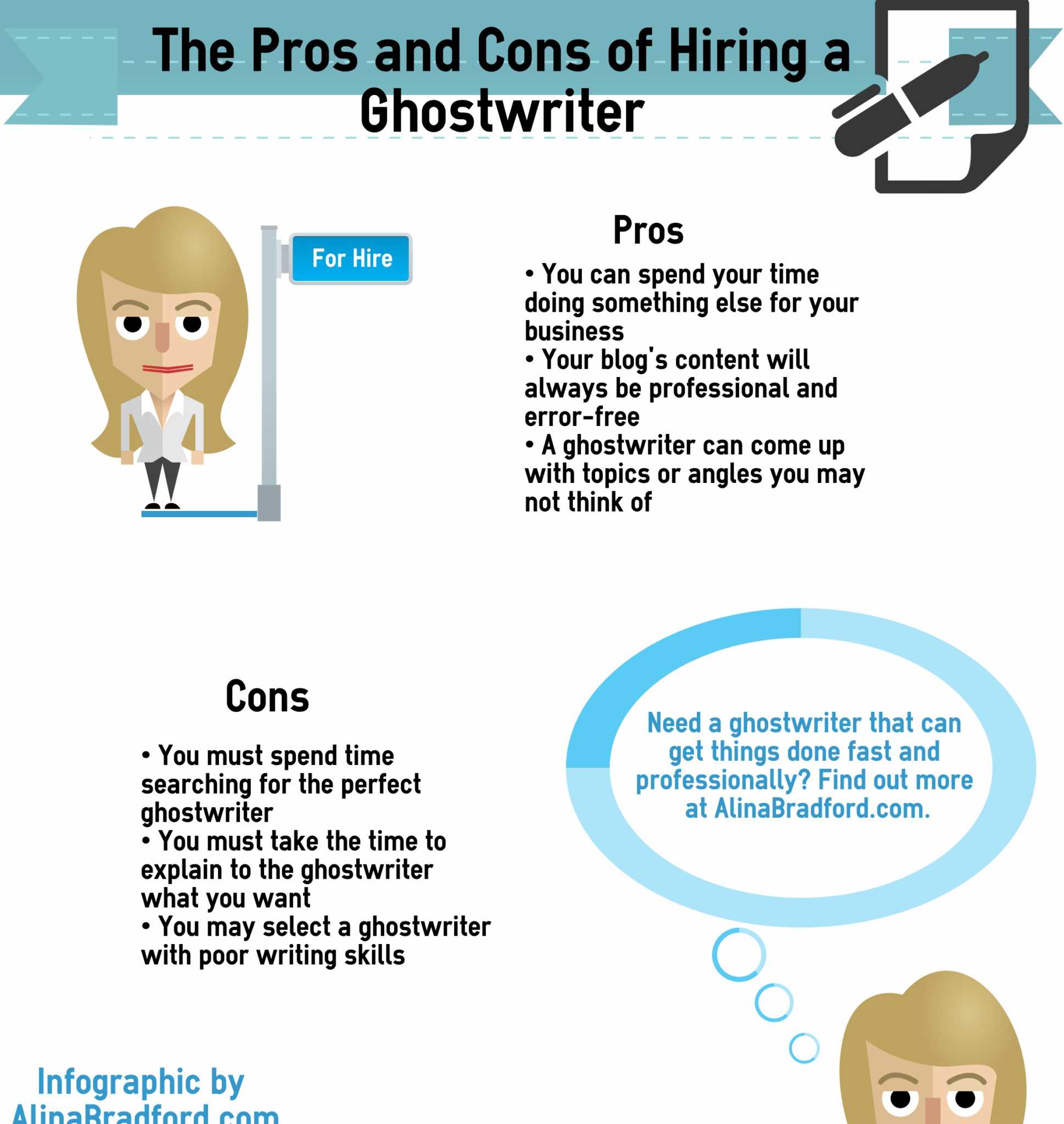
Easily content
6. Easel.ly
Easel.ly is easily the most awesome visual tool I use. (See what I did there?) It gives you everything you need to create stunning infographics and simple drag-and-drop tools. I use it constantly for myself and my customers. The best part? Easel.ly creates code so that you can embed your infographic on websites.
The free version has a lot of great visuals to start with, but if you want to go pro, I recommend upgrading.
giphy free gifs content
7. Giphy
Sometimes you just need a snappy gif to make your blog post or social media post just a little more special. Never fear, Giphy is here to supply you will all the gifs your heart could possibly desire, for free.
8. Three Graphs
Need a chart to illustrate some stats? Three Graphs is the site to hit up. You can create a variety of different types of charts, choose your chart's colors and more.
9. Siege Media Embedded Code Generator
How many times have you created an awesome visual and then wanted to allow people to share it, but remembered you don't know a thing about creating embedded code? I've been there! The solution is using Siege Media Embedded Code Generator. No skill required!
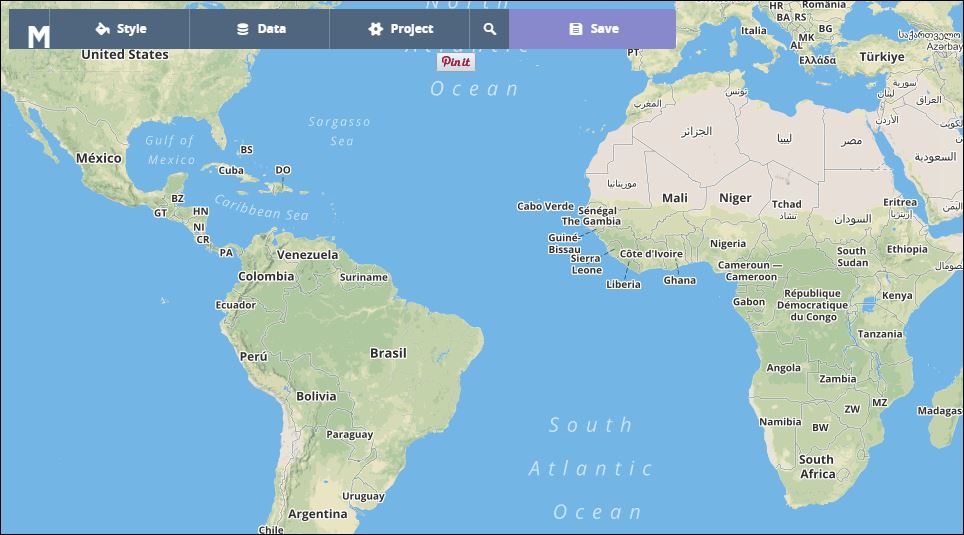
how to make your own customized map
10. MapBox
Maps are a cool visual that's not utilized as often as it should be. MapBox makes creating your own maps easy and, dare I say it, fun. Just input your data and you're map comes out like you hired Magellan.
Got any image creation tools or sites you're dying to share? Let me know!

How Much Should I Get Paid for Freelance Writing?
"How much should I get paid for freelance writing?" I hear this question all the time. For my No-Fluff readers out there I'll break it down.
"How much should I get paid for freelance writing?" I hear this question all the time. I could just answer with a vague, "It depends," (because it really does!) but for my No-Fluff readers out there I'll break it down. Here are the basics to determining how much to charge as a freelance writer, no matter if you’re new, or have been a professional writer for years.

How Much Money Do You Need?
Before anything else, you need to decide how much money you need. You see, you can make anything from a few dollars to a few thousand dollars per week. As a freelancer, you get to decide what you get paid and what hours you work. So sit down and do the math.
Start by deciding how much money you need to survive each month. That includes paying bills and buying essentials like clothing, food, medicine, etc.
Take your first figure and decide how much more than that you would need to live comfortably, meaning you could afford a few extras or keep your savings account well fed.
Now, break that monthly total down into how much money you need to make per week by dividing the amount by four.
Find the daily amount by dividing your weekly amount by seven or however many days you want to work per week.
Finally, decide how many hours you want to work per day.
How much you charge per hour, multiplied the number of hours you want to work per day, should equal how much money you need to earn per day.
So: What you want to make / Number of hours you want to work = Hourly fee

Say I decided that I needed to earn $2,000 per week to live comfortably. Then assume I only want to work five days a week so that I have weekends off and I only want to work five hours per day, tops. That means I need to make $400 per day. To achieve this, I charge a minimum of $80 per hour.
Charging by the project
Usually, freelance writers don’t charge by the hour, they charge by the project. For example, I wouldn’t tell clients I charge $80 per hour. I charge a set price for a project by deciding how many hours it will take me. So a blog post that will take me around two hours would cost a client around $160, bare minimum.
My prices are higher than my bare minimum, though. The bare minimum is just a guideline so I know how low I can haggle with a client without shooting myself in the foot. Also, I usually round up to the nearest $100. So, the cost would come out to $200. Why? Because I can! I also round up the hours. If it will take me 30 minutes, I charge for an hour.
Consider all the factors
There are some other factors that can add to your bare minimum pricing. Add more to the price if the piece needs interviews, research, images… or the client seems like they are going to be a pain in the butt (more on how to deal with them here).
Articles per day matter, too
We’re still not done. Now you need to decide how many articles per day you want to do. With the example above, if I charged $100 per article, I would need to write 20 articles a week or four articles per day to make my $2,000 per week goal. But that’s a lot of articles. I myself can’t write four a day. My limit is two.
If your brain blitzes out after one article, then you’ll only be able to do one article per day. No need to be ashamed or try to press yourself past your limit. That will lead to poor product quality and burnout.
Ultimately, you’ll need to up your rate to meet your income needs and your mental needs.
Experience

But Alina, you may be saying, if I only write one article per day and my goal is $2,000 per month, I would need to charge $400 per article and I’m not experienced enough to charge that much! To that I would say, maybe. If you’re approaching clients and proposing charging that much, I would agree. But there’s a loophole.
There are plenty of online magazines that will pay that and more. All you need to do is come up with a great idea, pitch it, and then nail the article. Now, I know it’s harder than that, but most editors don’t care if you’re new if you have a great idea and you can prove you can write well with a couple of clips. So, you have the potential to make way more than your minimum per article, meaning you can write less to meet your goals.
Make sense?
In the end, my answer to the question, "How much should I get paid for freelance writing," is simply:
"How much do you want to get paid?"
Want more great tips like these? Read my book:

The Ultimate Guide to Finding Jobs as a Freelance Writer
Professional freelance writers are always blogging about these sweet gigs they're working on that pays $100 to $2,000 per article. Where the heck do you find these fantastic jobs everyone's talking about?
Professional freelance writers are always blogging about these sweet gigs they're working on that pays $100 to $2,000 per article. Where the heck do you find these fantastic jobs everyone's talking about?
After years, I have honed a way to find great paying gigs quickly. Here are my secrets.
Hit Up Social Media
One of the easiest ways to find gig gems is to search social media. Often, businesses will post their need for a blogger, copywriter or ghostwriter on their pages. All you have to do is search for relevant hashtags.
Put these hashtags into a Facebook or Twitter search bar to find awesome gigs:
#bloggerswanted
#writerswanted
#copywriterwanted
#bloggerjob
#bloggingjobs
#writtingjobs
#publishingjobs
#journalismjobs
#freelancewriterwanted
#remotewriterwanted
#fbloggerswanted (Fashion bloggers wanted)
#healthbloggerswanted
Search Google the Smart Way
Searching for writing jobs on Google can bring up job posts from 2005 or jobs that are five states away and require on-site work. You can avoid all of the crappy job posts by searching smart.

If you want to search a certain site, put site: in front of the site name, then add keywords in quotation marks. For example, I've had a lot of luck with this search:
site:craigslist.org "remote writer "
Some other sites other than craigslist you can try are:
site:problogger
site:freelancewritinggigs.com
Some other terms you can try are:
"content writing companies"
"freelance writing companies"
To get newer job posts, add the date:
site:craigslist.org "remote writer " November 15th 2020
Now the secret to finding high paying jobs: add the type of payment you're looking for.
site:craigslist.org "remote writer " December 15th 2020 pays $220
site:craigslist.org "remote writer " November 15th 2018 $50 per hour
site:craigslist.org "remote writer " November 15th 2018 .50 per word
Successful writer Jennifer Mattern recommends this combination:
writer and "compensation: * per article" site:craigslist.org (Replace the * with the monetary amount you want to be paid.)
If you want to search everywhere, just leave off the site and type in the rest of the search. This will bring up high-paying gigs from company job boards that most people never look at.
Use LinkedIn
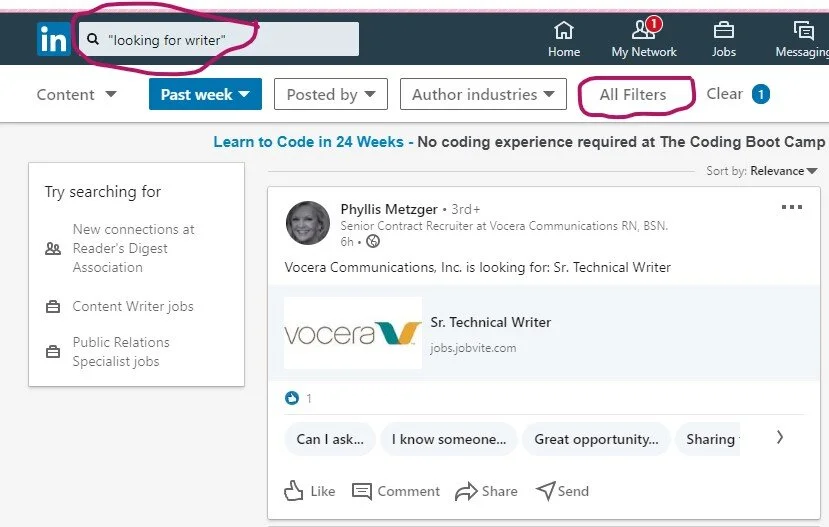
Another great way to find jobs is by searching LinkedIn. No, I’m not talking about the job section. Here are the details to a special way to search:
Go to the Home page
In the search bar type “looking for writer” or “looking for freelance writer”
When it takes you to the page, click on the All Filters option on the left side
Choose Past Week
Click Apply
Posts by companies and individuals looking for writers will pop up.
Get jobs delivered to your inbox
Now that you know the search criteria, set up Google alerts so you can get these great jobs delivered right to your inbox every day.
To set up a Google Alert follow these directions:
Go to https://www.google.com/alerts
Figure out what term you want alerts for (“writer wanted,” “food writer wanted,” “tech writer needed”)
Type your search term into the box at the top of the screen
Click on the "Show Options" dropdown menu
Set it up to send you an email every day and to send you "all results"
Click "Create Alert"
Sign Up to Get Daily Job News Letters

There are some great sites out there that scour the web for freelance writing jobs, then bundles them up into daily emails. I’ve rounded up a selection that provides links to gigs that pay well. Here are my favorite daily and weekly newsletters you need to sign up for:
Never stop searching
The key to finding gigs is volume. Apply for 20 solid gigs per week until you start bringing in the clients you need to pay the bills. Once you’ve got your clients, don’t stop. You’re never done searching when you’re a freelance writer. Simply trim your search down to 12 gigs a week. Remember, a dozen in play keeps the bills paid.

Start searching for clients that pay more to replace your current clients when the gigs end. Eventually, your name will get around and clients will search you out. That’s how you know you’ve made it to the big time. Even then, don’t stop searching. Just be super picky about who you take on as a client.
If you would like more great tips like these, order your copy of No-Fluff Freelance Writer Starter Pack today!
Can You Make $500 a Week by Publishing Articles on Vocal?
It’s like Medium, but with a twist. Here’s what you need to know about this publishing website.
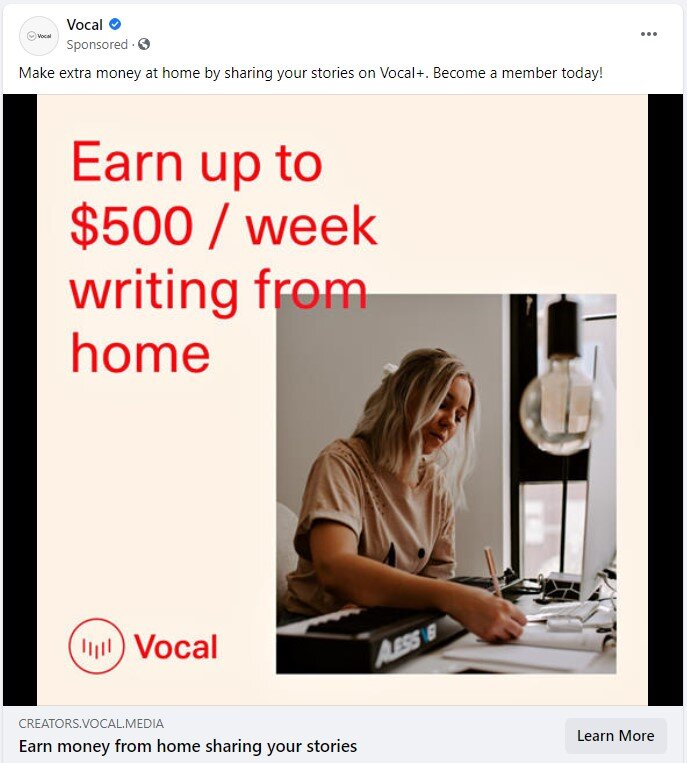
I’ve been running across a lot of ads from a website called Vocal that are targeted at freelance writers. You know I was curious and had to check it out! Vocal says that you can make up to $500 publishing your articles on their site. Another Medium wannabe, maybe? Here’s what I found out and my Vocal review.
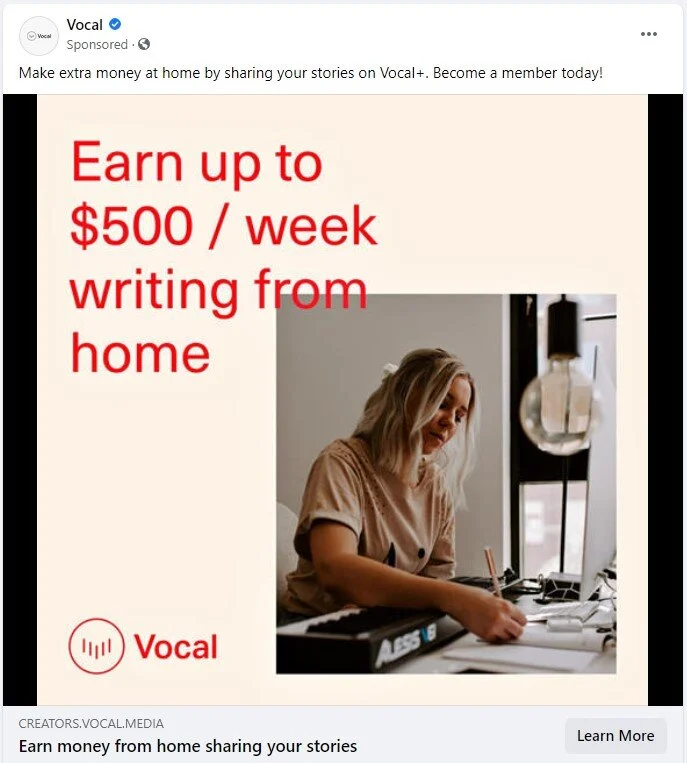
One of Vocal’s Facebook ads.
What is Vocal?
Vocal is a site where you can post your articles and get paid. That sounds pretty good until you realize that you may put up 100 articles and never earn a cent. Unlike many sites, Vocal doesn’t pay a flat rate for articles. Your article, instead, earns money over time depending on different factors. We’ll get into that in a minute.
There are a few quality requirements that Vocal wants in an article. First, it shouldn’t have spelling and grammar errors (duh) and there are word limits. An article can’t be less than 600 words and poems can’t be less than 100 words. They also don’t like erotica, nudity, and some other topics. Here’s Vocal’s full guidelines.
Another one of Vocal’s ads.
How much does Vocal pay writers?
Your article can earn money from how many times your article is read, weekly contests, and tips given to you from readers. Let’s start by looking at the pay-per-read setup.
According to Vocal, writers earn $3.80 per 1,000 reads. If you subscribe to Vocal + (which is $10 per month with a 30-free trial), you’ll earn $6 per 1,000 reads. So, say you subscribe to Vocal+ and your article goes viral, snagging 1 million reads. That’s an earnings of $6,000. Not too shabby. I wonder if that’s ever happened on their platform, though.
Also, what constitutes a read? Do people have to scroll through the whole article before you get a “read” or do they have to stay on the page for a certain amount of time? I dug around their site until I found their FAQ. Here’s what they say about reads on their FAQ:
How are my reads calculated?
Reads are calculated by Vocal’s read algorithm, which takes into account things like time spent on the page, as well as how far down the page is scrolled. This is to make sure that your readers are actually reading your story, so that you’re earning on real engagement from your fans.
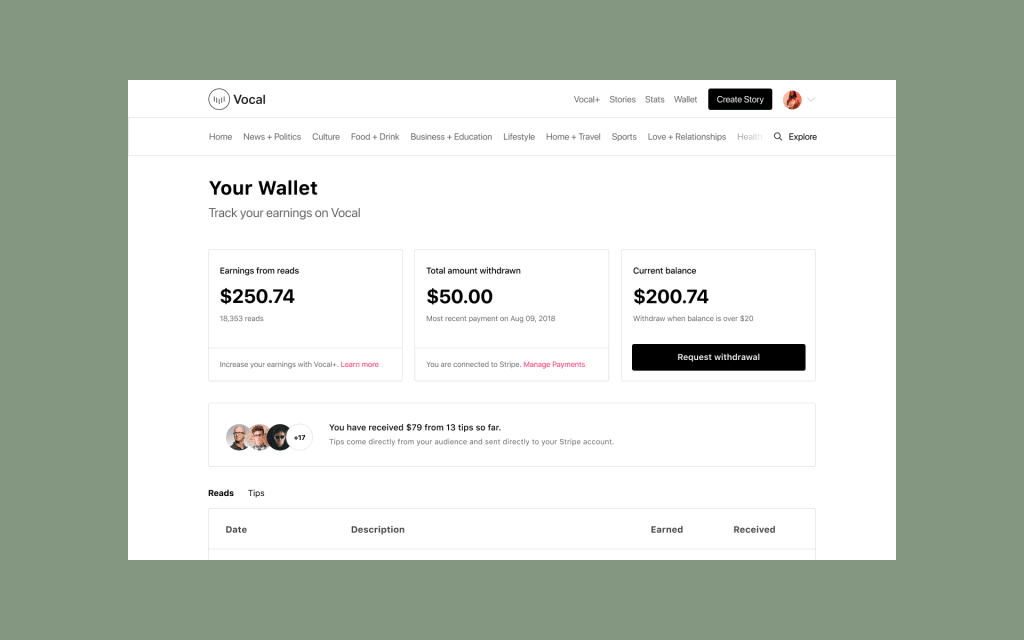
Screenshot from Vocal’s payment information page.
Vocal also has weekly contests. Some pay in cash, while others have different types of prizes. I had to laugh when I saw that some contests pay in “experience.” Freelancers just love that word! You also can’t enter the contests if you’re not a Vocal+ member.

Like I mentioned before, your readers can also give you tips if they like your article. This reminds me of the flash websites of the 90s and early 2000s with their gyrating tip jars. Fond memories. Tips are a great idea until you see that Vocal takes a 7% processing fee, unless you have Vocal+, and then it only takes a 2.9% processing fee. This site grabs money every way it can think of it seems.
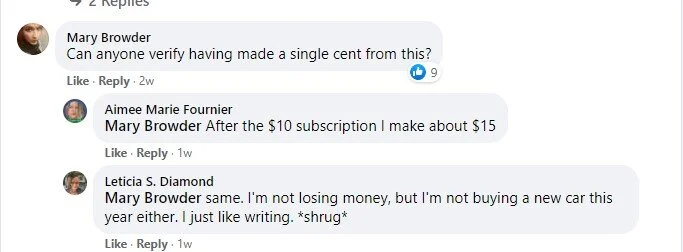
For some insight, I took a look at the comments on one of their Facebook ads. Here’s what one writer had to say:
Leticia S. Diamond
You don't have to pay to publish. I've been a subscribing member for 3 months. The first month I only did the free part. I'm positive this company makes their money from the memberships, and the bonus of the membership for the members is the extra writing contests. Winning a contest can get you from $75-5000 depending on the award amount and if you place in the top 3. Beyond that, you get, like, a cent per read. So, if you've got a supportive family or fan base, you could make some cash on the clicks. If you do it, just write a LOT to increase how much you may be seen and clicked on.
Oh, people can tip you too, but I haven't had that happen for me yet. Good luck and blessings to you, whatever you do.
Here’s another interesting conversation:

And another…
Where the money comes from
There’s no ads on Vocal, so how do they make their money and how do they pay you? Here’s the answer from their website:
How does Vocal make money and pay creators if there are no ads?
We believe that creators like you are our partners, and that the stories you share should be free of distractions like annoying ads and popups. In order to create a sustainable ecosystem for everyone on Vocal, we earn money in the following ways:
1. We earn money when creators upgrade to Vocal+
2. We receive a small platform processing fee on Tips (7% for Vocal / 2.9% for Vocal+)
3. Our in-house content studio, Vocal for Brands, partners brands that share our values of quality and creativity with Vocal creators to produce branded content.
The catch
Besides charging membership fees and skimming tips, Vocal also has a payout threshold. You can only cash out if you make $35 or more or $20 or more with Vocal+. So, if your articles don’t make many tips or get many reads, you may not be able to cash out your earnings for a long time.
Does Vocal take your rights?
One good thing about Vocal is that they don’t get you to sign away your copyright when you post an article. They just use a limited license, which means you’re free to post your articles wherever you like since you still own them.
Vocal review: My thoughts
Okay, so Vocal seems like an interesting idea, but I’m not sure if most writers would ever make enough money to hit the payout. Since you get to keep your rights, I would say give it a try if you’re curious. If you get the Vocal+ 30-day free subscription, just make sure to cancel if you don’t make enough to cover the subscription plan in that first month. Here’s is their full intake process and how the site works, in detail.
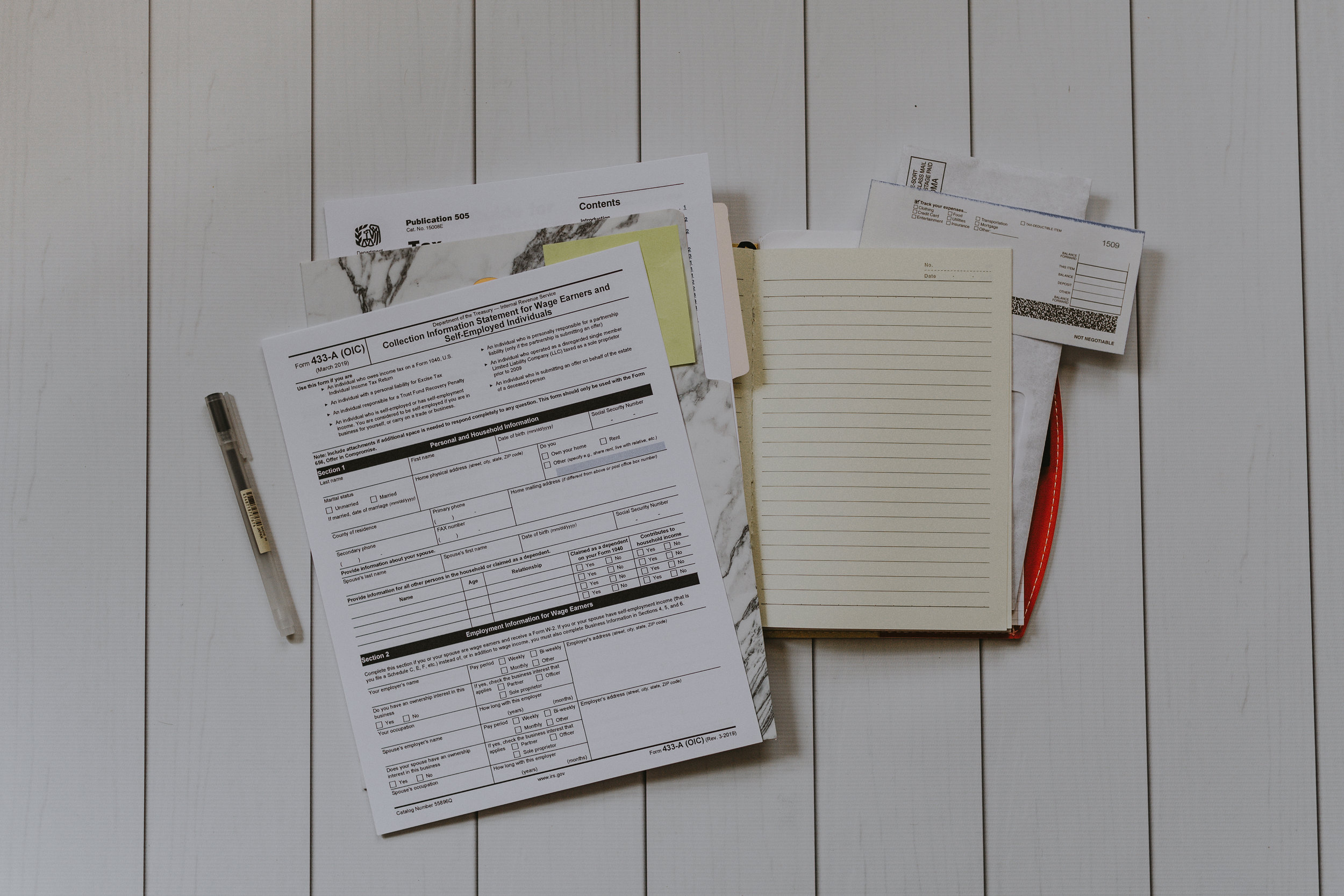
How to Manage Your Finances as a Freelance Writer
Get your finances in order with these tips.
It’s often said that freelancers don’t like doing the boring stuff. While it may be true, unfortunately, for the freelance writer, putting off the task of money management is not an option if you want to keep bringing in the cash and stay on top of your financial game. Managing your finances can be daunting at the best of times. Still, don’t let these stresses keep you from achieving your freelancing goals! Here are some tips to help you get your finances in order, from creating a savings account to saving on your taxes.

Identify your regular expenses
To stay financially fit, you need to know what most of your money is being spent on every month and trim the fat.
The most common expenses are:
Rent or mortgage costs
Phone bill
Car note
Insurance
Utilities
Don’t forget to figure out your business expenses! These include:
Internet
Office supplies
Website hosting
Domain costs
Now that you know what you’re spending, trim the fat. The less you pay in bills each month, the less you will be stressed during lean times in your business. Compare the prices of utility companies, website hosting, insurance, and internet services to see if you can find a lower-cost provider. Then, consider refinancing your cars and mortgages to find a better interest rate to save even more in the long-term.
Once that’s done, look into additional expenses, such as eating out, going to the movies, or going out to get a coffee every morning. Are there things that could be limited or done at home to save money?
Set goals for your finances
Any successful business will need to set and meet financial goals. The same goes for freelance writers, too. To start out, figure out these three numbers:
How much money is needed to pay all the bills
How much money is needed to pay the bills and have a little extra to play with
How much money is needed to live the dream life
Once all of these numbers have been identified, you can plan on how much work you’ll need to get to achieve your financial goals.
How do you determine your rates? Here’s a good guide to help you figure it all out.
Save smart
When squirrels hunt for acorns and such during the fall, they will take the nuts and bury them away to come back to later when food runs out. This is what we should be doing with our finances. Having enough money stashed away to cover any incidentals, or as an ‘emergency fund’ is just smart, especially if you are a freelance writer.

Freelance writing is unpredictable. The ‘feast and famine’ nature of the freelancing world could mean several months of drought where you can’t quite meet your financial goal for that month. With an emergency fund, you won’t need to worry about how you’re going to pay your bills and keep food on the table.
For example, on average, you make around $3,000 per month, but in August you only made $2,500, you can loan yourself $500 from your savings to cover the cost of those extra expenses. You have to keep track of what you borrow, though, and then pay yourself back when you make any money over your financial goals.
Here’s some ways to maximize your freelance profits.
Work on improving your credit score

Many personal loan calculators and banks will ask for your monthly income as part of the application process and, for us, income can be unpredictable. I’ve found that when I’m getting car loans, a good credit score can mean the difference between getting a loan and going home without a car because the banks recognize the unsabilitity of freelancing as a negative. Can’t really blame them on that one, but it means that we need to keep our credit score strong.
These are some simple ways that you can work to improve your credit score over time:
Set up an auto payment for your credit cards, so you never miss a payment- missed, or late payments will lower your credit score.
The more available credit you have, the better. Don’t be afraid to ask your credit card companies to increase your limit. An increased limit that isn’t used will make your score increase.
Pay off debt. Paying off car loans, paying your student loans, paying your mortgage, and paying down on your credit cards all make your score go up.
Pay some regular payments through your credit card, such as your phone bill and pay them back within a few days of paying your bill to bring your available balance back up.
Limit spending because you see the money is there. Credit card money is not your money to be spent but is a backup option. Budgeting properly is essential, so you don’t use your credit card as additional spending money!
Over time, you will begin to see your credit score creeping up. Here are some more tips for bettering your credit from Experian.
Work out deductions
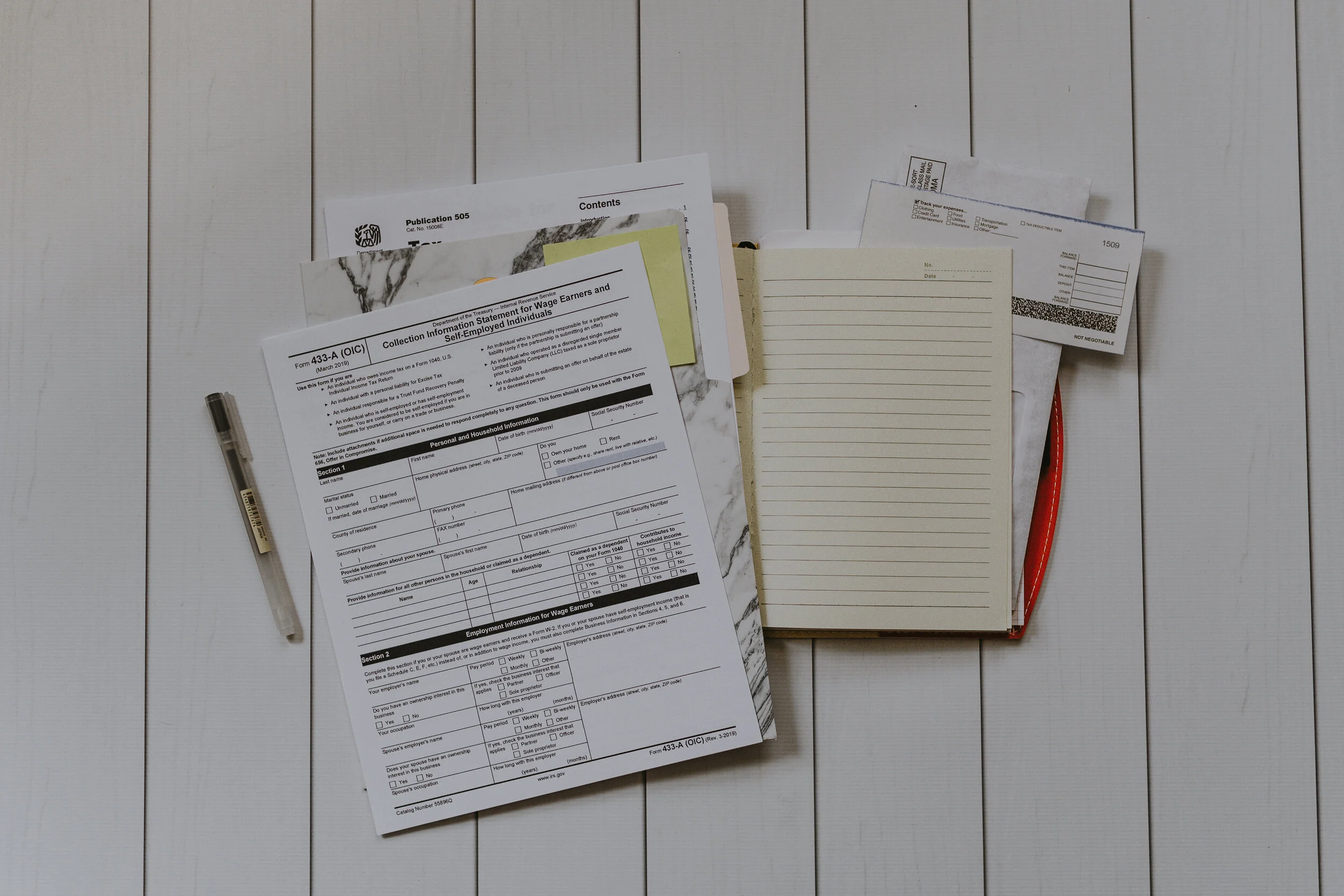
Working for yourself will often mean getting the lovely surprise of being hit with that extra tax rate due to your self-employment. Stay on top of your business expenses and use them as deductions to avoid paying more in taxes than your should.
First, use a business expense tracking app, like BizXpenseTracker, Smart Receipts, or Expensify, to store pictures of your receipts, and then work with an accountant who will help you to sift through to see which purchases could be claimed as a business expenses.
You’d be surprised at how much of your spending is for legitimate business reasons! Many freelancers don’t take advantage of the fact that their mileage, internet usage, and office equipment even though all count towards tax savings!
Here are some potential deductions:
Office supplies
Clothes you buy to wear at meetings with clients
Part of your mortgage to account for your home office
Desks, office chairs, filing cabinets, and other office furniture
External hard drives, mice, keyboards, routers, and other computer equipment
Computer or laptop
Internet service
Magazines, books, and courses you use to learn about freelance writing or to manage your business
Mileage on your car used to meet with clients or to go to seminars
Website and domain hosting costs
PayPal or other money service fees
Bank fees
ContentFly Review: Fly place to write for or not so much?
Here’s all about ContentFly and some considerations before you apply.
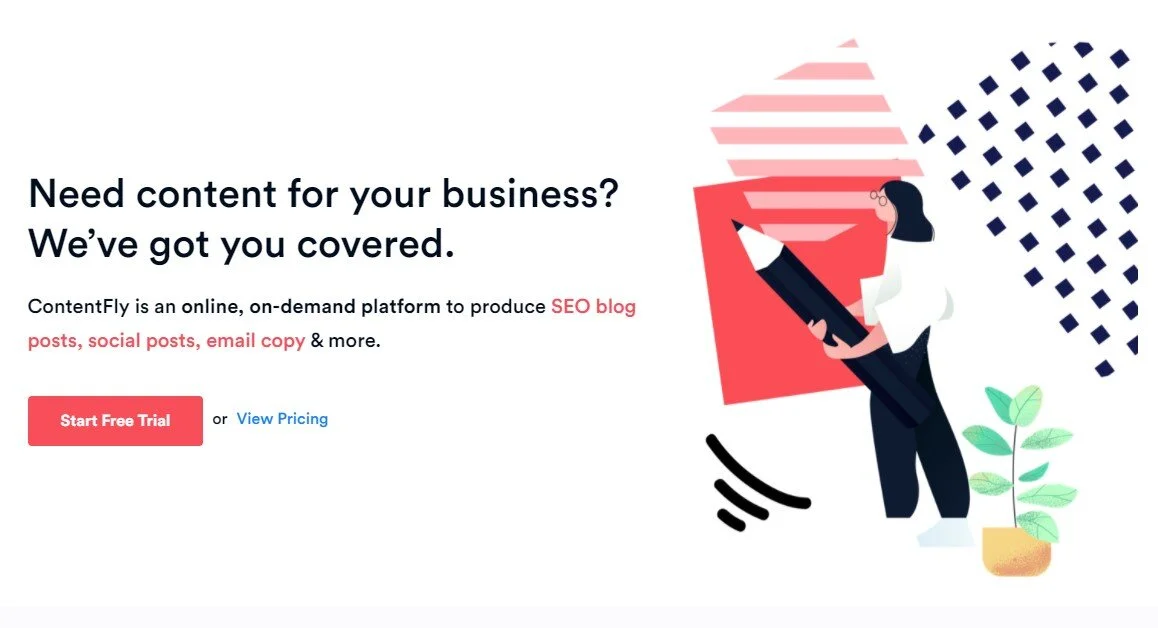
I recently came across an ad for ContentFly. This is a site that pays writers for content and then sells the content to businesses and online magazines. Some of their clients include Medium, Inc., and the Wall Street Journal. I hadn’t head of them, so I looked them up.
The basics
In a nut shell, ContentFly works like most “content mills.” They get content requests from businesses, and then they put the request on their dashboard for writers to claim. First come, first served, but we’ll get more into that later. ContentFly does send out email notifications when there is new work on the dashboard, so there’s that.
Applying
Here is the application form. To get accepted, you have to write a 750 word blog post. They don’t pay you for the sample, but they also say they won’t use it and you retain the rights to the article. If you get accepted, they give you an assignment. If they don’t like your work they terminate your contract and you don’t get paid for the article, according to their guidelines posted here.
Here is a copy of their contractor’s agreement.
Ratings

Once you complete your work and submit it, you are given a rating. There are three writer’s ratings.
Tier 1- A writer with a 9 or 10 rating.
Tier 2- A writer with a 7 or 8 rating.
Tier 3- A writer with a 5 or 6 rating.
Here’s how ContentFly says they come up with their rating system:
Content Rating = Customer Rating - Deadline Rating - Spelling/Grammar Rating.
Customer Rating: The customer provides a rating from 1 to 10 for your finished piece. 10 means they love it, 1 means they were very disappointed.
Deadline Rating: If you miss the specified deadline for a job you’ve claimed, you’re docked 4 points from the rating assigned by the customer (Customer Rating).
Spelling/Grammar Rating: When the internal ContentFly team does a check on your submission, if we notice blatant spelling/grammatical errors or wrong use of language (e.g. US vs. UK as directed by the original brief), you’re docked 2 points from the Customer Rating.
Your rating determines how much work you are able to get. Tier 1 allows you to have first pick of any available job. After an hour, if none of the Tier 1 writers pick up the assignment, Tier 2 gets to take jobs Tier 1 writers didn’t want. After another hour, Tier 3 has access to the crumbs the Tier 1 and Tier 2 writers didn’t want, basically. You can learn more about their rating system here.
The pay
Apparently, they already have more than 100 writers in their systems. Their top writers write around 15 to 20 pieces of content per week and make around $700 (their ad says $1,000, but they contradict themselves elsewhere). ContentFly says that compensation averages around $0.05 per word.
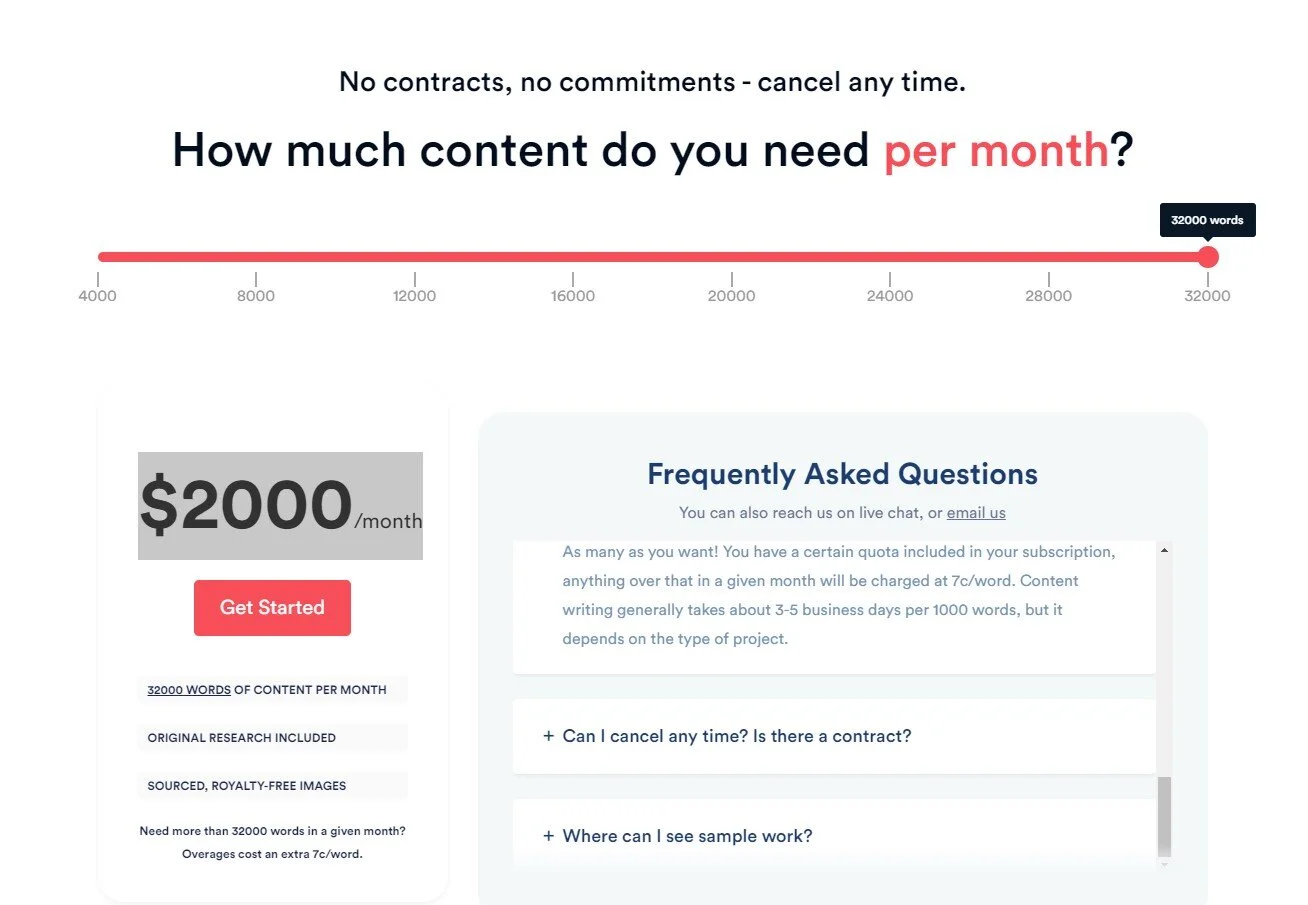
Each ContentFly client pays $250 per month for 4,000 words of content. That’s their base package. So, the writers get paid around $200 for the 4,000 words and ContentFly takes a $50 cut. Clients can get bigger packages where they can get more content. The biggest package is 32,000 words for $2,000 per month. So, if my math is right, ContentFly is taking a $400 profit from the biggest package.
The pay system isn’t automated, though. You’ll need to submit an invoice at the end of the week to get your payment. They only pay through PayPal.
Here’s the full ad they posted on ProBlogger:
Hey there! We're ContentFly, a start-up that matches small businesses looking for content help with writers.
We're looking for an eager freelance Content Writer to join our team. Your role, in a nutshell, will be helping us write articles, blogs, social copy, etc. for our growing customer base.
How does it work? If you're accepted into our writer base, whenever a new content request (job) comes from one of our customers it's automatically pushed to you and available on a dashboard.
The job will include a brief, required length, compensation details, and the deadline for submission.
If everything sounds great, you can claim the job and have it completed by the deadline. You invoice us weekly and get paid via PayPal.
Some FAQs:
1) Generally, most of our content is Website articles, Blogs, and Social Media posts.
2) Average project duration is usually around five days (~1000 words). You can take on as many projects at once as you want.
3) Compensation averages at $0.05/word. Note! Most of our writers earn an average of $1000 per month!
4) This is a contractor position and is freelance, you're compensated based on the number of words you write.
5) You only deal with us, never the actual client. So it's hassle-free and a seamless way to make some extra money!
What's the catch? There is none.
You get the listed compensation details; no hidden fees or payment required from you. But we do have very high standards, and one or two poor rankings or missed deadlines will get you moved out of the roster.
Next steps in the application process are submitting your application details and including a portfolio of your best work at http://writers.contentfly.com
Important: If you need an idea of the style of writing and quality we are looking for, you can check out our blog here before submitting your application: https://contentfly.com/blog
My No-Fluff Freelance Writing Starter Pack teaches you how I make a living at home as a freelance writer. It includes my two books, a social media marketing guide for writers, invoice template, contract template and more. Just $29.97!

Can You Make Money Writing for the Medium Partner Program?
Here’s what you need to know about the Medium Partner Program, no matter if you are a new freelance writer or a seasoned one.
When you’re first starting out as a freelance writer, you don’t have clips to show clients. I always tell new writers that if they want a good place to publish their work where it will look professional, Medium is a choice. Post your best stuff there and you’ll have instant clips you can show off to potential clients. (BTW, LinkedIn is another good option.)
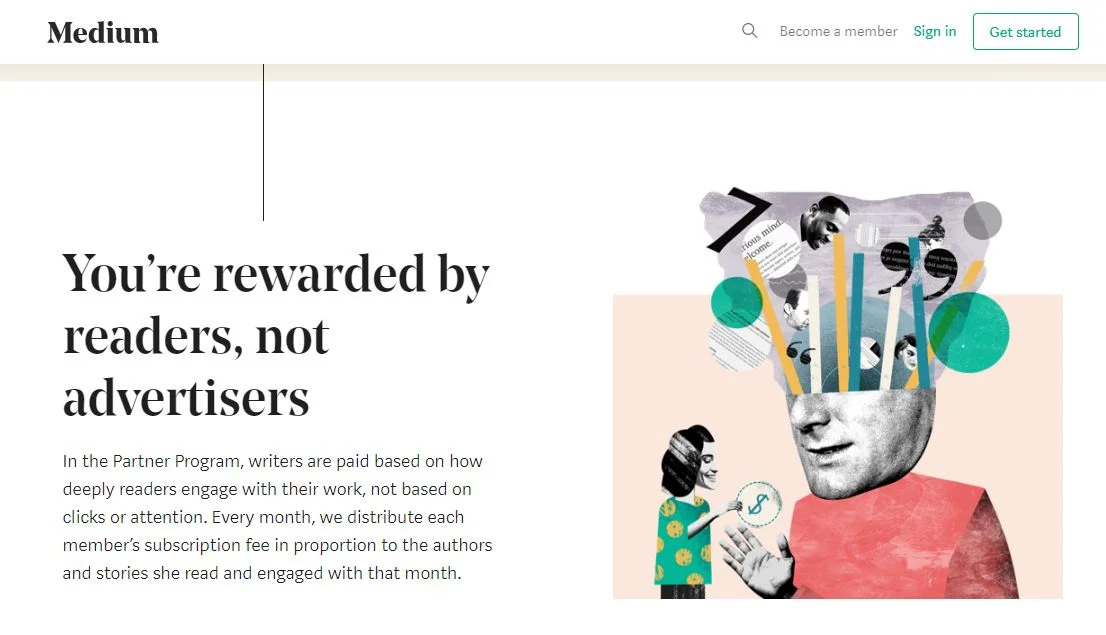
You can even get paid for posting on Medium, if you join the Medium Partner Program. All you have to do is sign up, then tick on the distribution and earnings setting before you publish the piece. Here’s what you need to know, no matter if you are a new freelance writer or a seasoned one.
Will you really make anything?
How realistic is it that you’ll earn money from a site you’re primarily using as a portfolio for your work until you get published by paying clients? Well, every month Medium releases stats about who’s earning what.
According to Medium, in October 2018:
59.1% of authors or publications who wrote at least one story for members earned money.
9.1% of active authors earned over $100.
$8,745.25 was the most earned by an author, and $2,203.91 was the most earned for a single story.
Fast forward to March 2019:
55% of writers or publications who wrote at least one story for members earned money.
7.5% of active writers earned over $100.
$9,707.36 was the most earned by a writer, and $3,702.39 was the most earned for a single story.
And in September 2020:
68.7% of writers or publications who wrote at least one story for members earned money.
6.4% of active writers earned over $100.
$49,705.40 was the most earned by a writer, and $16,685.5 was the most earned for a single story.
That’s better than a lot of pay-per-view or -click sites, at least in my experience.
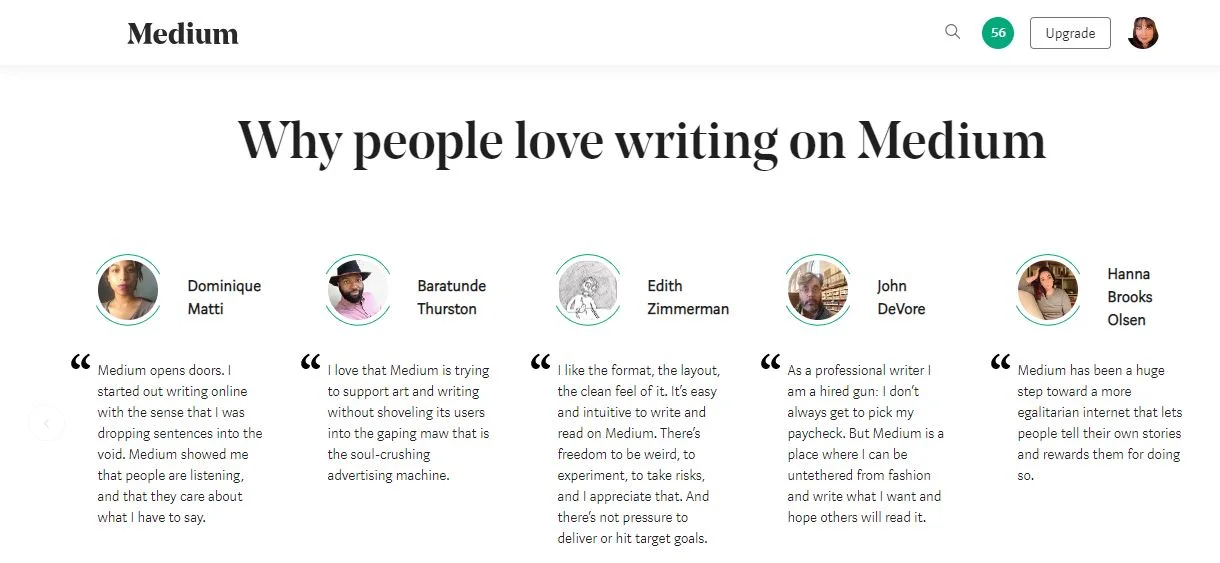
Testimonials on Medium from the site.
How to use the Medium Partner Program if you are an established writer
For seasoned writers, you probably have plenty of clips to show clients. For you, Medium is a good place to post articles that were rejected by clients or that you just can’t seem to find a home for. Having the chance of earning is better than them rotting away in a folder on your hard drive., after all. This is what I use the site for and I really like having a fall-back for on-spec articles.
Get published by Medium magazines
There are also magazines owned by Medium that pays writers very high flat rates for articles. Here’s a list of the top 19 high-paying Medium magazines.
Need help getting your freelance writing career off the ground? Grab my No-Fluff Freelance Writing Starter Pack. It teaches you how I make $100 to $200 an hour at home as a freelance writer. The pack includes gig finding secrets, my two books, a social media marketing guide for writers, invoice template, contract template and more.

Tip for New Writers: Successful Writers Don’t Burn Bridges
Don’t burn bridges with clients, new writers. Here’s why.
Should you fight the system? Here’s my thoughts.

I frequent many writers’ forums. I like to lurk, absorbing the knowledge that my peers type about companies and publishers. I remember that a few years ago I stumbled upon a thread full of angry writers. The writers all freelanced for a publication that I wrote for, as well.
The publication had decided to essentially put all freelance projects on hold while they sorted out financial issues. I understood and was patiently waiting to hear if I would get to work with them again. The group of writers in this thread didn’t feel the same. Many threatened the company with a smear campaign. Others posted hateful diatribes directed at the editors of the publishing company. Many declared that they would never write for the company again.

This company had been good to their writers. They always paid on time and offered extra incentives for hard work. I had to wonder if these angry writers were shooting themselves in the foot with this public display of angst. You see, as a freelance writer of more then 20 years, I have learned to take everything in stride. I know the value of holding my temper and not burning bridges.

When I first started my writing career I went to work for a small company as a freelance article writer. This company was bought out only months after I started writing for them. They told their writers that they would be handing out work again within a month’s time.
I didn't hear from them (other than a "wait and see" letter) for more than a year. Instead of sending them a hateful I’m-Tired-of-Waiting email or ranting about them on forums, I took work with other companies. Then, one day they emailed me out of the blue and offered me a fantastic opportunity. The job took me about thirty minutes and I got paid $100.
Maybe the problem is you
Since then, I have worked for them consistently for two years and have made thousands of dollars. Another time that I could have burned bridges was when a publication wouldn’t answer my emails. I had worked with this publication for around a year and they paid well. Plus, I loved the work.
Suddenly, though, I stopped receiving emails from my editor. Did I send a heated email? No, I gave them the benefit of the doubt. Turns out, my email system was blocking their emails even though I had them on my safe list. After the problem was solved I continued writing articles for them and made a lot of money. I’m just glad I didn’t try to jump to conclusions!

Things change
Even though that editor wasn’t the problem, many are. I’ve dealt with some real jerks in my time.
One of my first editors, for example, was a piece of work. She’d rarely answer her emails and when she did she would give me one sentence answers that didn’t even address what I had asked in the first place. Then, when I emailed her again, she would give me very snotty responses.

I remained civil and, though I was tempted, I didn’t tell her off. Many writers will tell you this is a mistake. My theory is that no editor stays at a publication for very long.
You don’t need to waste your writing time fighting the system, it will change soon enough. Sure enough, a few months later a new editor took her place and that publication is still one of my best sources of income. Moral of the story? Getting work as a writer is hard. Making connections is hard. Don’t make your life harder by burning bridges.
Be nice 24/7?
So, you’re probably wondering if I’m telling you to just roll over and take bad behavior. No way! If you are experiencing sexism, racism, or abuse, go over the editor’s head or terminate your contract with the client. Some behavior just can’t stand. Just make sure to act professionally. Don’t rant, don’t rave. State your problem clearly and back it up with screenshots.
Need help? Here’s everything you need to start a successful freelance writing career.

High Paying Magazines Looking For Pitches: 19 Magazines on Medium that Pay
You may know that you can publish articles and blog posts on Medium and use them for clips to grab the attention of potential clients, but did you know there are magazines that are owned by Medium that will pay for your work? Yup.
Medium magazines that accept freelance submissions in 2020.
You may know that you can publish articles and blog posts on Medium and use them for clips to grab the attention of potential clients while making a few coins, but did you know there are magazines owned by Medium that will pay for your work? Yup. It’s just like submitting to other online magazines, but through the Medium platform. Medium-owned publications also have the bonus of paying very well. Many pay $1 to $2 per word!
Tim Denning has some more great tips on how to get Medium editor’s attention and get published. For this article, though, I’m going to list some Medium publications, their guidelines, and how to get in contact with the editor.
Also, don’t forget to check out 50+ High Paying Magazines Looking For Pitches.
FFWD
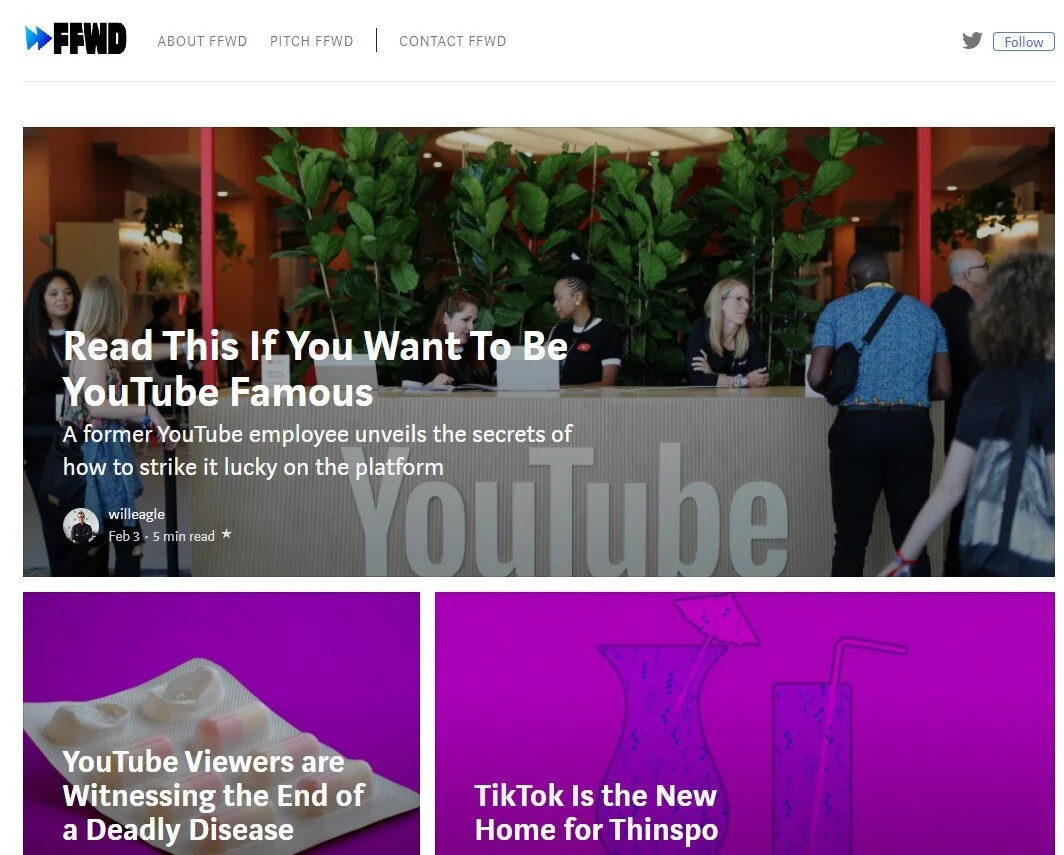
“Think of it like The Economist for online video (meaning at the minute YouTube, Twitch and TikTok), looking at the bigger trends and putting them into all-important context, explaining to readers what their wider impact is for society and how this shifts the way we work, earn money, and spend our time.”
Marker
“Marker is a new Medium publication making you smarter about business. We deliver intelligence by entrepreneurs, CEOs and thinkers, and rigorously reported journalism that changes how you think about the future. If you’re interested in writing for Marker or reaching an editor, you can email us at marker@medium.com.”
Slackjaw
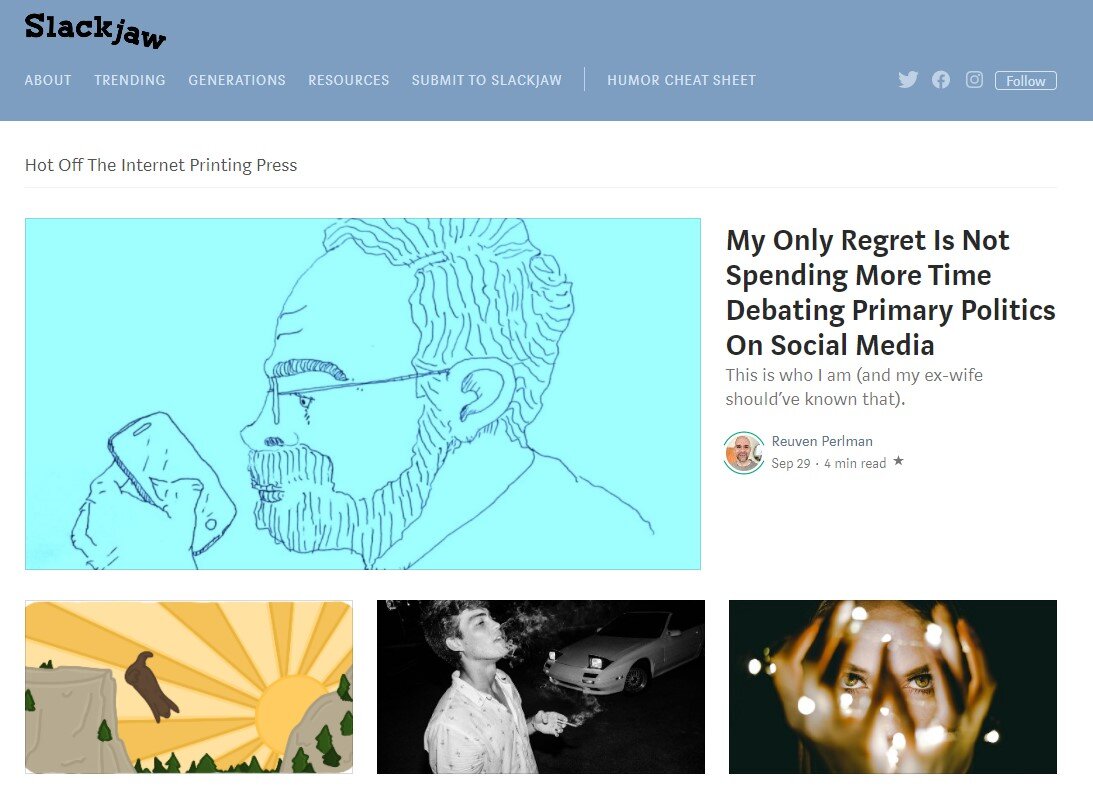
“As the #1 destination on Medium for all-things humor, and think-pieces on cats, Slackjaw wouldn’t be what it is without you, High Warlock of Funny Ideas. That said, we do accept submissions from humor writers of all backgrounds and extraterrestrial lifeforms.”
The Startup
“We’re reimagining the startup. Medium's largest active publication, followed by +708K people.”
Momentum
“This is a blog that captures and reflects the moment we find ourselves in, one where rampant anti-Black racism is leading to violence, trauma, protest, reflection, sorrow, and more. Momentum doesn’t look away when the news cycle shifts. Momentum doesn’t chase the news or report it out dispassionately. Momentum reflects the lived experiences of people right now, and ongoing, in America.”
Guidelines: Submit stories at momentumeditors@medium.com.
Level
“We aim to fundamentally change what you think of when you hear the phrase “men’s publication,” and to do so through and for the worldview of Black and Brown men.”
Elemental
“Elemental is a new Medium publication for science-backed health and wellness coverage. Every day, you will find new ambitious and trustworthy reporting on the many ways to live a healthy life. You can email us at elemental@medium.com.”
OneZero

“OneZero is a Medium publication about the impact of technology on people and the future.”
Guidelines: Submit stories at onezero@medium.com.
Heated

“Our goal is to showcase the links between food and just about everything else: agriculture, politics, history, and labor; culture and cooking; identity, family, and love. It’s a new, ongoing, and exciting project, one in which we intend to involve lots of different voices and views — including, we hope, yours.”
ZORA

“At ZORA, we unabashedly amplify the voices of women of color. We are a digital home for incisive ideas, contemplative thinking, and enterprise storytelling that explores the interiority and intersections of women of color. ZORA gives women of color a place where they are seen and heard, and the intricacies of their lives are honored and reflected daily.”
Guidelines: Submit stories to platform editor, Jolie A. Doggett, at jdoggett@medium.com.
Human Parts
https://humanparts.medium.com/
“Human Parts is Medium’s home for personal stories and perspectives. From the mundane to the extraordinary to the downright weird, we’re here to explore what it means to be human.”
Tenderly
https://medium.com/tenderlymag
“We believe in living deliciously and joyfully, while trying to help more than we hurt, and we’re here for anyone who believes the same. We publish original vegan recipes that center and celebrate plants; the stories of animals who have been liberated from exploitation and the people who helped them; interviews with the most interesting and influential vegans and plant-based chefs in the world; happiness breaks; deep dives into the complex ethics of progressive veganism and anti-speciesism; pop culture through an animal rights lens; vintage vegetarian book reviews; personal essays on dogs, beans, nature, and more; advice for beginner vegans; heartfelt recommendations and passionate odes to our favorite ingredients and products; beautiful photographs from the wild world; cakes; comics, and cats.”
GEN
“GEN is a new Medium publication focused on politics, power, and culture. Every day, you will find stories that will help you understand the powerful forces reshaping our world. You can email us at gen@medium.com.”
Forge
“Forge is here to examine and illuminate our constant struggle to get more done, invest in creativity and focus, and be happy doing it. We bring journalistic rigor and credible, peer-reviewed science to bear. We don’t use vague inspiration-speak or glibly suggest quick fixes to major personal problems. Medium is ad-free, and Forge will not peddle product recommendations or embed affiliate links. We provide a toolbox of research- and expert-backed strategies to be more productive, inspired, and whole, and mind-expanding ideas about how we humans are navigating this big, complicated world. You can email us at forge@medium.com.”
The Bold Italic

“The Bold Italic is an online magazine that celebrates the character and free-wheeling spirit of San Francisco and the Bay Area. For pitches, feedback, or questions, send a message to info@thebolditalic.com.”
Serious Eats @ Medium
https://medium.com/@seriouseats
“Anything related to food, cooking, eating. We prefer to develop recipes in-house, so including recipes in SE@M submissions is probably not advisable. Same with specific or generalized technique advice that would require our staff to test and verify; we’re trying to keep this platform more personal and less prescriptive, for now. Otherwise, the relation to food can be specific or tangential as long as the focus is sharp.”
The Establishment
https://medium.com/@ESTBLSHMNT
“The Establishment is looking to unearth overlooked stories, produce original reporting, and provide a platform for voices that have been marginalized by the mainstream media. And yes, we want your humor, wit, and good old-fashioned satire, too. We publish originally reported features, interviews, long-form journalism, personal essays, and multimedia of all shapes, sizes, and creeds.We pay $125 for feature stories, op-eds, and personal essays (800–1,500 words), and $500 for a select few long-form investigative pieces that involve original reporting and at least five interviews (3,000 words).”
The Ascent
“We believe in authentic, personal storytelling. The stories that perform best for us are rooted in firsthand experience and packed with tons of value, in the form of personal lessons and profound takeaways for the end reader.”
Modus
“Modus is a place designers can rely on to level up their skills and knowledge, stay current on the state of the design and tech fields, and dig deeper into the areas that interest them.”
Guidelines: Pitch the editor at modus@medium.com.


Smart Ways To Maximize Your Freelancing Profits
How to make more without getting more clients.
There are many benefits to working as a freelancer. Not least, getting to be your own boss and knowing that all the hard work you put in is lining your pockets with profits rather than someone else's. However, ensuring your business is profitable is not always easy. The good news is that you can get some helpful suggestions on how to maximize profit below.

Keep your costs low
It's simple math, but keeping your outgoings as low as possible will ensure that your profits remain high. In particular, drop any unnecessary costs like:
Sharing an office when you can just as efficiently work from home
Buying tech you don’t really need like expensive cameras for photos or fancy printers
Traveling to do an interview when you can Skype or email
Buying reference guides when you can look the information up online
Getting a fancy desk when grandma’s old desk will do
Avoid being scammed
It's not a lot of fun to think about, but there is a heck of a lot of people out there that do not recognize the hard work and hustle that freelancers do to survive. Unfortunately, it is these people that see freelancers as an easy mark for fleecing and scams.
In fact, freelancers tend to be scammed in several ways, from clients refusing to pay once they have completed the work to clients using rough drafts and proofs rather than settling the full invoice.
One way to avoid this is to use freelancer websites that will broker payment for you. However, if you go it alone, be sure to ask for at least a 50% deposit before beginning a job. Then, have specific completion points where the remainder of the fees are paid. Also, share drafts as locked Google Docs or PDFs that can’t be copy and pasted onto a scammer’s website without payment.
Oh, and if a client won't agree to this, it's best to walk in the other direction, because you will usually end up spending precious and profitable time chasing them for payment!
Invest any additional profits
Many people think of their profits from freelance work as an end goal. However, this isn't necessarily the case. After all, you can make your money work even harder by investing it wisely.
For some people, this will mean investing in their business or even getting more training to do what they do better. While for others, investing in the stock market is the most profitable option.
Of course, before you even consider financial investment, it's wise to take some time to familiarize yourself with all the different types of products from Share CFDs to penny stocks. Only then, once you understand the market and the particular types of investment you will be using, should you start to use your hard-earned freelance profits.
Subcontract the extra work
If you think that being a freelancer is about doing everything yourself, you are in for a shock. After all, it's standard practice for those freelancing to subcontract out work or parts of projects that they either do not specialize in or do not have time to do.
The great thing about subcontracting extra work is that it can help rather than hinder your profits. The reason is that you can offer a much more comprehensive service to your client, thus making you much more likely to get more significant and more profitable contracts. Plus, hiring out saves you time and time equals profits.