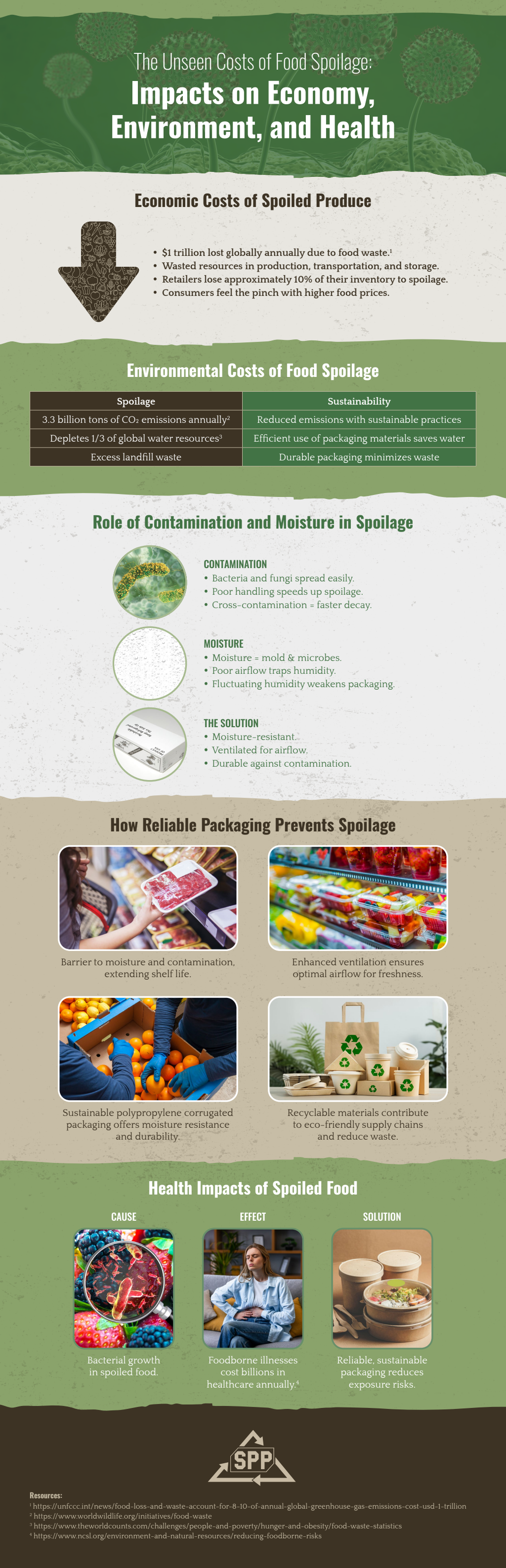
Food spoilage is often dismissed as a minor inconvenience, but its impact reaches far beyond individual households. Spoiled food represents wasted money, lost resources, and avoidable health risks. Across supply chains and communities, spoilage affects economic stability, environmental conditions, and public well-being. For a lifestyle audience, recognizing these broader effects helps connect everyday food habits with larger consequences that shape society.

Economic Costs That Add Up
Food spoilage creates significant financial loss at every stage of production and consumption. Farmers lose income when crops spoil before distribution. Manufacturers and retailers face reduced margins from expired or damaged goods. Consumers absorb direct costs when food purchased for home use goes uneaten. Over time, these losses contribute to higher food prices and increased pressure on supply chains. Waste-related expenses also divert funds that could support efficiency, innovation, or affordability across the food system.
Environmental Impact of Wasted Resources
The environmental effects of food spoilage extend well beyond discarded meals. Producing food requires water, land, energy, and labor. When food spoils, all of those resources are wasted as well. Food waste in landfills releases methane, a greenhouse gas that accelerates climate change. Packaging materials often end up discarded alongside spoiled food, increasing landfill volume and pollution. Reducing spoilage helps conserve natural resources while limiting emissions tied to unnecessary disposal.
Health Risks Linked to Spoiled Food
Spoiled food presents clear health concerns. Consuming food that has gone bad can lead to foodborne illness, causing symptoms that range from mild discomfort to severe medical complications. Certain populations face a higher risk, including older adults and individuals with weakened immune systems. Spoilage also reduces access to fresh, nutritious food, which can influence long-term dietary habits. Preventing spoilage supports both immediate safety and broader public health outcomes.
Supply Chain Practices and Packaging
Spoilage often occurs due to breakdowns in storage, transport, and handling. Temperature fluctuations, moisture exposure, and physical damage shorten shelf life. Improved logistics and packaging help reduce these risks. Protective solutions such as custom corrugated plastic boxes shield food products during transport, helping maintain quality and reduce loss before items reach consumers. Investments in these areas support efficiency while lowering waste-related costs.
Household Behaviors and Daily Choices
Consumer habits play a major role in food spoilage. Overbuying, improper storage, and misreading expiration labels contribute to unnecessary waste. Simple practices like meal planning, correct refrigeration, and using leftovers more effectively reduce spoilage at home. Awareness of food handling basics empowers households to cut waste without sacrificing convenience or nutrition.
Food spoilage affects economic stability, environmental sustainability, and personal health in ways that often go unnoticed. While the issue spans global systems, progress depends on consistent actions. Reducing spoilage lowers costs, protects natural resources, and improves food safety outcomes. Small changes create measurable benefits over time. Recognizing the broader impact of spoiled food encourages more responsible choices that support both individual households and the systems they depend on every day. For more information on the impact of food spoilage, feel free to look over the accompanying resource below.