

The No-Fluff Guide to Starting a Blog
Ready to make the leap? Here’s how to get started.
While you may not go viral and earn millions from your blog, it is still a great tool. Blogging is one of the best ways to grow a portfolio and a following as a writer. It takes time and dedication, but I promise you it’s not a waste of time.
Ready to make the leap? Here’s how to get started.
how to make your blog awesome
Where to Start
Before you can do anything else, you need a blogging platform. If you don’t want to fuss with setting up your own blog, Medium is a good place to start. Blogger also offers a free blogging platform. Though these sites help you get started for free, they offer very little freedom. Setting up your own site with its own domain name is usually a better option. I’ve found SquareSpace to be affordable and very easy to use. They also have a lot of free website templates for those of us that know nothing about web design. (No, they aren’t paying me to say that.)
Set Up a Home Office
When you're working from home, it makes sense to set up a good office space. A space of your own means you're comfortable and can stay productive- once you're at your desk you know, it's time to get down to work. Having a separate office also helps you to maintain a good work/ life balance which can be tricky when you're working a significant amount of time from home.
If you have a spare bedroom, give it a coat of paint and kit it out with a sturdy desk, an office chair, some shelves and some storage. You could finish with some fun accessories and personal touches that make the room feel pleasant to spend time in.
Here are some tips for setting up a home office.
Clear, Beautiful Images
Your content is important, and the words you write will keep a reader coming back for more. But it’s the images you use that will draw them in and will bring your words to life. It's the photos that will make your blog and blog posts look visually appealing. If you run the kind of blog that reviews products, you will need clear, high-quality images of whatever you’re talking about. If you write about lifestyle or travel, you will a good camera to be able to take beautiful, stunning shots of the places you visit.
A good quality camera such as a DSLR is a good investment as a blogger. These can be complex, but Skillshare has some great low-cost classes that you can take to learn how to use one.
A good understanding of Photoshop or other editing software is useful too, so you can enhance your images and make them the best they can possibly be.
Good stock photos are important, too, for times you can’t take your own photos. Here’s a list of all the places you can get free images and graphics for your blog:
20+ Free Ways to Get Photos and Multimedia Content for Blog Posts and Articles
A Nice Layout
Cluttered blogs with ads everywhere, messy presentation, cheap looking fonts in poor styles and colors and the cardinal sin, background music playing, can all put off a reader. You might feel like your content is the only thing that truly matters, but unfortunately, no one will read what you have to say your blog has an unpleasant aesthetic.
If you've tried designing your blog yourself you could be putting people off in all kinds of ways. Your best bet in this case is to either use a premade template or find a web designer.
Improve Your Domain Authority
Your domain authority is something that sponsors will be looking at when they're searching for blogs to work with. This is a metric devised by Moz which shows how much authority your blog has online.
Lots of different factors make up your score, some of which you can’t directly influence (such as your website's age) but one thing you can do is get as many backlinks as possible. This is where you get your link onto good quality websites, and the main way you can go about it is by offering guest posting. The website owner gets some good quality content, and you get to include your link. You could also speak to a network of bloggers and ask if they would be willing to swap links with you which is a quick and easy way for you all to gain some backlinks.
Another thing you can do to boost your domain authority is to get rid of any broken links and within your site. Use a broken link checker and go through and remove anything that no longer works.
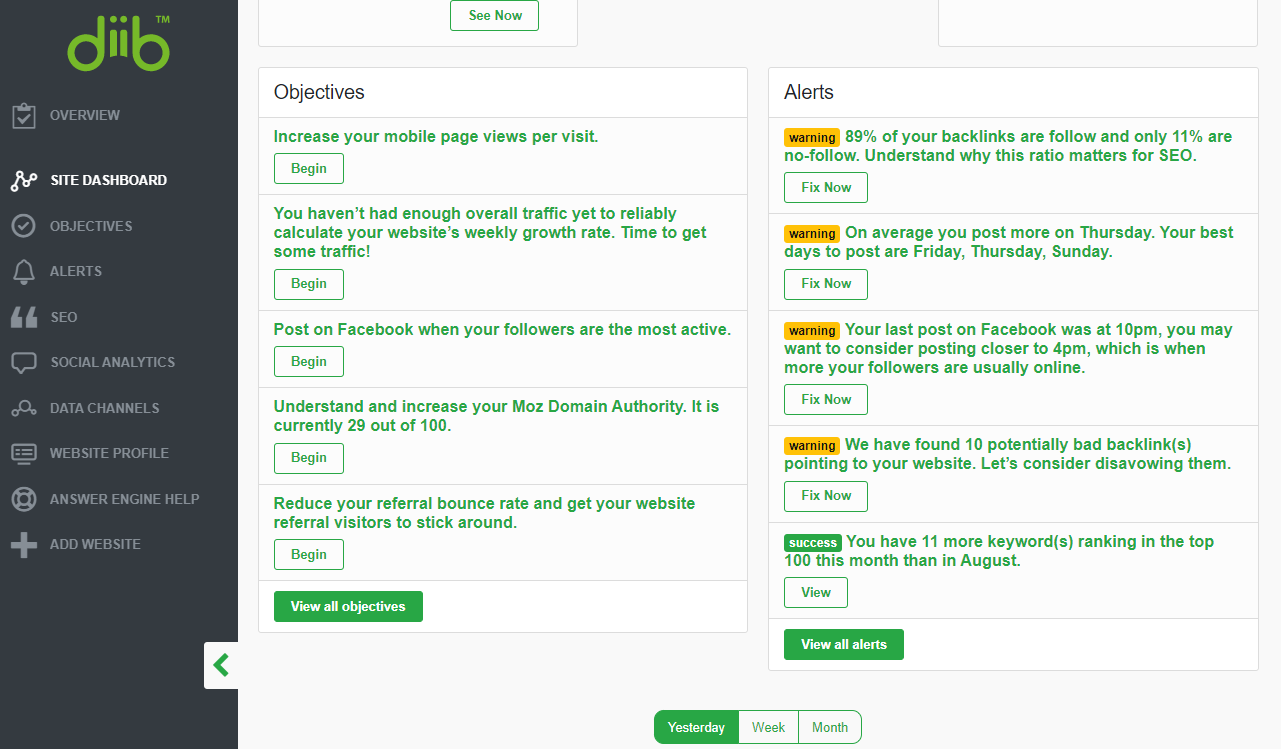
My favorite tool is Diib. It goes through your whole site and finds ways to improve your site’s rank and earn more money from your blog. It also walks you through the steps to fix your site rank, get more readers and more.
Think of Ways To Monetize
You can earn money from blogs in a number of ways. Your biggest source of income as a blogger will be sponsored content, here you will work with an advertiser publishing blog posts or ads for a fee. Depending on how influential your blog is, advertisers can pay very well for this. The only trouble is because they come to you, you can never be sure how much work you're going to get. Some months you might get lots of interest and others less or none.
Some other income sources are:
Selling your own ebooks or other digital media
Set up a members area for special pro tips or socializing
SEO

SEO (Search Engine Optimization) is how search engines find your blog or posts so they can suggest them to internet searchers. Here’s how to make Google, and the others, love you.
Think long
When it comes to blogs you need well written, interesting and engaging content, and you don’t need to squeeze this into a couple of hundred words. Allow your creative writing to flow and expand on your favourite topics.
Why? Because your readers deserve a beautifully crafted, well thought out read. Also, search engines tend to favor longer posts. You might be done at 1,000 words, but there’s nothing wrong with pressing on to 2,000 if you find you can. Don’t make a post long if it doesn’t need to be, though! Search engines are smart and can tell when a blogger is just writing fluff to make their posts longer.
Remember, make your posts interesting and informative, but stop when you’re done.
Keywords and phrases
These are the tools for your SEO success, but they must be used very carefully. When creating your blog title you’ll want to use SEO keywords that are highly searchable. But shoe horn them into your title and you’ll be penalised for using phrases that look unnatural and obviously there for Google’s eyes only.
The same goes for the rest of your text. Make sure that you use your keywords and phrases as naturally and liberally as possible but without making it look like they don’t belong.
Click here to learn more about SEO.
Frequent Updates

Arguably, the most important quality of a successful blog is that it is updated as frequently as you can manage. However, you shouldn’t allow this rule of thumb to get in the way of quality. Your blog posts should always be helpful to your audience, or at least entertaining.
Ultimately, if you are not entirely happy with your writing, then you should either polish it until you are, or write something new.
Still, it is important that you keep your blog regularly updated, as this ensures that readers will continue to return as often and search engines will show your site in search results. Whatever posting schedule you decide on, keep it. Consistency is important.
Outside Advice
Many people have gone before you already, even with the Internet being as young as it is, and many of the trailblazers have great advice to share. There are a huge number of blogging resources out there which you should take advantage of for this reason. Doing so will help you to get your blog to where you want it to be. I suggest reading Jon Morrow's blog.
YouTube
Blogging and YouTube might be separate platforms, but they can go hand in hand. You can work with both of these as a way to gain a bigger audience and appeal to the most number of people. For example, you could do lifestyle vlogs on YouTube, but then full reviews of places you visit on the blog.
You can learn more about Vlogging (video blogging) here.
Social Media

As a blogger, you absolutely need to utilise social media to do well. This is the way you connect and network with others, and it also gives you a free way to advertise. You should set up accounts on Twitter, Facebook, Instagram and Pinterest (choose two you really like) and use each of them as a way to promote your blog and connect with others.
Pay Taxes
Once you start making money from your blog, you need to ensure that you’re paying the right amount of taxes and that you're registered to do so. In most cases, it's as simple as completing a form online and then submitting a tax return each year where you can pay anything that's outstanding. It’s good practice to put money aside in a separate account, that way when your tax bill comes in you have a way to pay it without struggling.
Here's the legal stuff you need to know.
Content is King
Finally, the most important thing for any blog is putting out the best content possible. You should provide the reader with information that’s interesting and valuable. If you write about things you yourself are passionate about, your enthusiasm will transfer to your posts. This is how you will attract readers and gain you interaction on your blog posts.
Other Articles You May Like

No-Fluff Guide to Creating a Writer's Website
Writers are always getting asked “Can you send me a link to your website?”, so if the answer is “no”, unfortunately there could be another writer not too far away waiting to take your role.
If you are a writer and want to take yourself seriously, having your own writer website is one of the best things you can do. Writers are always getting asked, “Can you send me a link to your website?” So if the answer is “no,” unfortunately there could be another writer not too far away waiting to take your role. Here’s a guide to creating your first website.

Why do I need a website?
No matter how smart you look, clients will always take you a lot more seriously when they see you have your own website. You’ll be able to create a clearer picture of yourself and your services by showing people rather than telling them. Plus, you’ll be able to add examples of your work so clients can see with their own eyes what you’ve been up to, rather than you having to reel all your jobs off for them.
Your clients are hunting for information about you and your work, they don’t have time to read every bit of detail, so you need to make sure they get to the facts super-fast. You’re a writer, so they’ll be expecting big things!

Where do you start?
I've had a lot of writers ask me how to start their website. My best recommendation is to purchase a domain name (see below), get a host account for the hosting and start a WordPress blog on it using the free Customizr theme.
I also love Squarespace. This is what I use. It’s inexpensive and it works great, especially if you have no idea what you’re doing. There are a lot of ways to customize your site so it looks different than everyone else's.
Some people recommend setting up a free site with a free website builder. I don’t like free website builders because the designs are limiting. You have full control over a paid WordPress site and most businesses prefer this platform for their site. If you want a free site, though, here are some platforms:
10 Top Tips for Creating a ‘Real’ Writer’s Website
1. It’s all in the name.
Giving your business a name will add a sense of professionalism. Once you have decided, think about creating a domain name, for example myword.com. This is a great way for people to start taking you seriously and will move you on from being a writer, to a professional that means business.
2. Stand out from the crowd.
With more and more writers coming on to the scene, you’ll want clients to be knocking on your door, first. Make sure to use your voice and don’t worry about being overly formal. Clients want to get to know you.

3. Facts first.
The main thing that people want to know is what is what you do and what you can do for them. Then, if they’re interested, they’ll take a look at your clips.
4. Make them read.
According to research, only 16% of people read web pages word-for-word, so make sure your most important information stands out. Use big, bold headlines to ensure nothing gets missed.
5. Show your passion for words.
It may sound obvious, but choose the words you use to describe you and your business carefully. You want potential clients to see your enthusiasm and love of writing shining through, so make sure everything you say has a confident feel to it.

6. It’s all about you.
People reading your website obviously know you’re a writer. That’s why they’re there. But what other little nuggets of information can you give them about yourself? Have you worked in marketing, so you also know how to market yourself? Have you studied language, so you can offer some wonderful words in French or in Spanish as well? Maybe a brief mention about how you got in to writing - anything that can help the client get closer to you will always add another dimension to your website.
7. Added extras.
Obviously you can write, but what can you write? Don’t just assume everyone knows everything about you. Whether you’re a Social Media Savior or you’re the Mother of Marketing, every extra detail about what you can do is going to add another string to your bow.
8. Beautiful design.
So, you’ve written your website and you’re good to go. Now all you have to do is decide what it’s going to look like. Go for a clean and simple design - anything cluttered is just going to clog up potential clients’ brains. Keep it simple with a lot of white space and let your ability do the talking. If you need a hand creating your site, there are some top website builders to help you every click of the way.

9. The proof is in the pudding.
Don’t just tell them, show them. It’s great to talk about all the things you’ve done and how you’ve created some award-winning work, but no one will believe you more than the person that’s seen it with their own eyes. Examples of great work are an essential part of selling yourself. If you have a blog, let the world see it. Long copy, short copy, online, offline - be loud and proud about the work that you have done and your vibe will attract your tribe.
10. Call me!
One of the biggest mistakes that people make when designing their website is not to have their contact details up front. Everyone’s busy and having to scroll through your web pages to find a contact number or email is enough to make anyone switch off. You could also create a contact form on a page of your website to encourage people to get in touch.
Keep it simple
To keep things simple, your website should have the following:
Homepage: Invite people to take a look at what you have to offer.
About page: Let people know what you’re about and why they should connect with you.
Services page: Your full list of talents and experience.
Clips page: The blogs you’ve done, testimonials, case studies and anything else that sells you.
Contact Me page: The more ways you let people get in contact with you, the more chance they will get in touch. Leave your contact number, email and Linkedin details.
SEO
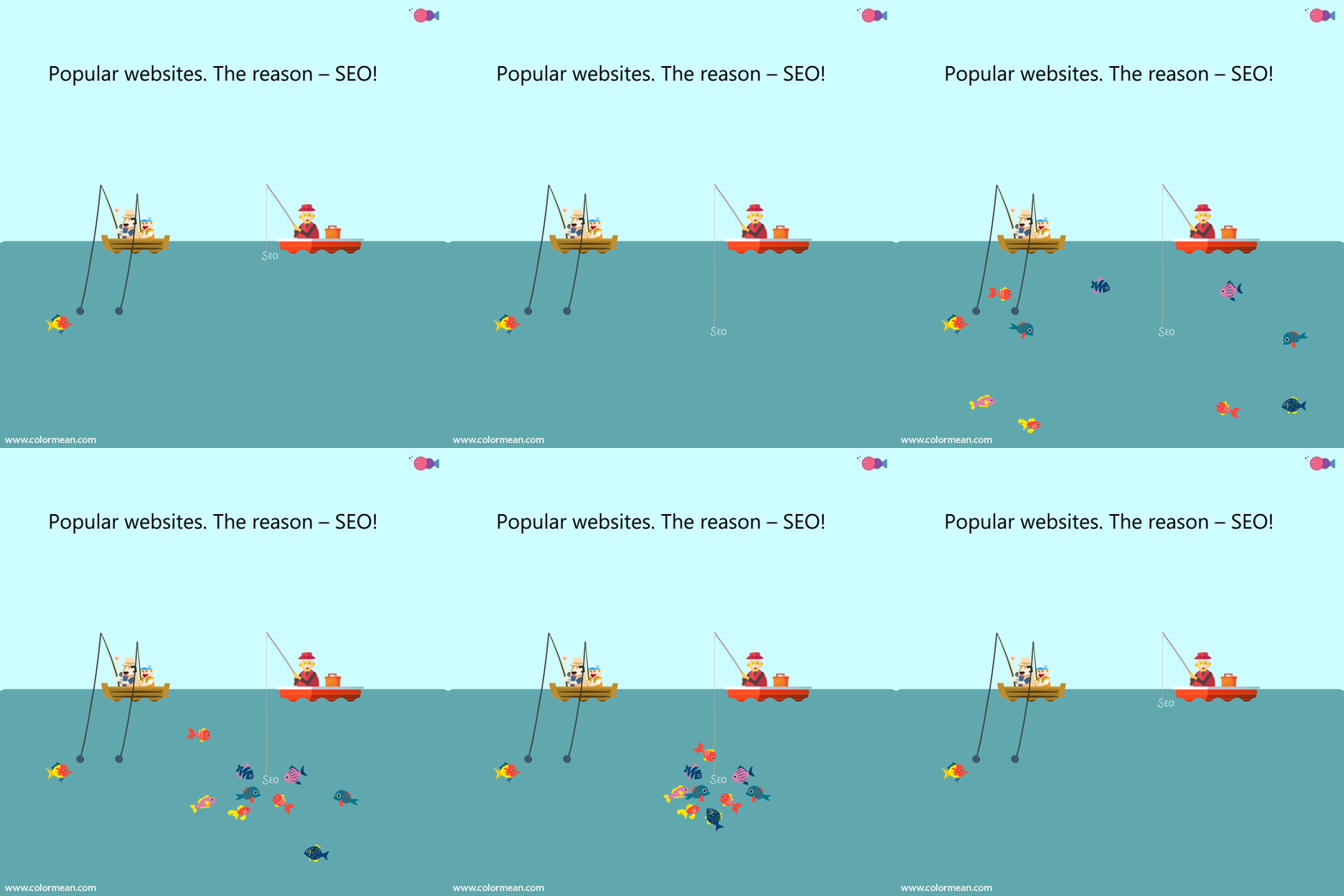
Search Engine Optimization (SEO) is important for any website. It's how the search engines like Google bring your site to people. I've written up a free guide to help you with the basics of SEO.
Now that you've got the site, get the clients. I teach you how in my book-
The Fluff-Free Freelance Writing Master Course: The only course that gives you concrete, actionable information to building a successful freelance business without any fluff.

What is SEO: A Step-by-Step Guide for Writers
SEO is a big deal for writers that want to make money writing articles and blogs online. Without SEO skills you won't keep up with your competition. You've probably seen job ads looking for writers that know SEO. If you don't know what those three letters mean, don't worry. I'm here to help!
What is SEO?
SEO is an abbreviation for search engine optimization, which, in a nutshell, means anything that helps a search engine find an article and rank it on the first page of search results. Go to Google and search for your favorite topic. See the first result? That article has excellent SEO. Some sites hire companies like whitehat-seo.co.uk to build their site rank, but most rely on writers like us.
So, how do you get these magical results? Well, only so much of it is in the hands of the writer. A lot of SEO has to do with the website's reputation. I'm going to cover what you, as a writer, needs to know about it to make your articles rank.

What is seo
Research Keywords
The first thing you do before you write an article is to research. Now, as an expert on your niche, you should have a pretty good idea about what people want to read. There's more to it than that, though. Keywords are a big way search engines know what your article is about and how to rank it in search.
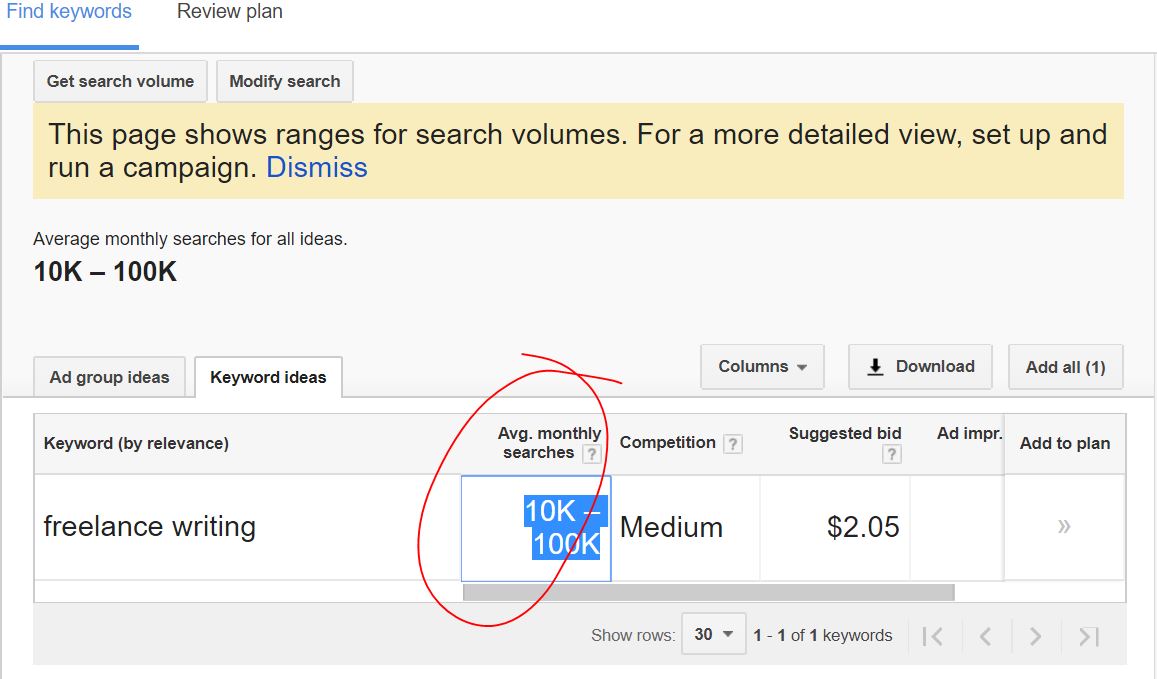
To research keywords, go to Google Keyword Planner> Go to Keyword Planner > Discover new keywords. Then, type in a word or phrase that describes what you want to write about and click, Get Started.
tips for seo keywords
A list of keywords will pop up. Look for keywords and phrases that have 10 to 100 thousand monthly searches. This means that people are actively typing these keywords into Google each month looking for articles on the topic. And in turn, Google actively searches for articles that provides information on these topics.
So your articles should have keywords here and there throughout. Most of the time, keywords will naturally pop up in your writing. You don't really need to think about it too hard.
Just be sure that:
You have a keyword in the title of the article or post and that it is close to the beginning
There is a keyword in the name of the image files you use and in the captions
Keywords are in the headings
There is a least one keyword in the first or second sentence of the post
DO NOT litter your article or post with keywords, though. Other than the areas I've highlighted, let them come naturally. If you spam an article with the same words over and over you'll get a penalty, which will make your post rank lower in searches.
SEO-Friendly Headings
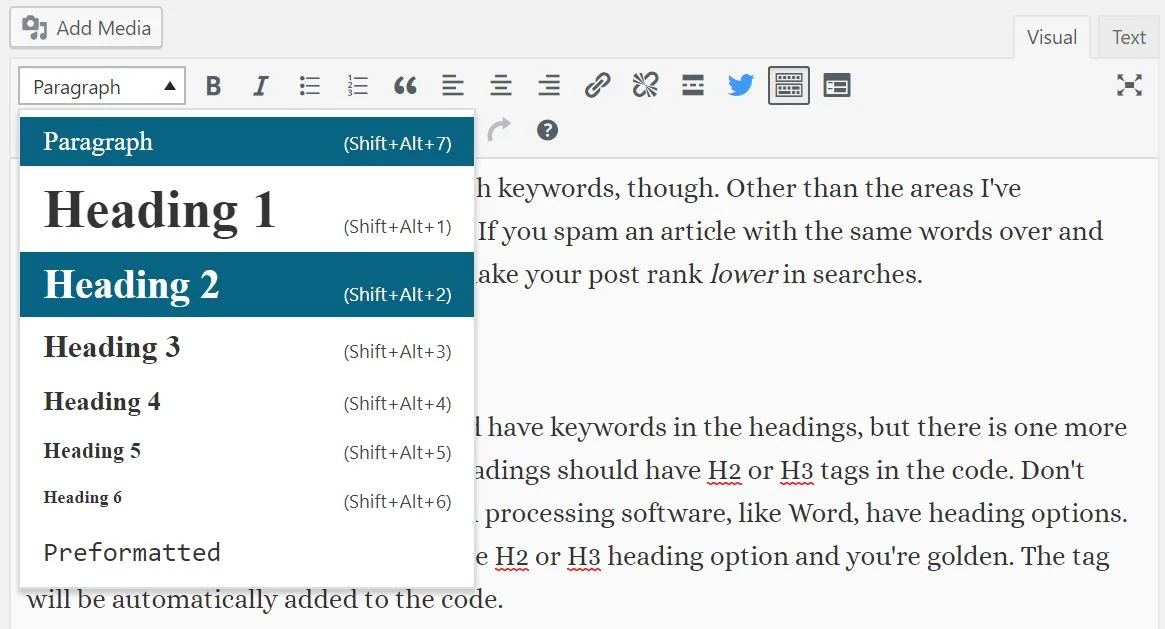
Now you know that your posts should have keywords in the headings, but there is one more thing you should know. All of your headings should have H2 or H3 tags in the code. Search engines look at your heading to figure out what your article is about. These tags help search engines know where your headings are.
Don't freak out! You don't need to know coding. Most post editors and word processing software, like Word, have heading options. Just highlight your heading, tap on the H2 or H3 heading option and you're golden. The tag will be automatically added to the code.
wordpress headings
Add Media
Search engines LOVE media. Media in a post tells the search engines that you are providing added value to the reader.
The rule is to add at least two images to your post for good ranking, but the more the merrier. Some media you can add to a post are:
Embedded YouTube videos
Gifs
Image galleries
Audio recordings
Videos of yourself explaining a concept
Infographics
Memes
Surveys
Maps
Where do you get quality media? Here are some free places I use:
Consider Length
The length of your post or article makes a difference, too. Search engines seem to prefer posts that are 400 words or more. The longer, the better, though. Once again, search engines are looking for value.
Best Article length
If you have a post that is a gallery of images and very little words, don't worry. If there is a lot of media it seems to cancel out the word count requirement.
Quality Links Make SEO Better
Finally, you need to add quality links in your articles. Link to reputable sites throughout your articles.
So reputable websites that search engines love are:
Government sites like the FDA, National Library of Health, or the CDC
Groups like the World Health Organization, American Dental Association or the American Cancer Society
Science and health journals and magazines like JAMA and Scientific American
Trusted health sites like the Mayo Clinic
University websites
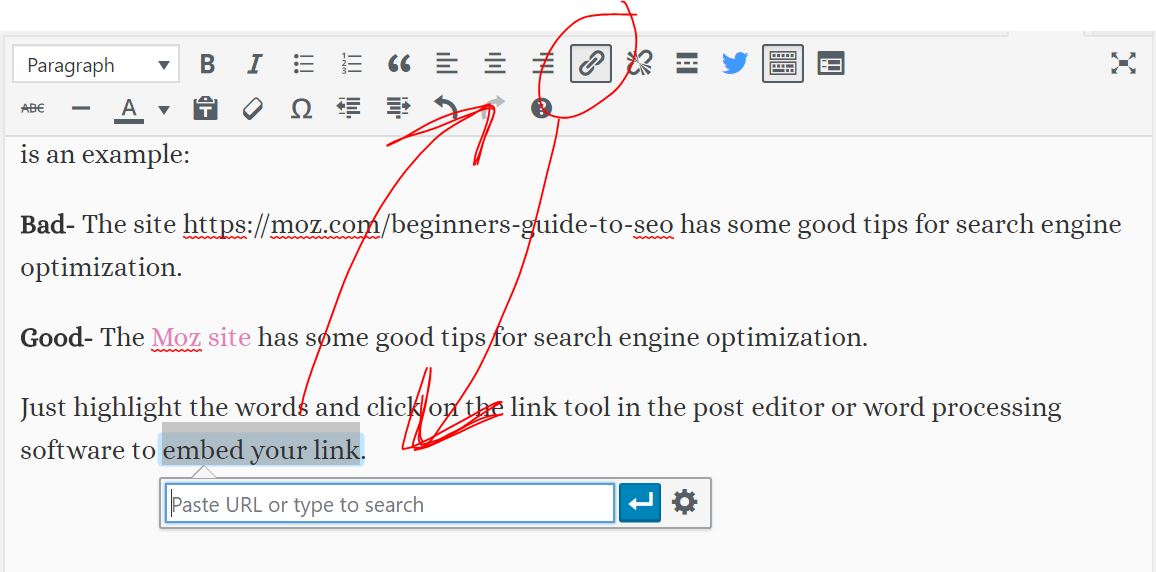
Search engines like it when the link is embedded in words, not just a typed out address. Here is an example:
Bad- The site https://moz.com/beginners-guide-to-seo has some good tips for search engine optimization.
Good- The Moz site has some good tips for search engine optimization.
Just highlight the words and click on the link tool in the post editor or word processing software to embed your link.
linking for seo
Also, make sure you link to other articles or blogs on your site. Try to put two links to your own content in the first two paragraphs of every piece.
Be a Good Writer
Search engines also rank posts higher if they contain good spelling. This should go without saying, since you're a professional writer and all, but ALWAYS check your spelling.
That's It!
That's basically all writers need to know about SEO. Remember, as long as you're thinking about your reader and providing quality, then most of your worries are taken care of already.